Jubail · Industrial City, two ports and contractor yards

Asset tracking in Jubail for plant stores, contractor equipment and port yards

Spatial Map shows where tagged equipment, tools and other assets are on a live 3D map of each store, workshop or yard, using the reads and positions your RFID and BLE systems already produce. Asset tracking in Jubail is shaped by scale: an industrial city of 1,016 km² on the Gulf coast, with plants, central stores, contractor yards and two ports spread across it, and equipment that crosses site boundaries every day. Each building or yard is its own facility, and all of them can sit in one workspace.

No credit card. Runs in the browser. Pro is $60/month for up to 4 facilities. Book a demo

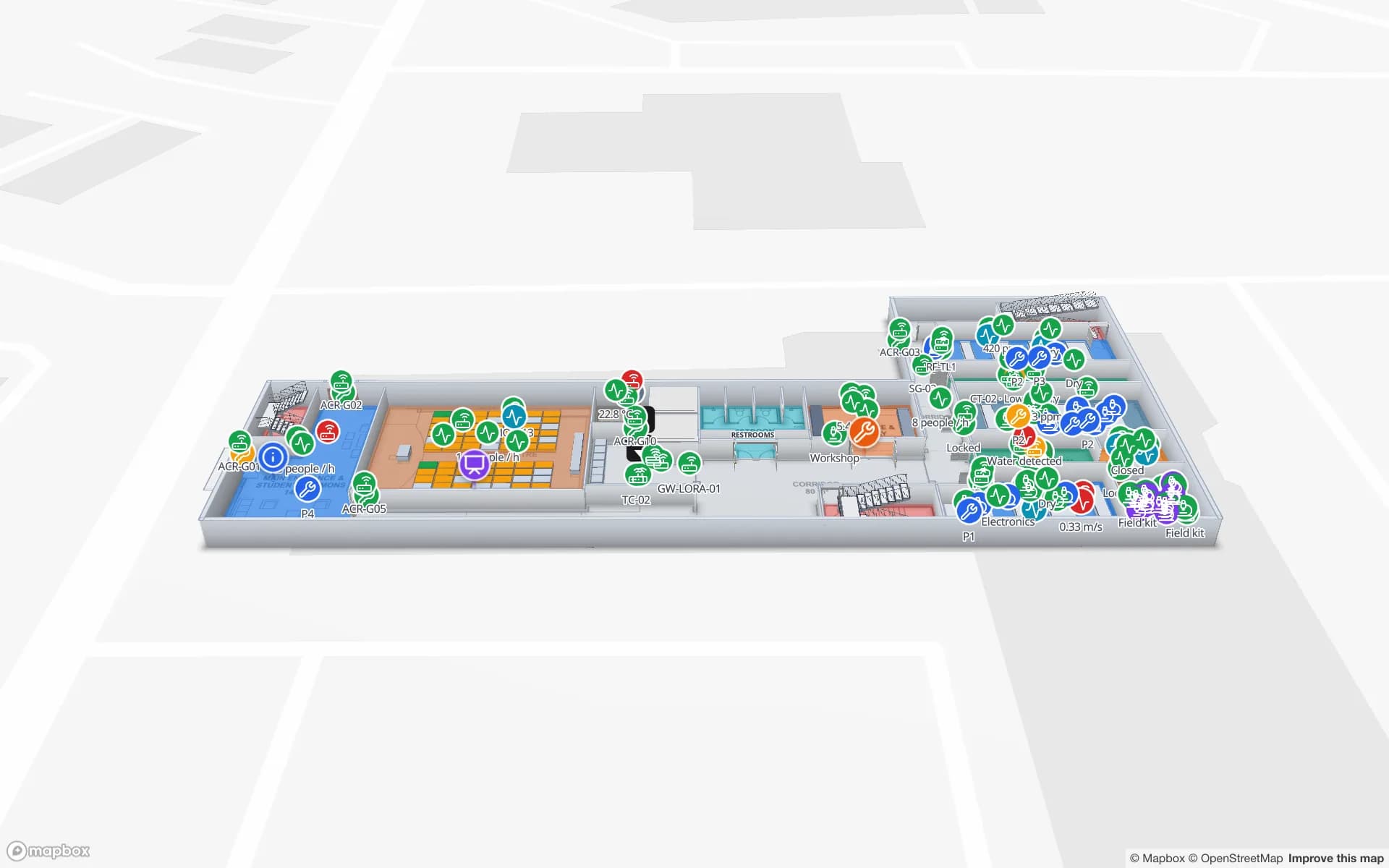
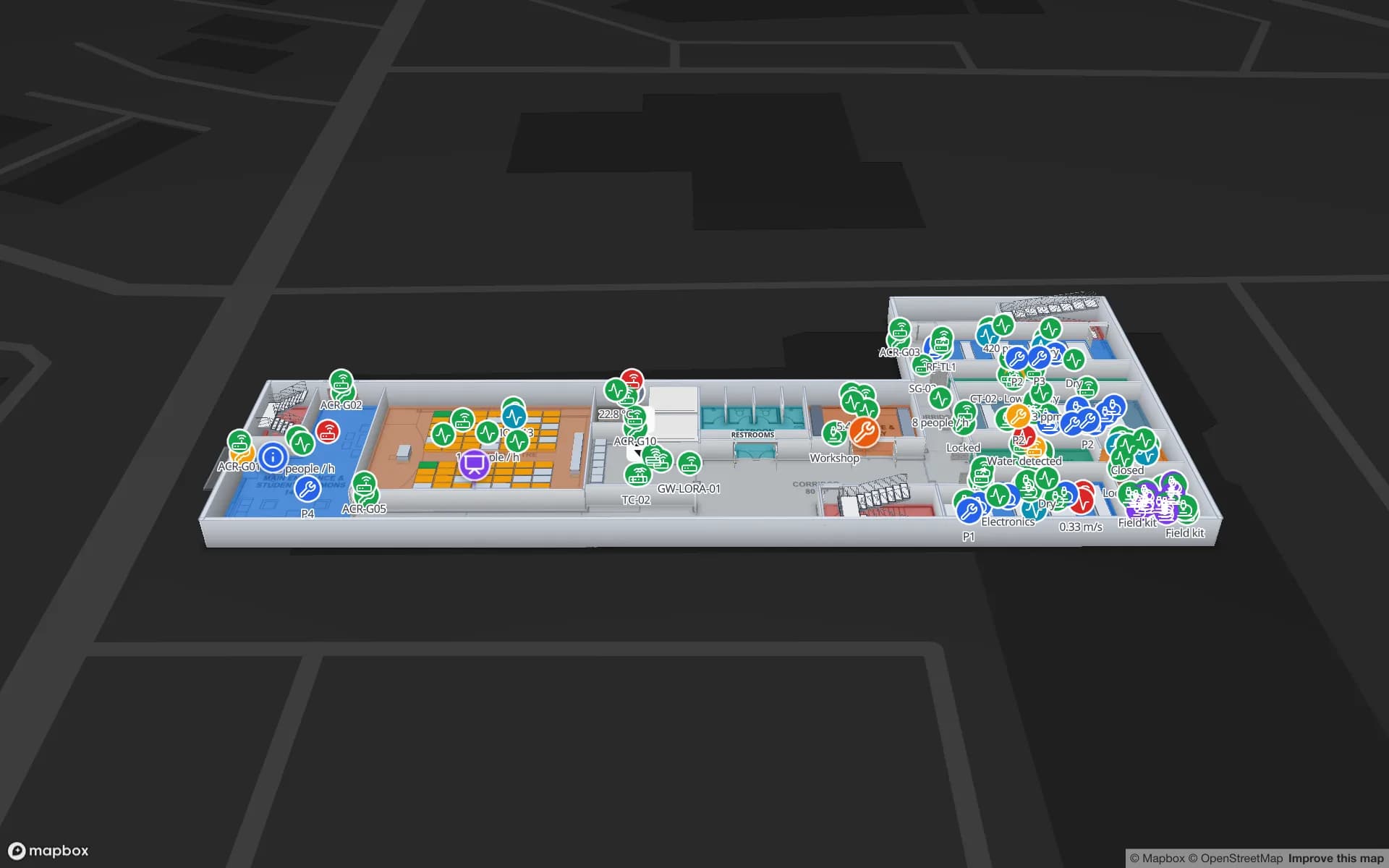
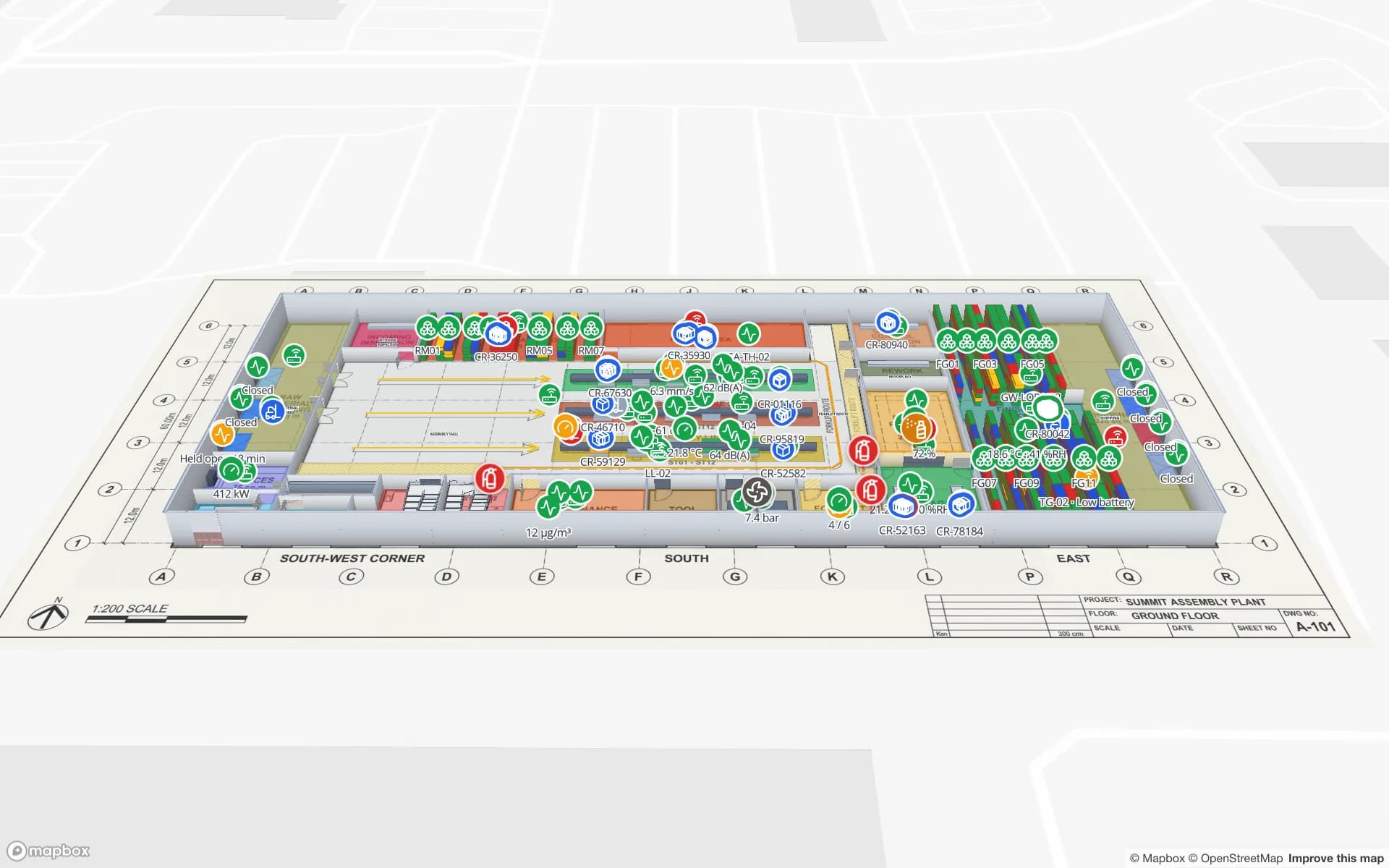
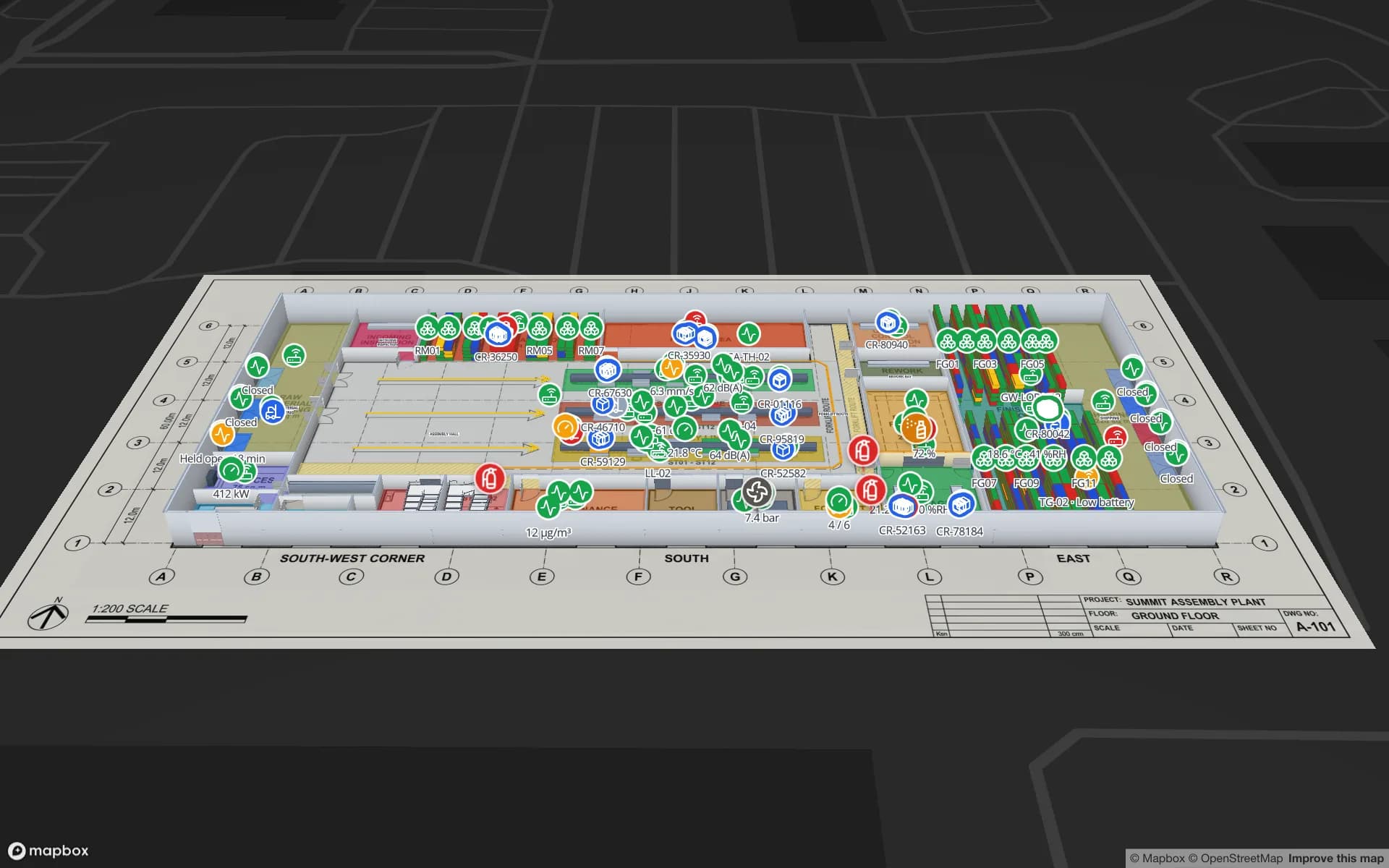
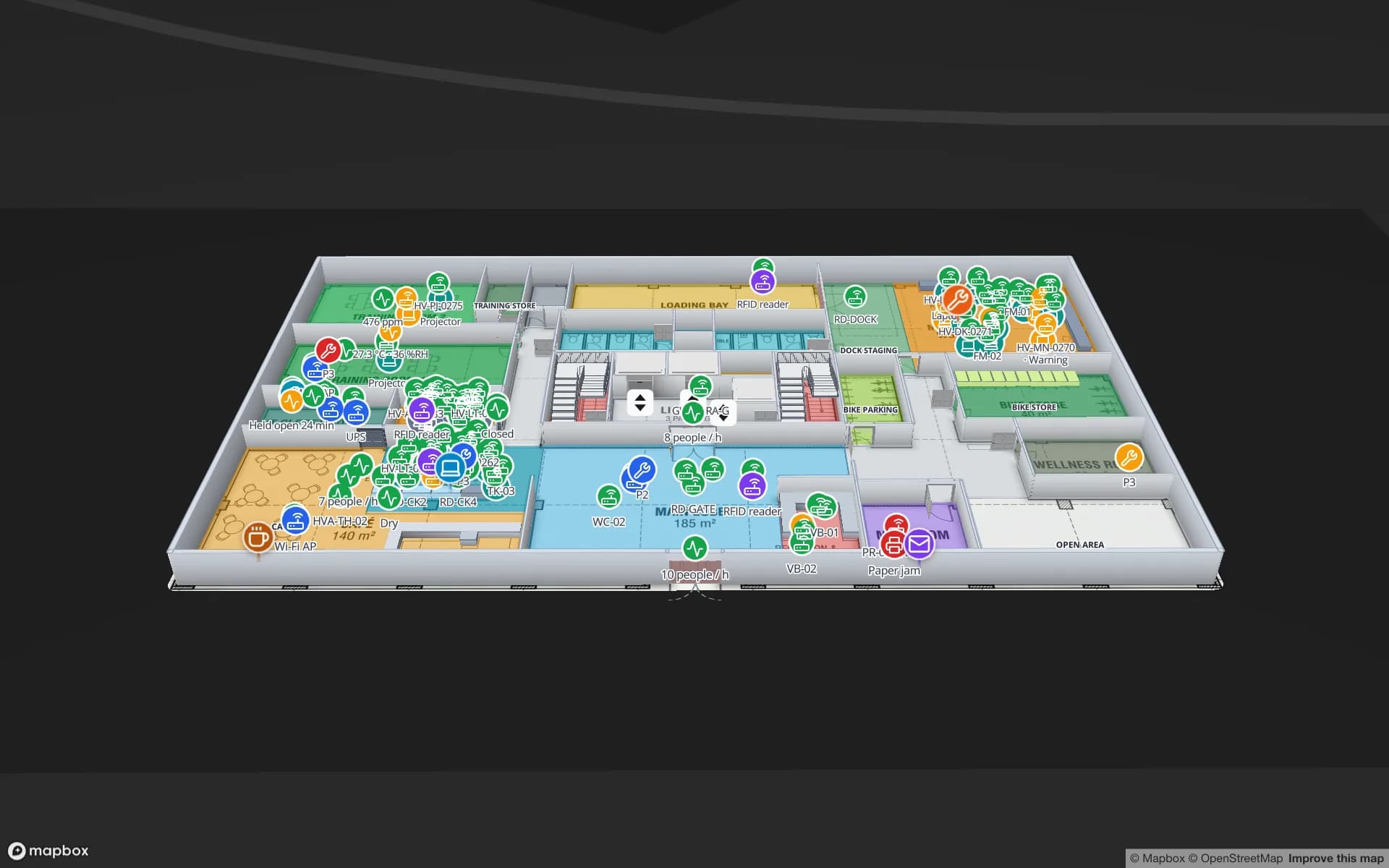
Summit Assembly Plant, a assembly plant demo, in the Spatial Map 3D viewer with live device markers
Summit Assembly Plant
Summit Assembly, a demo plant: lines, workstations and 867 raw-material and finished-goods rack locations on one plant map.
Rack locations in the Summit assembly-plant demo
867
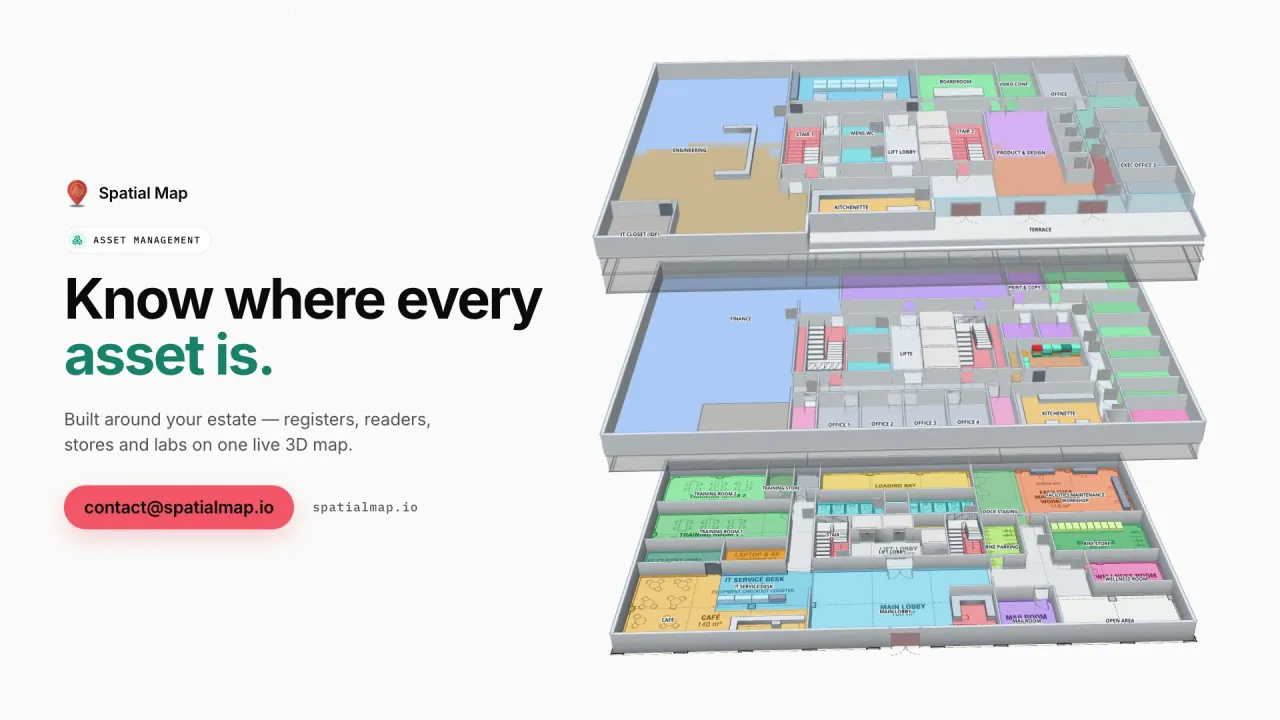
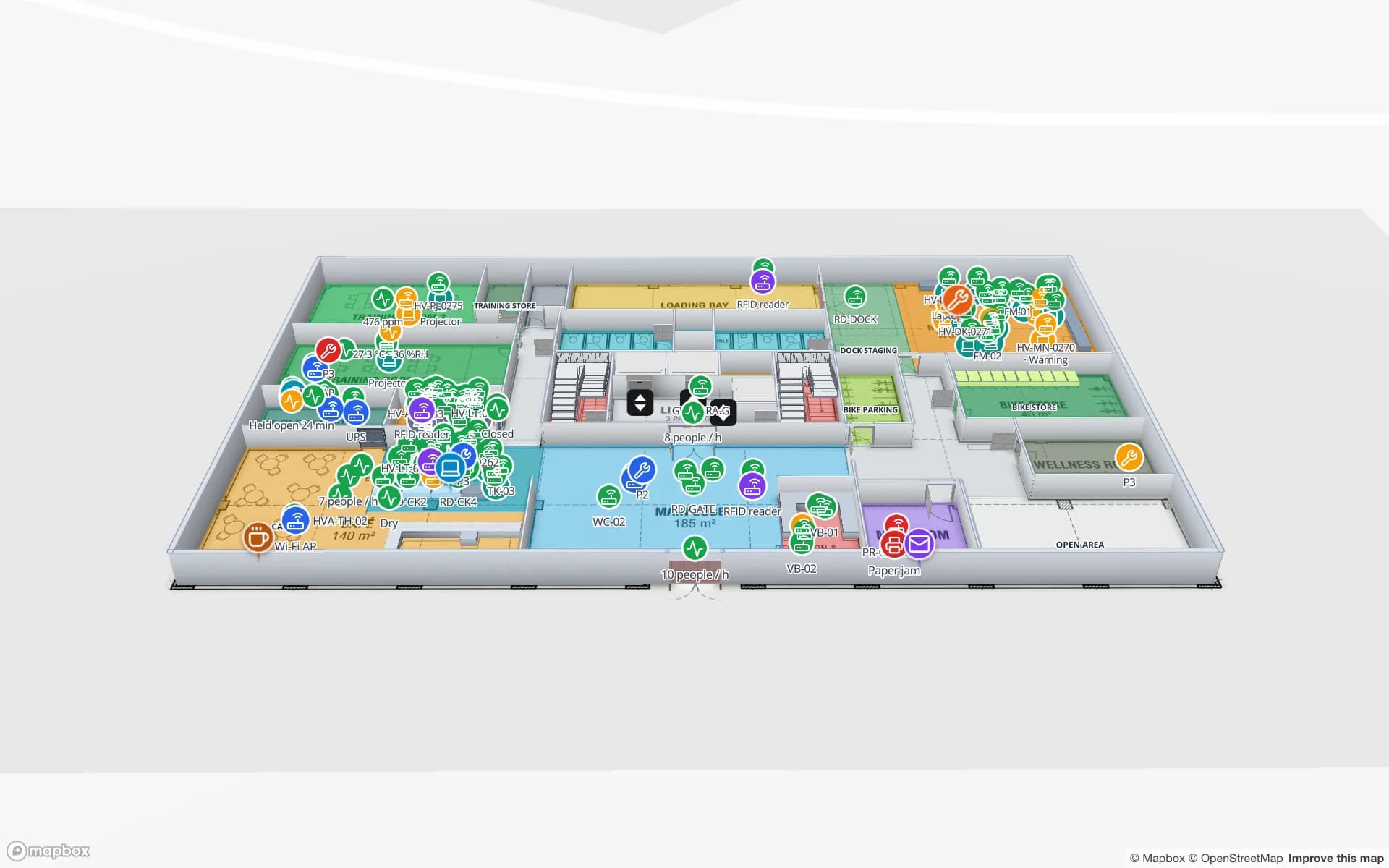
Floors in the Harborview asset-register demo
3
How often alert rules are checked, with alerts shown in the app
15 s
Free trial, up to 5 facilities, no card
7 days

One authority, one very large estate

The Royal Commission for Jubail and Yanbu was established by Royal Decree on 21 September 1975 and manages industrial cities that today include Jubail, Yanbu, Ras Al-Khair (added in 2009) and Jazan (added in 2015). Jubail Industrial City covers 1,016 km² on the Arabian Gulf coast, about 100 km north of Dammam.

At that scale an asset is rarely lost inside a room. It is lost between sites: a piece of test equipment that left the central store for a plant, a contractor’s kit that moved to a different yard, a spare that went out on a job and never came back. Tracking works at the level of stores, gates and yards: read the tag at the store door and the yard entrance, and the map shows the last place each item was seen. That is what a tool-crib and gate pattern does.
Contractor equipment: whose is it, and where?

Maintenance work in an industrial city brings contractors with their own lifting gear, welding sets, test instruments and tools. The questions on the first and last day are the same: what was mobilised, what is on site and what has left. A table with owner, tag ID, status and the date the item is due out gives you the list.

Read the tags at the yard entrance, and the map shows which items are on site and in which yard. A style rule colours items that are overdue for return, and a rule on “a row matches” raises an in-app alert for them. The inspection or calibration date is a field in your own table: Spatial Map colours it but certifies nothing, and your inspection regime remains the record. A contractor can be given a read-only share link limited to its own layer, with an expiry date, so it sees its own kit without an account.

Instruments, calibration and the lab

Plants hold large registers of instruments, gauges and lab equipment that move between benches, panels and the field. The Westbrook demo maps instruments with their calibration status and location in a science building, and the Harborview demo shows an asset register with check-out, stores and spares on three floors.

For a plant the same pattern applies to the instrument store: draw the cabinets and benches as areas, keep calibration due dates in the table, and colour what is overdue. An RFID handheld walk-through, floor by floor, updates the register room by room; see RFID asset management. Safety management systems and permit processes stay where they are.

Two ports and the yards beside them

Jubail Commercial Port and King Fahd Industrial Port in Jubail are two of the eight ports where the Saudi Ports Authority (Mawani) signed 20-year concession contracts for multipurpose terminals on 26 June 2025. The container terminal at Jubail Commercial Port was reported in April 2026 to have a SR2 billion concession, with quay length growing from 1,000 to 1,400 metres and berth depth from 14 to 18 metres.

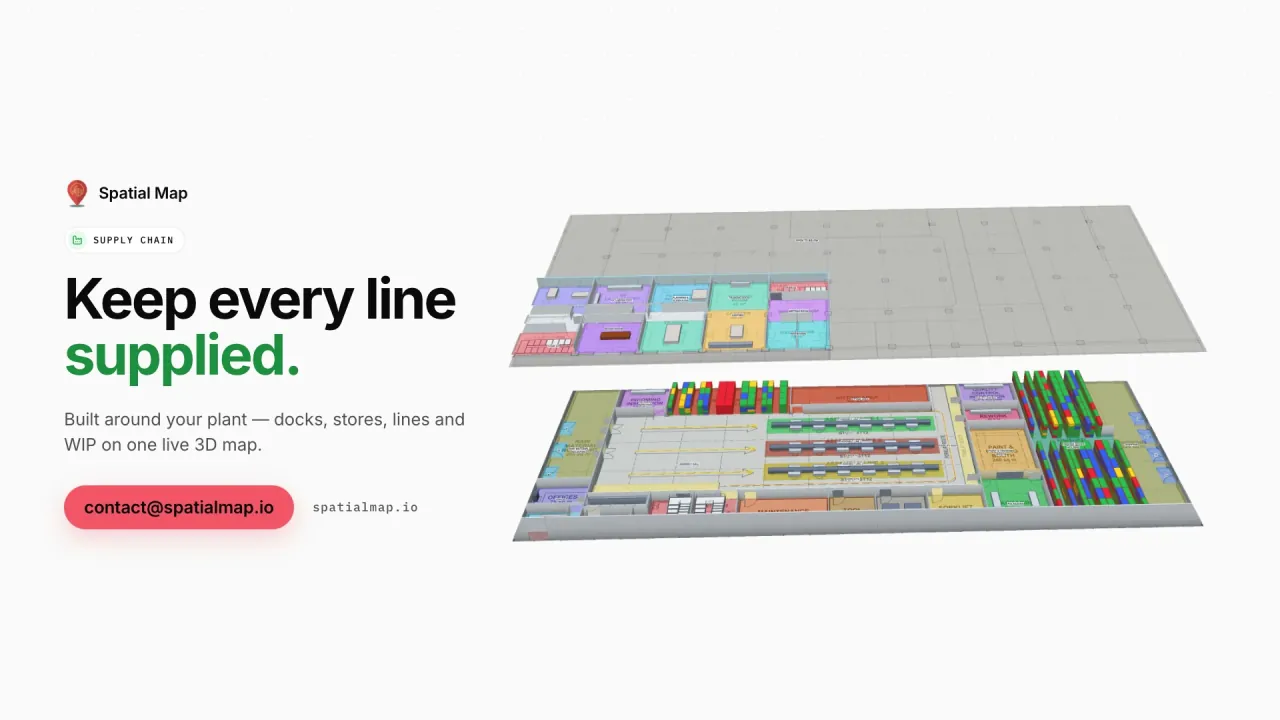
Port work brings yards: equipment staged for a job, returnable reels and crates, spares waiting for a vessel. Draw each yard as an area, give each item a tag, and the map shows what stands where and for how long. A rule set to “matches for N minutes” flags items that have waited past their window. The Eastport demo shows gate, weighbridge, yard slots and RFID pallets on one site.

Services for teams in Jubail

Where Jubail teams usually start depends on the role:

  • Plant maintenance and stores teams usually begin with asset tracking for tools, instruments and spares, then link it to inventory tracking for consumables.
  • Contractors and logistics firms often start with a yard map and a mobilisation list.
  • RTLS and UWB is for large indoor workshops and stores where people and vehicles must be located continuously; most sites will not need it first.
  • If you have no readers or tags yet, our team can source RFID readers, rugged tags and BLE gateways on request, quoted per project, with warranty and device support from the manufacturer: see hardware and demo kits on request.
  • Our team builds an asset management system, RFID handheld apps and ERP integrations as client projects. The product runs as cloud or on-premises.

Also served nearby

The same approach covers Ras Al-Khair to the north and, to the south, Dammam and Khobar, which have their own page for RFID tracking in Dammam. Nothing needs to be installed at any of them: the map opens in a browser.

How Spatial Map does it

Building a Jubail asset map

  1. 01

    Load the asset register

    Upload a CSV or Excel list of assets with tag IDs, owners, due dates and home stores as a table.

  2. 02

    Map the stores and yards

    Import each store or yard plan, align it, and draw areas named like your gates and readers.

  3. 03

    Connect reads and counts

    Fixed-reader middleware posts reads through the write API; handheld counts arrive as file uploads.

  4. 04

    Add overdue and silence rules

    In-app alerts for items overdue at a borrower, yards short of kit and tags that stop reporting.

Where Jubail teams track assets

Plant tool cribs and spares

Check-out, last-seen store and overdue items coloured on the plan.

Instruments and calibration dates

Instruments in their labs and cabinets, with due dates from your table.

Plant stores and racks

Spares and consumables by rack and level, searchable by part number.

Port-side yards

Gate, weighbridge, yard slots and laydown areas with alerts for waiting items.

See it on real demo facilities

Fictional names, real floor plans, live sensors, RFID, BLE tags and gateways — open any of them in the browser.

All 13 demo facilities

Asset tracking in Jubail — questions we get

No. Inspection and calibration dates are fields in your own table. Spatial Map colours them and lists what is overdue, but your inspection regime, permit process and safety systems remain the record.

At the points where it changes place: store doors, yard entrances and gates. Each read puts the item at that location on the map. Continuous positions need an RTLS, and its engine can post positions to a table through the write API.

Yes, through a read-only share link limited to the layers and floors you choose, with an expiry date and a view cap. The contractor needs no account, and you can revoke the link at any time.

Yes. A handheld count can be uploaded as a CSV or Excel file, or posted by your own app through the write API. Our team builds handheld apps as client projects if you do not have one.

No. Spatial Map is sold online and our team works with customers in Saudi Arabia remotely, by video call and through the contact form. There are no local resellers or partners.

In US dollars, the same worldwide: a 7-day free trial for up to 5 facilities with no card, then Pro at $60 a month or $600 a year for up to 4 facilities. Larger estates are quoted as custom services.

Track one contractor yard or tool crib first.

Start the free trial and open the Harborview demo, or send us an asset list and the plan of a store or yard through the contact form.