Asia-Pacific · Southeast Asia

Indoor mapping and RFID tracking software for Southeast Asia

Spatial Map is browser-based indoor mapping software that turns plants, port warehouses, fulfilment centres and malls into live 3D maps, fed by the RFID readers, BLE gateways and sensors you already run. Across Southeast Asia those buildings differ a great deal — electronics plants outside Hanoi, automotive lines on Thailand’s eastern seaboard, e-commerce warehouses around Jakarta, multi-storey logistics buildings in Singapore — and one workspace can hold all of them.

No credit card. Runs in the browser. Pro is $60/month for up to 4 facilities. Book a demo

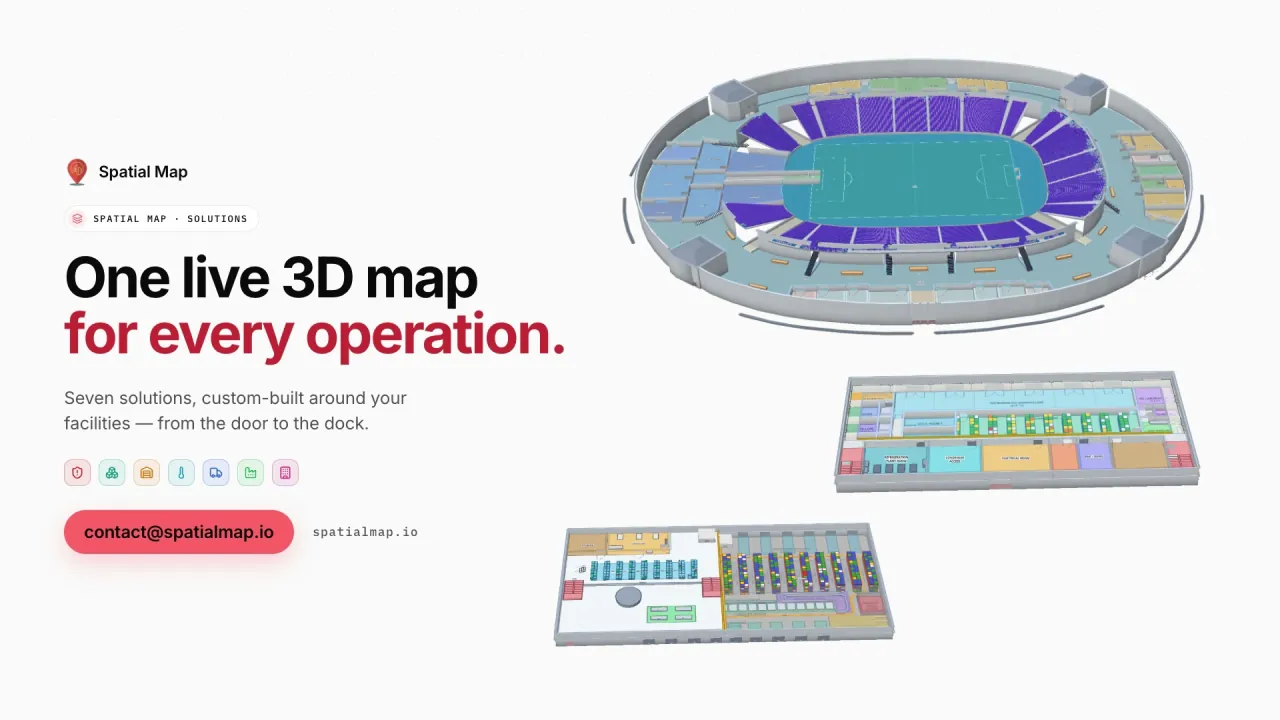
Solutions film: “One live 3D map for every operation” beside Crown Park Stadium and two demo facilities in 3D
The seven Spatial Map solutions — from anti-theft and inventory to logistics and supply chain — each on its demo facility, live in 3D.
Interface languages, including English and Chinese
6
Demo facilities to explore online
13
Software to install — runs in any modern browser
0
Free trial, up to 5 facilities, no credit card
7 days

Factories spreading across the region

Over the past decade many manufacturers have added plants in Southeast Asia alongside the ones they run in China, and electronics, automotive parts, garments and footwear have filled new industrial parks in Vietnam, Thailand, Malaysia and Indonesia. A new plant usually comes with a new warehouse, a new supplier base and a new team that does not yet know the building.

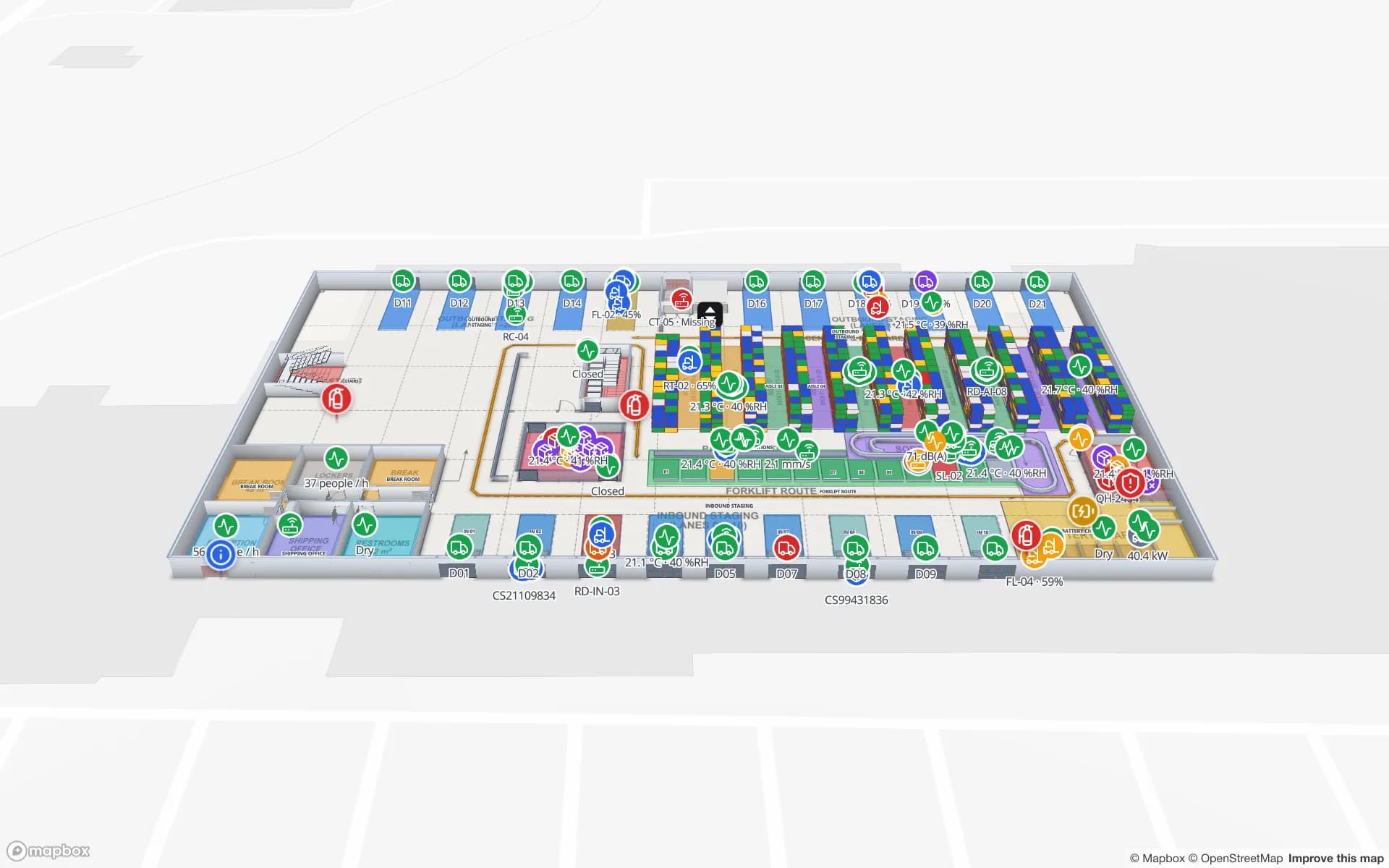
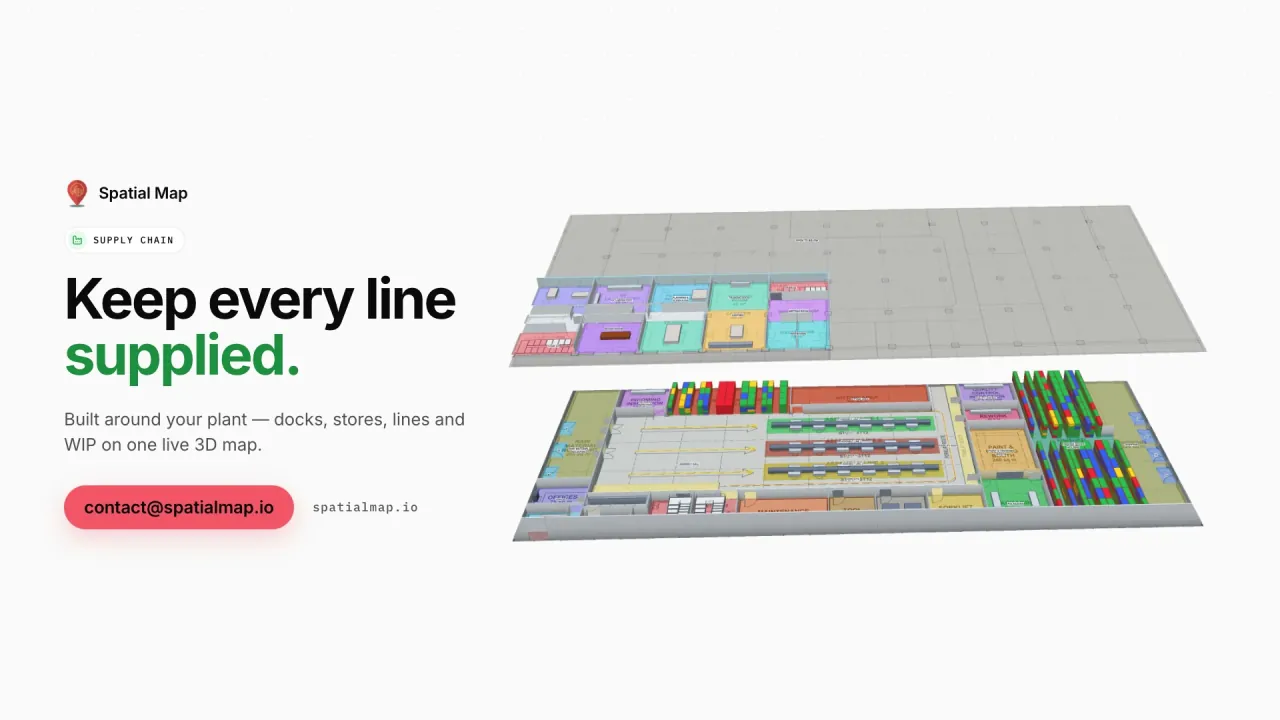
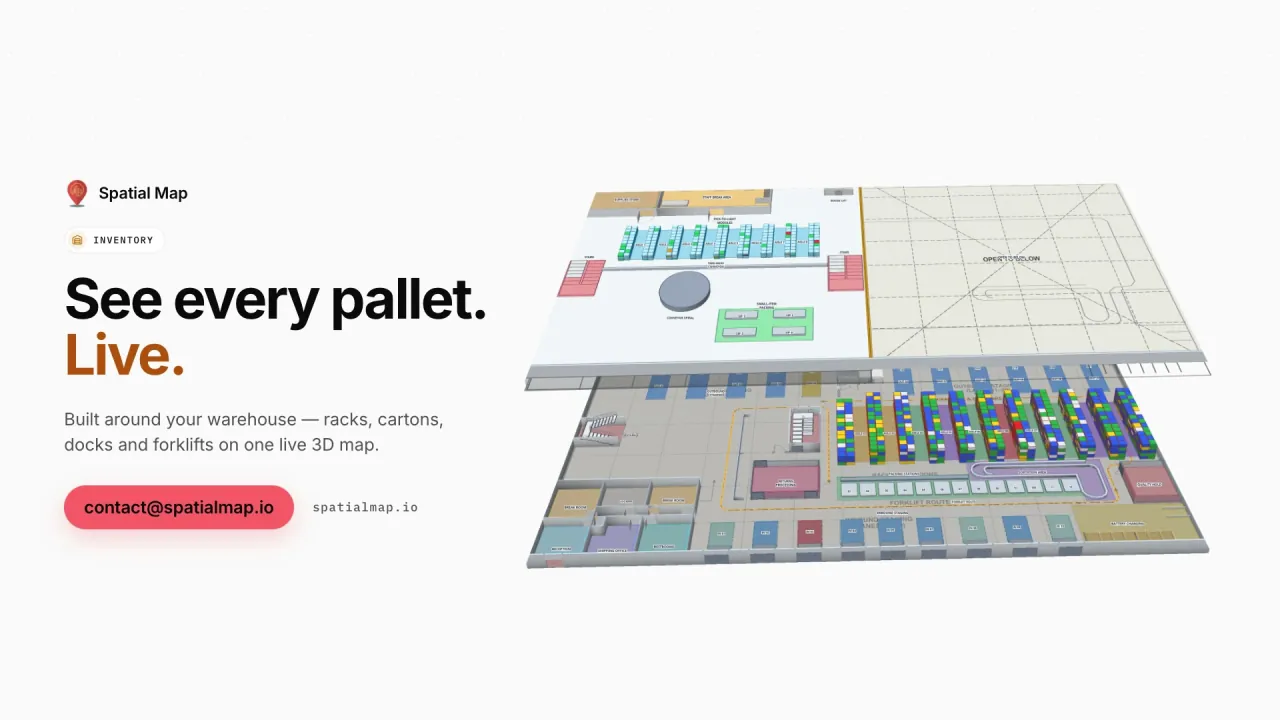
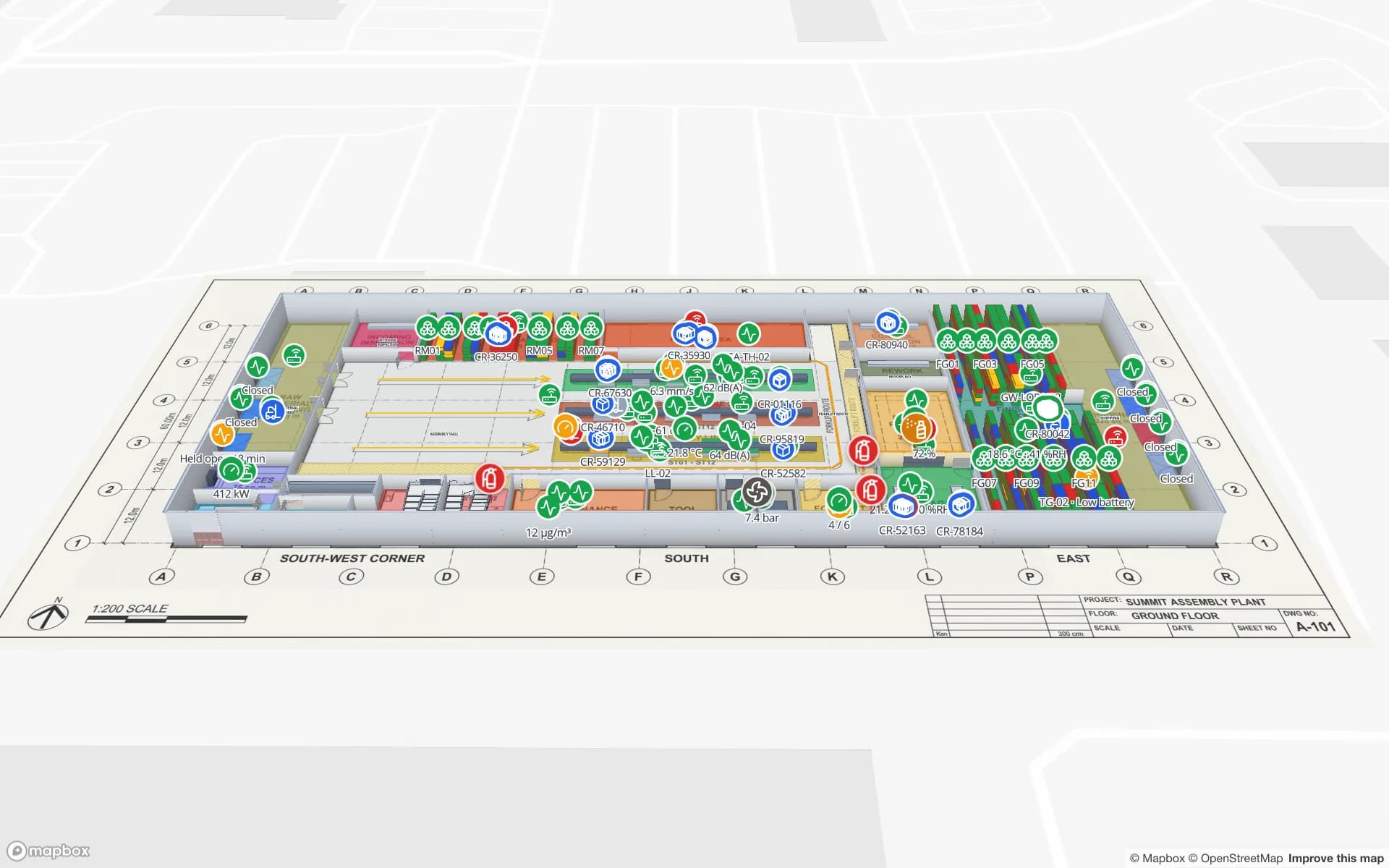
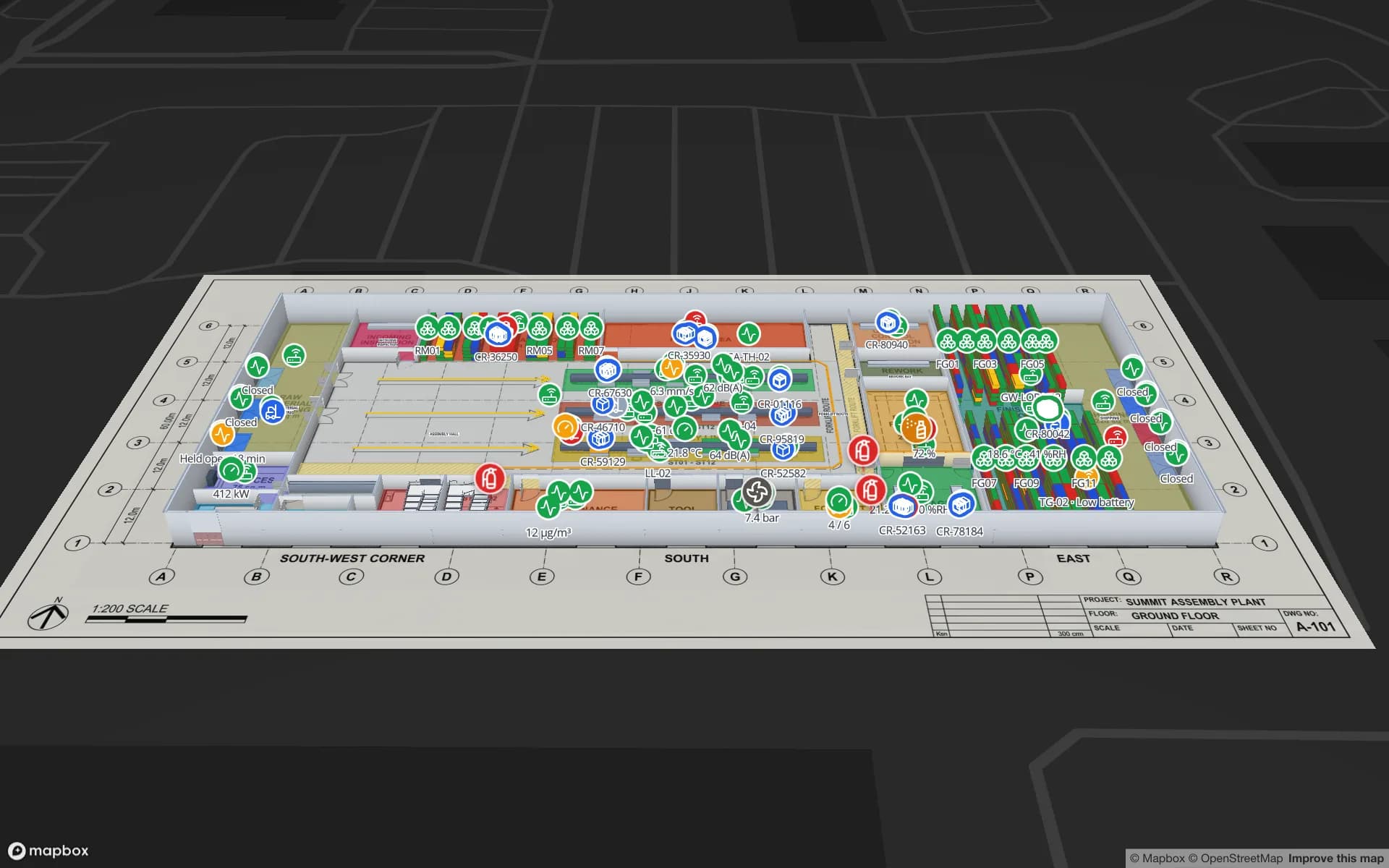
Spatial Map gives each of those sites the same starting point: the layout uploaded as a PDF or DWG, lines, racks, docks and stores drawn on top — AI Map can draft the walls, doors and racks for a person to review — and RFID, MES or WMS rows placed where the work actually happens. The Summit Assembly demo shows assembly lines, 351 RFID work-in-progress carriers and seven docks on one map.
Ports, transhipment and the warehouses behind them

The region’s trade runs through some of the world’s busiest container ports — Singapore, Port Klang and Tanjung Pelepas in Malaysia, Laem Chabang in Thailand, Tanjung Priok in Jakarta, and Hai Phong and Cai Mep–Thi Vai in Vietnam. Behind each sits a ring of container freight stations, bonded warehouses and cross-docks where cargo is unpacked, sorted and loaded against cut-off times.

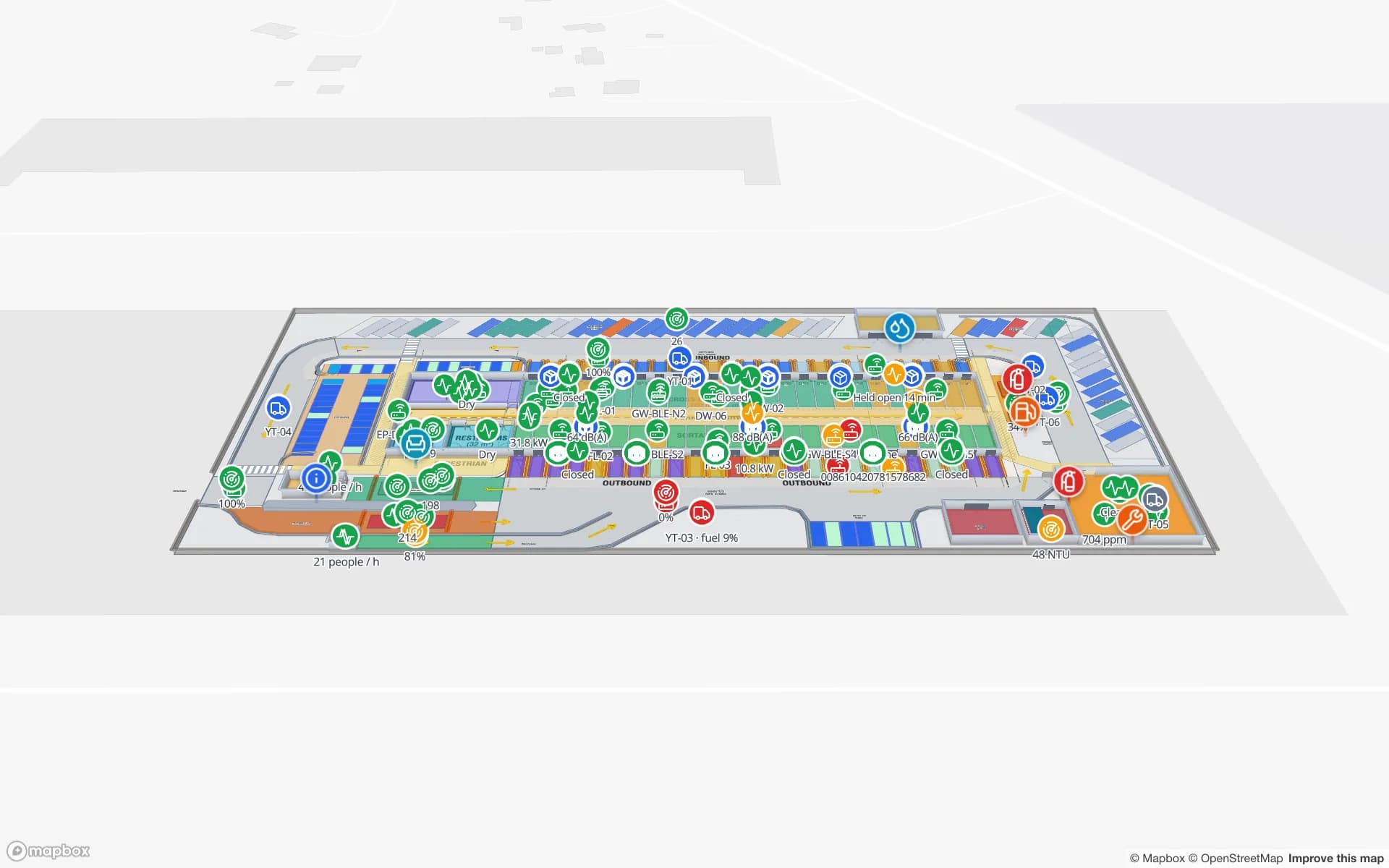
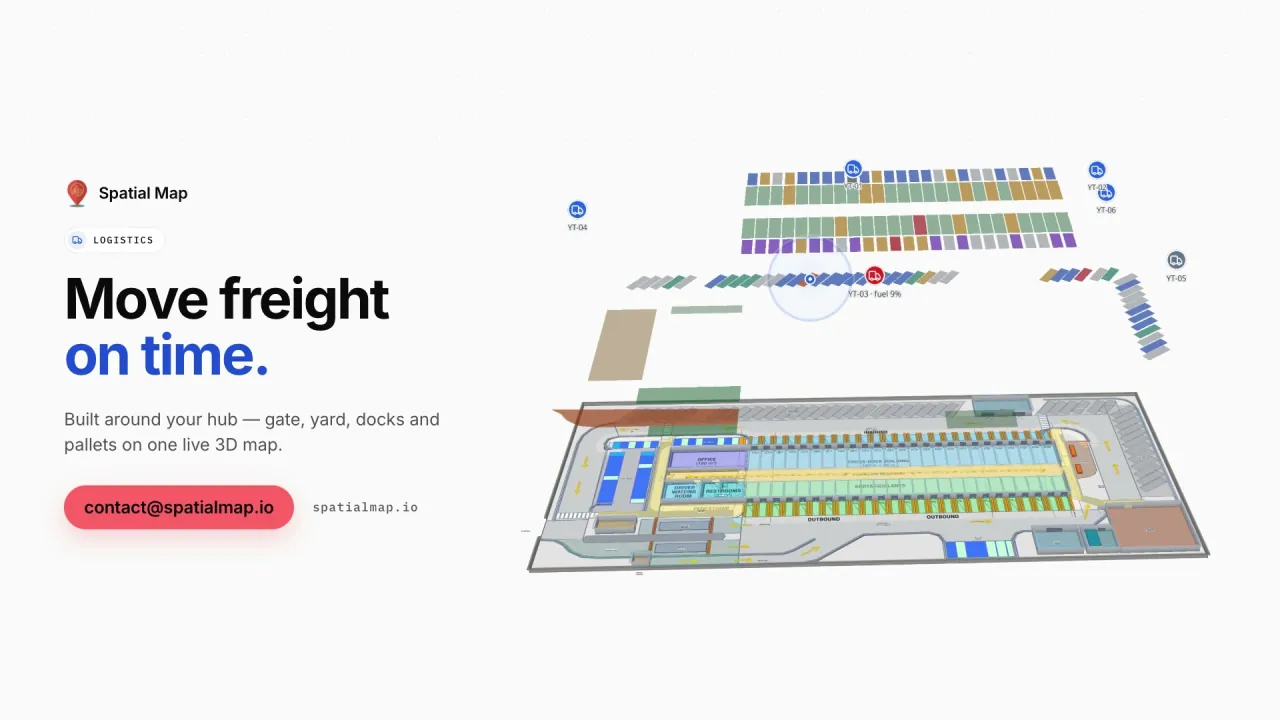
On the map, dock doors, yard slots and staging lanes are shapes your yard or WMS data colours, and RFID-tagged pallets are followed door to door. The Eastport Cross-Dock demo puts 50 dock doors, 44 yard slots and 1,180 RFID pallets in one view.

Country by country

The platform is the same everywhere; what each market needs from it is not. Each country has its own page:

  • [Singapore](/singapore) — data centres, multi-storey warehouses on scarce land, pharma plants and a transhipment hub by sea and air.
  • [Malaysia](/malaysia) — semiconductor and electronics plants in Penang, Port Klang and Tanjung Pelepas, halal segregated storage and Klang Valley malls.
  • [Indonesia](/indonesia) — the Bekasi–Cikarang industrial corridor, Tanjung Priok, e-commerce fulfilment around Greater Jakarta and retail across the archipelago.
  • [Vietnam](/vietnam) — electronics plants in the north around Bac Ninh and Hai Phong, industrial parks around Ho Chi Minh City, garments and footwear made for export.
  • [Thailand](/thailand) — automotive and electronics plants in the Eastern Economic Corridor, Laem Chabang and Bangkok’s multi-level shopping malls.
  • [Hong Kong](/hong-kong) — not part of Southeast Asia, but the re-export and air-cargo gateway many of the region’s supply chains pass through, with warehouses stacked many floors high.

Languages, hardware and privacy across borders

The app’s interface is available in English and Chinese, among six languages, and each user picks their own. It is not available in Bahasa Indonesia, Malay, Vietnamese, Thai or Filipino. Room names, rack codes, table columns and report titles are your own text, so they appear in any language and script exactly as you write them.

Regional estates rarely run one hardware vendor everywhere. Spatial Map does not drive readers itself: your RFID middleware, RTLS engine, BLE gateways or IoT platform post rows to a table through the write API, or expose a REST endpoint that Spatial Map polls. Each country has its own data-protection law — Singapore’s and Malaysia’s PDPA, Indonesia’s PDP Law, Thailand’s PDPA and Vietnam’s personal data protection law among them — and they are context for your project, which your legal advisers assess; many projects tag stock and equipment rather than people.

One workspace for a regional estate

Facilities in several countries can live in one workspace and be grouped into named solutions — by country, by business unit or by customer. Owner, Admin, Editor and Viewer roles decide who changes what, and read-only share links give a plant manager, a client or a contractor one facility with chosen floors and layers, an expiry date and no account.

Alert rules on each facility’s tables — a row that matches, a reading that stays out of range for some minutes, a table that stops updating — are checked every 15 seconds and shown in the app, with Show on map to jump to the item. They are delivered in the app only, not by email, SMS or push. Reports export to PDF, Excel, CSV and JSON for monthly reviews across the region.

How Spatial Map does it

One workflow for every site in the region

  1. 01

    Import each building

    A PDF or DWG (AutoCAD R2004–R2018) per floor, placed at real-world scale and stacked in 3D.

  2. 02

    Draw or draft the layout

    Lines, racks, docks, stores, stairs and lifts — drawn by hand or drafted by AI Map and reviewed.

  3. 03

    Connect each site’s systems

    RFID, BLE, sensor, MES or WMS rows through the table write API, REST polling or file uploads.

  4. 04

    Run the region from one workspace

    Live maps, in-app alerts, history playback, reports and read-only links per site.

What teams across the region map first

New plants and their lines

Assembly lines, WIP carriers and material racks fed from your MES and RFID.

Port-side cross-docks

Dock doors, yard slots and pallets staged for the right outbound load.

E-commerce fulfilment

Rack-level stock, pick-to-light, packing and staging lanes on one map.

Electronics secure stores

High-value units read zone by zone, with choke points and a shrink report.

See it on real demo facilities

Fictional names, real floor plans, live sensors, RFID, BLE tags and gateways — open any of them in the browser.

All 13 demo facilities

Questions from teams across Southeast Asia

Spatial Map is sold online and runs in the browser, so teams in Singapore, Malaysia, Indonesia, Vietnam, Thailand, the Philippines and elsewhere in the region sign up the same way. We have no local offices; our team works with customers remotely and through the contact form.

Not yet. The app is available in English, Chinese, Spanish, French, German and Arabic, and each user picks their own. Your own content — room names, rack codes, column names and report titles — can be written in any language and script.

Yes. Spatial Map is hardware-agnostic. Each site’s RFID middleware, RTLS engine or gateway software posts rows to a table or exposes a REST endpoint that Spatial Map polls, so a plant in Vietnam and a warehouse in Thailand can run different readers in the same workspace.

Put every facility in one workspace and group them into named solutions, for example by country or by business unit. Roles control who can edit each facility, and read-only share links give outside parties a view of one site without an account.

No. Laws such as Singapore’s PDPA, Indonesia’s PDP Law or Thailand’s PDPA are context for your project, and your legal advisers decide what applies. Spatial Map only shows the data you send it; a data processing agreement is available and the security page describes how data is protected.

The same worldwide, in US dollars: a 7-day free trial for up to 5 facilities with no credit card, then Pro at $60 a month or $600 a year for up to 4 facilities. Larger regional estates are quoted as custom services.

Map your first site in the region this week.

Start the free trial, or send us a floor plan and a sample of your RFID, MES or WMS data through the contact form and we will show you your own building live.