United States · USA

Indoor mapping and RFID tracking software for the USA

American warehouses, stores and venues operate at a scale where nobody can walk the building to find out what is happening. Spatial Map turns floor plans into live 3D maps in the browser — racks colored by inventory, RFID reads at dock doors and store exits, crews and equipment as live markers — fed by the readers, gateways and systems you already run.

No credit card. Runs in the browser. Pro is $60/month for up to 4 facilities. Book a demo

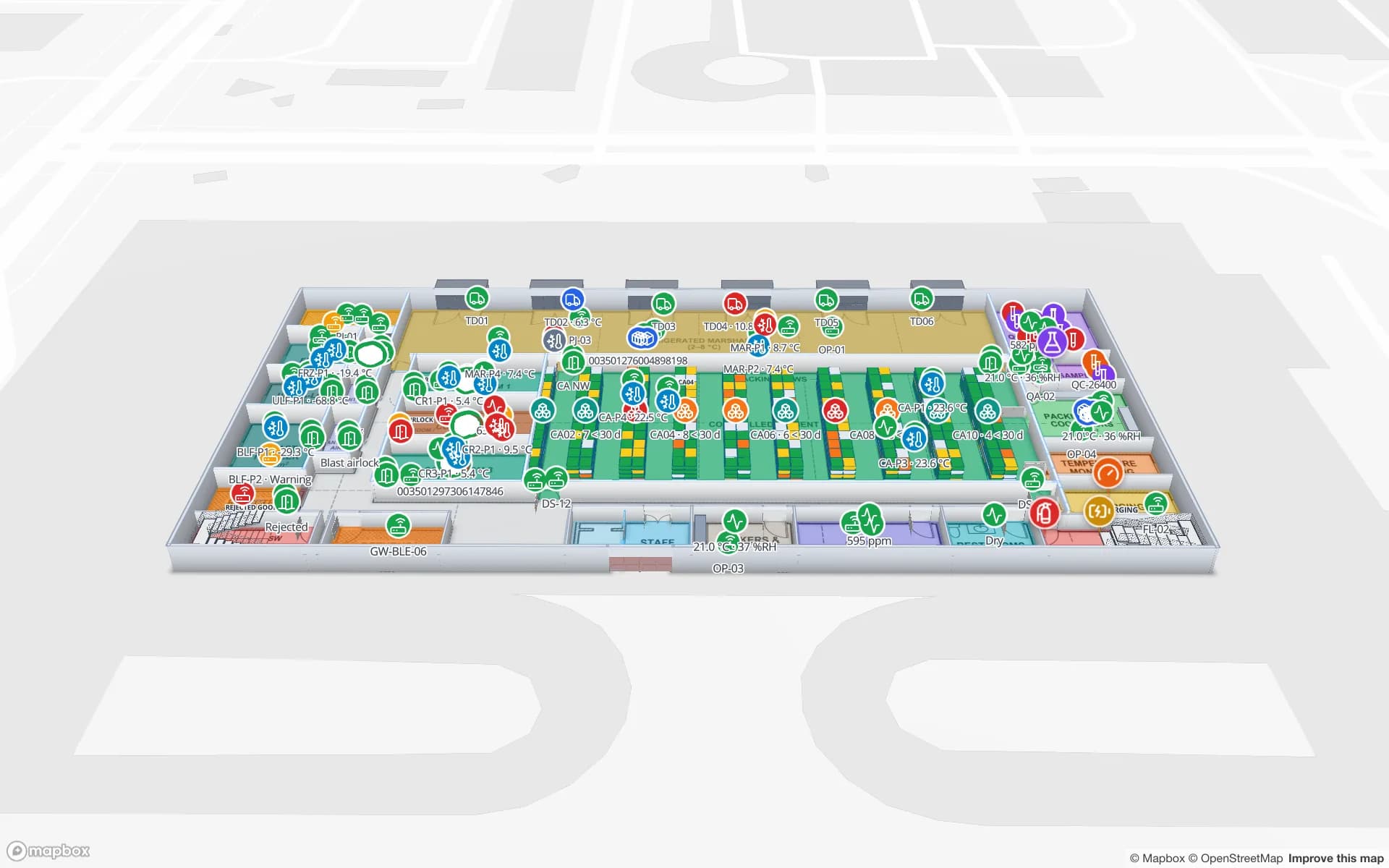
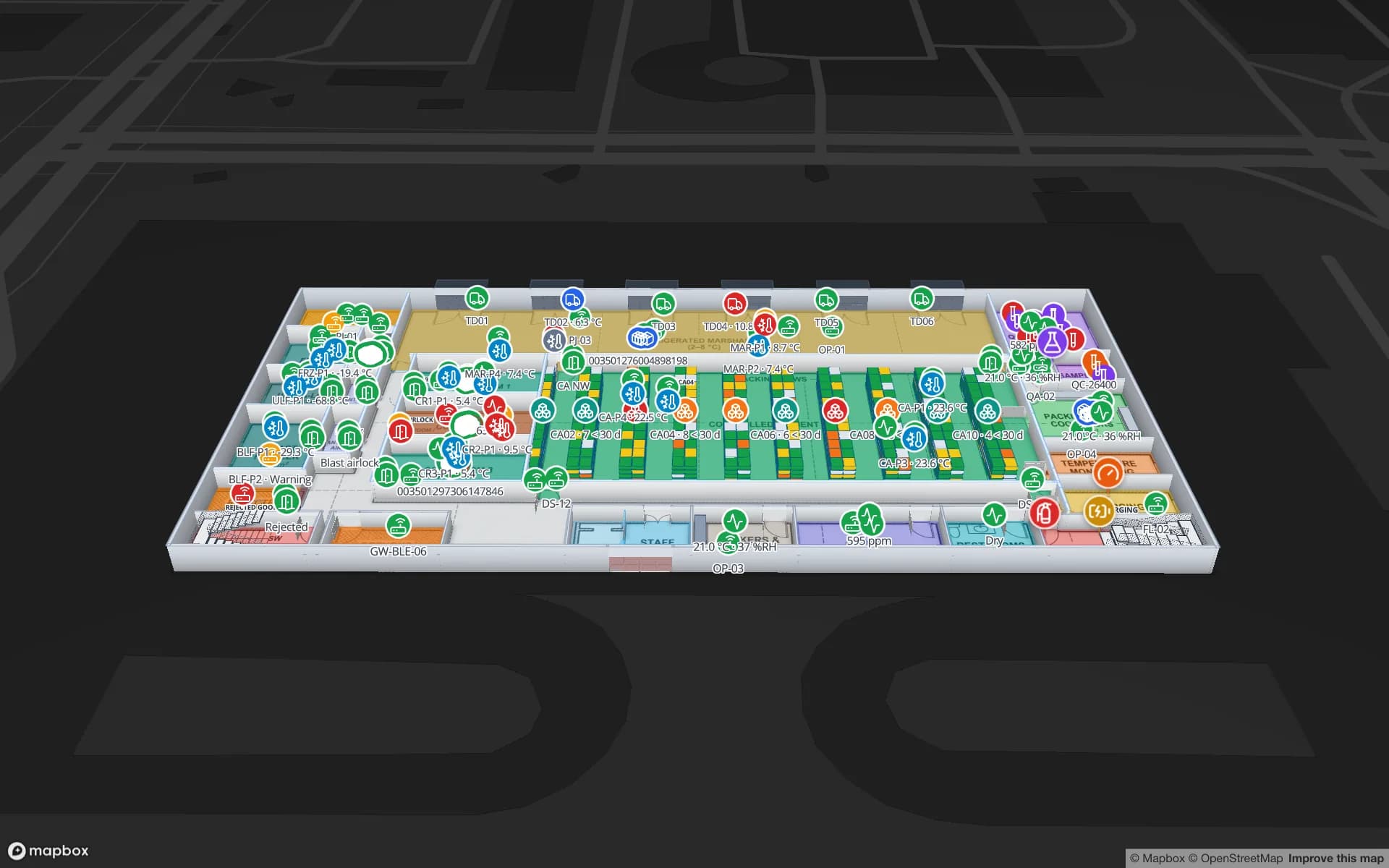
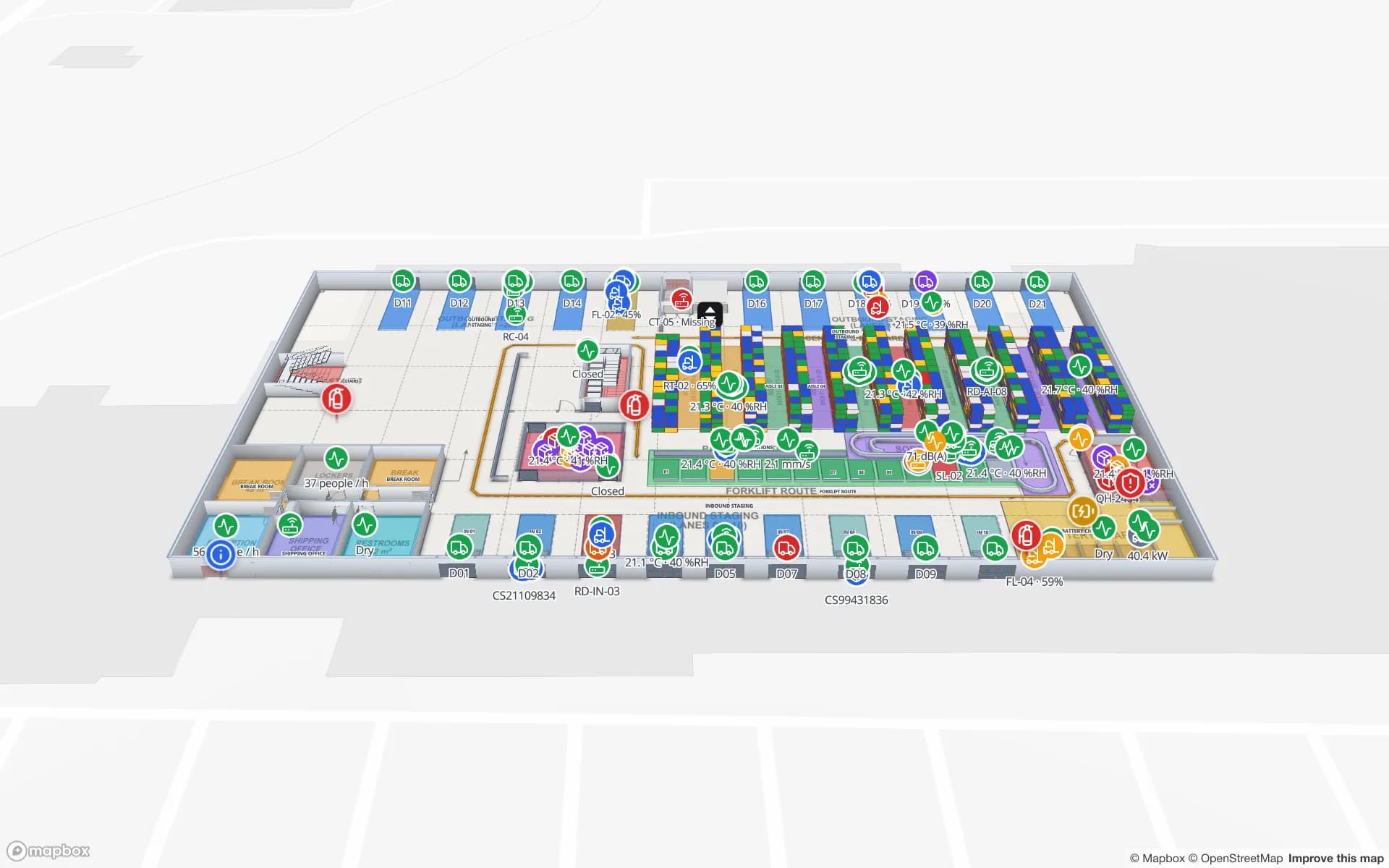
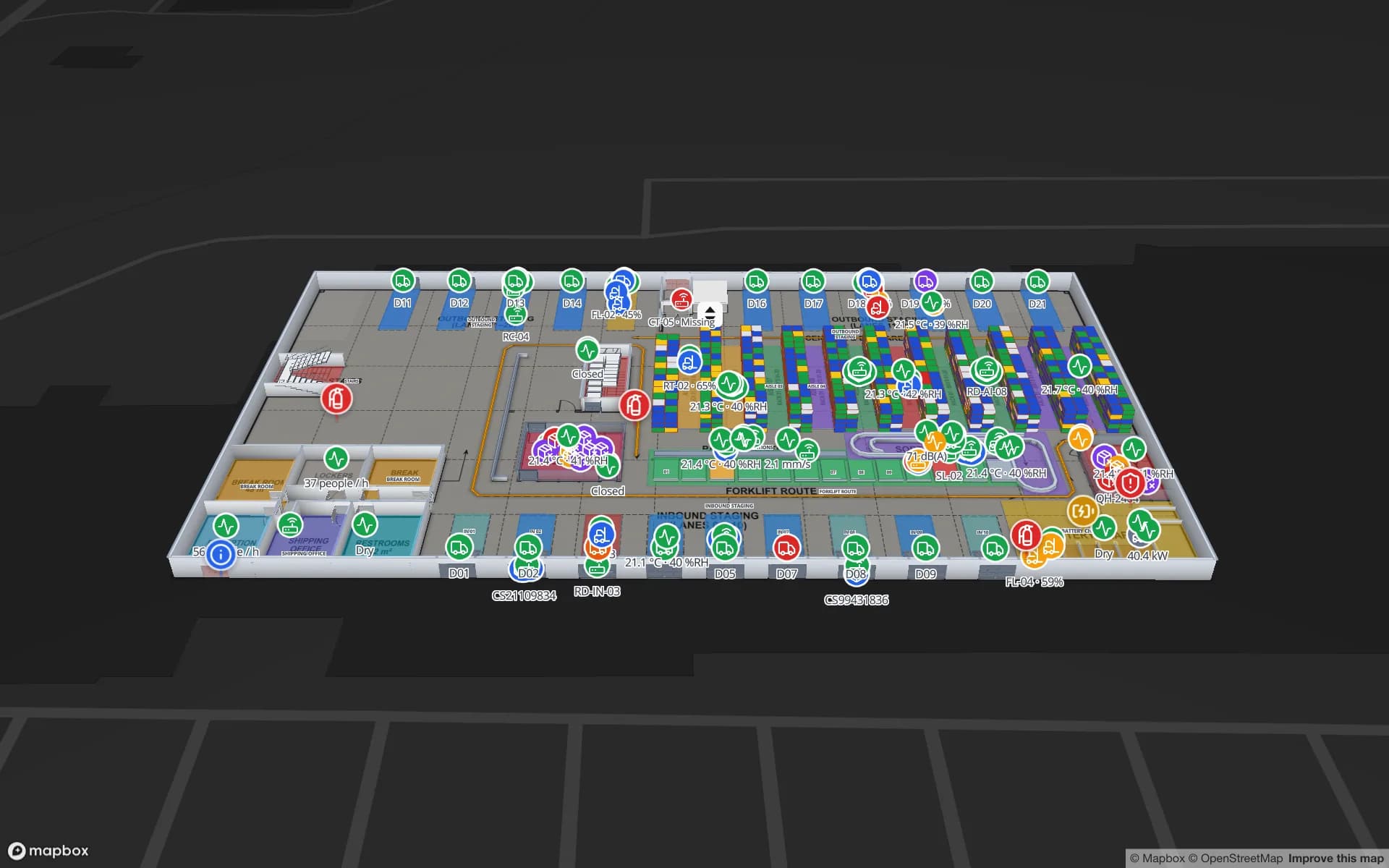
Crestline Fulfillment Center, a fulfillment center demo, in the Spatial Map 3D viewer with live device markers
Crestline Fulfillment Center
Crestline Fulfillment Center, a demo fulfillment center: 2,204 rack locations, pick-to-light, packing, staging lanes, forklifts and the trailer yard.
Rack locations in the Crestline demo fulfillment center
2,204
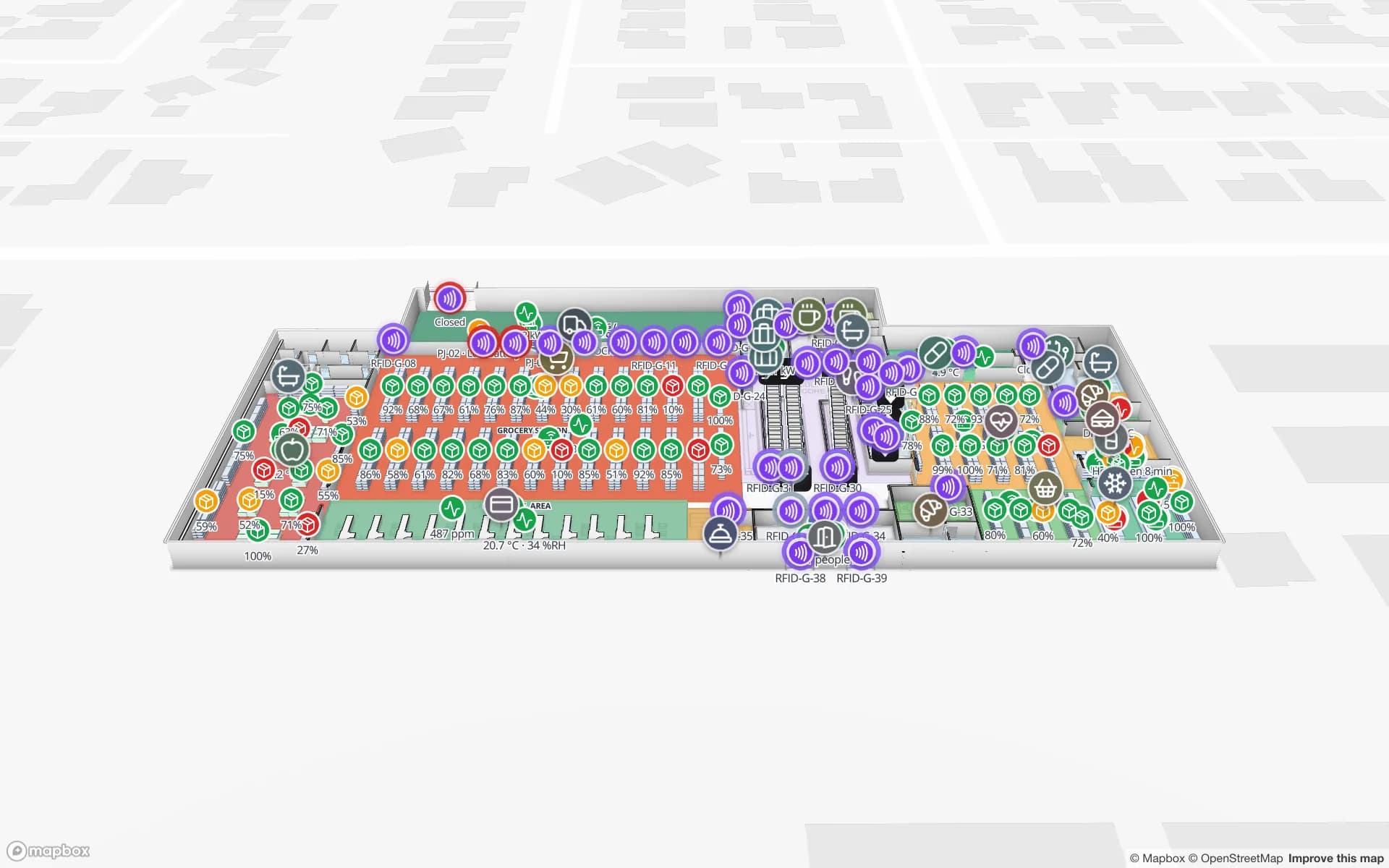
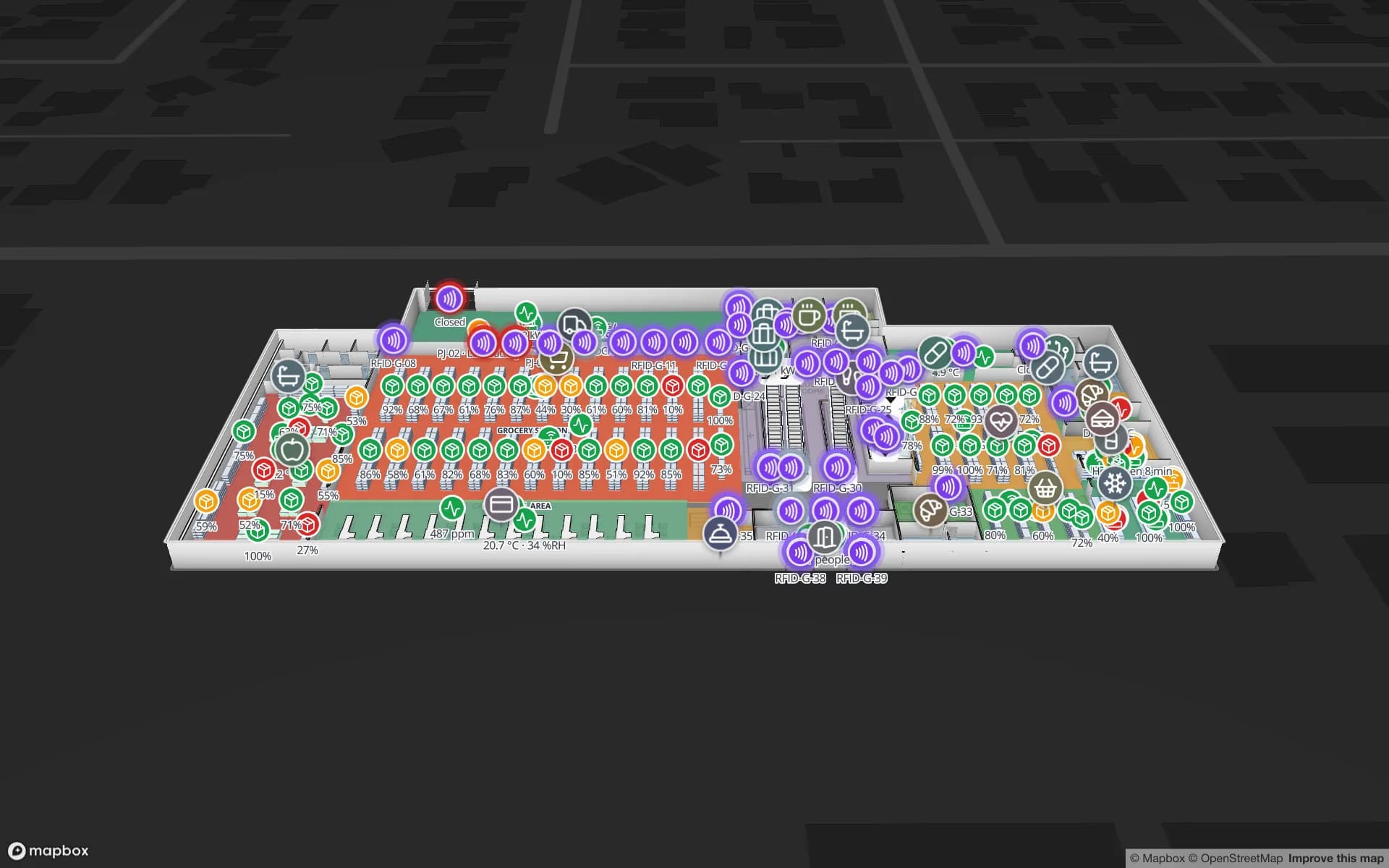
RFID readers in the Retail Mart demo store
85
Demo facilities to explore in the browser
13
Free trial, up to 5 facilities, no credit card
7 days

3PL networks and warehousing at scale

The US has one of the world’s largest warehousing and third-party logistics markets, and many operators run dozens of buildings across several states for many clients at once. Each building has a WMS, often a yard system, sometimes RFID at the docks — and each team has its own spreadsheet of what is really happening on the floor.

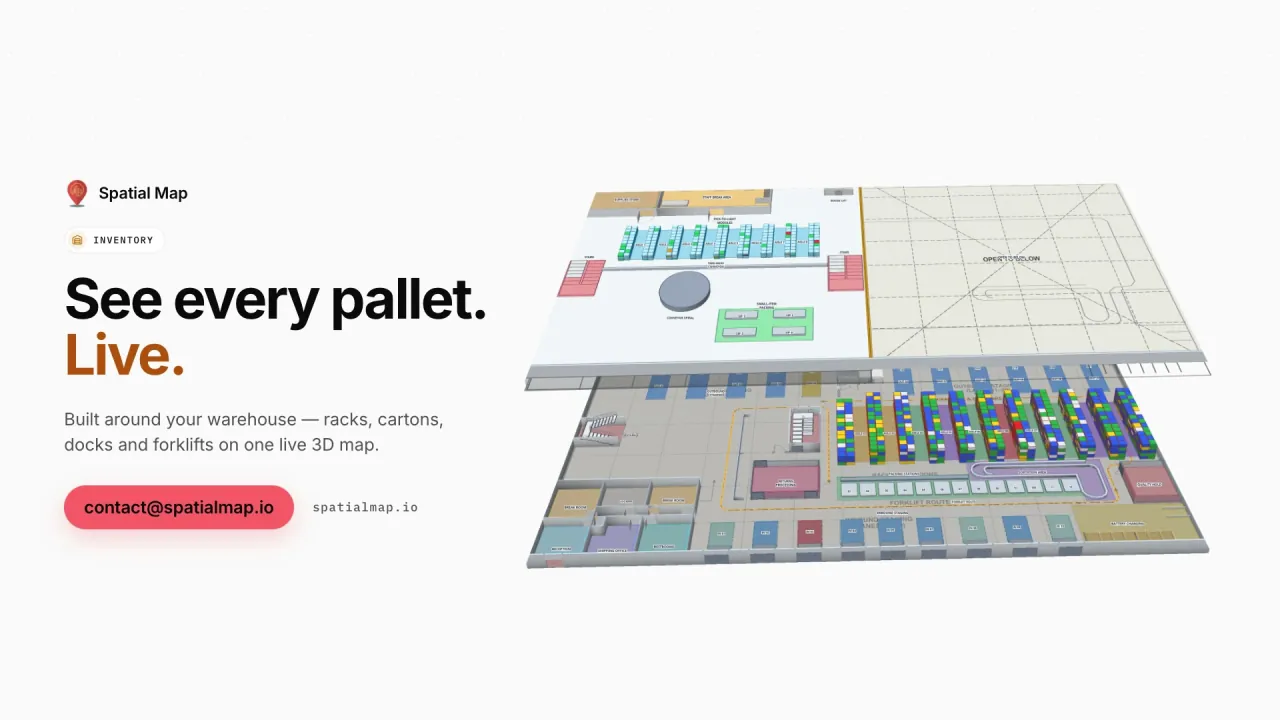
Spatial Map gives every building the same live map: rack locations colored by stock or status from your WMS, RFID-tagged pallets and cartons read at each dock door, trailers in the yard and forklifts as live markers. Facilities, reports and data can be grouped into named solutions inside one workspace, reports export to PDF, Excel, CSV and JSON for client reviews, and read-only share links let a client or a regional manager see one site without an account.
E-commerce fulfillment centers

E-commerce fulfillment adds speed and variability: holiday peaks, thousands of SKUs, pick-to-light zones, packing stations and outbound staging that changes by the hour. The Crestline Fulfillment demo shows 20 racks with 2,204 rack locations, pick-to-light, packing, staging lanes, forklifts and the trailer yard on one live map, with dock dwell and forklift battery levels flagged in place.

If your bin inventory lives in a CSV export or behind a WMS API, it can drive the rack colors directly — see the example stock by bin on a rack grid.

Retail loss prevention and shrink

Shrink — from external theft, employee theft, process errors and damage — is a persistent cost for US retailers, and many have adopted item-level RFID, first in apparel and increasingly in other categories. Readers at exits, fitting rooms and stockrooms produce a lot of reads; the hard part is seeing them in context.

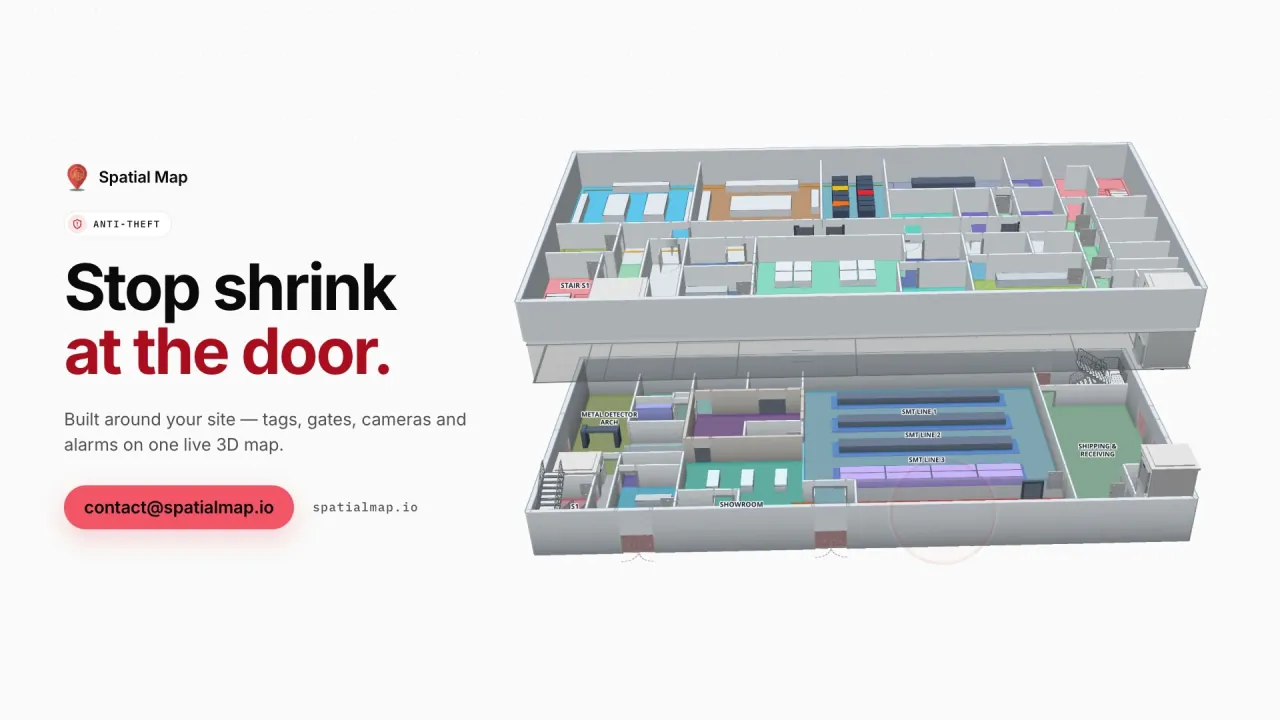
Spatial Map places every reader on the store plan, across floors, escalators and elevators, and shows reads as they arrive: which tagged items passed which exit, what moved from the stockroom to the sales floor, which department is running low. The Retail Mart demo has 85 RFID readers at doors, escalators and elevators, and Northgate Electronics follows 863 high-value units through security zones and choke points, with a shrink report. Spatial Map shows what happened on the map and in reports; it does not trigger store alarms or send notifications.

Stadiums, arenas and convention centers

US venues host professional and college sports, concerts and trade shows, often several events a week. Operations teams need to see gates and concourses filling up, which rooms are over capacity, where crews and carts are and which devices are offline — during the event, and afterwards for the review.

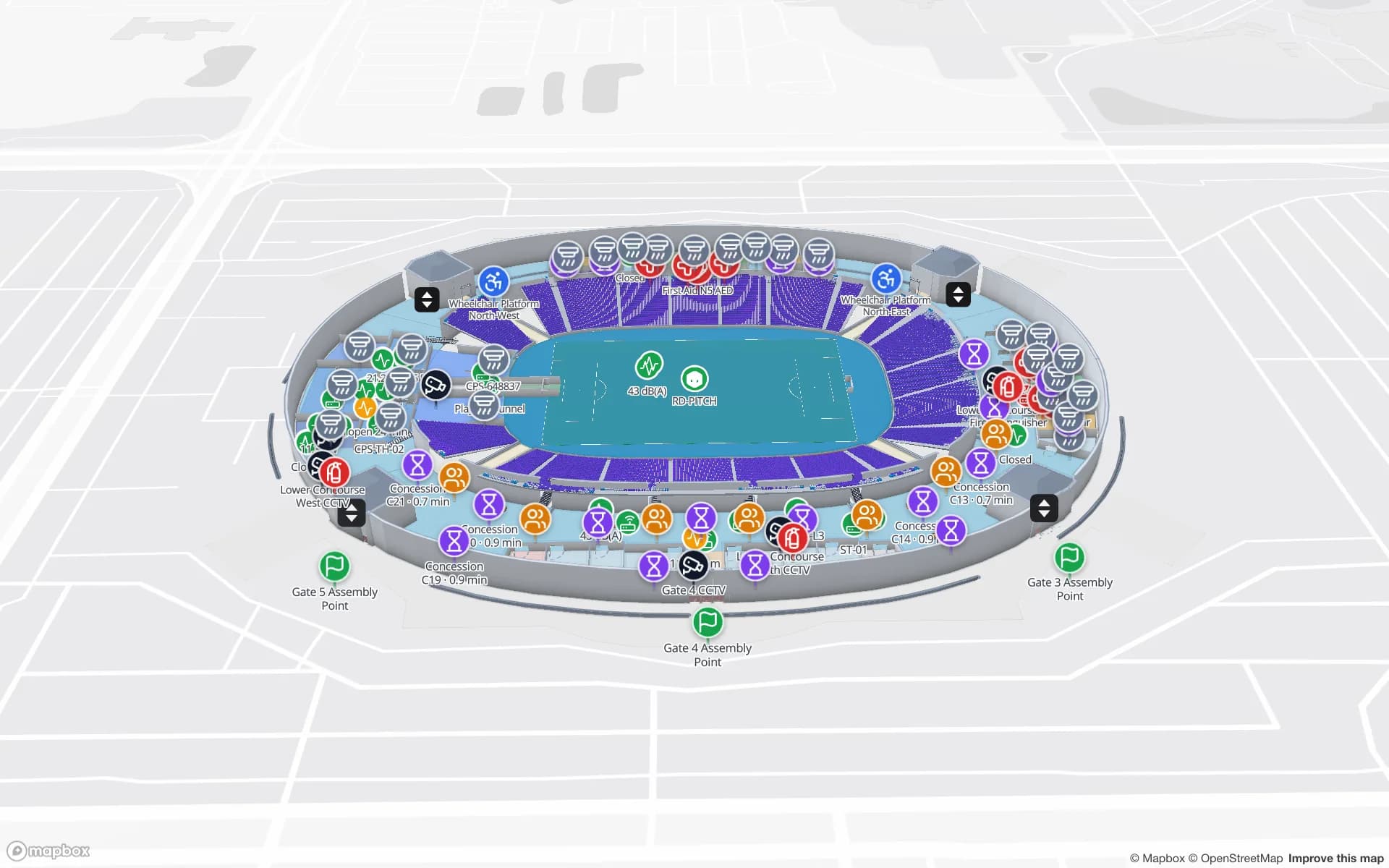
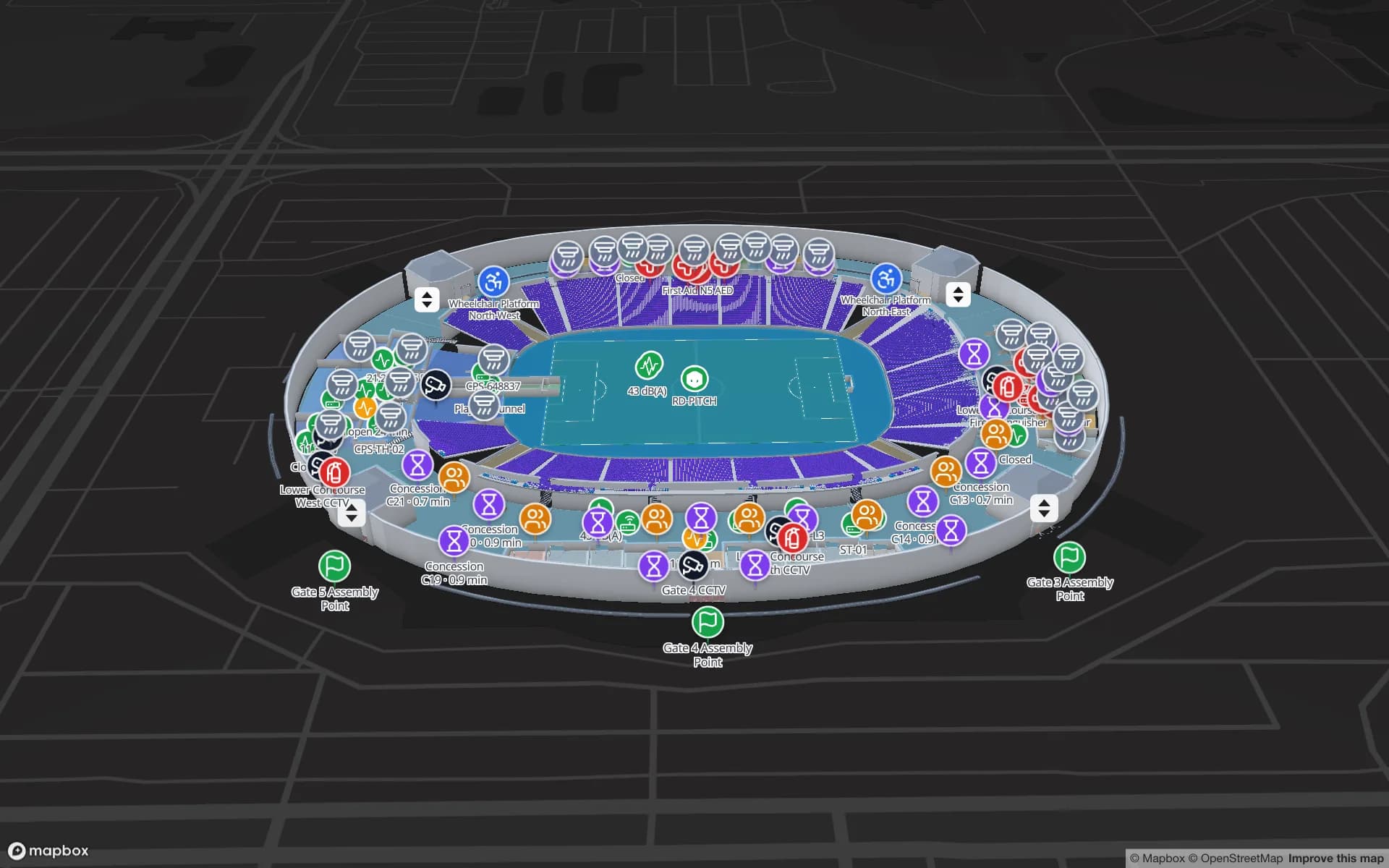
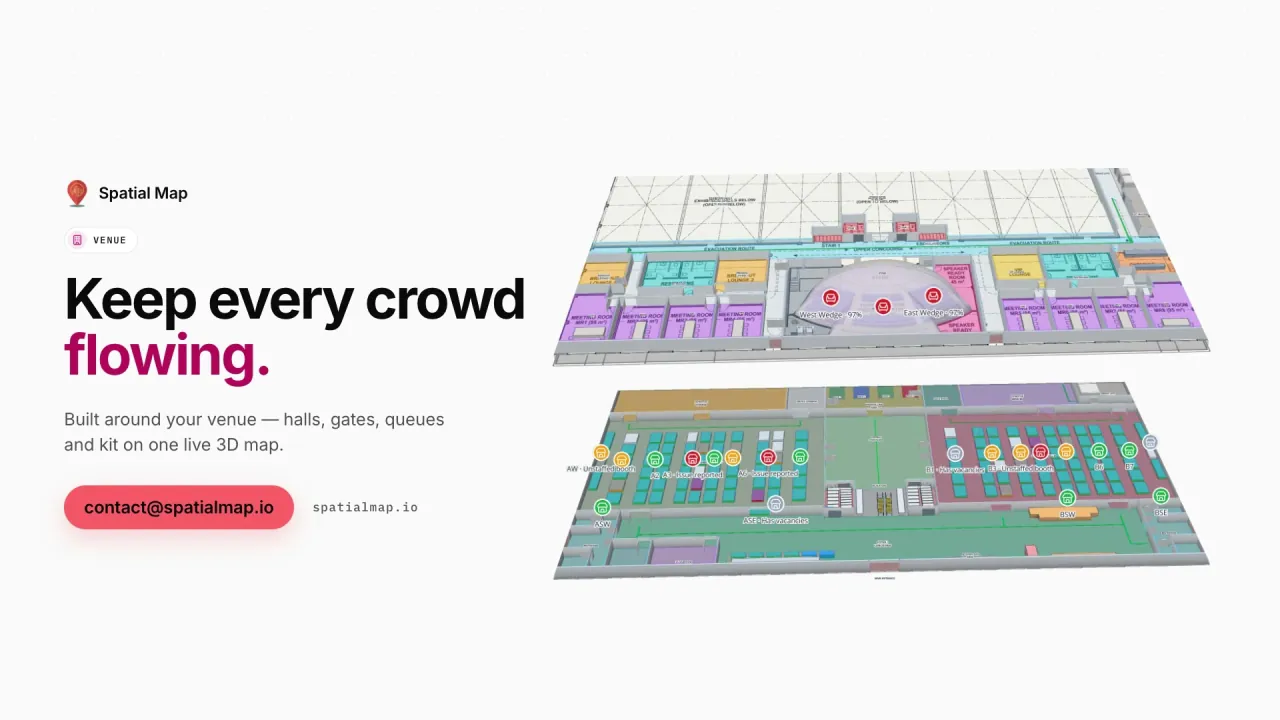
The Crown Park Stadium demo shows turnstile scans, crowd counters, row allocations, food and beverage sales and crews on one live map; Lakeside Convention Center shows halls, rooms over capacity and crates tracked from dock to booth. Wayfinding builds walking routes around walls and through doors, also on share links for exhibitors or contractors.

Cold chain for food and pharma

Food shippers and carriers work under the FDA’s Food Safety Modernization Act (FSMA), including its rule on the sanitary transportation of human and animal food, and pharmaceutical supply chains are moving to interoperable, package-level tracing under the Drug Supply Chain Security Act (DSCSA). Spatial Map does not make anyone compliant with either. What it does is make the physical state of a cold store visible: rooms and freezers colored by live temperature from your sensors, doors open or closed, held pallets marked in place, and a history your QA team can replay and export.

The Polar Pharma demo shows cold rooms, freezers and 1,140 rack locations with temperature zones and pallets on hold.

Working with Spatial Map in the US

Spatial Map is sold online and priced in US dollars: a 7-day free trial for up to 5 facilities with no credit card, then Pro at $60 a month or $600 a year for up to 4 facilities. Our team works with US customers remotely, by video call and through the contact form; for multi-site rollouts, floor-plan digitization and RFID, BLE or WMS integration are quoted as a fixed-price custom service, with a proposal within 3 business days. Spanish is available in the app alongside English for bilingual floor teams.

How Spatial Map does it

From floor plan to live map

  1. 01

    Import the floor plan

    Upload a PDF or DWG (AutoCAD R2004–R2018) and place it at real-world scale.

  2. 02

    Draw the building

    Trace racks with their locations, dock doors, rooms, walls, stairs, escalators and elevators.

  3. 03

    Connect your systems

    Your WMS, RFID middleware or RTLS engine posts rows to a table, or Spatial Map polls its REST endpoint.

  4. 04

    Operate and report

    Live map, history playback, reports in PDF, Excel, CSV or JSON, and read-only share links.

What US teams use it for

3PL multi-client warehouses

Rack-level stock, RFID pallets and the trailer yard, with share links for each client.

Retail shrink and RFID at the exits

Reads at doors, escalators and elevators across a multi-floor store.

Stadium and arena operations

Turnstiles, crowd counters, concessions and crews on game day.

Convention centers and trade shows

Halls, room capacity and crates from the dock to the booth.

Cross-docks and LTL terminals

Dock doors, yard slots and pallets staged for the right outbound trailer.

Food and pharma cold storage

Temperature zones, doors and held pallets, with reports for QA.

See it on real demo facilities

Fictional names, real floor plans, live sensors, RFID, BLE tags and gateways — open any of them in the browser.

All 13 demo facilities

Questions from US teams

Yes. It is hardware- and vendor-agnostic: your RFID middleware, RTLS engine or WMS posts rows to a Spatial Map table through the write API, or exposes a REST endpoint (JSON, GeoJSON or CSV) that Spatial Map polls on a schedule. CSV and Excel uploads work too.

No. Spatial Map does not control doors, sound alarms or send notifications. It shows which tagged items passed which reader on the store map and in reports, so loss-prevention teams can investigate incidents and see patterns over time.

No. Spatial Map shows live temperatures, door states and held stock on the map and exports reports; your quality system, traceability records and procedures remain the record of compliance.

Yes. Read-only share links let you choose layers and floors, set an expiry and a view cap, and revoke access at any time. Viewers do not need an account, and wayfinding works on share links too.

No. Spatial Map is sold online and our team works with customers remotely, by video call and through the contact form. The product runs in the browser, so there is nothing to install on site.

In US dollars, the same as everywhere: a 7-day free trial for up to 5 facilities with no credit card, then Pro at $60 a month or $600 a year for up to 4 facilities. Larger networks are quoted as custom services.

Map your first US site this week.

Start the free trial, or send us a floor plan and a sample of your WMS or RFID data through the contact form and we will show you your own building live.