Saudi Arabia · BLE asset tracking

BLE asset tracking for Saudi venues, giga-projects and plants

Expo 2030 Riyadh, the 2034 FIFA World Cup and the giga-projects are adding stadiums, venues and districts faster than operating teams can learn them. BLE tags are a cheap way to know where the equipment and crews in those buildings are; Spatial Map is where that knowledge becomes a map an operations room can read — on match day, during fit-out and long after handover.

No credit card. Runs in the browser. Pro is $60/month for up to 4 facilities. Book a demo

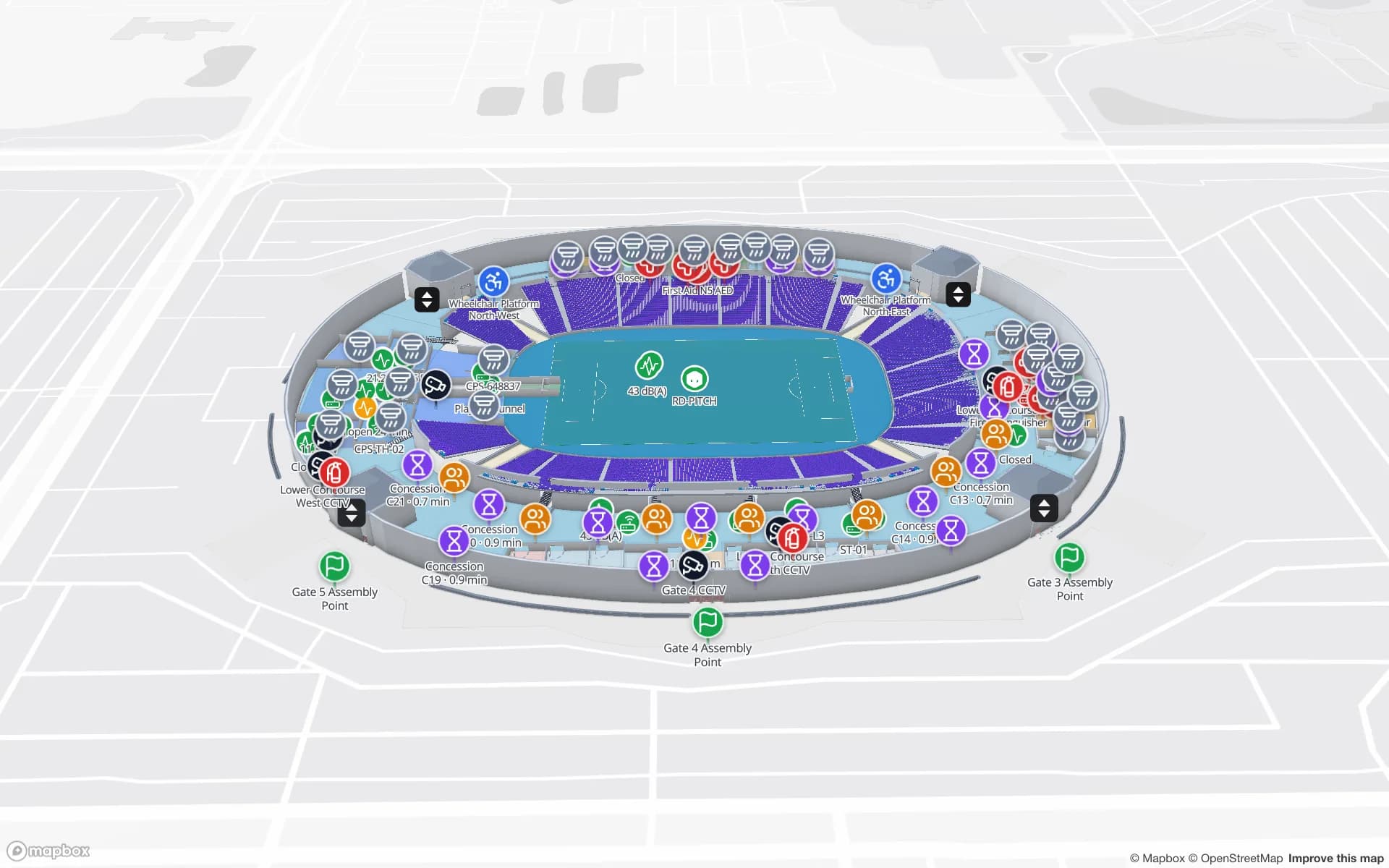
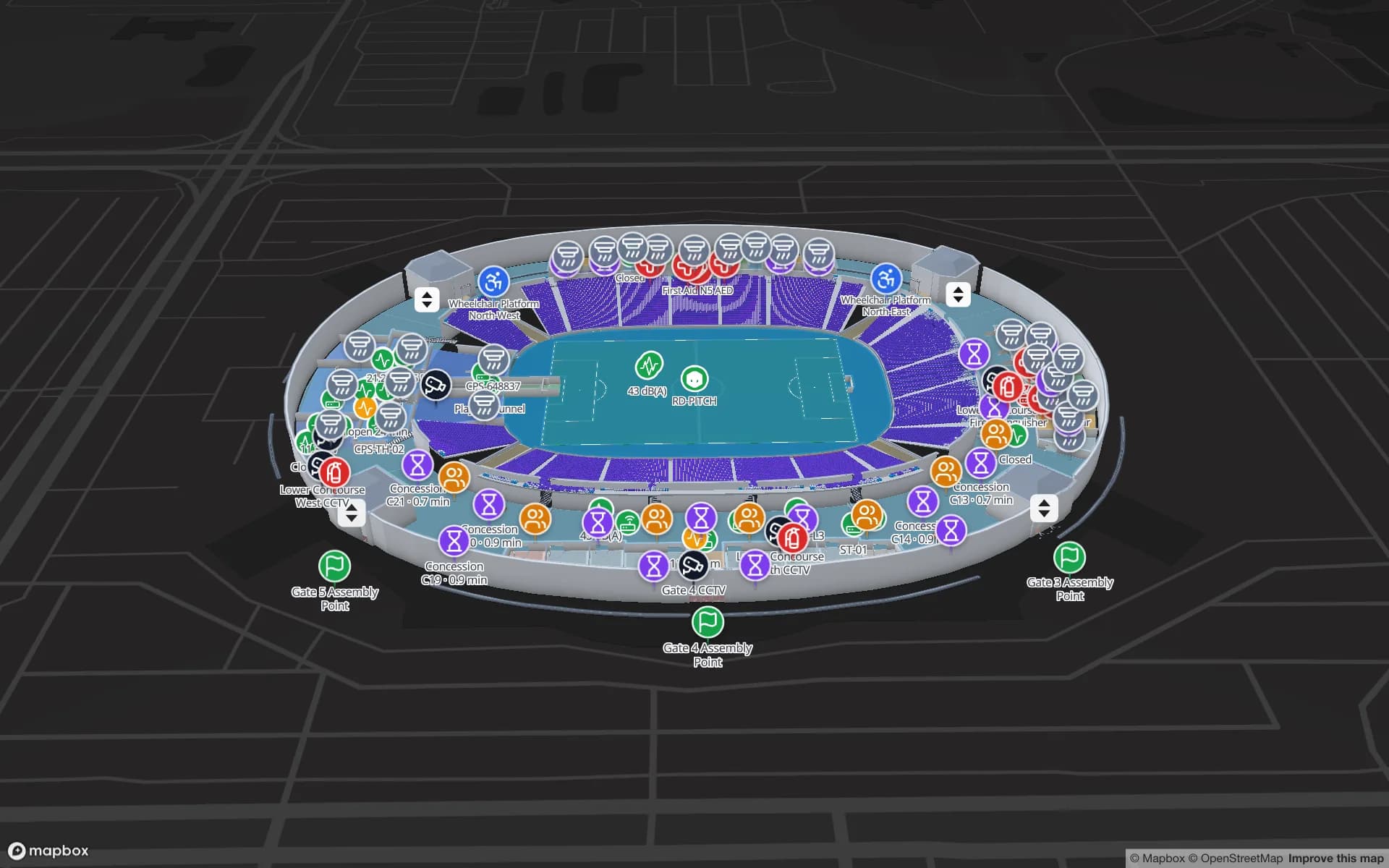
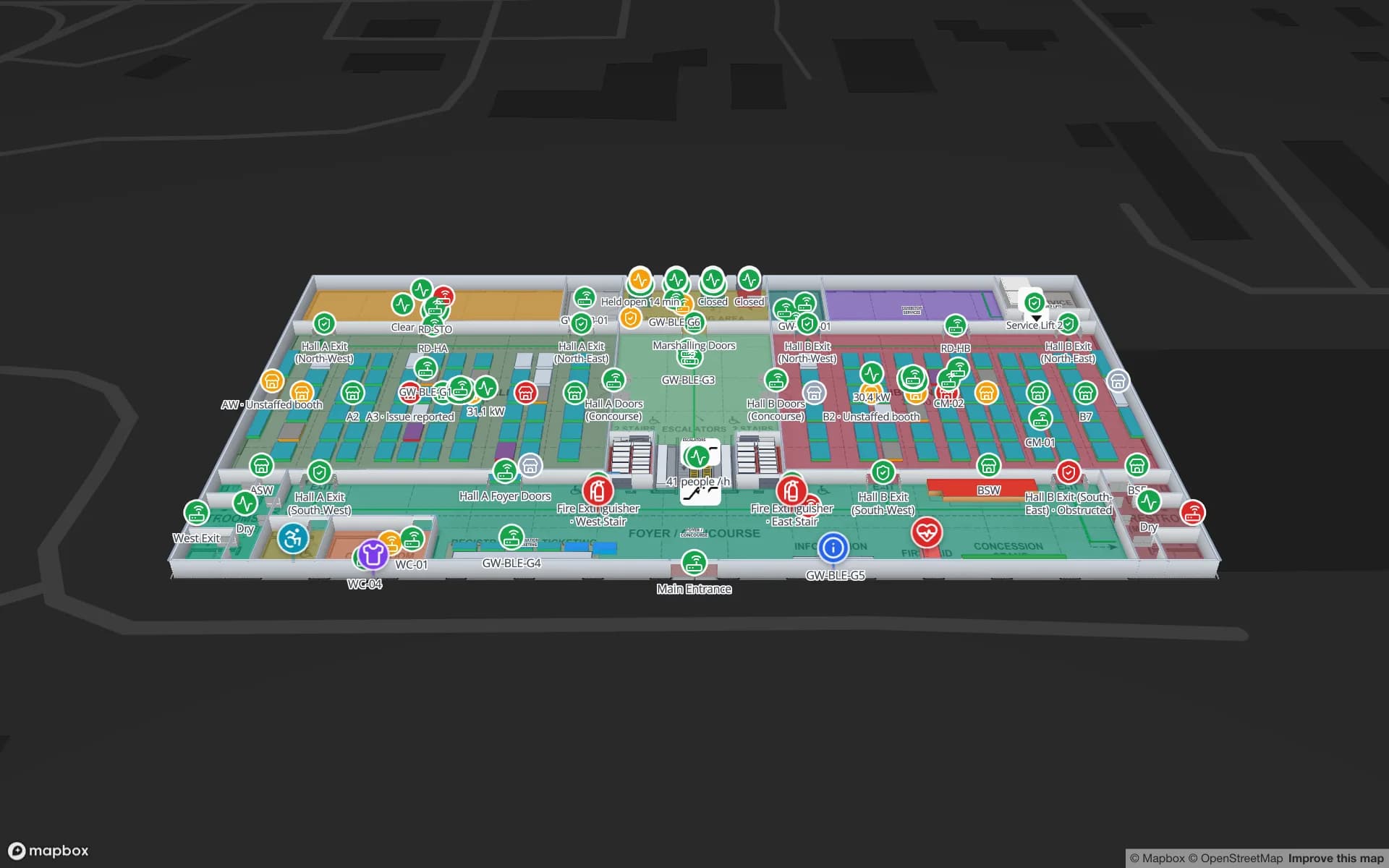
Crown Park Stadium, a stadium demo, in the Spatial Map 3D viewer with live device markers
Crown Park Stadium
Crown Park Stadium, a demo venue with 30,513 seats: BLE-tagged staff and equipment located by concourse, next to turnstiles and crowd counters.
Seats mapped in the Crown Park stadium demo
30,513
Demo facilities with live BLE, RFID and sensor data
13
Software to install on control-room PCs or phones
0
Arabic interface with full right-to-left layout
العربية

Why BLE fits the Kingdom’s build-out

Saudi Arabia will host Expo 2030 in Riyadh and the 2034 FIFA World Cup, with new and redeveloped stadiums, plus a pipeline of giga-projects and entertainment destinations. Each brings large buildings full of things that move: event kit, maintenance carts, medical and safety equipment, contractors’ tools, forklifts, and the crews who use them. BLE tags are small, battery-powered and inexpensive, and gateways can cover a concourse or a plant hall without the fixed choke points RFID needs.

How BLE beacons, tags, gateways and positioning engines fit together is explained on our BLE page. Here we focus on the three Saudi situations where we see BLE being planned: event venues, construction-to-operations handover, and plants and logistics sites.
Stadiums and event venues: equipment and crews

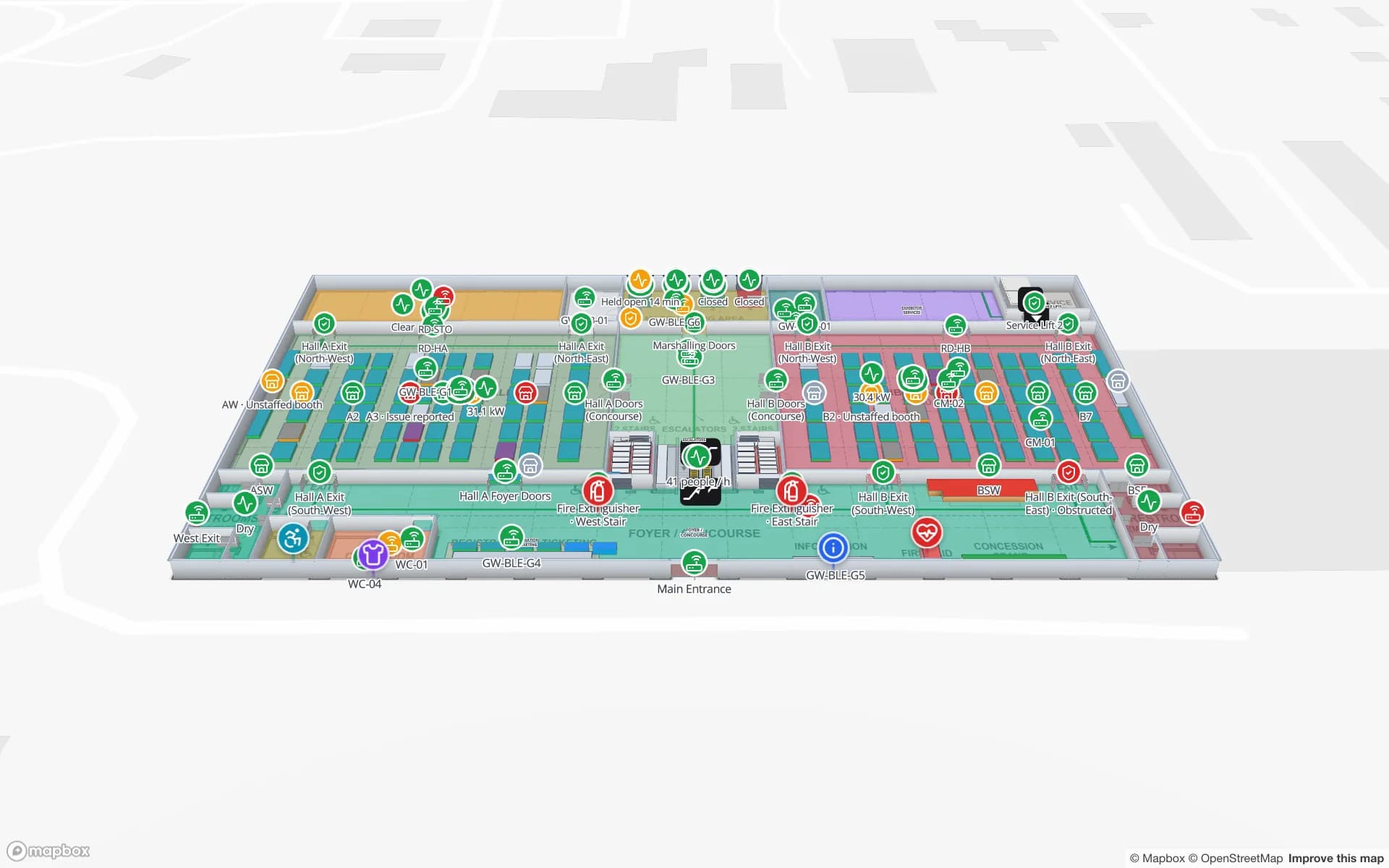
A stadium on event day has stewards, medics, cleaning and catering crews spread across concourses, plus equipment pools — wheelchairs, barriers, radios, kit crates — that end up wherever they were last used. With gateways named after zones, your BLE engine reports which zone each tag is in; Spatial Map matches that zone name to the room or area on the map and shows the tag there, floor by floor.

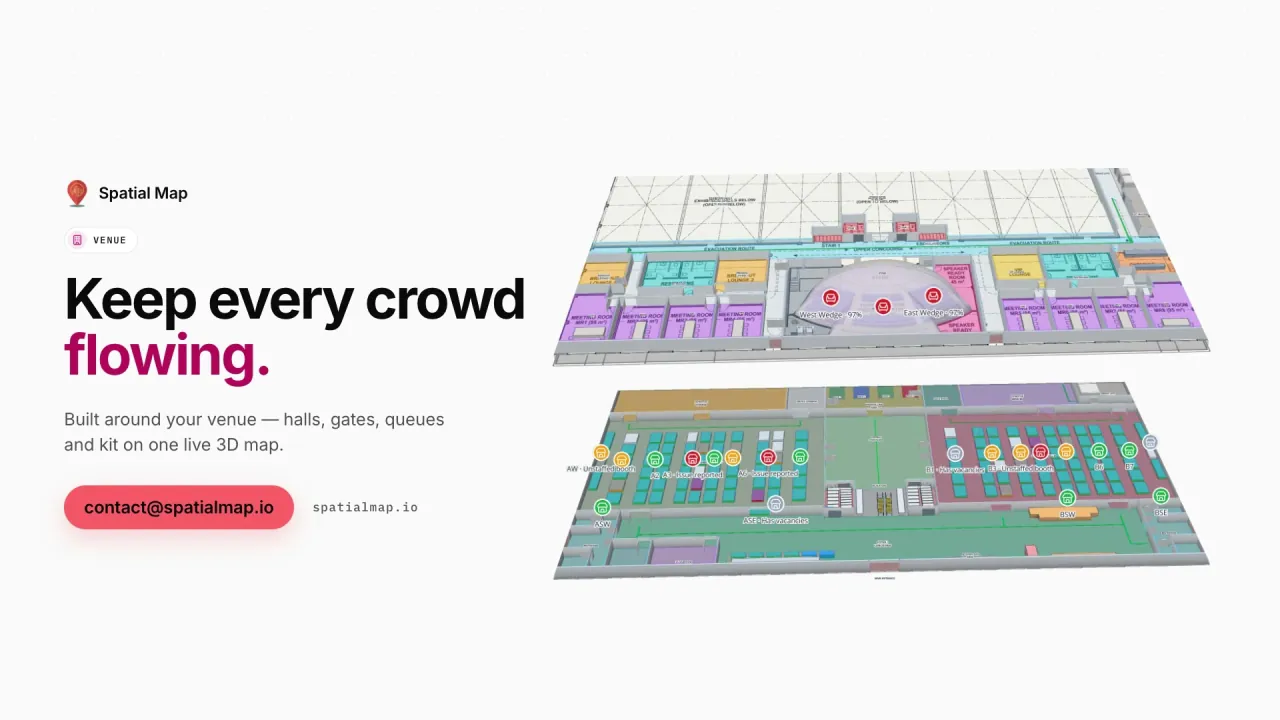
The Crown Park demo puts staff and equipment by concourse next to turnstile scans, crowd counters and row allocations. The Lakeside Convention Center does the same for halls, session rooms and loading docks — the shape of a large exhibition or event venue.

From construction phase to operations

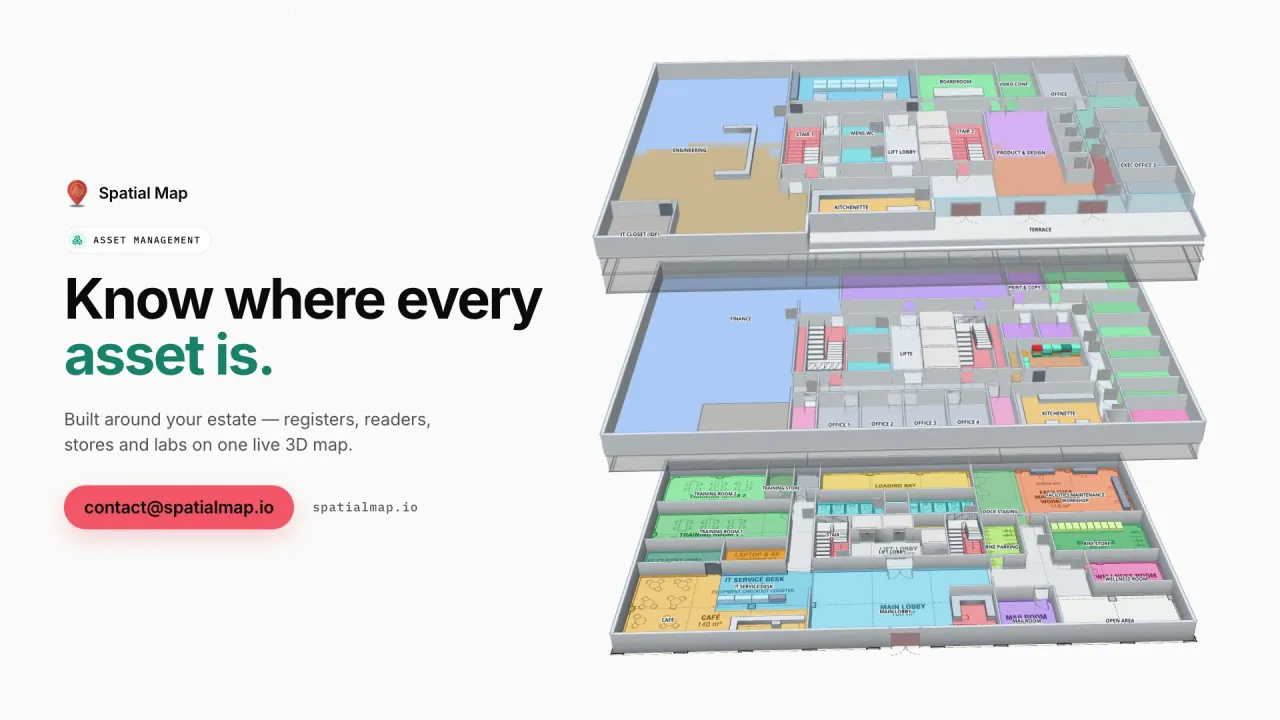
On a giga-project, the building exists as drawings long before it has a facilities team. That is the moment to import the DWG or PDF plans and trace the floors once. During fit-out, BLE tags on contractor-owned tools, temporary power, lifting gear and high-value MEP spares show which level and zone they are on, and a time-limited share link gives each contractor a read-only view without an account.

At handover, the same map — rooms, doors, stairs, lifts, named zones — moves to the operating team, who add their own asset tags and sensors. Nothing is redrawn, and every change to a table row is kept, so the operator can see how equipment moved in the weeks before opening.

Plants and logistics: tools, forklifts and carts

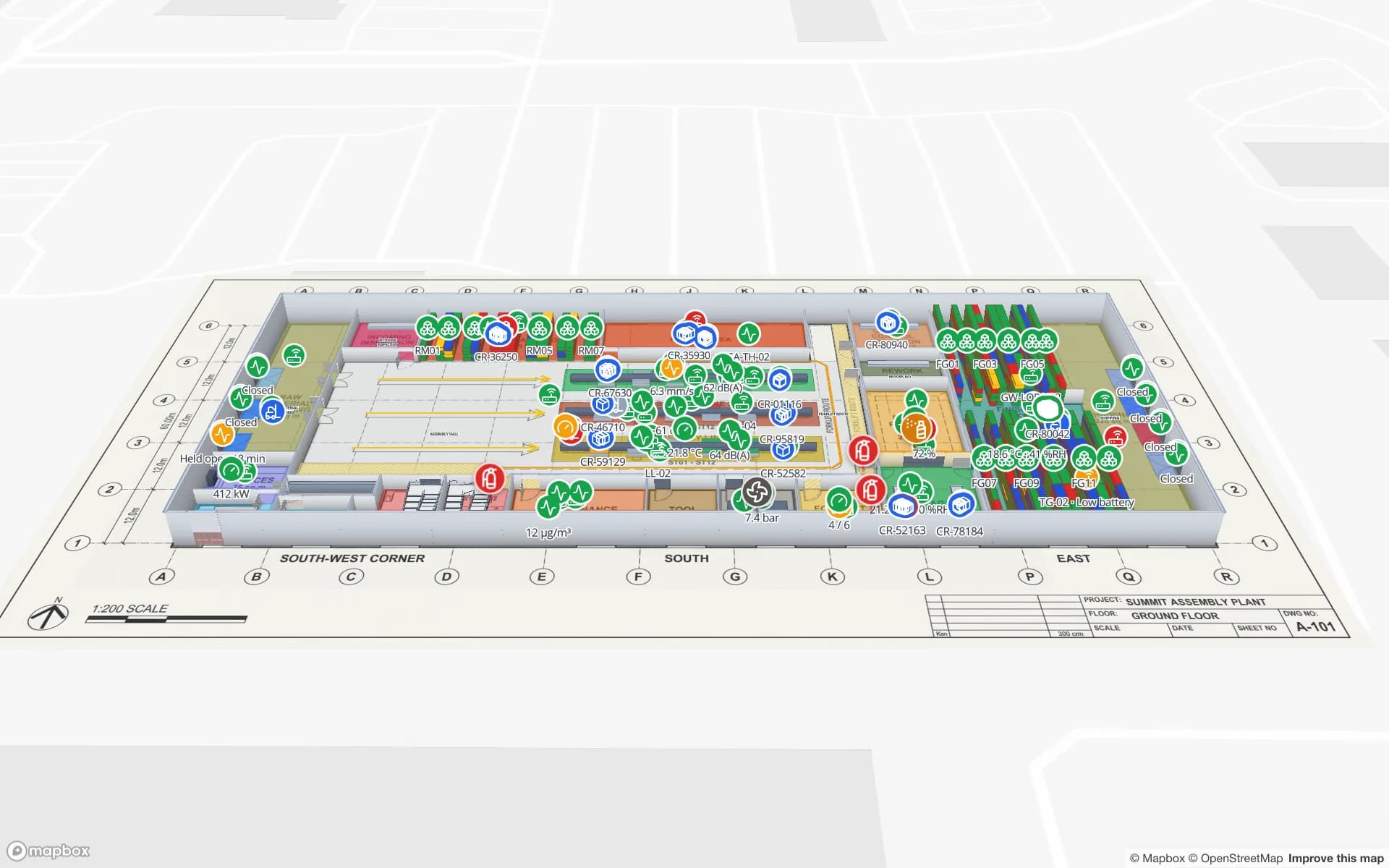
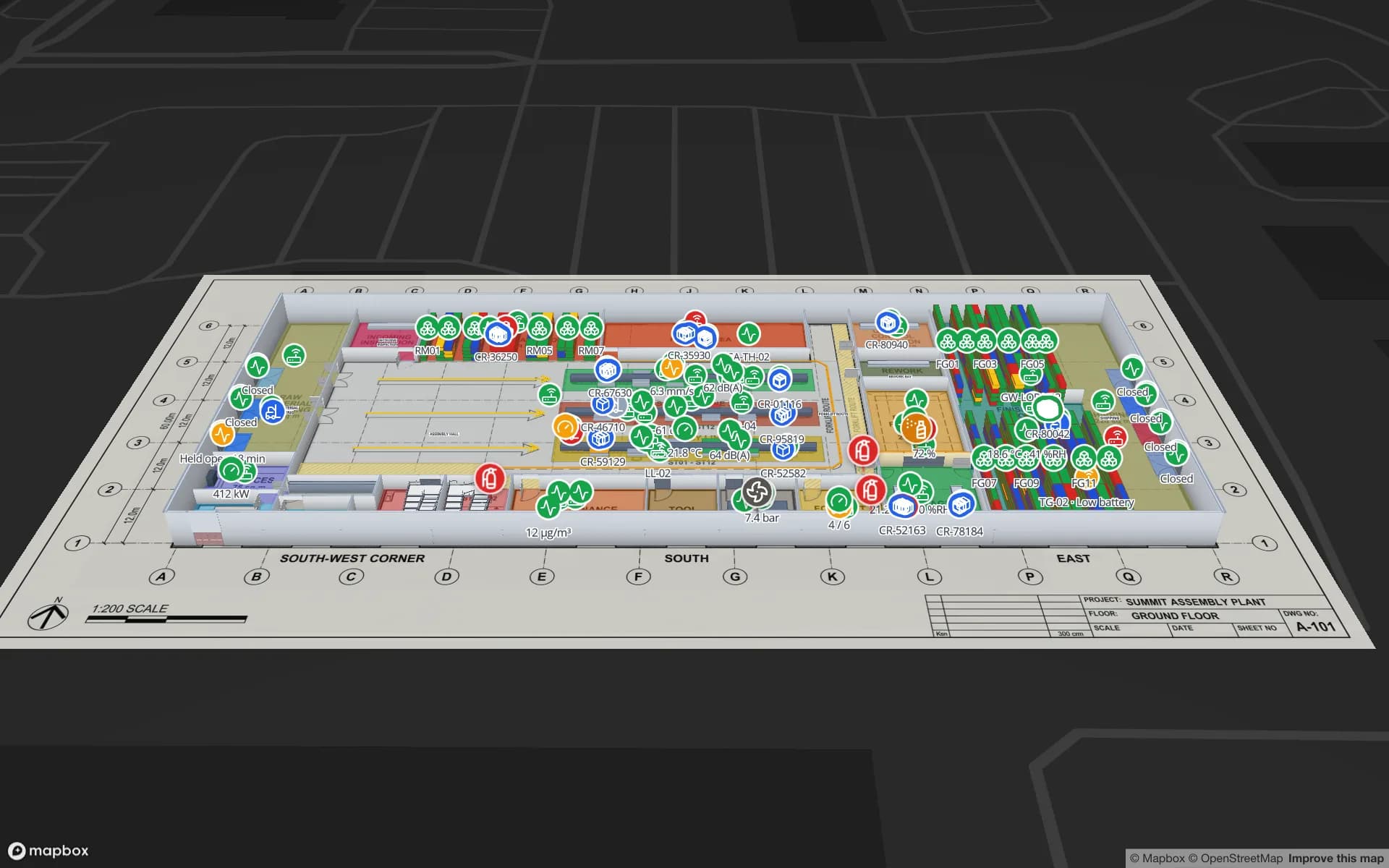
In Saudi industrial cities and logistics parks, BLE answers everyday questions: where is the torque tool, which forklift has sat idle by the charger all shift, which carts are stranded in the wrong zone. The Summit Assembly demo shows tools and crews on the shop floor; Eastport shows forklifts and crews on the dock. Style rules colour each marker by its status field, so idle or stale equipment stands out without anyone opening a table.

People tracking needs consent and a policy

Tracking equipment is straightforward; tracking people is a decision for your HR, legal and safety teams. Saudi Arabia’s Personal Data Protection Law, overseen by SDAIA, applies to personal data such as a named worker’s location. Spatial Map does not decide what is lawful for you, but it supports a careful set-up.

  • Track by zone rather than exact position, and use role or badge IDs instead of names where that is enough.
  • Limit who sees the people layer with workspace roles (Owner, Admin, Editor, Viewer), and leave it out of share links.
  • A data processing agreement is available, and our security page explains how workspaces are isolated.
How Spatial Map does it

Setting up BLE tracking in a Saudi venue or plant

  1. 01

    Map the building early

    Import contractor DWG or PDF drawings and trace floors, rooms, concourses, doors, stairs and lifts in 3D.

  2. 02

    Name zones to match gateways

    Give each room or area the same name your BLE engine uses for the zone its gateways cover.

  3. 03

    Feed positions or presence

    Your RTLS engine or gateway software posts tag rows to a table, or exposes a REST endpoint Spatial Map polls.

  4. 04

    Operate, replay, hand over

    Live markers and colour rules for the control room, history playback for investigations, share links for contractors.

BLE use cases in Saudi venues, sites and plants

Stadium crews and equipment

Stewards, medics and equipment pools by concourse alongside turnstiles and crowd counters.

Exhibition and event halls

Staff and equipment located by hall during build-up, the event and breakdown.

Giga-project fit-out

Contractor tools, lifting gear and MEP spares by level and zone, carried into operations at handover.

Plant tools and crews

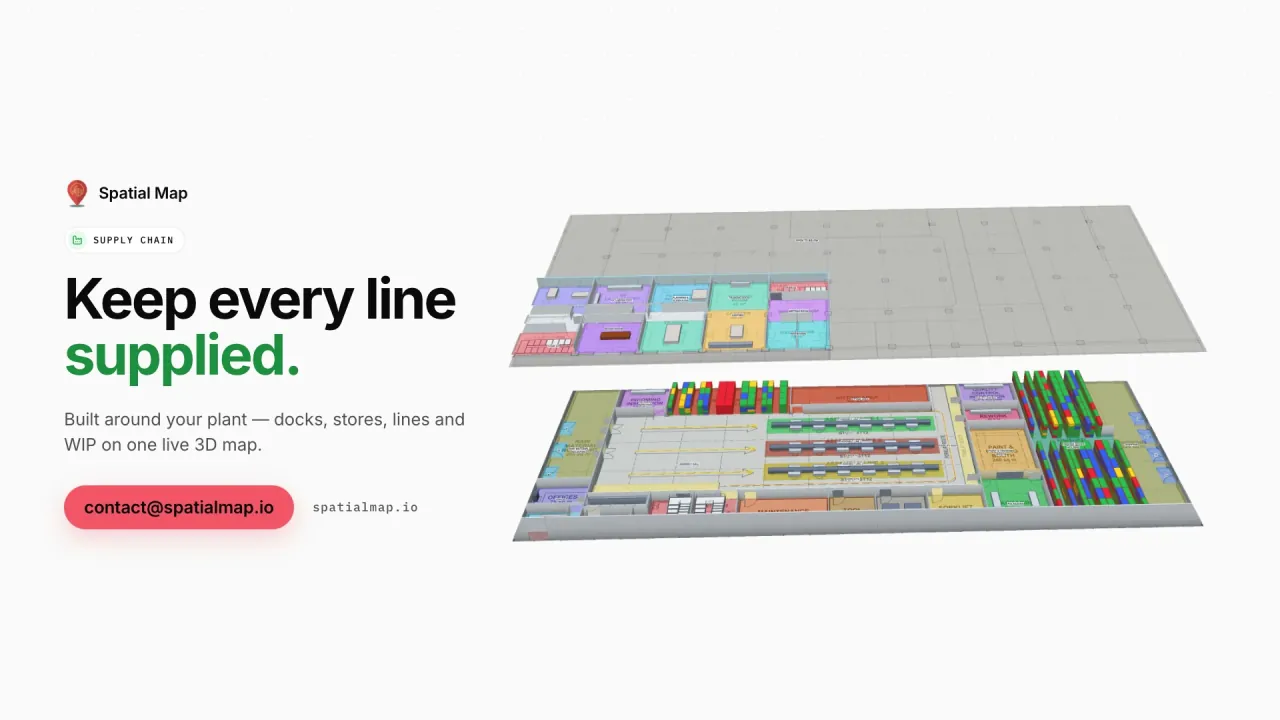
Tools and crews on the shop floor next to lines, WIP and material racks.

Forklifts and yard equipment

Forklifts and crews on the dock and in the yard, idle or stale units coloured by status.

See it on real demo facilities

Fictional names, real floor plans, live sensors, RFID, BLE tags and gateways — open any of them in the browser.

All 13 demo facilities

BLE tracking in Saudi Arabia — questions we get

No. Your RTLS engine or gateway software works out where each tag is, as coordinates or as the zone a gateway covers. Spatial Map displays that position, or matches the zone name to a room or area on the map.

Yes, and it is the easiest time. Import the contractor’s DWG (AutoCAD R2004–R2018) or PDF drawings, trace the floors, and use time-limited read-only share links for contractors during fit-out. The same facility then carries into operations.

Technically yes, but people tracking should follow a written policy and Saudi Arabia’s Personal Data Protection Law. Many teams track by zone, use badge or role IDs instead of names, and limit the people layer to specific roles.

Spatial Map keeps showing the last position or zone your system reported. If your engine includes a status or last-seen field, a style rule can colour stale tags so they stand out. Spatial Map does not send notifications.

As often as your system sends them. The table write API accepts bulk upserts at 60 requests a minute per key, so batch updates; REST sources are polled on a schedule you set.

Put your venue’s equipment and crews on one map.

Open the Crown Park and Lakeside demos in a free trial, or send us your drawings and a sample of your BLE engine’s output and we will map the building for you.