Birmingham · M6, M42, Hams Hall and automotive supply

Warehouse tracking in Birmingham, from the M42 shed to the line-side rack

Spatial Map draws a warehouse as a live 3D map and puts on it the pallets, cages, racks and vehicles that your own readers and systems report. Warehouse tracking in Birmingham is shaped by where the city sits: at the middle of the Midlands logistics belt, with the M6, M42 and M5 on its doorstep, rail terminals just outside it and a car-making region around it. The buildings are big, multi-client and busy, and most of them already have a WMS; what is missing is one picture of the floor, the yard and the racks that return to the line.

No credit card. Runs in the browser. Pro is $60/month for up to 4 facilities. Book a demo

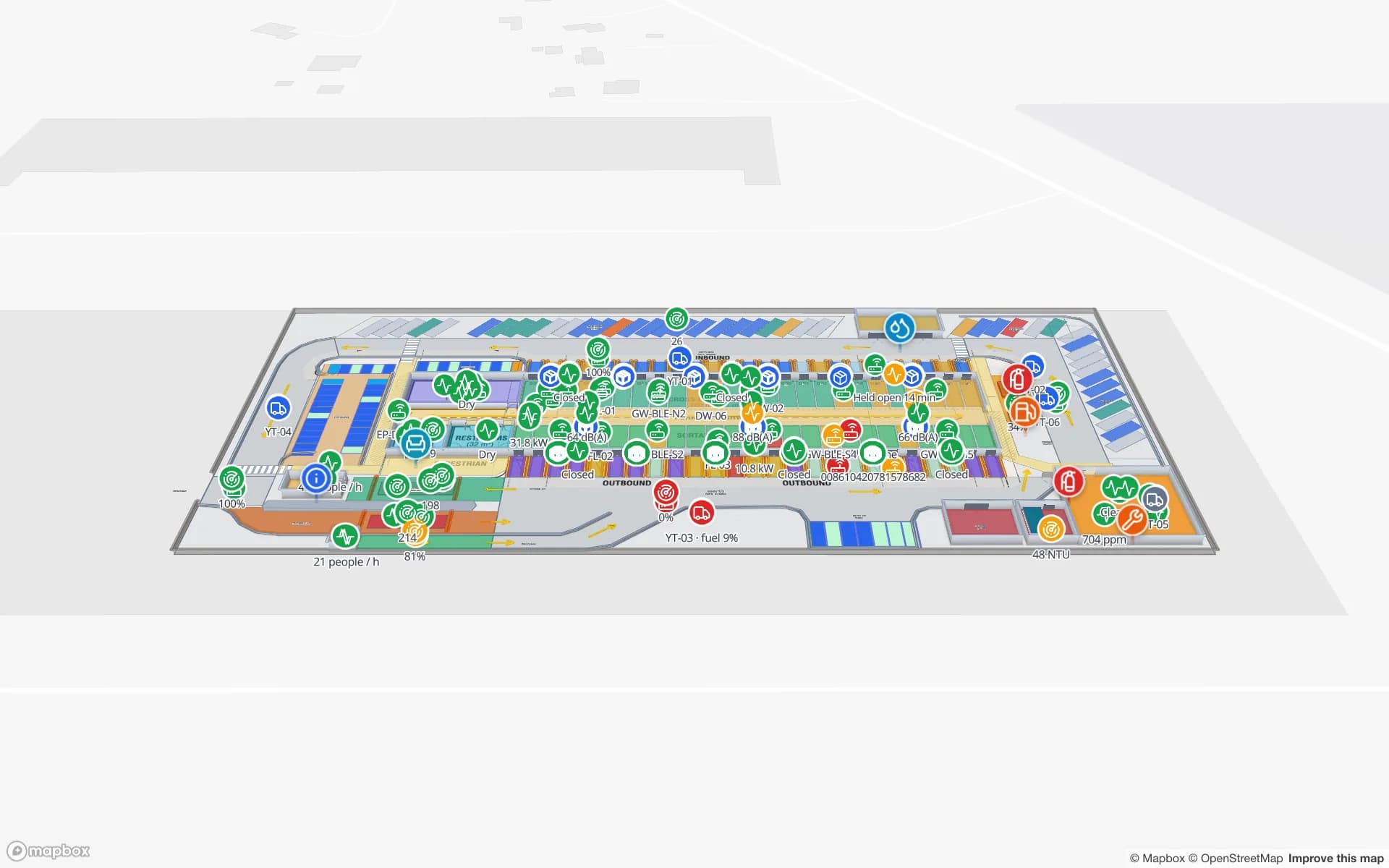
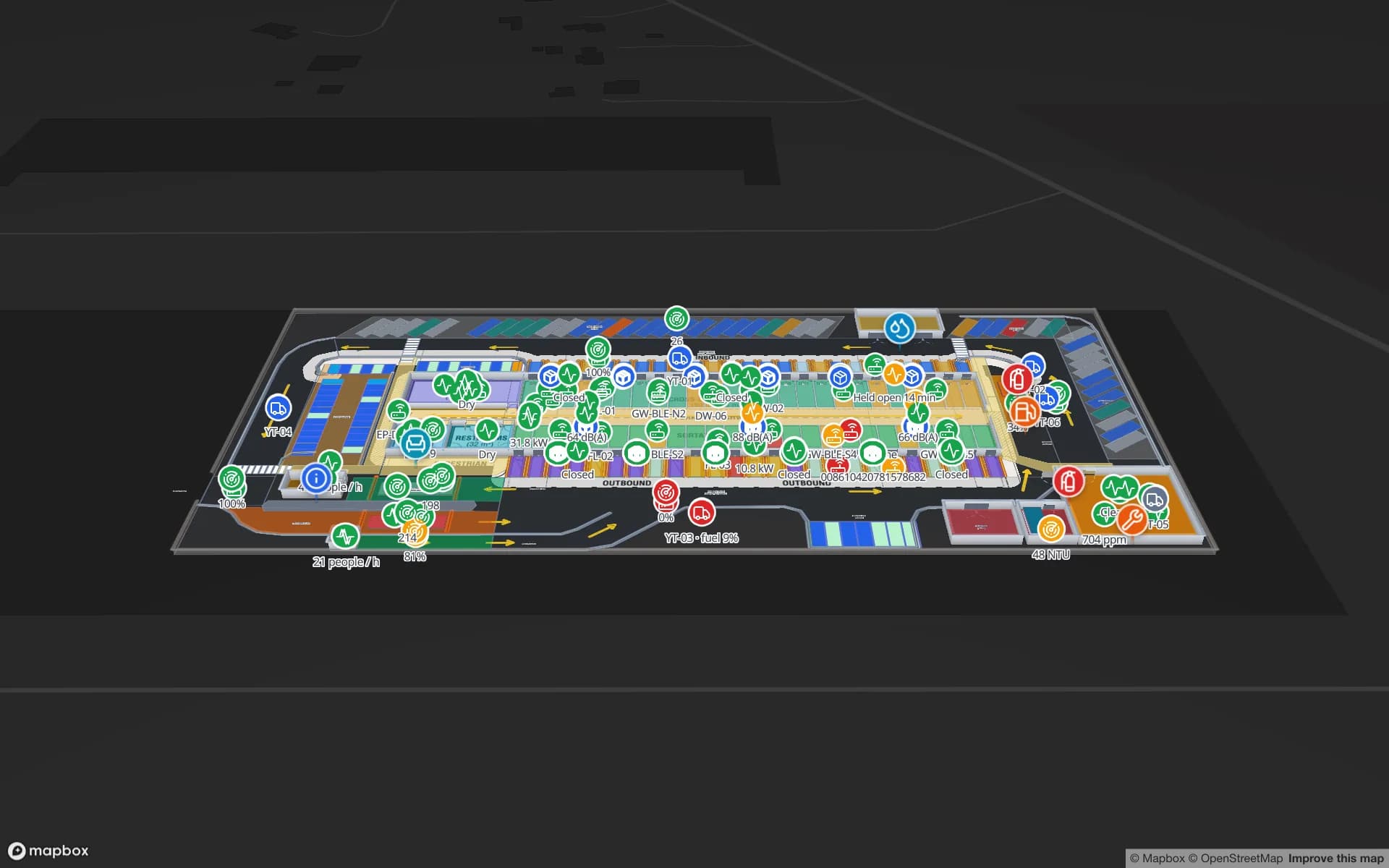
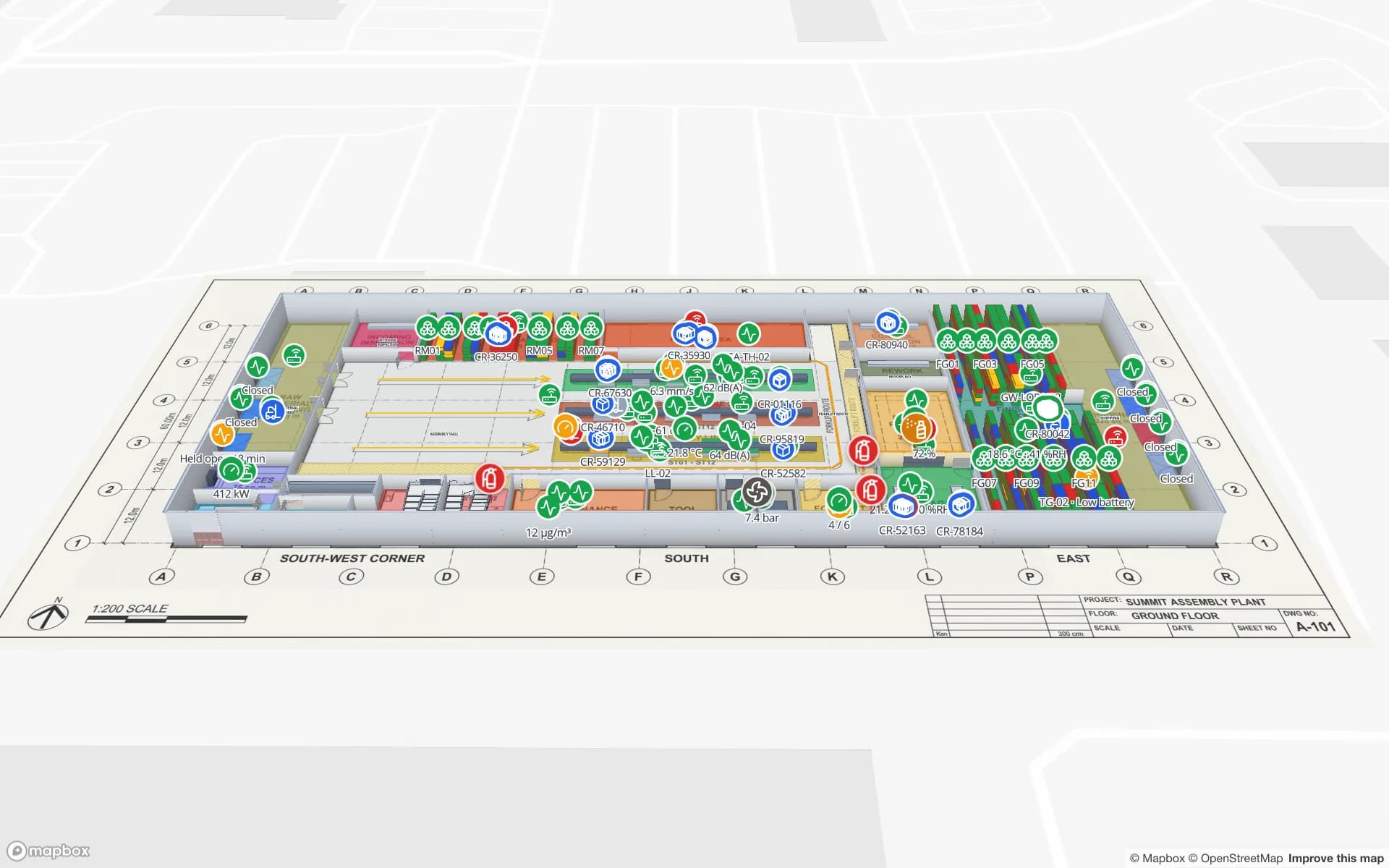
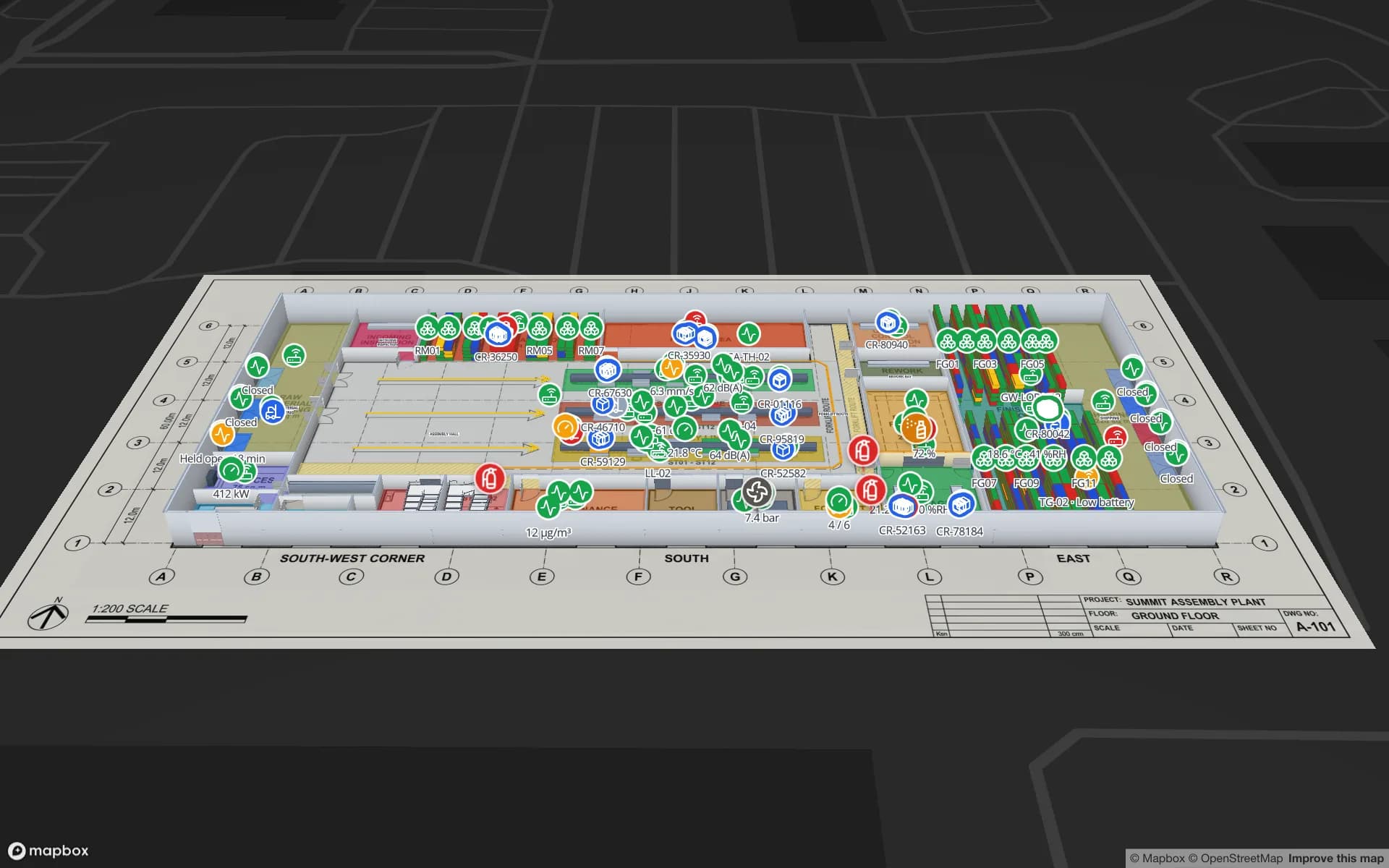
Summit Assembly Plant, a assembly plant demo, in the Spatial Map 3D viewer with live device markers
Summit Assembly Plant
Summit Assembly, a demo assembly plant: 867 rack locations for raw materials and finished goods, lines, workstations and dock appointments on one map.
Rack locations in the Summit assembly-plant demo
867
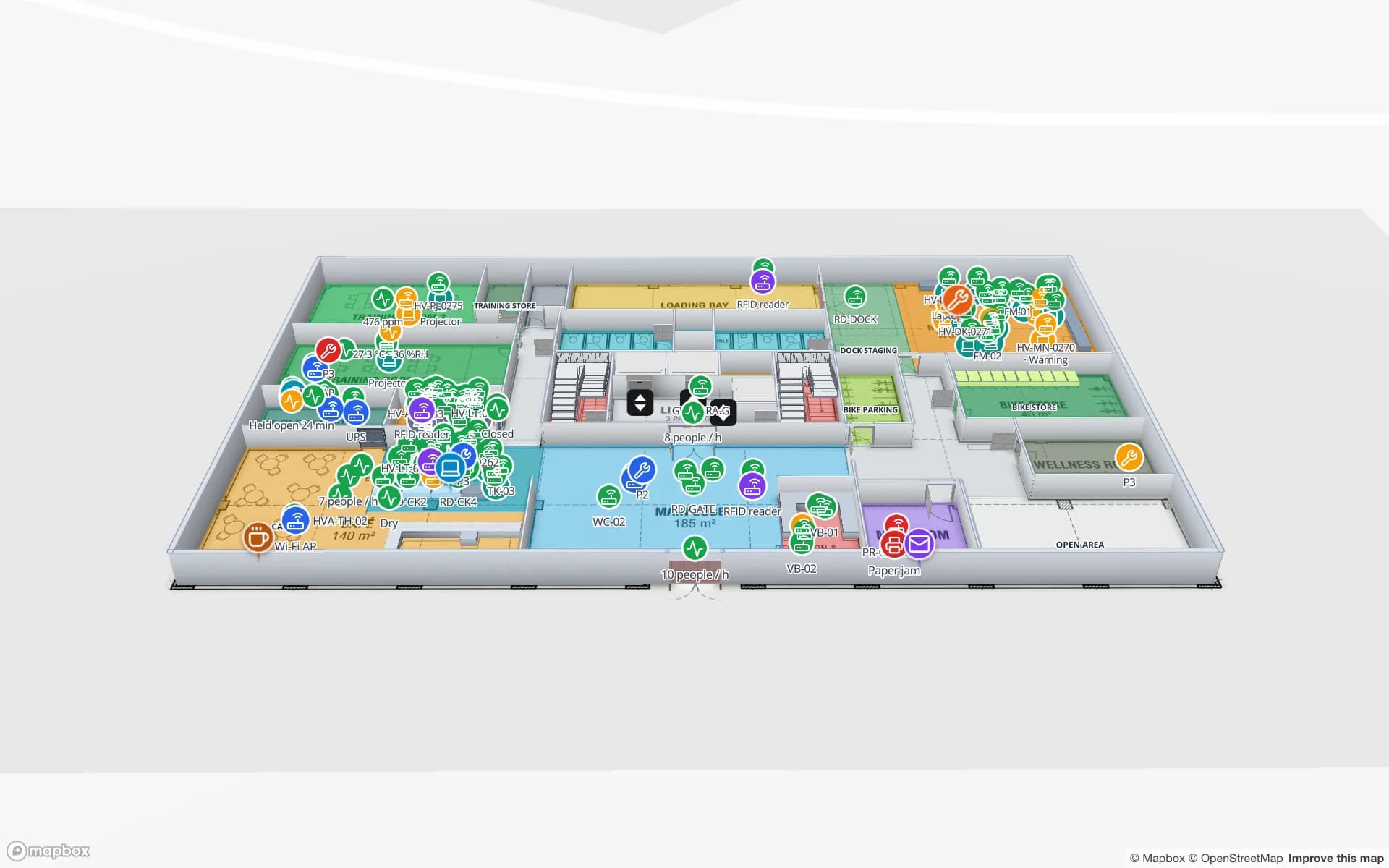
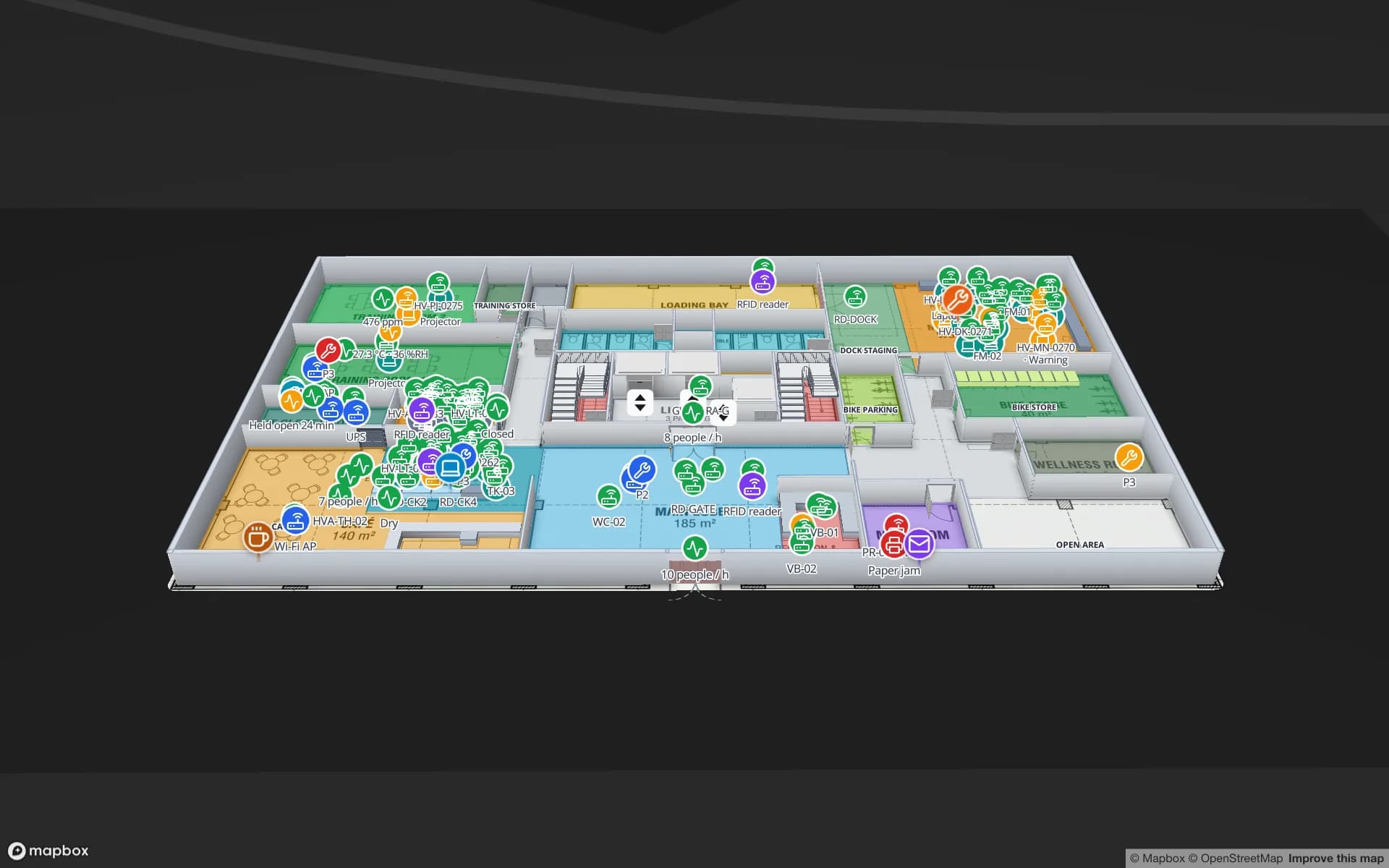
Rack locations in the Crestline fulfilment demo
2,204
How often alert rules are checked, with alerts shown in the app
15 s
Free trial, up to 5 facilities, no card
7 days

The Golden Logistics Triangle, as its planners describe it

Midlands Connect, the sub-national transport body, describes the Golden Logistics Triangle as an area of around 289 square miles famous for its dense concentration of warehouses and multimodal hubs, with access to the M1, M6, M42 and A14, from which operators can reach 90 % of the UK population within four hours by HGV. For the wider Midlands it cites more than 580,000 people working in logistics and more than 45,000 logistics firms.

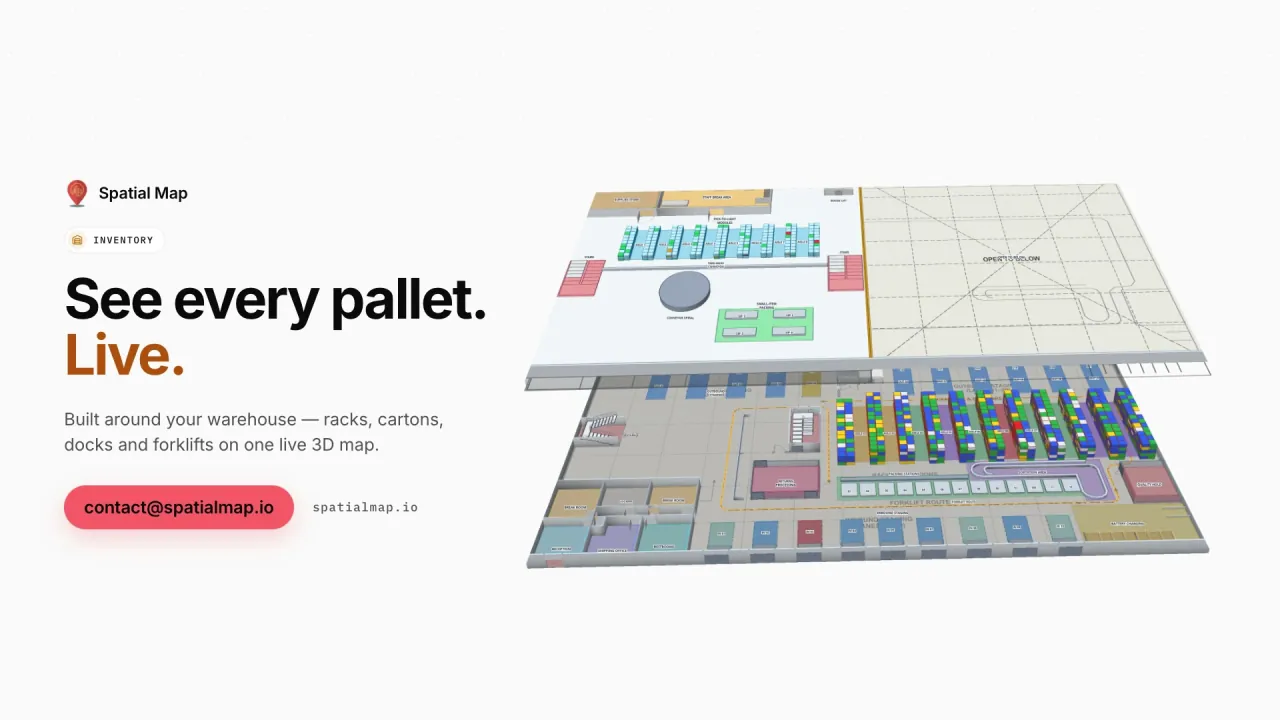
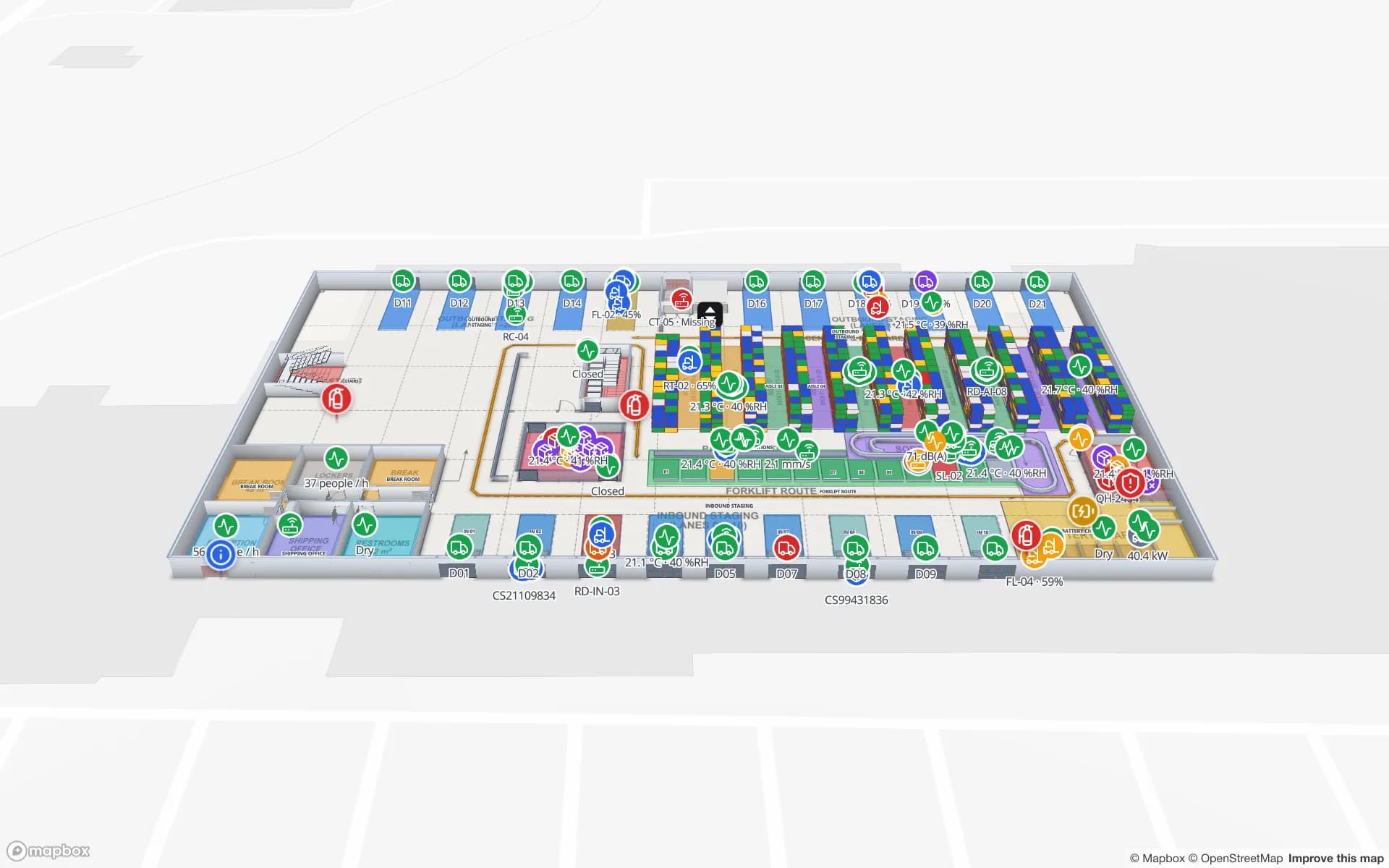
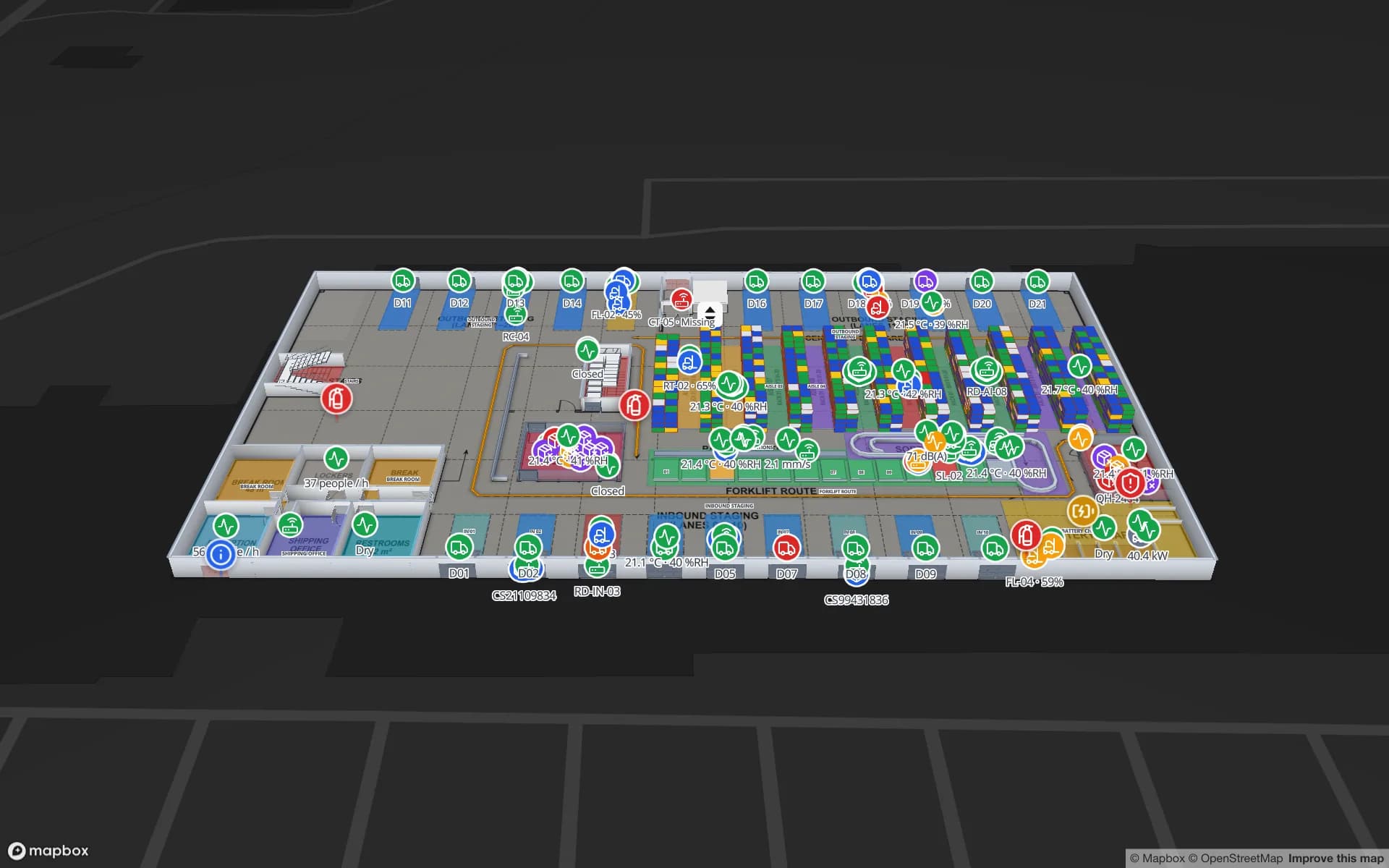
Density is the point. A shed in Birmingham’s ring shares a motorway junction, a rail line and a labour market with hundreds of others, and customers pick it for slots and speed. The things that go wrong are small and repeated: a trailer in the wrong yard slot, a pallet staged against the wrong order, a cage that has left with another client’s goods. The Crestline demo shows 2,204 rack locations coloured from stock status, pick modules, staging lanes and the trailer yard, which is the same layout most Midlands sheds run. The UK page covers the belt as a whole; this page is about the buildings inside it.
Rail-served sites: Hams Hall and the box on the train

Hams Hall, eight miles outside Birmingham beside the Nuneaton to Birmingham line, is described by its owner as one of the country’s busiest inland rail freight terminals. The 11-hectare site handles deep-sea and short-sea traffic to and from Southampton, Tilbury and Felixstowe, as well as Channel Tunnel traffic and domestic freight from Scotland. Containers that arrive by train still have to be unloaded, checked, put away and picked in a warehouse nearby.

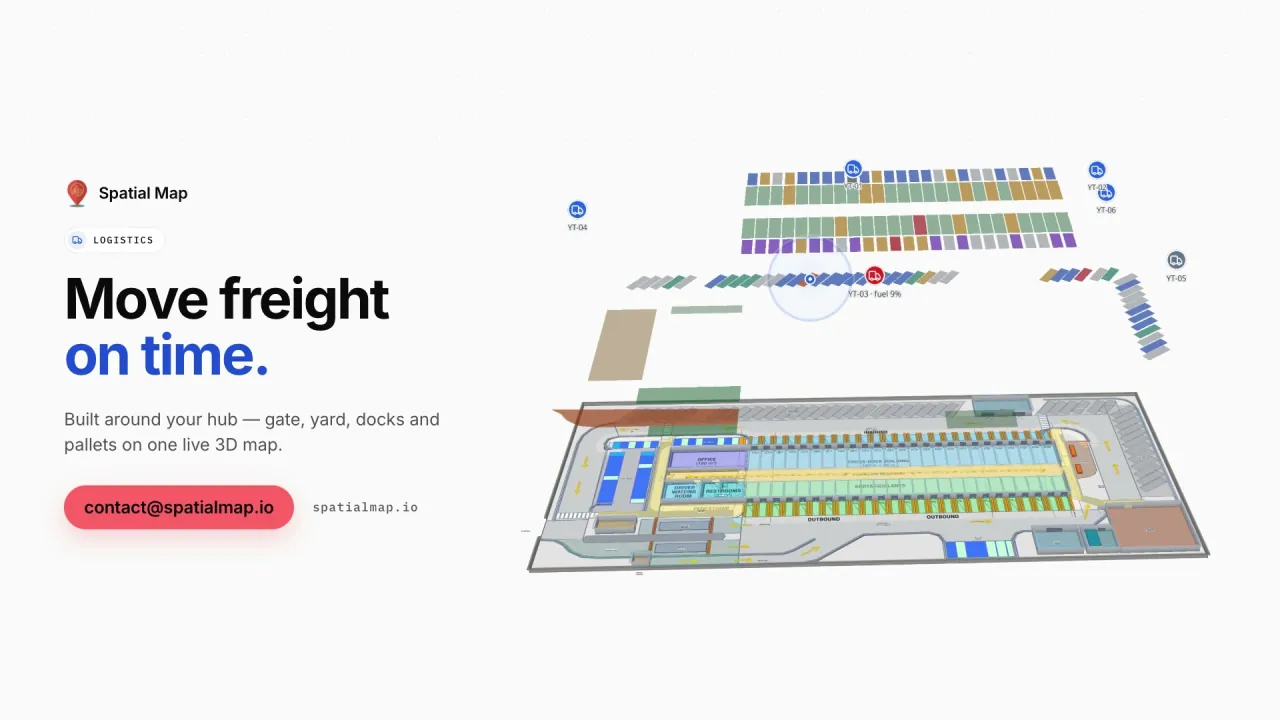
The terminal is the port’s side of the story; the shed beside it is yours. Draw the yard slots and dock doors, read pallets at the door with RFID, and the map shows which container’s contents are staged, put away or already on an outbound trailer. The Eastport demo shows 50 dock doors, 44 yard slots and 1,180 RFID pallets. Spatial Map does not connect to the rail operator’s or port’s systems, and it does not predict train arrival times; it shows what your own reads and WMS say.

Automotive supply: returnable racks, kits and line-side stock

Invest West Midlands, the region’s inward-investment body, calls the West Midlands the largest automotive exporter in the UK and says £11 billion of cars and parts were exported from the region in 2025. Suppliers behind those numbers move heavy, specific goods: sequenced kits, returnable steel racks and dunnage, tooling and gauges that belong to a customer. A missing rack stops a line before a missing pallet does.

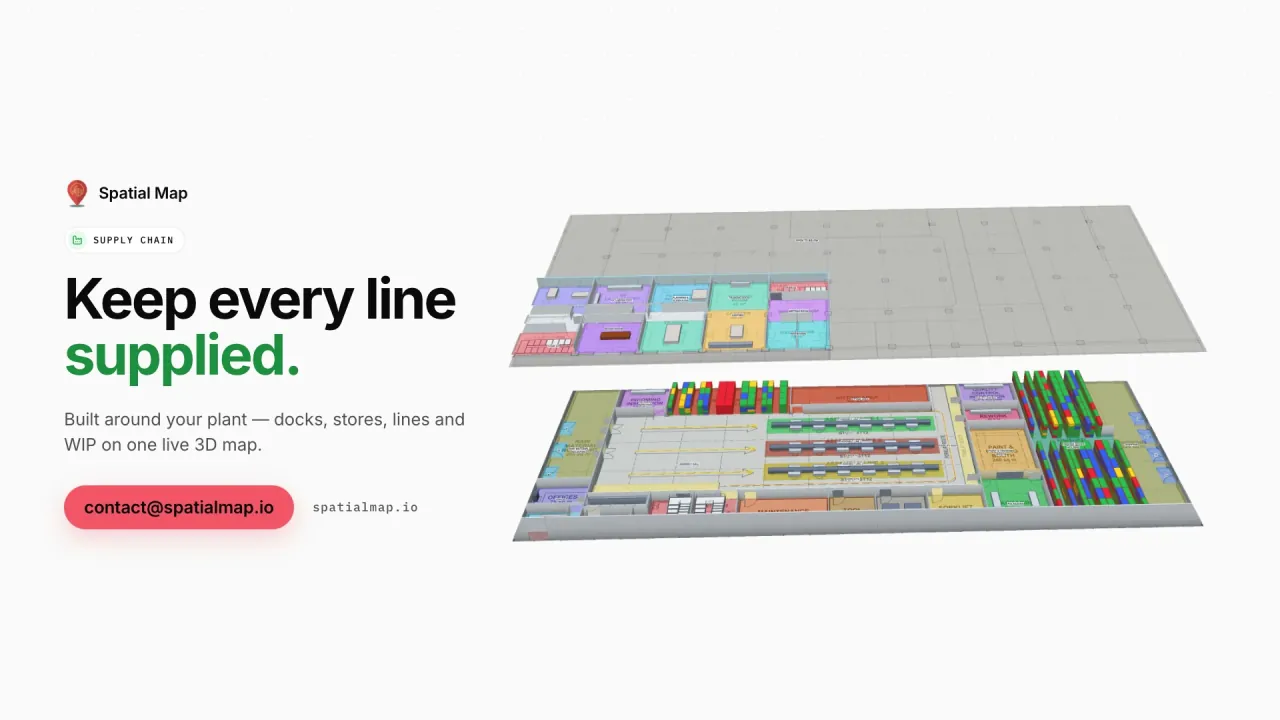
Tag the returnable racks and kits with RFID or BLE, name the goods-in, line-side and returns areas as areas on the plan, and the map shows where each rack is, how long it has been there and whose it is. A “not updated” rule raises an in-app alert when a rack has not been read for a set time. The Summit demo shows an assembly plant with 867 raw-material and finished-goods rack locations, WIP carriers between stations and dock appointments. Spatial Map is not an MES and does not sequence production: your own systems decide the order, and the map shows where things are.

Multi-client sheds and what each client may see

A lot of Midlands space is run by third-party logistics operators for several customers at once. Each client wants proof of its own stock and nothing of the others’. Draw each client’s zone as an area, keep stock in a table with a client column, and give each client a read-only share link that shows only its floors and layers, with an expiry date and a view cap; the client needs no account. Share links explains the options.

Reports help at month end: the built-in reports and the report builder export PDF, Excel, CSV and JSON, and a public read-only report link lets a client see a stock summary without logging in. Billing, WMS and customer contracts stay in your own systems.

Services for teams in Birmingham

Where Birmingham teams usually start depends on the building:

  • Third-party logistics sheds usually begin with inventory tracking and client-specific views of racks and dock doors.
  • Automotive suppliers often start with asset tracking for returnable racks, tooling and trolleys before adding stock RFID.
  • RTLS and UWB is worth looking at for large sheds where forklifts and people must be located continuously; a BlueIOT server connects directly and other engines through the write API.
  • If you have no readers or tags yet, our team can source RFID and BLE hardware on request, quoted per project, with warranty and device support from the manufacturer: see hardware and demo kits on request.
  • WMS and ERP integrations, handheld stock-take apps and custom software are built as client projects; the product runs as cloud or on-premises.

Also served nearby

The same page covers Solihull, Coventry, Wolverhampton, Walsall, Dudley, Redditch, Tamworth and Nuneaton, and the rest of the Black Country and Warwickshire sheds around the city. Nothing needs to be installed at any of them: the map opens in a browser.

How Spatial Map does it

From shed plan to live floor

  1. 01

    Import the shed plan

    Upload a PDF or a DWG from AutoCAD R2004–R2018, or a photograph, and align it at real scale.

  2. 02

    Draw racks, doors and client zones

    Trace racks with their locations, dock doors, yard slots and each client’s area, or let AI Map draft them for a person to review.

  3. 03

    Connect your WMS and readers

    Your WMS and RFID middleware post rows through the table write API, or Spatial Map polls a REST endpoint.

  4. 04

    Share and alert

    Read-only client links, in-app alerts for racks not read and trailers parked too long, and reports at month end.

What Birmingham teams track

Multi-client distribution sheds

Rack-level stock by client, staging lanes and the trailer yard.

Rail-served and port-linked warehouses

Dock doors, yard slots and RFID pallets from containers that arrive by train.

Returnable racks and line-side stock

Where each rack is, how long it has been there and whose it is.

Tooling, gauges and shared equipment

Check-out, last-seen area and overdue items on the plan.

See it on real demo facilities

Fictional names, real floor plans, live sensors, RFID, BLE tags and gateways — open any of them in the browser.

All 13 demo facilities

Warehouse tracking in Birmingham — questions we get

The WMS knows what should be in each location; a map shows it, with doors, yard and live reads beside it. Spatial Map reads from your WMS through the write API or a polled REST endpoint, and it does not write back to it. The post on warehouse digital twin vs WMS explains the split.

Yes, if the racks are tagged and read somewhere, for example at your goods-in and despatch doors. Each read updates the rack’s last-seen area and adds to its row history, and a “not updated” alert rule flags racks nobody has read for a set time, in the app only.

Yes. Draw each client’s zone, keep a client column in the stock table and send a read-only share link that shows only the floors and layers you choose. It can expire and be revoked, and the client needs no account.

No. It has no link to terminal or rail systems and does not predict train arrivals. It shows what happens in your own building after a container arrives, based on your own reads.

No. Spatial Map is sold online and our team works with customers in the UK remotely, by video call and through the contact form. There are no local resellers or partners.

In US dollars, the same worldwide: a 7-day free trial for up to 5 facilities with no card, then Pro at $60 a month or $600 a year for up to 4 facilities. Larger estates are quoted as custom services.

Put one Midlands shed on a live map.

Start the free trial and open the Crestline demo, or send us the plan of a shed and an export from your WMS through the contact form.