UK · RFID for retail and distribution

RFID tracking software for UK retail, distribution centres and 3PL warehouses

In UK retail, RFID started on the clothing rail and has worked its way back up the supply chain. Tagged items arrive at a distribution centre, travel to stores in roll cages, move from the stockroom to the shop floor and leave through a fitting room or the front door. Spatial Map puts each of those reads on a live 3D plan of the building where it happened — store, DC, 3PL shed or port-side warehouse — so the stock team, loss prevention and transport are looking at the same map instead of three spreadsheets.

No credit card. Runs in the browser. Pro is $60/month for up to 4 facilities. Book a demo

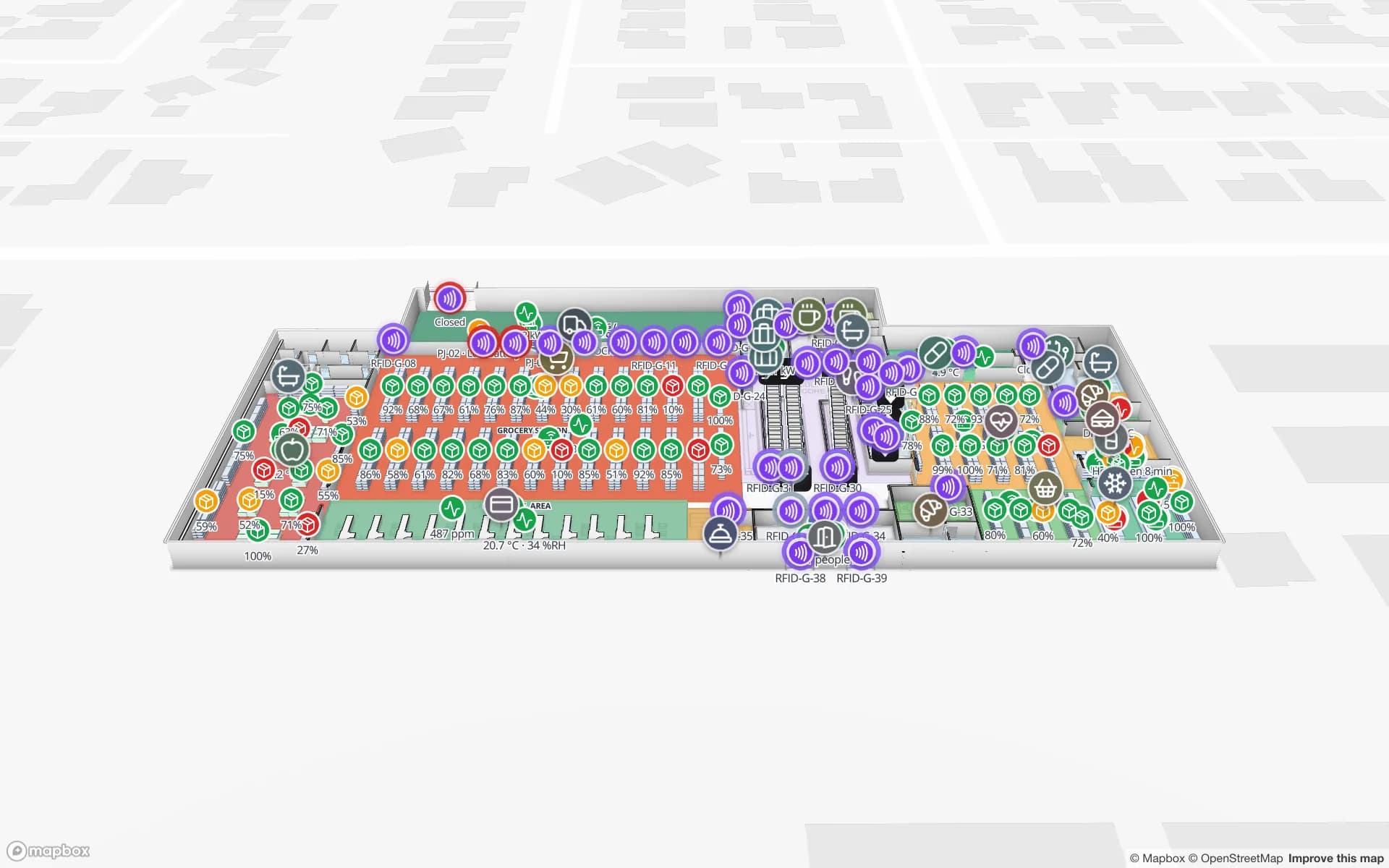
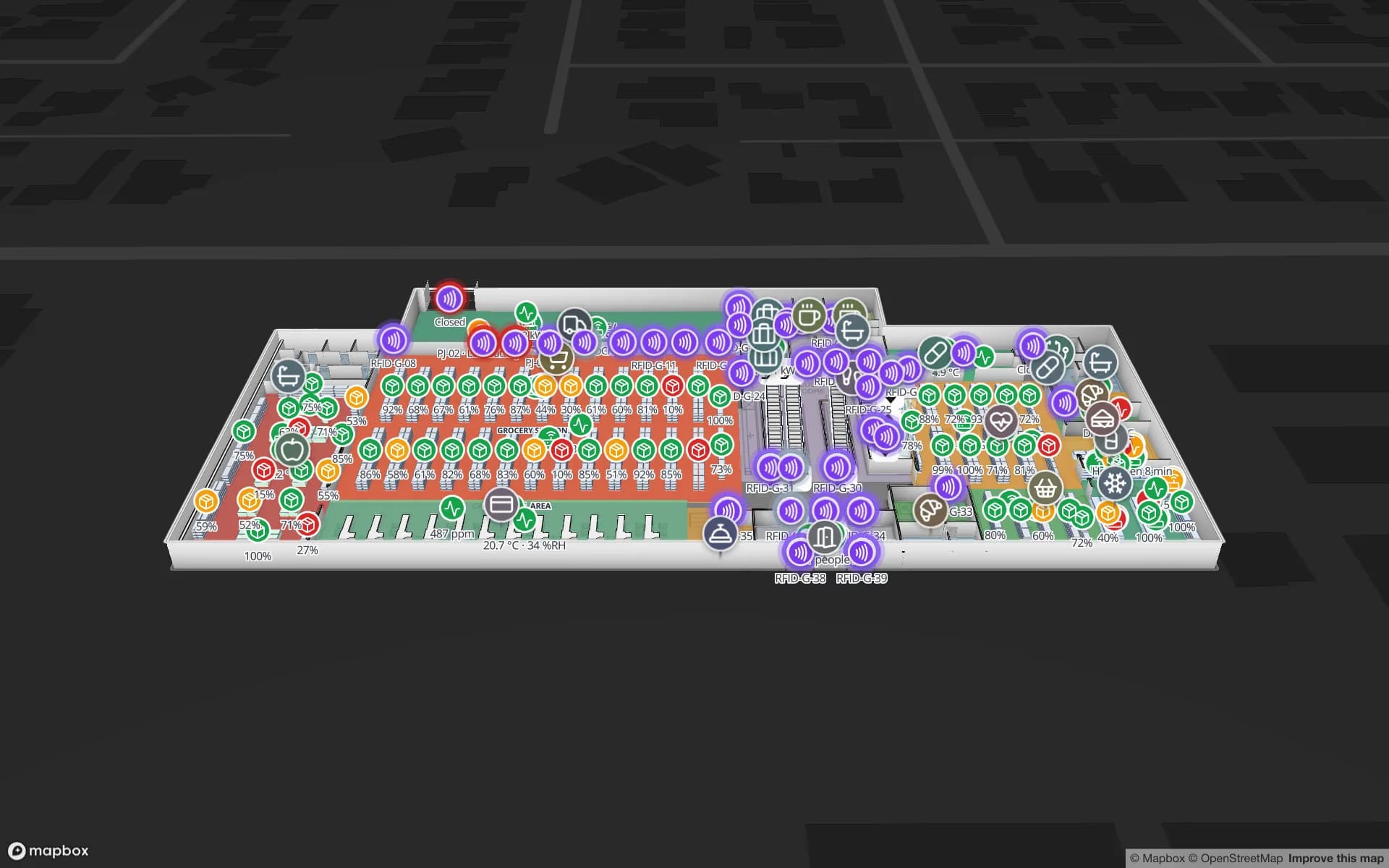
Retail Mart Store, a three-floor retail store demo, in the Spatial Map 3D viewer with live device markers
Retail Mart Store
Retail Mart, a three-floor demo store: 85 RFID readers at the entrances, escalators and lifts, beside shelf and department stock.
RFID readers in the Retail Mart demo store
85
RFID pallets in the Eastport cross-dock demo
1,180
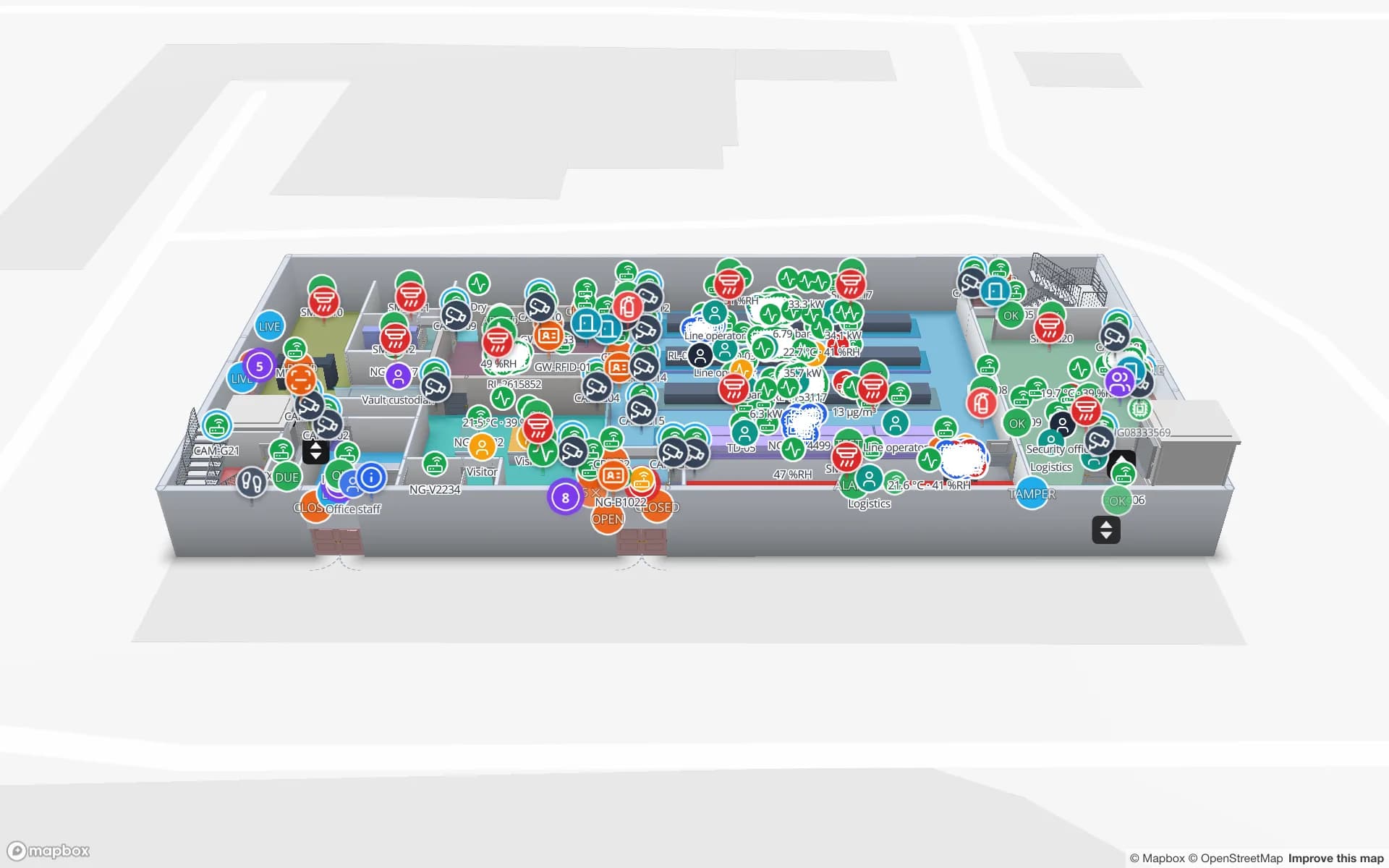
Tagged units in the Northgate secure-store demo
863
Free trial, no credit card
7 days

Item-level RFID in UK stores

Several large UK fashion and general-merchandise retailers now tag at item level, and many suppliers ship goods already tagged. In a store, the value sits at three kinds of door. The stockroom door tells you what has gone out to the floor and what is still in the back. The fitting rooms show what was taken in and what came out. The exits show what left. Spatial Map draws each reader at its door with its last read and read count, places tagged items at the reader that last saw them, and colours a reader that has gone quiet so a dead portal is spotted on the morning walk rather than at the next stock count.

For tags, readers and middleware in general, see our RFID tracking software page. Spatial Map does not sound alarms at the exit — your EAS or RFID gates keep that job; it gives store and loss-prevention teams a map of what happened and a read trail for the incident file.

  • Stockroom to floor — replenishment gaps by department, from the reads at the stockroom door.
  • Fitting rooms — items in and out per room, as your middleware counts them.
  • Exits — reads at each entrance, escalator landing and lift lobby on a multi-floor store.

Roll cages, dollies and totes between DCs and stores

British store replenishment runs on returnable transit items: roll cages, dollies, plastic totes and pallets that leave the DC full and are supposed to come back. They drift — into store yards, supplier sites and other depots — and replacing them is a steady cost. Tagging the equipment and reading it at DC dock doors and at each store’s goods-in turns that drift into data.

Spatial Map shows those reads where they happen: cages by dock door and marshalling lane at the DC, and at the goods-in door of each store you map. If your system works out a balance per store — sent out, returned, outstanding — that number can sit on the store in a report or colour it with a style rule. Reads come in the same way as any other data: your middleware or a small relay posts batches to a table with the table write API, or Spatial Map polls a REST endpoint you already have.

Multi-client 3PL sheds in the golden triangle

The Midlands “golden triangle” is home to a dense cluster of large distribution sheds, many of them run by 3PLs for several clients under one roof. Client zones move as contracts start, grow and end, so the map has to change easily: in Spatial Map a client’s zone is an area you redraw in minutes, and its racks keep their bin locations. Stock and RFID pallets can be coloured by client from a field in your WMS data.

Each client can get its own monthly pack — built-in reports or your own, exported to PDF, Excel, CSV or JSON — and a read-only share link limited to its own floors and layers, with an expiry date and a view cap. Solutions group the facilities, reports and data of one client across several sheds inside the same workspace.

Port-centric logistics at Felixstowe and Southampton

Felixstowe is the UK’s busiest container port and Southampton a major deep-sea port on the south coast, and both are ringed by port-centric warehouses that de-van containers and do distribution work next to the quay instead of trucking everything inland first. Tagging pallets as a container is stripped, then reading them at the dock door into storage and again on the way out, gives a clean record of what each box contained and where it went.

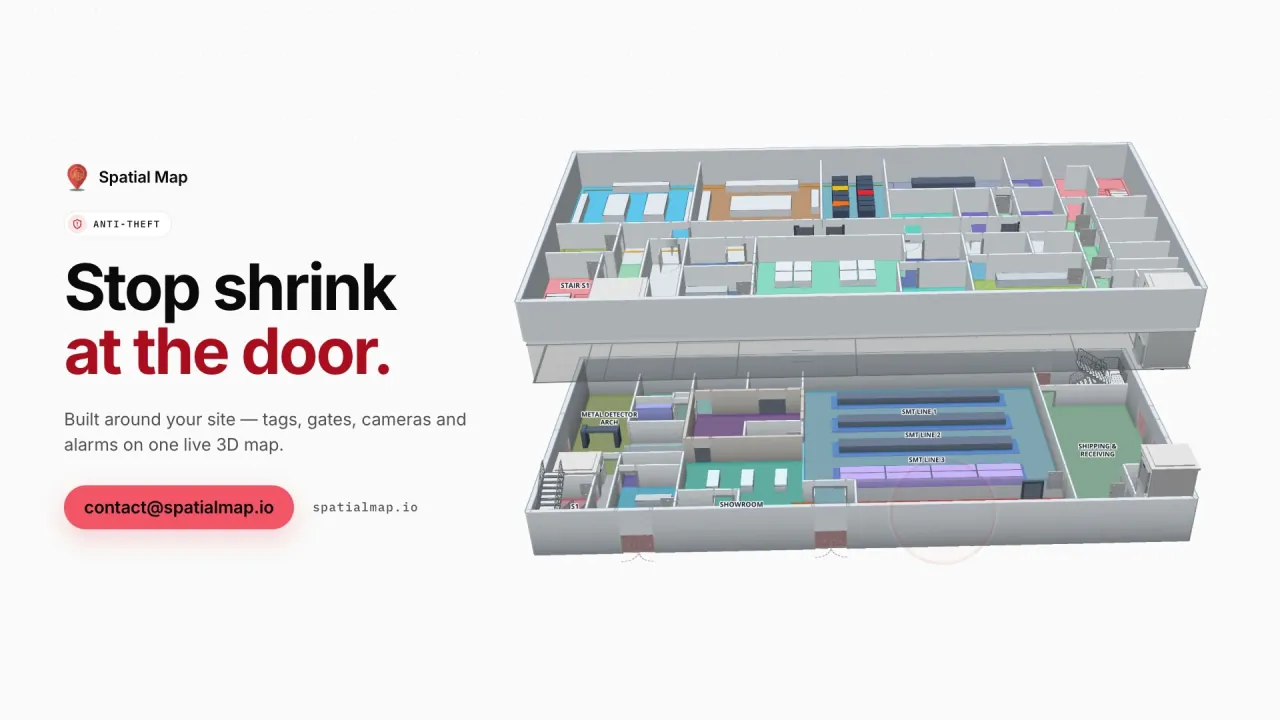
The Eastport demo shows the pattern on one site: 50 dock doors, 44 yard slots, a gate and weighbridge and 1,180 RFID pallets moving through the cross-dock. Spatial Map does not connect to port community systems or make customs declarations; it shows what your reads and WMS say is physically in the building.

High-value goods in secure cages

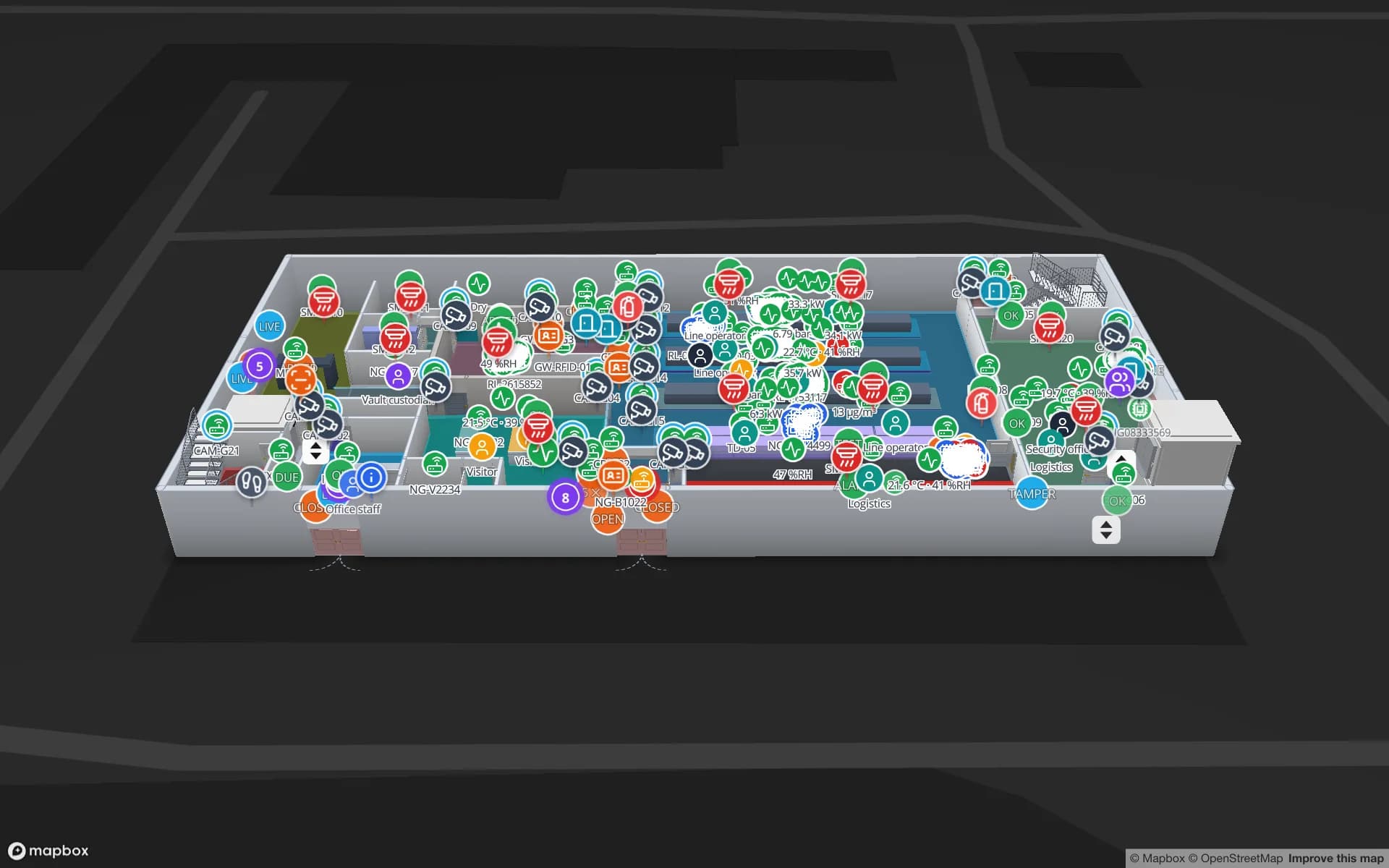
Consumer electronics, fragrance, spirits and other high-value lines usually sit in a locked cage or a separate secure store inside the warehouse. Reading items or trays at the cage gate, alongside access-control events from the same door, shows when stock moved and who was in the zone. In the Northgate demo, 863 tagged units are followed reader by reader through the cage and vault, and the History player replays a unit’s path for an investigation. Spatial Map does not lock or open doors — your access control does.

Tag the assets, not the people: UK GDPR context

RFID on cages, totes, pallets and products does not identify anyone. It becomes personal data under UK GDPR when reads are tied to a person — a staff badge at the cage gate, a name against a tool. If you plan to do that, the ICO’s guidance on monitoring workers is the context to read first: be clear about the purpose, tell staff, collect only what you need and consider a data protection impact assessment. Your legal advisers decide what applies to you. Our DPA and security page describe how Spatial Map handles your data.

How Spatial Map does it

From store and shed reads to one live map

  1. 01

    Map the buildings

    Import the store, DC or port-side warehouse plan from PDF or DWG and trace racks, docks, cages and fitting rooms.

  2. 02

    Name every read point

    Add a marker or zone for each portal, cage gate and goods-in door, named exactly as your middleware names it.

  3. 03

    Send batched reads

    Your middleware posts reads to a table over HTTPS, or Spatial Map polls its REST endpoint on a schedule.

  4. 04

    Report per client or store

    Colour stock by client or status, replay a unit’s path and export packs to PDF or Excel.

RFID use cases for UK operators

Item-level store stock

Stockroom-to-floor reads by department on a three-floor store with escalators and lifts.

Fitting rooms and exits

Reads at fitting rooms, entrances and lift lobbies, with quiet readers coloured.

Roll cages and totes

Returnable transit items counted by dock door and lane as they leave and come back.

Multi-client 3PL sheds

Client zones, rack locations and pallets coloured by client, with a share link each.

Secure cages

High-value units followed through the cage gate, with access events and a replayable trail.

See it on real demo facilities

Fictional names, real floor plans, live sensors, RFID, BLE tags and gateways — open any of them in the browser.

All 13 demo facilities

RFID in the UK — frequently asked questions

No. Spatial Map is sold online and our team works with UK customers remotely, by video call and through the contact form. There is nothing to install, so a project does not need a site visit from us.

Yes, as far as your reads go. Tagged equipment read at DC dock doors and store goods-in doors appears at those doors on the map. Balances per store — sent, returned, outstanding — are worked out by your system and can be shown in reports or as colours on the map.

Tags on products, cages and pallets do not identify anyone. Linking reads to staff badges or names does, and then UK GDPR and the ICO’s guidance on monitoring workers are the context. Your legal advisers decide what applies; our DPA is available.

Any fixed portals, gates or handhelds your supplier provides for the UK and European UHF band. Spatial Map has no reader drivers: your middleware or a small relay posts reads to a table, or exposes a REST endpoint Spatial Map polls.

The same worldwide, in US dollars: a 7-day free trial for up to 5 facilities with no credit card, then Pro at $60 a month or $600 a year for up to 4 facilities. Store estates and multi-site networks are quoted as custom services.

Put your store and DC reads on one map.

Start a free trial and open the Retail Mart and Eastport demos, or send us a floor plan and a sample of your reads through the contact form.