Poznań · A2 corridor, Swarzędz, Tarnowo Podgórne and the fair grounds

Inventory tracking in Poznań, along the road to Germany

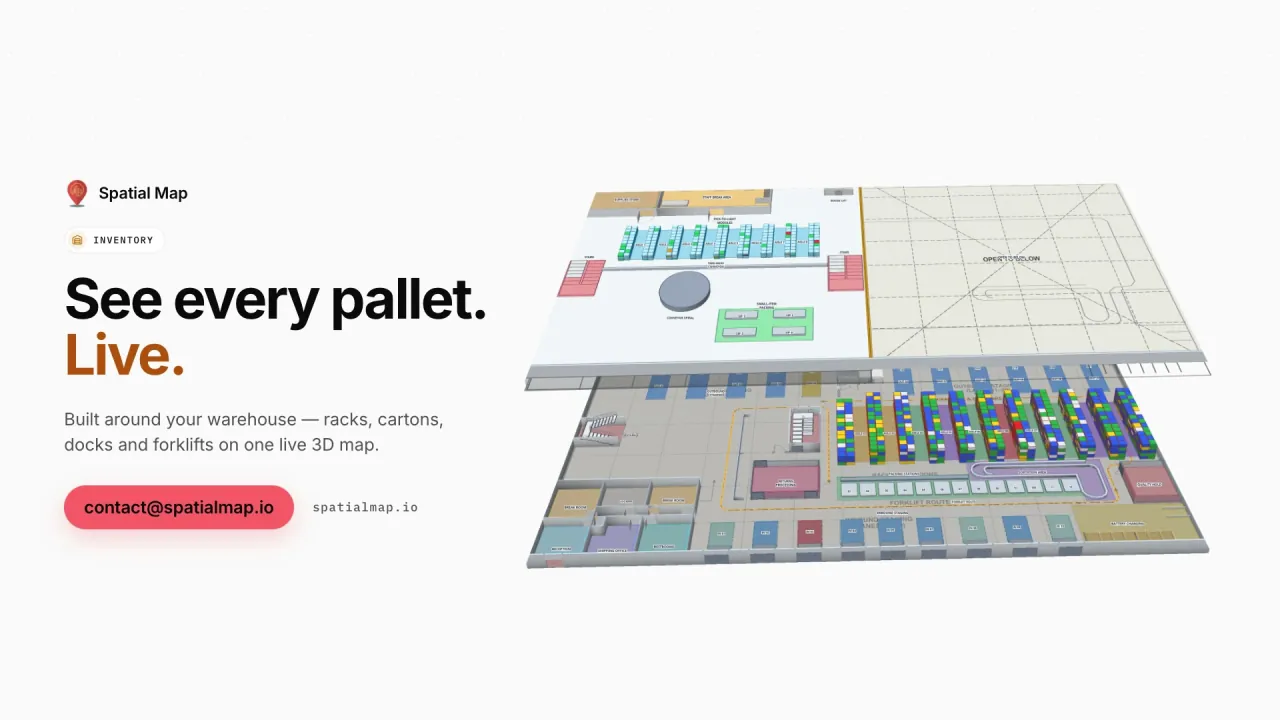
Spatial Map shows where stock sits on a live 3D map of the building, using the counts, scans and RFID reads your own systems produce, so a rack location or a staged pallet is a place rather than a code. Inventory tracking in Poznań is shaped by one road: the A2 motorway runs from the German border to the city, and distribution centres cluster beside it to serve customers on both sides of the border. Each building is its own facility, and an operator with several sheds keeps them in one workspace.

No credit card. Runs in the browser. Pro is $60/month for up to 4 facilities. Book a demo

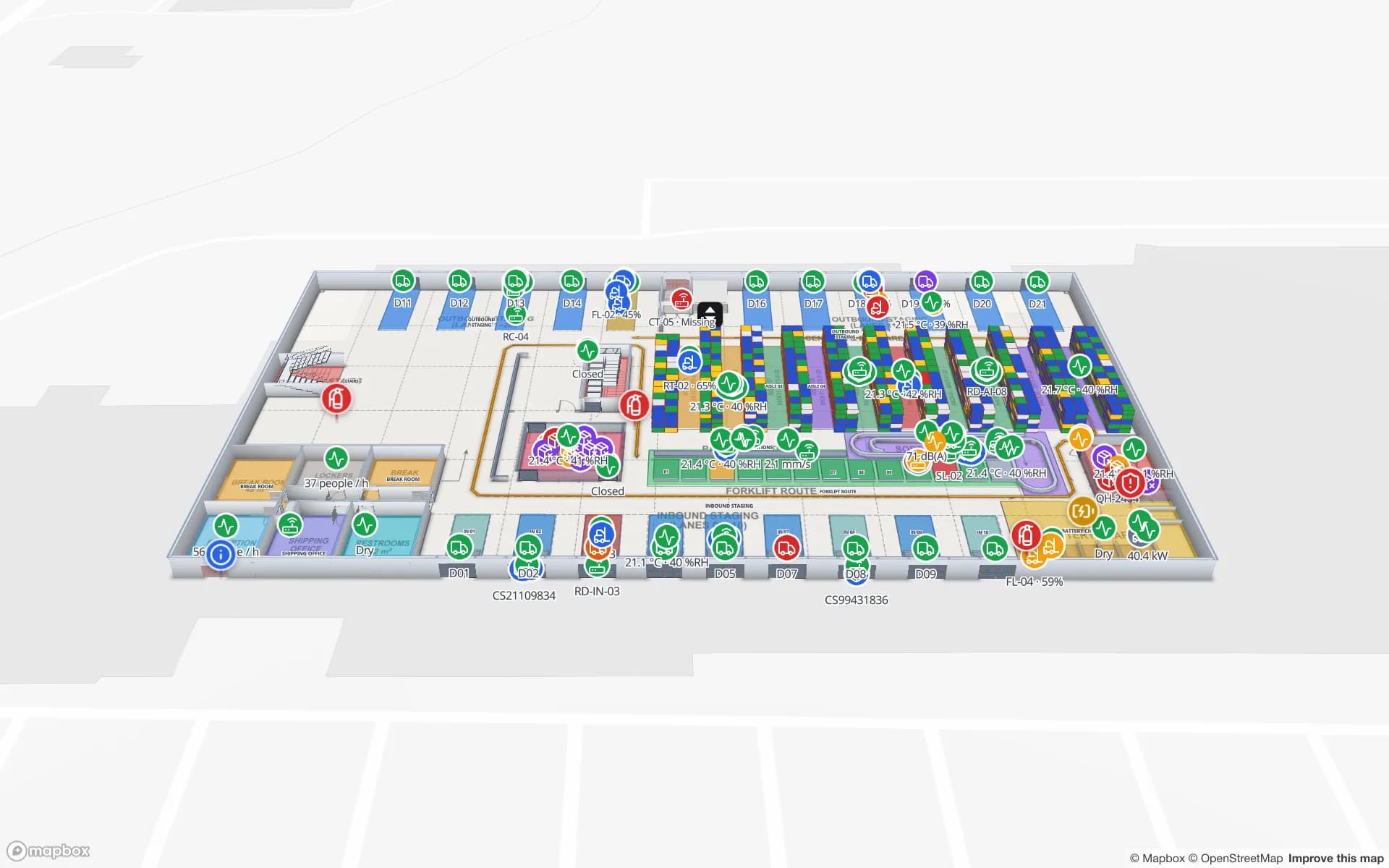
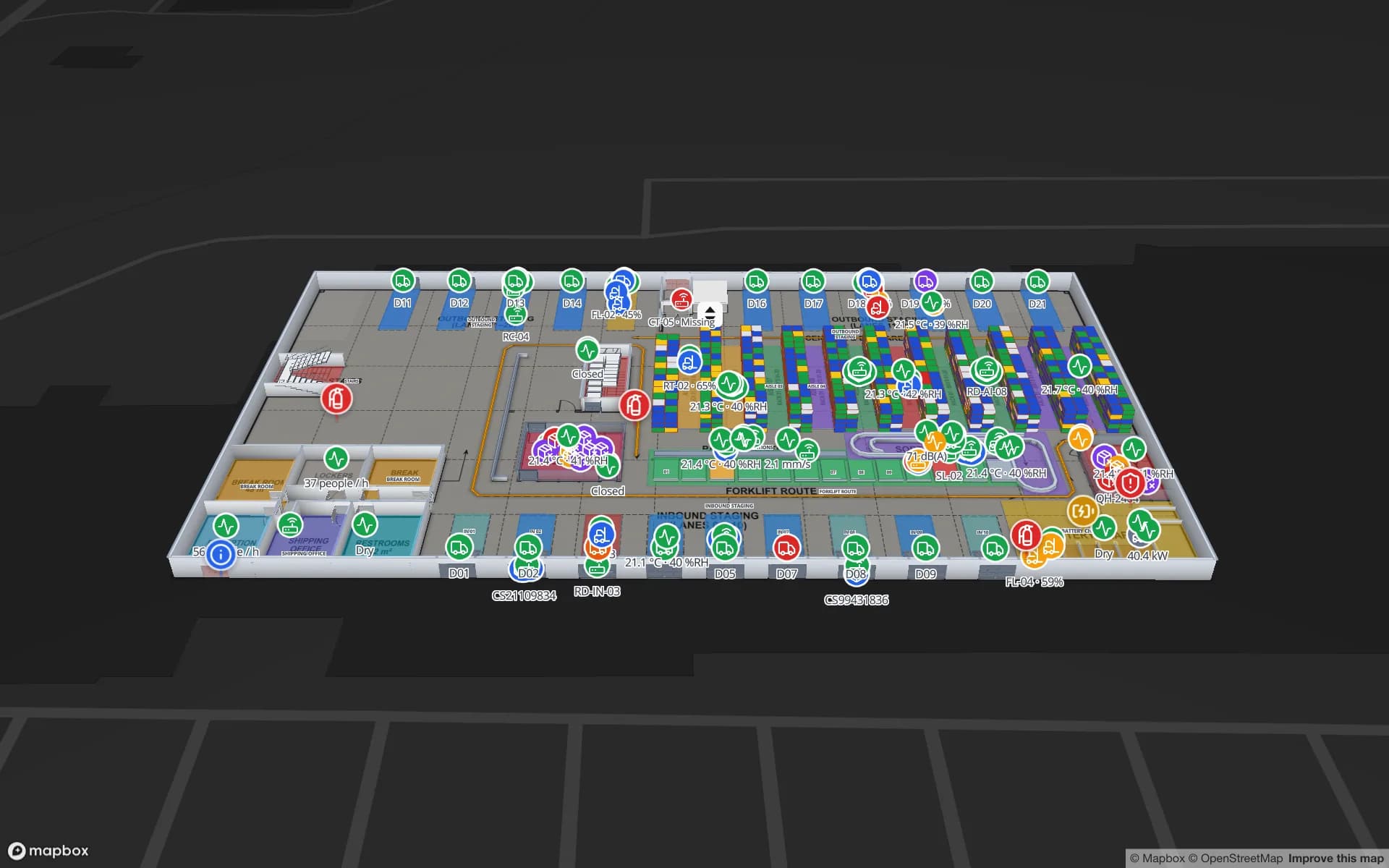
Crestline Fulfillment Center, a fulfillment center demo, in the Spatial Map 3D viewer with live device markers
Crestline Fulfillment Center
Crestline Fulfillment Center, a demo warehouse: 20 racks with 2,204 locations, pick-to-light, packing output, staging lanes, forklifts and the trailer yard.
Rack locations in the Crestline demo warehouse
2,204
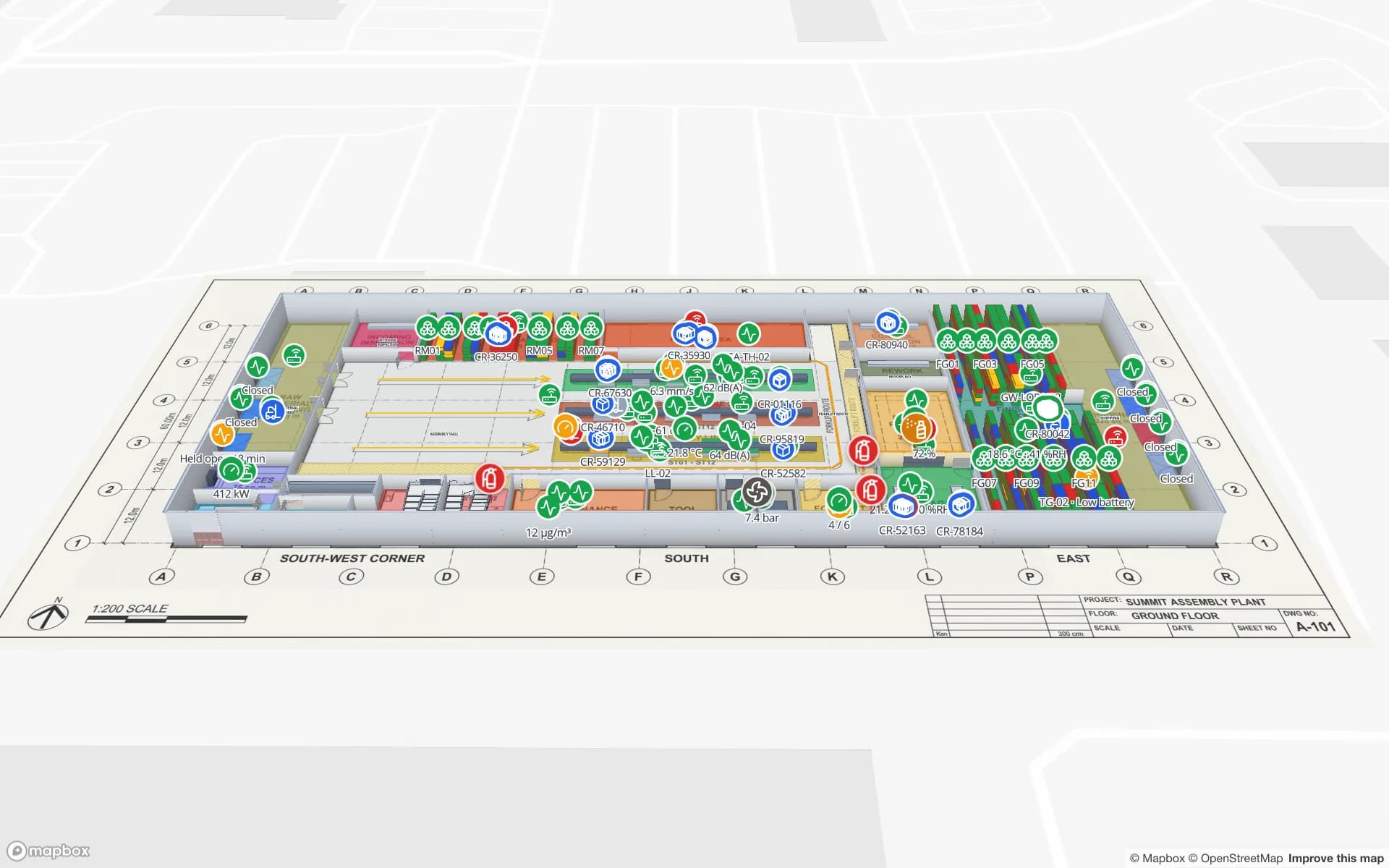
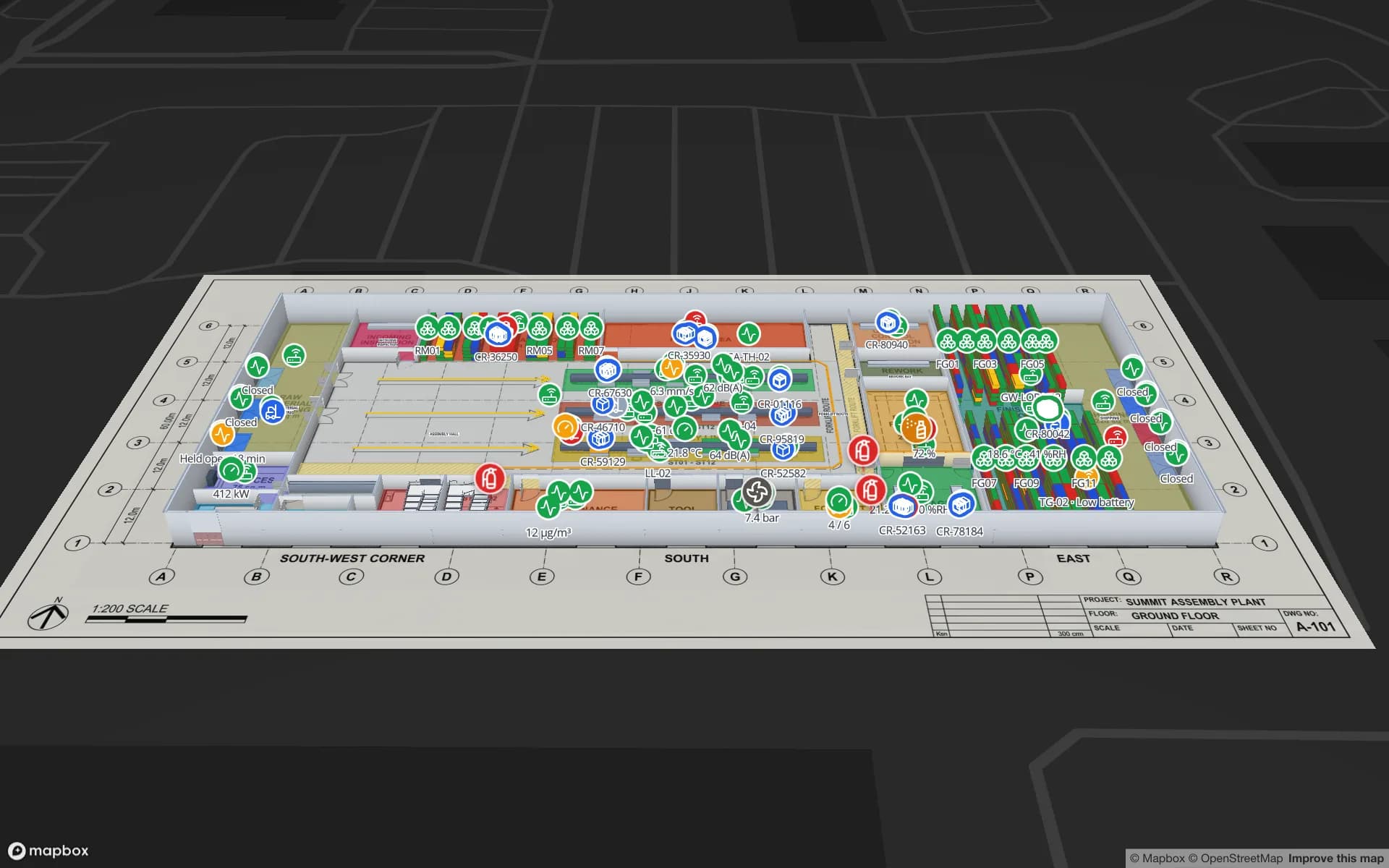
Rack locations in the Summit assembly-plant demo
867
Interface languages for Polish teams (Polish not yet available)
EN · DE
Free trial, up to 5 facilities, no card
7 days

The A2: the Berlin side of Poland

The A2 motorway links the German border near Świecko with Poznań, Konin, Łódź and Warsaw. Its first western section, from Świecko to Nowy Tomyśl, 105.9 km long, opened on 1 December 2011, and most of the stretch from the border to Konin is tolled. The road is part of European route E30 and carries on across the border as the German A 12 towards Berlin. A distribution centre beside it can send a truck to a German customer and be back for the next wave on the same day.

That rhythm sets the inventory problem: stock is not picked for a week’s demand but for the next departure. Name each staging lane after the delivery run, show the pallets in it as rows in a table with their lane and cut-off, and the map shows what is ready, what is short and what is already on the road. The Crestline demo shows the same pattern: rack inventory, pick-to-light, staging lanes in front of the docks and the trailer yard.


Four clusters west and east of the city

Property-market research for Q4 2025 calls Wielkopolska the fifth largest warehouse market in Poland, with about 3.6 million square metres or 9.9 % of national supply. It names the largest clusters as Swarzędz, Tarnowo Podgórne, Gądki and Komorniki, and notes that occupiers come mostly from the automotive and logistics sectors.

In buildings like these the unit of inventory is the bin, the pallet or the kit, and the question is always how stock in the system compares with stock on the rack. Start with a CSV or Excel export of locations and quantities, colour the racks from it, and add handheld counts or RFID stock counting by zone later; the post on CSV bin inventory to a live rack map shows the steps. Your WMS stays the system of record; Spatial Map shows its data in the building and does not write back to it.

Nearshoring: stock that arrives in new patterns

The same research lists a large labour pool, proximity to the German border, direct A2 access and “the increasing trend of nearshoring and relocating operational processes from Asia to Poland” as reasons for growth in the region. Nearshored production and warehousing bring inventory that did not exist in the building before: components arriving from several suppliers, kitting for German customers, returnable containers going back and forth.

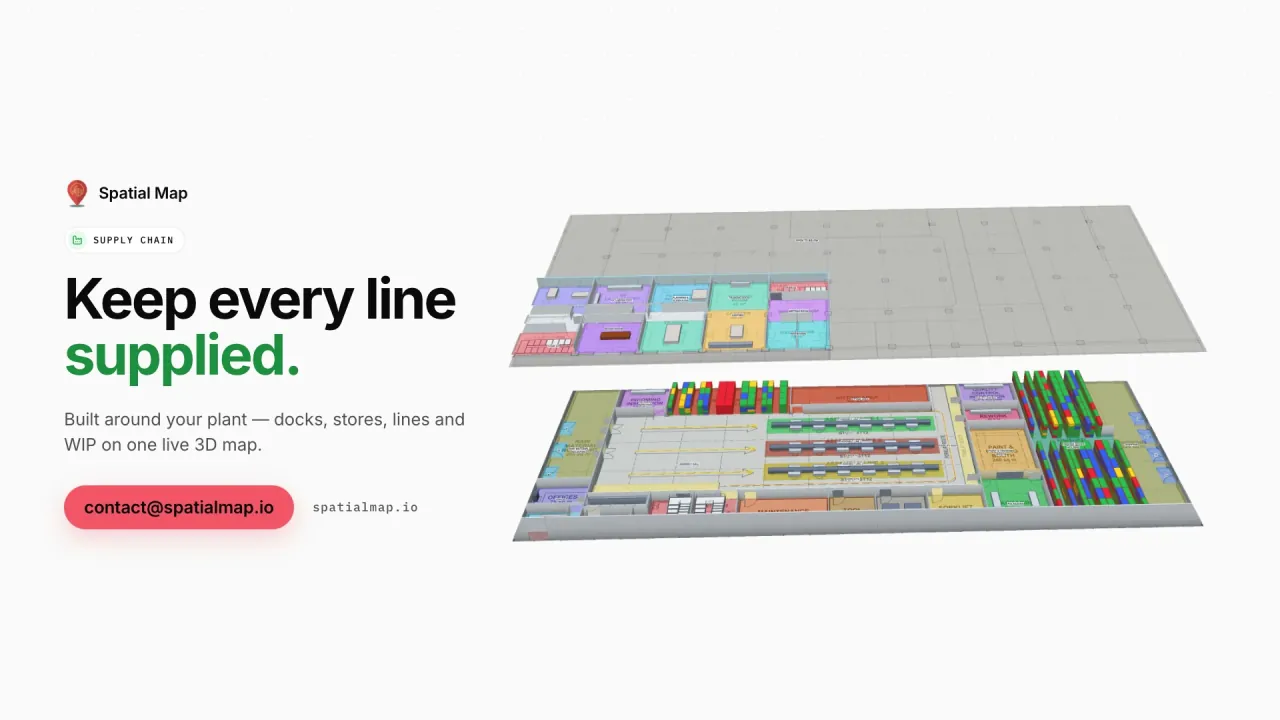
For those, a plant-style map helps more than a pure warehouse one: raw-material racks, WIP carriers between stations and finished goods racks on one plan. The Summit demo shows three lines with WIP carriers and 867 rack locations, and manufacturing supply chain visibility describes how it is built. RFID tags on carriers and returnable racks are read at doors, so the map shows which container is where without a manual scan.

The fair grounds: inventory that moves in and out for a week

Poznań is also a fair city. The General National Exposition of 1929 covered 65 hectares; Poznań’s international fair grounds today cover about 11 hectares, and, according to the city’s culture site, of the interwar buildings the Heavy Industry Hall survives as today’s Pavilion 2 and the Gala Hall as part of Pavilion 3A. An old pavilion with a modern fit-out is exactly the kind of building whose drawings are paper.

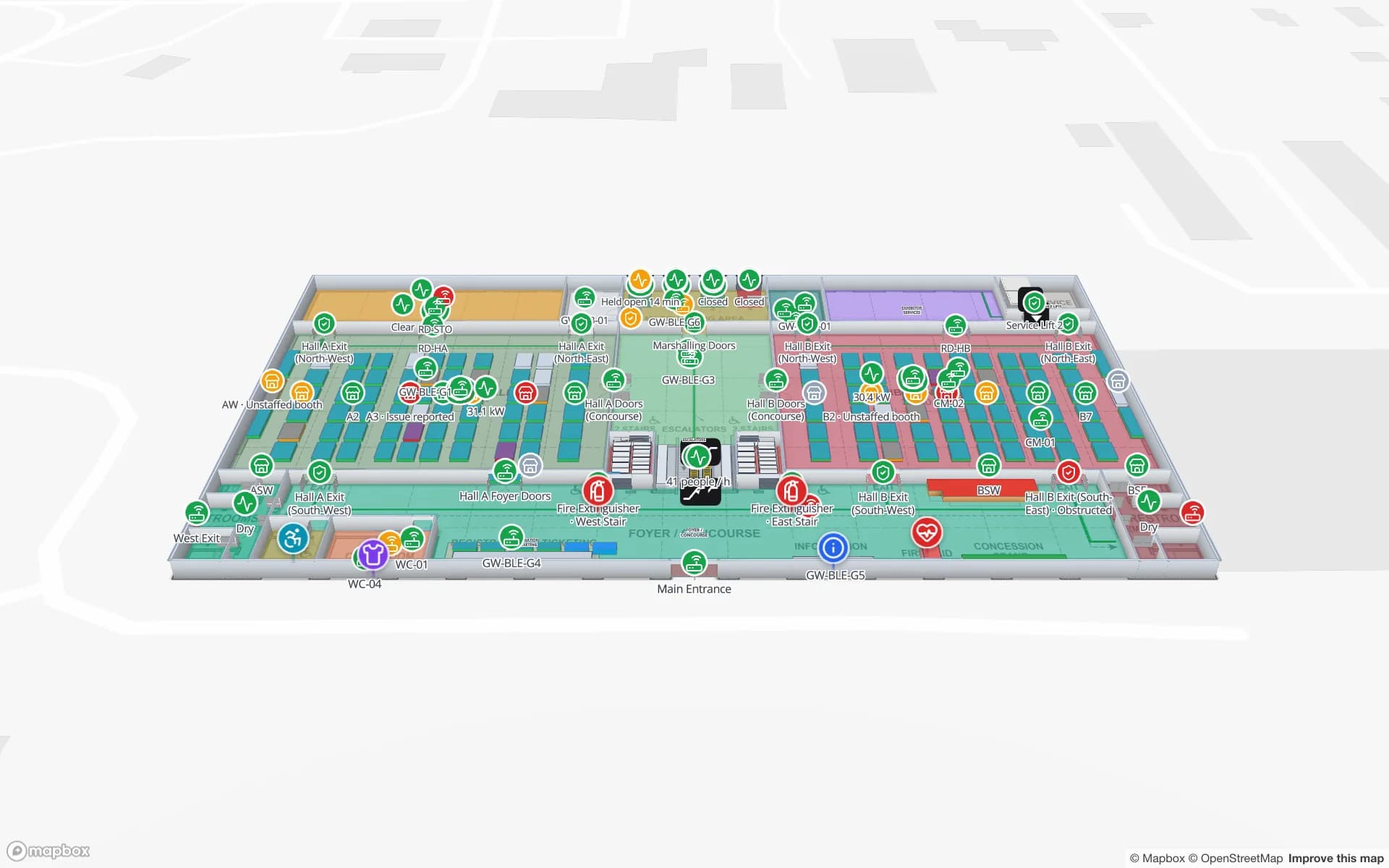
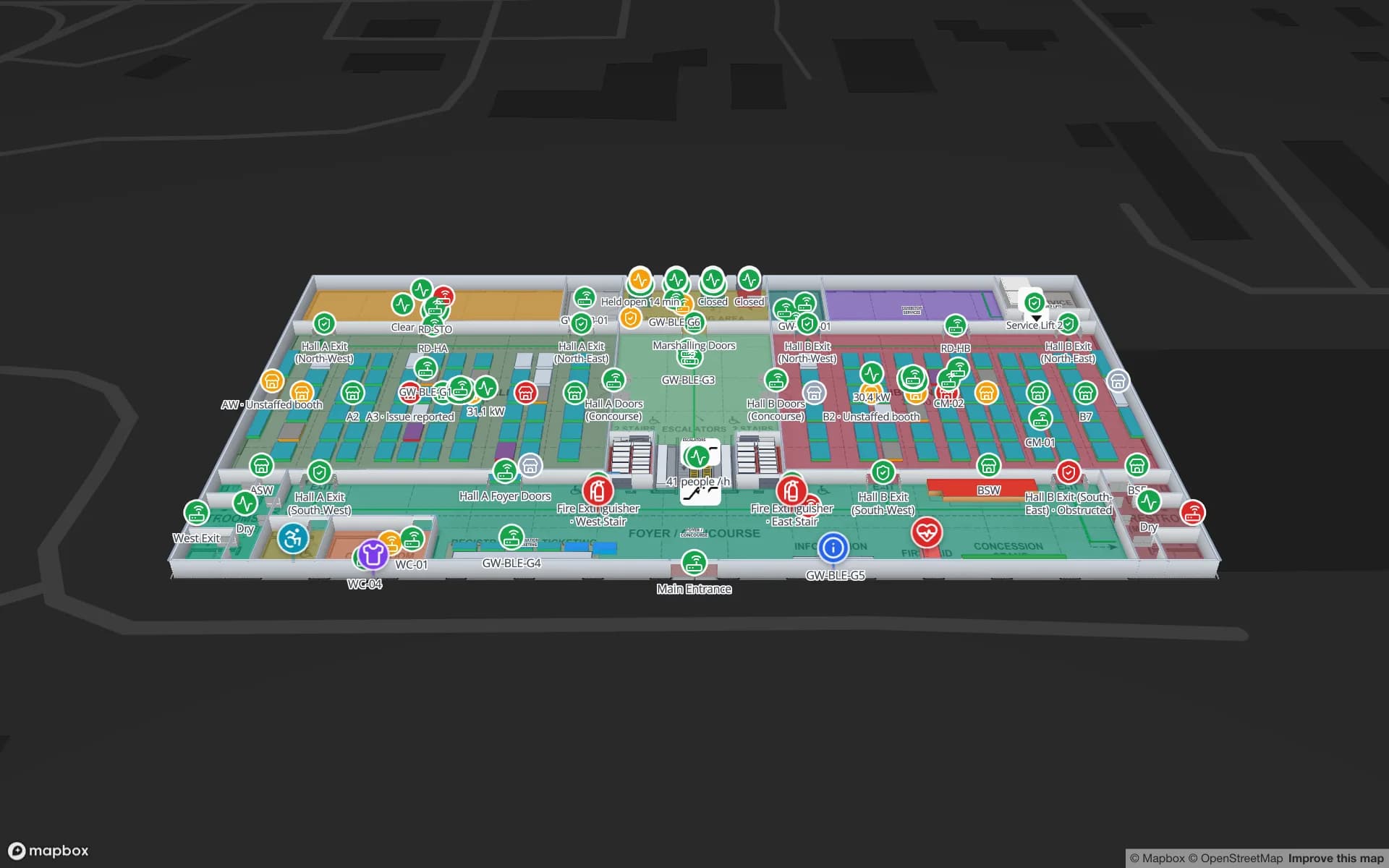
A fair’s inventory is crates, stand materials, furniture, AV and exhibits that arrive in a week, are placed on a hall plan and leave again. Draw each hall once, keep exhibitor areas as named areas, and put a table of crates with their dock and stand. The Lakeside demo shows exhibition halls with booth blocks, session rooms and docks on two floors. RFID tags on crates read at the loading dock tell an organiser which crates have arrived at which hall.

Services for teams in Poznań

Poznań teams tend to follow this order:

  • Distribution centres start with inventory tracking from a WMS export, then RFID counts at dock doors and in picking zones.
  • Plants and nearshoring operators add asset tracking for returnable racks, containers and tools between stations.
  • Event and fair teams start with an indoor map of the halls and a crate table.
  • If you need readers, handhelds or tags, our team can source them on request, quoted per project, with warranty and device support from the manufacturer: see RFID readers and tags and hardware and demo kits.
  • Android handheld apps, WMS integrations and RFID inventory systems are built as client projects. The product runs as cloud or on-premises.

Also served nearby

The same page covers Luboń, Kostrzyn and Swarzędz around the city, Września, Środa Wielkopolska and Nowy Tomyśl along the A2, Konin to the east, and Gniezno. The app has no Polish interface, but labels you write in Polish display exactly as typed.

How Spatial Map does it

From a stock export to a live rack map

  1. 01

    Map the building

    Upload the layout as PDF, DWG (R2004–R2018, placed as a picture) or image and align it at real scale; AI Map drafts racks and doors for a person to review.

  2. 02

    Load locations and quantities

    One row per bin or pallet from a CSV or Excel export, with the location code your WMS uses.

  3. 03

    Colour by stock status

    A data link colours each rack location by full, low, empty or blocked, and staging lanes by delivery run.

  4. 04

    Add counts and rules

    Handheld counts or RFID reads update the same table; in-app alerts flag short lanes and readers that went quiet.

What Poznań teams track

Distribution centres on the A2

Rack-level stock, pick zones and staging lanes by delivery run.

Cross-border linehaul

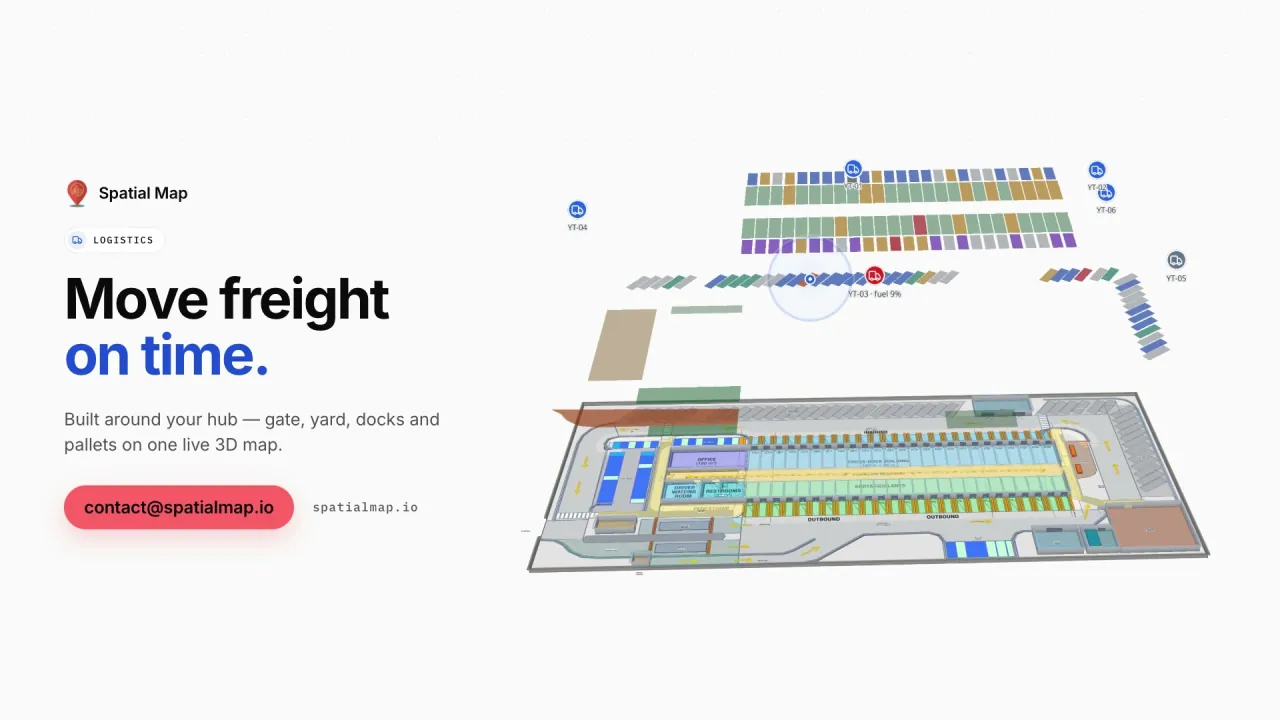
Dock doors, yard slots and pallets staged for the trucks to Germany.

Nearshored production

Raw materials, WIP carriers and finished goods from line to dock.

Fairs and events

Exhibition halls, crates and loading docks with a link per exhibitor.

See it on real demo facilities

Fictional names, real floor plans, live sensors, RFID, BLE tags and gateways — open any of them in the browser.

All 13 demo facilities

Inventory tracking in Poznań — questions we get

Not yet. The app is available in English, German, French, Spanish, Arabic and Chinese; German is practical when the client or the group headquarters is German. Your own content — rack codes, room names, report titles — can be in Polish.

Yes, and it is the recommended way. A CSV or Excel list of locations and quantities becomes a table, and the racks on the map are coloured from it. Handheld counts and RFID can be added later without redrawing anything.

No. It reads data from your WMS and shows it on the map; there is no write-back to the WMS or ERP. Counts you capture with handhelds or RFID can be posted into Spatial Map tables, and your own integration decides what goes back to the WMS.

Yes. A read-only share link can be limited to chosen floors and layers, with an expiry date and a view cap, and exhibitors need no account. Your labels display exactly as you typed them.

No. Spatial Map is sold online and our team works with customers in Poland remotely, by video call and through the contact form, in English or German. There are no local resellers or partners.

In US dollars, the same worldwide: a 7-day free trial for up to 5 facilities with no card, then Pro at $60 a month or $600 a year for up to 4 facilities. RFID hardware, if you ask us to source it, is quoted per project and is not part of the subscription.

Colour one Poznań distribution centre from a spreadsheet.

Start the free trial, upload your bin stock as a CSV, or send us a warehouse layout and a sample export through the contact form.