Łódź · A1/A2 junction, Stryków, the economic zone and textile heritage

RFID tracking in Łódź, from the textile mill to the central warehouse

Spatial Map shows RFID reads on a live 3D map of the building where they happen, so a tag read at a dock door becomes a carton in a lane or a garment in a bin. RFID tracking in Łódź has two stories that meet: the city grew as a textile centre, and today it sits where the A1 and A2 motorways cross, so central warehouses for retail chains and logistics operators stand around it. Your readers and middleware do the reading; Spatial Map shows each read in place.

No credit card. Runs in the browser. Pro is $60/month for up to 4 facilities. Book a demo

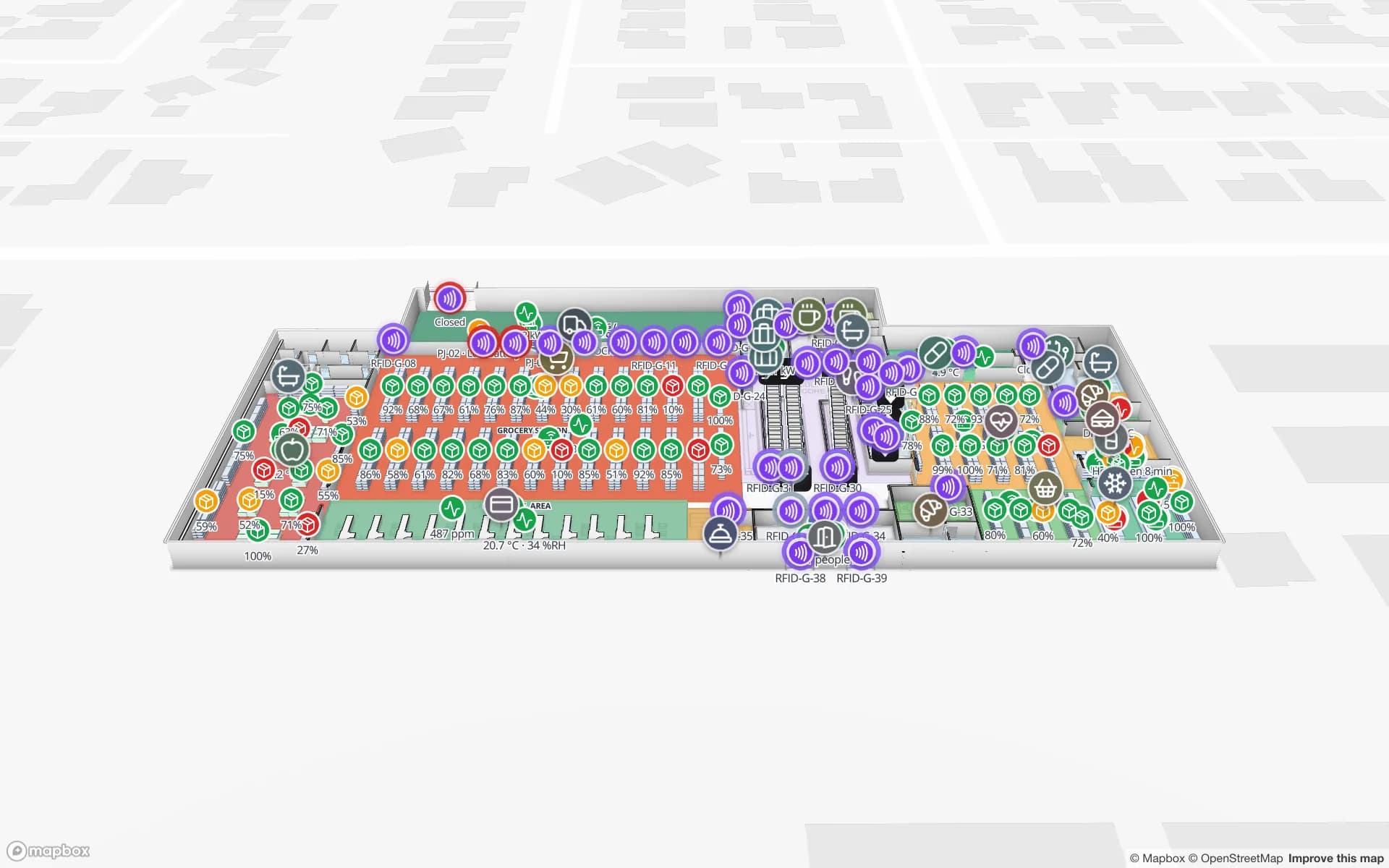
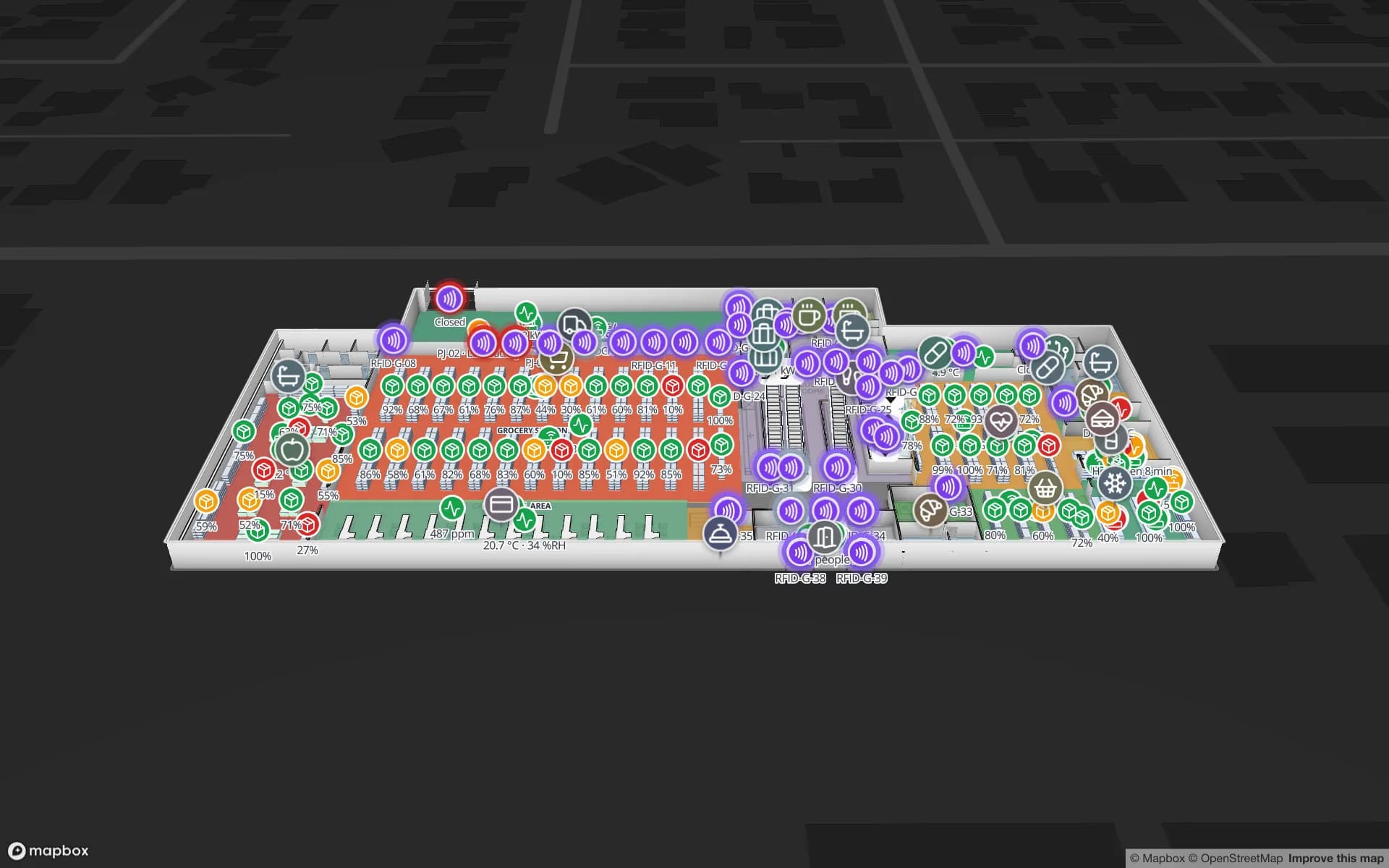
Retail Mart Store, a three-floor retail store demo, in the Spatial Map 3D viewer with live device markers
Retail Mart Store
Retail Mart, a demo three-floor store: RFID readers at entrances, escalators and lifts, shelf stock by department and item-level tags.
Floors in the Retail Mart demo, with item-level RFID reads
3
Rack locations in the Crestline demo warehouse
2,204
Interface languages for Polish teams (Polish not yet available)
EN · DE
Free trial, up to 5 facilities, no card
7 days

Where the A1 meets the A2

Property-market research for Q4 2025 calls Central Poland the third largest warehouse market in the country, with 5.1 million square metres or nearly 13.9 % of Polish supply. Logistics operators and retail chains locate their central warehouses and distribution centres there to serve the whole country, and the core locations it names are Stryków, Łódź and Piotrków Trybunalski. The A1 and the A2 meet at the Łódź Północ interchange at Stryków, which is why national distribution sits here.

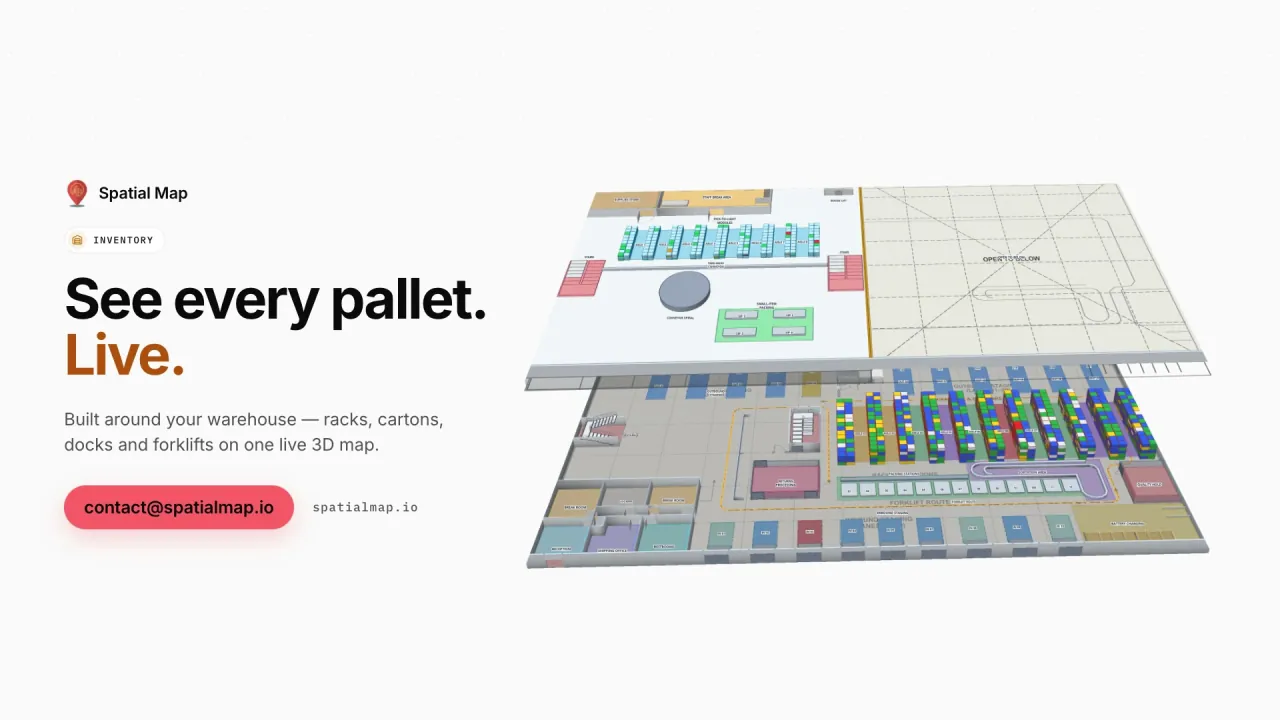
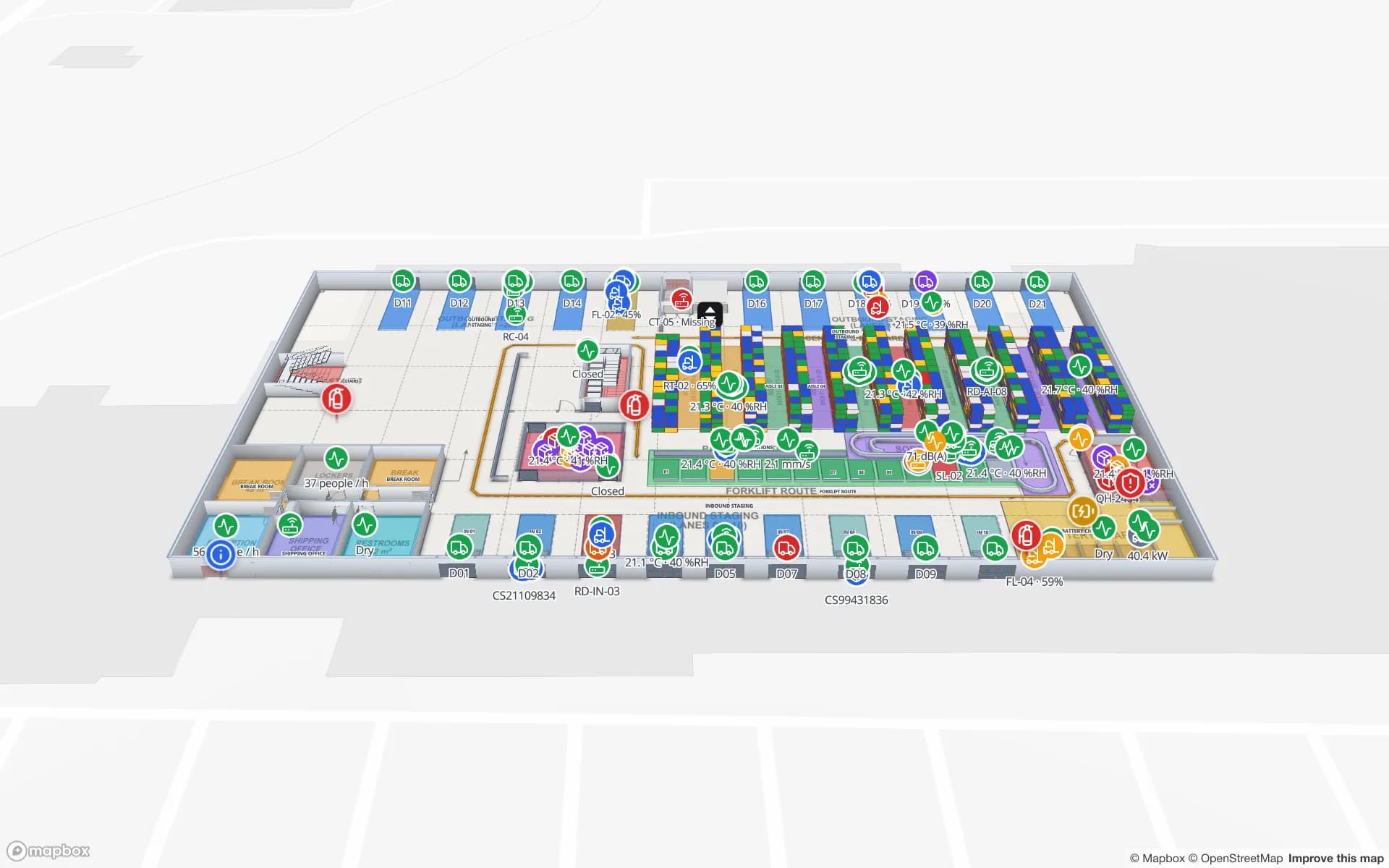
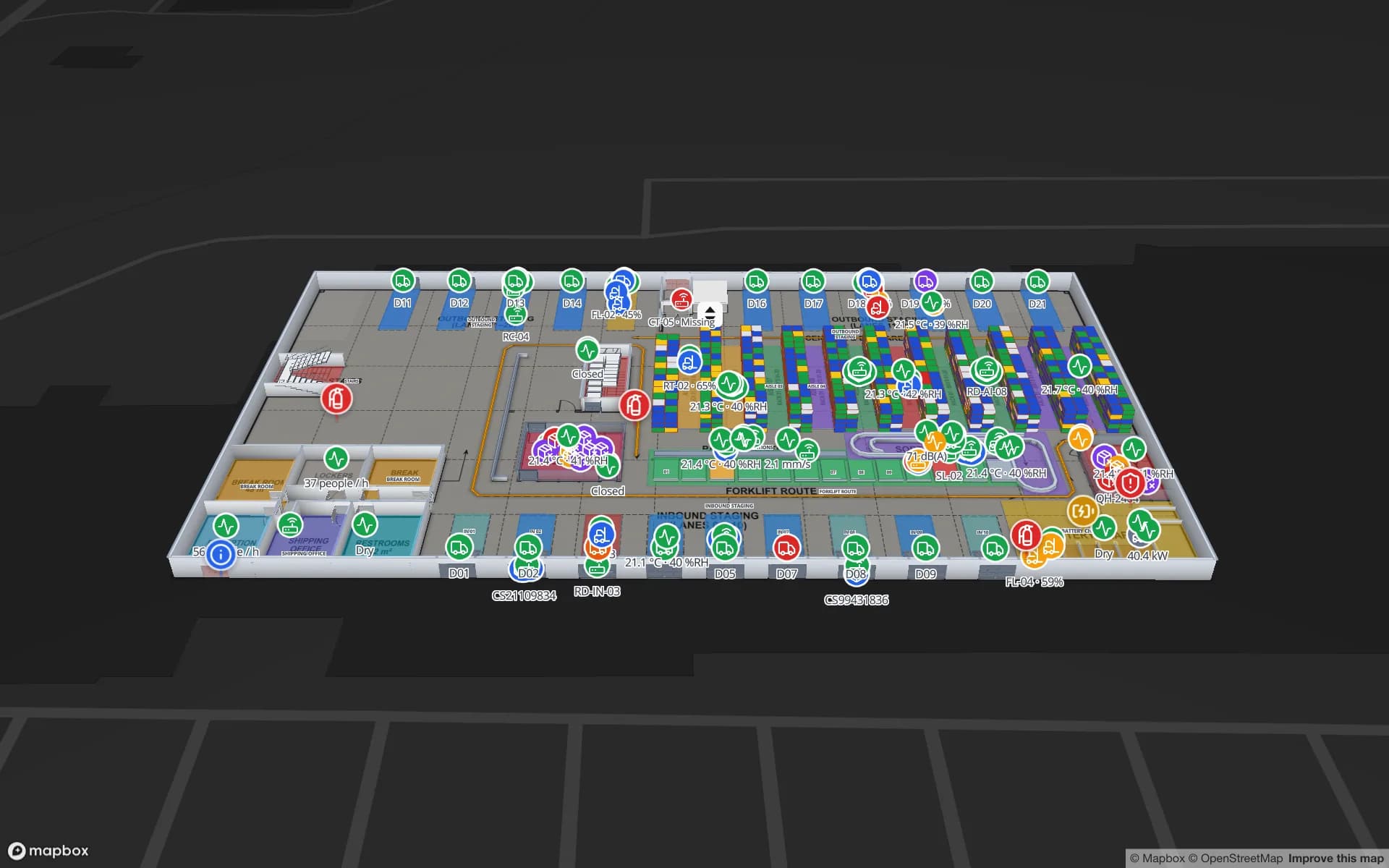
A central warehouse has a particular RFID problem: volume and variety. Cartons arrive mixed, leave mixed and are counted by the pallet. Portals at dock doors read tagged cartons on every move, a table of cartons with their last door and lane gives the map something to show, and a count rule raises an in-app alert when a lane holds fewer cartons than the order. The RFID gates page explains placement, and the Crestline demo shows 2,204 rack locations with staging lanes before the docks.
Apparel and returns: the textile city’s modern problem

Łódź has made cloth since the nineteenth century, and clothing is still where item-level RFID earns its keep: garments are small, numerous, look alike and move constantly between stockroom, shop floor and returns. A hang-tag or sewn-in label with a UHF tag can be read in a carton, in a bin or at a door without opening it.

Tags on apparel behave differently from tags on metal or liquids, so test them in your own bay first; the post on RFID tags for metal, liquids and apparel lists what to check, and how RFID stock counting works describes counts by zone. In a returns hall the map shows which bin holds which items and how long they have waited; in a shop, the Retail Mart demo shows item-level reads, shelf stock and RFID readers at the exits across three floors.

The special economic zone: plants at the junction

The Łódź Special Economic Zone describes itself as “growing business in central Poland since 1997”, located at the junction of the A1 and A2 motorways, and counts more than 820 investment projects on its own site. It has its seat in the historic Grohman Factory, a few minutes from the centre.

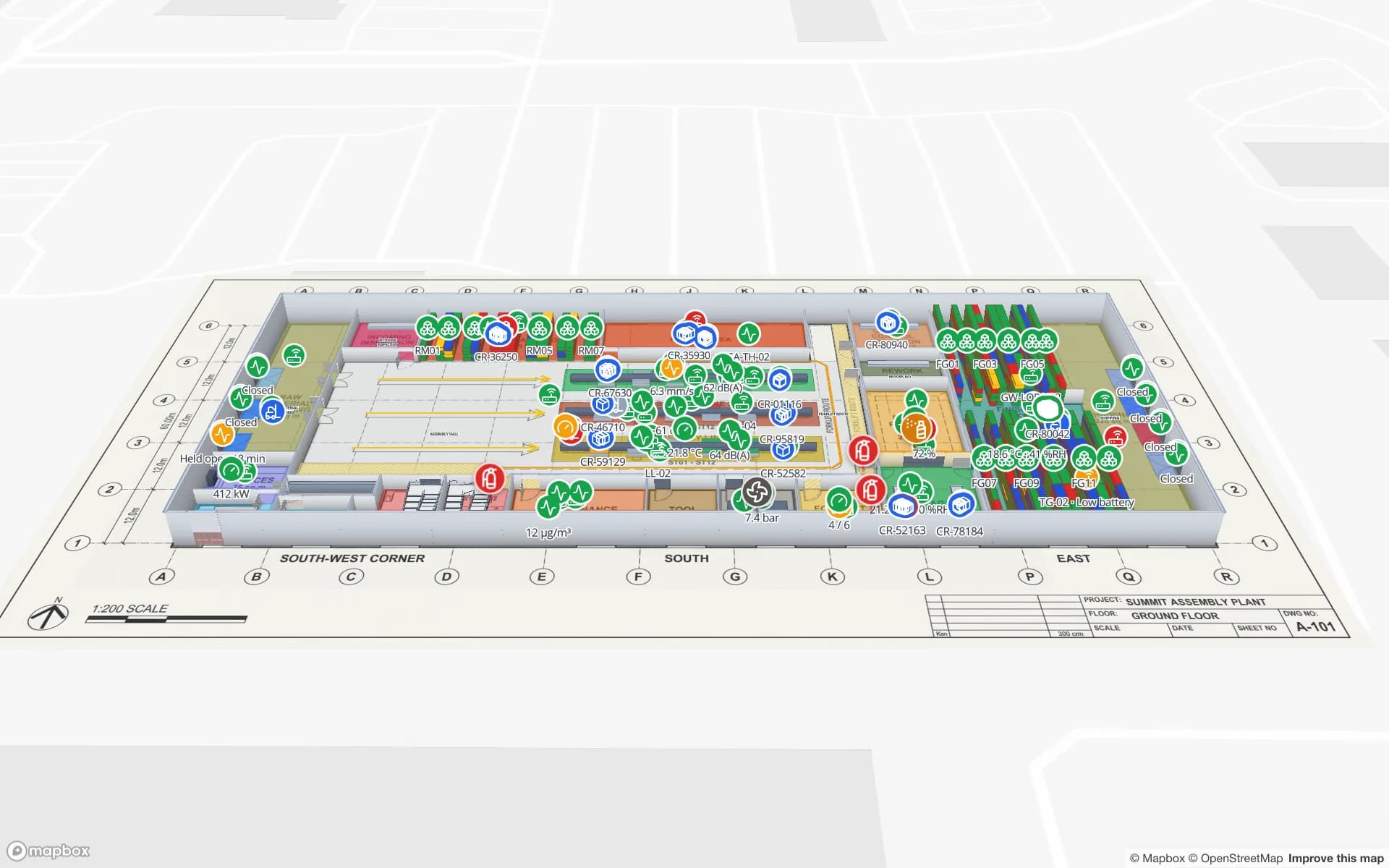
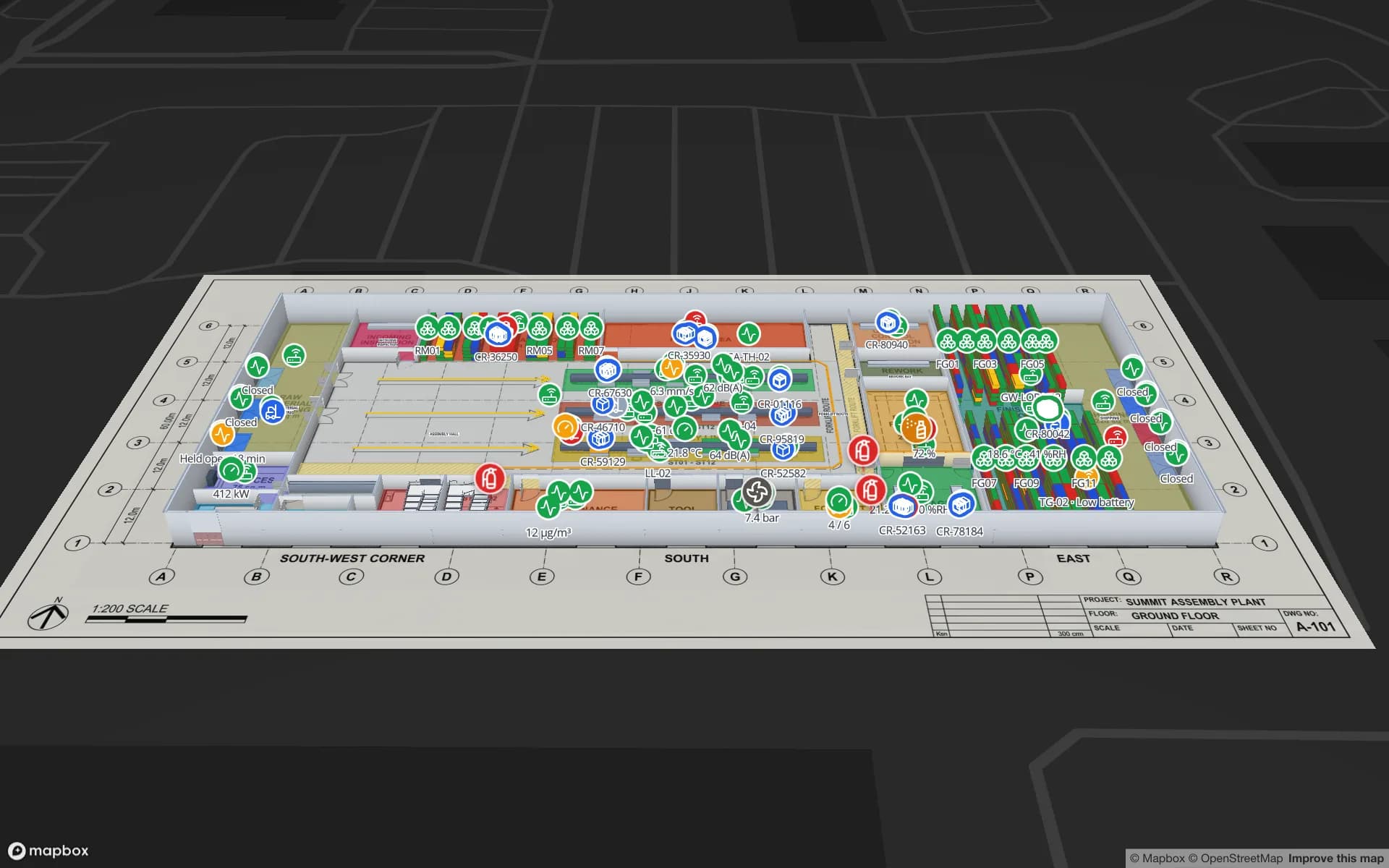
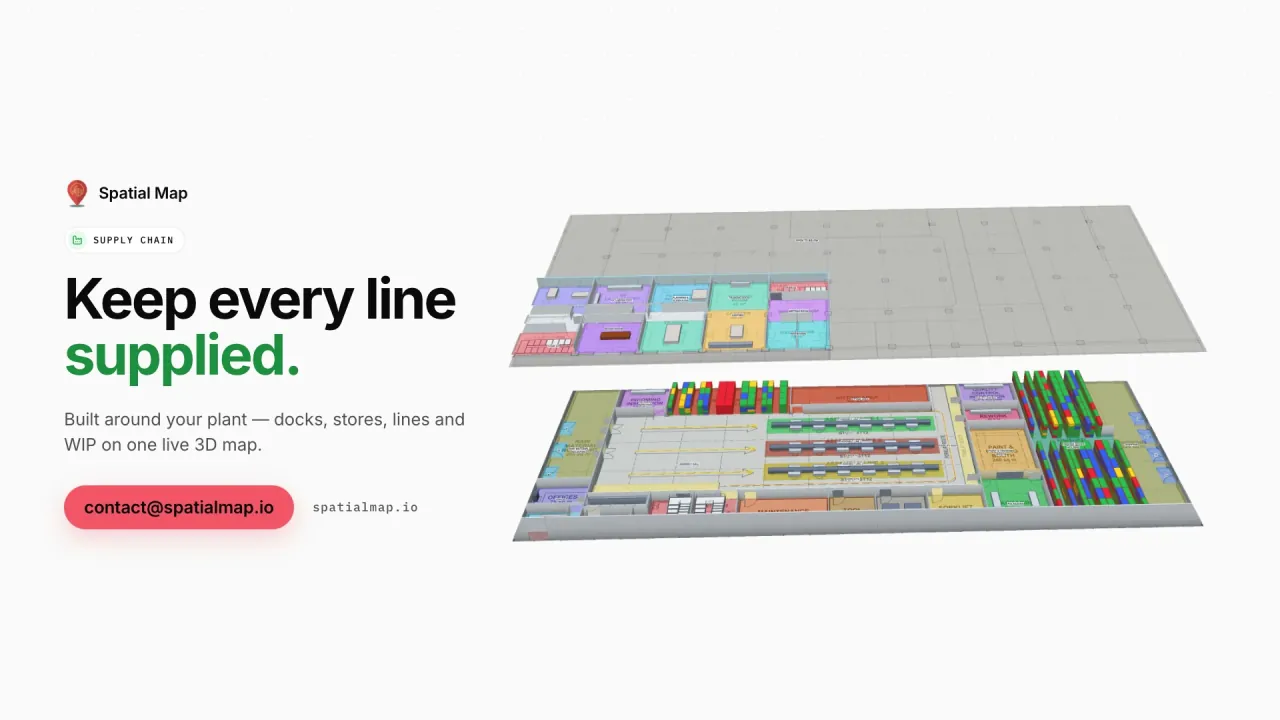
Plants in a zone like this need what any plant needs: raw materials in, work in progress between stations, finished goods out. RFID tags on carriers and returnable racks, read at doors and stations, put each container on the map without a manual scan, and the Summit demo shows three lines with WIP carriers and 867 rack locations on one plant map. Spatial Map shows what your readers report; it does not control machines or tell you what a zone permit requires.

Old mills, new buildings, missing drawings

Ludwik Geyer, a Saxon industrialist, is considered a pioneer of Łódź’s textile industry; he built the city’s first factory chimney and powered his looms with a steam engine. After 1945 his White Factory was taken into state ownership and ran as a cotton plant until the 1990s. Today it houses the Central Museum of Textiles. Industrial buildings elsewhere in the city have also been given new uses.

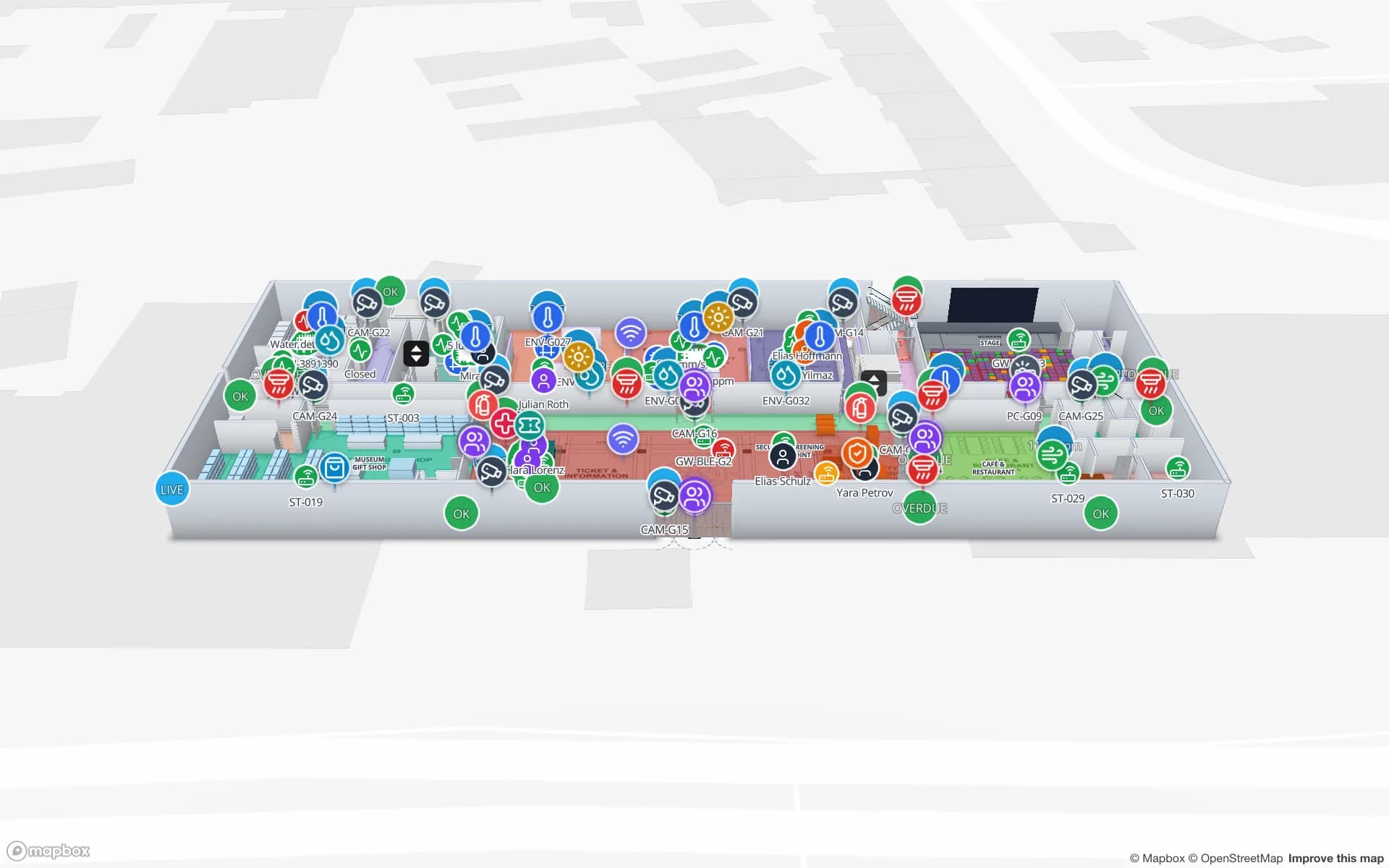
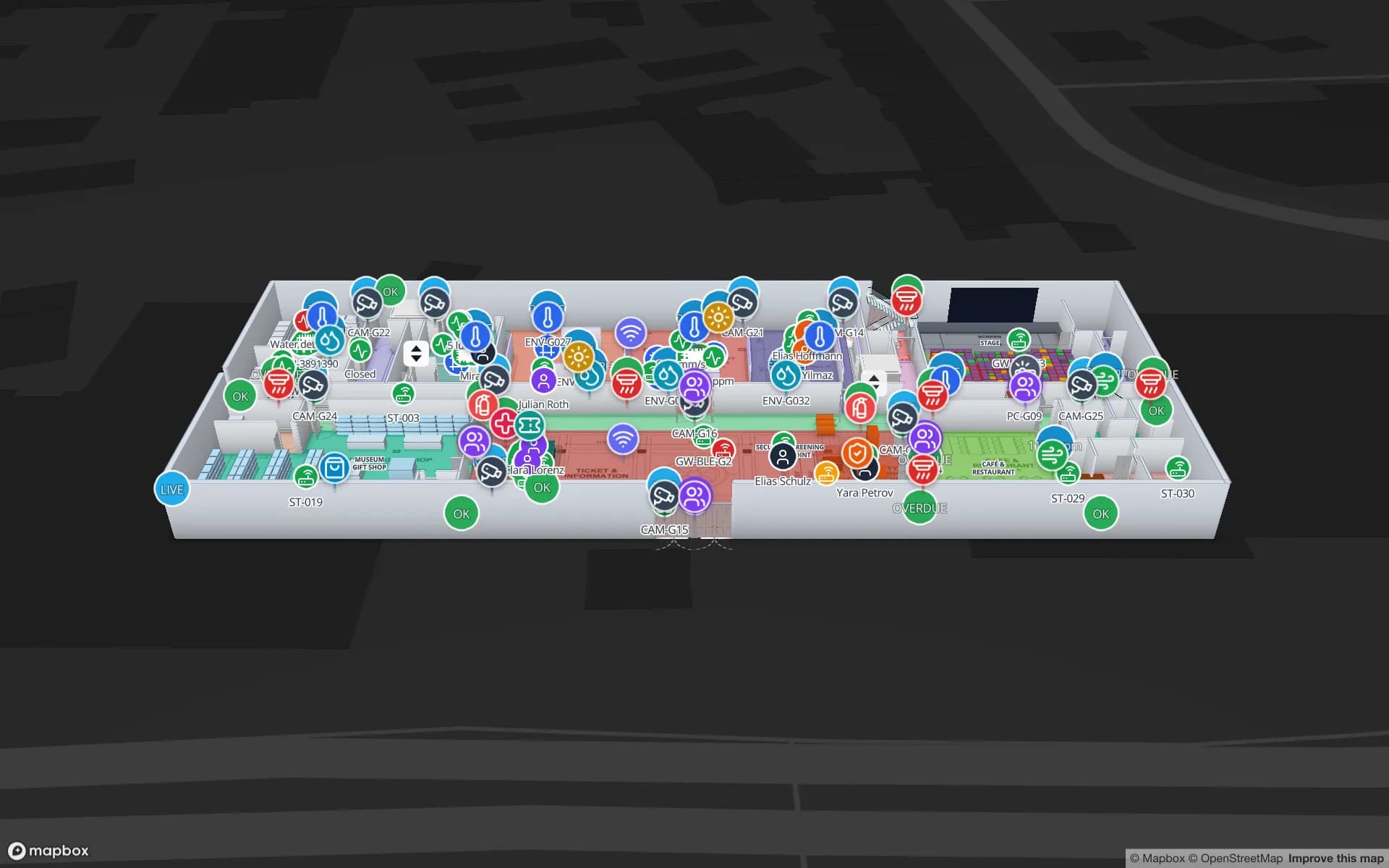
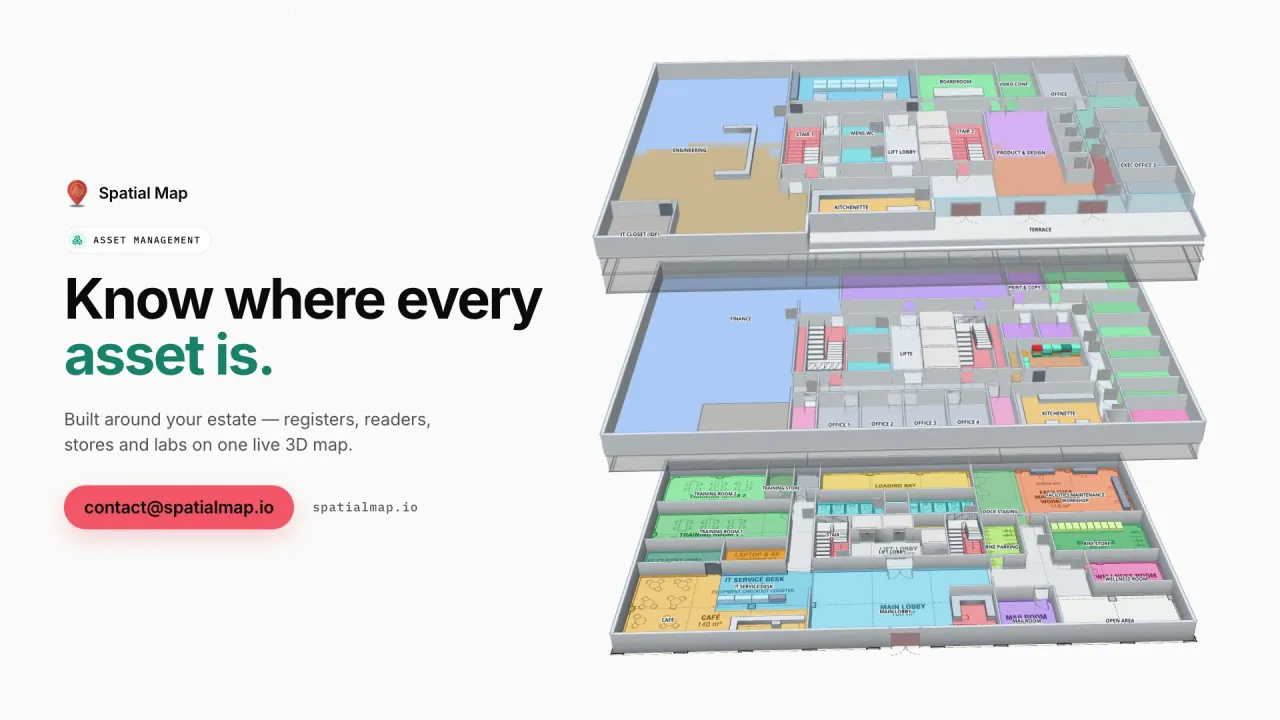
Converted buildings have a mapping problem and a tagging opportunity. Their plans are paper, scans or conversions of conversions: upload what you have as a PDF or image, align it at real scale and let AI Map draft walls and doors for a person to review. A collection or archive can then tag its objects: the Production Museum demo shows object tags on artworks and exhibits, climate sensors and audio guides tracked by gallery across three floors. This is a general pattern for any collection; it is not a statement about any particular museum.

Services for teams in Łódź

Łódź teams usually begin in one of two places:

Also served nearby

The same page covers Stryków and Zgierz, Piotrków Trybunalski to the south, Pabianice and Konstantynów Łódzki, Aleksandrów Łódzki and Brzeziny. The app has no Polish interface; room names, bin codes and report titles in Polish display exactly as typed.

How Spatial Map does it

From a dock door to a carton on the map

  1. 01

    Pick a door or a lane

    Start where cartons or items are most often lost: the dock doors of one central warehouse, or the returns hall.

  2. 02

    Draw the building

    Upload the plan or a scan, align it at scale, and let AI Map draft the floor for a person to review.

  3. 03

    Connect your reads

    RFID middleware posts rows through the table write API, or Spatial Map polls a REST endpoint; CSV and Excel work for a first test.

  4. 04

    Add count and silence rules

    In-app alerts for short lanes, items waiting too long and readers that stopped reporting.

What Łódź teams track

Central warehouses for retail chains

Cartons by door and lane, stock by rack, and the trailer yard.

Apparel, returns and shop floors

Item-level reads at doors and on shelves across several floors.

Plants in the economic zone

Carriers, returnable racks and finished goods from line to dock.

Collections and archives

Tagged objects located by gallery, with climate readings by room.

See it on real demo facilities

Fictional names, real floor plans, live sensors, RFID, BLE tags and gateways — open any of them in the browser.

All 13 demo facilities

RFID tracking in Łódź — questions we get

No. Your readers, portals or handhelds and their middleware do the reading, and they post the reads to a table through the write API, or expose a REST endpoint that Spatial Map polls. Spatial Map draws each read in the place where it happened.

Often, but it depends on the tag, the antenna layout and the fabric and packaging, so test your own cartons and bays first. Spatial Map does not make hardware or verify read rates; it shows what your system reports, including readers that stopped reporting.

Not yet. The app is available in English, German, French, Spanish, Arabic and Chinese, and each user picks their own language. Your own content — bin codes, room names, report titles — can be in Polish.

Yes. Upload a scan, a photograph of a plan or a sketch aligned at real size, or measure and draw the outer walls first. AI Map can draft from the picture, and you correct what it gets wrong. Our services team can also do the mapping remotely for a fixed price.

No. Spatial Map is sold online and our team works with customers in Poland remotely, by video call and through the contact form, in English or German. There are no local resellers or partners.

In US dollars, the same worldwide: a 7-day free trial for up to 5 facilities with no card, then Pro at $60 a month or $600 a year for up to 4 facilities. RFID hardware, if you ask us to source it, is quoted per project and is not part of the subscription.

Map one Łódź dock door and its cartons this week.

Start the free trial and open the Crestline demo, or send us a plan of a warehouse or returns hall and a sample of your reads through the contact form.