Dallas–Fort Worth · Inland ports, DFW Airport and foreign trade zones

Inventory tracking in Dallas and Fort Worth, from inland-port boxes to airport cargo

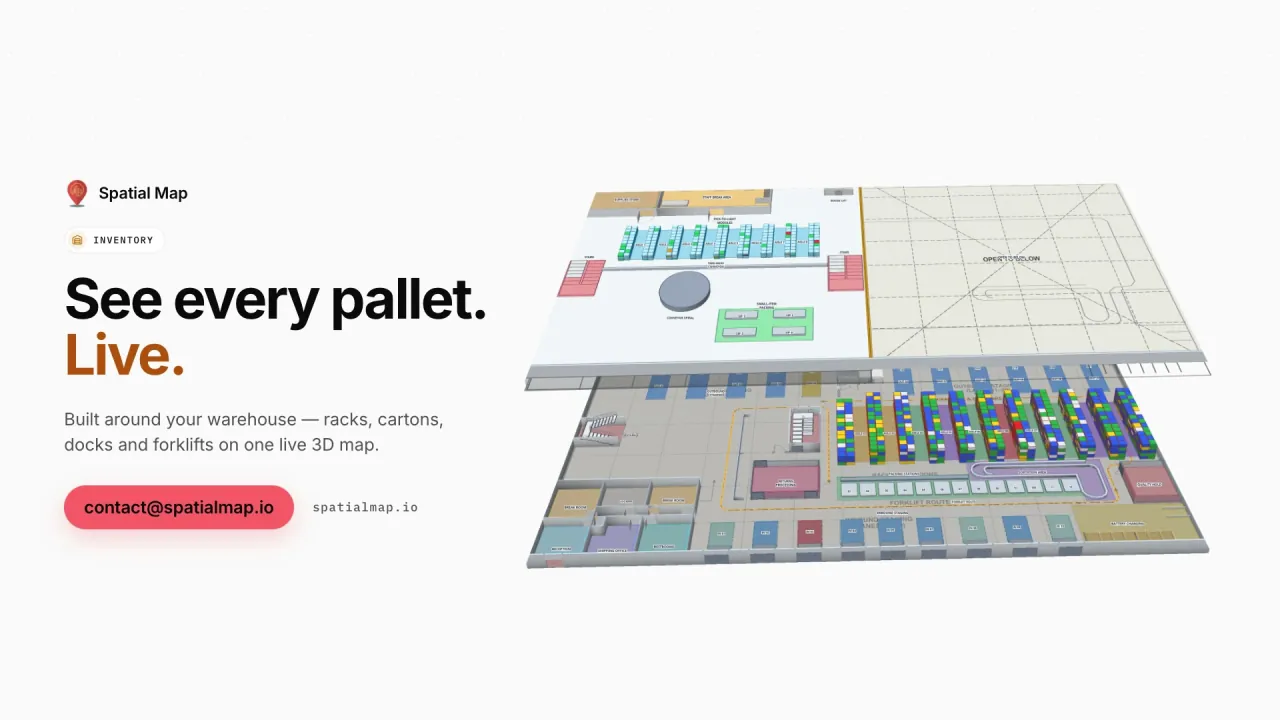
Spatial Map shows stock where it sits: rack locations colored from your WMS, pallets read at dock doors, staging lanes and trailers on a live 3D map of the building. Inventory tracking in Dallas is shaped by scale. The metro calls itself a global inland port, its distribution districts are measured in thousands of acres and millions of square feet, and the buildings in them are big enough that finding one pallet among thousands of locations is a daily task.

No credit card. Runs in the browser. Pro is $60/month for up to 4 facilities. Book a demo

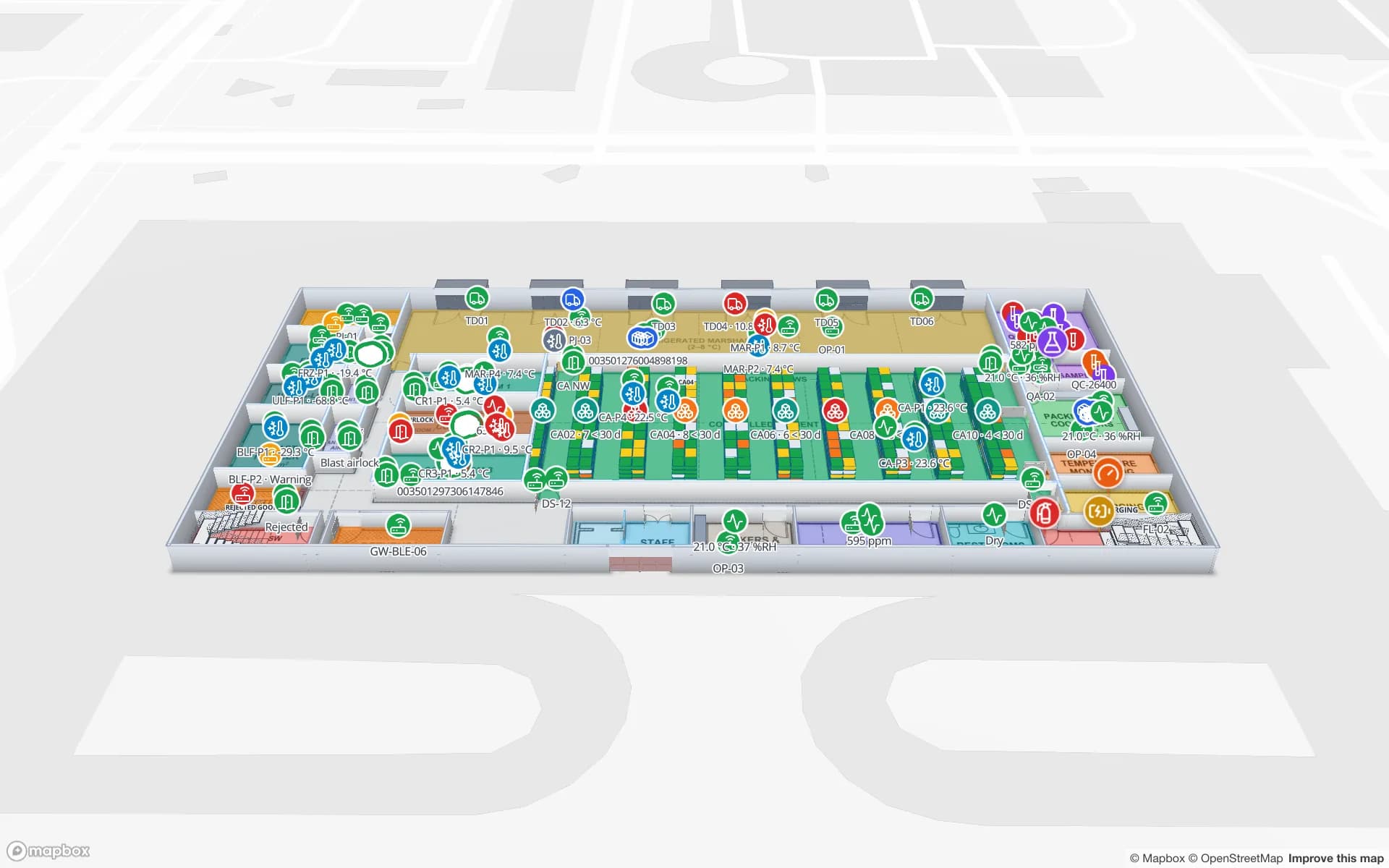
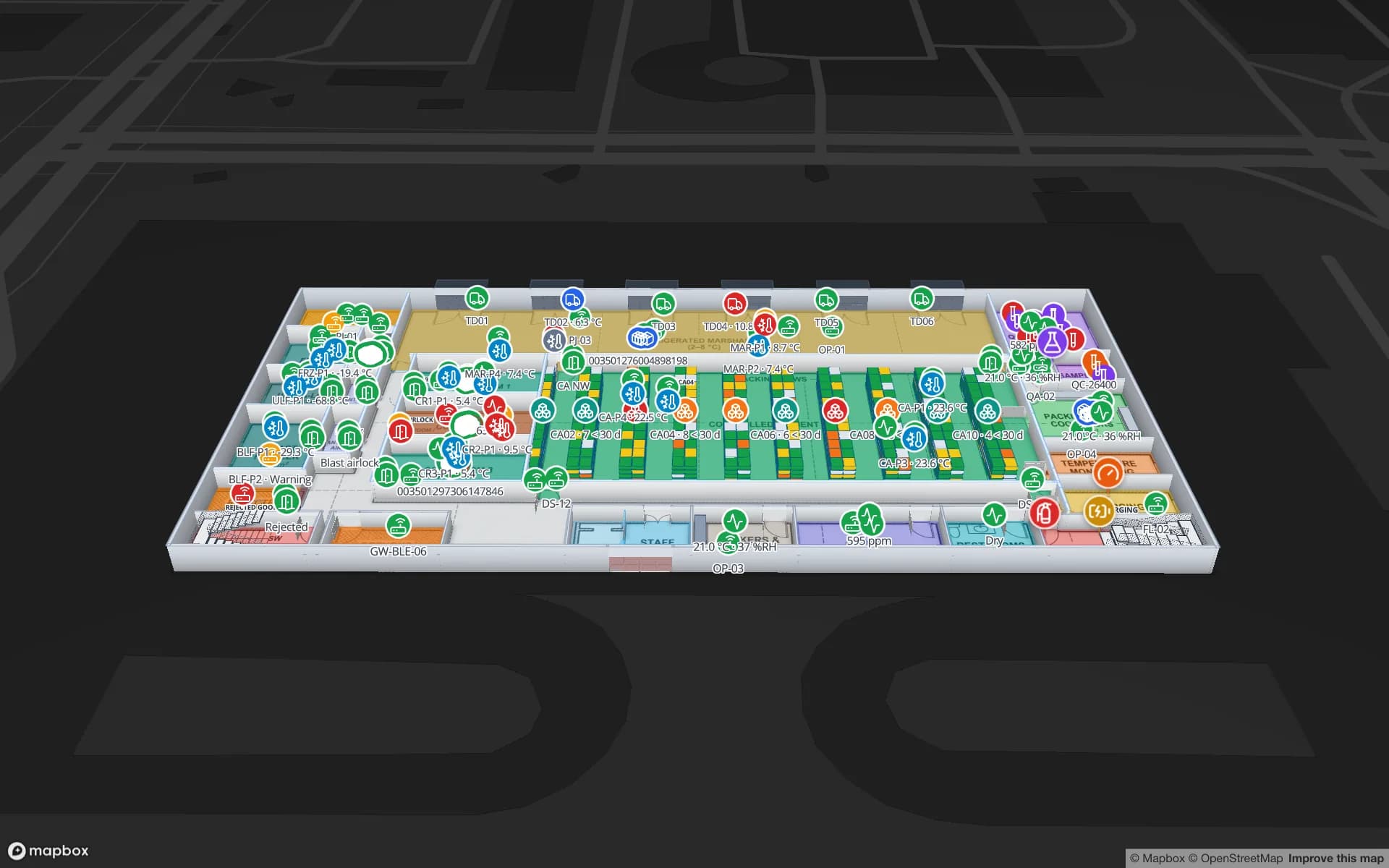
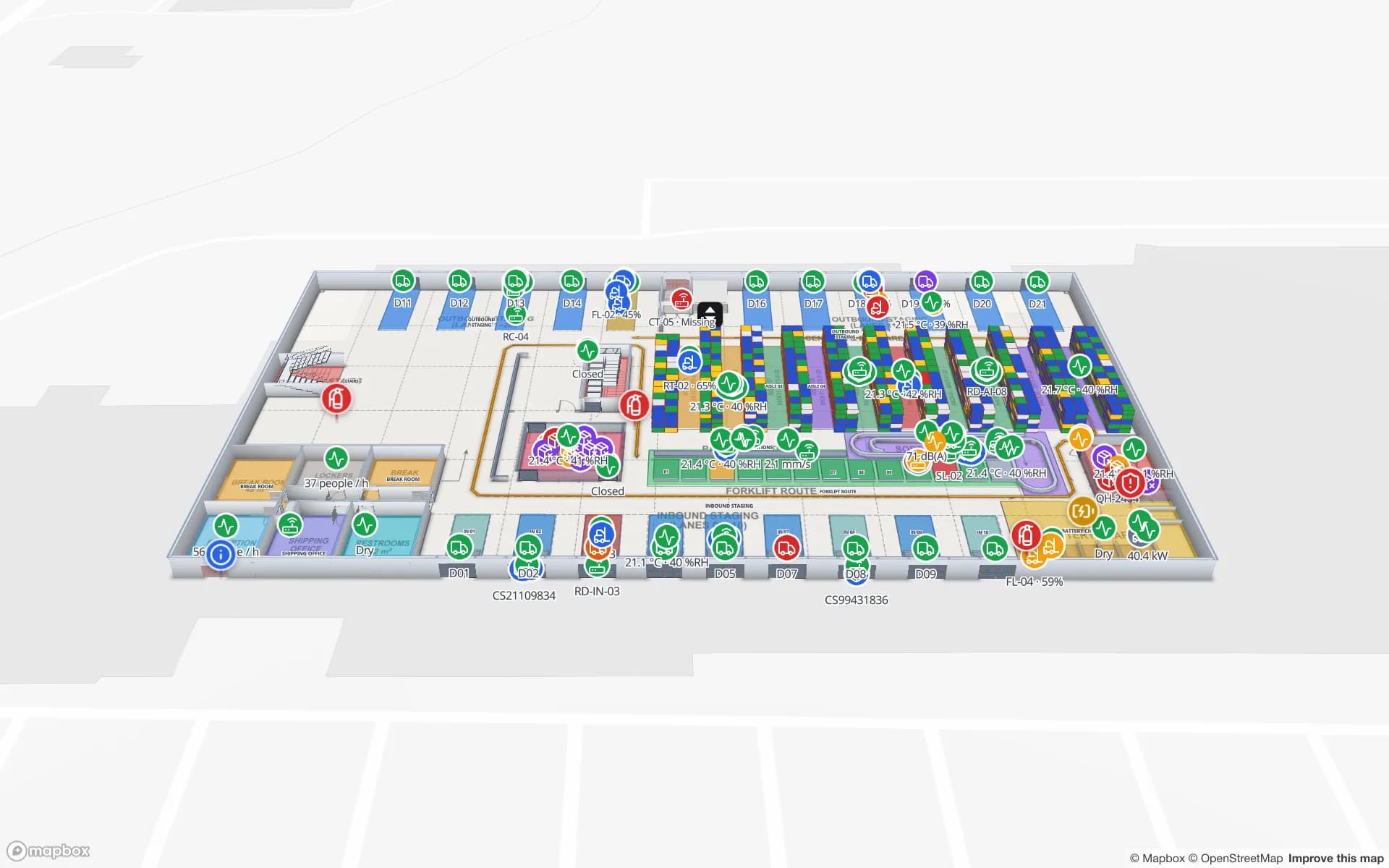
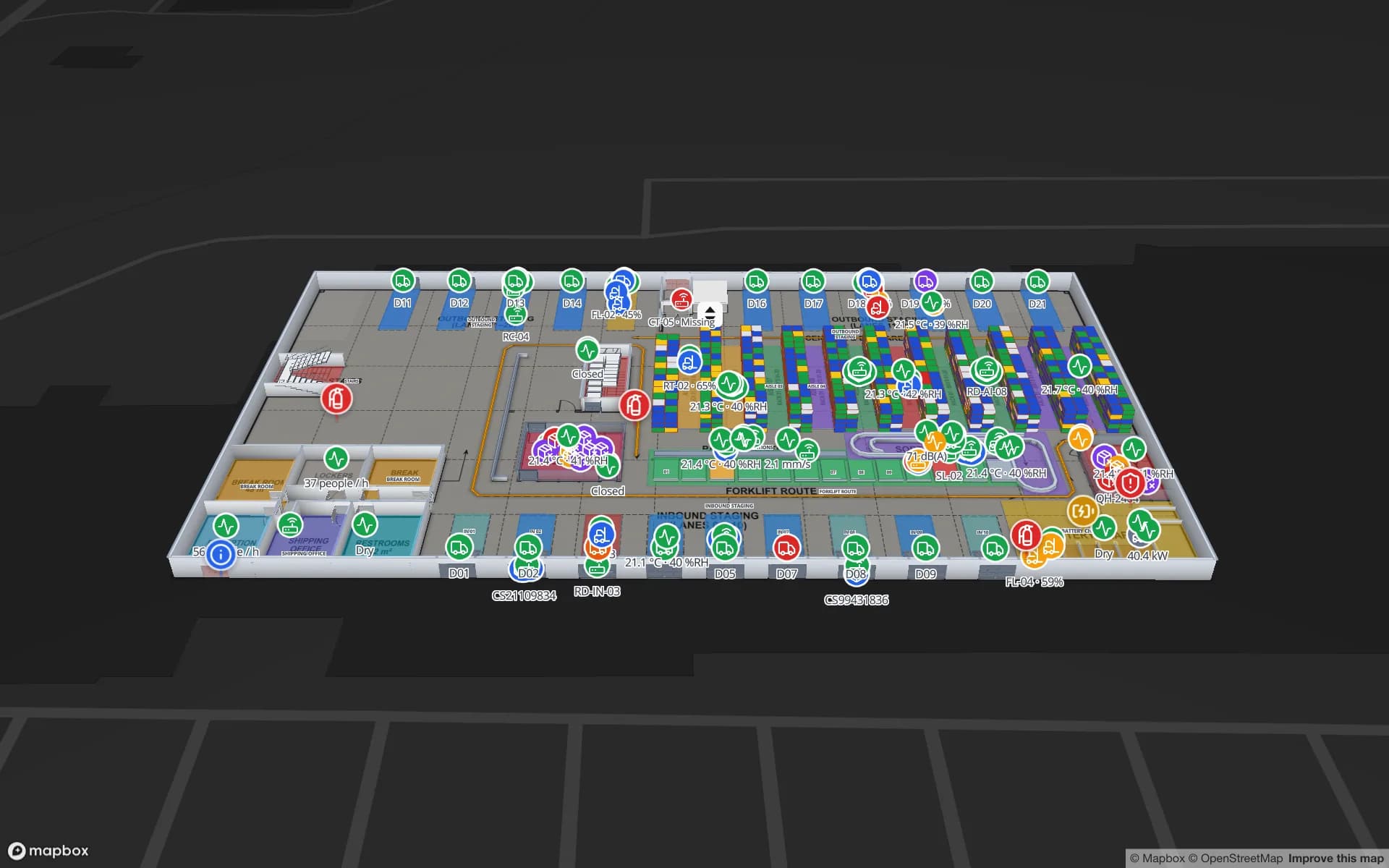
Crestline Fulfillment Center, a fulfillment center demo, in the Spatial Map 3D viewer with live device markers
Crestline Fulfillment Center
Crestline Fulfillment Center, a demo distribution building: 20 racks with 2,204 locations, pick modules, staging lanes, forklifts and the trailer yard.
Rack locations in the Crestline fulfillment demo
2,204
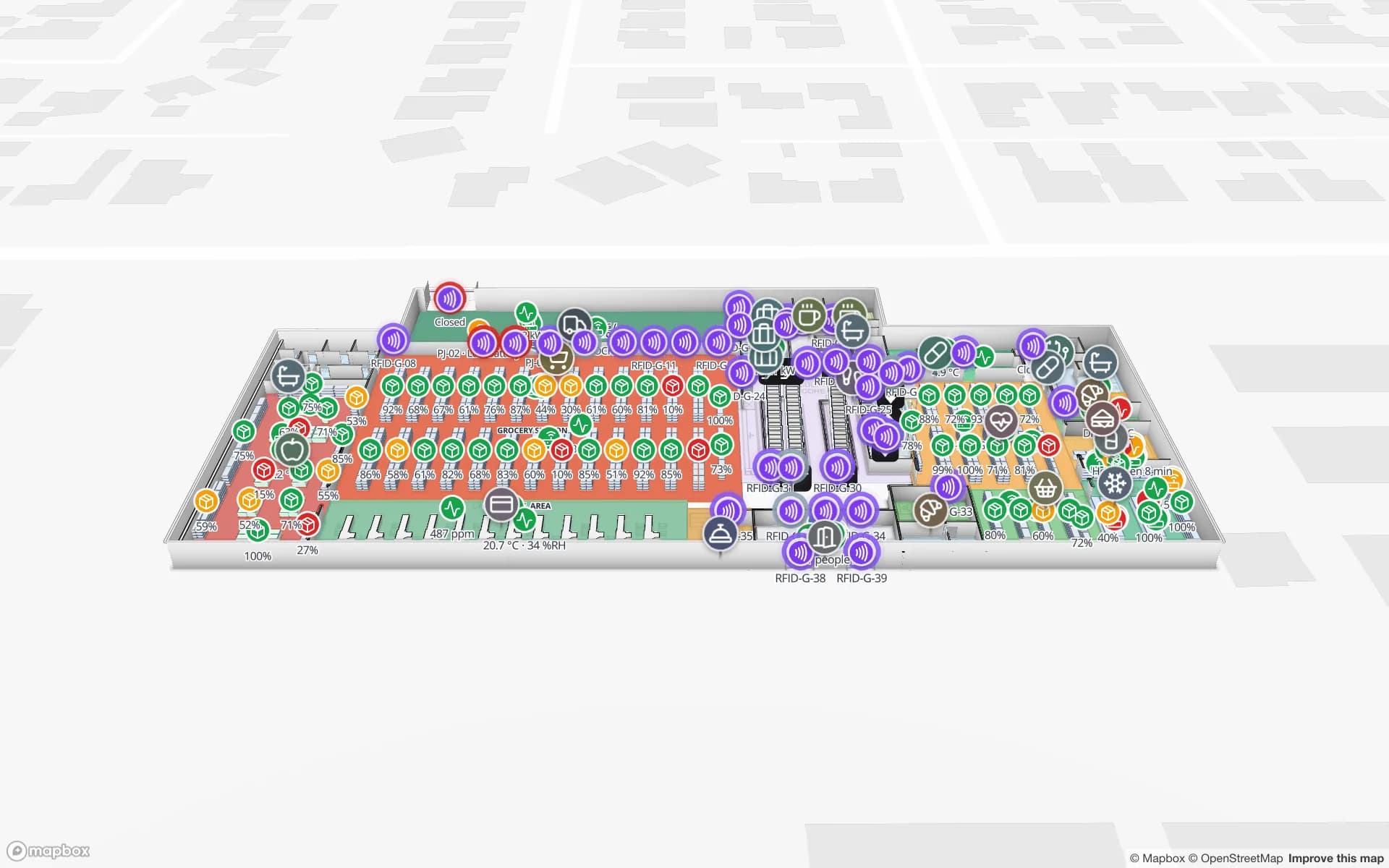
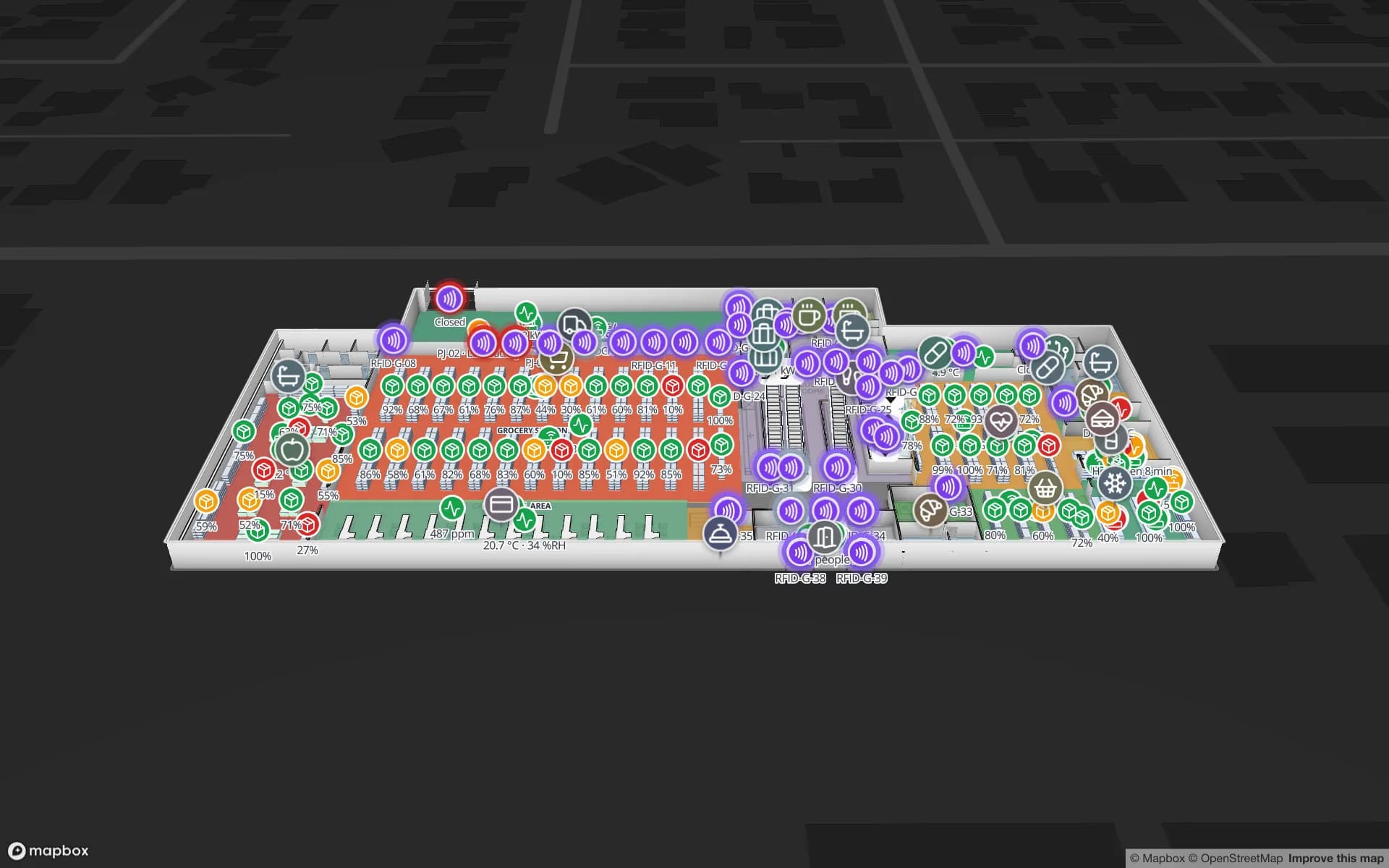
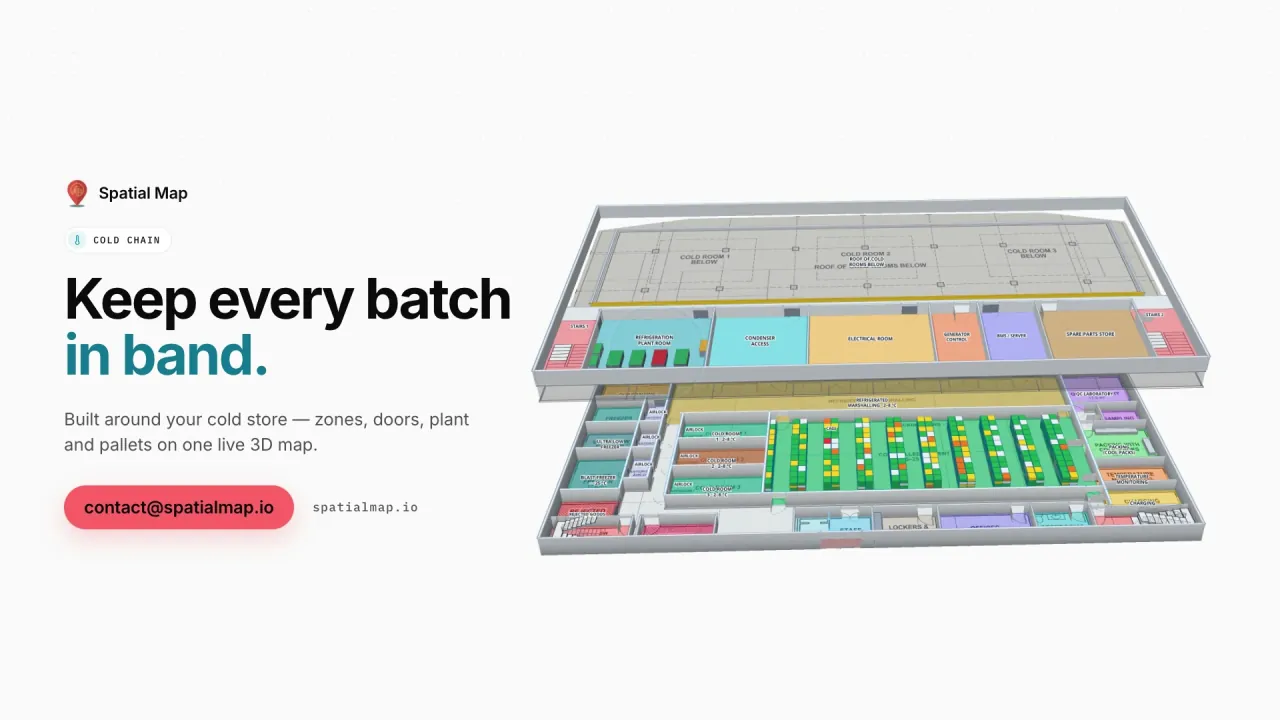
Rack locations in the Polar Pharma cold-store demo
1,140
How often alert rules are checked, with alerts shown in the app
15 s
Free trial, up to 5 facilities, no card
7 days

A region that calls itself a global inland port

The Dallas Regional Chamber’s 2026 logistics sheet describes the whole region as a global inland port, with DFW International Airport and a Fort Worth industrial airport capable of large-scale cargo operations. It lists two Class I rail lines, interstates 30, 35 and 45 plus I-20, and says carriers can reach up to 99 percent of the US population within 48 hours.

The chamber’s figures describe reach, not storage, but they explain why so much inventory sits here: a building in the middle of the country holds stock for many regions at once, and it is expected to ship any of it on short notice. That is the inventory problem in one sentence. Spatial Map answers the first half of it, where is the stock inside the building, by coloring each rack location from your WMS table so a shortage or an over-full aisle is visible in seconds. See CSV bin inventory to a live rack map for how a plain export becomes the map.


Two inland-port districts, in the chamber’s numbers

In southern Dallas County, the chamber says, the inland port covers 7,500 acres and five cities, with a 360-acre intermodal terminal giving access to the ports of Los Angeles and Long Beach and more than 25 million square feet of occupied or build-to-suit space. North of Fort Worth, it describes a 9,600-acre inland port district within a 27,000-acre development, anchored by an airport the chamber calls 100 percent industrial and corporate.

Buildings in districts like these are large, new and often leased by the same operator in several places. A 3PL running three or four of them wants one view across all: the same rack colors, the same dock-door names, the same reports. Facilities, reports and data can be grouped into named solutions inside one workspace, and the Crestline demo is a good template for the big-box layout: 20 racks, 2,204 locations, pick modules, packing stations, docks and the trailer yard.

Foreign trade zones, freeport status and the dwell clock

The chamber lists five foreign trade zones in the DFW area, including No. 39, granted to DFW Airport and spanning seven counties, and explains that Texas freeport exemptions let local governments exempt goods that move out of state within 175 days of acquisition. Both ideas hang on how long stock sits and where it goes next.

Spatial Map does not decide zone or tax status, and it is not a customs system. What it does is make the dwell visible. A column in your stock table for receipt date or days on hand drives a color rule on the racks, so the oldest pallets are the reddest, and an alert rule such as “row matches for N minutes” flags stock that has waited too long in a staging lane. Your trade or tax team keeps the records; the map shows the warehouse picture they rely on. The warehouse digital twin versus WMS post explains the split.

DFW Airport and air cargo buildings

The airport’s own fact sheet lists 17,183 acres of real property, seven runways and five terminals, centered between its owner cities of Dallas and Fort Worth, and says that 21 cargo airlines provide worldwide freighter service. Around such an airport sit cargo buildings, forwarders’ warehouses and cold rooms where inventory moves by the hour: small pieces, tight cutoffs, constant breakdown and build-up of loads.

Item-level RFID suits that handling because it counts by walk-through rather than by hand. A handheld or a portal reads a whole shipment, and the map shows which lines of a shipment are received and which are missing. See RFID stock counting and how RFID stock counting works for the numbers on read rates and counting. For a building that handles both the airport’s cargo and ordinary pallets, the same map covers both with different layers.

Services for teams in Dallas and Fort Worth

North Texas teams usually start with the biggest building and the clearest pain:

Also served nearby

The same page covers Lancaster, Wilmer, Hutchins and Grand Prairie in the south, and Haslet, Arlington, Irving and Plano around the airport and the north side. Nothing needs to be installed at any of them: the map opens in a browser.

How Spatial Map does it

From a rack export to a live building map

  1. 01

    Pick the first building

    The biggest box or the one with the most mislaid stock, not necessarily the newest.

  2. 02

    Map racks, aisles and doors

    Upload the plan, let AI Map draft racks, aisles and doors for a person to review, and name locations like your WMS does.

  3. 03

    Bind stock and reads

    The WMS table drives rack colors; RFID middleware posts reads through the write API, a polled REST endpoint or CSV and Excel uploads.

  4. 04

    Add dwell and silence rules

    In-app alerts for stock waiting too long in a lane and readers that stopped reporting.

What Dallas–Fort Worth teams track

Big-box distribution centers

Rack stock by location, pick modules and the trailer yard in one map.

Inland-port cross-docks

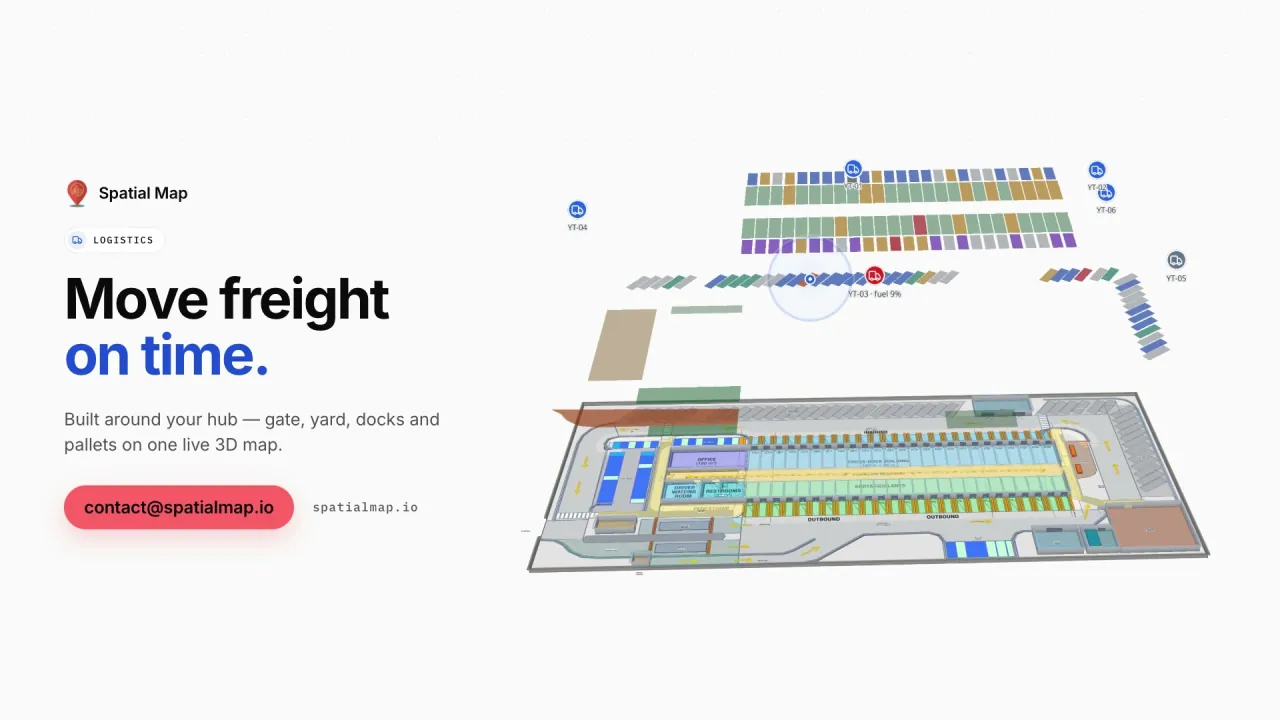
Dock doors, yard slots and pallets staged for the right trailer.

Cold rooms and held stock

Temperature zones, cold-room doors and stock on hold by location.

Retail replenishment

Shelf and department stock on a multi-floor store plan.

See it on real demo facilities

Fictional names, real floor plans, live sensors, RFID, BLE tags and gateways — open any of them in the browser.

All 13 demo facilities

Inventory tracking in Dallas: questions we get

No. It is not a customs, trade or tax system, and it does not decide any zone status. It shows where stock is and how long it has sat, from the receipt date or days-on-hand field in your own table; your trade team keeps the records.

No. The Crestline demo shows 2,204 locations and Polar Pharma 1,140. Racks are drawn once with their location grid and then colored from a table, so a larger building is more rows, not a new way of working.

Yes. Set up the first building as a template and repeat its room names, data links and reports. Facilities, reports and data can be grouped into solutions inside one workspace; Pro covers up to 4 facilities and larger networks are quoted as custom services.

A spatial view. Your systems stay the record; the map shows rack locations, staging lanes and dock doors colored by the data they produce, with history and reports on top. See the WMS integration guide for the options.

No. Spatial Map is sold online and our team works with customers in the United States remotely, by video call and through the contact form. There are no local resellers or partners.

In US dollars, the same worldwide: a 7-day free trial for up to 5 facilities with no card, then Pro at $60 a month or $600 a year for up to 4 facilities. RFID hardware, if you ask us to source it, is quoted per project and is not part of the subscription.

Map your biggest Texas building first.

Start the free trial and open the Crestline demo, or send us the plan of a distribution center and a sample of your WMS export through the contact form.