Cardiff · Canton depot, the port and the semiconductor cluster

Asset tracking in Cardiff, from the bogie drop to the cleanroom instrument

Spatial Map puts tagged equipment on a live 3D map of the building where it works, so a tag read at a store door becomes a component in a repair bay, an instrument in a laboratory or a handling frame in a quayside shed. Asset tracking in Cardiff has three recognisable homes: the rail depot that services the region’s trains, the port’s sheds and stores a short drive from the city centre, and the research and manufacturing sites of the south Wales compound-semiconductor cluster. Your readers, beacons and asset register do the reading; Spatial Map shows each item in place.

No credit card. Runs in the browser. Pro is $60/month for up to 4 facilities. Book a demo

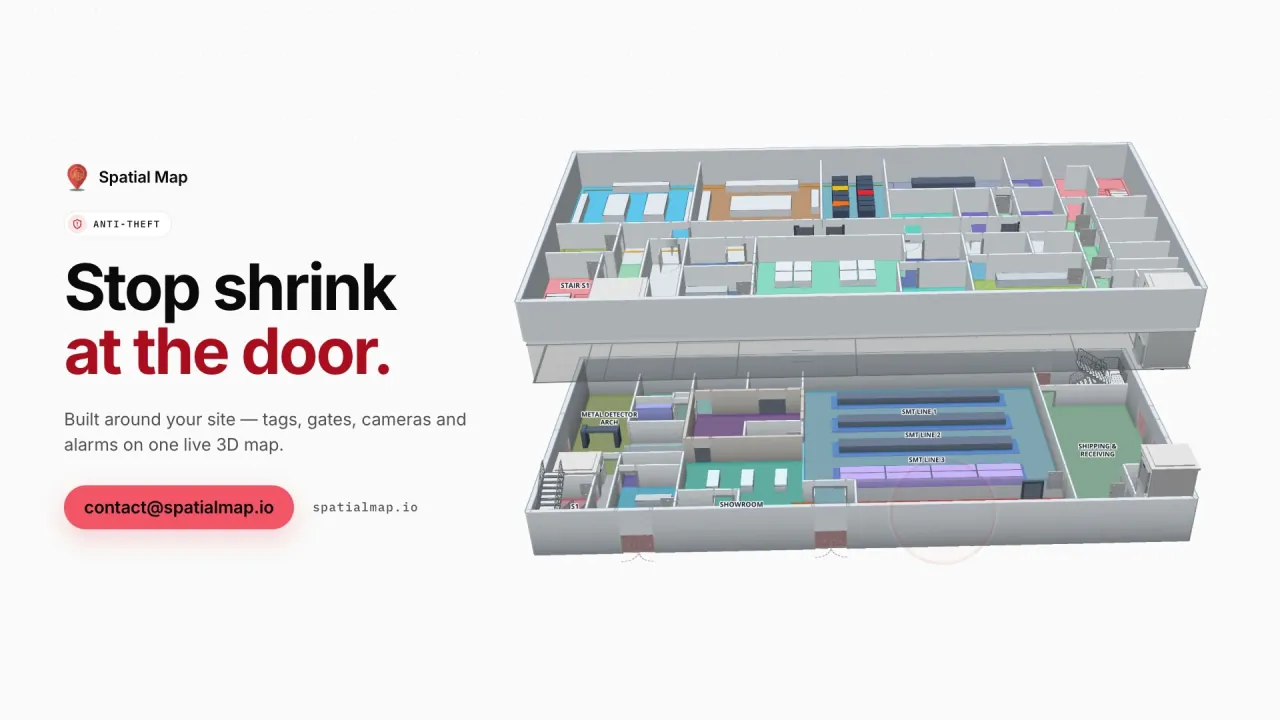
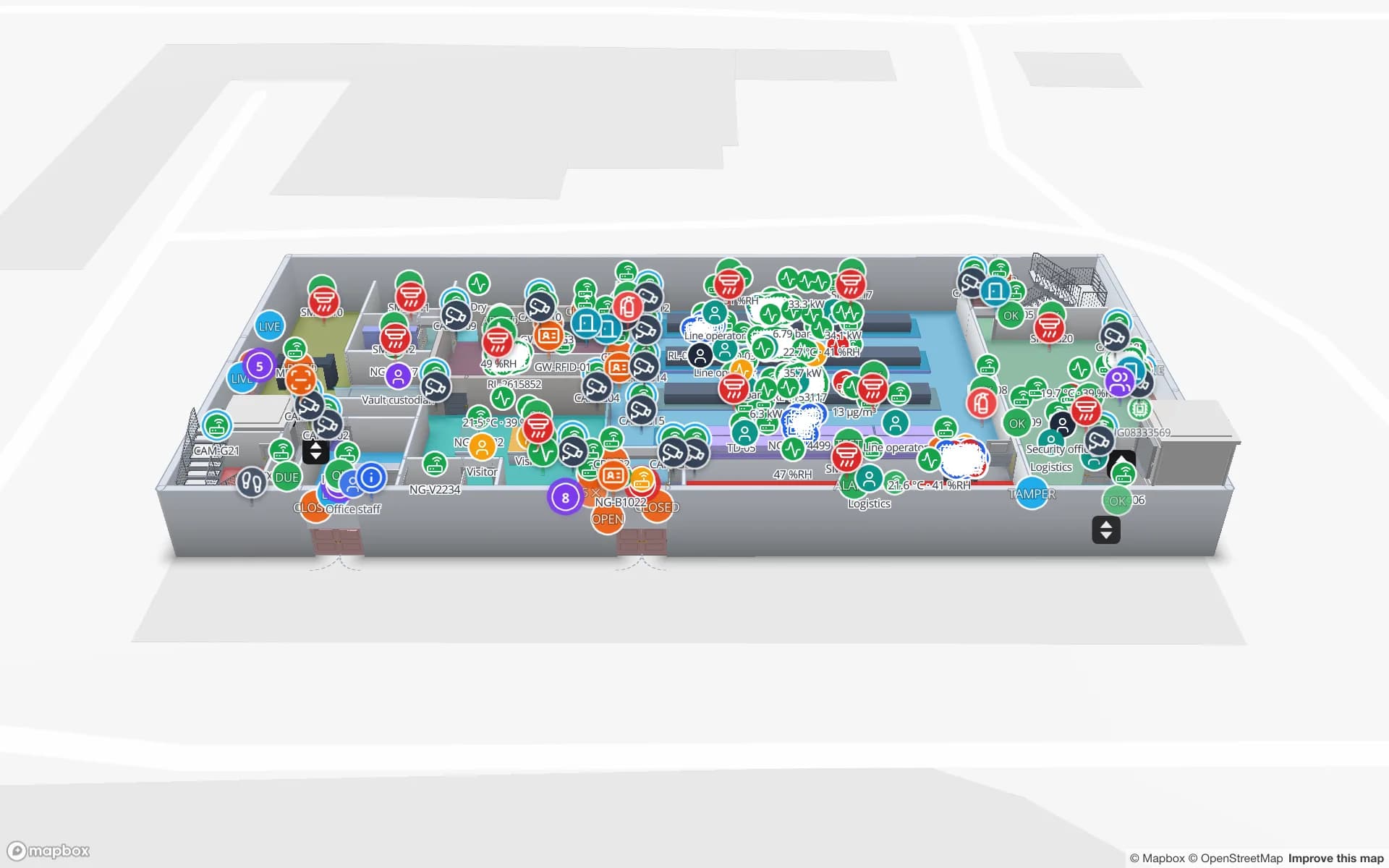
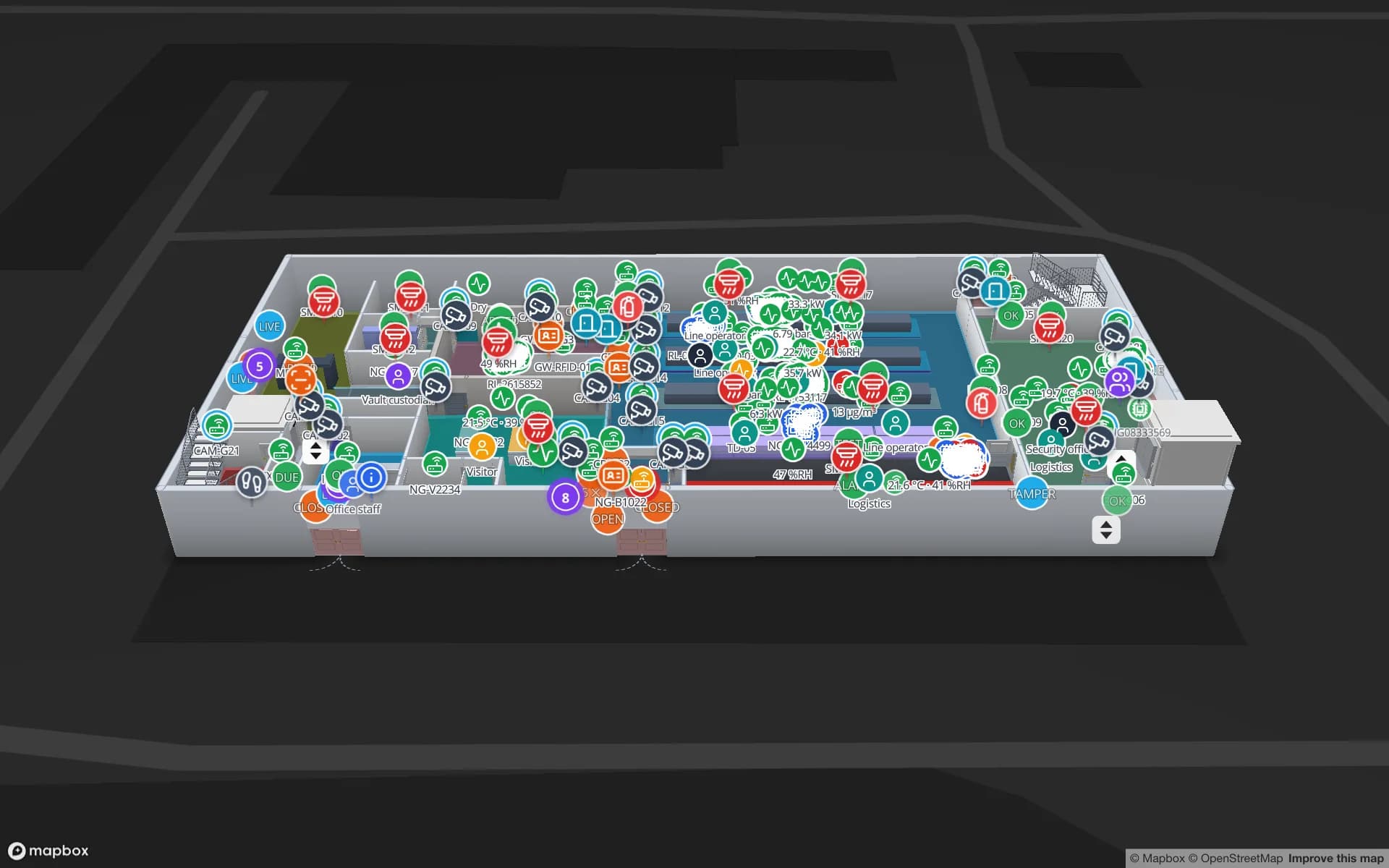
Northgate Electronics — Assembly & Secure Store, a electronics assembly & secure store demo, in the Spatial Map 3D viewer with live device markers
Northgate Electronics — Assembly & Secure Store
Northgate Electronics, a demo electronics plant and secure store on two floors: RFID-tagged material and BLE-tagged tools located room by room.
Floors in the Northgate demo, with tools located room by room
2
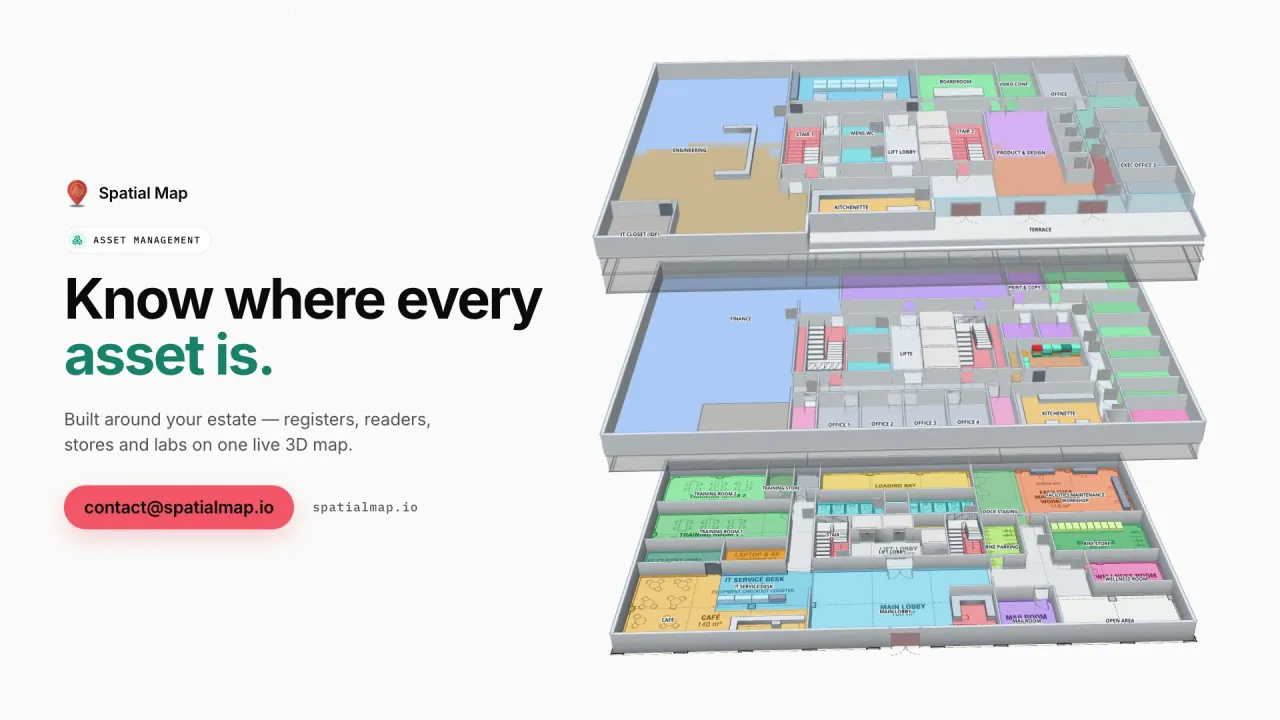
Floors in the Harborview asset-register demo
3
Registered assets across the three sites in the Asset Management film
796
Free trial, up to 5 facilities, no card
7 days

Canton depot: a £12 million bogie drop and the parts around it

The Welsh Government announced that a new £12 million bogie drop at Canton depot in Cardiff, funded through Transport for Wales, is now in service. Engineers can remove, repair and replace the wheel and underframe equipment beneath train carriages more safely, and trains that previously had to go elsewhere for specialist maintenance can now be serviced on site and return to service faster.

More work on site means more parts moving between stores, bays and the workshop: wheelsets, motors, gearboxes, test equipment and the lifting gear itself. Those are the items asset tracking is for: high in value, few in number and costly when one cannot be found. Tag each component or its container with an asset ID, read it at the store and bay doors, and the map shows which are in repair, which are waiting and which are back on the shelf, with a row history of where each has been. BLE tags on tools and test kit show them room by room; see RFID tool tracking and RFID versus BLE for asset tracking. Spatial Map does not plan maintenance or connect to fleet-management systems; it records where things are.
Compound semiconductors: a cluster led from Cardiff University

CSconnected is the compound-semiconductor project in south Wales led by Cardiff University. The UK Government announced £25 million for it through UK Research and Innovation’s Strength in Places Fund, out of a total project value of about £43.74 million, with the rest from industry. Its stated aim is a cluster of manufacturing excellence, with applications in communications, 5G, autonomous vehicles and medical devices.

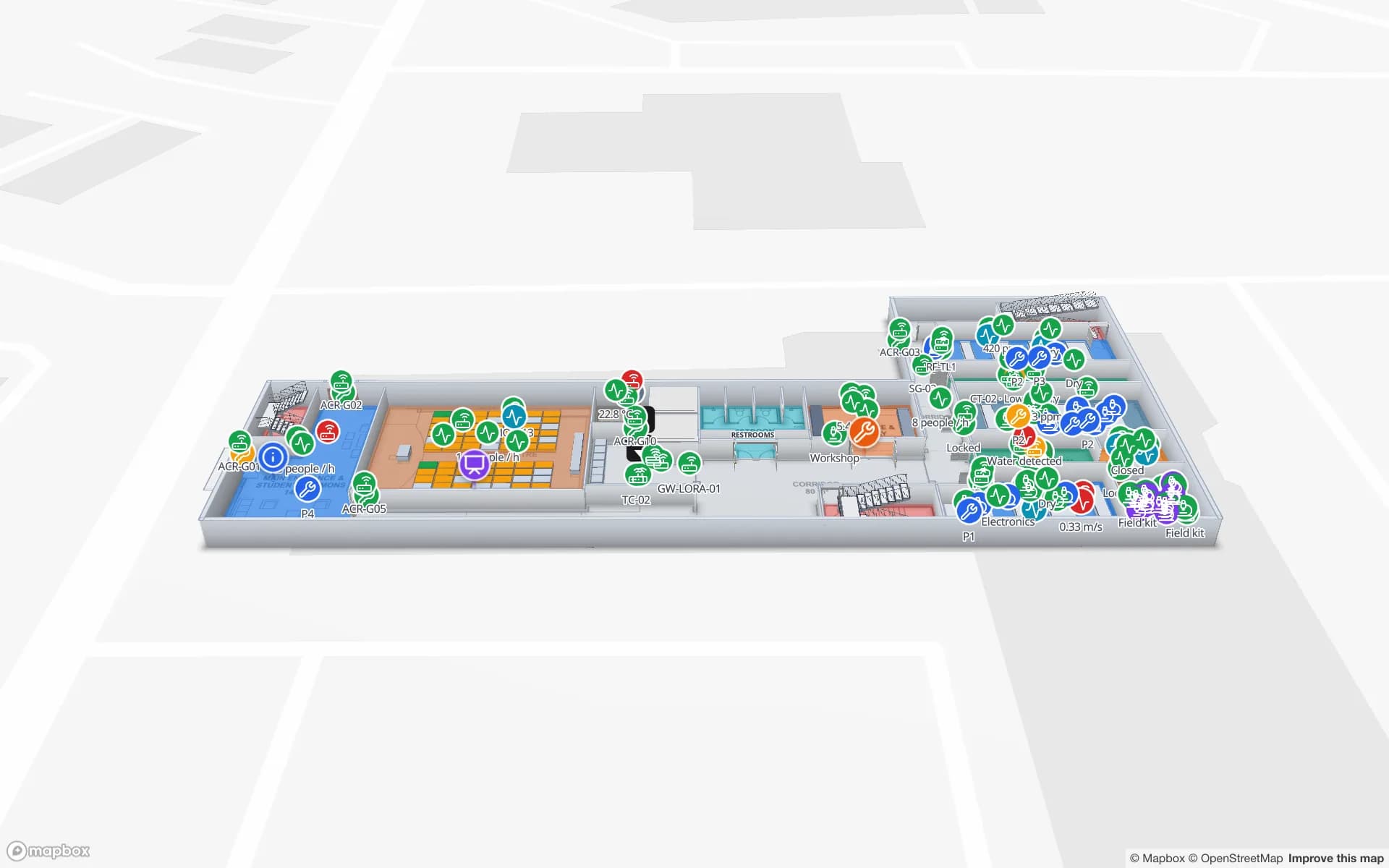
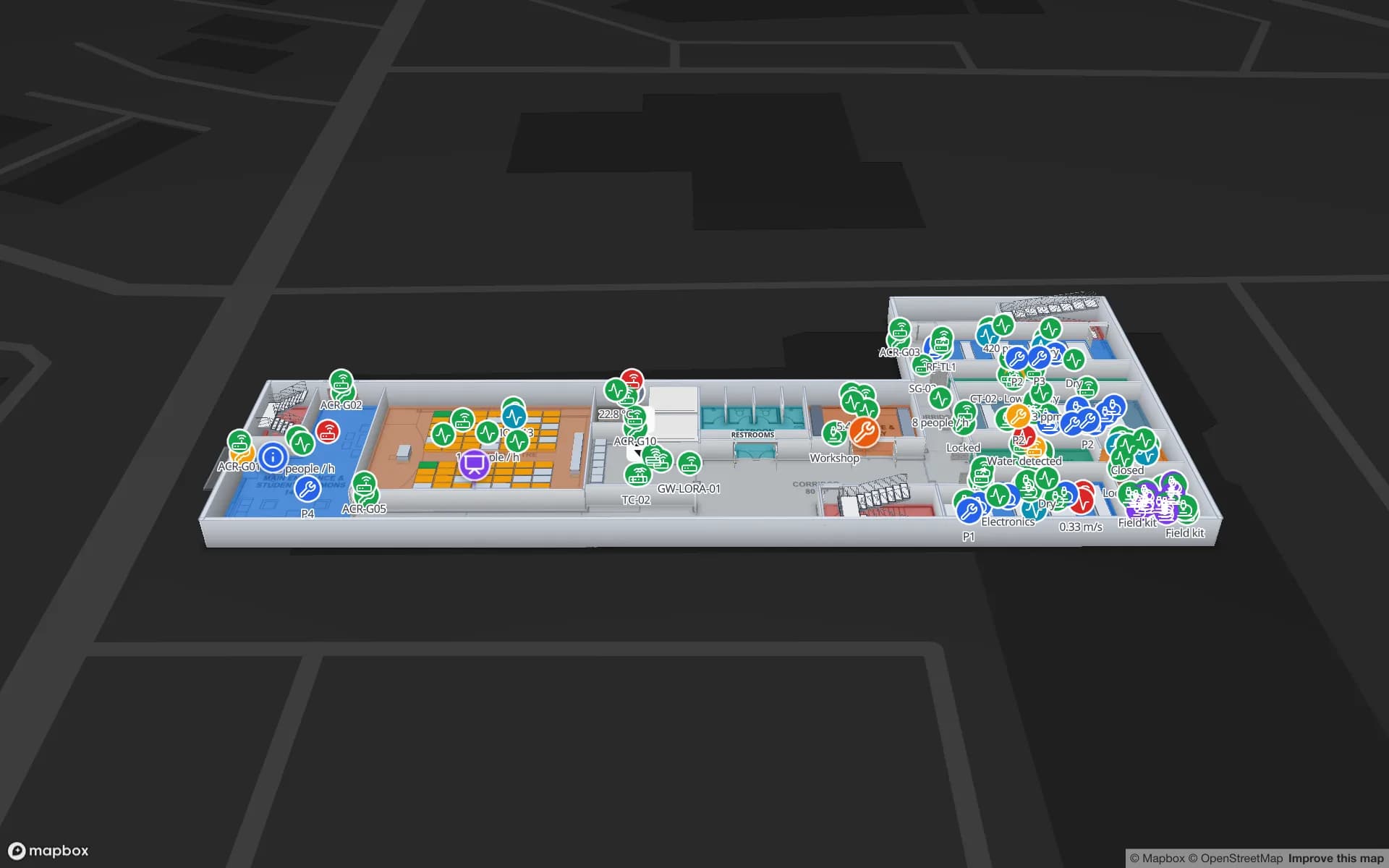
Research and fabrication sites hold instruments, tools, carriers, consumable stores and shared equipment that several groups book. Mark the laboratories, stores and bays as areas, tag the shared instruments and carriers, and a check-out table shows who has what and which instrument is due for calibration, as in the Westbrook demo with its lab equipment bookings. Test tags and readers in your own cleanroom before buying in volume, because metal, liquids and cleaning regimes all affect reads. Spatial Map does not monitor or control process tools and makes no compliance claim.

Port of Cardiff: sheds, a gantry and a chilled store

The port’s operator describes the Port of Cardiff as under 2.5 miles (4 km) from the city centre, with direct links to the national rail network, covering 852 acres and handling container, forest products, fresh produce, dry bulk and liquid bulk cargo. Its facilities include steel warehousing with overhead gantry cranes, 40,000 square metres of transit and distribution shed capacity and more than 5,300 square metres of chilled, ambient and frozen warehousing with computerised stock control.

A port estate holds a lot of kit that is not stock: handling frames and cradles, spreaders, pallet stillages, forklift attachments, trailers and the portable equipment that contractors bring. Tag the items that go missing or sit in the wrong place, give each a home area on the plan, and a “not updated for N minutes” rule can flag one that nobody has read for too long, in the app. For the stock inside the sheds, inventory tracking is usually the first step, and asset tracking the second.

A public estate in a bilingual capital

Cardiff is the seat of the Welsh Government, which became the sole shareholder of Cardiff Airport in March 2013 and owns the Bro Tathan business park at St Athan. Public-sector estates teams keep asset registers across many sites, with equipment that is checked out, moved and repaired. In Spatial Map each site is its own facility in one workspace, and the Harborview demo shows a three-floor building with an asset register, equipment check-out and work orders on one plan.

The interface is not available in Welsh. It comes in English, Spanish, French, German, Arabic and Chinese, but room names, labels and report titles are your own content and can be in Welsh, English or both. Roles (Owner, Admin, Editor and Viewer, plus custom roles) decide who can see or change each facility.

Services for teams in Cardiff

Where Cardiff teams usually start depends on the building:

  • Depots and workshops start with asset tracking for high-value components, tools and test kit, then add stock RFID for consumables.
  • Labs and research sites often begin with an instrument register and check-out, then add inventory tracking for stores and consumables.
  • RTLS and UWB matters mainly for large sites where people and vehicles must be located continuously; most buildings will not need it first.
  • If you have no tags or beacons yet, our team can source RFID and BLE hardware on request, quoted per project, with warranty and device support from the manufacturer: see hardware and demo kits on request.
  • Asset registers, handheld apps and integrations are built as client projects, including an asset management system; the product runs as cloud or on-premises.

Also served nearby

The same approach covers Penarth, Barry, Caerphilly, Newport, Pontypridd, Llantrisant and St Athan, and the industrial estates along the M4 and the A470. Nothing needs to be installed at any of them: the map opens in a browser.

How Spatial Map does it

From the store door to a live asset register

  1. 01

    Pick the assets that hurt to lose

    Components, instruments, tools or handling kit: the few items where a missing one stops a job.

  2. 02

    Map stores, bays and labs

    Upload the plan, photo or sketch, let AI Map draft the floor, and name read points and areas the way your register does.

  3. 03

    Connect tags and the register

    RFID middleware, BLE gateways and your register post rows through the table write API, a polled REST endpoint or CSV and Excel uploads.

  4. 04

    Add check-out and silence rules

    In-app alerts for items out too long, kit that has moved to the wrong area and readers that stopped reporting.

What Cardiff teams track

Depot components and test kit

Parts by bay and status, tools located room by room, with a read trail.

Laboratory instruments

Shared kit, bookings and calibration due dates across a science building.

Port handling gear and trailers

Frames, cradles and trailers by yard slot, with the gate and weighbridge in view.

Public-estate asset registers

IT devices, equipment check-out and work orders across three floors.

See it on real demo facilities

Fictional names, real floor plans, live sensors, RFID, BLE tags and gateways — open any of them in the browser.

All 13 demo facilities

Asset tracking in Cardiff — questions we get

No. It does not schedule work, connect to fleet-management systems or know a train’s condition. It shows where tagged components, tools and test kit physically are, from your own reads and register, with a row history.

That depends on the tag, the part, the cleaning regime and how you read it, so test in your own area first. The post on RFID tags for metal, liquids and apparel lists what to check. Spatial Map does not make tags; it shows what your readers report, and makes no compliance claim.

No. It is available in English, Spanish, French, German, Arabic and Chinese. Your own room names, asset names and report titles can be in Welsh, English or both.

Yes. A “not updated for N minutes” alert rule is checked every 15 seconds and appears in the app (bell, toast and Alerts page). There is no email, SMS or push, and no write-back to other systems.

No. Spatial Map is sold online and our team works with customers in the UK remotely, by video call and through the contact form. There are no local resellers or partners, and nothing is installed on site.

In US dollars, the same worldwide: a 7-day free trial for up to 5 facilities with no card, then Pro at $60 a month or $600 a year for up to 4 facilities. RFID and BLE hardware, if you ask us to source it, is quoted per project and is not part of the subscription.

Map one Cardiff store and its kit this month.

Start the free trial and open the Northgate demo, or send us a plan of a depot, store or laboratory and a sample of your asset register through the contact form.