Peshawar · The Khyber route, Torkham, Rashakai and the airport

Warehouse tracking in Peshawar, on the road to the Khyber

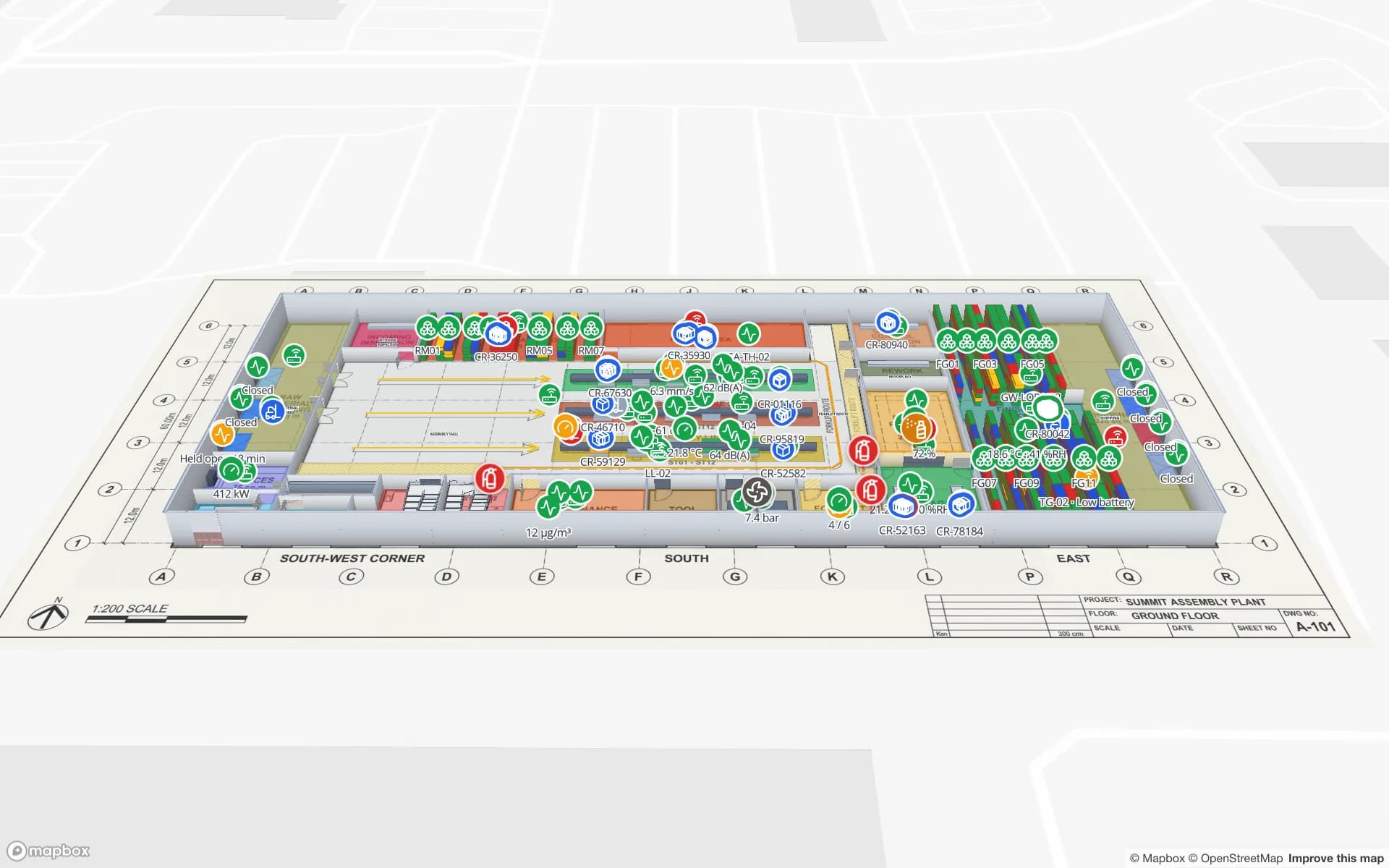
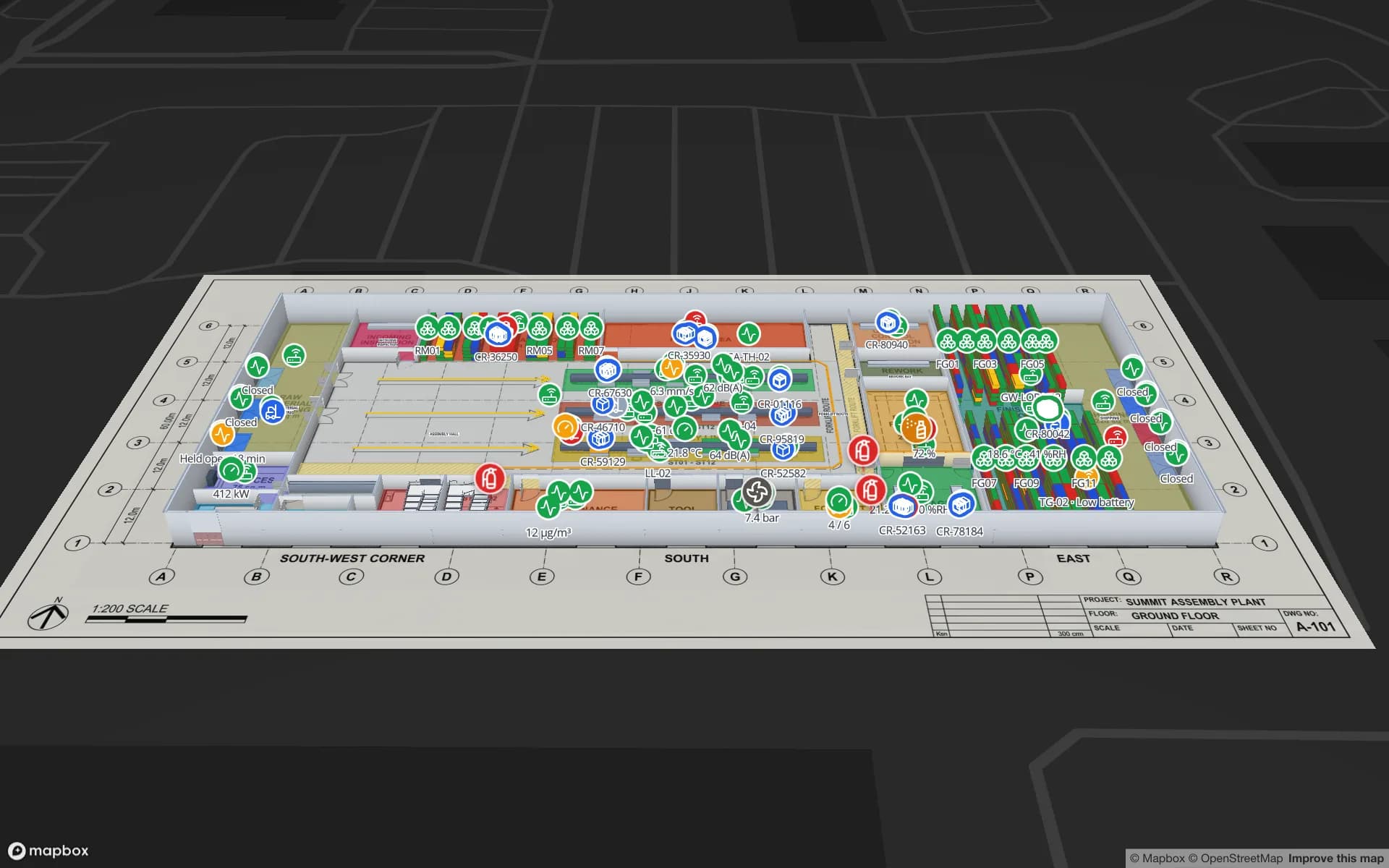
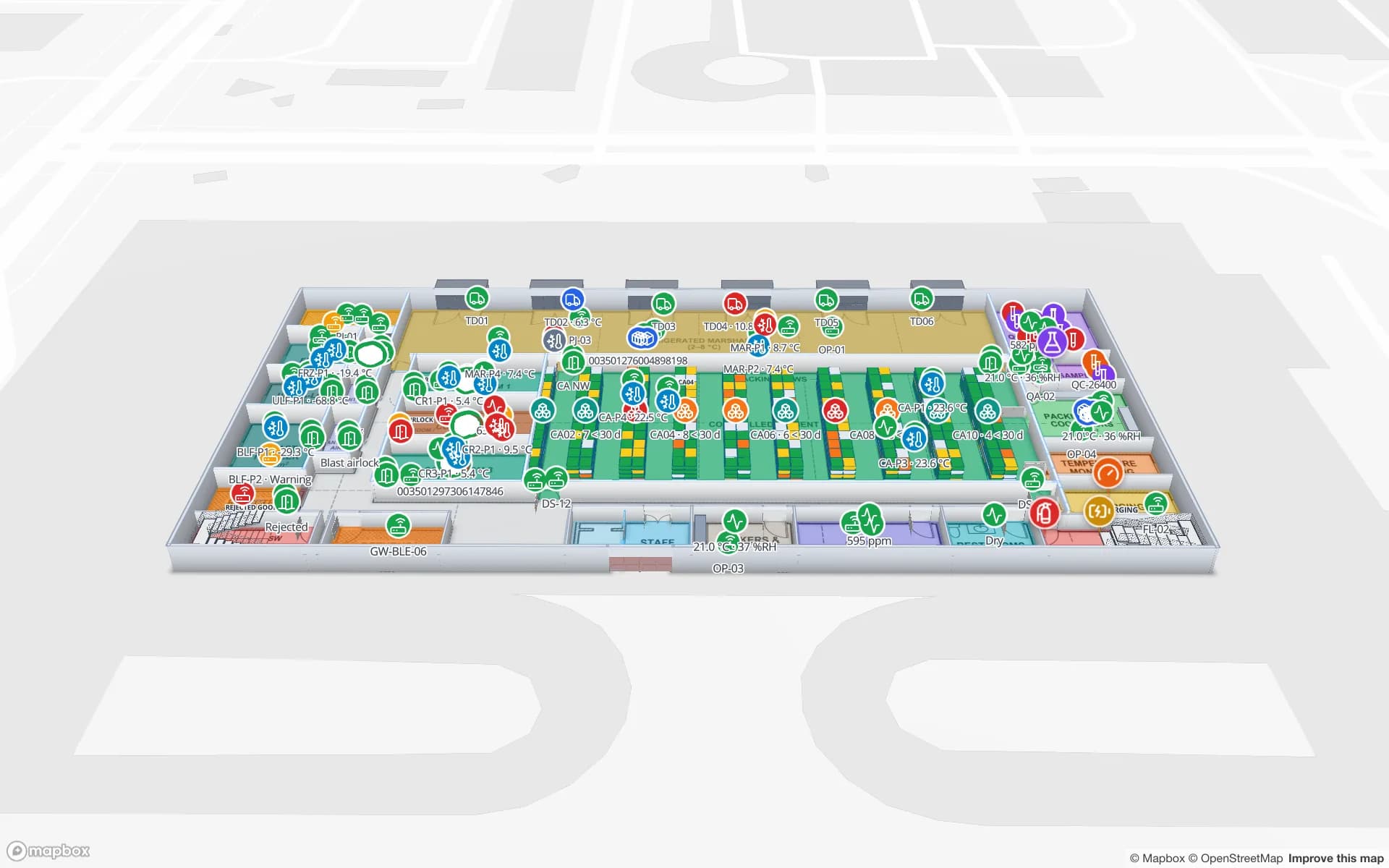
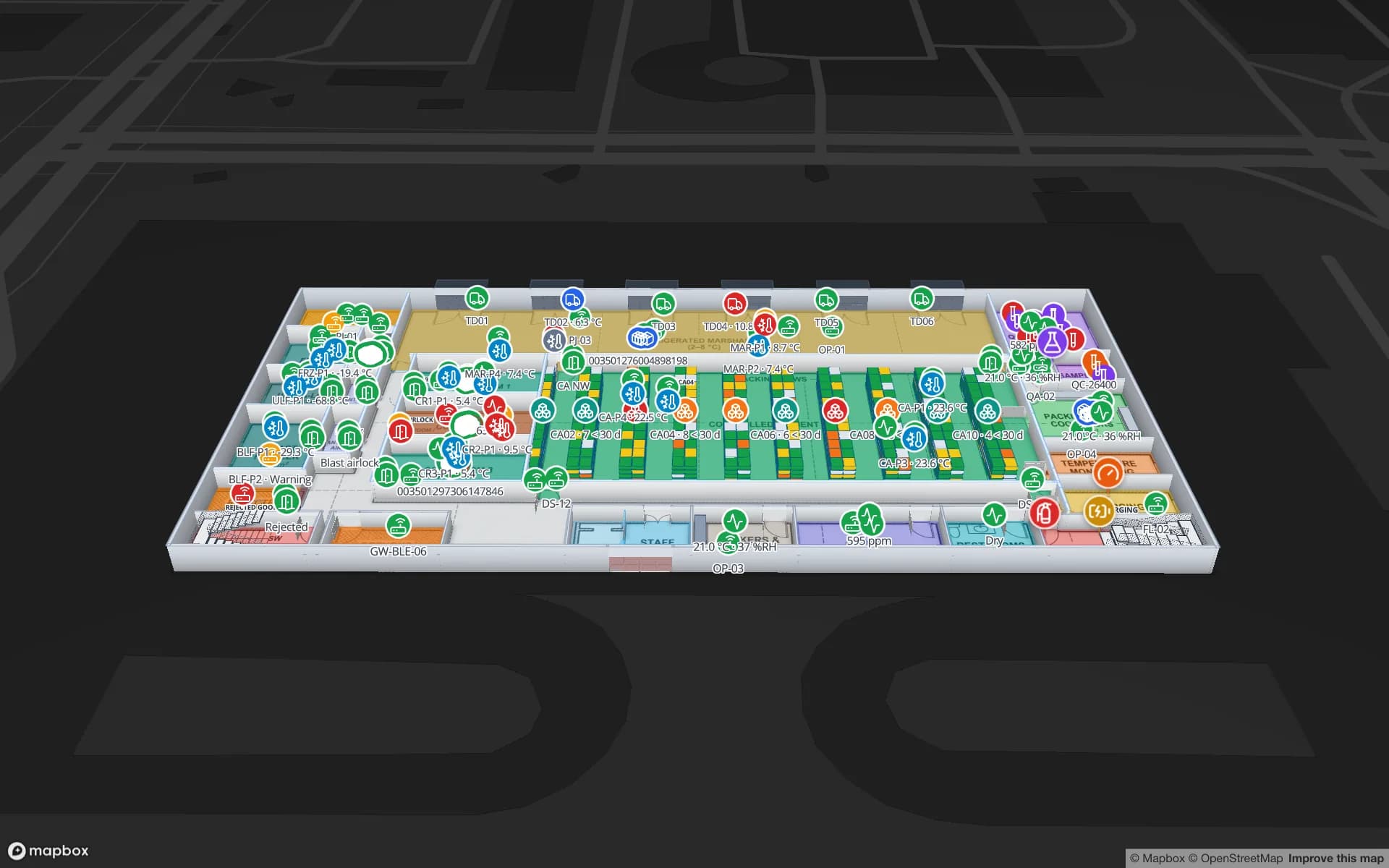
Spatial Map shows pallets, bins and dock doors on a live 3D map of the warehouse, coloured from your stock records, scans and RFID reads. Warehouse tracking in Peshawar is shaped by the road west: the city sits at the eastern end of the Khyber Pass, and its sheds hold goods that are going to, or have come from, the Torkham crossing, alongside ordinary distribution for the province. Each building can carry its own map in one workspace, and none of it depends on how the border is running that week.

No credit card. Runs in the browser. Pro is $60/month for up to 4 facilities. Book a demo

Eastport Cross-Dock Freight Hub, a cross-dock & trailer yard demo, in the Spatial Map 3D viewer with live device markers
Eastport Cross-Dock Freight Hub
Eastport Cross-Dock, a demo freight hub: 50 dock doors, 44 yard slots and 1,180 RFID pallets, with the gate and weighbridge.
Dock doors in the Eastport cross-dock demo
50
Yard slots in the Eastport demo
44
How often alert rules are checked, with alerts shown in the app
15 s
Free trial, up to 5 facilities, no card
7 days

The Khyber route and the Torkham terminal

The road west from Peshawar climbs the Khyber Pass, and Torkham on the N-5 is where it reaches the border. Pakistan’s National Logistics Corporation lists terminals at Torkham and at Jamrud, at the foot of the pass, among its border facilities, and describes them as one-stop points for customs, immigration and other agencies. It says Torkham operates round the clock and is being upgraded under an Asian Development Bank-funded Integrated Transit Trade Management System.

Those systems belong to the state. Inside your own warehouse the questions are different: which pallets of a consignment are staged, which trucks are waiting at which door, which cartons are on hold. A yard and dock map answers them, and the Eastport demo shows 50 dock doors, 44 yard slots and 1,180 RFID pallets on one view; the post on cross-dock and yard visibility explains the pattern. Spatial Map does not connect to customs, the terminal or transit systems, and a crossing can slow or stop for reasons outside any warehouse’s control. A map that shows what is staged and for how long lets you plan around that.


Rashakai: a new zone, so start with the drawing

The Board of Investment lists the Rashakai special economic zone in Nowshera, on the M-1 side of Peshawar, among its approved and notified zones. Radio Pakistan reported in July 2023 that its first phase, a China–Pakistan Economic Corridor project, was complete and due to be inaugurated, with a projection of more than 70,000 direct and 250,000 indirect jobs.

Units in a new zone have what older Peshawar buildings often lack: a current drawing. Import the architect’s PDF or DWG (AutoCAD R2004–R2018, placed as a picture), align it at real size and let AI Map draft walls, doors, racks and areas for a person to review. AI Map is available on paid plans and the trial, with a monthly limit. Then map the receiving docks, the bonded or held area and the rack bays before the first pallet arrives, and the first stock count becomes a row in a table rather than a spreadsheet. The Crestline demo shows 2,204 rack locations coloured by stock status.

Air cargo through Bacha Khan International Airport

The Pakistan Civil Aviation Authority’s traffic figures for July 2024 to June 2025 show 9,514 tonnes of cargo through Peshawar airport, of which 9,247 tonnes were international, and 1,161,063 passengers, of which 1,014,310 were international. Most of the airport’s air freight, in other words, travels on international routes. Karachi, Lahore and Islamabad each handled many times that, so air cargo is a specialised flow in Peshawar rather than the bulk of what the city’s warehouses hold.

Air freight is small, urgent and often valuable, and it needs its own bins. Scan items in at the door, give them a status column such as received, held or released, and colour the map by it. A count rule on the held-items table raises an in-app alert when something has waited too long, and Show on map takes the supervisor to the bin. RFID stock counting covers the handheld walk-through.

Distribution for the province, on one map

Most of what a Peshawar warehouse holds is ordinary distribution: goods for retailers, wholesalers and projects across Khyber Pakhtunkhwa. For that, start with a stock list as a CSV or Excel file with a bin code on each row, draw the racks, and the map is coloured from the list; the guide to a CSV stock list on a rack map shows how. Handheld counts follow, then RFID at the dock door once the bins are trusted. For sheds with an old plan or none, see digitising a paper floor plan.

Services for teams in Peshawar

Where Peshawar teams usually start:

  • Distributors and clearing agents start with inventory tracking at the bin and the dock door.
  • Factories and zone units add asset tracking for forklifts, pallets and returnable crates.
  • RTLS and UWB matters mainly for large yards and plants where vehicles must be located continuously; most buildings will not need it first.
  • If you have no handhelds or readers yet, our team can source them on request, quoted per project, with warranty and device support from the manufacturer: see RFID readers and tags on request.
  • Many Peshawar companies have in-house developers; where yours does not, our team builds an RFID inventory system, handheld apps and ERP integrations as client projects. The product runs as cloud or on-premises.

Also served nearby

The same page covers Hayatabad and Jamrud, Nowshera and Charsadda, Mardan and the industrial areas around Haripur. Nothing needs to be installed at any of them: the map opens in a browser.

How Spatial Map does it

From the dock door to the bin

  1. 01

    Pick one warehouse

    A distributor’s godown, a forwarder’s shed or a unit in the Rashakai zone, wherever finding things costs most.

  2. 02

    Map doors, lanes and racks

    Upload the plan, scan or photographed sketch, and draw dock doors, staging lanes and racks with their locations.

  3. 03

    Load stock and consignments

    One row per bin or pallet from CSV or Excel, then handheld counts; your own software can post rows through the write API.

  4. 04

    Add waiting and silence rules

    In-app alerts for pallets staged too long and readers that stopped reporting.

What Peshawar teams track

Freight sheds and consignments in transit

Dock doors, yard slots and pallets staged by consignment.

Provincial distribution stock

Rack-level stock by bin, built from a spreadsheet first.

Zone units and factories

Raw material, work in progress and finished goods by location.

Temperature-sensitive stores

Cold rooms and quarantine areas with readings on the plan.

See it on real demo facilities

Fictional names, real floor plans, live sensors, RFID, BLE tags and gateways — open any of them in the browser.

All 13 demo facilities

Warehouse tracking in Peshawar: questions we get

No. It has no link to customs, terminal or transit systems. It shows what happens inside your own building, from your own scans, RFID reads, stock records and sensors, so it complements those systems rather than replacing them.

Nothing changes in the product; what changes is the stock. Staged pallets and waiting trucks are rows in your tables, so the map shows how much has built up, where, and for how long. An alert rule on the staging table can warn you before a lane fills.

With the drawing and a spreadsheet. Import the architect’s plan, draw the racks, upload a CSV or Excel list of stock with bin codes, and the map is coloured from it the same day. Handheld counts and RFID can be added later without redrawing anything.

Yes. They can push rows to a table through the write API (HTTPS, bearer API key, bulk upsert, 60 requests per minute per key), or expose a REST endpoint that Spatial Map polls. If you would rather not build it, our team does integrations as client projects.

No. Spatial Map is sold online and our team works with customers in Pakistan remotely, by video call and through the contact form. The app has no Urdu or Pashto interface; names and labels you write can be in either.

In US dollars, the same worldwide: a 7-day free trial for up to 5 facilities with no card, then Pro at $60 a month or $600 a year for up to 4 facilities. RFID hardware, if you ask us to source it, is quoted per project and is not part of the subscription.

Put one Peshawar warehouse on a live map this week.

Start the free trial and open the Eastport demo, or send us the plan of a godown, freight shed or zone unit and a sample of your stock list through the contact form.