Karachi · Port of Karachi, Port Qasim, SITE and Korangi

RFID tracking in Karachi, from the port gate to the factory dock

Spatial Map puts RFID reads on a live 3D map of the building where they happen, so a tag at a dock door becomes a pallet in a lane, a carton in a container or a roll at a despatch bay. RFID tracking in Karachi starts at the sea: containers arrive through the Port of Karachi and Port Qasim and fan out to freight stations, export zones and factory docks across the city, and every one of those buildings can carry its own map. Your readers and middleware do the reading; Spatial Map shows each read in place.

No credit card. Runs in the browser. Pro is $60/month for up to 4 facilities. Book a demo

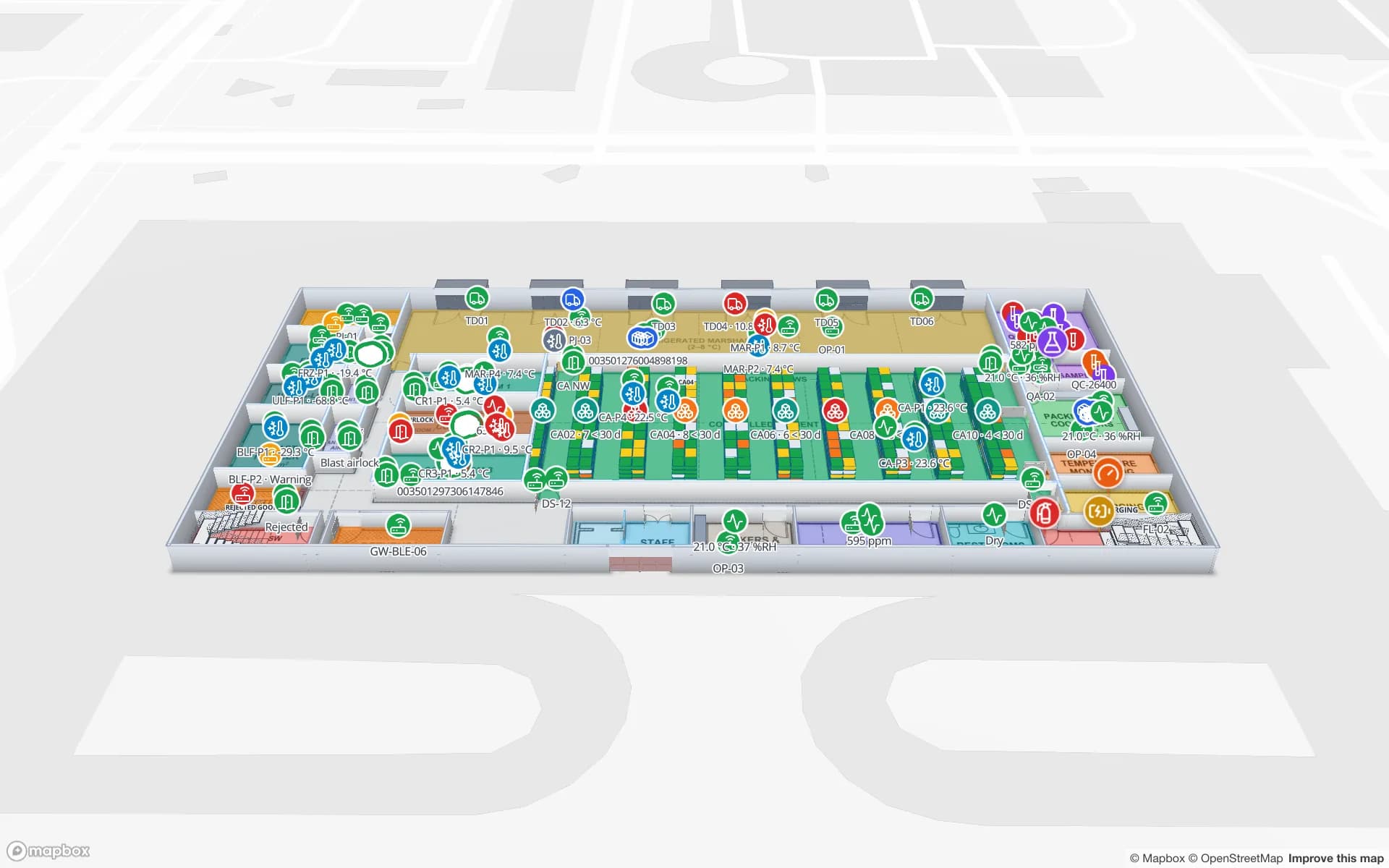
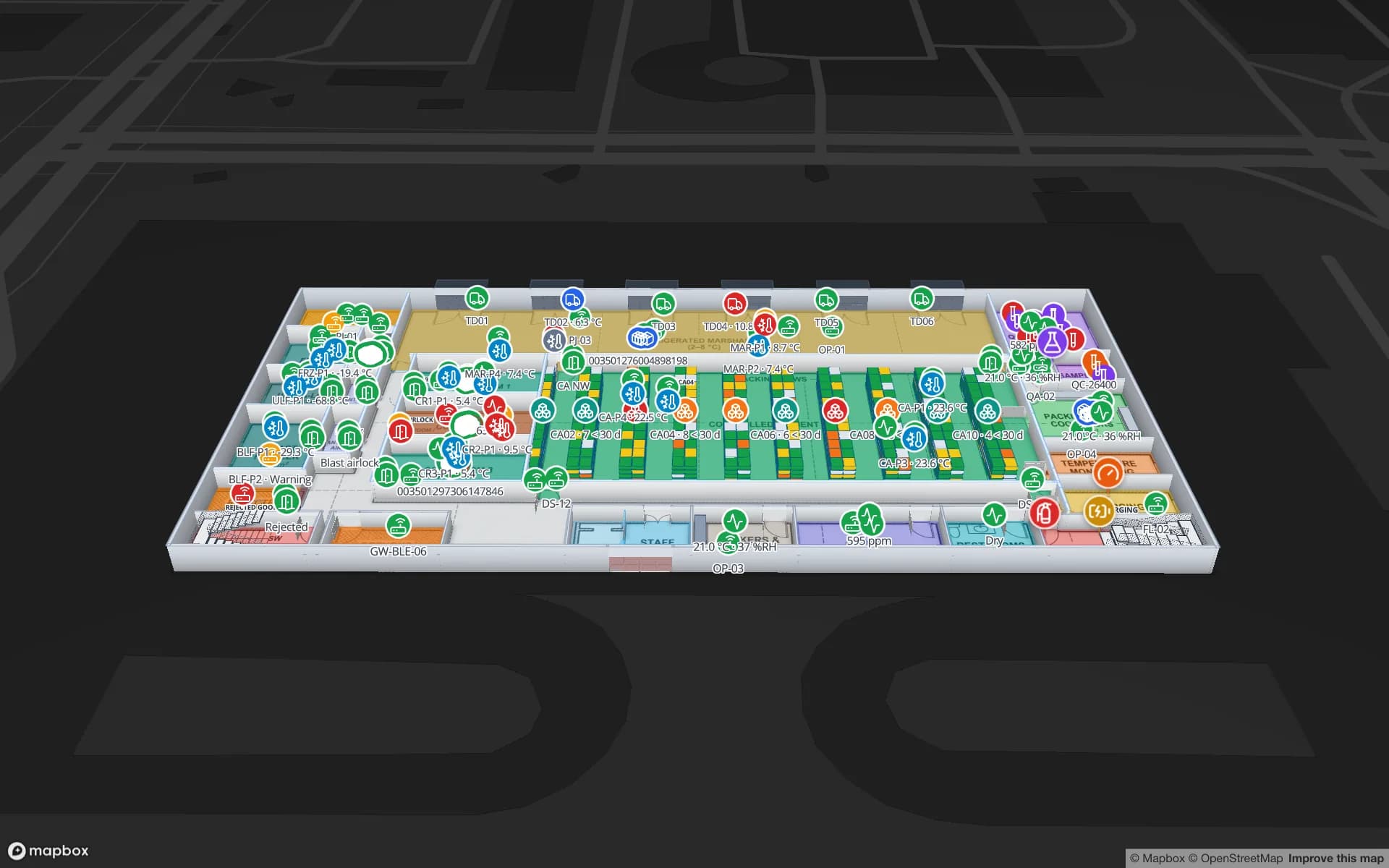
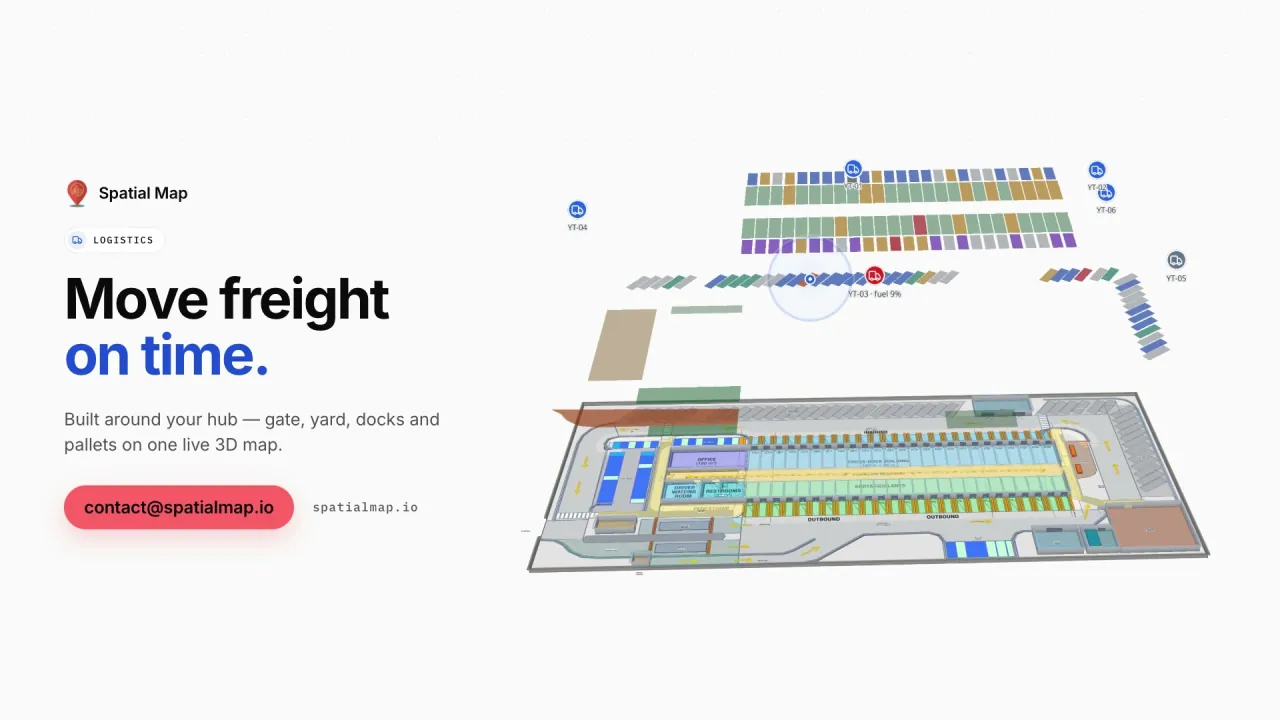
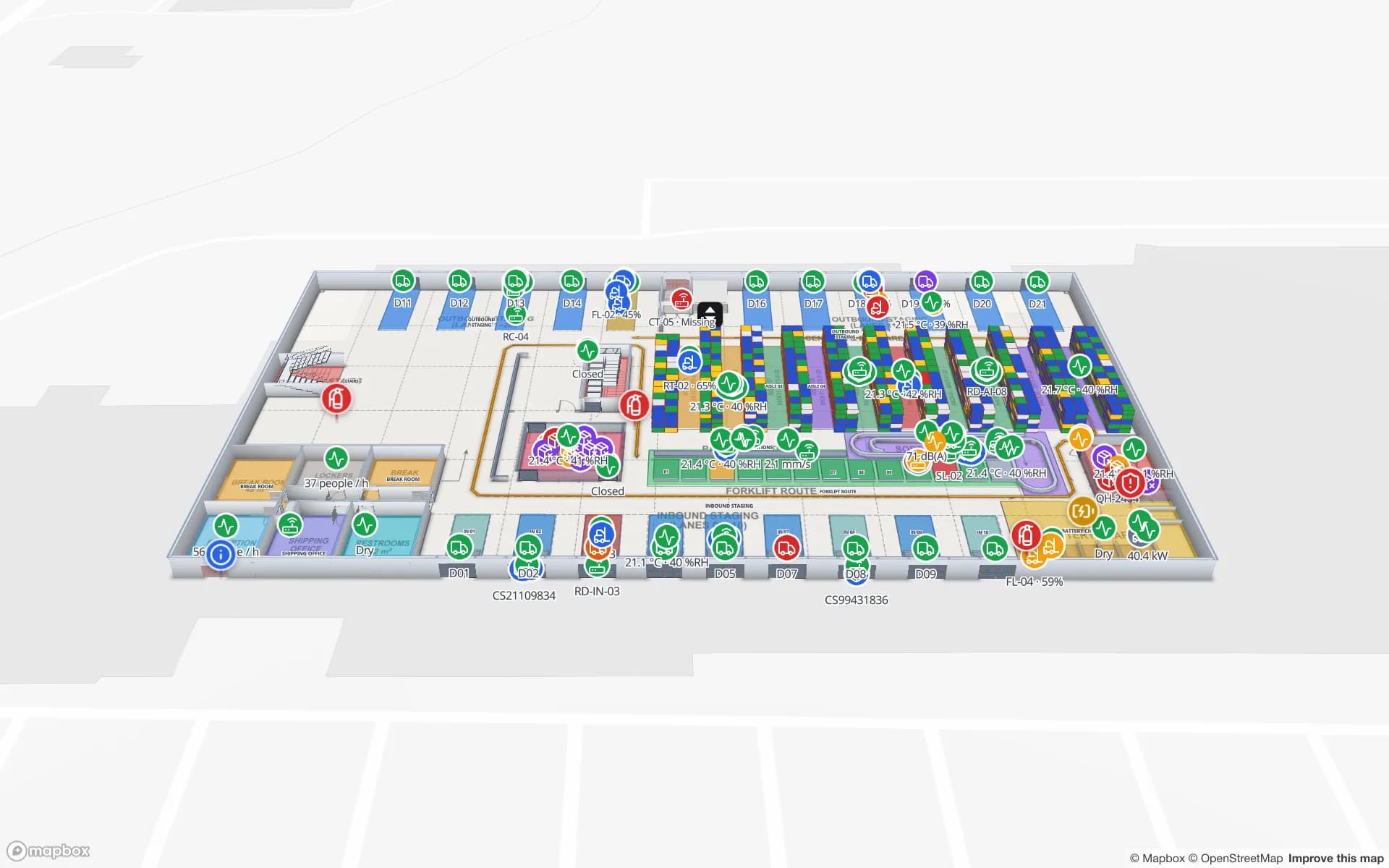
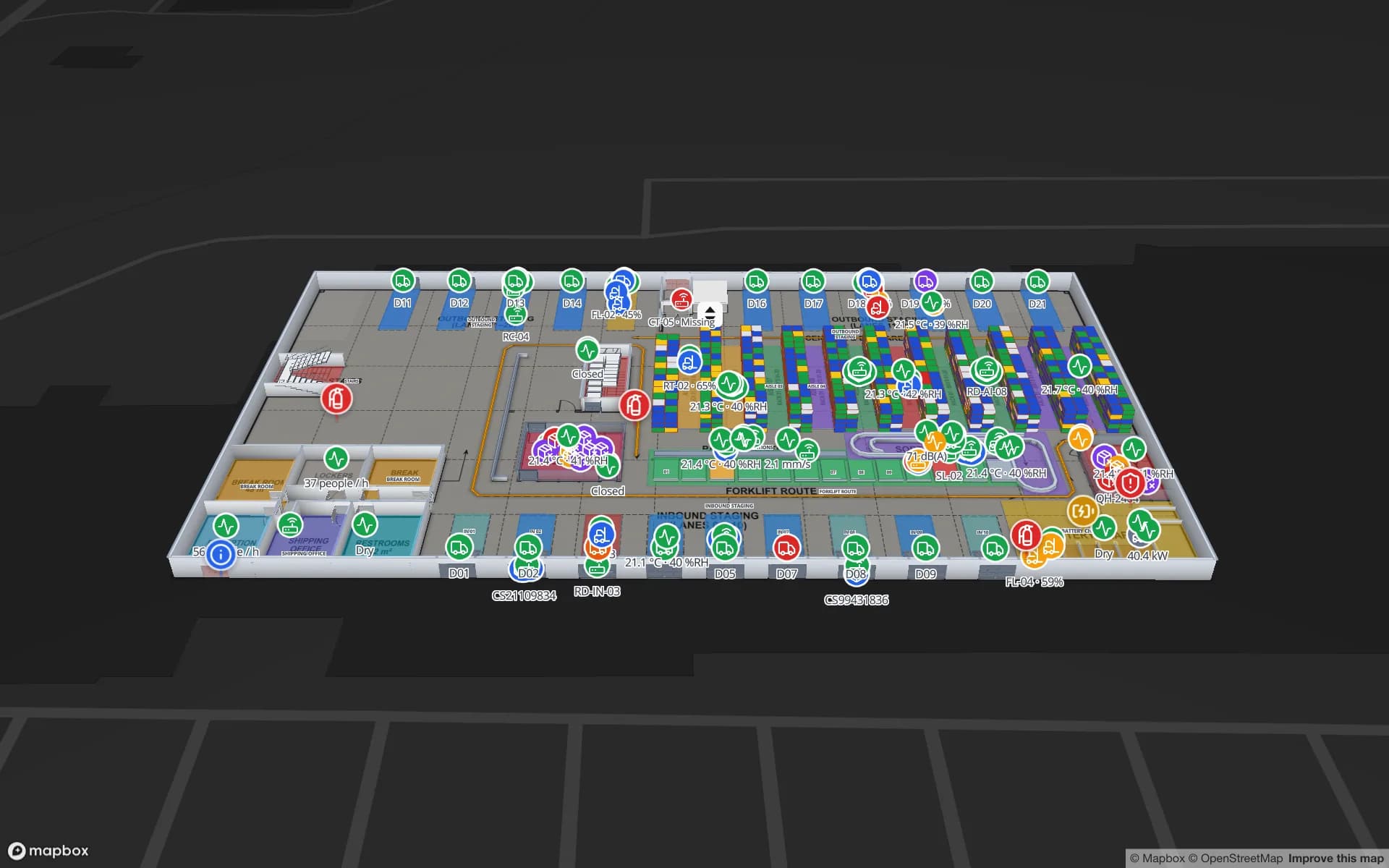
Eastport Cross-Dock Freight Hub, a cross-dock & trailer yard demo, in the Spatial Map 3D viewer with live device markers
Eastport Cross-Dock Freight Hub
Eastport Cross-Dock, a demo freight hub: 50 dock doors, 44 yard slots and 1,180 RFID pallets, with the gate and weighbridge.
Dock doors in the Eastport cross-dock demo
50
RFID pallets moving through Eastport
1,180
How often alert rules are checked, with alerts shown in the app
15 s
Free trial, up to 5 facilities, no card
7 days

Two ports, and the buildings behind their gates

Karachi Port Trust lists three private-sector container terminals at the port, alongside its oil piers and general-cargo and bulk berths. Port Qasim, about 28 miles south-east of the city on Phitti Creek in the Indus delta, was set up by an Act of Parliament on 29 June 1973 and began operating in 1980; its authority lists containers beside coal, LNG, edible oil and general cargo.

Cargo does not stay at the port for long. Export boxes are stuffed, and import boxes unpacked, in warehouses and container freight stations around the city, and Pakistan Single Window runs a port community system called PortVerse that is already working at Karachi for vessel arrivals and cargo tracking. That is a system for the port. Inside your own shed the question is different: which pallet is in which lane, which carton went into which container, which trailer is waiting at which door. RFID portals at the dock doors answer it, and the Eastport demo shows 50 dock doors, 44 yard slots and 1,180 RFID pallets on one map. Spatial Map does not connect to PortVerse, customs or terminal systems; it shows what your own reads say.
The export zone: for a garment unit, the carton is the unit

The Karachi Export Processing Zone, run by the Export Processing Zones Authority (created by ordinance in 1980), covers 305 acres in two phases, both fully allotted according to the authority, about 10 km from Port Bin Qasim. Garments are its dominant sector, followed by electronics, chemicals, plastic and paper products and food. In a garment unit a buyer’s order is split into export cartons by size, colour and destination, and a short carton is usually discovered at the loading dock, not at the packing table.

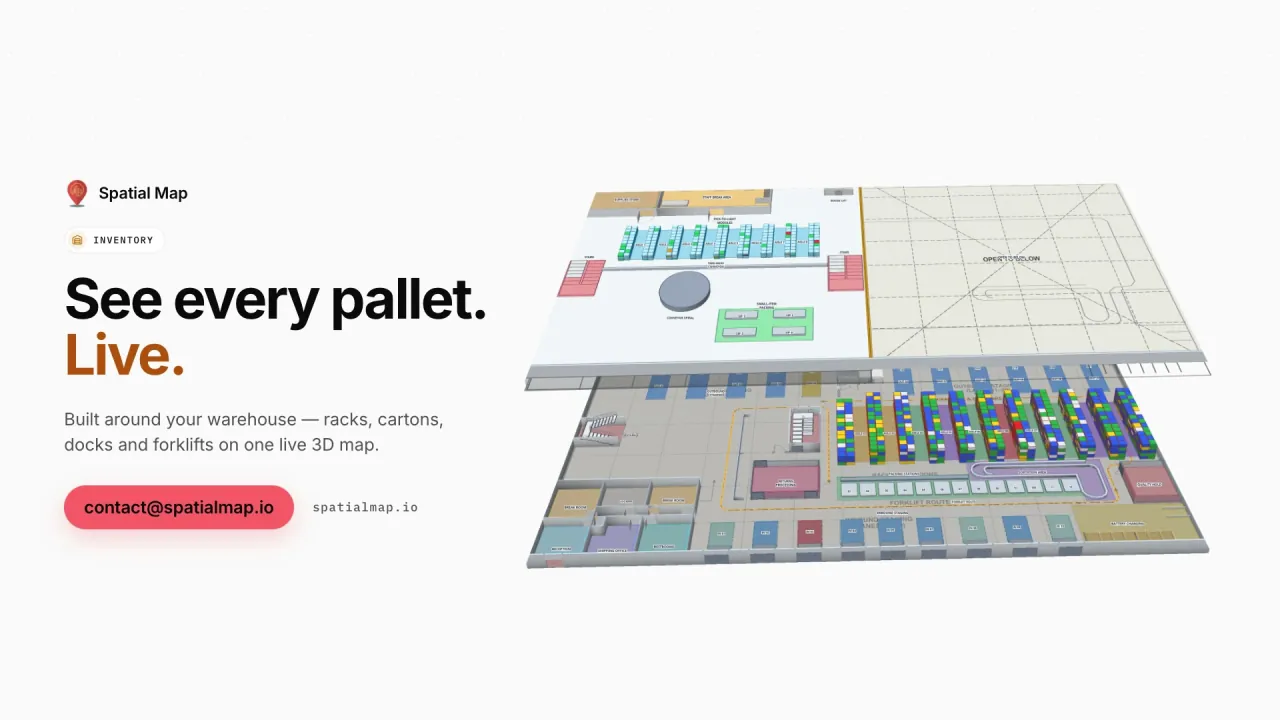
Label each carton with a UHF RFID tag at packing, read it at the despatch door, and the map shows which cartons of an order are staged, which are still on the floor and which have left. A row of readers at a door is a gate, and the RFID gates page explains how to place them. Tags on apparel and metal fittings behave differently, so test them in your own packing area first; the post on RFID tags for metal, liquids and apparel lists what to check. The Crestline demo shows 2,204 rack locations coloured by stock status and the staging lanes in front of the docks.

SITE and Korangi: old estates, mixed buildings

SITE in west Karachi covers about 4,840 acres and houses about 3,600 factories, according to a 2018 Express Tribune report. The Korangi Association of Trade and Industry (KATI, founded 1970) gives Korangi Industrial Area as roughly 10,000 acres on its own figures, and lists textiles, leather, pharmaceuticals, chemicals, engineering, towels, paints and food among its industries. Both estates are full of mid-sized factories and warehouses built over decades, where the best drawing may be a scan, a photographed plan or a CAD file nobody has opened for years.

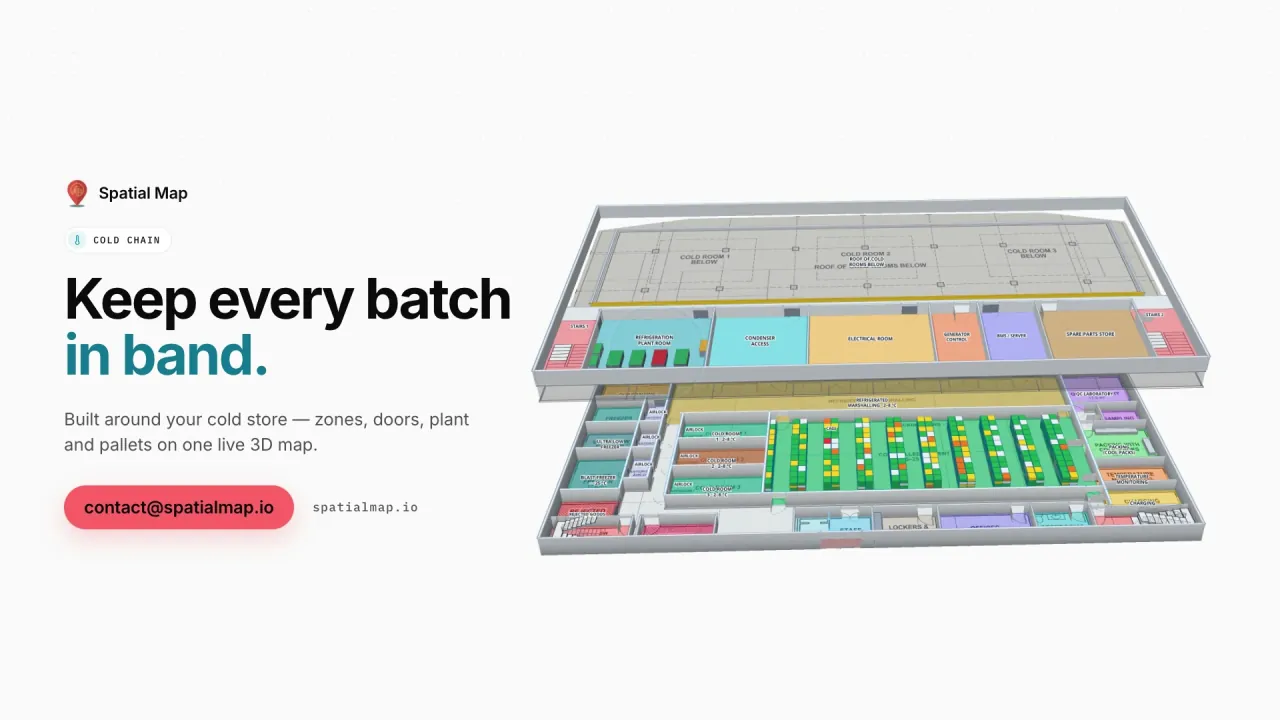
Upload it as it is — PDF, DWG (AutoCAD R2004–R2018, placed as a picture) or image — align it at real scale and let AI Map draft walls, doors, racks and areas for a person to review. AI Map is available on paid plans and the trial, with a monthly limit. Then add RFID where it pays back first: finished-goods racks, returnable crates and totes, and the quarantine area. In a pharmaceutical plant that means a held batch has a tagged pallet or tote read at the quarantine door, so the map shows where it sits; your quality system remains the record and Spatial Map makes no compliance claim. The Polar Pharma demo shows quarantine areas and 1,140 rack locations.

Heat, humidity and the shed with no air conditioning

Karachi is hot and humid for much of the year. For 10 June 2026 Dawn reported 37 °C at 56 % humidity, a “feels-like” reading of 49 °C, and a Pakistan Meteorological Department forecast of 40–43 °C maximums for 8–12 June. Container yards, loading bays and un-cooled sheds are exactly where RFID readers, antennas and printers live. Heat is a reason to choose enclosures, cable runs and mounting carefully and to test tags in your own shed — a decision for your hardware vendor and integrator, not something Spatial Map can verify.

What the map can do is notice. An alert rule set to “not updated for N minutes” on the reader table raises an in-app alert when a portal goes quiet, a temperature sensor on the same plan colours the hottest bay, and a heatmap of readings shows which side of the shed is worst by mid-afternoon; see warehouse temperature mapping. For dairy and frozen foods the same rules apply to cold rooms, covered under temperature monitoring.

Services for teams in Karachi

Where Karachi teams usually start depends on the building:

  • Freight forwarders, container freight stations and exporters usually begin with inventory tracking at dock doors, because a lost pallet there costs a vessel cut-off.
  • Factories in SITE and Korangi tend to begin with asset tracking for returnable crates, moulds and forklifts, then add RFID for stock.
  • RTLS and UWB matters mainly for big, busy yards and plants where vehicles and people must be located continuously; most buildings will not need it first.
  • If you have no readers or tags yet, our team can source RFID readers, antennas and tags on request, quoted per project, with warranty and device support from the manufacturer: see hardware and demo kits on request.
  • Many Karachi companies have in-house IT; where yours does not, our team builds Android RFID handheld apps, ERP and WMS integrations, and other custom software such as POS or booking systems as client projects. The product itself runs as cloud or on-premises.

Also served nearby

The same approach covers Landhi and North Karachi industrial areas, Bin Qasim Industrial Park beside Port Qasim, and Hub just across the provincial border in Balochistan. Nothing needs to be installed at any of them: the map opens in a browser.

How Spatial Map does it

From the port gate to the despatch door

  1. 01

    Pick one building

    A freight station, an export-zone unit or a factory dock in SITE or Korangi — wherever a missing carton costs most.

  2. 02

    Map doors, lanes and racks

    Upload the plan, photo or sketch, let AI Map draft the floor, and name read points the way your middleware names them.

  3. 03

    Connect reads and stock

    RFID middleware and your ERP post rows through the table write API, a polled REST endpoint or CSV and Excel uploads.

  4. 04

    Add door and silence rules

    In-app alerts for cartons staged too long, short loads before cut-off and readers that stopped reporting in the heat.

What Karachi teams track

Container freight stations and export warehouses

Dock doors, yard slots and pallets staged for the right container before cut-off.

Export garment cartons

Cartons read at packing and the despatch door, with each order’s status by lane.

Pharma quarantine and cold rooms

Held batches, quarantine areas and cold-room readings in place.

FMCG distribution and mall stock

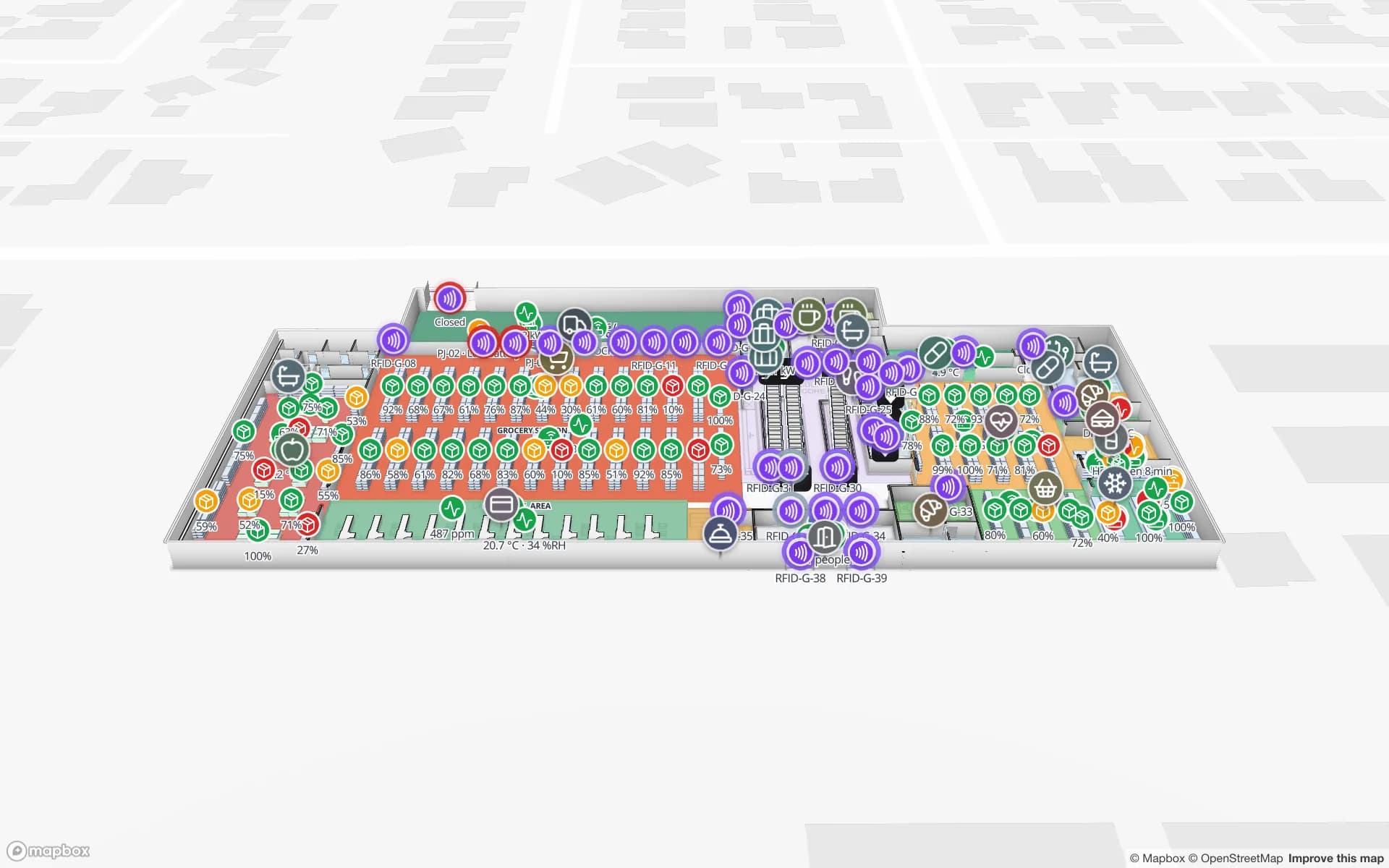
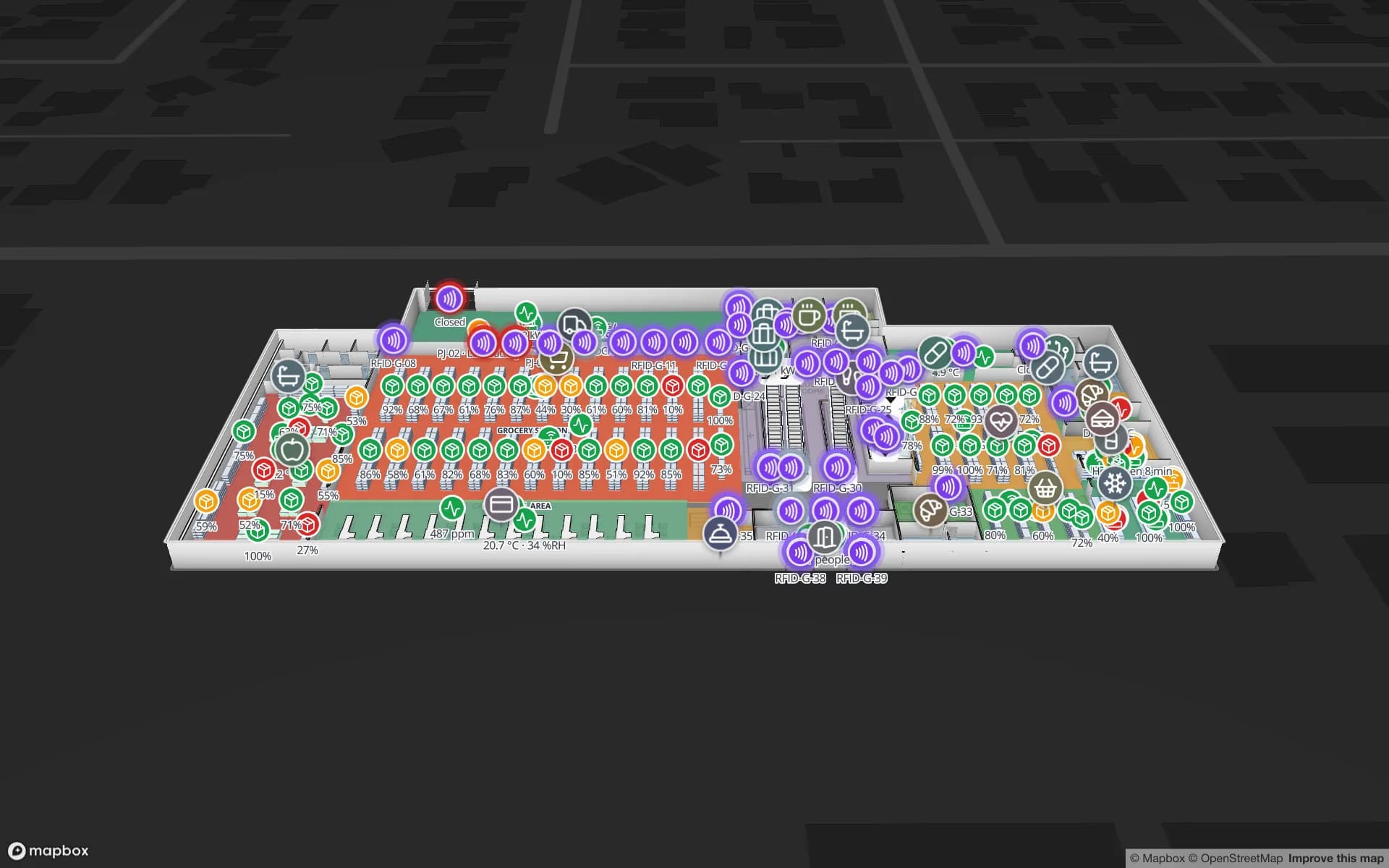
Rack-level stock by bin, and item-level RFID across floors in multi-level retail.

See it on real demo facilities

Fictional names, real floor plans, live sensors, RFID, BLE tags and gateways — open any of them in the browser.

All 13 demo facilities

RFID tracking in Karachi — questions we get

No. It has no link to port community, customs or terminal systems. It shows what happens inside your own building, from your own RFID reads, WMS or ERP and sensors, so it complements the port-level systems rather than replacing them.

That depends on the hardware you choose and how you mount it, so ask the vendor for its operating range and test tags in your own shed. Spatial Map does not make hardware; what it adds is visibility — an in-app alert when a reader stops reporting, and temperature readings coloured on the plan.

Yes. Upload the photo or scan and align it at real size, or sketch the outer walls and racks and photograph the sketch. AI Map can draft from the picture, and you correct what it gets wrong. Our services team can also do the mapping remotely for a fixed price.

Yes. Your developers can push rows to a table through the write API (HTTPS, bearer API key, bulk upsert, 60 requests per minute per key), or expose a REST endpoint that Spatial Map polls. If you would rather not build it, our team does integrations as client projects.

No. Spatial Map is sold online and our team works with customers in Pakistan remotely, by video call and through the contact form. There are no local resellers or partners.

In US dollars, the same worldwide: a 7-day free trial for up to 5 facilities with no card, then Pro at $60 a month or $600 a year for up to 4 facilities. RFID hardware, if you ask us to source it, is quoted per project and is not part of the subscription.

Map one Karachi dock before the next shipment.

Start the free trial and open the Eastport demo, or send us the plan of a freight station, export unit or factory dock and a sample of your reads through the contact form.