Erbil · The airport, the Turkish border and the Kurdistan Region

Inventory tracking in Erbil: warehouses, airport cargo and shops

Spatial Map is a browser-based live map of a building that shows where stock sits, using the counts, scans and RFID reads your own systems produce. Inventory tracking in Erbil has two supply routes to plan around: trucks arriving over the Ibrahim Khalil crossing from Türkiye, and cargo flown into the airport. Both feed distribution warehouses and shops in the Kurdistan Region, and the stock in them can be seen on one map per site.

No credit card. Runs in the browser. Pro is $60/month for up to 4 facilities. Book a demo

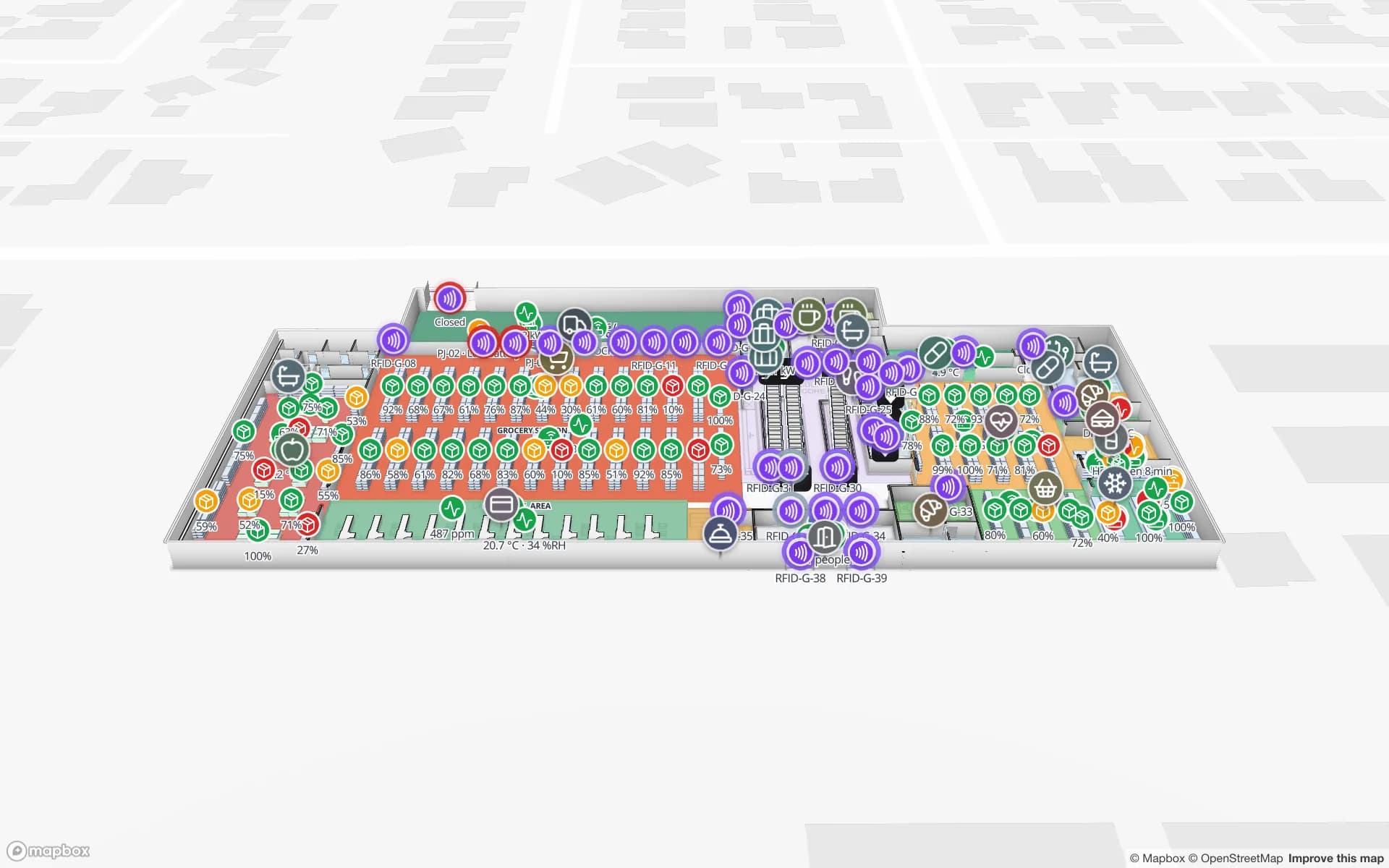
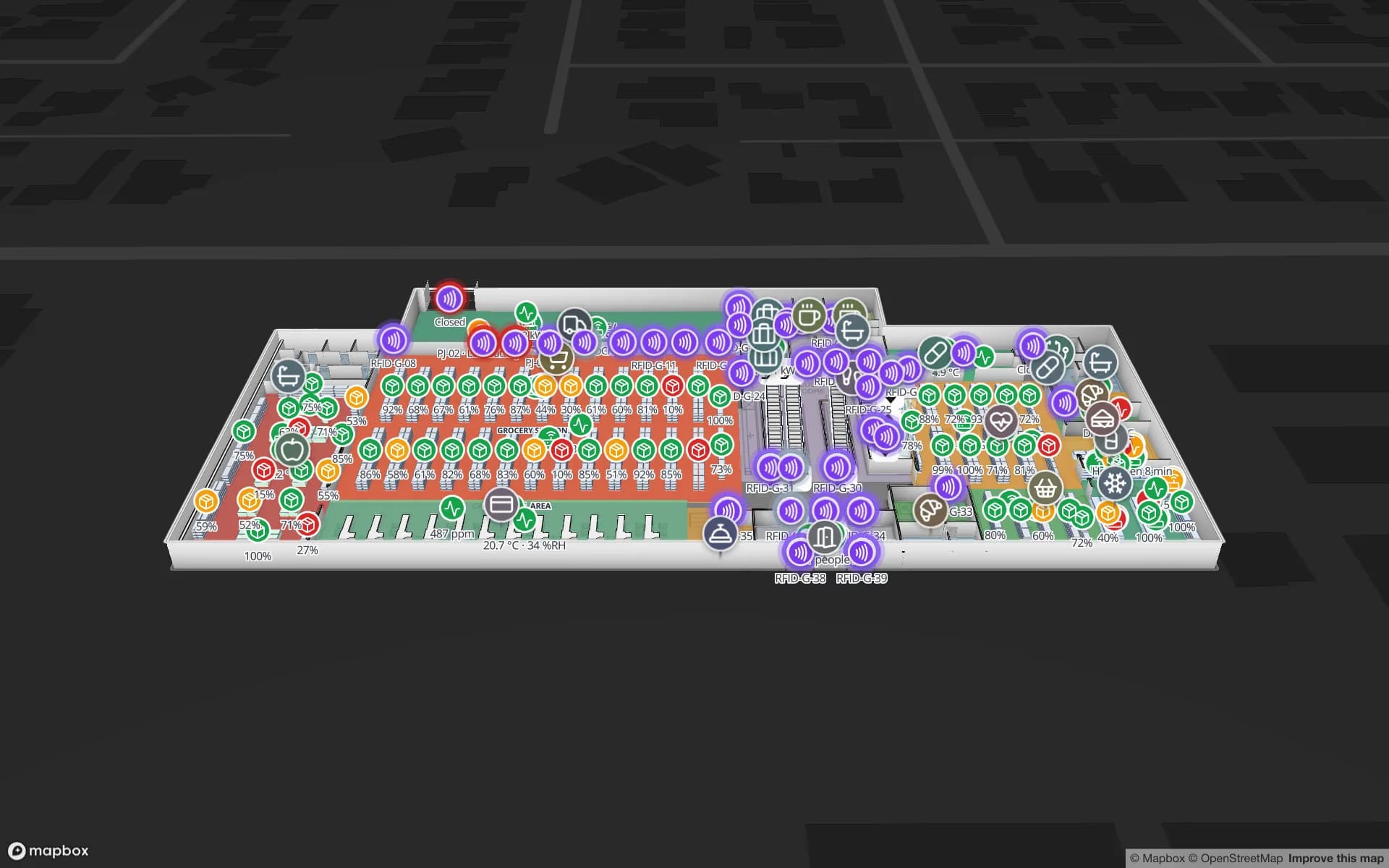
Retail Mart Store, a three-floor retail store demo, in the Spatial Map 3D viewer with live device markers
Retail Mart Store
Retail Mart, a demo store: three floors with an escalator core and lifts, RFID readers at the exits, shelf and department stock, fridges and BLE trolleys.
Floors in the Retail Mart demo
3
Rack locations in the Crestline fulfilment demo
2,204
Write API requests per key, with bulk upsert
60/min
Free trial, up to 5 facilities, no card
7 days

The Turkish crossing and the arrival problem

The Ibrahim Khalil crossing lies south of Silopi in Şırnak Province, Türkiye, and leads to Zakho in Duhok Governorate across the Khabur river. The Kurdistan Regional Government owns and maintains the Iraqi side, and trade reports describe it as the Kurdistan Region’s main route for trade with Türkiye. Customs rules and waiting times at the crossing have changed over time, according to local news.

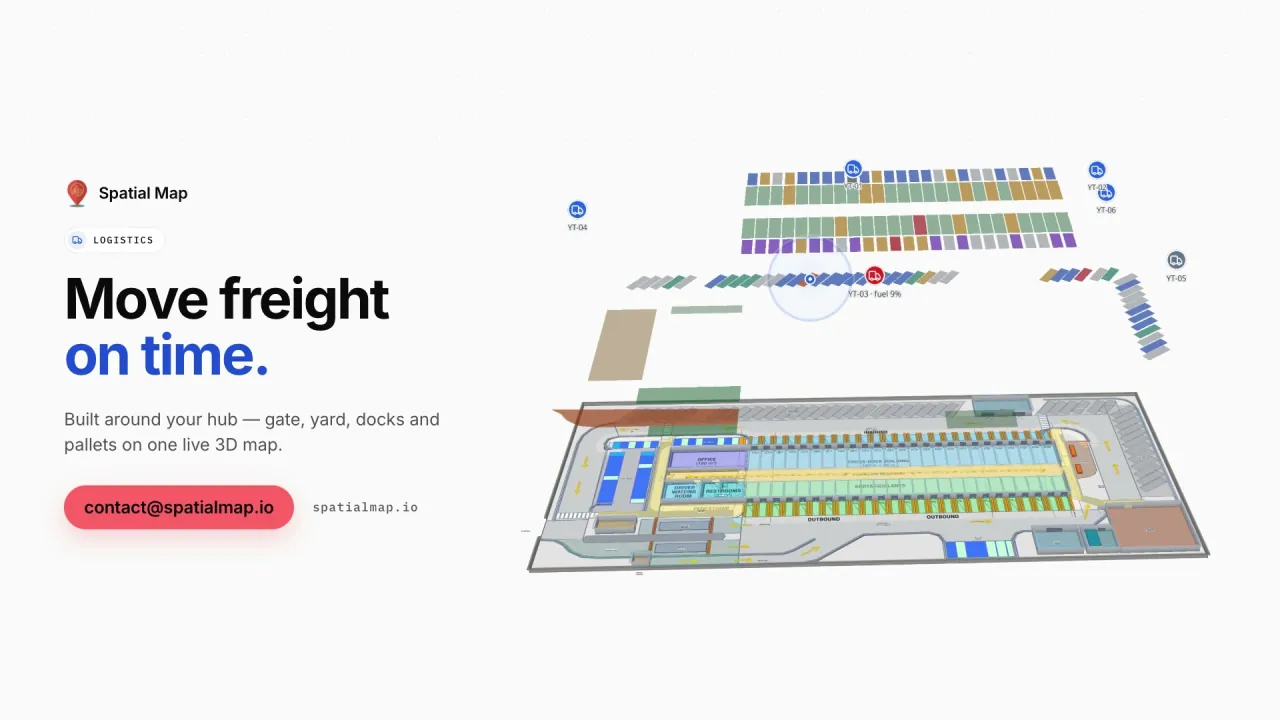
For a distributor in Erbil that means irregular arrivals: five trailers on one day, none the next, and stock that arrives out of order. A map of the receiving yard and dock doors shows which trailer is at which door, which pallets have been received and which are still on the trailer. Spatial Map does not connect to customs systems or to the border; it shows the part you control. The Eastport demo shows 50 dock doors, 44 yard slots and 1,180 RFID pallets, and the post on yard visibility and dock doors explains the layout.


The airport and the cargo shed

The new Erbil International Airport opened on 5 July 2005 and has a runway of 4,800 by 75 metres. It has been run by the federal Iraqi Civil Aviation Authority since 2017, according to published sources. Air cargo anywhere tends to be high-value or time-sensitive: electronics, spare parts, medicines and e-commerce parcels.

In a shed or a forwarder’s warehouse, the question is which consignment is on which shelf or in which cage. Tag cartons or cages, read them at the door, and the map shows what has been collected and what is overdue. An alert rule on “not updated for N minutes” on a reader table raises an in-app alert when a portal goes quiet. RFID stock counting covers handheld counts, and inventory tracking is the general page.

Distributors with several warehouses

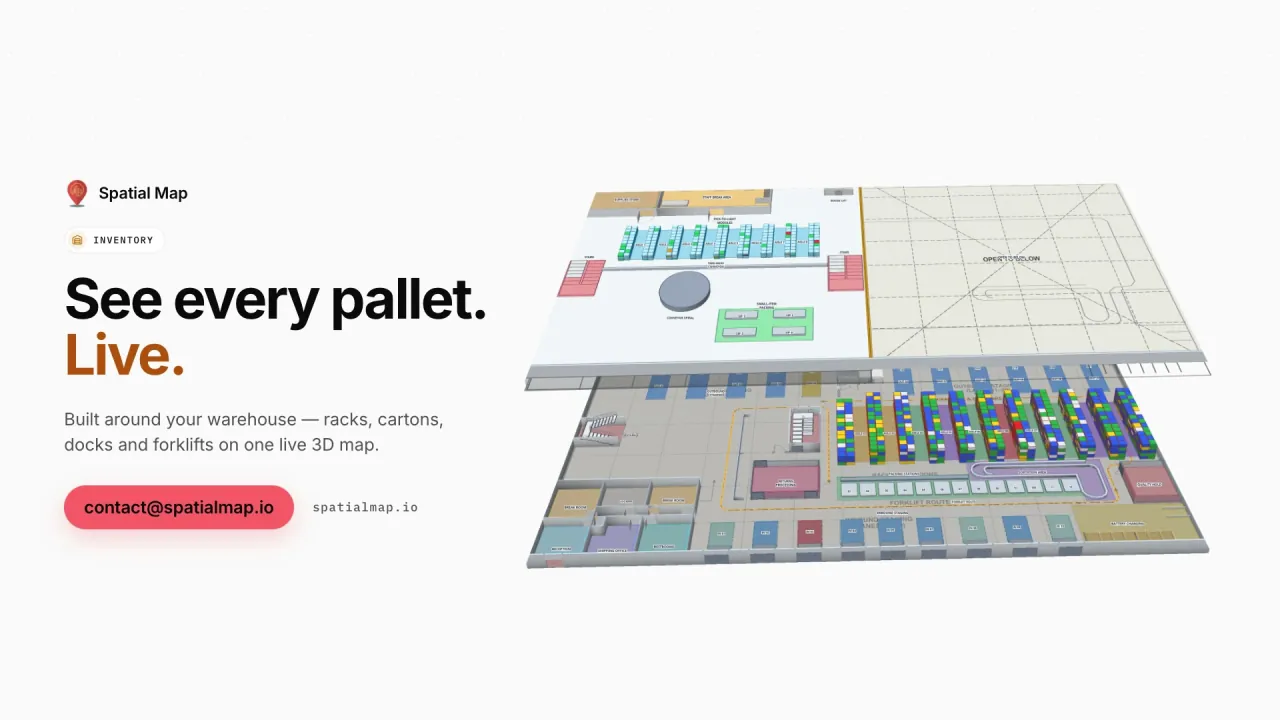
Distribution in the Kurdistan Region often means several warehouses and a mixture of formats: bulk pallets, split cartons and a few hundred fast-moving lines. Keep each warehouse as a facility in one workspace and group them into named solutions, so a planner sees the same stock figures whichever warehouse the question concerns. The Crestline demo shows a distribution site with 2,204 rack locations coloured by stock status, pick-to-light, packing and staging lanes.

You do not need RFID to start. Upload a CSV or Excel export of bins and quantities as a table, draw the racks as a grid, and each location is coloured by what it holds; the post on CSV bin inventory to a live rack map shows the steps. Later a handheld count or RFID reads update the same table, and your developers can post rows through the table write API.

Shops, markets and the Citadel

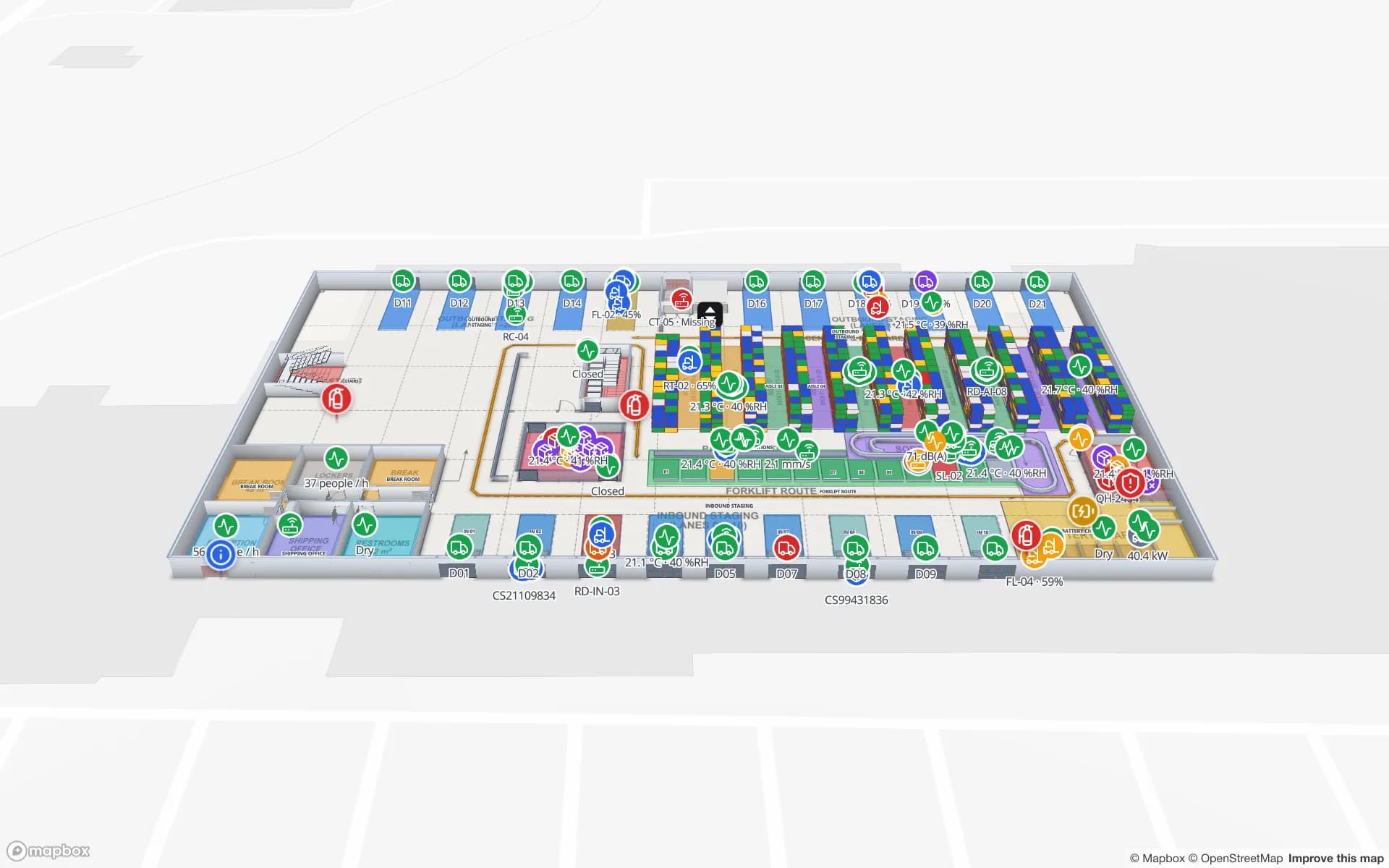
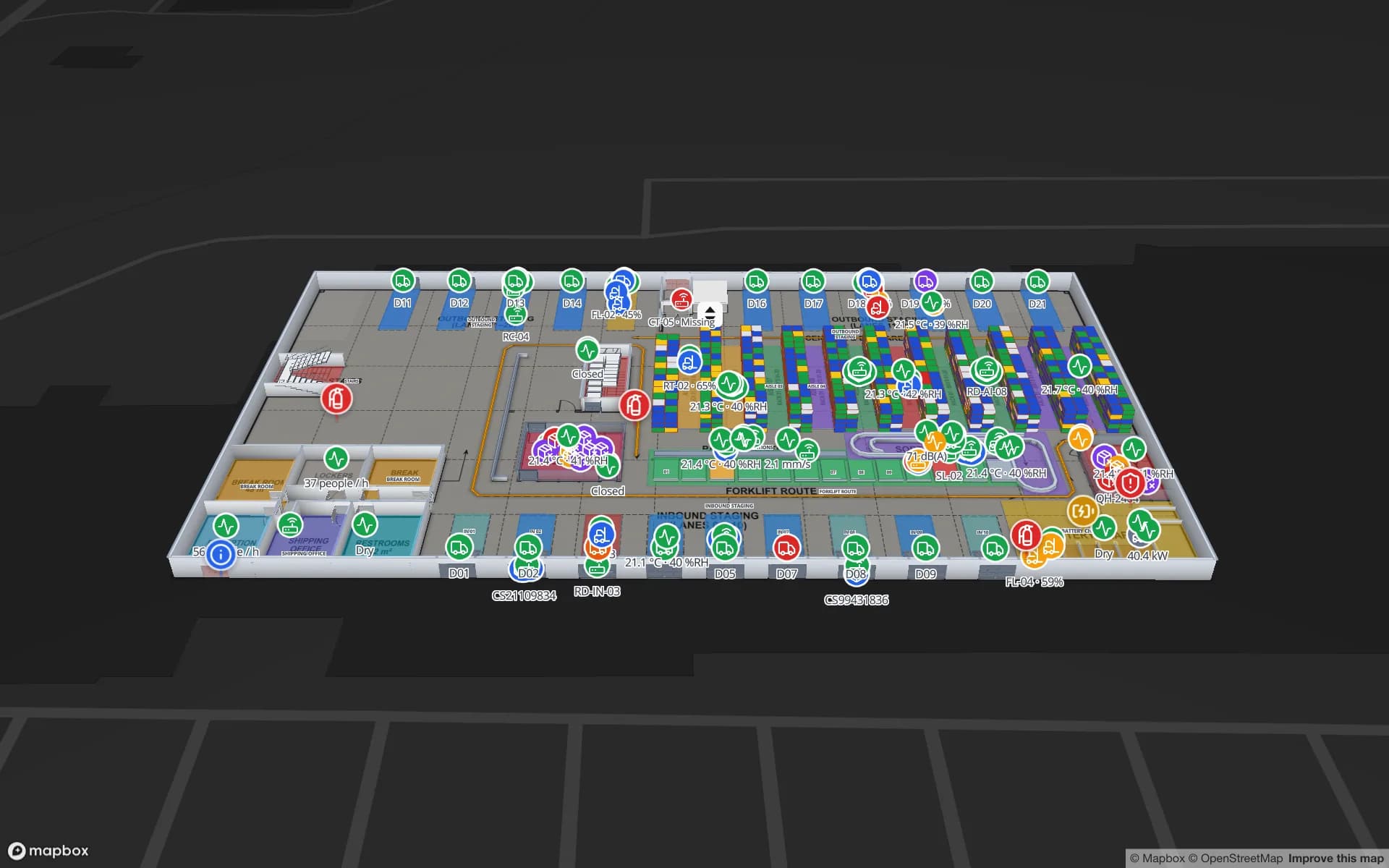
Retail in Erbil ranges from traditional markets to multi-floor stores, and the same problems recur: shelf stock that does not match the count, fridges that drift and stock that leaves through the wrong door. The Retail Mart demo shows a three-floor store with shelf stock by department, fridge temperatures and RFID readers at the exits; see RFID for retail.

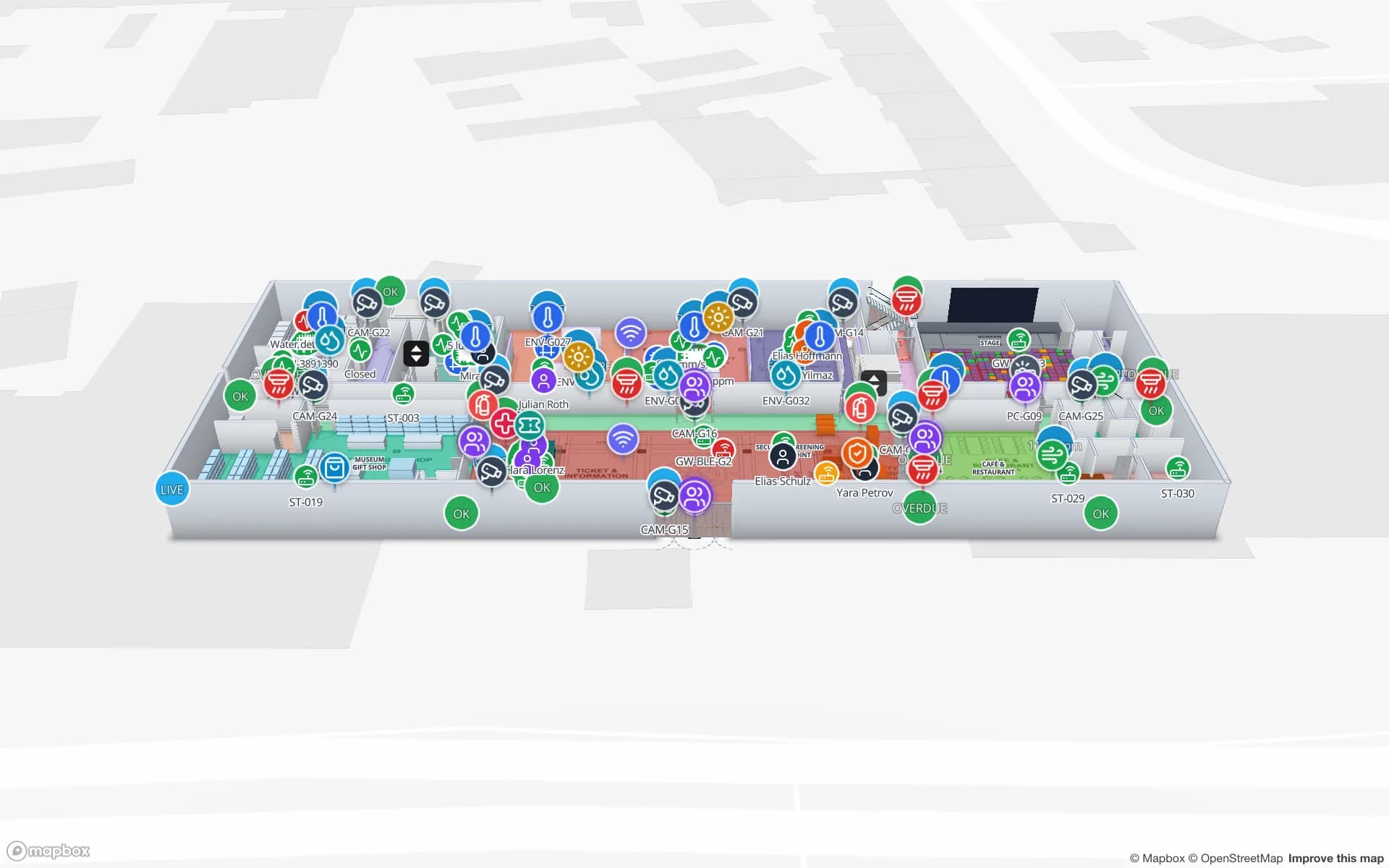
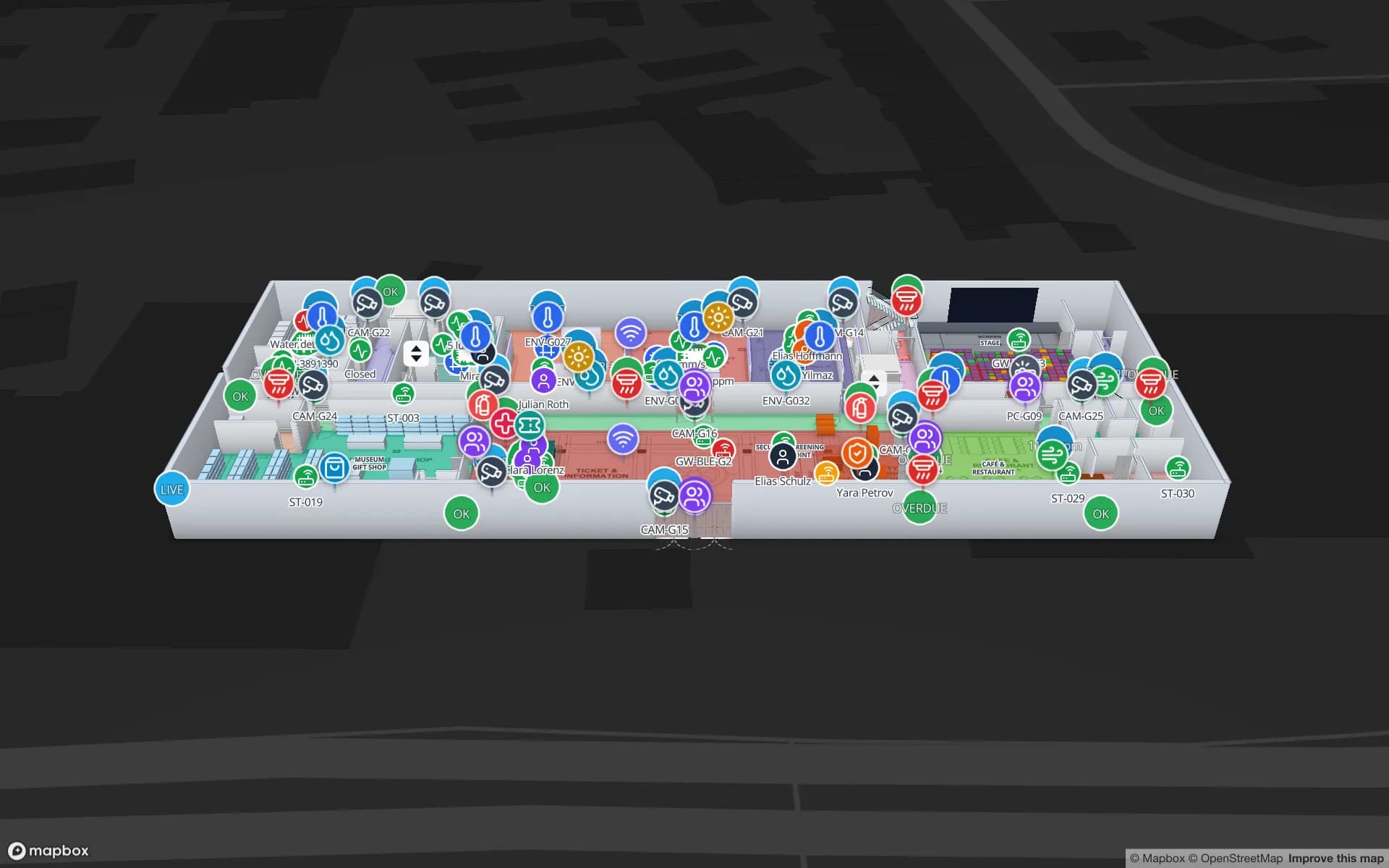
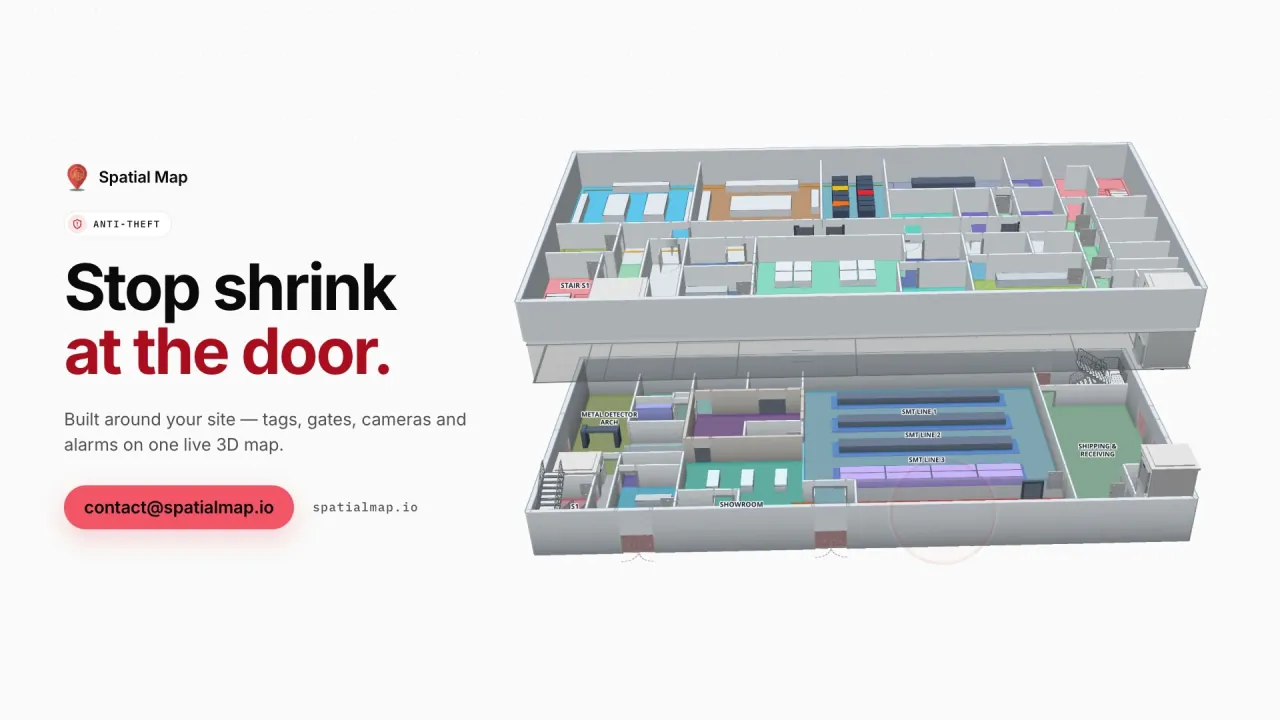
The Citadel of Erbil was inscribed on the World Heritage List on 21 June 2014 and is the fourth Iraqi site there. Its revitalisation has been led by the Kurdistan Regional Government’s High Commission with UNESCO. For a heritage building or a museum, the layer that matters is not stock but rooms, visitor counts and climate; the Production Museum demo shows three floors of galleries with visitor counters and climate sensors, and museum indoor mapping covers the general case.

The Region’s own investment law, and language

The Kurdistan Region has its own investment law, Law No. 4 of 2006, alongside the federal Investment Law No. 13 of 2006, and its own investment authority. Spatial Map says nothing about what applies to your company; your legal advisers decide. What it can do is keep a record of what physically moved, with a history for every change and reports exported to PDF or Excel.

The interface is available in Arabic (with a full right-to-left layout), English, Chinese, French, German and Spanish; it is not available in Kurdish. Teams in the region typically work in English or Arabic, and the names of rooms, racks and reports that you write can be in Kurdish.

Services for teams in Erbil

Erbil teams usually begin with stock and a single site:

Also served nearby

The same approach covers Koya, Soran, Shaqlawa and Makhmour around Erbil, and Sulaymaniyah and Duhok elsewhere in the Region. Nothing needs to be installed at any of them: the map opens in a browser.

How Spatial Map does it

From a stock spreadsheet to a live rack map

  1. 01

    Upload your list

    A CSV or Excel export of bins, items and quantities becomes a table in minutes.

  2. 02

    Draw the warehouse

    Import the plan or a photo, align it, and let AI Map draft walls, doors and racks for a person to review.

  3. 03

    Colour racks by stock

    A data link colours each location by quantity or status, with filters per product group.

  4. 04

    Add counts, then RFID

    Handheld counts, then RFID reads at the dock doors, update the same table.

What Erbil teams track

Receiving yards for trucks from the border

Trailers at doors, pallets received and pallets still on the trailer.

Distribution warehouses

Rack-level stock by bin across several sites in one workspace.

Retail stores

Shelf stock by department, RFID at the exits and fridges by temperature.

Heritage buildings and museums

Galleries with visitor counters and climate sensors on one plan.

See it on real demo facilities

Fictional names, real floor plans, live sensors, RFID, BLE tags and gateways — open any of them in the browser.

All 13 demo facilities

Inventory tracking in Erbil — questions we get

No. It has no link to customs, border or airport systems. It shows what happens inside your own building, from your own scans, RFID reads, ERP or WMS, so it complements those systems rather than replacing them.

Yes. Upload a CSV or Excel export of bins, items and quantities and the rack map shows stock per location. RFID readers or handheld counts can be added later, through your middleware or the write API.

No. The app is available in Arabic (with a full right-to-left layout), English, Chinese, French, German and Spanish, and each user picks their own. Your own rack codes, room names and report titles can be written in Kurdish.

The ones you choose. Spatial Map is hardware-agnostic: your RFID middleware or handheld app posts rows to a table through the write API (HTTPS, bearer API key, bulk upsert, 60 requests per minute per key), or exposes a REST endpoint that Spatial Map polls. Spatial Map does not read tags itself.

No. Spatial Map runs in a browser, so sites in the Region and in the rest of Iraq can sit in one workspace. Nothing is installed on site. For data that must stay on your own network, the MIT-licensed open-source edition can be self-hosted.

No. Spatial Map is sold online and our team works with customers in Iraq remotely, by video call and through the contact form, in English or Arabic. There are no local resellers or partners.

In US dollars, the same worldwide: a 7-day free trial for up to 5 facilities with no card, then Pro at $60 a month or $600 a year for up to 4 facilities. RFID hardware, if you ask us to source it, is quoted per project and is not part of the subscription.

Map one Erbil warehouse from a stock export.

Start the free trial in English or Arabic, or send us a plan and a stock export and we will show it back to you live.