
RFID in the Middle East: retail, logistics and cold chain
RFID in the Middle East: why retail groups, logistics hubs and cold chains in the GCC adopt it, the traps, and what to check: UHF bands, heat and languages.
Why RFID fits the region
Three kinds of business drive most RFID projects in the Gulf and the wider Middle East: retail in large malls and fast-growing store networks, logistics in ports, free zones and airport cargo districts that re-export across the region, and cold chain for food and medicines in one of the hottest climates on earth. Each has its own reasons to adopt RFID, and its own practical traps.
Retail: many stores, big peaks
Malls are central to shopping in the Gulf, and many fashion and lifestyle brands are run by regional groups that operate dozens or hundreds of stores across several countries. That is exactly the profile where item-level RFID pays: many SKUs per store, frequent replenishment, and seasonal peaks around Ramadan, Eid, national days and the shopping festivals, when knowing what is really on the floor matters most.
- Start with stock accuracy — fast weekly counts by department; see how RFID stock counting works.
- Add exit reads for high-value categories — electronics, fragrances, accessories.
- Think in estates, not stores — the value is comparing stores and regions on one view.
More on store programs in RFID for retail stores.
Logistics: ports, free zones and re-export
The region’s large ports, free zones and airport logistics districts move goods onward to neighbouring markets. Cross-docks and distribution centres there live on dock-door throughput: receiving and loading many trailers a day, often with mixed pallets from many suppliers. RFID portals at dock doors confirm receipts and loads without scanning every label, and gate reads at yard entrances tie trucks to their freight.
The usual traps are the same as anywhere — stray reads between adjacent doors, metal-heavy freight, tags applied inconsistently by suppliers — so a one-door pilot comes first. See the warehouse rollout plan and RFID warehouse management.
Cold chain: heat makes every door count
Much of the region’s food and many of its medicines are imported, and summer temperatures routinely pass 45 °C. Cold stores, pharma warehouses and last-mile hubs cannot afford a door left open or a pallet left on a hot dock. Regulators such as the Saudi Food and Drug Authority publish storage and distribution requirements for medicines, and distributors are expected to show where product was and at what temperature.
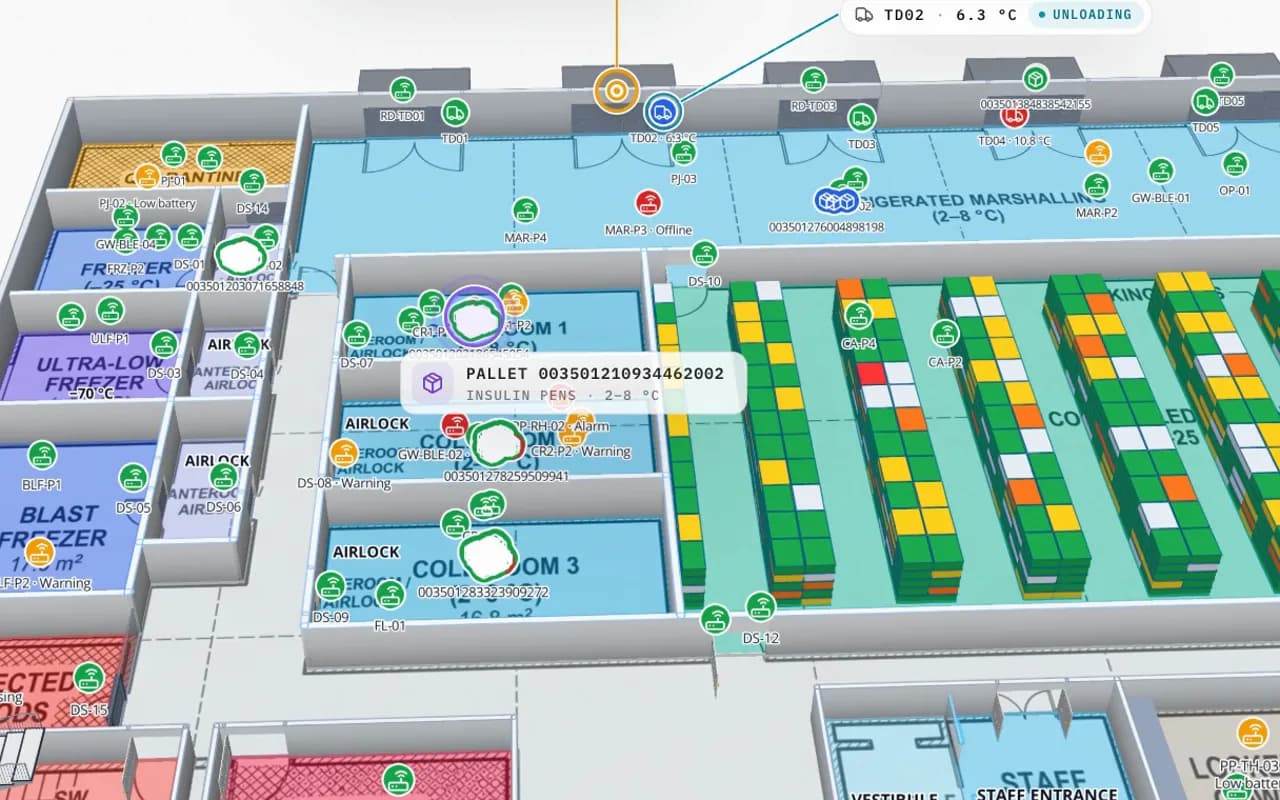
- Read pallets at every cold-room door — the read history shows how long product spent outside its zone.
- Put temperature on the same map — probes in each room, colouring it by band.
- Choose tags rated for the cold — low-temperature adhesives and tags specified for frost and condensation.
Practicalities that are specific to the region
| Topic | What to check |
|---|---|
| UHF frequency band | UHF RFID bands differ by country. Readers ship in regional variants; confirm the allowed band and power with the national regulator (e.g. TDRA in the UAE, CST in Saudi Arabia) before you buy. |
| Heat and dust | Readers, antennas and cabinets in yards and docks need appropriate temperature and IP ratings; shade and ventilation matter. |
| Languages | Floor teams, supervisors and head office may work in Arabic, English or both; pick software where each user chooses. |
| Data location | Ask where data is stored. If it must stay on your own servers, a self-hosted option avoids the question. |
| Supplier tagging | Many goods are imported; decide early whether suppliers tag at source or you tag at receiving. |
Where Spatial Map fits
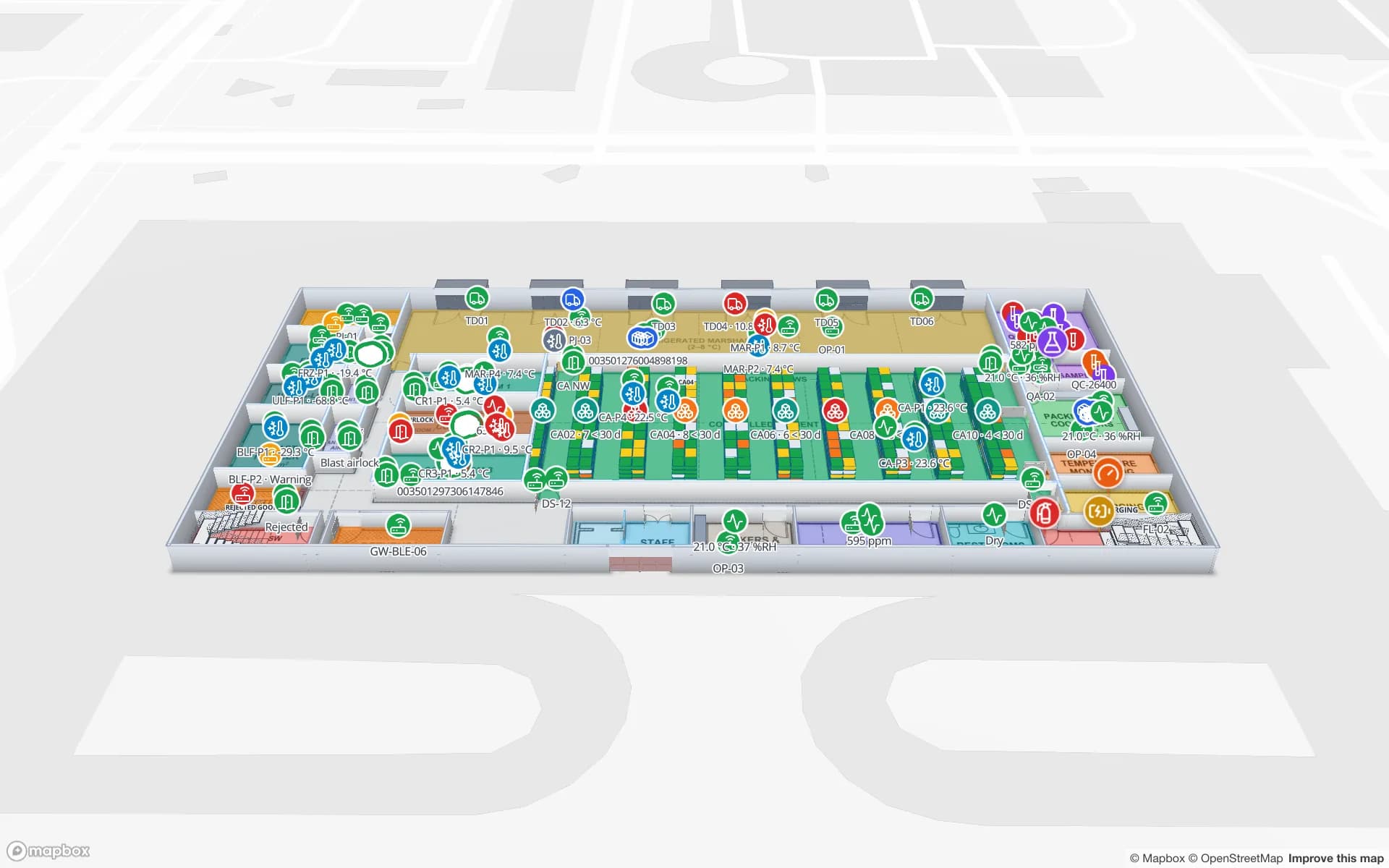
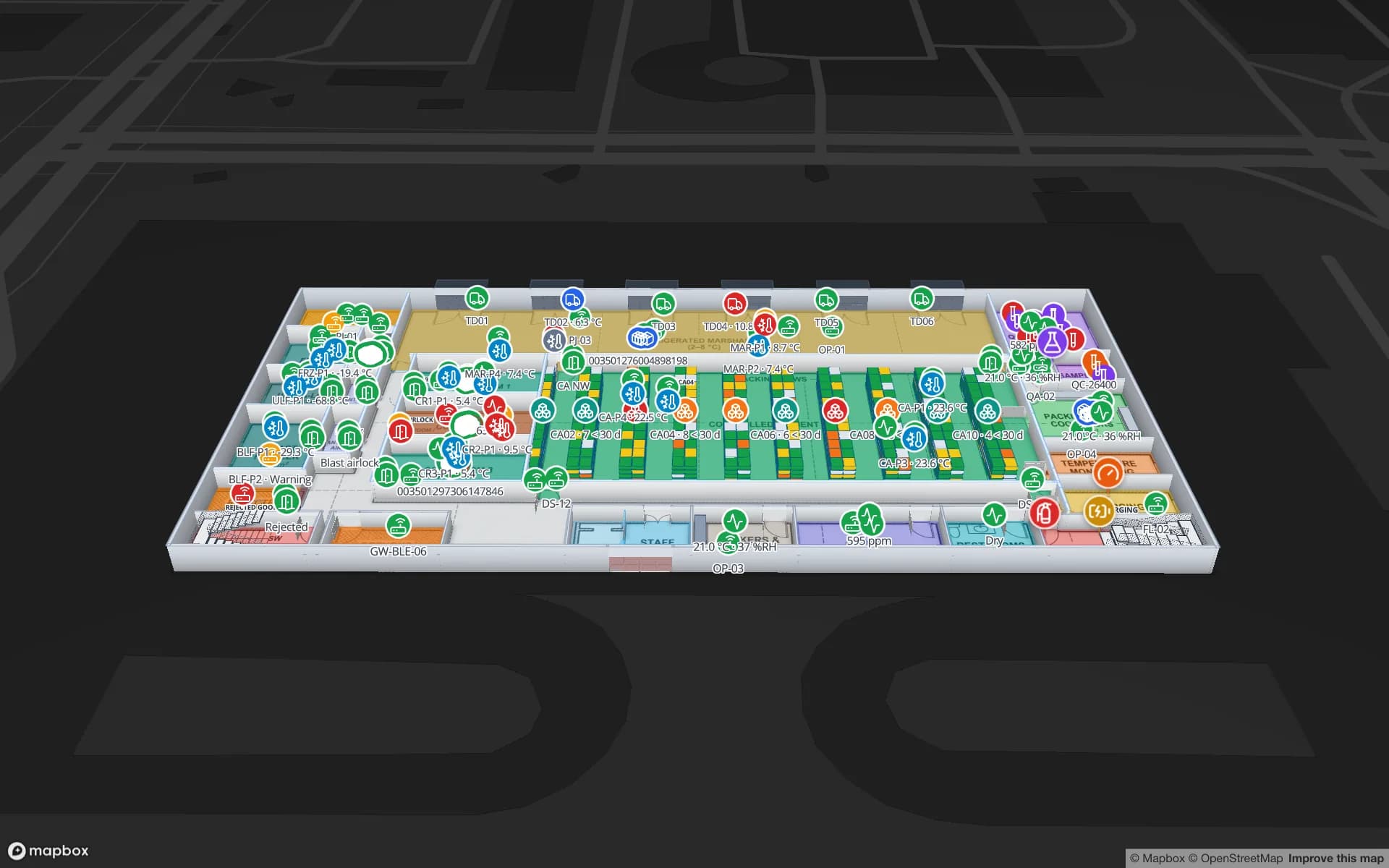
Spatial Map puts RFID reads, stock and sensor data on a live 3D map of each building, with a fully right-to-left Arabic interface alongside English. It is hardware-agnostic — readers from e.g. Zebra, Chainway, SATO or Sanray (trademarks of their owners) feed it through your middleware — and the open-source edition can run on your own servers. Country pages go deeper: RFID tracking in Saudi Arabia, RFID tracking in the UAE and the Middle East overview.
Hardware selection is on RFID hardware; middleware, ERP or WMS integration is custom development. For the solutions themselves, see inventory, logistics and cold chain.
Try the platform your data belongs on.
Spatial Map turns spreadsheets, sensor streams, and CAD drawings into one live 3D facility view — nothing to install, seven-day free trial.
Keep reading
- IndustryIndoor wayfinding for airports and malls: what actually worksSigns do most of the work; an up-to-date map does the rest. What helps people find their way in terminals and malls, and what blue-dot positioning really gives you.
- IndustrySupply-chain visibility inside the plant: lines, WIP, racks and docks on one live mapSupply-chain dashboards follow the truck to the dock door, then go blind inside the plant. A live indoor map of lines, stations, racks and docks closes that gap. Here is how to build one, using our Summit Assembly Plant demo as the worked example.
- IndustryStadium and venue operations on a live 3D map: gates, seats, concourses and crewsOn match day, gates, stewards, concessions and guest services each watch a different screen. A live 3D map of the bowl and concourses is where they agree on location. Here is how our Crown Park Stadium demo is built — 30,513 seats included — and how Lakeside Convention Center uses the same tools for events.