Hamburg · Container terminals, Speicherstadt, aircraft cabin supply

RFID tracking in Hamburg, from the rail yard to the cabin-parts shelf

Spatial Map puts RFID reads on a live 3D map of the building where they happen, so a tag at a dock door becomes a pallet in a lane, a crate in a trailer or a kit on a shelf. RFID tracking in Hamburg starts with a port that hands its boxes to rail and road, and with two industries that keep parts in very different buildings: old brick warehouses by the canals and the supplier halls of an aircraft cluster. Your readers and middleware do the reading; Spatial Map shows each read in place, in German or English.

No credit card. Runs in the browser. Pro is $60/month for up to 4 facilities. Book a demo

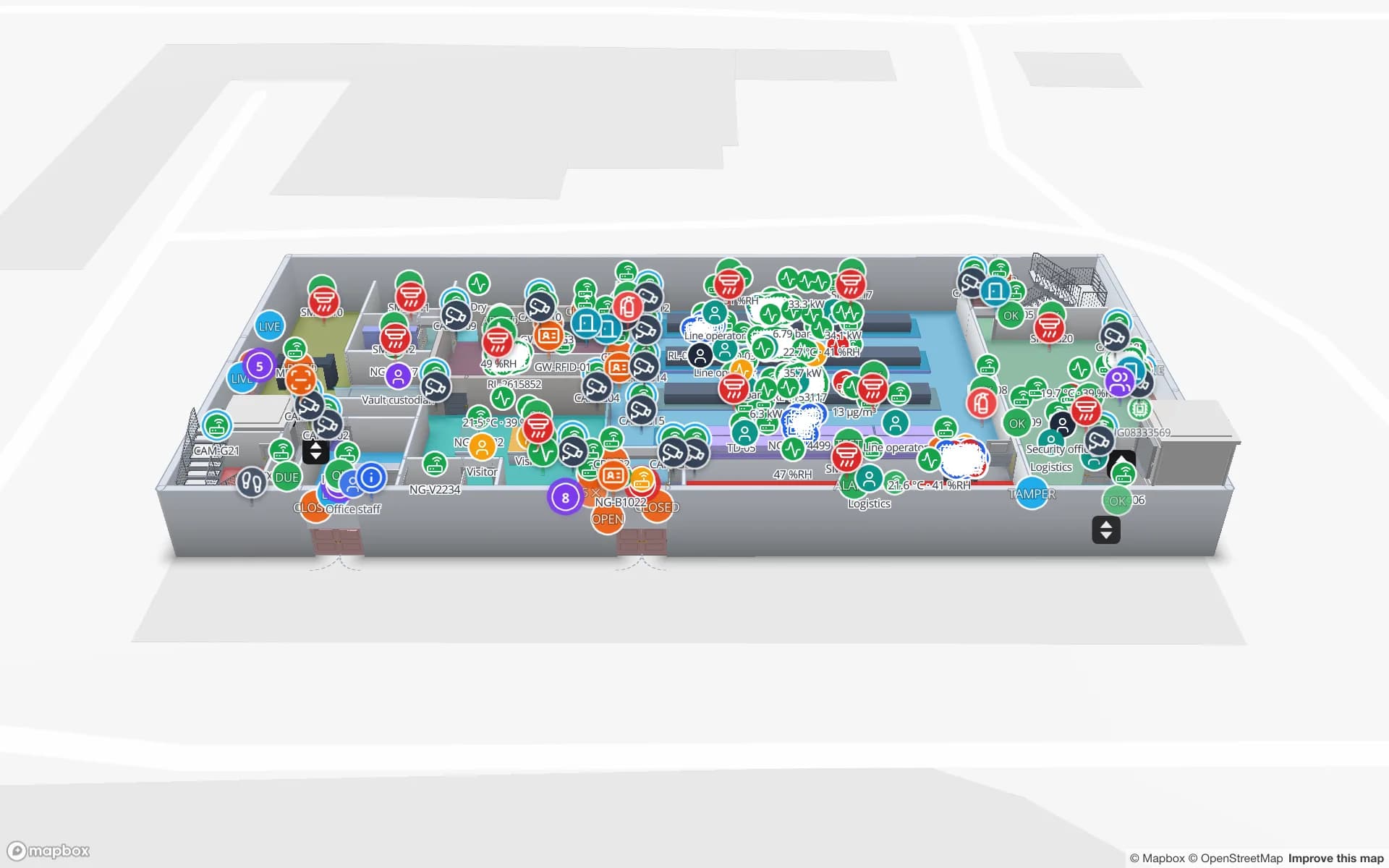
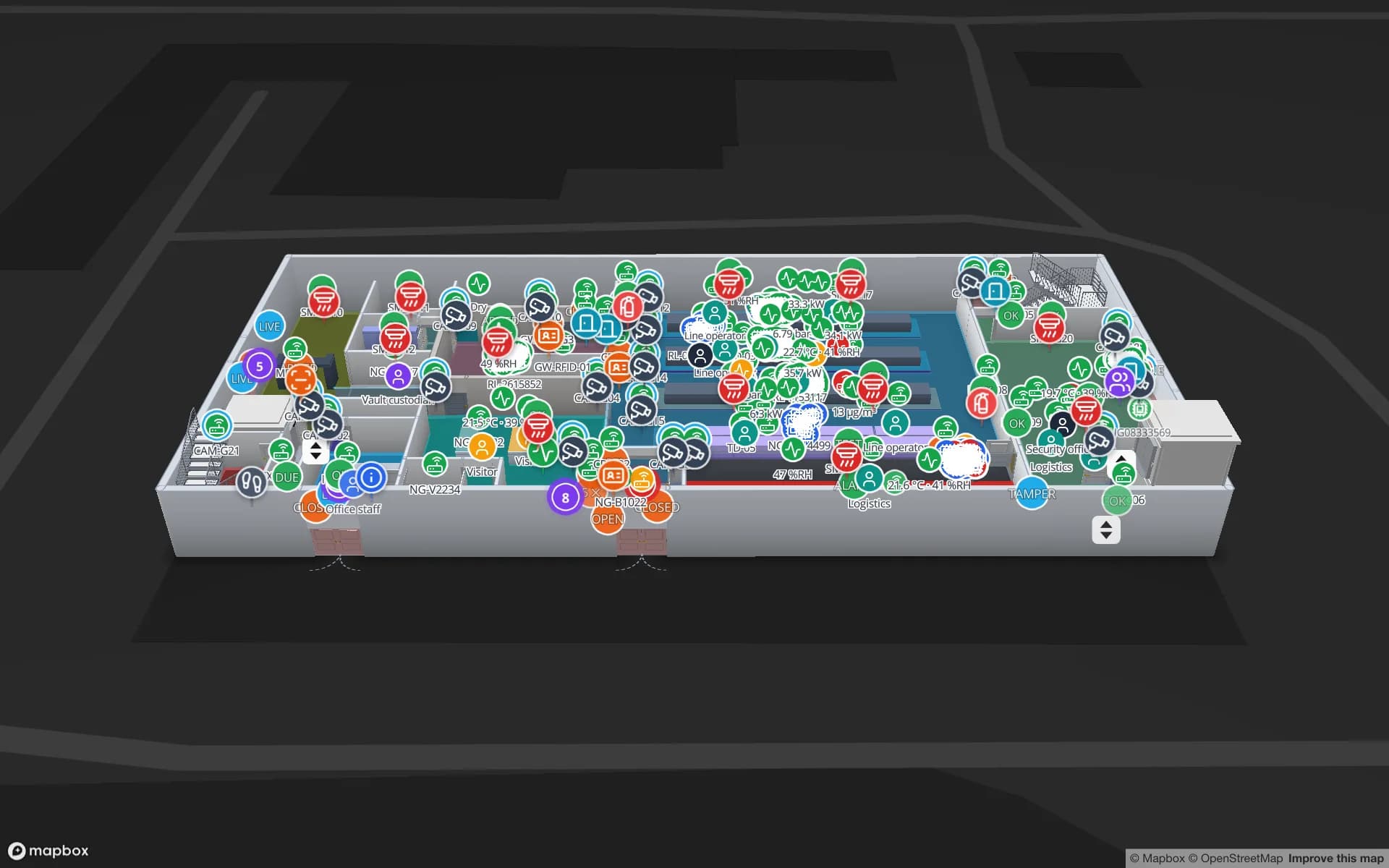
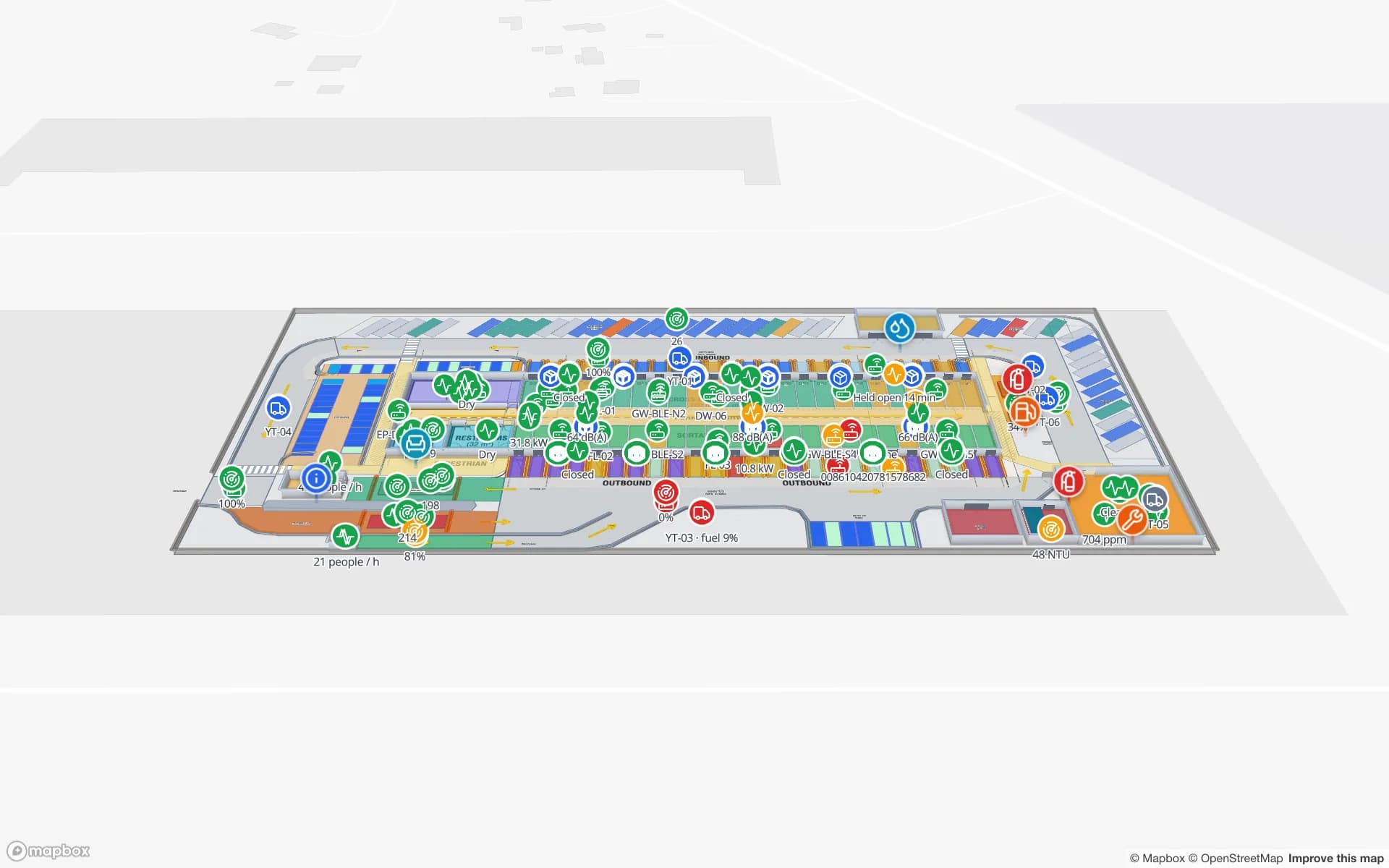
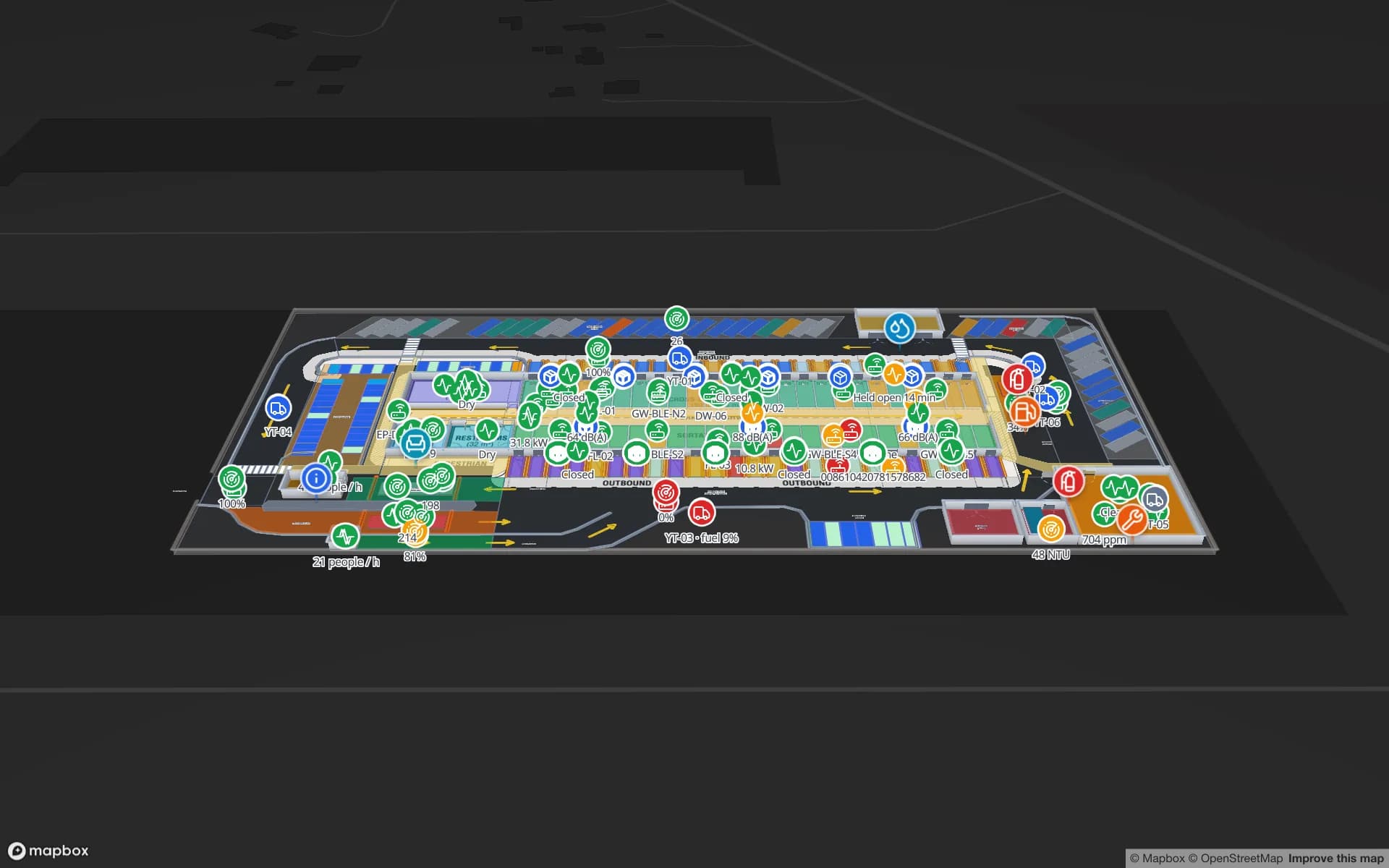
Eastport Cross-Dock Freight Hub, a cross-dock & trailer yard demo, in the Spatial Map 3D viewer with live device markers
Eastport Cross-Dock Freight Hub
Eastport Cross-Dock, a demo freight hub: 50 dock doors, 44 yard slots and 1,180 RFID pallets, with the gate and weighbridge.
Dock doors in the Eastport cross-dock demo
50
RFID pallets moving through Eastport
1,180
German interface, one of six languages
Deutsch
Free trial, up to 5 facilities, no card
7 days

Four container terminals, and the sheds behind their gates

The Port of Hamburg’s own site lists four container terminals and says that all of them are equipped with integrated rail terminals. The terminal at Altenwerder is described as having Europe’s largest container rail terminal for intermodal transport, with block trains cleared along nine parallel tracks of about 700 metres. Separate from the container terminals, the same site lists a group of multi-purpose terminals for other cargo.

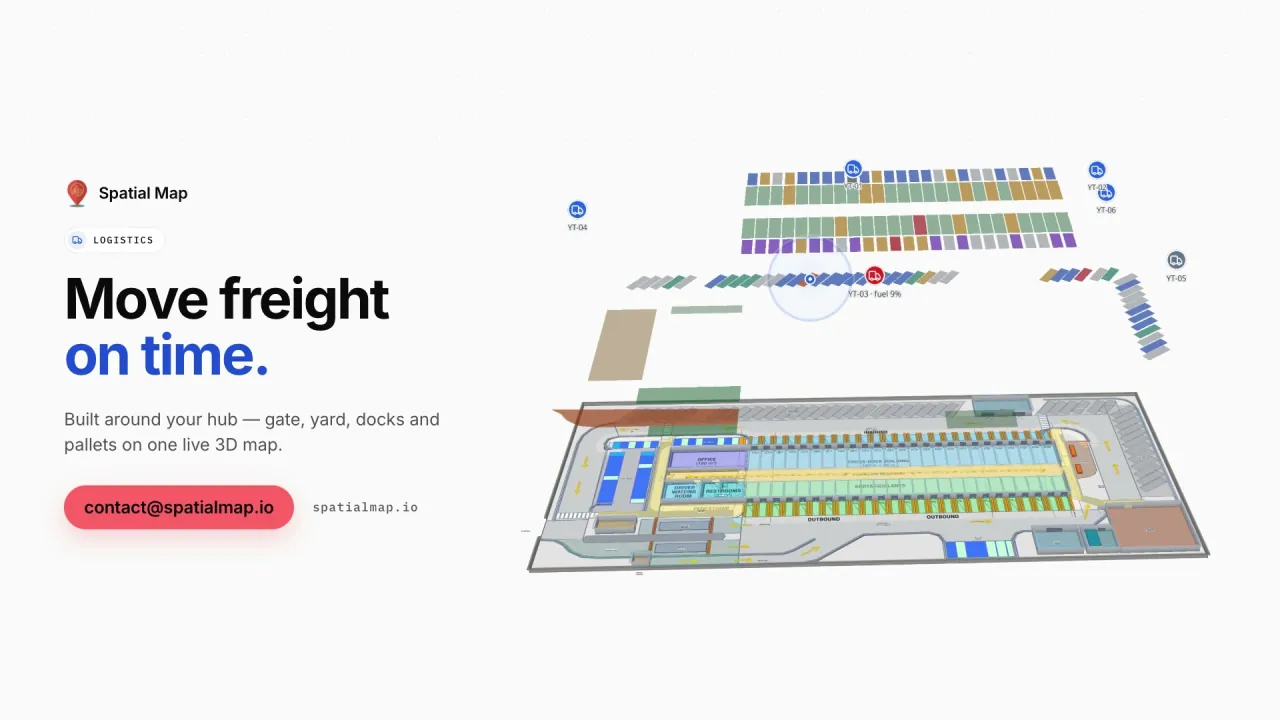
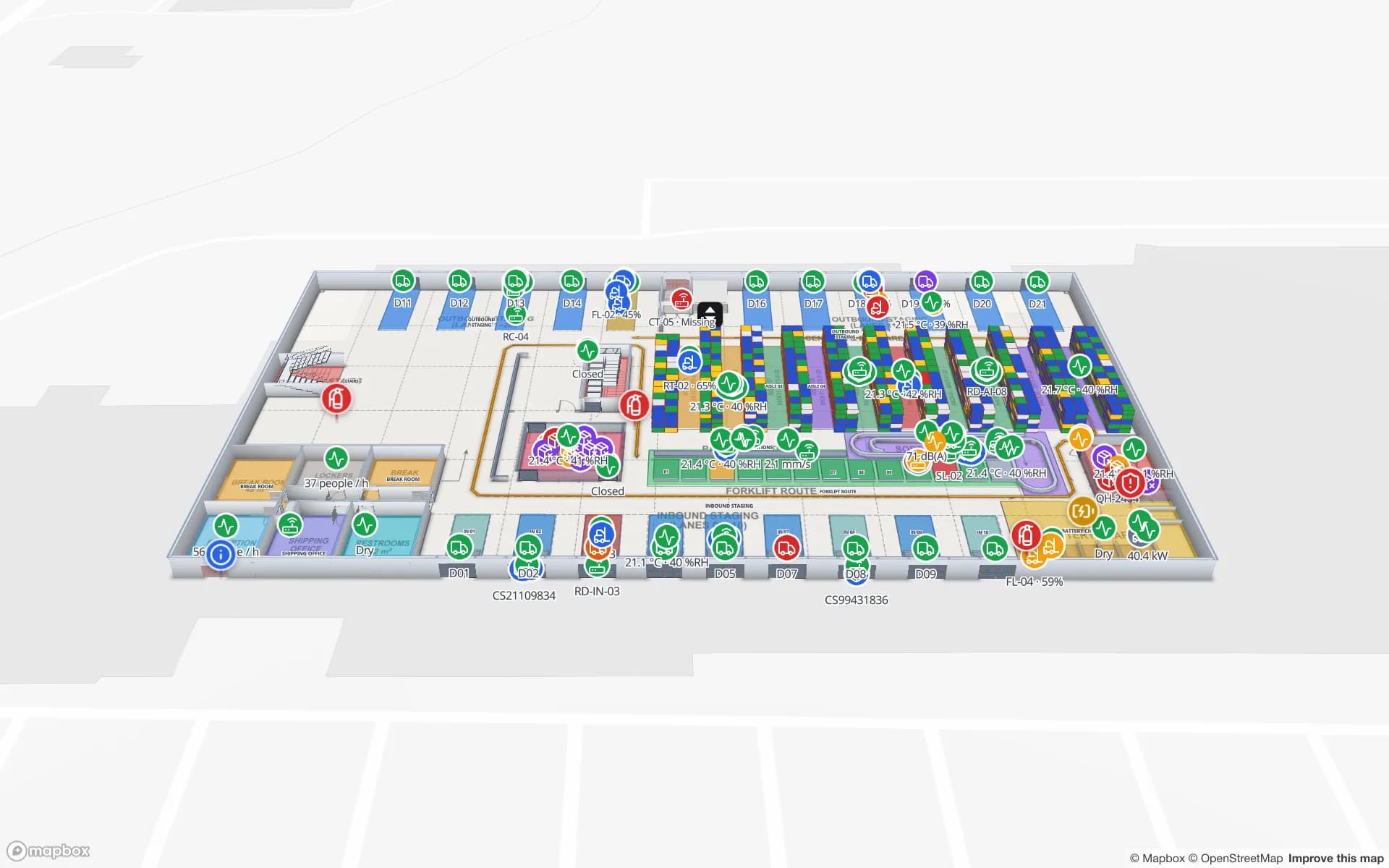
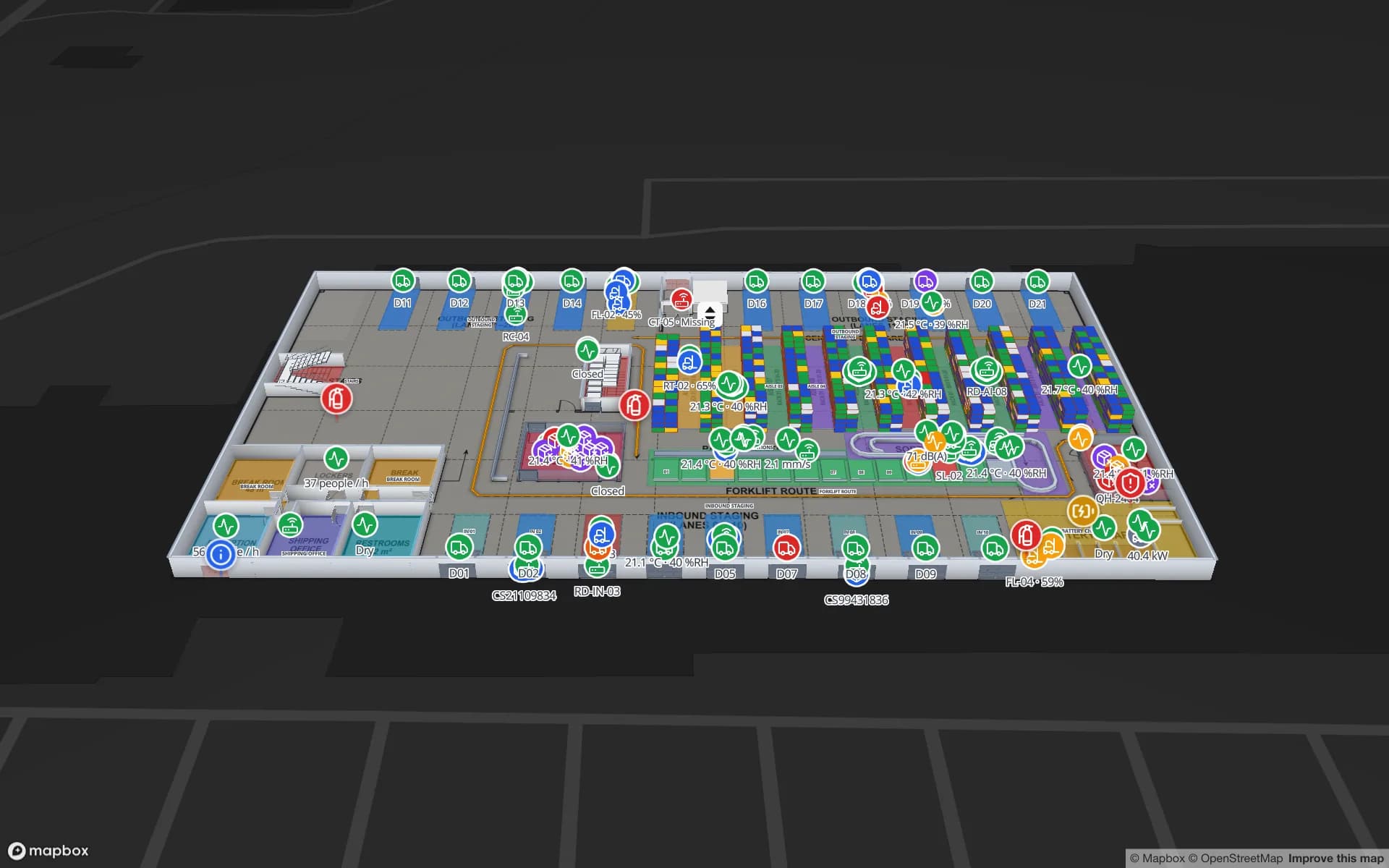
What happens inside a terminal is the terminal’s business and runs on its own systems. What Spatial Map maps is the next building along: the freight station, the forwarder’s warehouse or the stuffing hall where a box is unpacked into pallets or a pallet is built for a rail wagon. RFID portals at the dock doors say which pallet left through which door, and a yard layer shows which trailer is waiting at which slot. The Eastport demo puts 50 dock doors, 44 yard slots and 1,180 RFID pallets on one map. Spatial Map does not connect to terminal, customs or port community systems; it shows what your own reads and your own WMS say. The post on cross-dock and yard visibility explains the pattern.
Speicherstadt: the oldest sheds are the hardest to map

The Speicherstadt was built between 1883 and 1927 in the red-brick Gothic style as part of Hamburg’s free port, and was added to the UNESCO World Heritage List in July 2015. Coffee, tea, spices and carpets are stored behind its thick walls, according to the federal government’s portal for Germany. Buildings like these are narrow, multi-storey and protected, which changes how you tag and read stock: you cannot drill freely into brick that the monument authorities care about, so ask the building owner what may be fixed where before you plan any reader.

A passive UHF tag on a carton or a roll needs no cabling, and a handful of read points at doors, hoist landings and the loading bay can be mounted on stands. The map does the rest. Upload whatever plan exists, even a scan of an old drawing; draw each floor and the lifts or hoists between them; and give every floor its own read points, so that a carpet roll or a sack of spices shows on the floor where it was last read. Rolled textiles and foil-wrapped goods behave differently under radio, so test your tags in the building first; the post on RFID tags for metal, liquids and apparel lists what to check.

Aircraft cabin supply: many small shelves, many kits

Hamburg Aviation, the cluster’s own organisation, calls Hamburg the third largest civil aviation centre in the world and the city “a leading centre of excellence for cabin development”. About 300 small and medium-sized companies, employing over 10,000 people, supply the industry, with a focus on aircraft interior fittings and aircraft production.

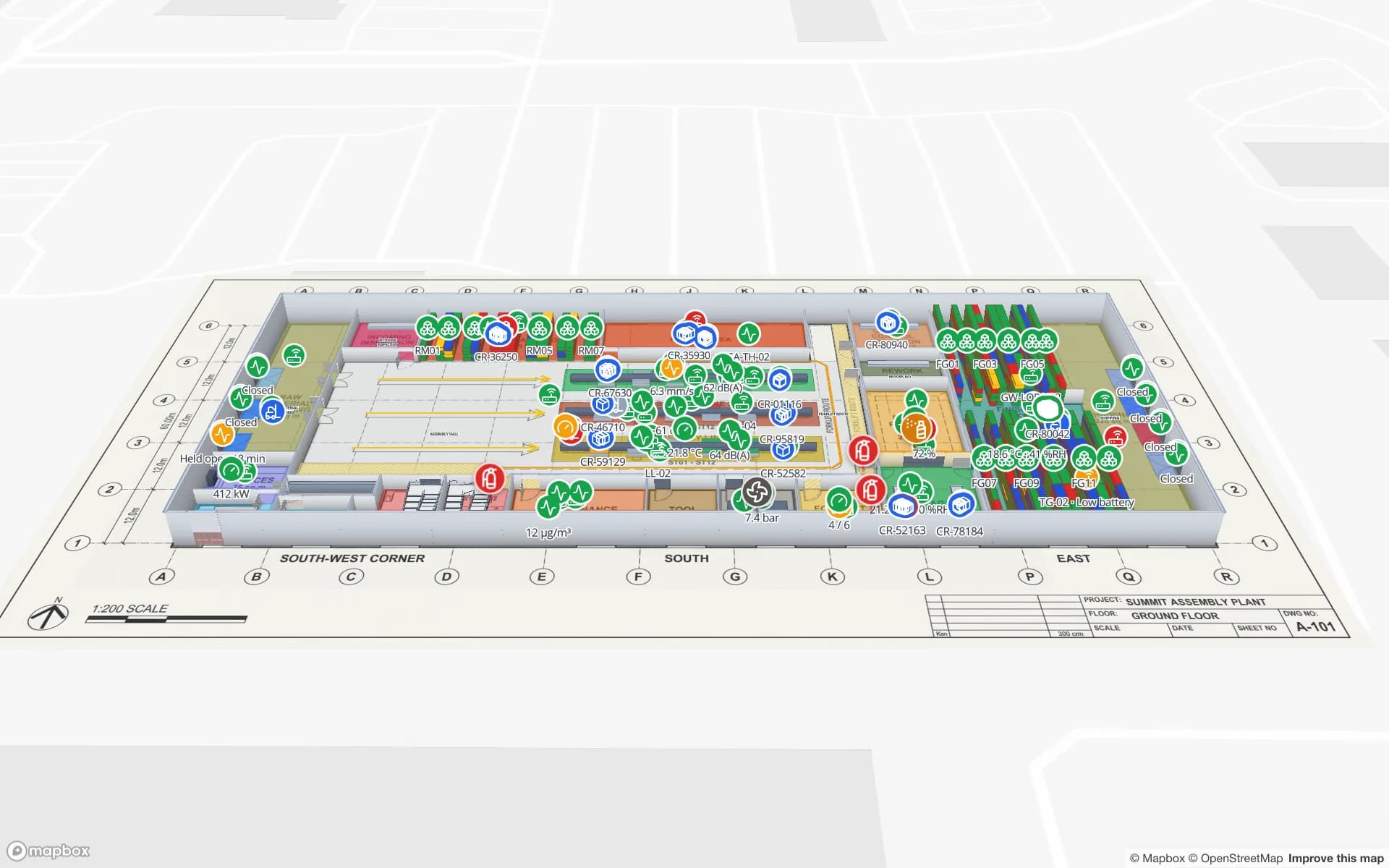
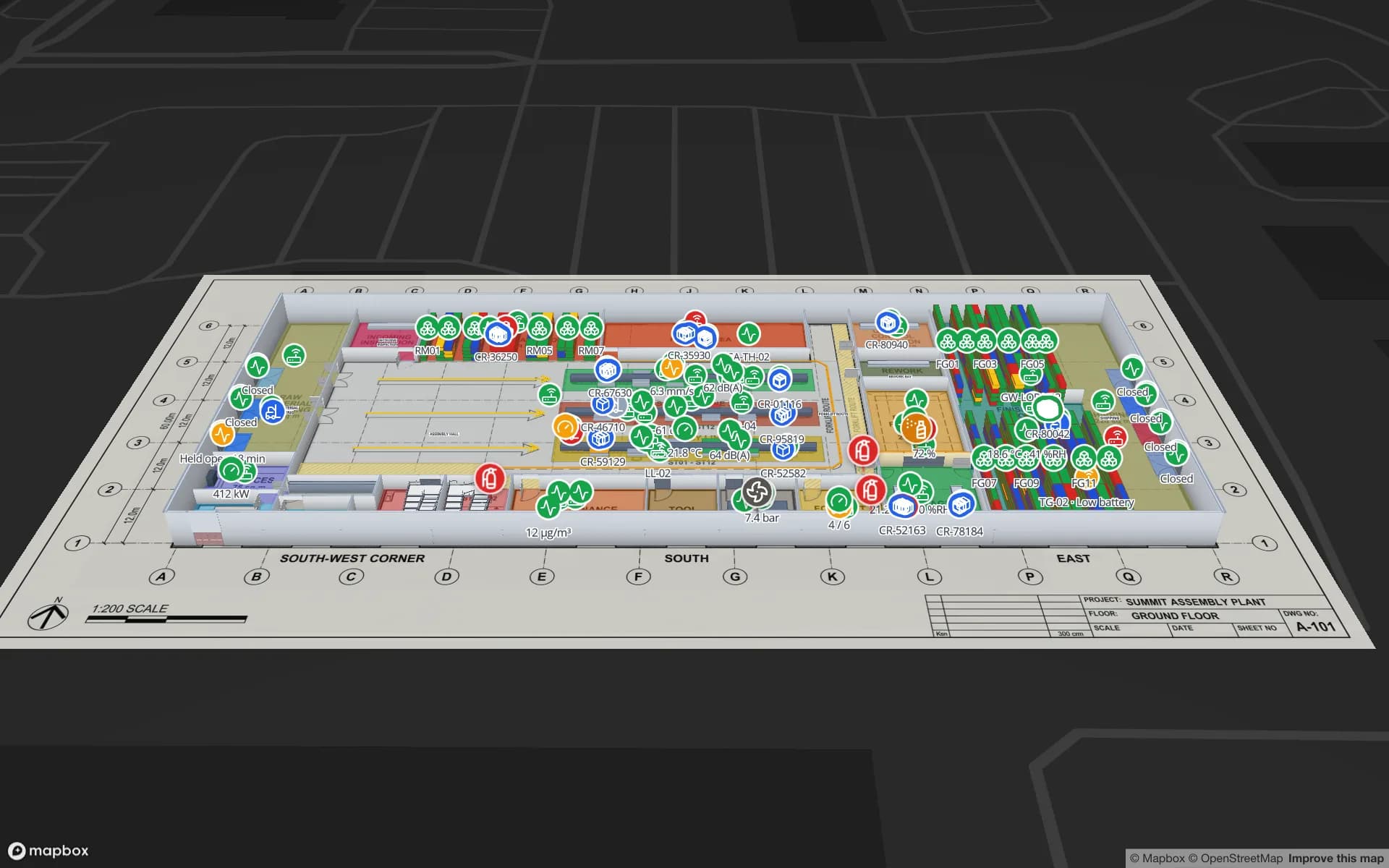
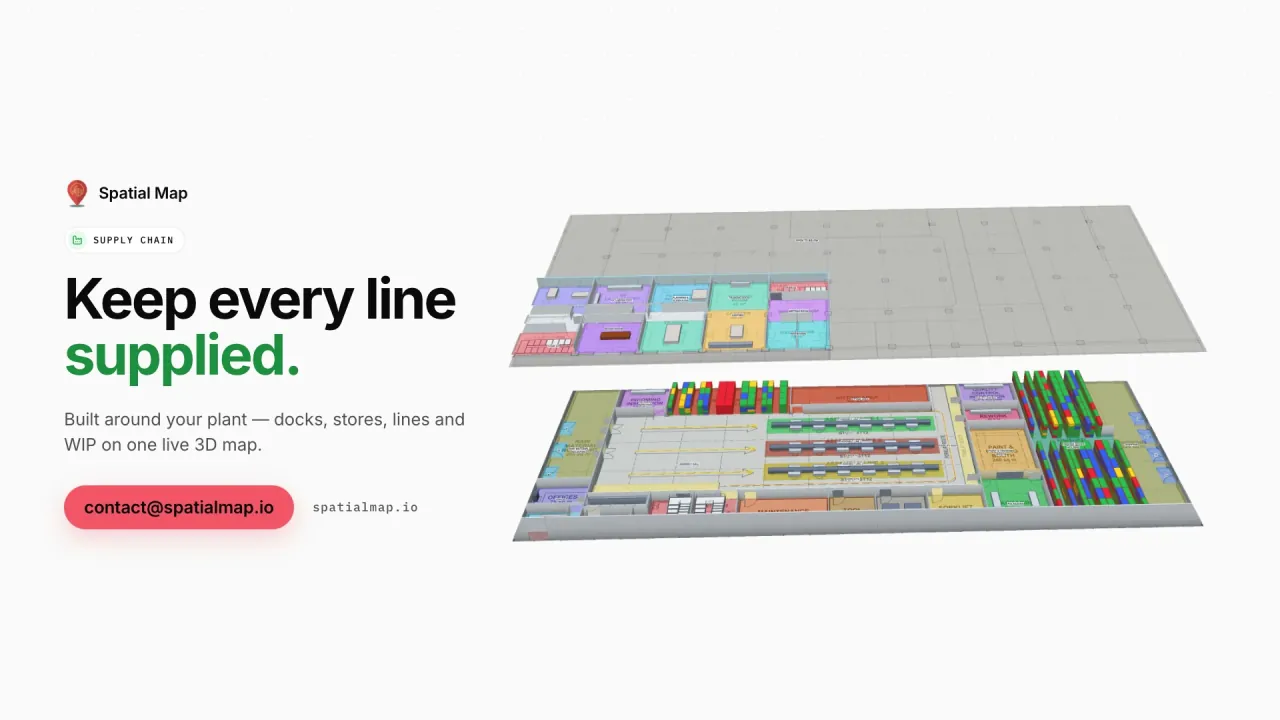
For a supplier of that size the problem is rarely one big warehouse. It is the many places a kit can be: an incoming bay, a kitting shelf, a rework table, a returnable rack on its way to the customer. Tag the racks and the kits, read them at the bay and the shelf, and the map shows which kit is complete, which is waiting for one part and which rack is still at the customer. Tools can carry BLE tags that locate them by room. Aviation parts carry their own traceability paperwork; Spatial Map does not replace it and makes no compliance claim. The Summit Assembly demo shows WIP carriers read between stations and 867 rack locations.

Services for teams in Hamburg

Where Hamburg teams usually start depends on the building:

  • Forwarders and freight stations usually begin with inventory tracking at the dock doors, because a pallet loaded onto the wrong rail wagon is found far from the gate.
  • Heritage warehouses and sheds with several floors tend to begin with indoor mapping of the plan and a few RFID read points, then add stock by floor.
  • Aircraft-interior and parts suppliers often start with asset tracking for returnable racks, jigs and tools; RTLS and UWB matters only where people or vehicles must be located continuously.
  • If you have no readers or tags yet, our team can source RFID readers, antennas and tags on request, quoted per project, with warranty and device support from the manufacturer: see hardware and demo kits on request.
  • Where in-house IT is thin, our team builds Android RFID handheld apps, ERP and WMS integrations and other custom software such as POS or booking systems as client projects. The product runs as cloud or on-premises.

Also served nearby

The same approach covers Harburg and Wilhelmsburg on the south bank of the Elbe, the aircraft-supply towns of Stade and Buxtehude to the west, Norderstedt in the north and Lübeck further up the coast. Nothing needs to be installed at any of them: the map opens in a browser.

How Spatial Map does it

From the dock door to the kitting shelf

  1. 01

    Pick one building

    A freight station, a Speicherstadt-style warehouse or a supplier hall where a lost pallet or kit costs most.

  2. 02

    Map floors, doors and shelves

    Upload the plan, scan or photo, let AI Map draft walls, doors and racks for a person to review, and name the read points as your middleware does.

  3. 03

    Connect reads and stock

    RFID middleware and your ERP post rows through the table write API, a polled REST endpoint or CSV and Excel uploads.

  4. 04

    Add door and silence rules

    In-app alerts for pallets staged too long, kits incomplete at cut-off and readers that stopped reporting.

What Hamburg teams track

Freight stations and forwarder warehouses

Dock doors, yard slots and pallets staged for the right rail wagon or trailer.

Multi-floor heritage warehouses

Cartons and rolls by floor and bay, with a plan drawn from old drawings.

Aircraft-interior kits and racks

Kits read at the kitting shelf and returnable racks followed to the customer and back.

Jigs, tools and test equipment

Where each tool is, by room, and who last had it.

See it on real demo facilities

Fictional names, real floor plans, live sensors, RFID, BLE tags and gateways — open any of them in the browser.

All 13 demo facilities

RFID tracking in Hamburg: questions we get

No. It has no link to terminal, customs or port community systems. It shows what happens inside your own building, from your own RFID reads, WMS or ERP, so it complements the port-level systems rather than replacing them.

Often yes, because passive UHF tags need no cabling and readers can sit on stands or at doors. What may be fixed to walls, floors or ceilings is a question for the owner and the monument authority, not something Spatial Map can answer. Test your tags in the building before you plan the read points.

Yes. Start with a table of kits and racks, upload reads as CSV or Excel, or post them with the write API, and show them on the shelf plan. Connect the ERP later if it pays back. Aviation traceability records stay in your quality system; Spatial Map makes no compliance claim.

Yes. The app has a German interface alongside English, French, Spanish, Arabic and Chinese, and each person picks their own. Room names, columns and report titles stay as you write them, umlauts included.

No. Spatial Map is sold online and our team works with customers in Germany remotely, by video call and through the contact form. There are no local resellers or partners.

In US dollars, the same worldwide: a 7-day free trial for up to 5 facilities with no card, then Pro at $60 a month or $600 a year for up to 4 facilities. RFID hardware, if you ask us to source it, is quoted per project and is not part of the subscription.

Map one Hamburg dock or shelf before the next shipment.

Start the free trial and open the Eastport demo, or send us the plan of a freight station, an old warehouse or a supplier hall and a sample of your reads through the contact form.