Frankfurt · Airport cargo, pharma handling, Rhine-Main

Cold chain monitoring in Frankfurt, from the apron to the cool room

Spatial Map shows temperature probes, door sensors and tagged pallets as live zones on a 3D map of the cold store, the cargo shed or the dock, so that a warm bay or an open door is something you see, not something you find in a log. Cold chain monitoring in Frankfurt is shaped by the airport: heat-sensitive freight arrives by air, waits in handling sheds and leaves by truck, and every minute outside its range is spent on a ramp, in a corridor or at a dock door. Your probes and loggers measure; Spatial Map puts each reading where it was taken.

No credit card. Runs in the browser. Pro is $60/month for up to 4 facilities. Book a demo

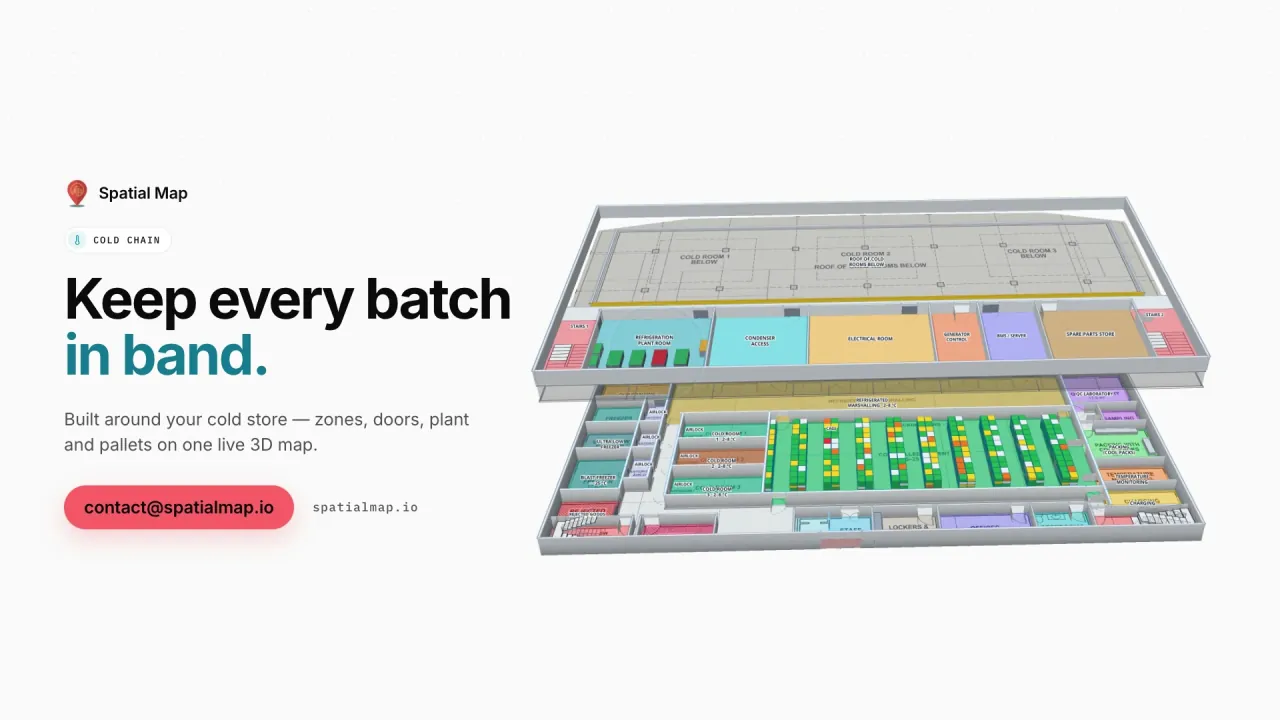
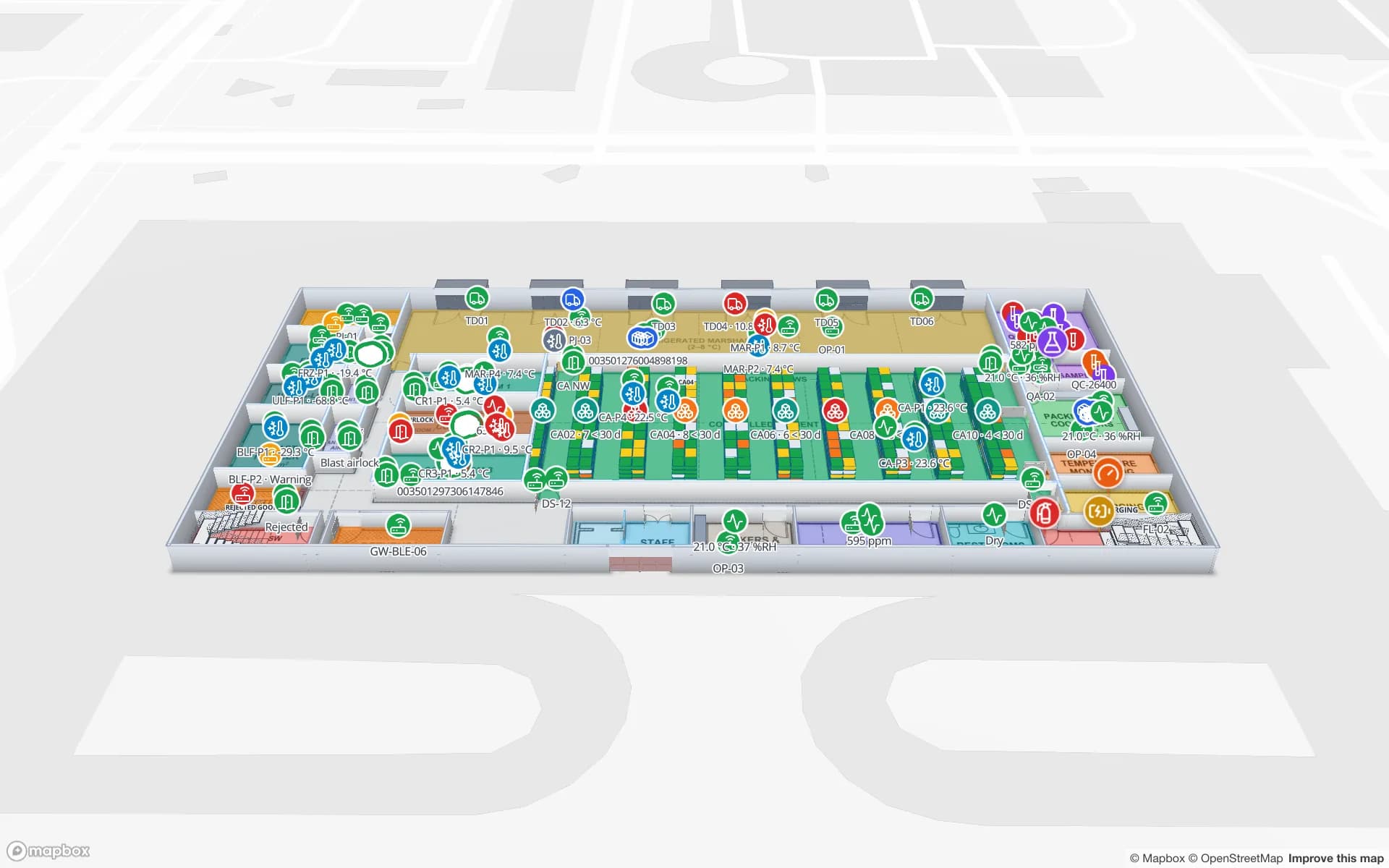
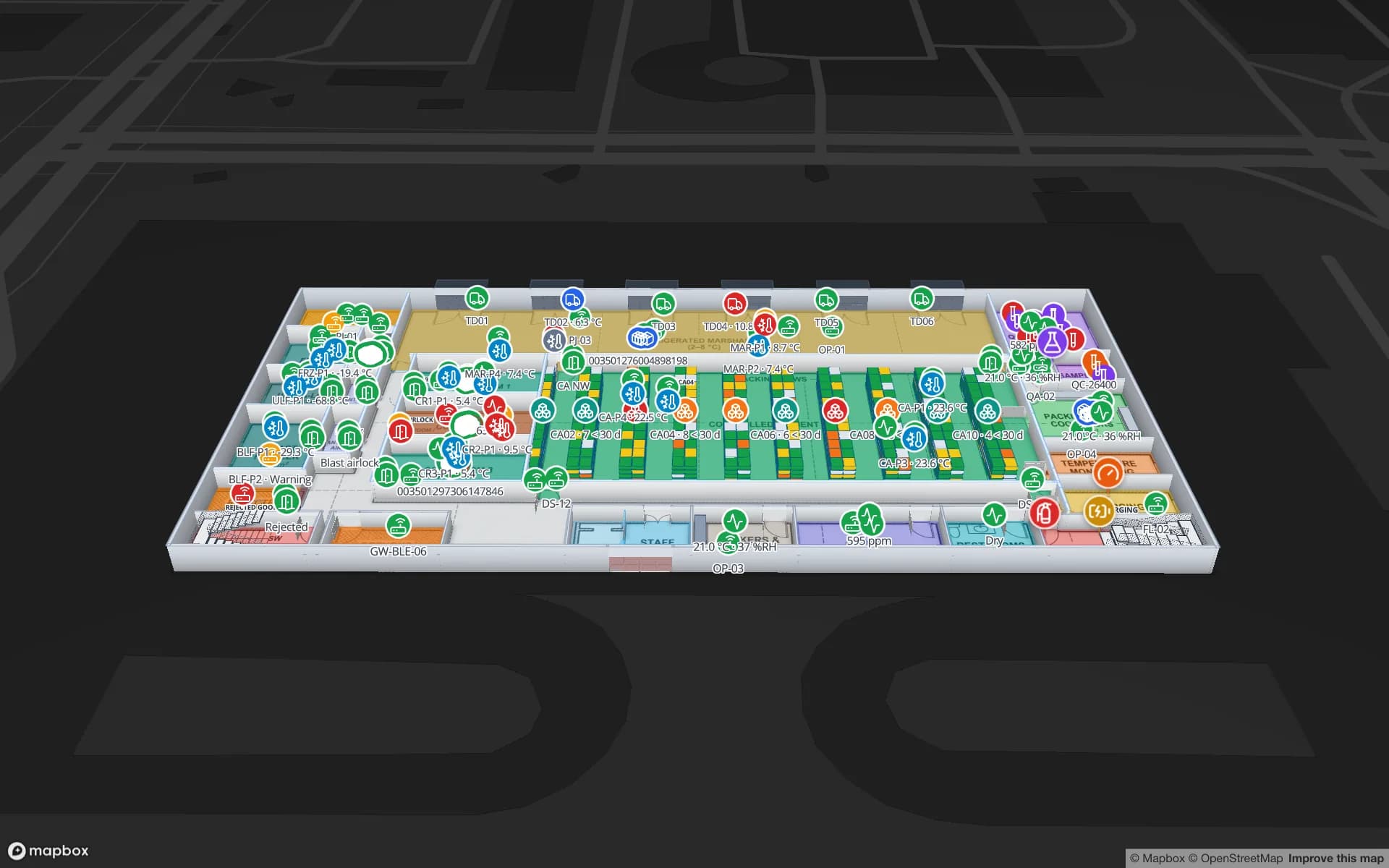
Polar Pharma — Cold Storage & QC Facility, a pharmaceutical cold store & qc lab demo, in the Spatial Map 3D viewer with live device markers
Polar Pharma — Cold Storage & QC Facility
Polar Pharma, a demo cold store and QC facility: temperature zones tinted from their probes, cold-room doors, reefer docks and 1,140 rack locations.
Rack locations in the Polar Pharma cold-store demo
1,140
How often alert rules are checked, with alerts shown in the app
15 s
German interface, one of six languages
Deutsch
Free trial, up to 5 facilities, no card
7 days

An airport that calls itself a pharma hub

Fraport describes Frankfurt Airport as “Europe’s leading pharma hub”. By its own account about 200,000 tonnes of pharmaceutical and healthcare freight pass through every year, in more than 22,000 m² of temperature-controlled cargo space, of which 14,000 m² is designated for pharmaceuticals. It points to the Rhine-Main region’s proximity to ten of the world’s 20 largest pharmaceutical producers, and to specially equipped vehicles that keep heat-sensitive products at the right temperature on the apron.

Those are the airport operator’s claims about its own handling chain, and they are the context for a different question: what happens in your own building. A forwarder’s branch warehouse in the Rhine-Main area, a pharmaceutical wholesaler’s cross-dock or a food importer’s chilled shed is a chain of rooms with different set-points, joined by doors and ramps. Each room is a zone on the map, tinted from its probes, with its doors shown as open or closed.


A handling shed as a map of temperature zones

A new air-cargo warehouse handed over in CargoCity South in 2020 shows the typical layout: 17,000 m² of storage space and capacity of over 200,000 tonnes a year, with a pharma centre that has a 1,300 m² zone kept at 15 to 25 °C and a smaller zone at 2 to 8 °C. Whatever the building, the operational questions repeat: which pallet is in which zone, how long has the door of that zone been open, and which probe has not reported since the last shift.

Draw the zones as areas, place each probe and door sensor where it hangs, and bind them to a table: the zone colours itself from its probes, a door sensor flips a cold-room door, and RFID reads at the door say which pallets went in or out. A heatmap of probe readings shows where the warm corner is. Alert rules on the same table, checked every 15 seconds, raise an in-app alert when a zone has been out of range for N minutes or when a probe has not updated for N minutes; see warehouse sensor alert rules. The Polar Pharma demo has all of it on two floors, and the guide to pharma cold storage and QC temperature monitoring walks through the set-up.

One boundary, stated plainly: Spatial Map is a live map and alerting layer over the readings you send it. It is not a validated monitoring system, it does not calibrate or qualify probes, and it makes no compliance claim, including for good distribution practice; your quality system and your validated loggers remain the record.

Volume makes the minutes matter

Fraport reports that cargo (airfreight plus airmail) reached about 2.1 million tonnes in 2025, up 1.1 percent, and describes Frankfurt as Continental Europe’s largest cargo hub. In a hub of that scale the minutes a consignment spends between aircraft and cool room are what count, not just its time in storage. Treat that path as data: a table of ramp pick-ups, shed receipts, zone moves and truck departures, each with a time, shown on one plan and replayed with the history player when a consignment has to be explained.

Heat-sensitive freight is wider than pharmaceuticals. Fresh produce, flowers and chilled foods have the same shape of problem with different set-points, and temperature monitoring and the cold chain solution apply in the same way.

Services for teams in Frankfurt

Where Frankfurt teams usually start depends on the building:

  • Forwarders and handling sheds usually begin with temperature monitoring of the cool rooms and door sensors on the zones that matter most, then add RFID at the doors.
  • Pharmaceutical wholesalers and distributors tend to begin with inventory tracking of held and quarantined stock next to the temperature zones.
  • Asset tracking covers insulated containers, data loggers and trolleys; RTLS and UWB is for yards where trucks and ramp vehicles must be located continuously.
  • If you have no probes, gateways or tags yet, our team can source sensors and RFID on request, quoted per project, with warranty and device support from the manufacturer: see hardware and demo kits on request.
  • Where you want an integration with your WMS or a handheld app, our team builds it as a client project; see custom software development. The product runs as cloud or on-premises.

Also served nearby

The same approach covers Offenbach, Hanau and Neu-Isenburg, Mainz and Wiesbaden across the Main and the Rhine, and the logistics parks along the A5 and A3. Nothing needs to be installed at any of them: the map opens in a browser.

How Spatial Map does it

From the first probe to a zone you can see

  1. 01

    Pick the rooms that matter

    The cool room, the pharma zone or the chilled dock: where an hour outside range costs most.

  2. 02

    Draw zones and place sensors

    Upload the plan, let AI Map draft walls and doors for review, then place probes and door sensors where they hang.

  3. 03

    Connect probes and reads

    Gateways and loggers post rows through the table write API or a polled REST endpoint; RFID reads join the same plan.

  4. 04

    Add range and silence rules

    In-app alerts for a zone out of range for N minutes, a door open too long and a probe that stopped reporting.

What Frankfurt teams monitor

Pharma handling zones

Controlled-room and cool zones tinted from their probes, with door events.

Quarantine and held stock

Pallets on hold shown beside the zone they sit in.

Cross-docks and reefer docks

Which truck is at which door, and how long the door has been open.

Chilled storage and fulfilment

Temperature and humidity readings across storage zones, with stock by bin.

See it on real demo facilities

Fictional names, real floor plans, live sensors, RFID, BLE tags and gateways — open any of them in the browser.

All 13 demo facilities

Cold chain monitoring in Frankfurt: questions we get

No. It is a live map and alerting layer over the readings you send it. Your validated loggers and quality system remain the record, and Spatial Map makes no compliance claim, including for good distribution practice. What it adds is where each reading was taken, which door is open and an in-app alert when a zone leaves its range.

No. It shows what happens inside your own building, from your own probes, RFID reads, WMS or ERP. It has no link to airport, customs or handler systems.

Not yet. Alerts appear in the app (the bell, a toast and the Alerts page), and rules can notify chosen roles or members there. There is no email, SMS or push, and no write-back to other systems.

Yes. Each gateway or logging system posts rows to a table with the write API, or exposes a REST endpoint that Spatial Map polls, and the plan shows them side by side. Only one RTLS vendor has a built-in driver, but temperature probes do not need one.

No. Spatial Map is sold online and our team works with customers in Germany remotely, by video call and through the contact form. There are no local resellers or partners.

In US dollars, the same worldwide: a 7-day free trial for up to 5 facilities with no card, then Pro at $60 a month or $600 a year for up to 4 facilities. Probes and gateways, if you ask us to source them, are quoted per project and are not part of the subscription.

Put one cool room on the map this week.

Start the free trial and open the Polar Pharma demo, or send us the plan of a cool room, a handling shed or a chilled dock and a sample of your probe readings through the contact form.