Germany · RFID in production and intralogistics

RFID tracking software for German warehouses, plants and line supply

In German manufacturing, RFID usually starts with the load carrier: the small and large containers that shuttle between supplier, warehouse and line. Spatial Map puts those reads on a live 3D map of the plant — goods receipt, supermarket, line side, empties yard — so planners, shift leads and logistics teams look at the same picture instead of separate read logs.

No credit card. Runs in the browser. Pro is $60/month for up to 4 facilities. Book a demo

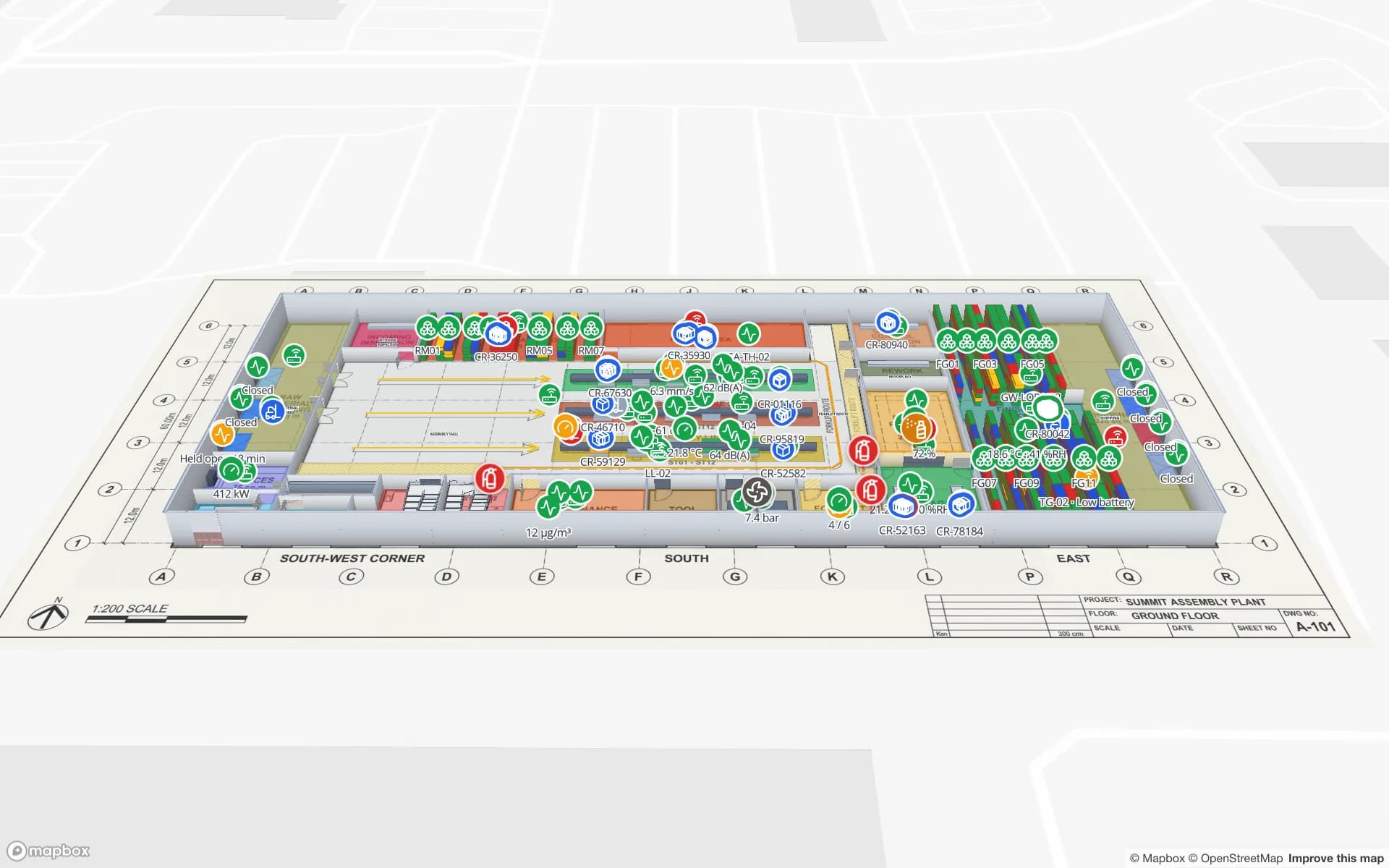
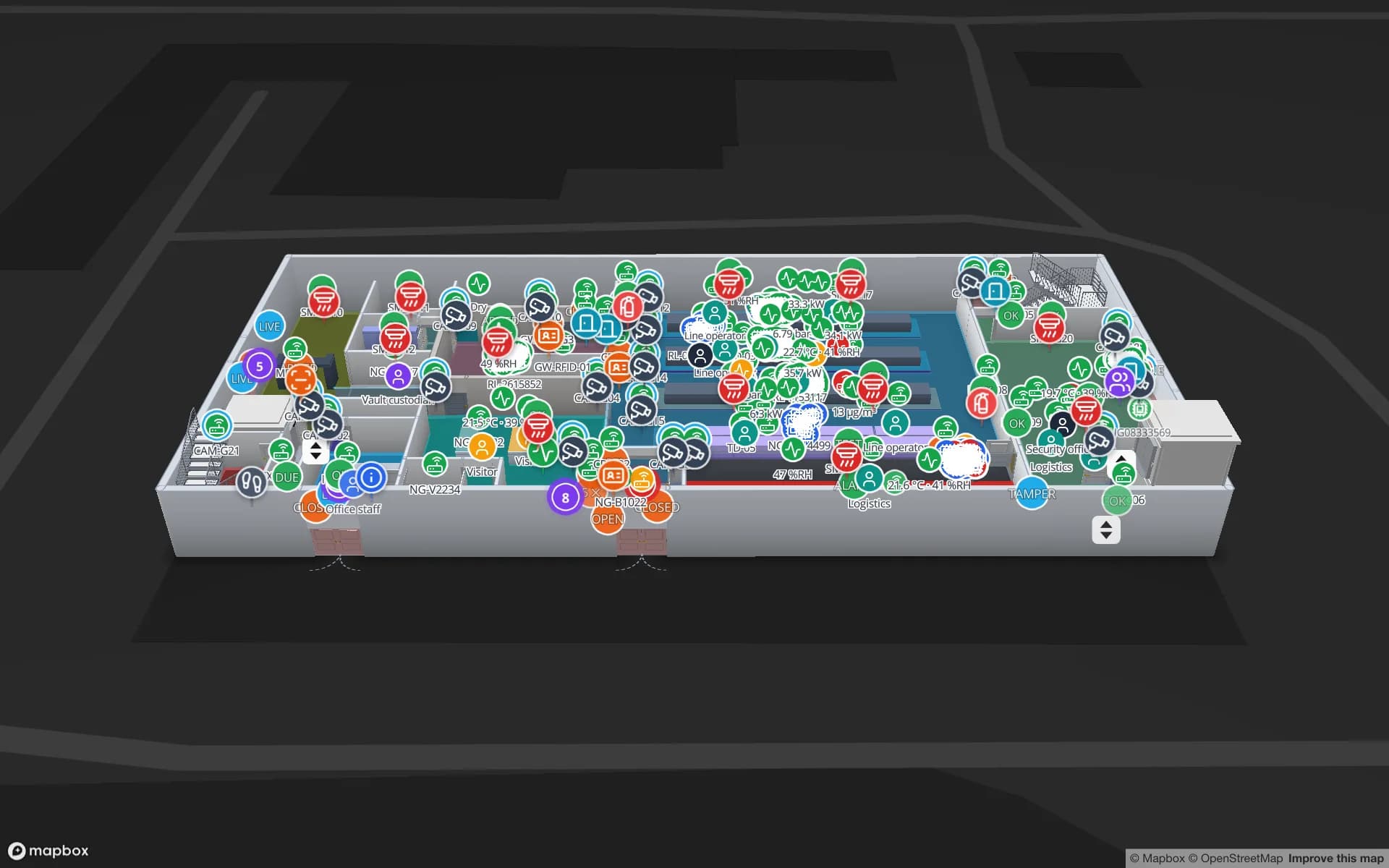
Summit Assembly Plant, a assembly plant demo, in the Spatial Map 3D viewer with live device markers
Summit Assembly Plant
Summit Assembly Plant, a demo plant: WIP carrier tags read between stations, 867 raw-material and finished-goods rack locations, docks and forklifts on two floors.
German interface, alongside five other languages
Deutsch
Rack locations in the Summit assembly demo
867
RFID pallets in the Eastport cross-dock demo
1,180
Free trial, no credit card
7 days

Where RFID pays off in German operations

Germany’s automotive and supplier industry runs on just-in-time (JIT) and just-in-sequence (JIS) supply, and that discipline has spread to machinery, electrical and consumer-goods plants. The weak point is rarely the part itself — it is the returnable load carrier: small load carriers (KLT bins) and large carriers (GLT), racks and special containers that go missing, pile up at a supplier or sit full in the wrong buffer. The VDA, the German automotive industry association, has published recommendations for RFID in automotive logistics, including container management, and many plants tag carriers rather than individual parts for that reason.

If you need the basics of tags, readers and middleware first, our RFID tracking software page covers them. This page is about how those reads become useful in a German plant or warehouse.
Load carriers and line supply on one map

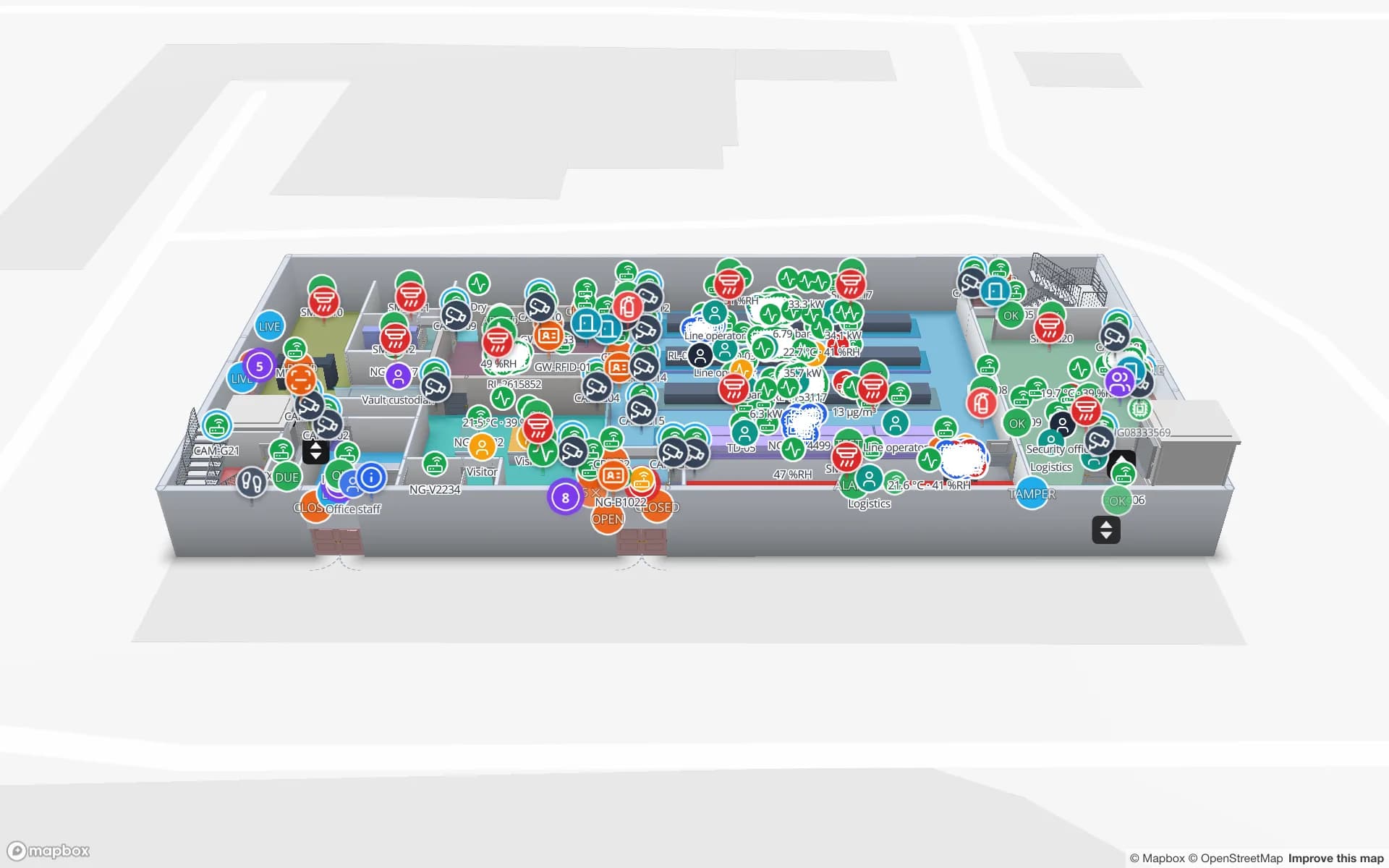
Draw the plant once — goods receipt, high-bay or small-parts warehouse, supermarket, line-side racks, sequencing area, shipping and the empties yard — and give every reader gate a marker or zone named after its reader ID. Reads arrive in a table; a data link places each carrier at the gate or zone that saw it last, and style rules colour the buffers by fill level or age.

  • Carrier pools — how many KLT and GLT are in each buffer, which ones have not moved for days, and where empties are piling up before they go back to the supplier.
  • JIT/JIS line supply — line-side racks and sequencing lanes coloured from your MES or WMS data, so a short buffer stands out on the map instead of in a list.
  • Goods receipt and shipping — gate reads at the dock doors next to the trailer and door they belong to.
  • Read trails — the History player replays a carrier’s path from its row history when a container goes missing.

Intralogistics and Industrie 4.0 without a new silo

Industrie 4.0 projects tend to produce many good data sources and few shared views of them. Spatial Map does not replace your MES, WMS or RFID middleware; it is the spatial layer on top. Your middleware or integration platform posts rows to a Spatial Map table with the table write API (HTTPS, bearer key, bulk upsert, 60 requests a minute per key — batch your reads), or Spatial Map polls a REST endpoint you already expose. CSV and Excel uploads cover a first stocktake or a pilot.

Positioning and read filtering stay in the middleware. Spatial Map shows the gate, zone or coordinates your system reports, and it does not raise alarms — it shows state on the map and in reports, with eight built-in reports per facility and a report builder that exports PDF, Excel, CSV or JSON.

GDPR: tag the carrier, not the person

Container and pallet reads are generally not personal data, which keeps RFID projects in German plants straightforward from a GDPR (DSGVO) point of view. It changes if you start reading staff badges or linking reads to the person who moved the carrier. Keep the table to carrier ID, gate and timestamp, and talk to your data protection officer before adding anything that identifies an employee. A data processing agreement is available on our DPA page, and our security page describes how workspaces are isolated.

German interface, remote team

The app ships in German as well as English, Spanish, French, Arabic and Chinese, so logistics planners can work in German while an international group IT team uses English on the same facility. Spatial Map is sold online and our team works remotely; for multi-plant rollouts we scope floor-plan digitisation and RFID integration as a fixed-price custom service, in German or English.

How Spatial Map does it

From reader gates to a live plant map

  1. 01

    Import the layout

    Upload the plant layout as DWG (AutoCAD R2004–R2018) or PDF and trace racks, buffers, docks and lines.

  2. 02

    Name the gates

    Place a marker or zone for each reader gate, named exactly like the reader ID in your data.

  3. 03

    Send the reads

    Your middleware posts batched reads to a table, or Spatial Map polls its REST endpoint.

  4. 04

    Run the shift on it

    Colour buffers by fill level, replay carrier paths and export reports for the shift meeting.

RFID use cases in German plants and warehouses

Load carrier management

KLT and GLT pools by buffer and age, empties ready for return, carriers that left the loop.

JIT/JIS line supply

Line-side racks and sequencing lanes coloured from MES or WMS data next to the carriers feeding them.

Component stores and secure cages

Material tags read between store and line, with a read trail for high-value components.

Cross-dock and transshipment

Pallets by dock door and lane, trailers in the yard and freight staged in the wrong place.

Contract logistics warehouses

RFID cartons on rack locations, staging lanes and packing for multi-client sites.

See it on real demo facilities

Fictional names, real floor plans, live sensors, RFID, BLE tags and gateways — open any of them in the browser.

All 13 demo facilities

RFID in Germany — frequently asked questions

Yes, if the carriers are tagged and your readers report the reads. Spatial Map places each carrier at the reader gate or zone that saw it last, colours buffers by count or age, and replays a carrier’s path from its row history. Reading and filtering tags stays in your RFID middleware.

No. It is the map and reporting layer on top of them. Your systems post rows to a Spatial Map table or expose a REST endpoint that Spatial Map polls; nothing needs to be installed on the shop floor.

Reads of containers, pallets and parts are generally not personal data. If you add staff badges or link reads to named employees, involve your data protection officer and, where one exists, the works council. A data processing agreement is available on our DPA page.

Yes. The interface is available in German, English, Spanish, French, Arabic and Chinese, and each user chooses their own language. Shape names and report titles are your own text, so German labels appear as you typed them.

Pricing is the same worldwide and billed in US dollars: a 7-day free trial for up to 5 facilities, then Pro at $60 a month or $600 a year for up to 4 facilities. Multi-plant estates and done-for-you integration are quoted as custom services.

Put your carrier reads on a plant map.

Start a free trial in German or English, or send us a plant layout and a sample of your read data and we will show you your own site.