Guangzhou · Nansha, Baiyun airport and the Canton Fair

Warehouse tracking in Guangzhou, from the Nansha quay to the Fair

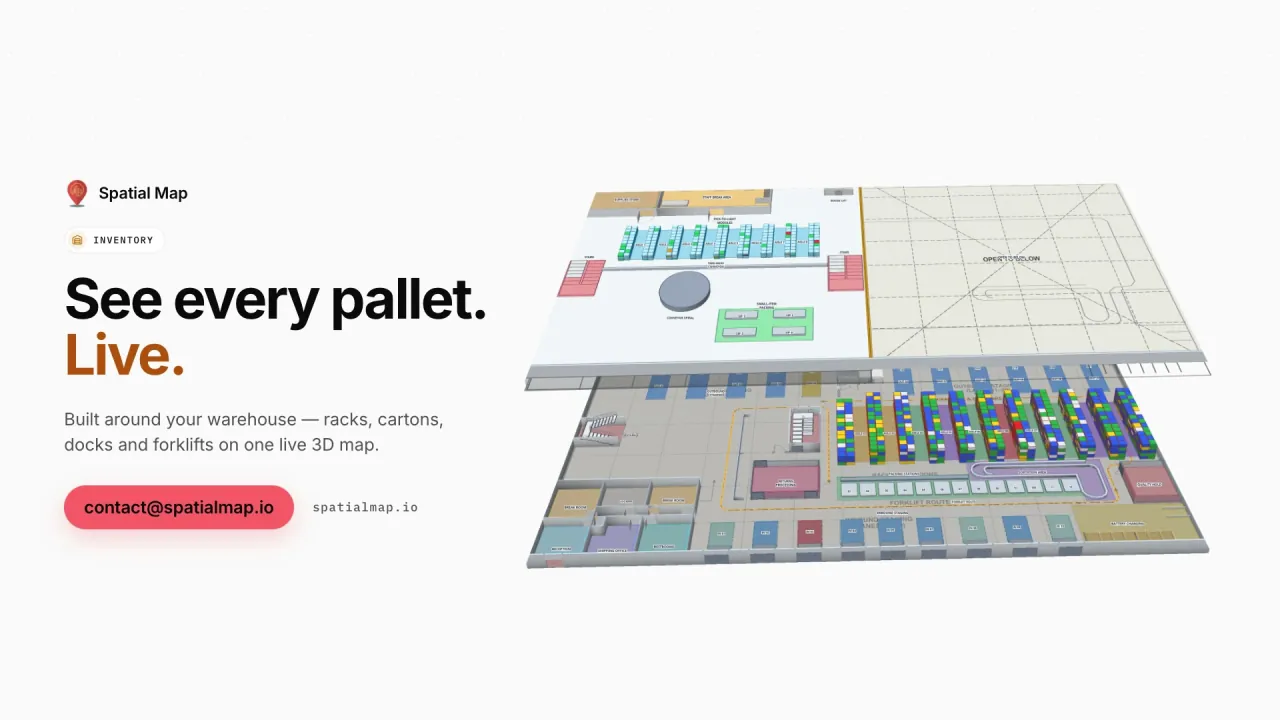
Spatial Map shows a warehouse as a live 3D map: racks coloured by stock status, dock doors with their turns, staging lanes and pallets moving on the floor. Warehouse tracking in Guangzhou means keeping several kinds of building honest at once: sheds fed by an automated container terminal at Nansha, freight stations around the airport that now has a third terminal, and wholesale and fair-season stock that swings by the week. Your WMS, RFID readers and sensors post the data; Spatial Map shows it where it belongs.

No credit card. Runs in the browser. Pro is $60/month for up to 4 facilities. Book a demo

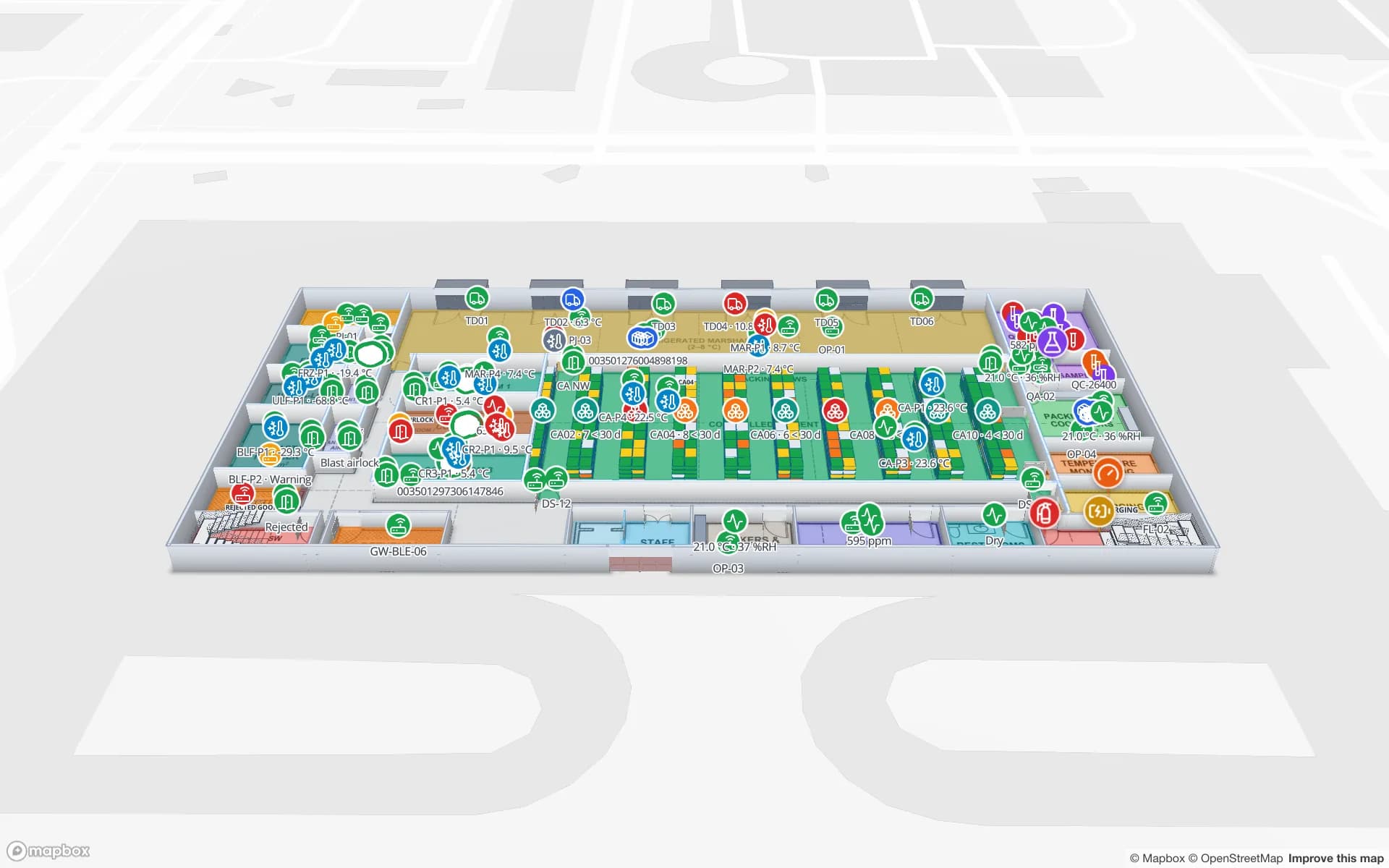
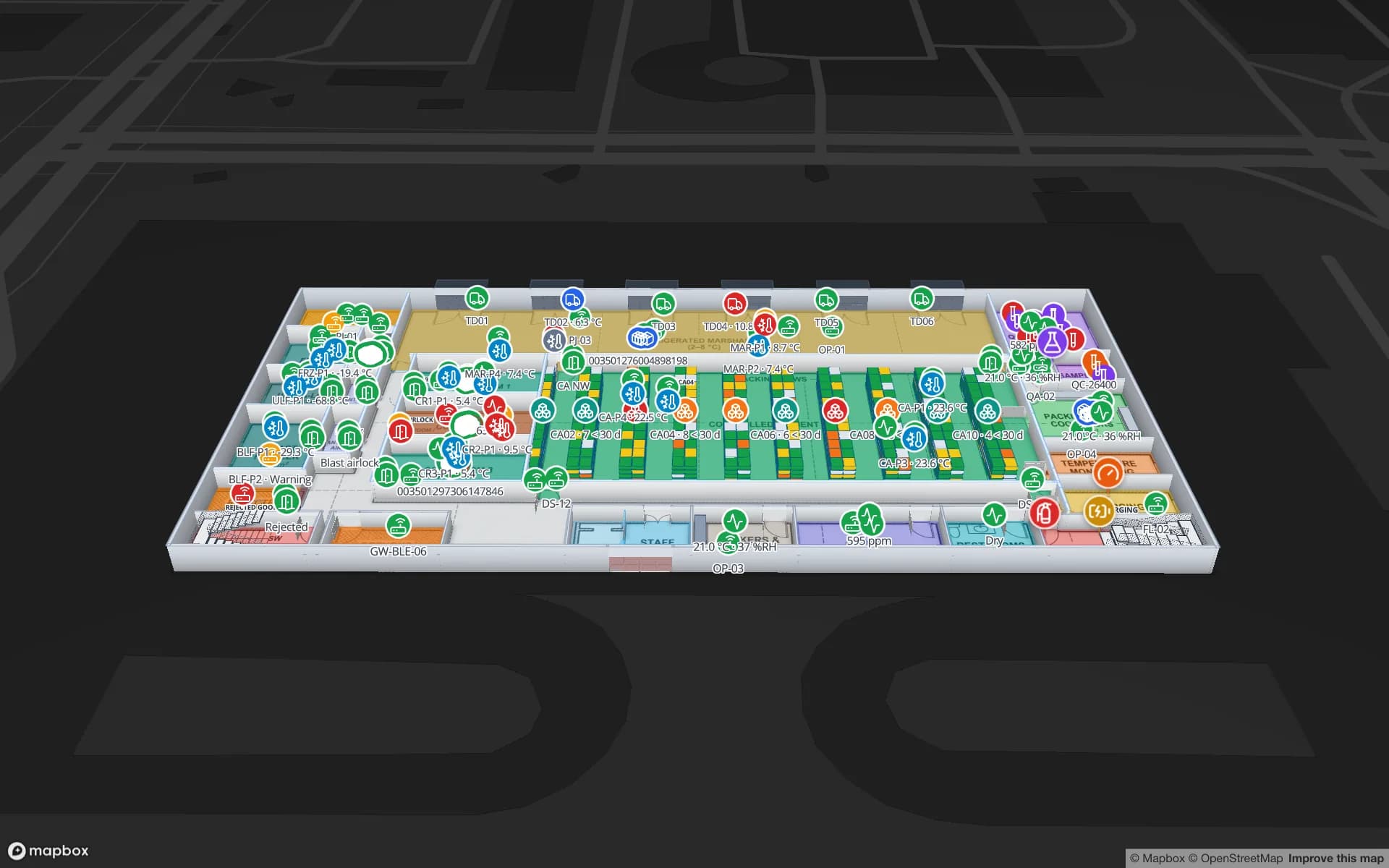
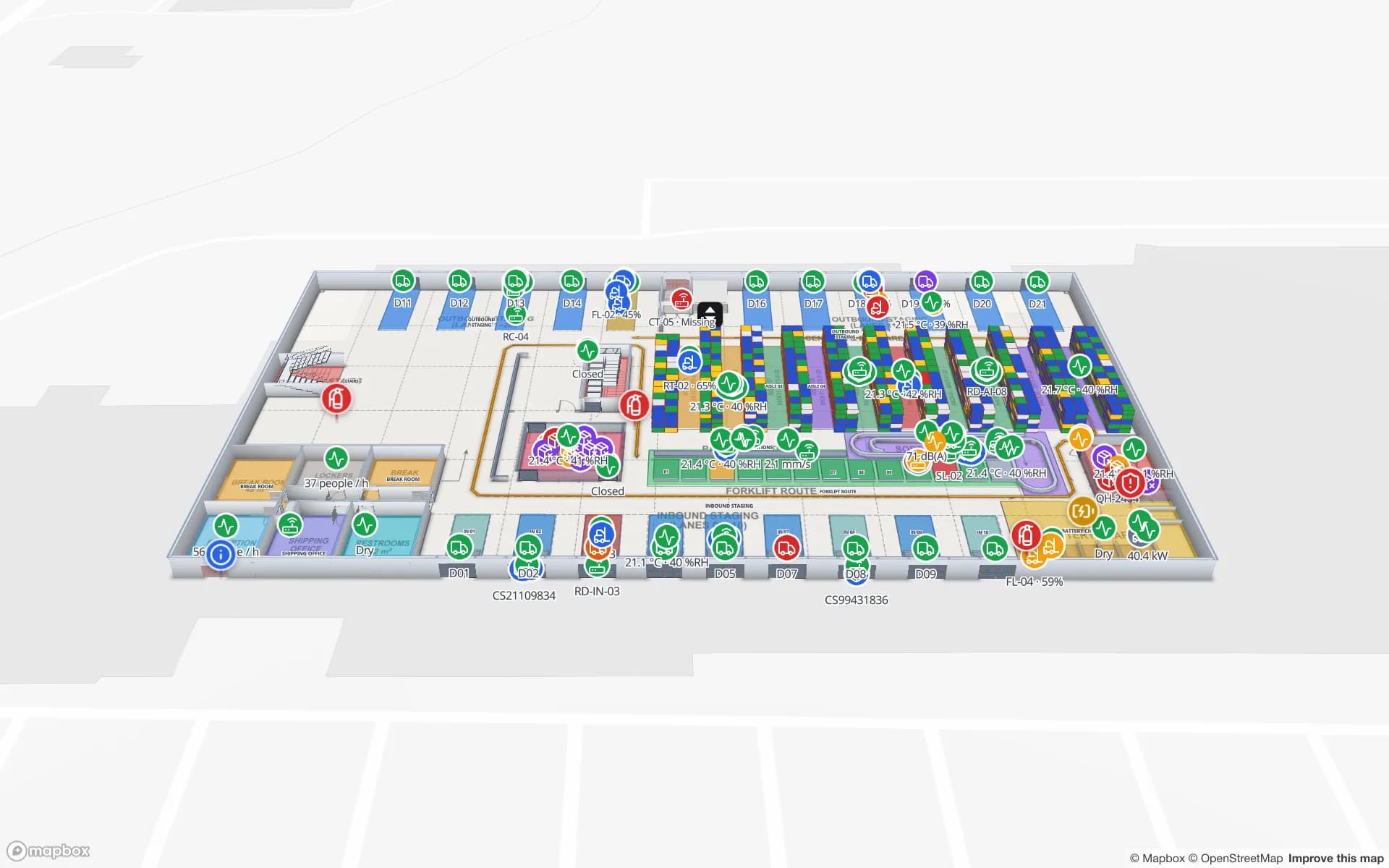
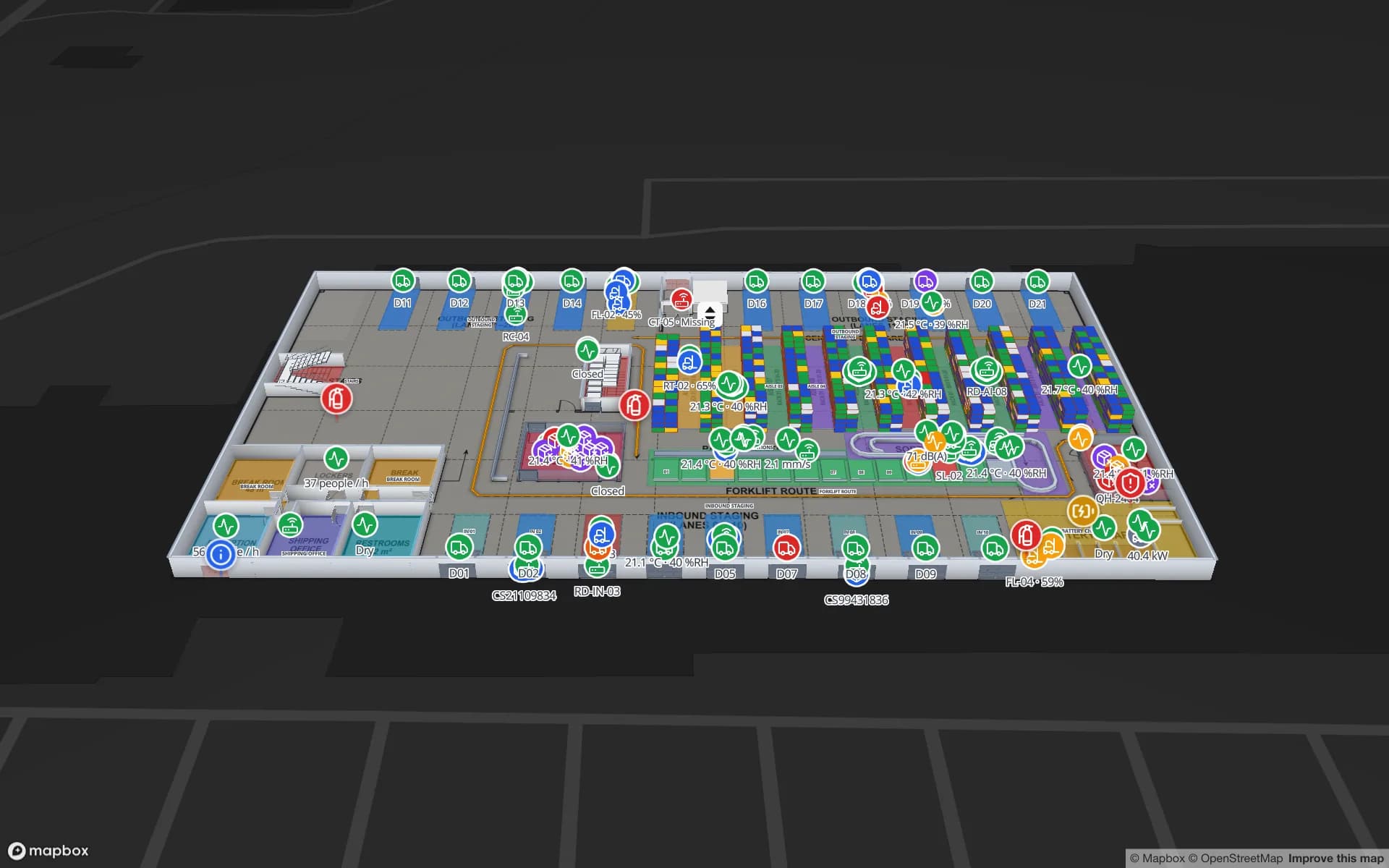
Crestline Fulfillment Center, a fulfillment center demo, in the Spatial Map 3D viewer with live device markers
Crestline Fulfillment Center
Crestline Fulfillment, a demo warehouse: 20 racks with 2,204 locations, dock doors, staging lanes and the trailer yard.
Rack locations in the Crestline warehouse demo
2,204
Areas of the Guangdong free trade zone: Nansha, Qianhai–Shekou and Hengqin
3
How often alert rules are checked, with alerts shown in the app
15 s
Free trial, up to 5 facilities, no credit card
7 days

Nansha: an automated quay and the sheds behind it

Nansha Port’s Phase IV terminal, unveiled in July 2022 in the Guangdong–Hong Kong–Macao Greater Bay Area, has four 100,000-tonne berths and a design throughput of 4.9 million TEU a year. China Daily reported that in its first year it handled 1.5 million TEU. Nansha is also the Guangzhou area of the Guangdong pilot free trade zone, which has three areas in all: Nansha, Qianhai–Shekou in Shenzhen and Hengqin in Zhuhai.

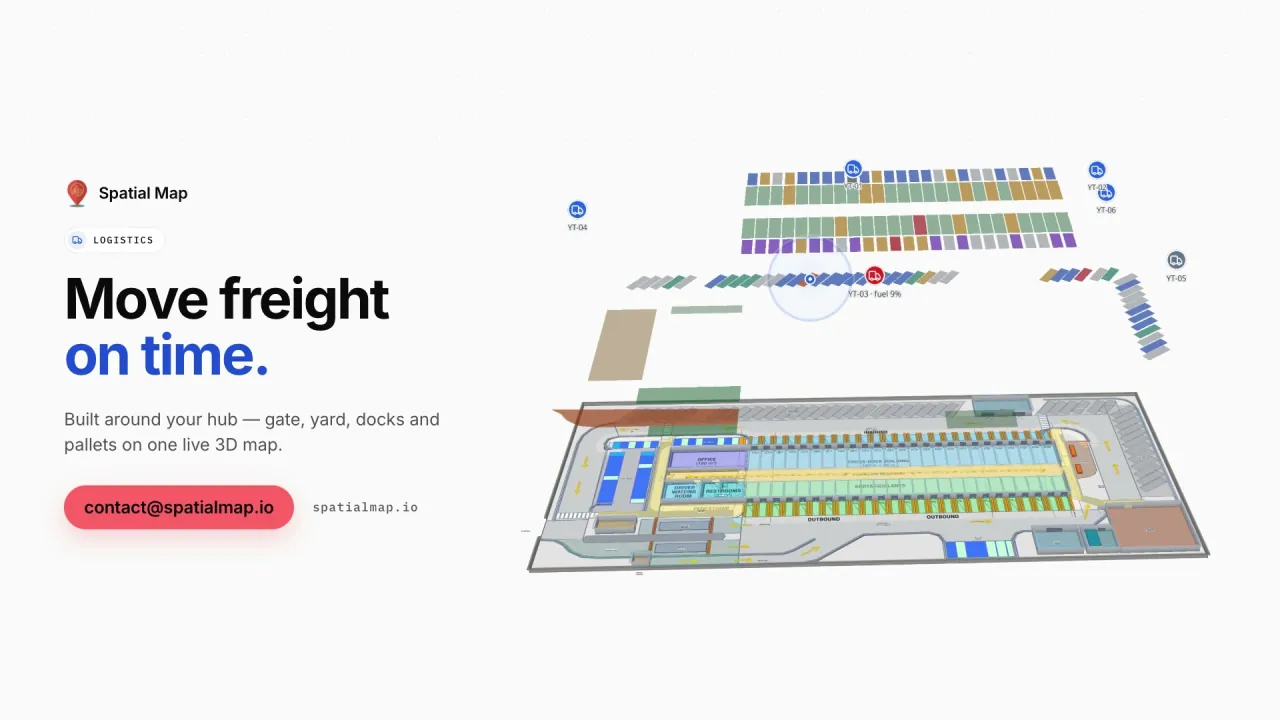
A quay that runs itself still ends at a gate, and what happens after the gate is a warehouse problem: which pallets are in which bay, for which container, for which cut-off. Draw each shed’s docks, lanes and racks, post a row for each pallet from your WMS or RFID readers, and the map colours each bay by status. The Crestline demo shows 2,204 rack locations coloured by stock status with staging lanes in front of the docks, and the Eastport demo shows the yard and the gate. Spatial Map does not connect to terminal or customs systems.


Baiyun airport: a third terminal and five runways

Guangzhou Baiyun began operating Terminal 3 and a fifth runway on 30 October 2025, and was reported as the first civil airport in China with five commercial runways. Cargo and mail passed about 2.44 million tonnes in 2025, a record. Sources differ on the airport’s designed cargo capacity, so we leave it out.

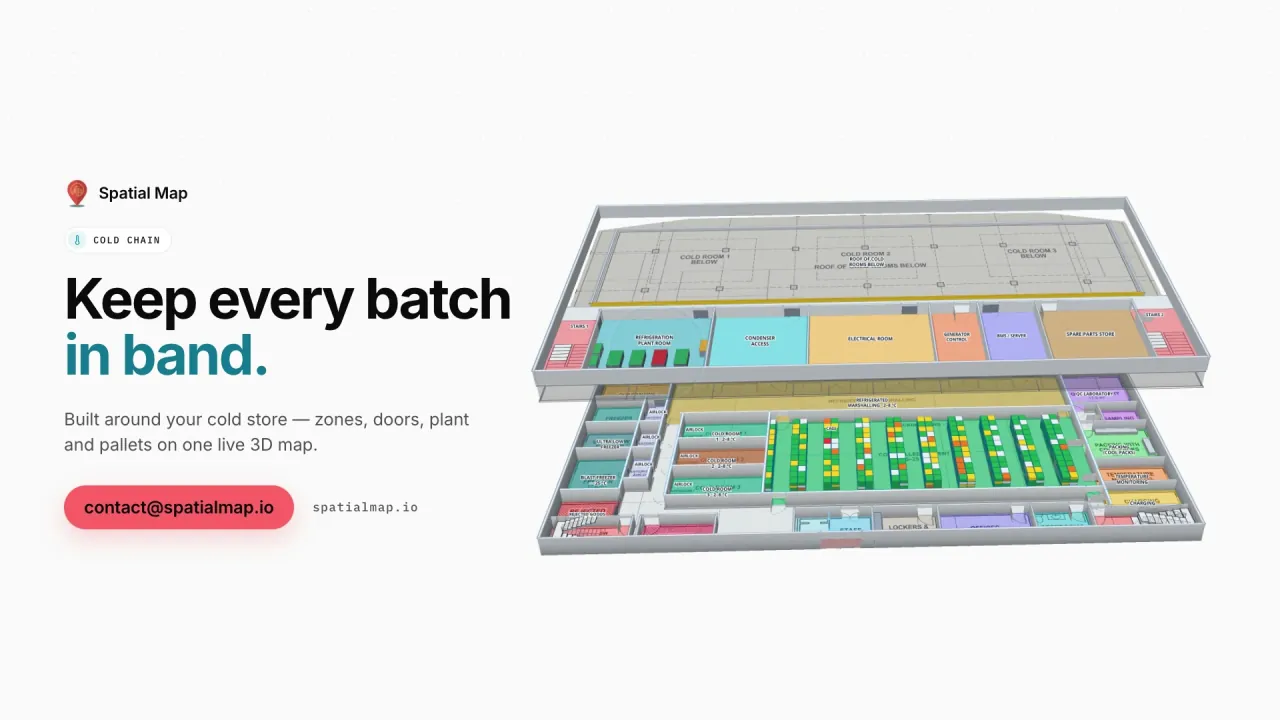
Around any airport sit forwarders’ and handlers’ sheds where time-critical cargo waits for a flight or a truck. The map question is the same as everywhere: where is this consignment, in what state, and who is waiting for it. Tag cartons at build-up, read them at the shed door, and the map shows what is staged and what has left. For perishables and pharmaceuticals, colour each cold room from its sensors; the cold chain solution and the Polar Pharma demo show how, and alerts appear in the app, not by SMS or email.

The Canton Fair and the wholesale belt

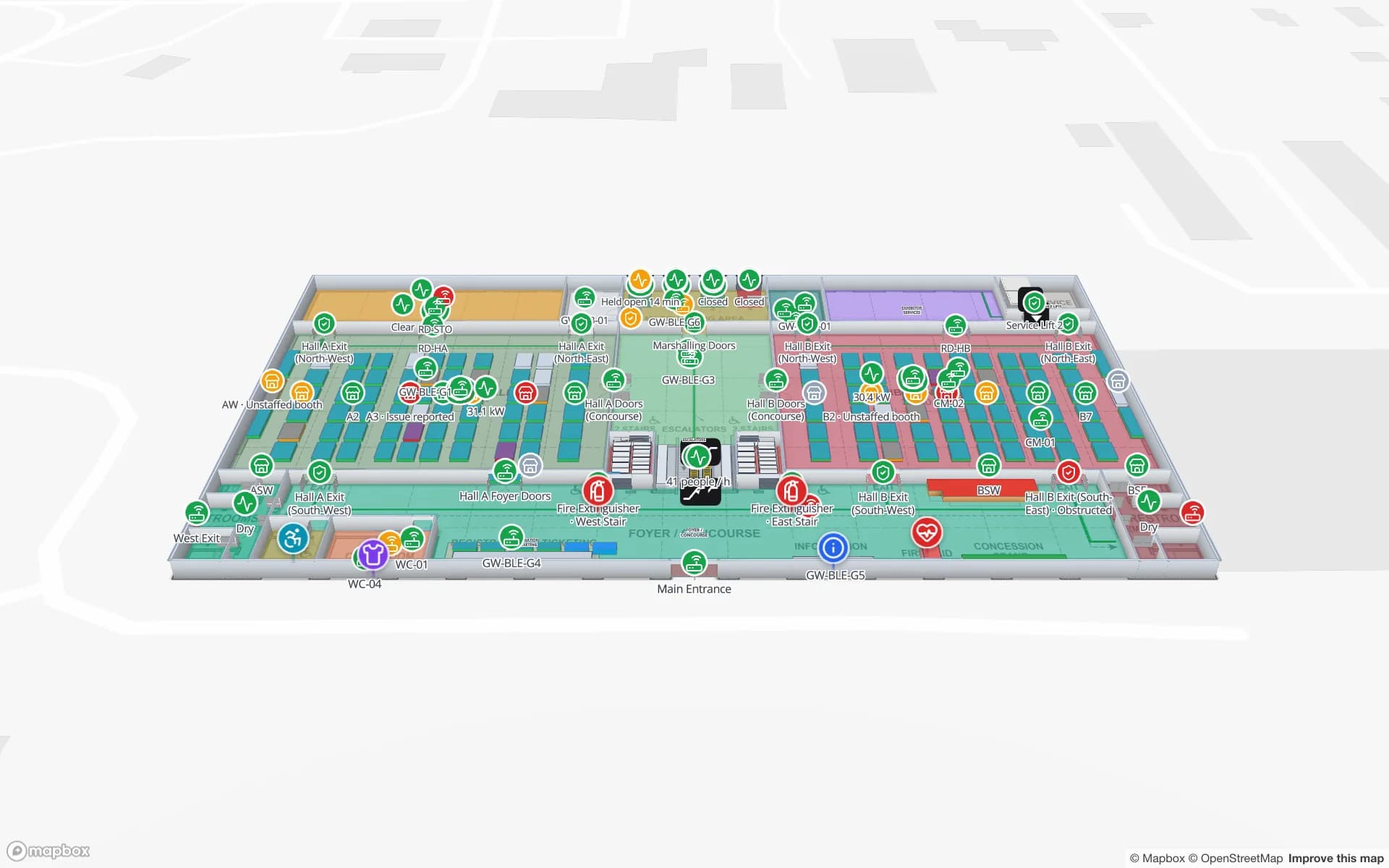
The Canton Fair, formally the China Import and Export Fair, has been held in Guangzhou since spring 1957, twice a year, and its Pazhou complex lies in Haizhu district; the Ministry of Commerce and the Guangdong government co-host it. Fair weeks pull stock into the city: samples, stand material and exhibitors’ goods arrive in bulk, are staged, and leave in a rush. Sourcing guides also describe Shahe and other districts as large clothing wholesale areas, where stock turns over daily.

Peaks like these expose which warehouses rely on memory. A live map of the staging area, with each lane’s status and the pallets in it, lets a duty manager see in a glance what is ready for the hall and what is not. Share a read-only link, locked to one floor and one set of layers with an expiry date, with a contractor or an exhibitor’s agent. The post on stock counting with RFID explains how a count that used to take a shift can take minutes, and barcodes versus RFID helps decide where each fits.

One workspace for several sites

Most Guangzhou operators run more than one building: a port-side shed, an airport station and a city distribution centre, or sheds in Nansha, Panyu and Baiyun districts. A Pro workspace holds up to four facilities, so all of them can be opened from one account, each with its own floors and layers, and larger estates are quoted as custom services.

Start with the building where an error costs most. Upload its plan, even a scan or CAD file, let AI Map draft the walls, doors and racks, and connect one source of rows. A CSV bin inventory is enough to see racks coloured by stock on the first day; RFID readers and sensors come later, if the numbers justify them.

Services for teams in Guangzhou

Where Guangzhou teams usually start depends on the building:

  • Port-side and airport sheds usually begin with inventory tracking at dock doors, because a lost pallet costs a vessel or flight cut-off.
  • Wholesale and distribution centres tend to begin with a warehouse map coloured from the stock system, then add RFID for counts.
  • RTLS and UWB matters mainly for large yards where forklifts and trailers must be located continuously; most sheds will not need it first.
  • If you have no readers or tags yet, our team can source RFID readers, antennas and tags on request, quoted per project, with warranty and device support from the manufacturer: see hardware and demo kits on request.
  • Where you need an Android RFID handheld app or a WMS integration, our team builds custom software as a client project. The product itself runs as cloud or on-premises.

Also served nearby

The same approach covers Foshan, Dongguan, Zhongshan and Huizhou, which sit within the Pearl River Delta around the city. Nothing needs to be installed at any of them: the map opens in a browser. For data-location questions, see the notes on China.

How Spatial Map does it

From the quay gate to the staging lane

  1. 01

    Pick one shed

    A port-side shed, an airport station or a distribution centre, wherever a missing pallet costs most.

  2. 02

    Map docks, lanes and racks

    Upload the plan, photo or sketch, let AI Map draft the floor, and name bays the way your WMS names them.

  3. 03

    Connect stock and reads

    Your WMS and RFID middleware post rows through the table write API, a polled REST endpoint or CSV and Excel uploads.

  4. 04

    Add peak-week rules

    In-app alerts for lanes holding goods too long and for readers that stopped reporting.

What Guangzhou teams track

Port-side distribution sheds

Dock doors, yard slots and pallets staged for the right container before cut-off.

Rack inventory and staging

Racks coloured by stock status, with staging lanes and quality holds.

Perishable and pharma freight

Cold rooms, quarantine areas and sensor readings in place.

Fair-week staging

Exhibitor goods and stand material staged lane by lane, with freight docks and halls on one map.

See it on real demo facilities

Fictional names, real floor plans, live sensors, RFID, BLE tags and gateways — open any of them in the browser.

All 13 demo facilities

Warehouse tracking in Guangzhou — questions we get

Yes. A CSV or Excel upload of bin inventory is enough to colour racks by stock on day one, and the write API or a polled REST endpoint keeps it live. RFID, sensors and readers can be added to the same map later.

No. It has no link to port community, customs or terminal systems. It shows what happens inside your own building, from your own WMS, RFID reads and sensors, so it complements those systems rather than replacing them.

Keep one table row per lane or pallet group with a status your team updates, colour the map by it, and use a share link locked to one floor and one set of layers for outside contractors. Alerts for lanes holding goods too long are shown in the app, not by email or SMS.

Yes. A Pro workspace holds up to four facilities, each with its own floors, layers and data; larger estates are quoted as custom services.

No. Spatial Map is sold online and our team works with customers in China remotely, by video call and through the contact form. There are no local resellers or partners.

In US dollars, the same worldwide: a 7-day free trial for up to 5 facilities with no card, then Pro at $60 a month or $600 a year for up to 4 facilities. RFID hardware, if you ask us to source it, is quoted per project and is not part of the subscription.

Map one Guangzhou shed before the next peak.

Start the free trial and open the Crestline demo, or send us a bin-inventory export and the plan of a shed through the contact form.