Shanghai · Yangshan, the free trade zone and Pudong airport

RFID tracking in Shanghai, from the Yangshan quay to the bonded shed

Spatial Map puts RFID reads on a live 3D map of the building where they happen, so a tag at a dock door becomes a pallet in a lane, a carton in a container or a case in a cold room. RFID tracking in Shanghai starts at the sea and the air: cargo comes off the Yangshan quays and through Pudong airport into bonded sheds across the Pudong free trade zone, and every one of those buildings can carry its own map. Your readers and middleware do the reading; Spatial Map shows each read in place.

No credit card. Runs in the browser. Pro is $60/month for up to 4 facilities. Book a demo

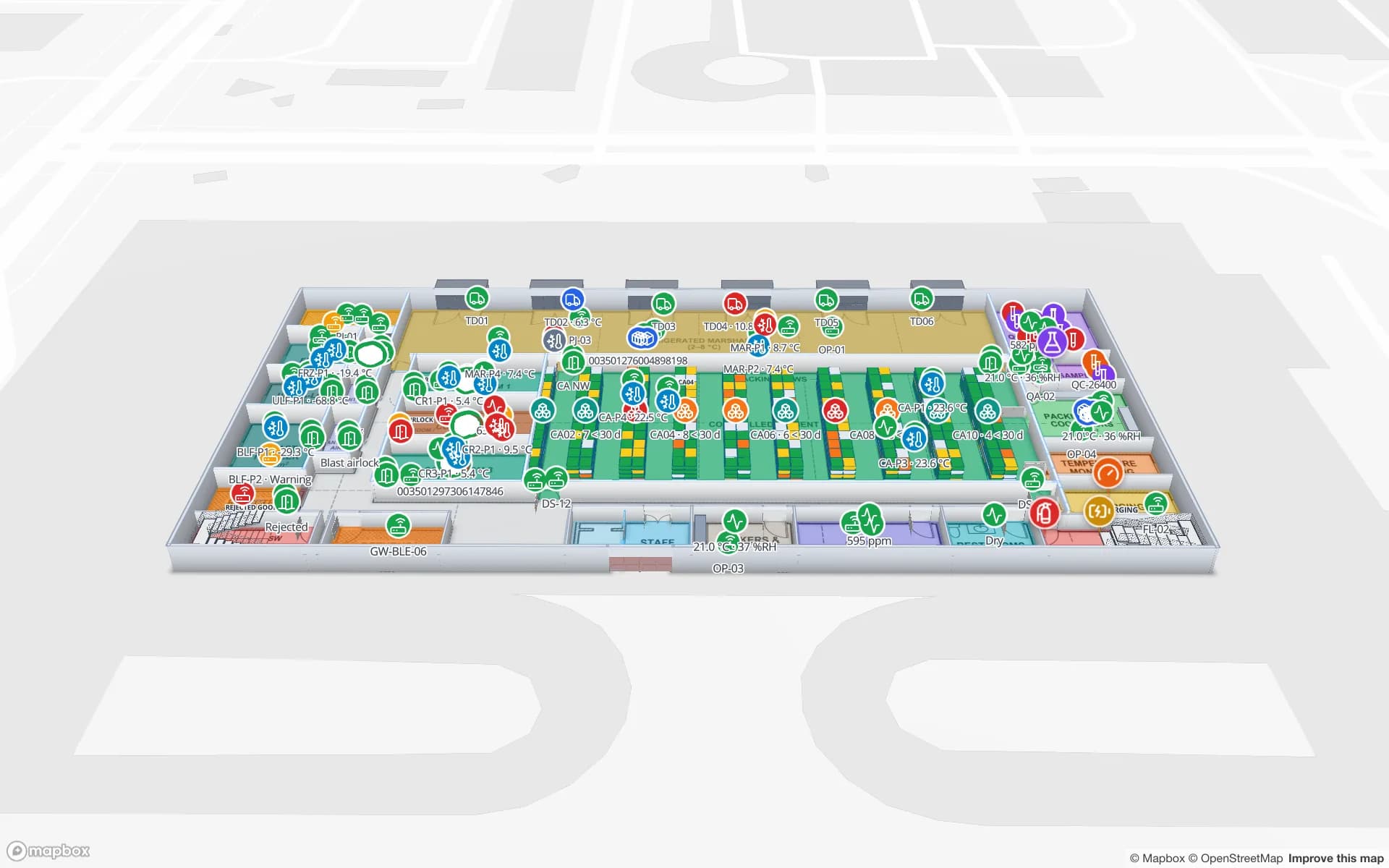
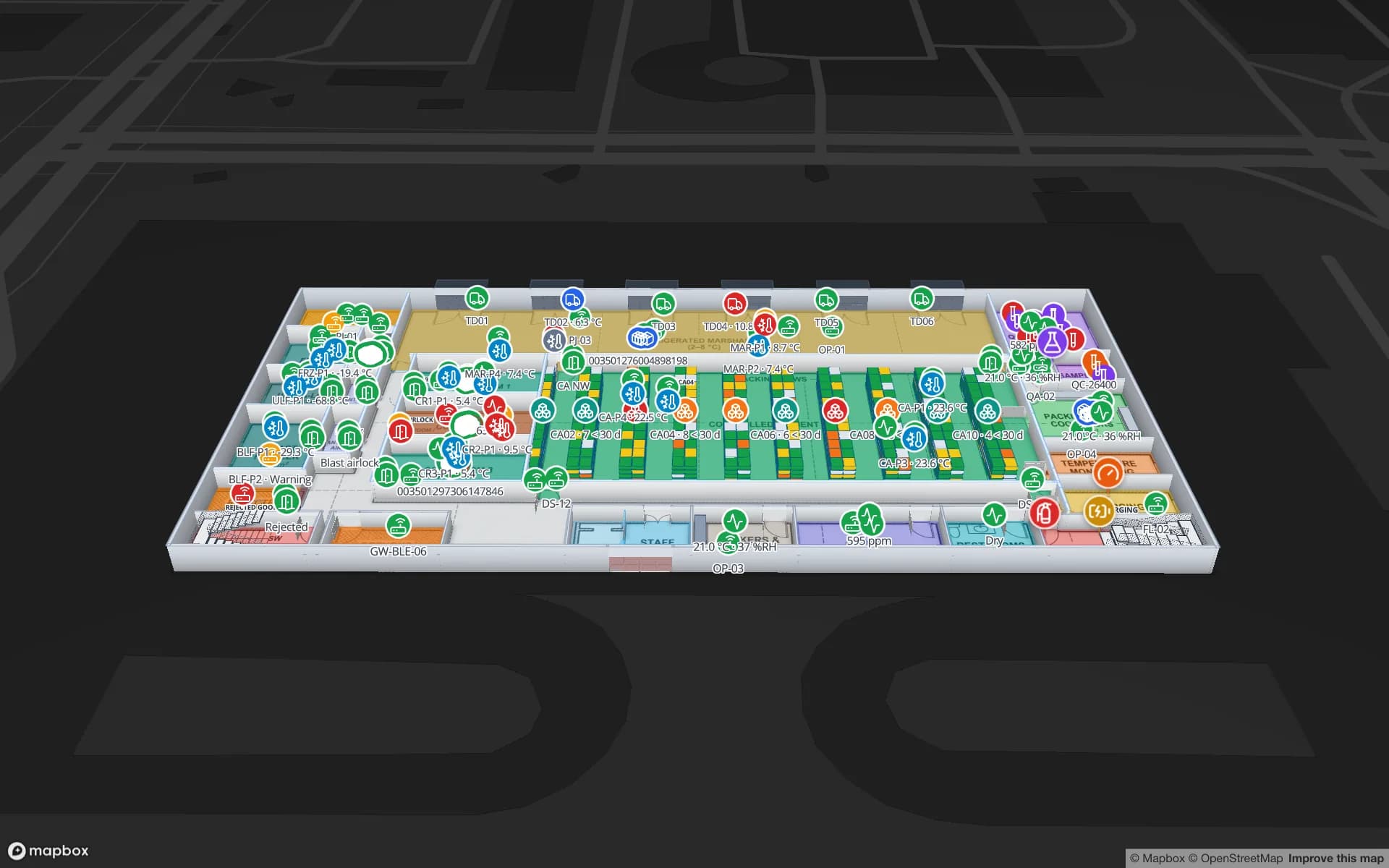
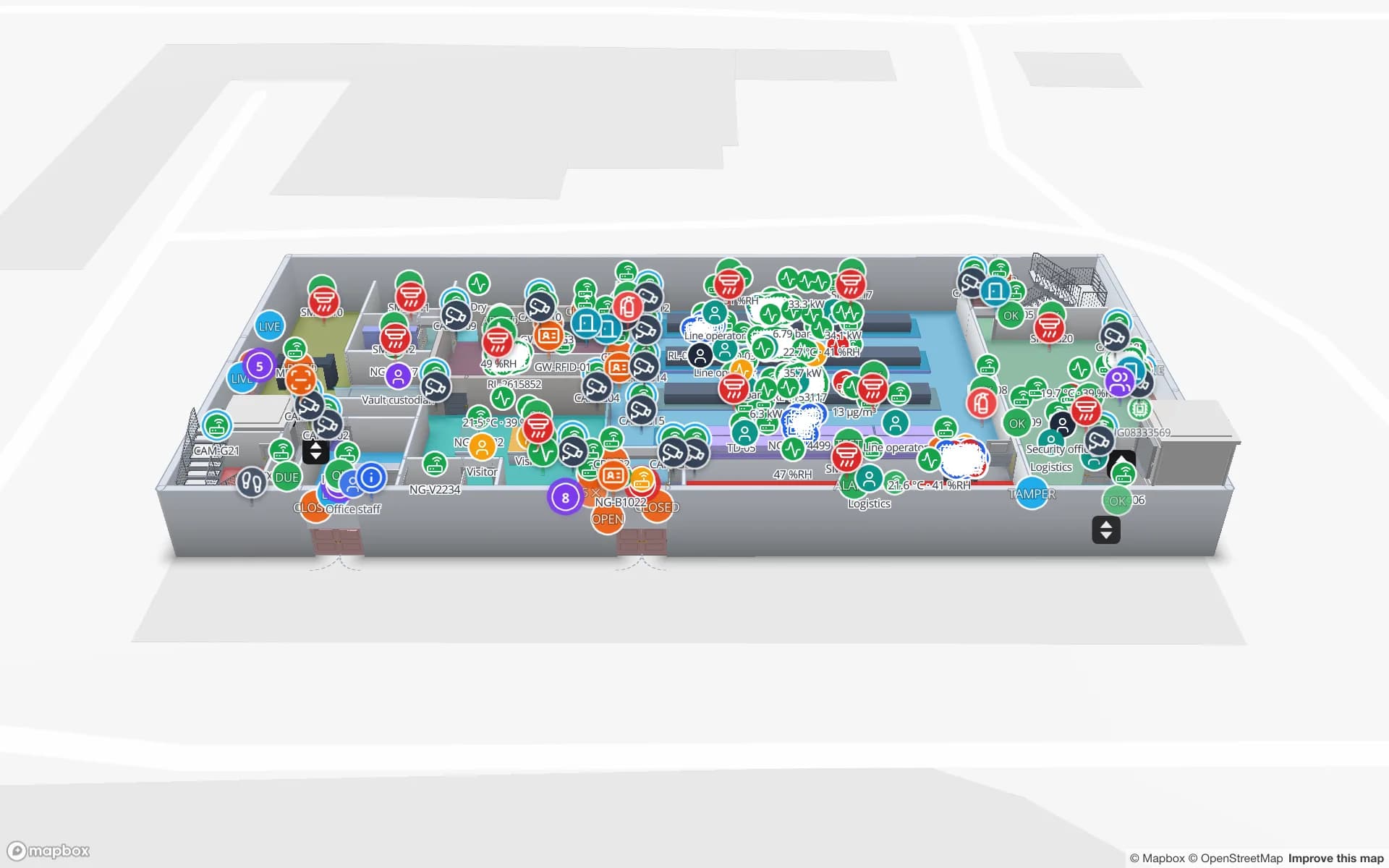
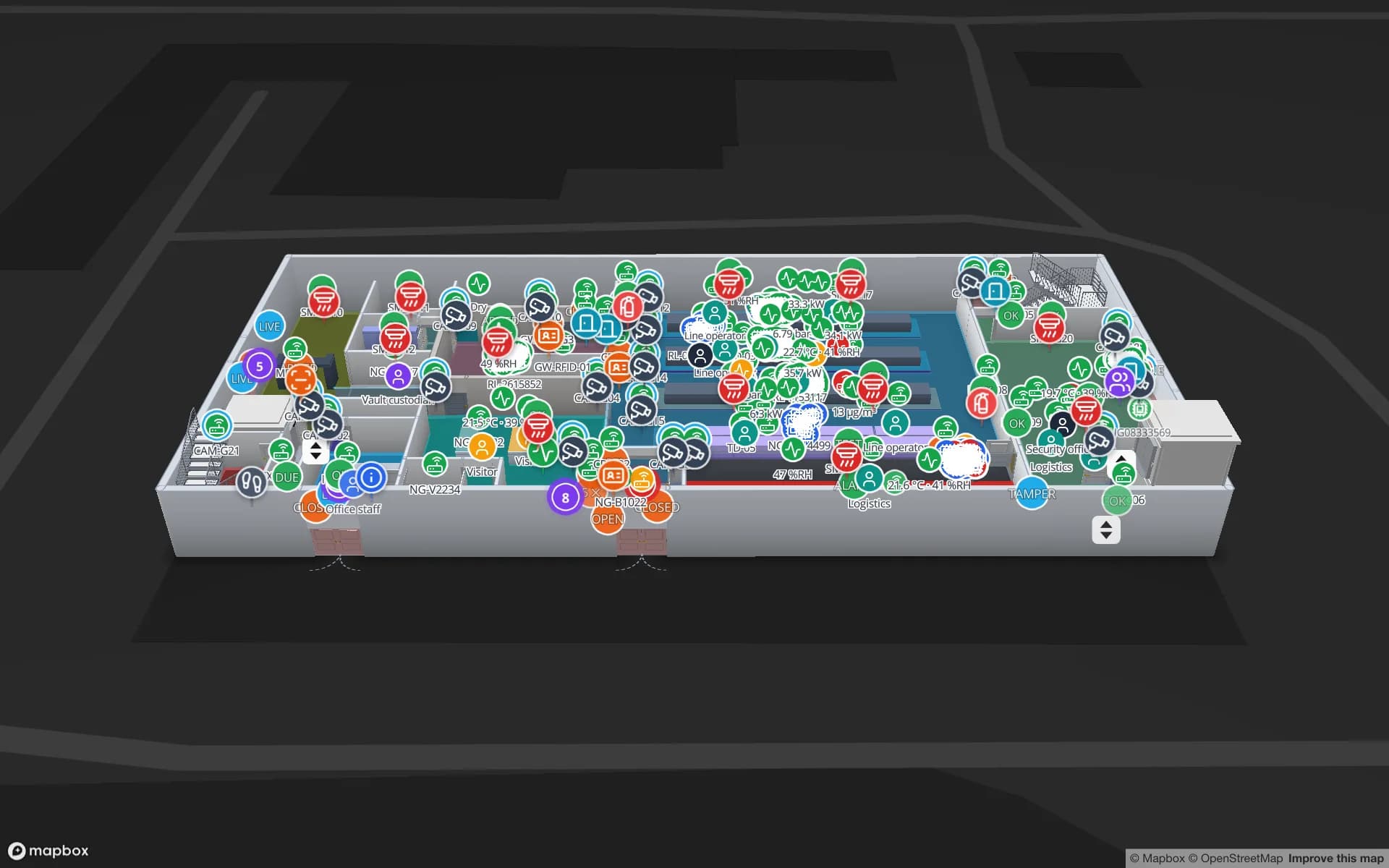
Crestline Fulfillment Center, a fulfillment center demo, in the Spatial Map 3D viewer with live device markers
Crestline Fulfillment Center
Crestline Fulfillment, a demo warehouse: 20 racks with 2,204 locations, staging lanes in front of the docks and the trailer yard.
Bonded areas the Shanghai pilot free trade zone was built from in 2013
4
Rack locations in the Crestline warehouse demo
2,204
How often alert rules are checked, with alerts shown in the app
15 s
Free trial, up to 5 facilities, no credit card
7 days

Yangshan, the Donghai Bridge and the sheds that feed them

Yangshan Deep Water Port stands on islands in Hangzhou Bay and has three parts: the wharves, the Donghai Bridge, a sea bridge that opened on 1 December 2005, and the Luchao Port Logistics Park at the bridge’s mainland end. Phase IV of the port, which Xinhua called the world’s biggest automated container terminal, began trial operations on 10 December 2017 with a design capacity of 4 million TEU a year. Behind that quay sit the container freight stations and distribution sheds where boxes are stuffed and unstuffed.

Automated cranes know where a container is; they do not know which carton inside it is short. Tag cartons or pallets with UHF RFID at stuffing, read them at the dock door, and the map shows which consignments are staged for which container and which are still on the floor. A row of readers at a door is a gate, and the RFID gates page explains how to place them. The post on cross-dock yard visibility covers doors, trailers and yard slots, and the Eastport demo shows them live. Spatial Map does not connect to terminal or customs systems.


One zone, four bonded areas

The China (Shanghai) Pilot Free Trade Zone launched on 29 September 2013 from four bonded areas in Pudong: the Waigaoqiao Free Trade Zone, the Waigaoqiao Free Trade Logistics Park, the Yangshan Free Trade Port Area and the Pudong Airport Free Trade Zone, together 28.78 square kilometres at launch. The Lingang Special Area was added when it launched on 6 August 2019. A bonded warehouse in a zone like this runs on status: goods are in, held, released or on their way out, and the same bay changes meaning during the day.

Draw each bay as an area, post a row per pallet or consignment from your WMS or RFID readers, and the map colours the bay by status; the History player replays how a night shift moved stock. The Crestline demo shows 2,204 rack locations coloured by stock status, with staging lanes in front of the docks and the trailer yard. Several tenants often share one building, so a read-only share link can lock one floor and one set of layers for a landlord, forwarder or inspector, with an expiry date and no account.

Pudong airport freight and imported pharmaceuticals

The Pudong Airport zone handles bonded logistics and airport freight and hosts distribution centres for electronics, medical equipment and consumer goods, according to China Daily. A Shanghai government report in October 2025 said the free trade zone’s bonded area handled over 40 percent of China’s imported medical devices and nearly 30 percent of its drug imports, and that it was working to become a core hub of the global pharmaceutical supply chain.

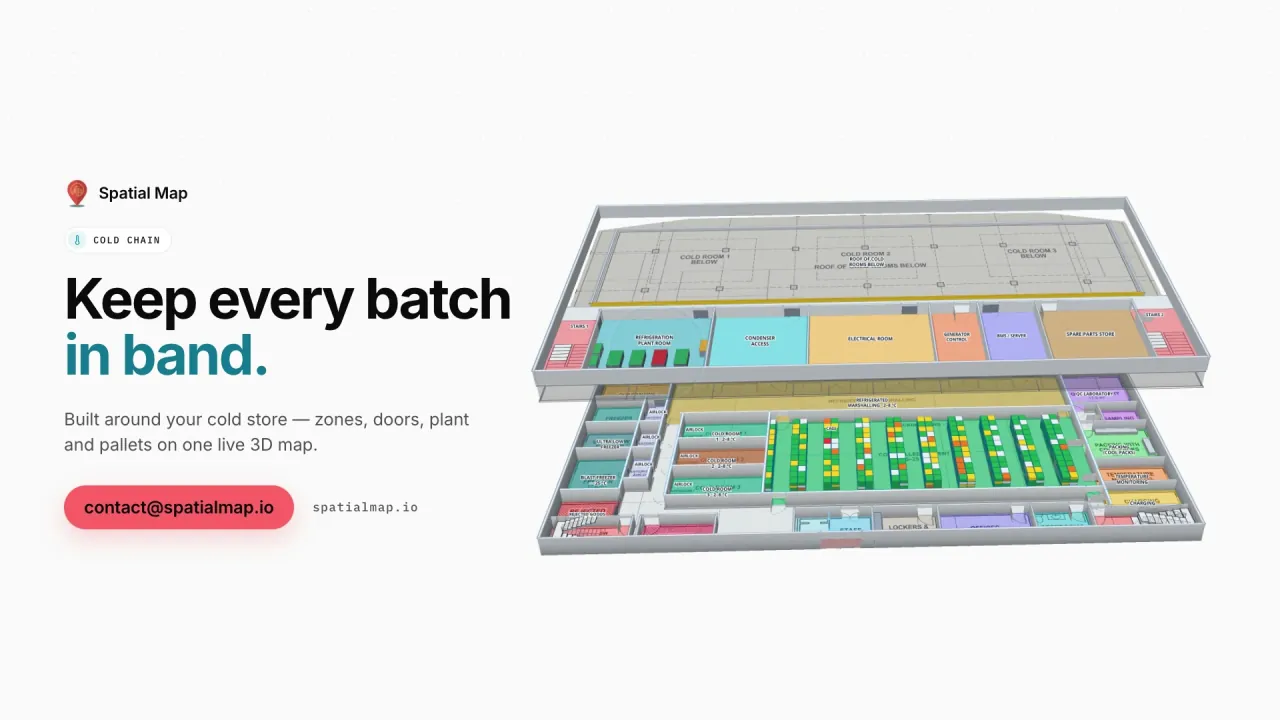
Medical and drug cargo travels with temperature requirements, so the shed that receives it needs cold rooms and a way to prove where a case has been. Spatial Map colours each cold room from your sensors and keeps the history; an alert rule such as “reading out of range for 10 minutes” is checked every 15 seconds and raised in the app, not by SMS or email. The Polar Pharma demo shows cold rooms, quarantine areas and 1,140 rack locations. Your quality system remains the record; Spatial Map makes no compliance claim. See temperature monitoring for the sensor side.

Start with one bay, then add the next

Zones fill with leased buildings whose drawings are a scan, a photograph or a CAD file from the developer. Upload it as it is, let AI Map draft the walls, doors and racks, correct what it gets wrong, and put RFID where a miss costs most: the staging lanes, the quarantine bay and the outbound door. The post on a warehouse RFID rollout plan sets out a sensible order, and tags for metal, liquids and apparel lists what to test in your own bay first.

A Pro workspace holds up to four facilities, so a forwarder with a Yangshan-side shed, a Pudong airport shed and a Waigaoqiao-side shed can see all three from one account.

Services for teams in Shanghai

Where Shanghai teams usually start depends on the building:

  • Forwarders and freight stations usually begin with inventory tracking at dock doors, because a lost pallet costs a vessel or flight cut-off.
  • Distribution centres in the zone tend to begin with asset tracking for returnable crates, trolleys and handling equipment, then add RFID for stock.
  • RTLS and UWB matters mainly for large yards where vehicles and people must be located continuously; most sheds will not need it first.
  • If you have no readers or tags yet, our team can source RFID readers, antennas and tags on request, quoted per project, with warranty and device support from the manufacturer: see hardware and demo kits on request.
  • Where you need an Android RFID handheld app or an ERP or WMS integration, our team builds custom software as a client project. The product itself runs as cloud or on-premises.

Also served nearby

The same approach covers the Songjiang, Jiading and Qingpu logistics areas, the Lingang area and, just across the provincial border, Kunshan and Taicang. Nothing needs to be installed at any of them: the map opens in a browser. For data-location questions, see the notes on China.

How Spatial Map does it

From the quay to the despatch door

  1. 01

    Pick one shed

    A freight station, a bonded bay or an airport cargo shed, wherever a missing carton costs most.

  2. 02

    Map doors, lanes and racks

    Upload the plan, photo or sketch, let AI Map draft the floor, and name read points the way your middleware names them.

  3. 03

    Connect reads and stock

    RFID middleware and your WMS post rows through the table write API, a polled REST endpoint or CSV and Excel uploads.

  4. 04

    Add door and silence rules

    In-app alerts for cartons staged too long, short loads before cut-off and readers that stopped reporting.

What Shanghai teams track

Freight stations and port-side sheds

Dock doors, yard slots and pallets staged for the right container before cut-off.

Bonded distribution centres

Rack-level stock by status, with staging lanes and quality holds.

Medical and drug imports

Cold rooms, quarantine areas and sensor readings in place.

High-value cargo cages

Cages and secure stores with access points and a shrink report for time-critical, valuable consignments.

See it on real demo facilities

Fictional names, real floor plans, live sensors, RFID, BLE tags and gateways — open any of them in the browser.

All 13 demo facilities

RFID tracking in Shanghai — questions we get

No. It has no link to port community, customs or terminal systems. It shows what happens inside your own building, from your own RFID reads, WMS or ERP and sensors, so it complements the zone-level systems rather than replacing them.

Yes. Upload the DWG (AutoCAD R2004–R2018, placed as a picture), PDF or a photograph of the plan and align it at real size. AI Map can draft from the picture, and you correct what it gets wrong. Our services team can also do the mapping remotely for a fixed price.

Yes. A read-only share link can lock one floor and one set of layers, with an expiry date and view caps, and needs no account. Tags move live on shared links.

It keeps the sensor history and replays it with the History player, and an alert rule raises an in-app alert when a reading stays out of range. It makes no compliance claim: your quality system remains the record of what happened to a batch.

No. Spatial Map is sold online and our team works with customers in China remotely, by video call and through the contact form. There are no local resellers or partners.

In US dollars, the same worldwide: a 7-day free trial for up to 5 facilities with no card, then Pro at $60 a month or $600 a year for up to 4 facilities. RFID hardware, if you ask us to source it, is quoted per project and is not part of the subscription.

Map one Shanghai bay before the next vessel.

Start the free trial and open the Crestline demo, or send us the plan of a freight station or bonded shed and a sample of your reads through the contact form.