Katowice · the special economic zone, Upper Silesia and Pyrzowice Airport

Asset tracking in Katowice, across the plants and sheds of Upper Silesia

Spatial Map shows where tagged equipment is on a live 3D map of each building and yard, using the reads and positions your RFID and BLE systems already produce. Asset tracking in Katowice covers a region that is industrial first and logistics second: plants inside a special economic zone, a warehouse market that is the second largest in Poland, and an airport whose cargo keeps growing. Each building is a facility in one workspace, and nothing has to be installed.

No credit card. Runs in the browser. Pro is $60/month for up to 4 facilities. Book a demo

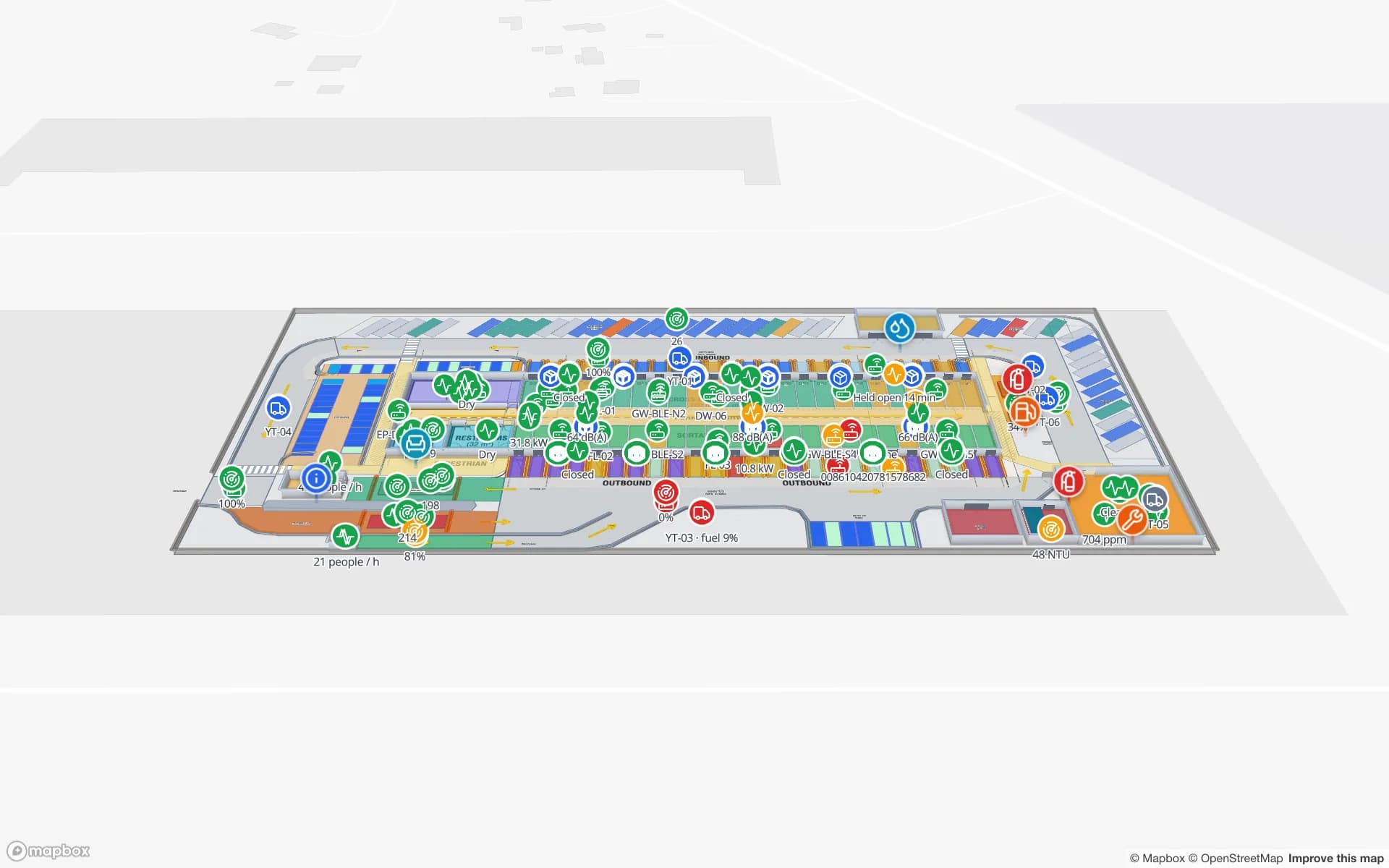
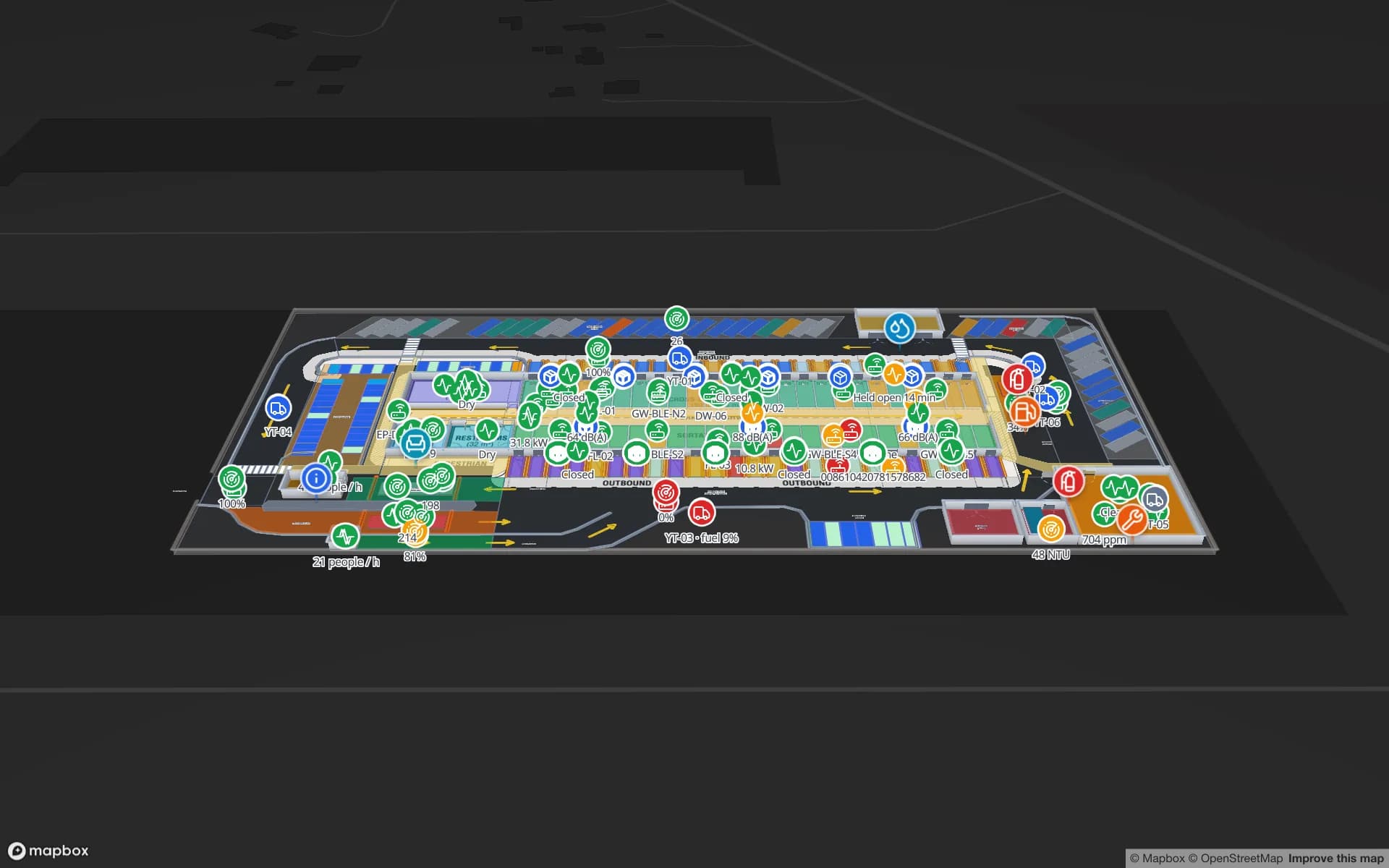
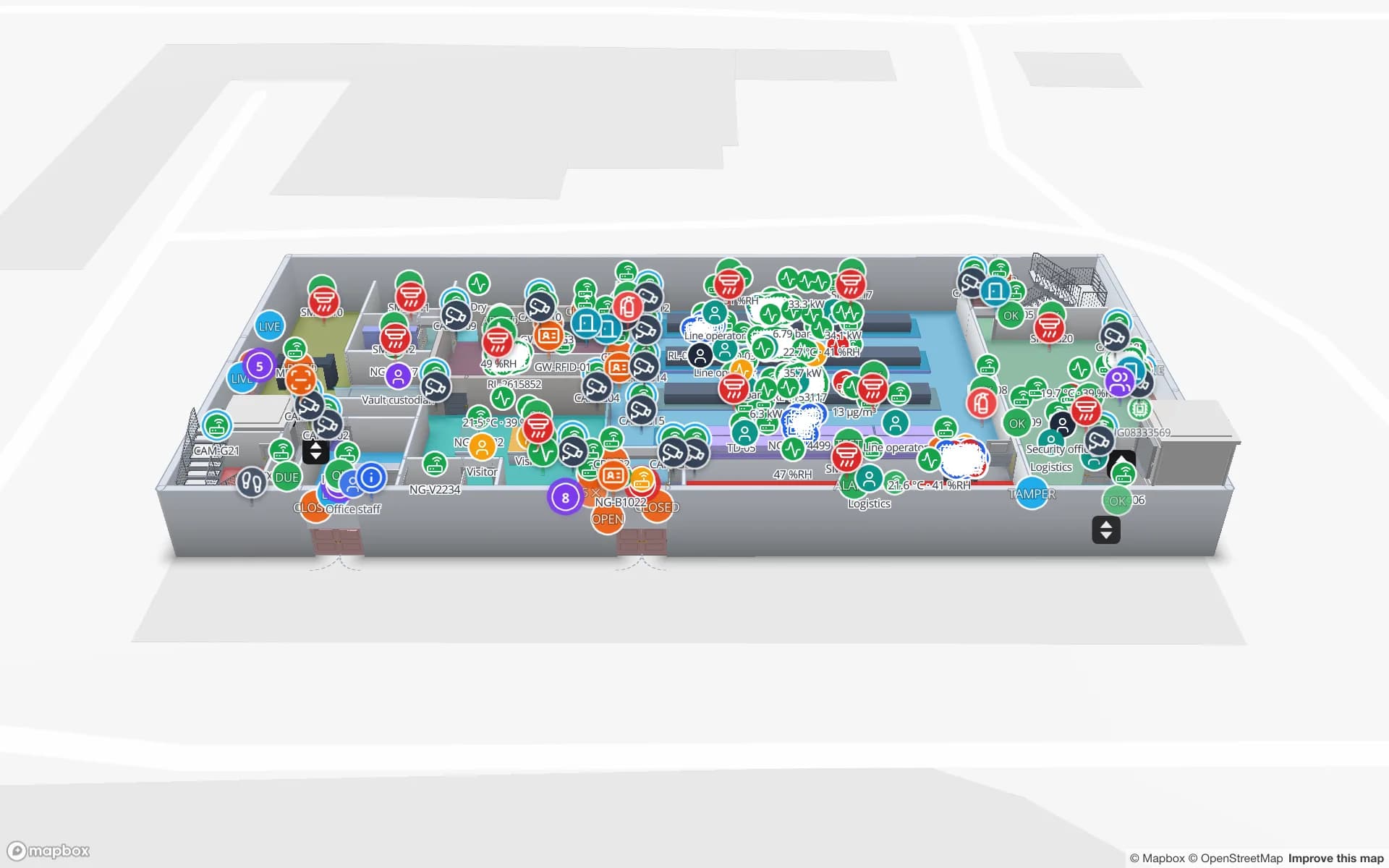
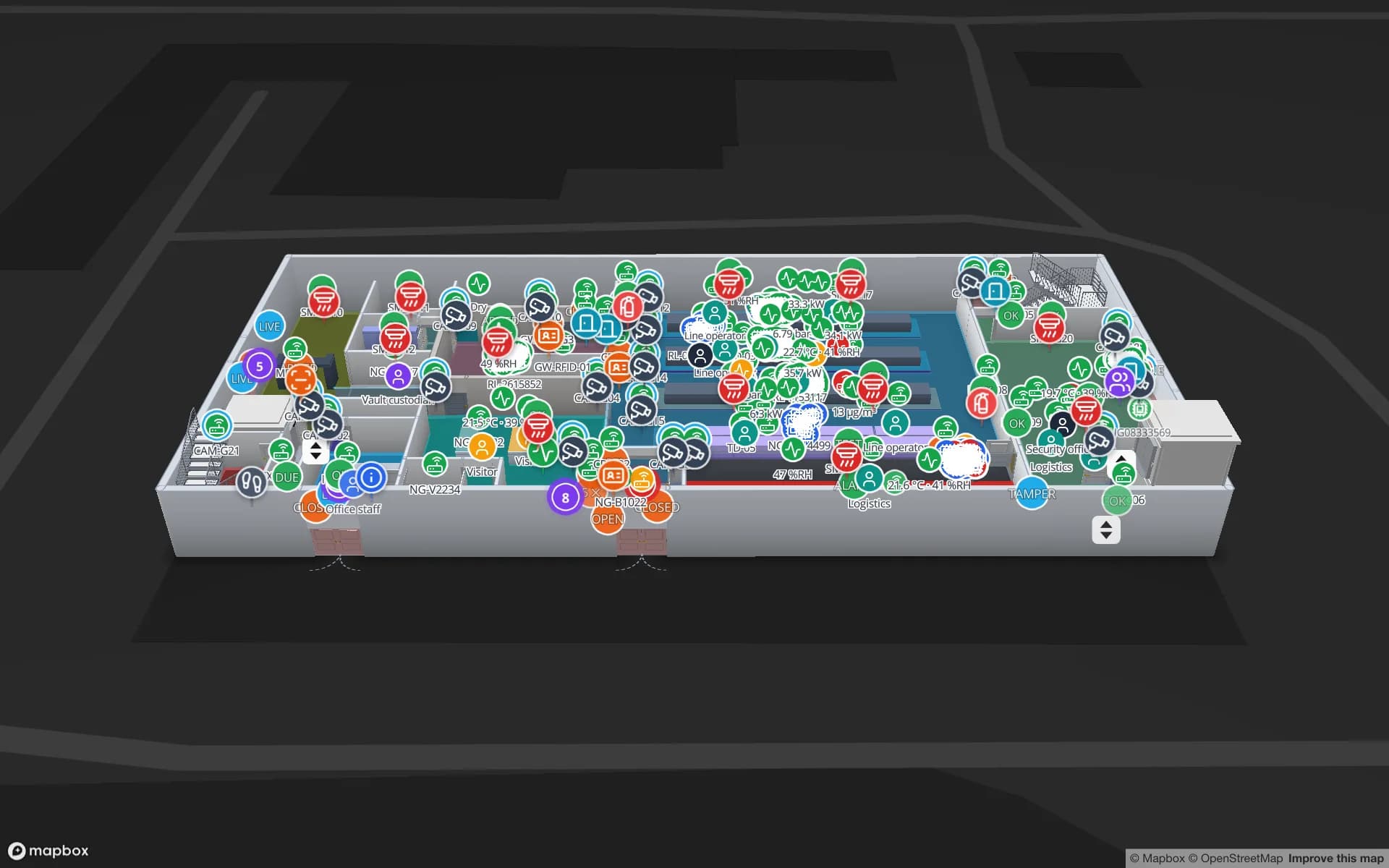
Northgate Electronics — Assembly & Secure Store, a electronics assembly & secure store demo, in the Spatial Map 3D viewer with live device markers
Northgate Electronics — Assembly & Secure Store
Northgate Electronics, a demo assembly plant and secure store: a vault and cages, security zones, access points, tools located room by room and 863 RFID-tagged units.
RFID-tagged units in the Northgate demo
863
Rack locations in the Summit assembly-plant demo
867
Interface languages for Polish teams (Polish not yet available)
EN · DE
Free trial, up to 5 facilities, no card
7 days

The second-largest warehouse market, spread across a metropolis

Property-market research for the fourth quarter of 2025 calls Upper Silesia the second-largest warehouse market in Poland after Warsaw, with modern stock above 6.2 million square metres, or 16.9 % of the country. Activity is spread across the cities of the metropolitan area — it names Będzin, Chorzów, Czeladź, Tychy, Dąbrowa Górnicza, Gliwice, Sosnowiec and Bielsko-Biała — and the research credits transport links with Czechia, Germany and Slovakia. Just under 1.07 million square metres were leased in 2025, mostly renegotiations and renewals of existing agreements.

A market like that is a chain of towns rather than one district, and the equipment that makes it work moves between them: forklifts and reach trucks, roll cages and returnable pallets, scanners and charging stations. Tag them, draw each building as a facility, and a table of assets with their home site and last read shows which have drifted to another yard. A rule for “not seen for N days” raises an in-app alert. The asset tracking page covers the pattern.
The special economic zone and the plants inside it

The Katowice Special Economic Zone was set up under a Council of Ministers regulation of 18 June 1996. Its operator gives its area as about 2,749 hectares across 48 communes and says more than 540 business entities operate in it. The national investment agency describes investment areas in the Silesian and Opole voivodeships and lists the leading sectors as automotive, glass products, steel, wood processing, food and construction.

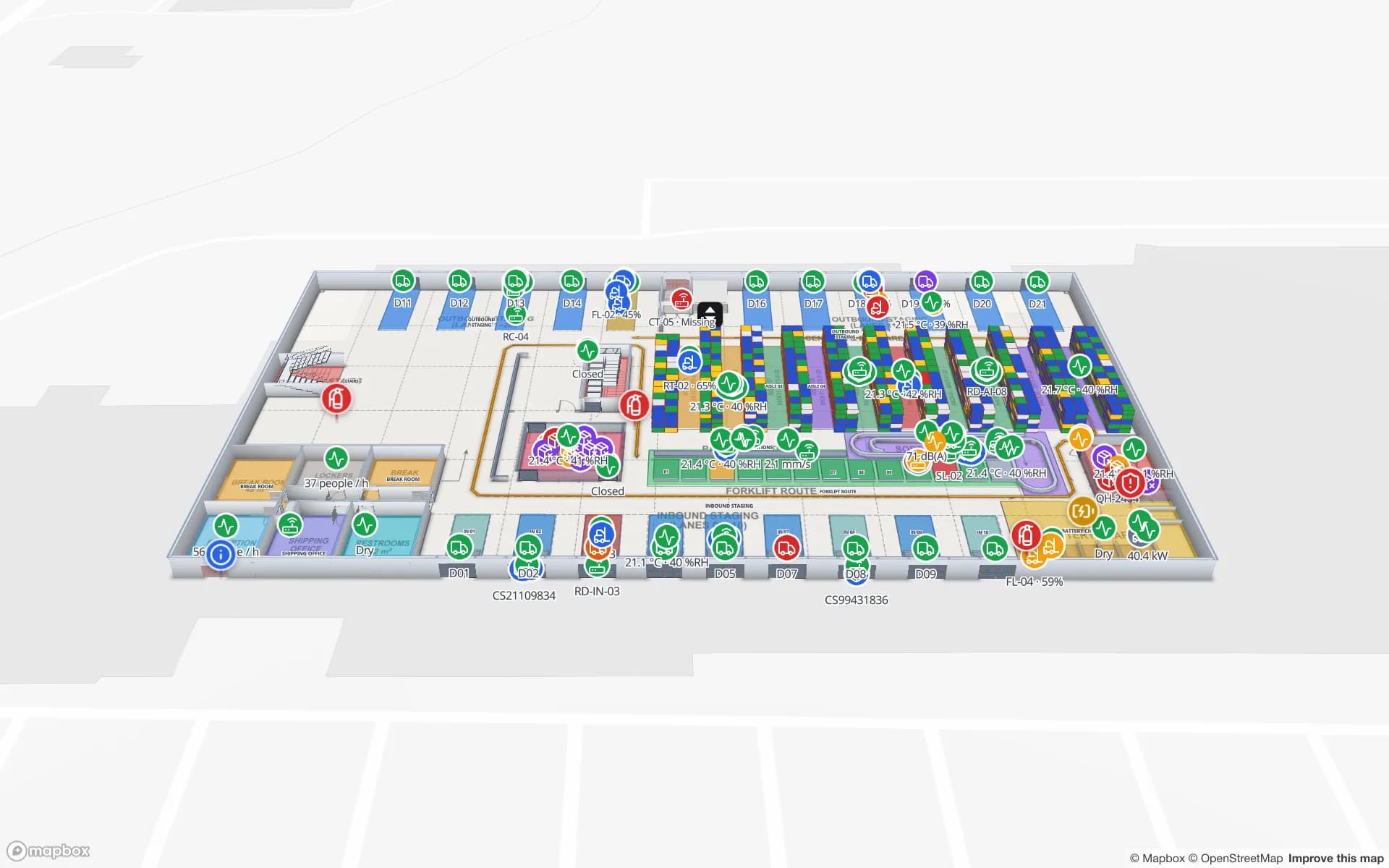
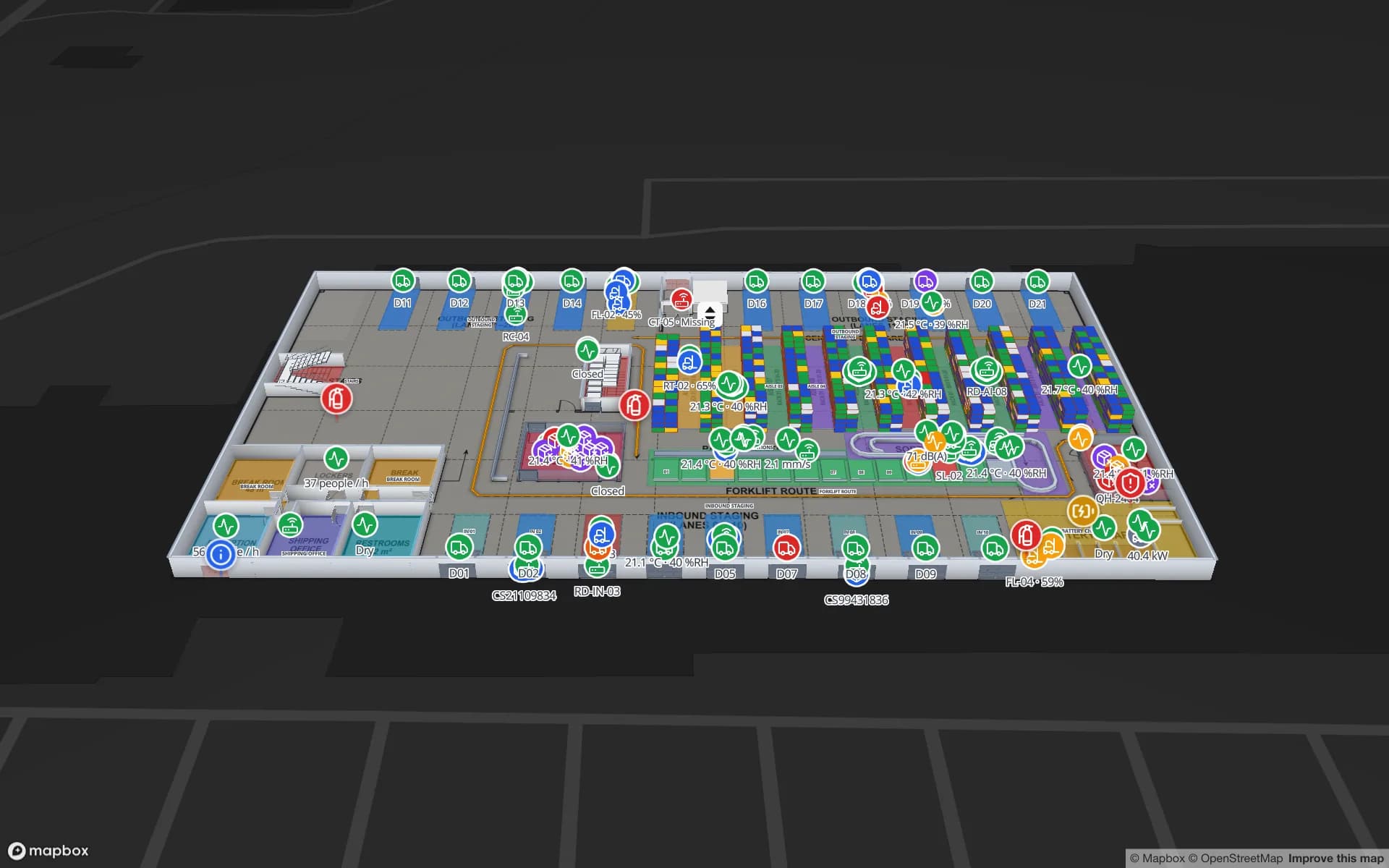
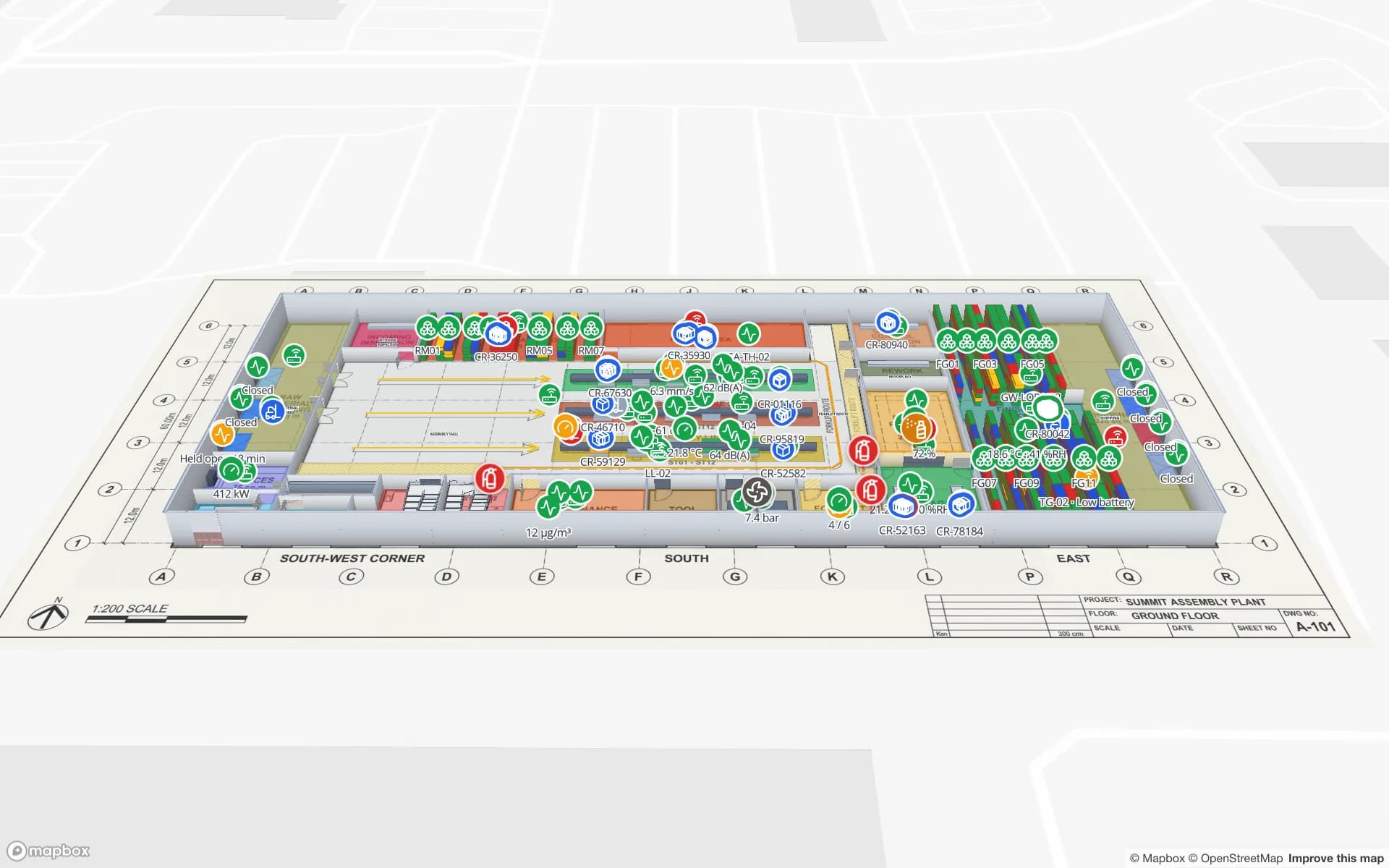
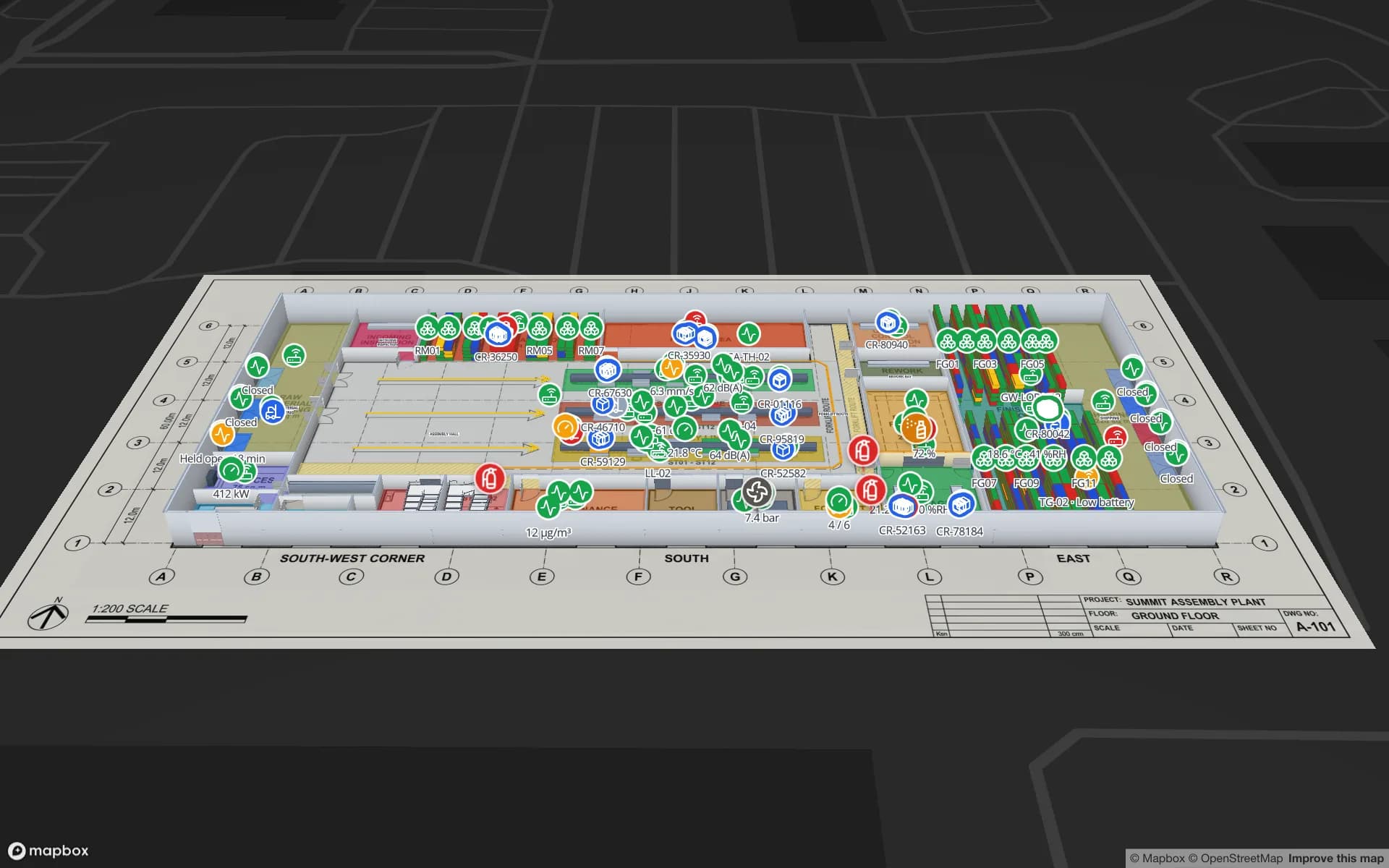
Those sectors share an asset problem that is not stock: tooling, gauges and fixtures that must be at the right line at the right time, returnable racks and containers that belong to a customer, and shared handling equipment between halls. Tag them with BLE or RFID, draw each bay and store as an area, and a table of tool IDs with their calibration or return dates drives the colours. The Northgate demo locates tools and equipment room by room, and the Summit demo shows lines, workstations and 867 rack locations on a plant map. RFID tool tracking explains the crib-door pattern.

Pyrzowice: an airport whose cargo keeps growing

Katowice Airport at Pyrzowice reported nearly 7.3 million passengers in 2025 and passed 7 million for the first time on 9 December. Its president also cited an all-time high of 46,000 tonnes of cargo. The airport plans a second cargo terminal of about 10,000 square metres in its south-eastern part, after which it expects its annual cargo capacity to reach about 75,000 tonnes. We give no construction date because none is confirmed.

Air cargo depends on reusable equipment that must come back: unit load devices, dollies, trolleys, nets and ground-handling vehicles. A forwarder’s hall can hold hundreds of such items, and a lost one is a recurring bill. Put an RFID reader at each dock door, tag the units, and a table with their last read lets the map show which hall, which door and how long. Spatial Map does not connect to airport, airline or customs systems, and it does not compute positions from BLE signals itself.

From the spreadsheet register to the map

Many Silesian plants already have an asset register in a spreadsheet or an ERP. That is the best starting point. Upload the register as a table, import the hall layout as a PDF or DWG (AutoCAD R2004–R2018, placed as a picture), align it at real scale, and place each asset at its home location. Handheld counts, RFID reads or BLE gateway rows then update it through the table write API or a polled REST endpoint.

Where a hall changes often — a moved line, a new store — a facility can be copied and adjusted rather than redrawn, and AI Map can draft the new walls and areas for a person to review. Roles limit who sees a facility. If tags might identify a person, talk to your works council and legal advisers early; most plant projects tag tools, containers and kits rather than people.

Services for teams in Katowice

Katowice teams tend to start in one of three places:

  • Plants begin with asset tracking for tools, returnable racks and WIP carriers, then inventory tracking for the stores that feed the line.
  • Warehouse operators in the metropolitan belt begin with doors, lanes and rack stock, then add RFID asset management for forklifts and cages.
  • RTLS and UWB is for large halls where vehicles and people must be located continuously; a BlueIOT server connects directly and other engines through the write API.
  • If you have no tags, beacons or readers yet, our team can source them on request, quoted per project, with warranty and device support from the manufacturer: see BLE beacons and gateways and hardware and demo kits.
  • Handheld apps, ERP integrations and an asset management system are built as client projects. The product runs as cloud or on-premises.

Also served nearby

The same page covers Gliwice, Tychy, Sosnowiec, Dąbrowa Górnicza, Zabrze, Ruda Śląska, Chorzów and Bielsko-Biała. The app has no Polish interface; room names, tool codes and report titles in Polish display exactly as typed.

How Spatial Map does it

From an asset register to a live map

  1. 01

    Load the register

    Upload a CSV or Excel list of assets with tag IDs, owners and home locations as a table.

  2. 02

    Draw the places

    Import the plan of each hall or yard, align it at real scale and draw stores, bays, dock doors and rooms as areas.

  3. 03

    Connect reads and counts

    RFID middleware, BLE gateways or handheld counts post rows through the write API, REST polling or file uploads.

  4. 04

    Add return and silence rules

    In-app alerts for assets not seen for N days and gateways that stopped reporting; replay history on demand.

What Katowice teams track

Tools, gauges and fixtures

Located by bay, with calibration and return dates from your system.

Returnable racks and containers

Tagged carriers by site, with a not-seen-for rule.

Handling equipment in warehouses

Forklifts, cages and pallets as live markers with row history.

Airport cargo equipment

Tagged units by hall and dock door, with last read and dwell.

See it on real demo facilities

Fictional names, real floor plans, live sensors, RFID, BLE tags and gateways — open any of them in the browser.

All 13 demo facilities

Asset tracking in Katowice — questions we get

Not yet. The app is available in English, German, French, Spanish, Arabic and Chinese, and each user picks their own language. Your own content — tool codes, bay names, report titles — can be in Polish, diacritics included.

Spatial Map does not depend on where a plant is registered. It maps your own buildings from your own floor plans and shows the data you send it, and it makes no statement about zone rules or incentives.

Yes. Each plant is a facility in one workspace, and a table of tool IDs with the last site and bay lets you see where each one is. Pro covers up to 4 facilities; larger estates are quoted as custom services.

Yes, for the halls and doors you map. Your readers post the reads, and Spatial Map shows each unit’s last door and dwell time. It does not connect to airport, airline or customs systems.

No. Spatial Map is sold online and our team works with customers in Poland remotely, by video call and through the contact form, in English or German. There are no local resellers or partners.

No. Pricing is the same worldwide and in US dollars: a 7-day free trial for up to 5 facilities with no card, then Pro at $60 a month or $600 a year for up to 4 facilities. Tags and readers, if you ask us to source them, are quoted per project.

Put one Silesian plant on a live asset map.

Start the free trial and open the Northgate demo, or send us a hall layout and a sample of your asset register through the contact form.