Lagos · Apapa, Tin Can, Lekki and Ikeja

Inventory tracking in Lagos, from the port gate to the shelf

Spatial Map handles inventory tracking in Lagos on a live 3D map of each warehouse: stock by bay, batch and expiry, pallets at the dock door that last read them, and forklifts at their lanes, coloured from your WMS, scanners and readers. Lagos receives much of Nigeria’s imported stock through the Apapa and Tin Can gateways and, since 2023, the Lekki deep-sea port, and then spreads it across a city of many millions. The map shows where each pallet is in the building where it is stored.

No credit card. Runs in the browser. Pro is $60/month for up to 4 facilities. Book a demo

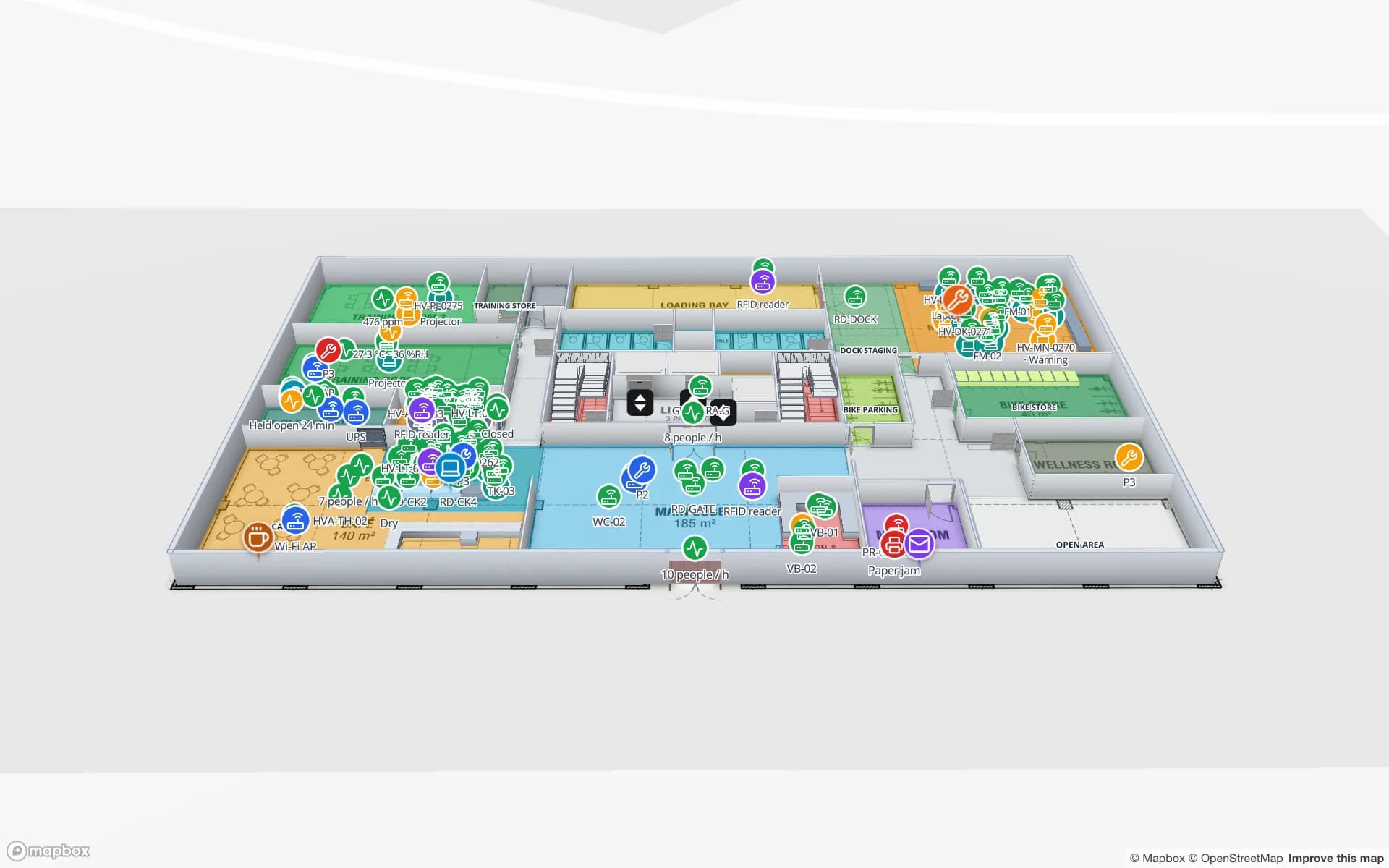
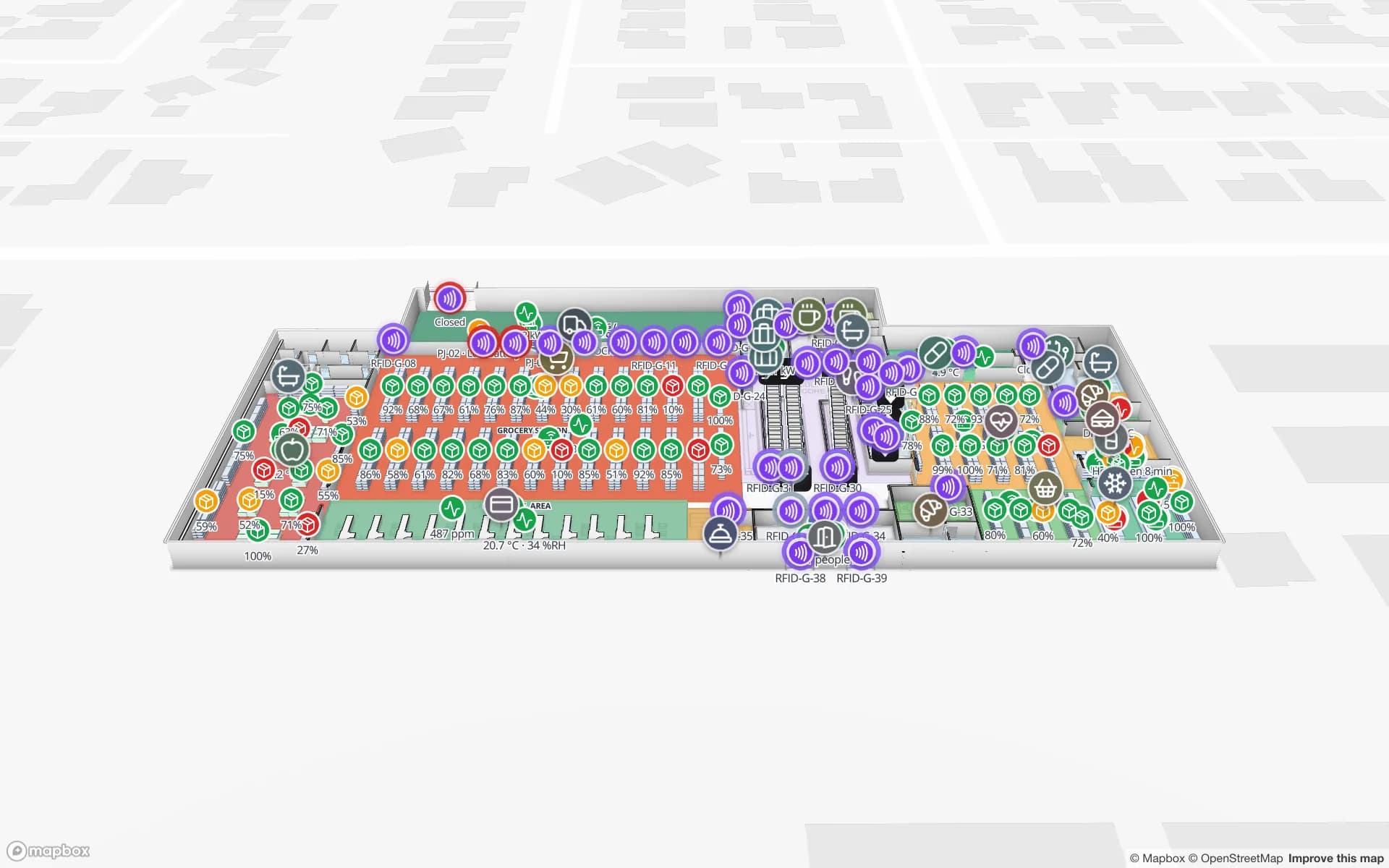
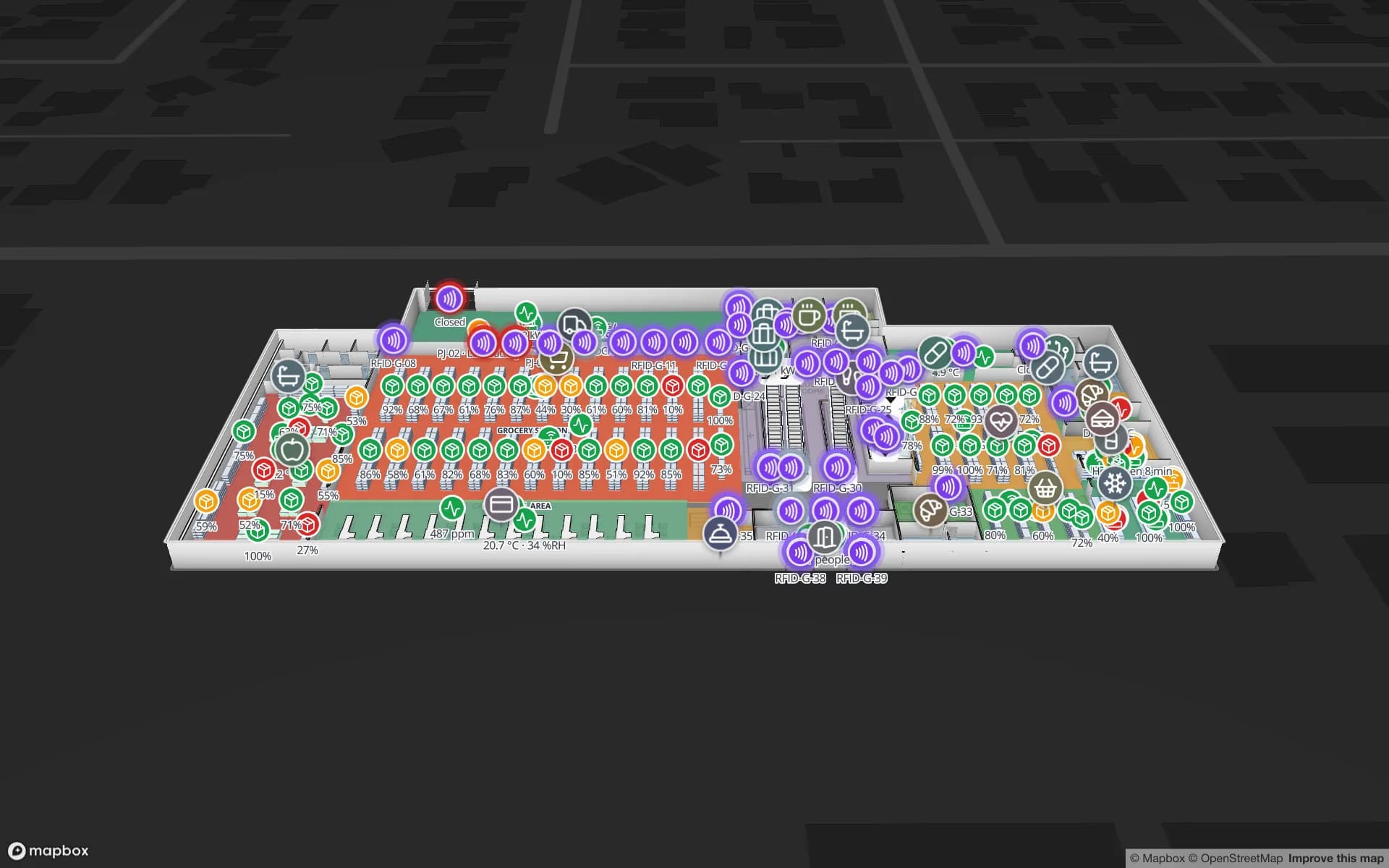
Retail Mart Store, a three-floor retail store demo, in the Spatial Map 3D viewer with live device markers
Retail Mart Store
Retail Mart, a demo three-floor store: 85 RFID readers at the doors, escalators and lifts, with shelf stock and fridge temperatures.
Rack locations in the Crestline fulfilment demo
2,204
RFID readers in the Retail Mart demo
85
How often alert rules are checked, with alerts shown in the app
15 s
Free trial, up to 5 facilities, no credit card
7 days

Apapa and Tin Can: the stock arrives through a queue

The Lagos Port Complex at Apapa and Tin Can Island Port are the long-standing gateways of the city; Tin Can opened in 1977 to relieve the Apapa quays, and the Lagos Port Complex expanded in the 1950s. Truck access is managed by Eto, the Nigerian Ports Authority’s electronic call-up, which took effect on 27 February 2021: trucks wait at approved truck parks until the app calls them in.

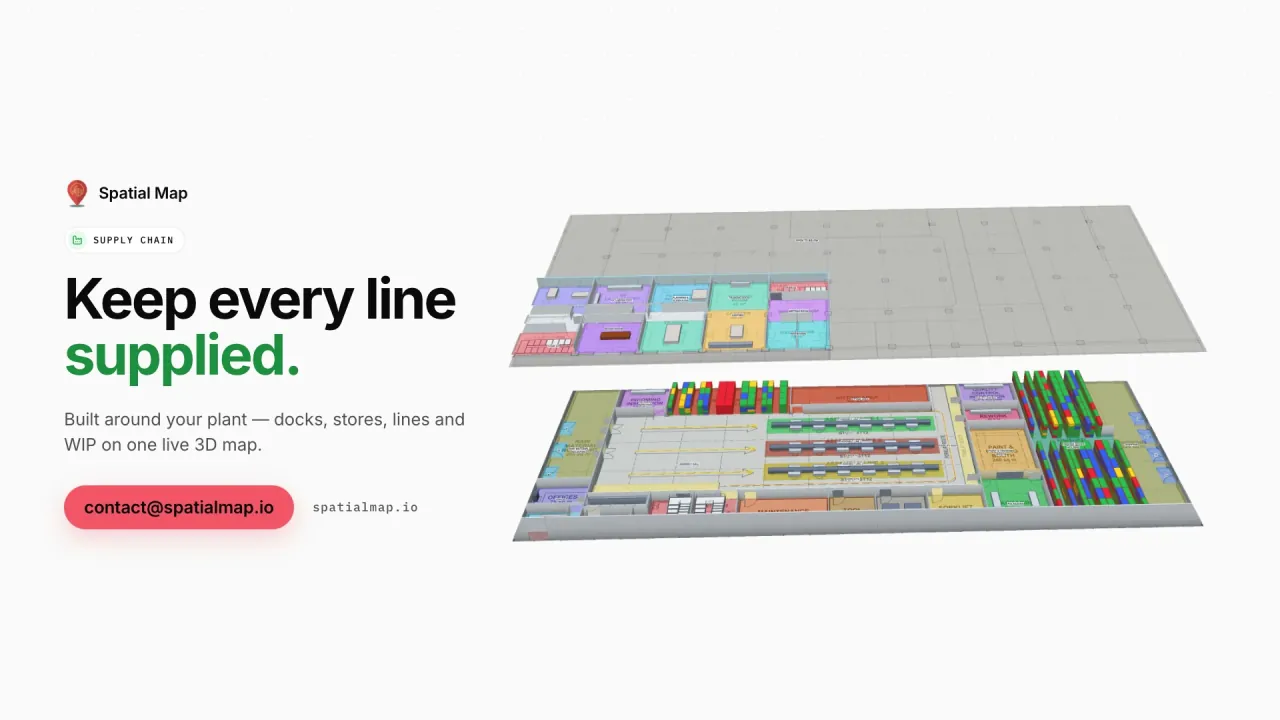
A call-up system changes the rhythm of a warehouse. Arrivals come in batches, set by the port, not by your shift pattern, so a depot’s dock doors are either idle or overloaded. Spatial Map shows which doors are in use, which lanes hold stock waiting to be put away, and which pallets from a delivery are not yet found. The Eastport demo has 50 dock doors, 44 yard slots and 1,180 RFID pallets on one map. Spatial Map does not connect to Eto, the ports or Customs; it shows your own warehouse.


Lekki Deep Sea Port: a second front on the east side

The Lekki Deep Sea Port sits in the Lagos Free Zone, about 50 km east of the city, with container, dry bulk and liquid bulk terminals, and states that it has been fully operational since 1 April 2023. Cargo through Lekki goes to a different set of warehouses, many of them in and around the free zone, and then onto roads that already carry the city’s traffic.

A company with sheds on both sides of the lagoon needs one view of both. In one workspace each warehouse is a facility; a solution groups them, and a manager sees stock across Apapa, Ikeja and Lekki without leaving the page. A read-only share link can be limited to the floors and layers a client or haulier needs, with an expiry date and a view cap.

Ikeja and the mainland: batches, expiry and regulated goods

Murtala Muhammed International Airport, owned and operated by the Federal Airports Authority of Nigeria, is in Ikeja, and the Lagos Mainland is where most of the city’s industry is. Food, drink, personal-care and household goods flow out of mainland warehouses to wholesalers and retailers, and NAFDAC’s remit covers the manufacture, import, distribution and sale of food, drugs, cosmetics, chemicals, detergents, medical devices and packaged water. Rules apply to the goods, not the software; Spatial Map makes no compliance claim and does not replace your batch records.

What it can do is make batch and expiry visible. Give each pallet a batch and expiry field in your table, and a style rule colours racks by days to expiry, so a manager walks to the red bays first. Pair it with RFID or barcode scans at the door and the map reflects the real position. The RFID stock counting page shows how a count goes from hours to minutes, and the bin inventory post shows how to start from a CSV.

Retail in a city of millions

Lagos is Nigeria’s largest city. Estimates put it at 17 to 21 million residents, and the 2006 census figure is disputed. Shops, supermarkets and malls serve that market, and the stockroom behind a shop is often the smallest and busiest warehouse in the chain: shelf counts, back-room counts and what is in the delivery truck outside.

The Retail Mart demo is a three-floor store with 85 RFID readers at the doors, escalators and lifts, shelf stock by department and fridge temperatures on the same plan. Item-level RFID suits fashion, electronics and cosmetics better than bulk food; the RFID retail page explains where it pays back. Footfall heatmaps stop at walls and closed doors, so the busiest entrance is clear.

Services for teams in Lagos

Where Lagos teams usually start:

Also served nearby

The same approach covers Ikorodu, Ojo, Isolo and Oshodi on the Mainland, Epe and Ibeju-Lekki to the east, Badagry to the west, and Agbara, Sagamu and Ota just over the border in Ogun State.

How Spatial Map does it

From the port gate to the shelf

  1. 01

    Pick one warehouse

    A depot near the port, a mainland distribution centre or a shop stockroom, wherever missing stock costs most.

  2. 02

    Map the bays

    Upload the plan or a photo, let AI Map draft racks, doors and lanes, and name bays as your WMS does.

  3. 03

    Feed it stock

    Start from a CSV, then your WMS or scanners post rows through the write API, or Spatial Map polls a REST endpoint.

  4. 04

    Add the rules

    In-app alerts for stock near expiry, a pallet staged too long, or a reader that has gone quiet.

What Lagos teams track

Port-side depots

Dock doors, lanes and pallets waiting to be put away.

FMCG distribution centres

Stock by bay, batch and days to expiry.

Supermarkets and shops

Shelf stock, RFID at the doors and fridge temperatures.

Multi-site networks

Warehouses at Apapa, Ikeja and Lekki grouped into one view.

See it on real demo facilities

Fictional names, real floor plans, live sensors, RFID, BLE tags and gateways — open any of them in the browser.

All 13 demo facilities

Inventory tracking in Lagos — questions we get

No. It has no link to the call-up system, the ports or Customs. It shows what happens inside your warehouse, from your own scanners, readers and WMS. If you want the truck call-up ticket or customs entry beside a delivery, keep it as a field in your own table.

It shows which dock doors are in use, which lanes hold stock waiting for put-away and which pallets of a delivery are not yet found. An in-app alert can flag pallets staged longer than the minutes you set. The call-up timing itself comes from the port system, not from Spatial Map.

Yes. Each shed is a facility in one workspace, and a solution groups them. Managers get the Viewer role or a read-only share link, and each building keeps its own plan, tables and alert rules.

Yes. Put the expiry date in your table and a style rule colours racks or markers by days to expiry. The map does not replace your batch records and makes no regulatory claim; it makes the data you already hold easy to see.

No. Spatial Map is sold online and our team works with Nigerian customers remotely, by video call and through the contact form. There are no local resellers or partners.

In US dollars, the same worldwide: a 7-day free trial for up to 5 facilities with no credit card, then Pro at $60 a month or $600 a year for up to 4 facilities. Scanners and tags, if you ask us to source them, are quoted per project and are not part of the subscription.

Map one Lagos warehouse this week.

Start the free trial and open the Crestline and Eastport demos, or send us a warehouse plan and a sample stock list through the contact form.