Africa · Nigeria

Indoor mapping & RFID tracking in Nigeria

Spatial Map is browser-based software for indoor mapping & RFID tracking in Nigeria: it turns the floor plan of a warehouse, distribution centre or supply store into a live 3D map fed by your readers, gateways and stock records. Nigeria’s buildings that matter most sit on the ports at Lagos, Port Harcourt and Onne, on the Lagos mainland, and in the distribution networks that carry food, drink and household goods to the rest of the country. Nothing is installed on site: the map opens in a browser.

No credit card. Runs in the browser. Pro is $60/month for up to 4 facilities. Book a demo

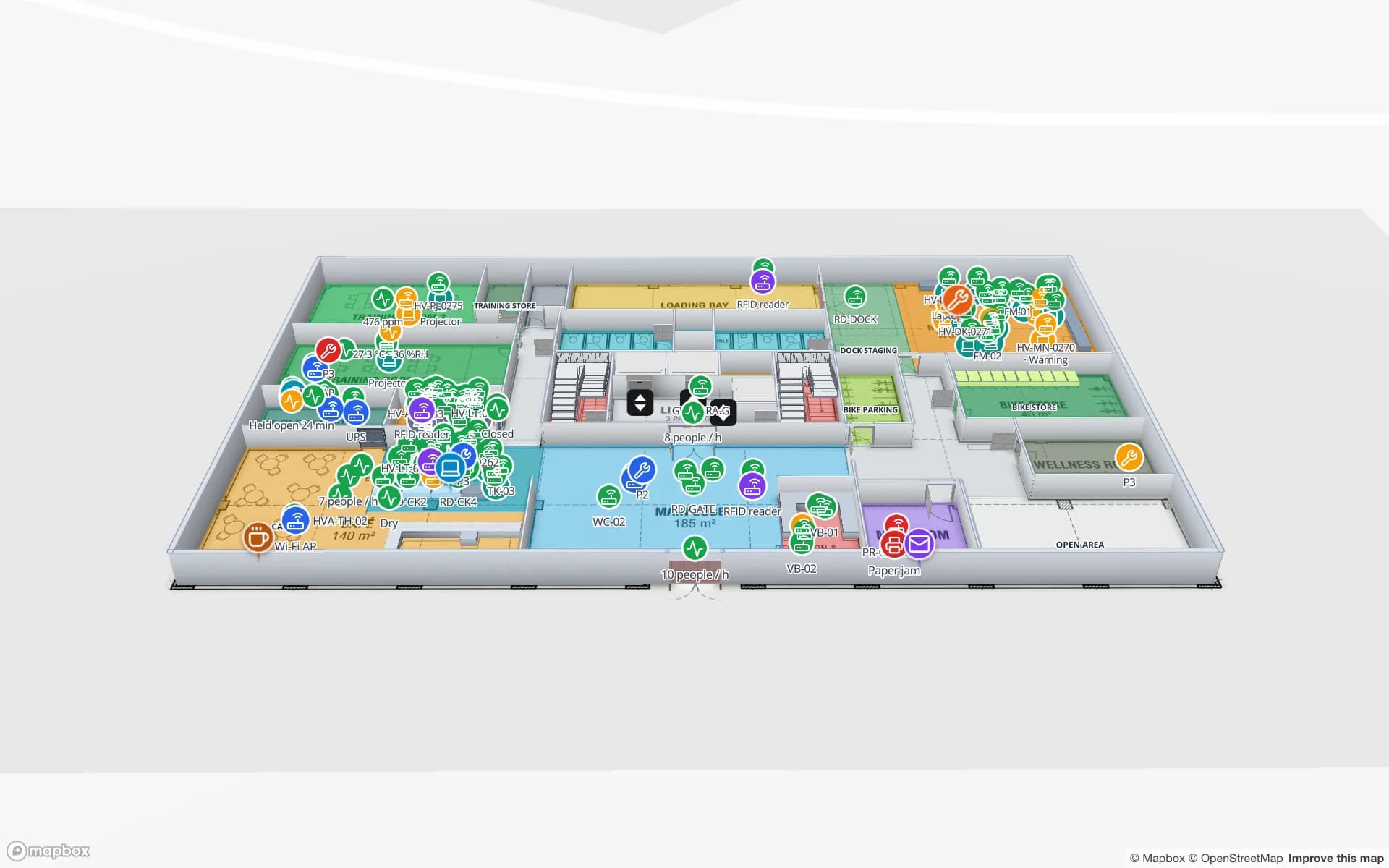
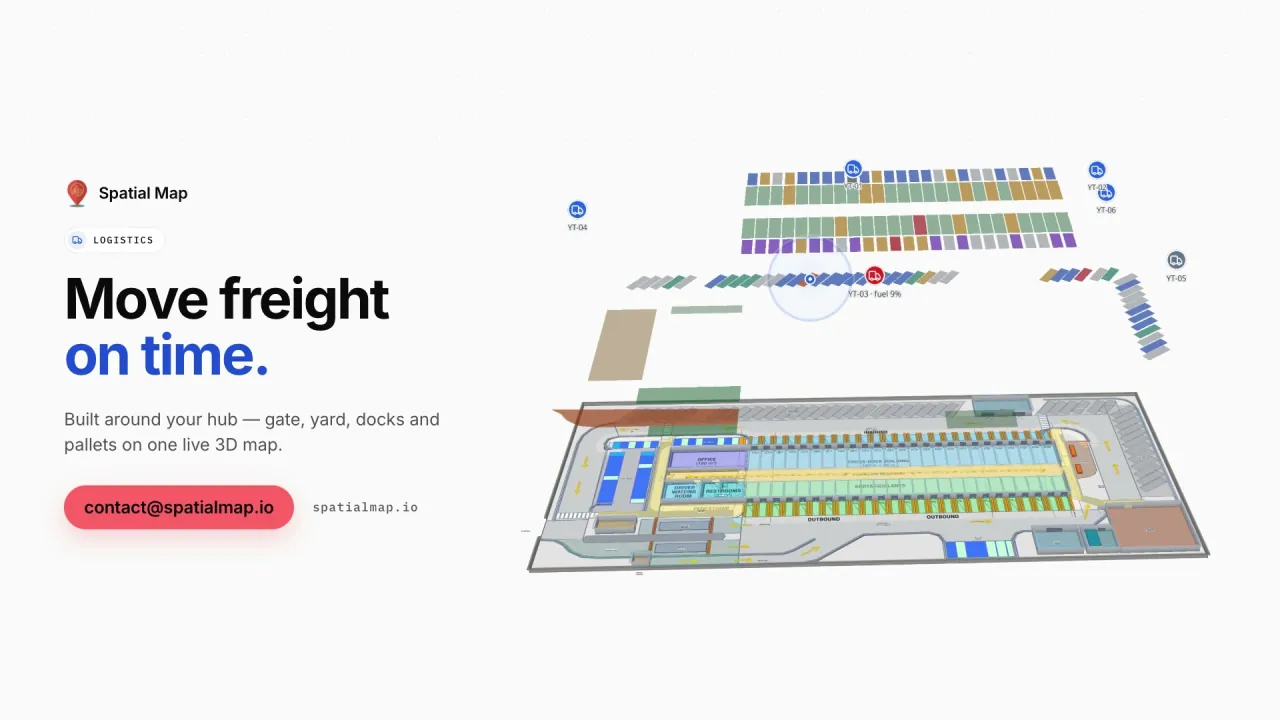
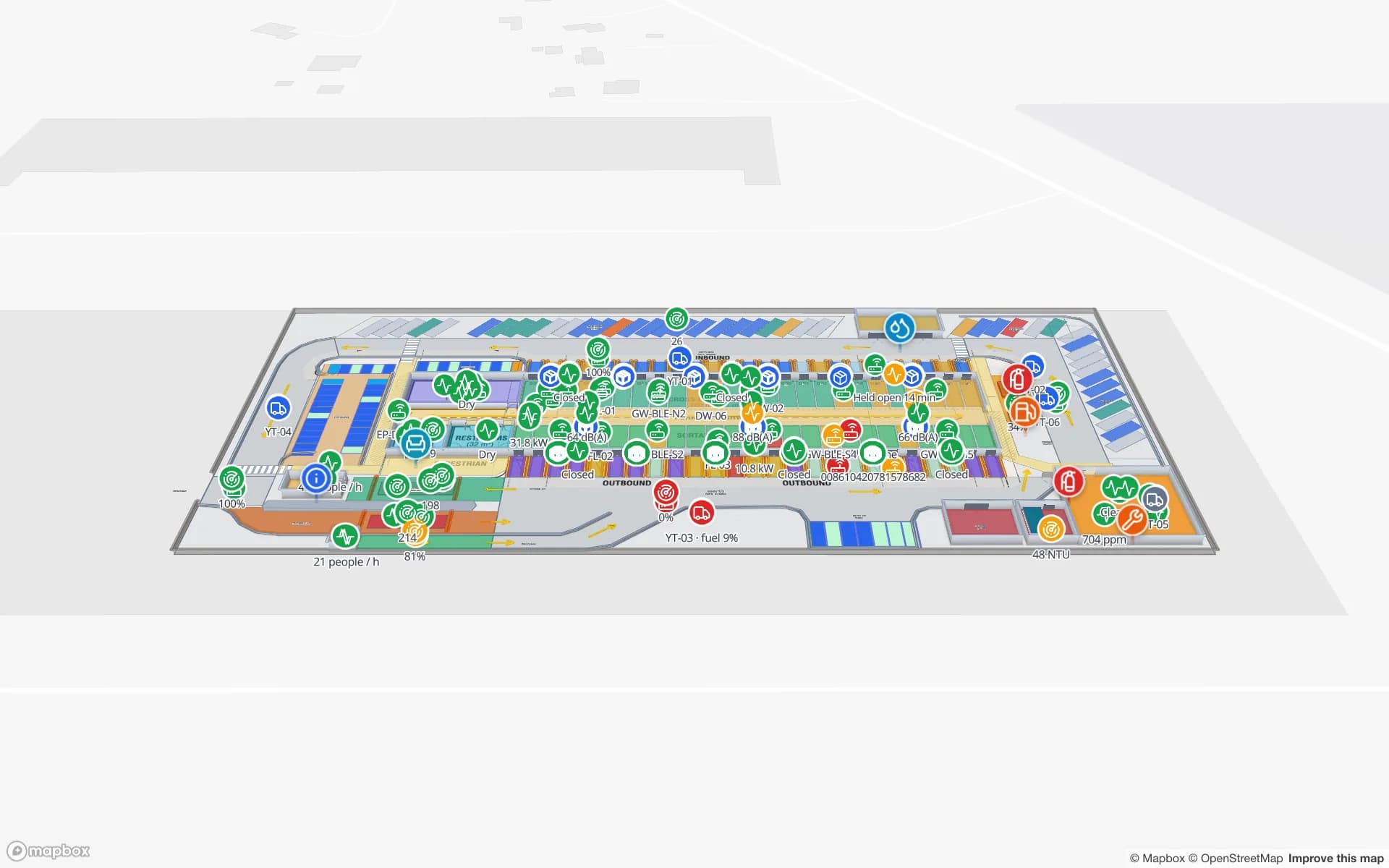
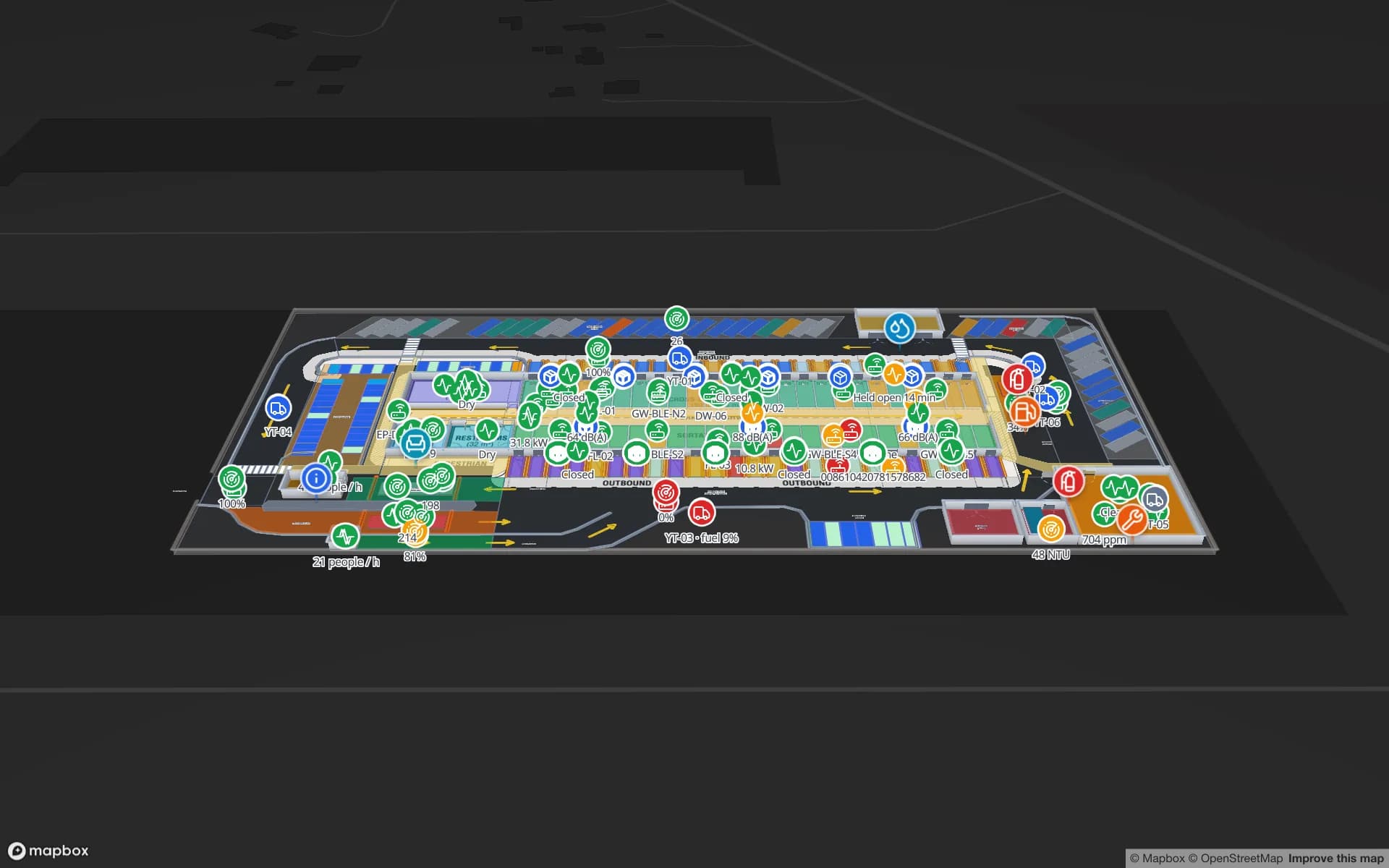
Eastport Cross-Dock Freight Hub, a cross-dock & trailer yard demo, in the Spatial Map 3D viewer with live device markers
Eastport Cross-Dock Freight Hub
Eastport Cross-Dock, a demo freight hub: 50 dock doors, 44 yard slots and 1,180 RFID pallets, with the gate and weighbridge.
Dock doors in the Eastport cross-dock demo
50
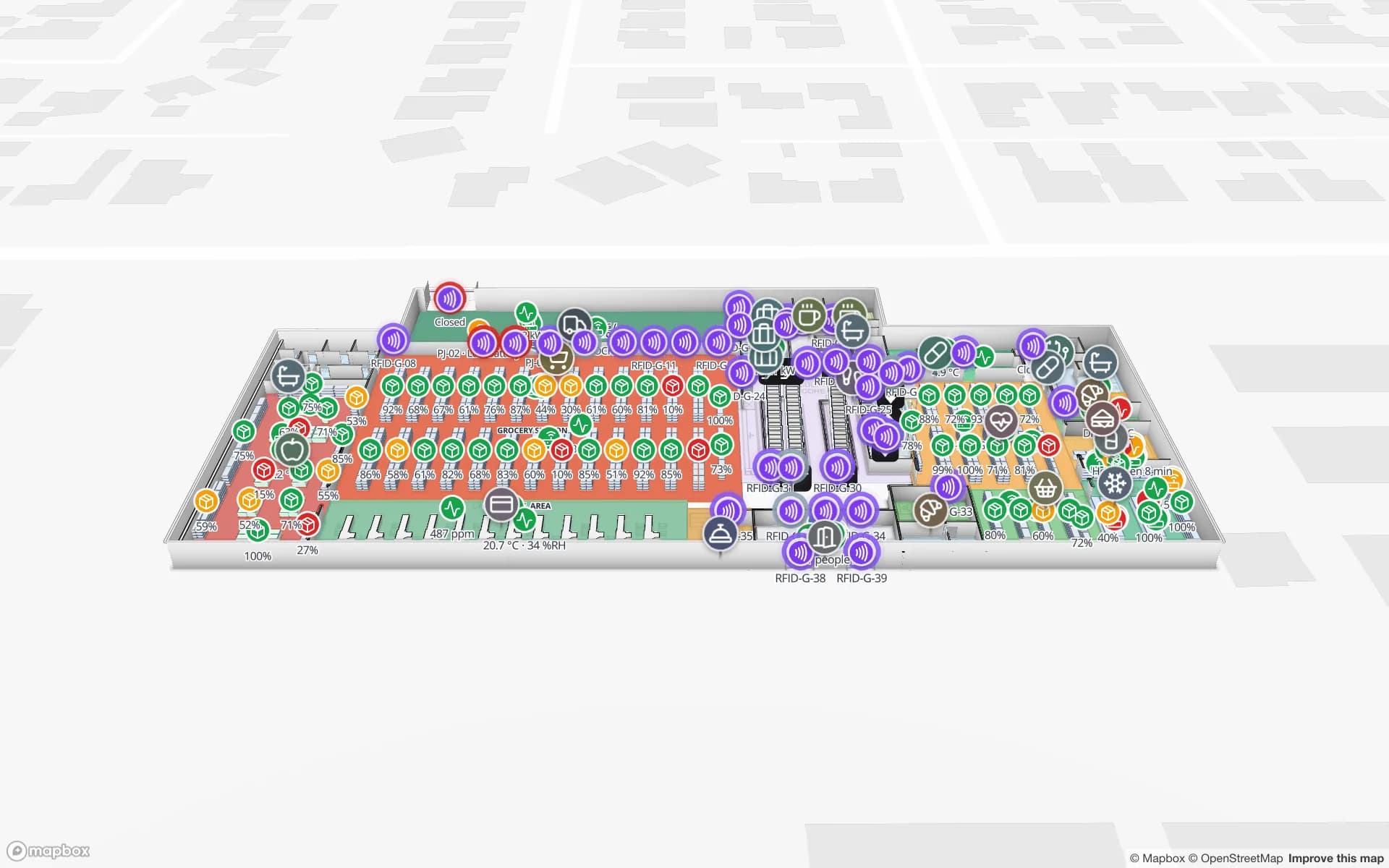
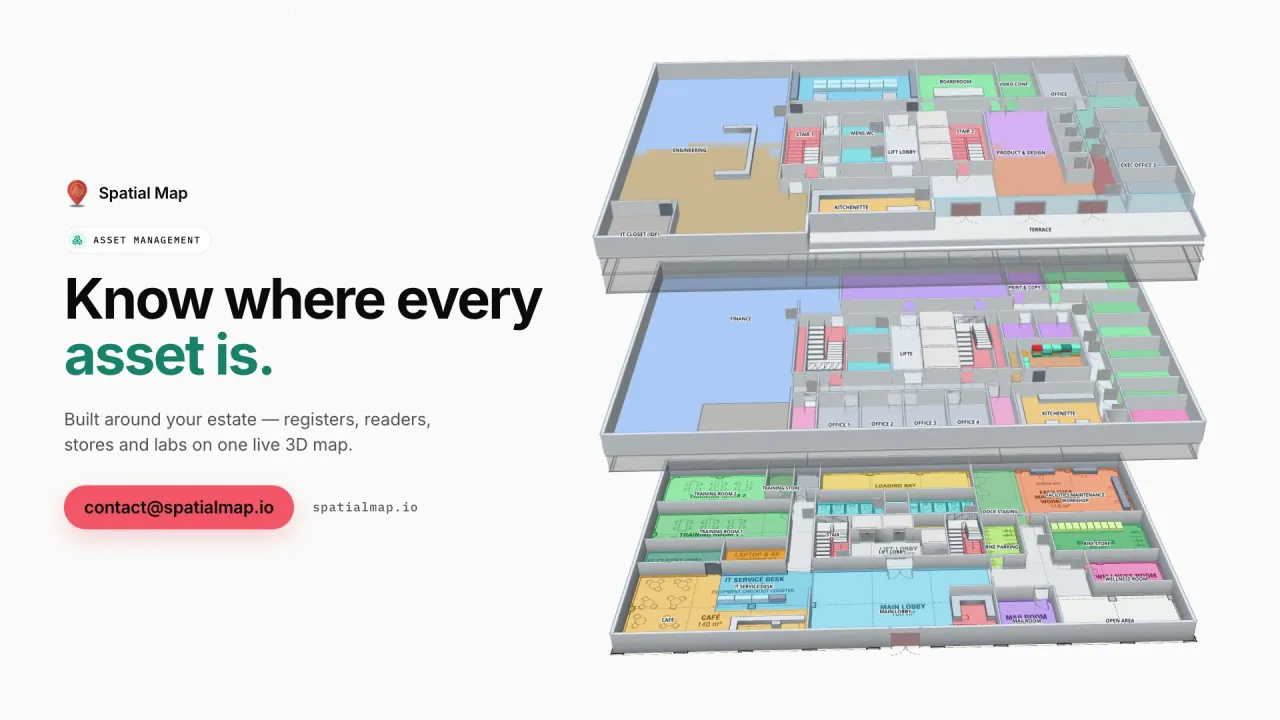
RFID readers in the three-floor Retail Mart demo
85
Interface languages, including English and French
6
Free trial, up to 5 facilities, no credit card
7 days

A port system with more than one gateway

Lagos is the best-known gateway, but Nigeria’s ports are not only in Lagos. Besides Apapa, Tin Can Island and Lekki in Lagos State, there are Port Harcourt and Onne in Rivers State, Warri in Delta State and Calabar in Cross River State. Onne Oil and Gas Free Zone sits on the Bonny River estuary, near Port Harcourt, and its supply bases and warehouses serve the offshore and onshore energy industry.

Each port feeds its own warehouses, depots and supply stores. Spatial Map draws the dock doors, yard slots, gates and weighbridges of each on the site plan and colours them from your yard or WMS data, as in the Eastport Cross-Dock demo. It does not connect to port, terminal or Customs systems; it shows what your own reads and records say is in your building. The Lagos ports have their own page: inventory tracking in Lagos.
Customs and the shifting paperwork

The Nigeria Customs Service presents B’Odogwu as a home-grown, paperless Unified Customs Management System. It was piloted at a Lagos terminal from October 2024, followed by a pre-launch at Apapa and Tin Can Island. Cargo documents, payments and releases are handled there, not in Spatial Map.

What a warehouse can control is the location of the goods once they are released. Keep the customs entry number as a field next to the bay, pallet or consignment, and your team can search for the entry and see where the goods are on the map. That ties the two systems together without either one writing to the other.

Distribution, regulated goods and the mainland

Nigeria’s consumer market is large and its distribution is layered: manufacturers’ warehouses, regional depots, wholesale hubs and then stores and traders. For food, drugs, cosmetics, chemicals, detergents, medical devices and packaged water, NAFDAC’s remit covers manufacture, import, export, distribution, advertisement, sale and use, which makes batch and expiry information important to the people holding the goods. Spatial Map is not a compliance tool and makes no regulatory claim, but it can show which bays hold which batch and colour racks by days to expiry from your own stock data.

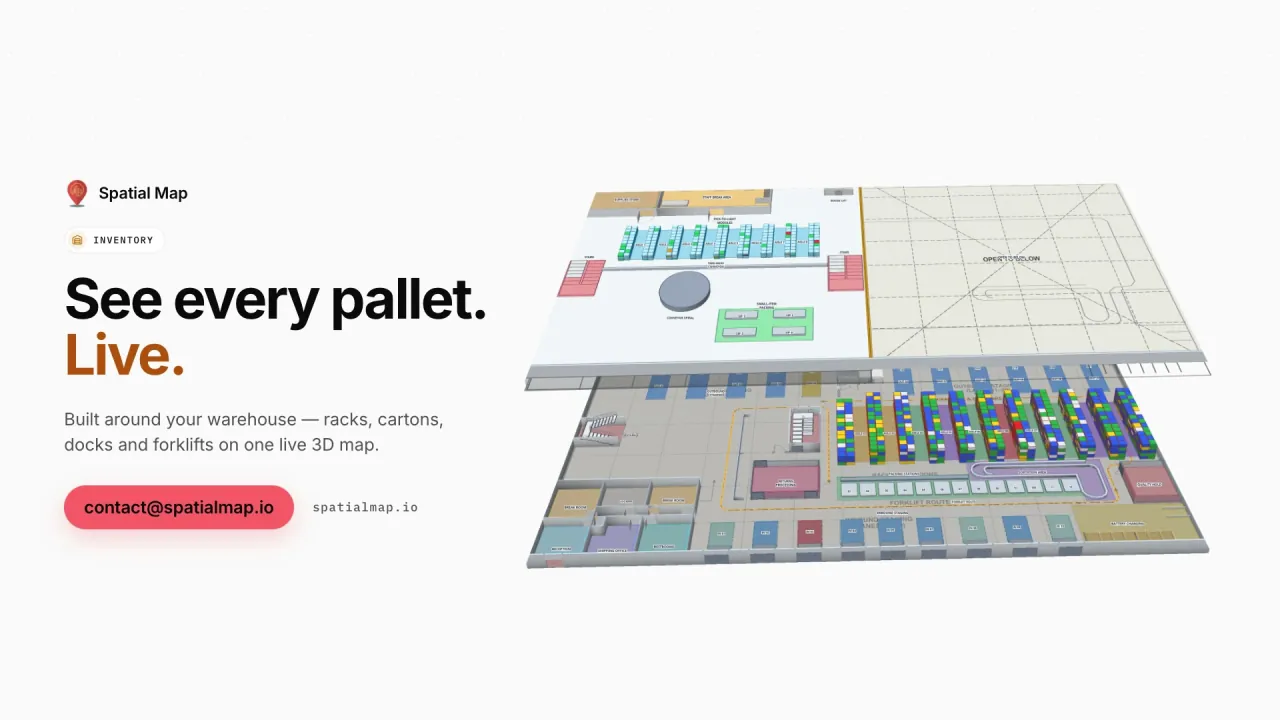
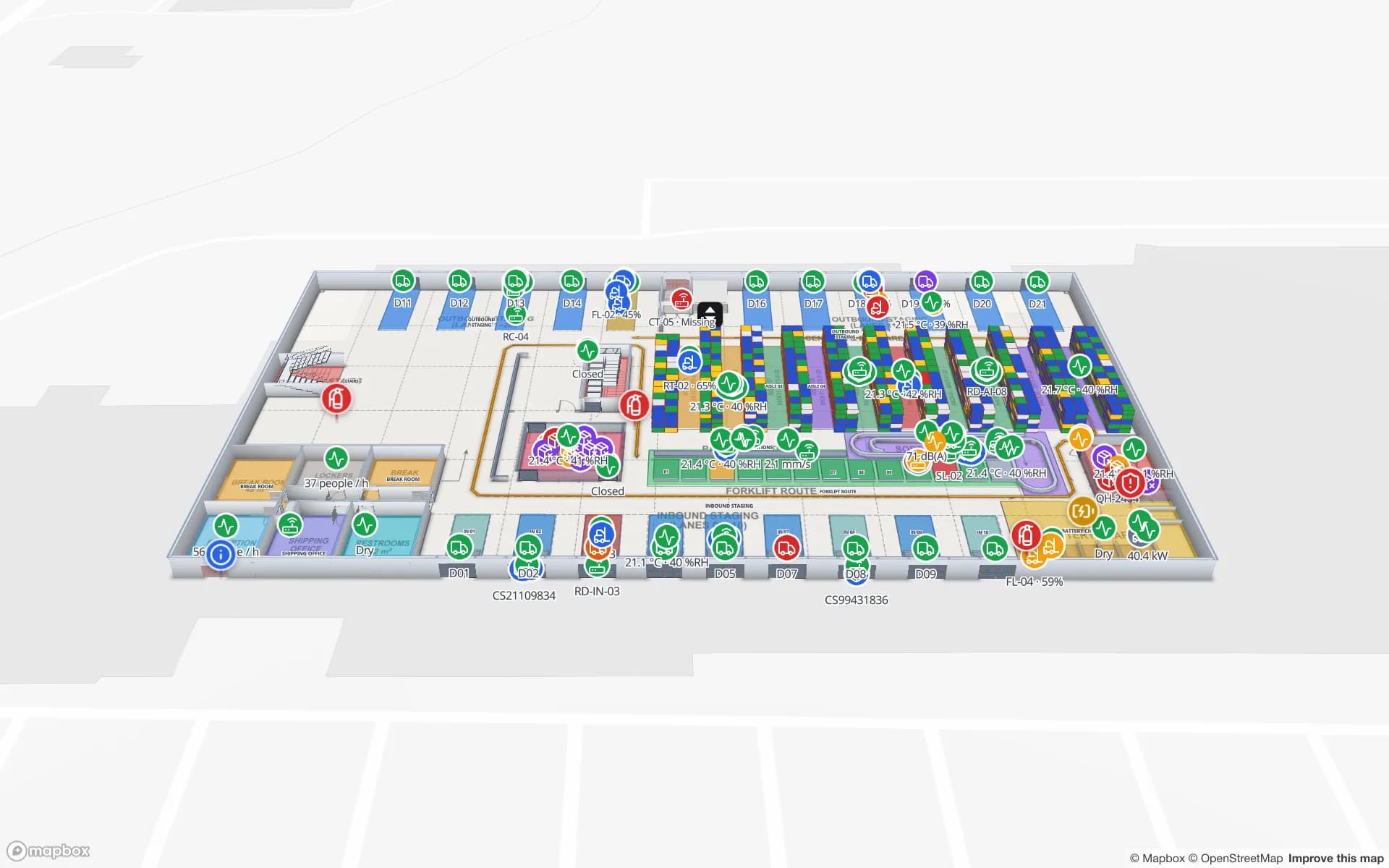
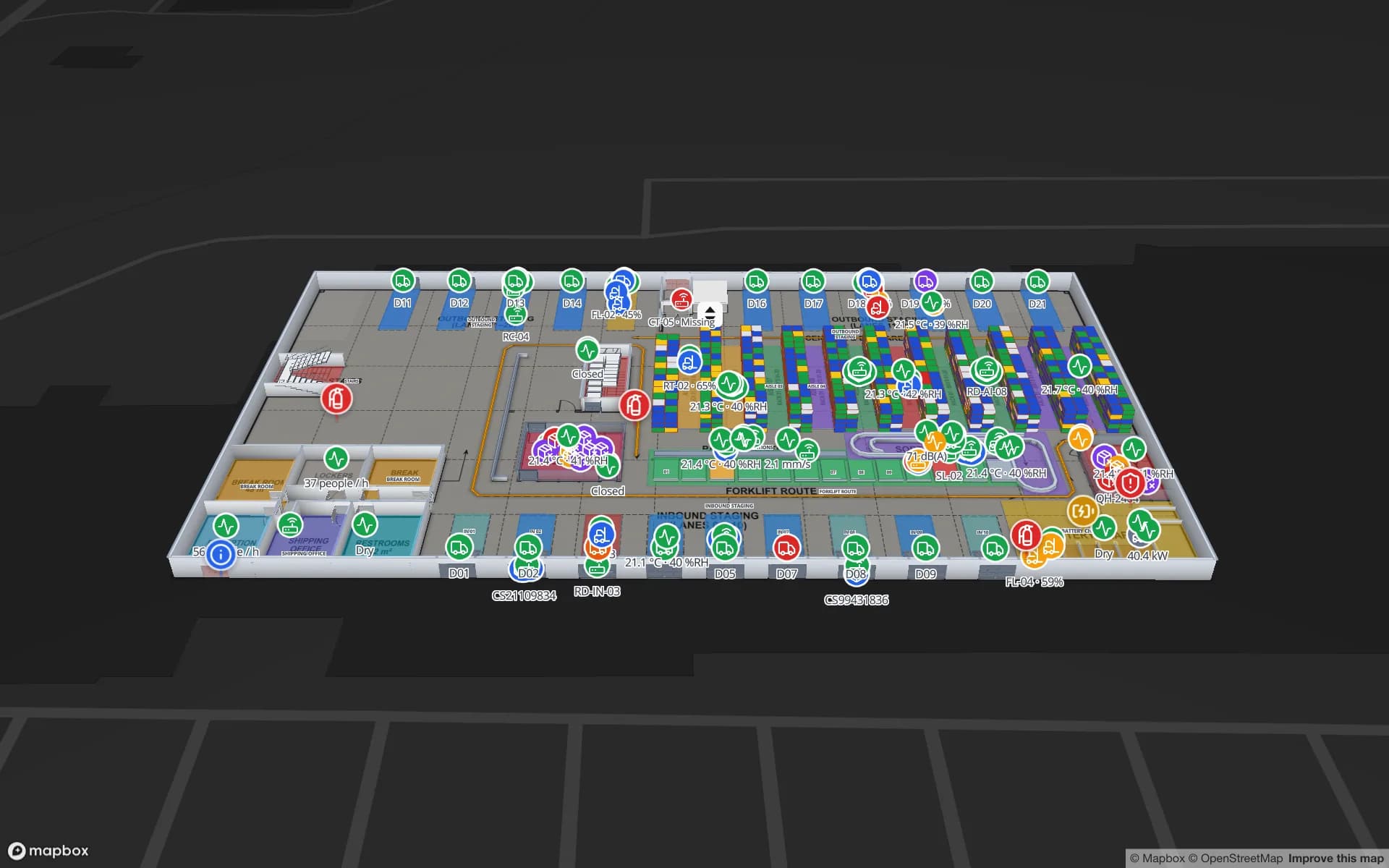
The Crestline demo shows 2,204 rack locations coloured by stock status, with pick modules and staging lanes in front of the docks. In a store or a mall, the Retail Mart demo places 85 RFID readers at the doors, escalators and lifts of a three-floor shop, with shelf stock and fridge temperatures on the same plan.

Generators, connections and plans that survive both

Many Nigerian sites run on backup generators and mobile data, so plan for a link that drops. The map itself runs in the cloud and needs a connection to view, but your readers, gateways or middleware can buffer rows and post them in batches when the link returns. A “not updated for N minutes” alert rule shows in the app which reader or sensor went quiet, so you can tell a fault from a quiet hour.

The write API takes bulk upserts over HTTPS with a bearer key (60 requests a minute per key), which suits a gateway that sends every few minutes more than one that sends every second. Where an integrator is needed, our team builds Android RFID handheld apps, WMS and ERP links and stock back offices as client projects. The product itself runs as cloud or on-premises.

Data protection and language

The Nigeria Data Protection Act was signed on 12 June 2023 and set up the Nigeria Data Protection Commission, which requires registration of data controllers and processors “of major importance”. It becomes relevant when location data can be linked to a person, such as a driver’s or picker’s badge; tags on pallets, crates and stock do not identify anyone. Your legal advisers decide what applies. A data processing agreement is available and the security page explains how data is protected.

English is Nigeria’s official language, and the app’s interface is available in English, French, Spanish, German, Arabic and Chinese. It is not available in Hausa, Yoruba, Igbo or Pidgin, but your own room names, rack codes and report titles can be written in any of them and appear exactly as typed.

Also served

Beyond Lagos, the same approach covers warehouses and depots in Abuja, Kano, Port Harcourt, Ibadan, Onitsha, Aba, Kaduna and Warri. Nothing is installed at any of them, and one workspace can hold facilities in several cities.

How Spatial Map does it

From floor plan to live map

  1. 01

    Import the plan

    A PDF, a DWG from AutoCAD R2004 to R2018 or a photo of the warehouse, depot or supply store.

  2. 02

    Draw the building

    Racks with their locations, dock doors, yards, gates, stairs and lifts; AI Map drafts, a person reviews.

  3. 03

    Connect the data

    Your WMS, RFID middleware or gateways post rows to a table, or Spatial Map polls a REST endpoint.

  4. 04

    Share and alert

    Read-only links for clients and drivers, and in-app alerts for readers that went quiet or goods staged too long.

What teams in Nigeria map first

Port-side warehouses and depots

Dock doors, yard slots and pallets staged for trucks.

FMCG distribution centres

Rack-level stock by bin, batch and days to expiry.

Supply stores for energy and industry

Tagged tools, spares and equipment with check-out history.

Supermarkets and malls

Shelf stock, RFID at the doors and fridge temperatures by floor.

See it on real demo facilities

Fictional names, real floor plans, live sensors, RFID, BLE tags and gateways — open any of them in the browser.

All 13 demo facilities

Questions from teams in Nigeria

No. It shows your own buildings, with stock, readers and sensors coloured from the data you send it. Port bookings, truck call-up tickets and customs entries stay in their own systems; keep the entry number as a field in your own table if you want to search by it.

It is context when location data can be linked to a person, for example through a staff badge. Your legal advisers decide what applies, including any registration with the Commission. Spatial Map only shows the data you send it, roles limit who sees each facility, and a data processing agreement is available.

Viewing the map needs a connection. Readings do not have to be live: your gateway or middleware can hold rows and post them in batches when the link returns, and an alert rule on “not updated for N minutes” shows what went quiet. For sites that must run on a local network, see on-premises deployment.

No. The app is available in English, French, Spanish, German, Arabic and Chinese. Names, rack codes and report titles you type can be in any language and appear exactly as typed.

No. Spatial Map is sold online and our team works with Nigerian customers remotely, by video call and through the contact form. There are no local resellers or partners.

No. Pricing is the same worldwide and in US dollars: a 7-day free trial for up to 5 facilities with no credit card, then Pro at $60 a month or $600 a year for up to 4 facilities. Larger networks are quoted as custom services.

Map your first Nigerian site this week.

Start the free trial, or send us a floor plan and a sample of your WMS, RFID or sensor data through the contact form and we will show you your own building live.