Durban · The port, Dube TradePort and the N3 corridor

RFID tracking in Durban, from the quay to the N3

Spatial Map shows RFID reads on a live 3D map of the building where they happen, so a tag at a dock door becomes a pallet in a lane, a carton in a trailer or a consignment in a build-up area. RFID tracking in Durban follows the cargo: boxes come off ships at the continent’s busiest container terminal, move through depots and cross-docks, and leave on trucks up the N3 or by air from Dube TradePort. Your readers and middleware do the reading; Spatial Map puts each read in place.

No credit card. Runs in the browser. Pro is $60/month for up to 4 facilities. Book a demo

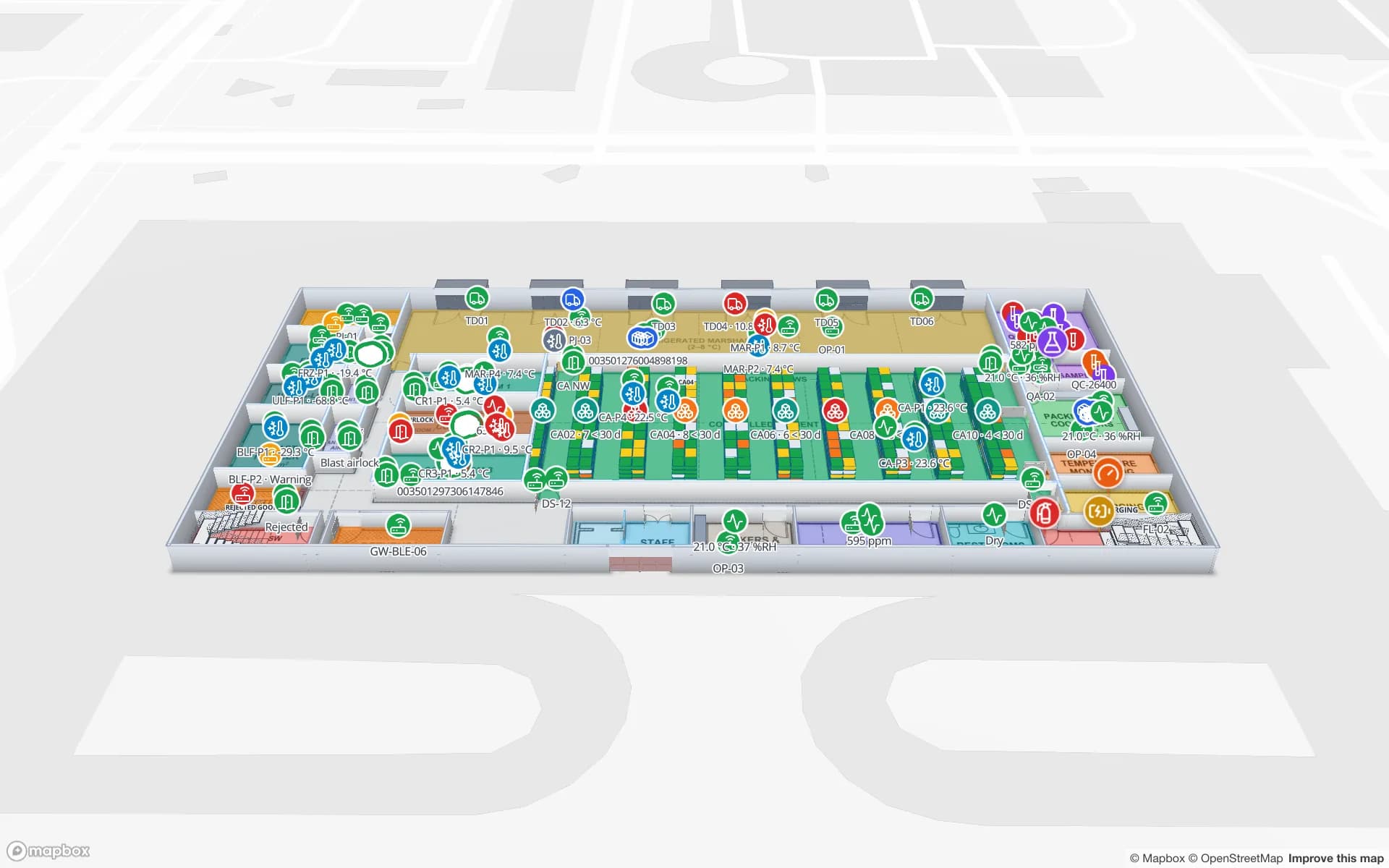
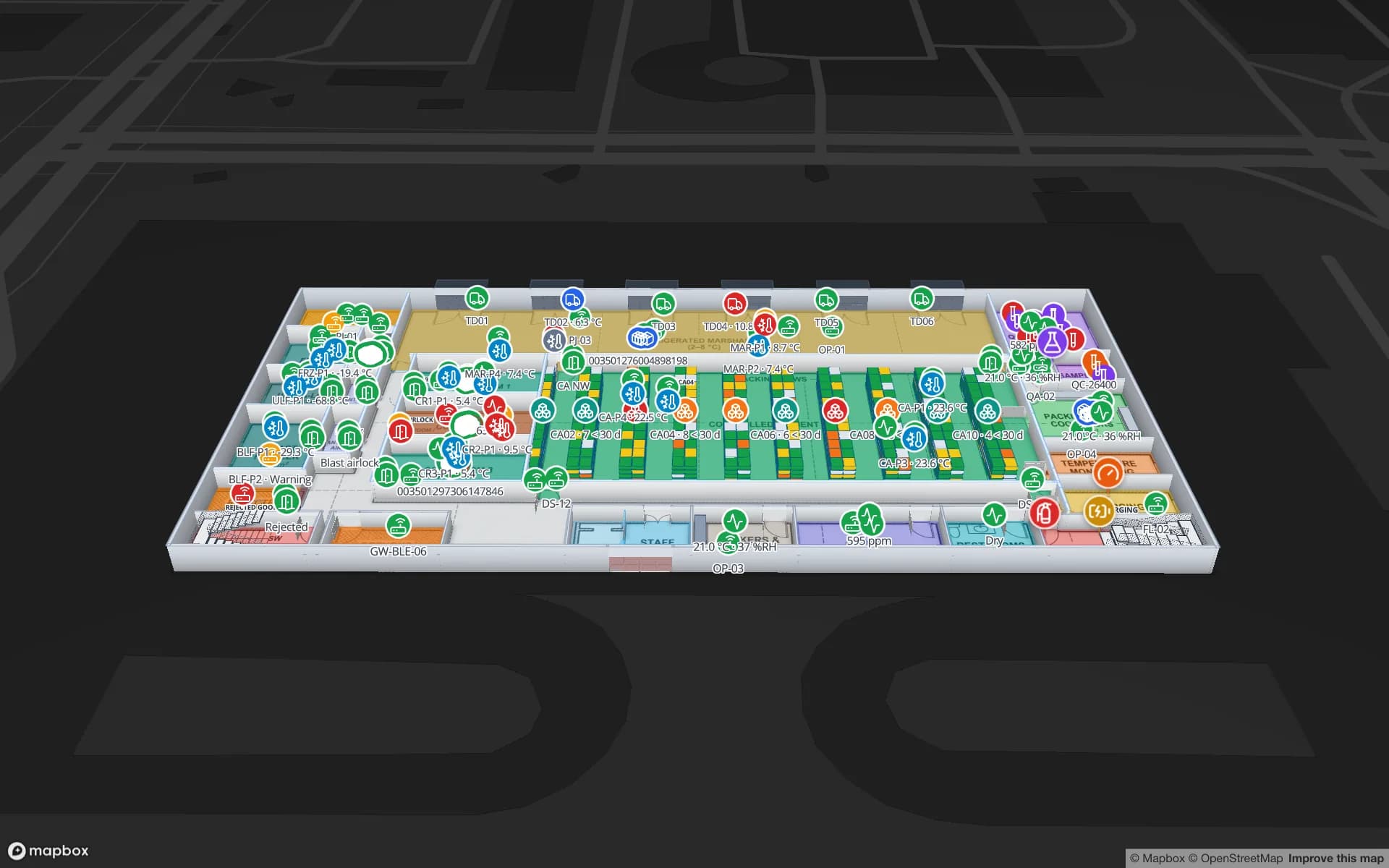
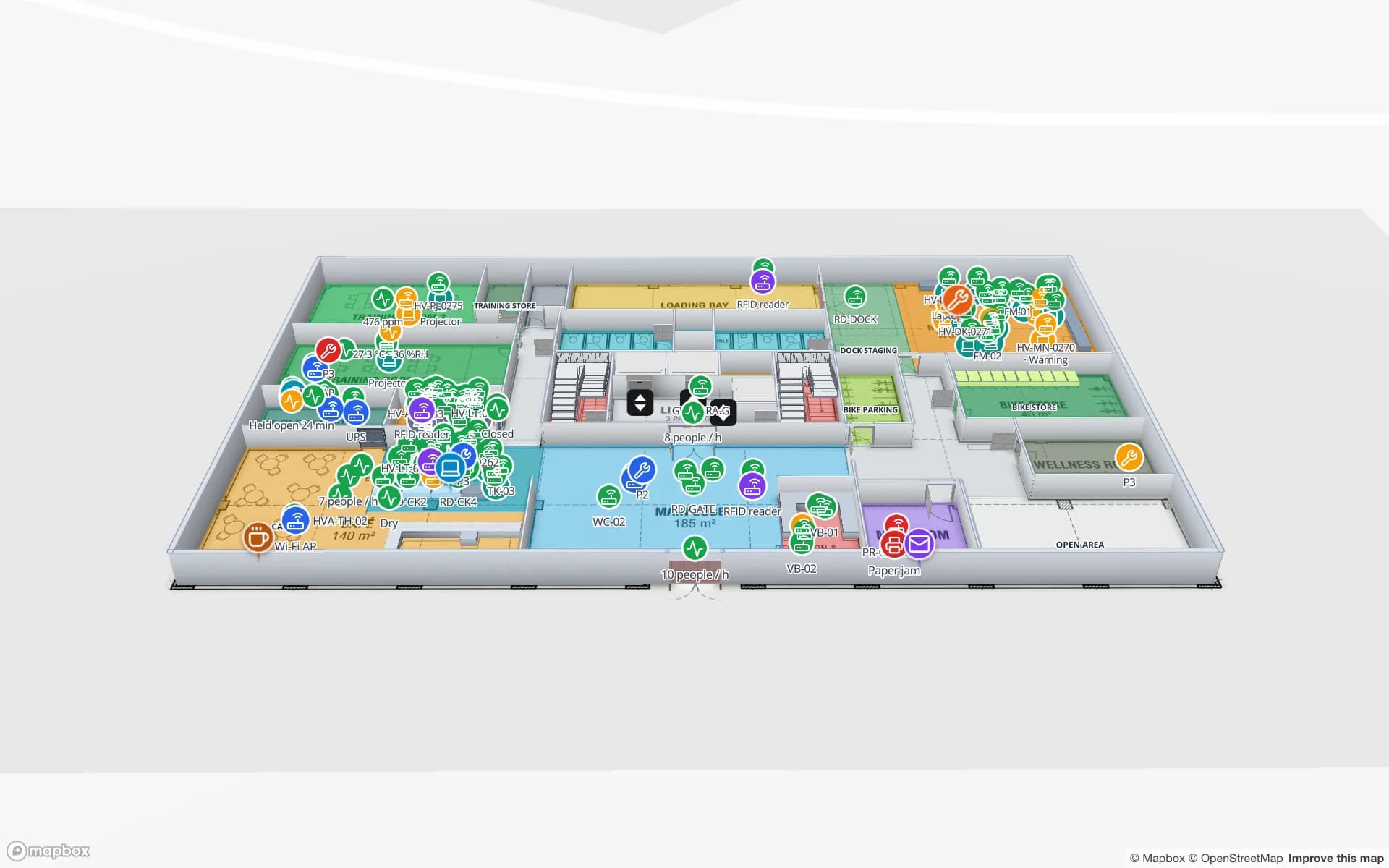
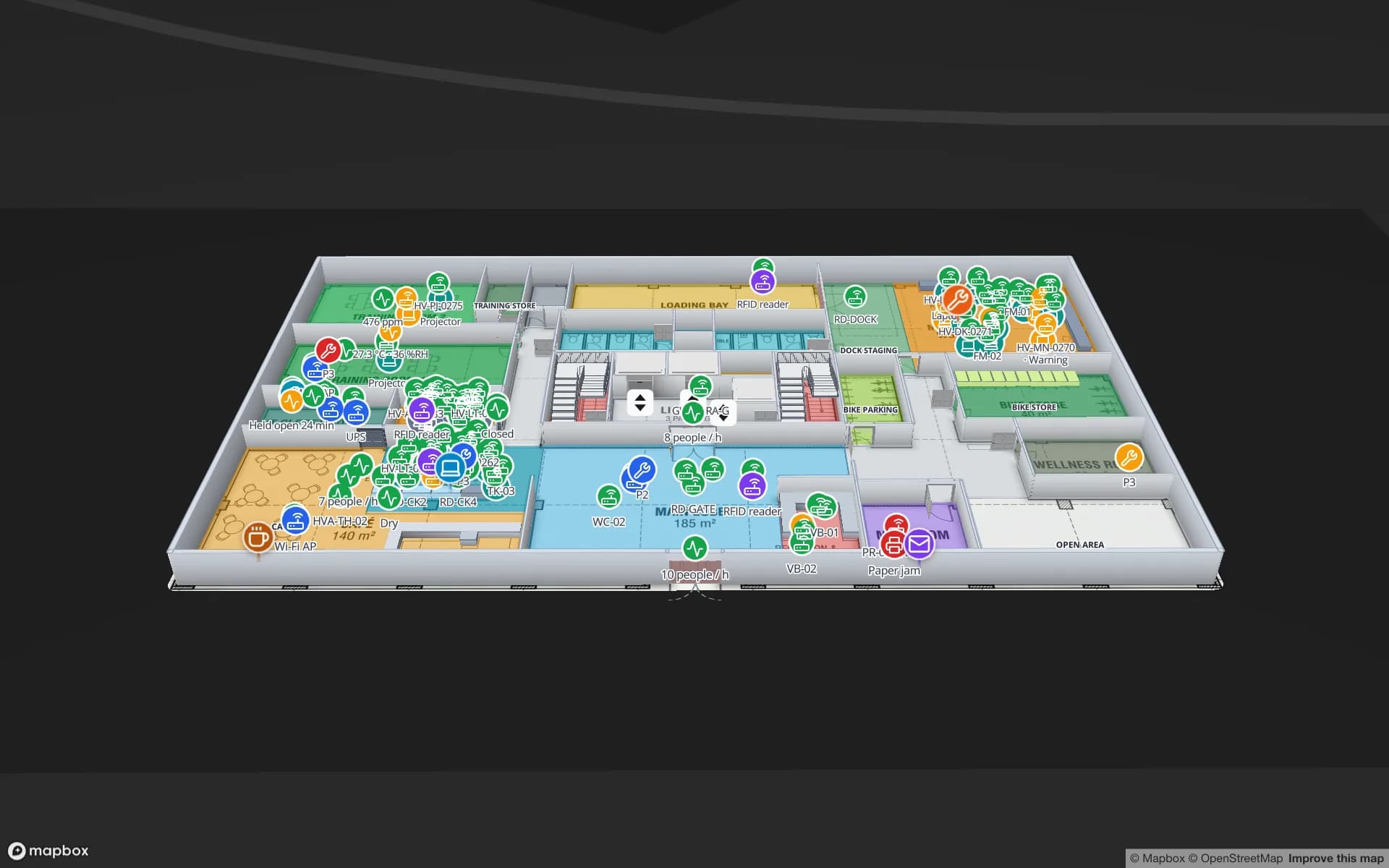
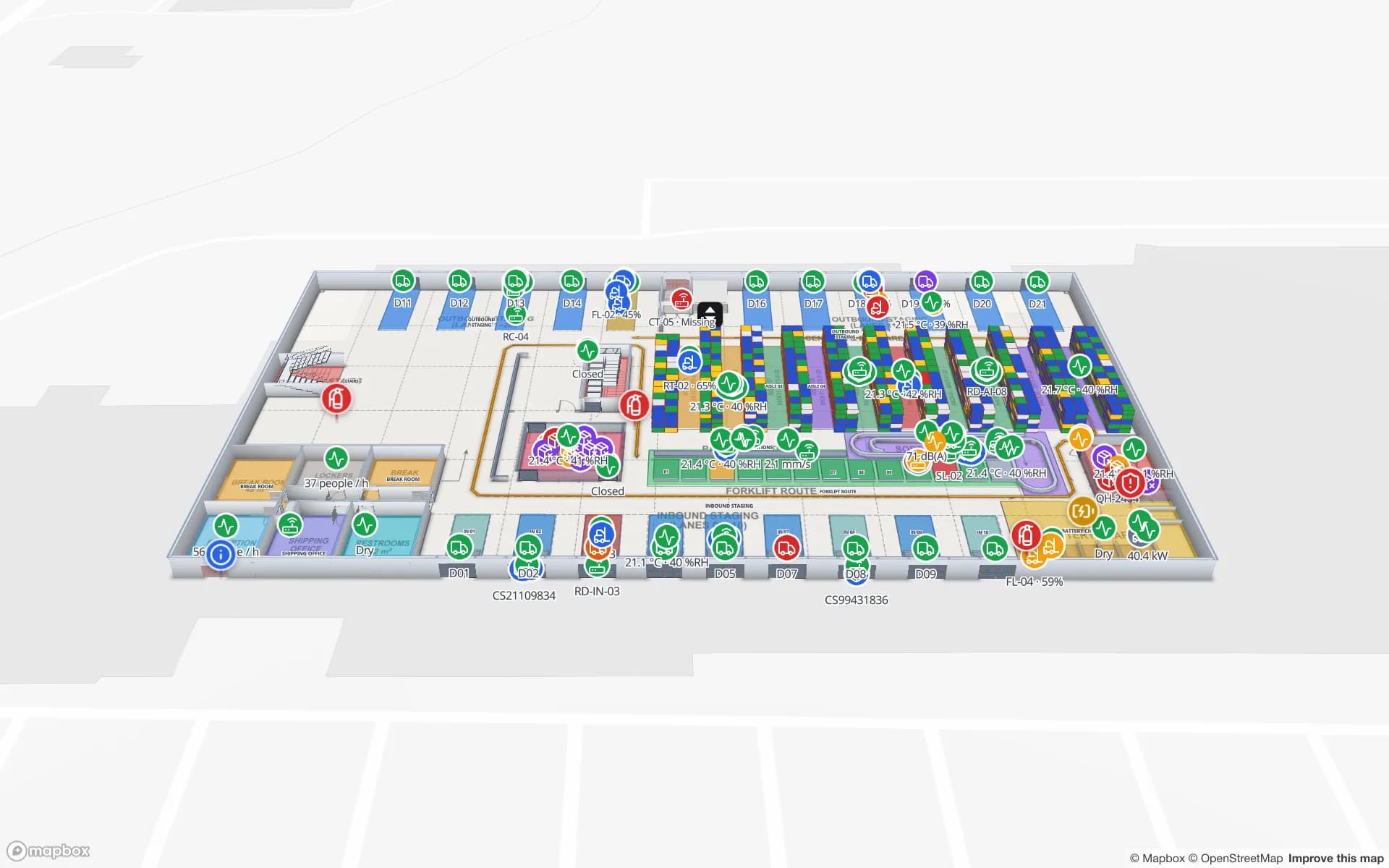
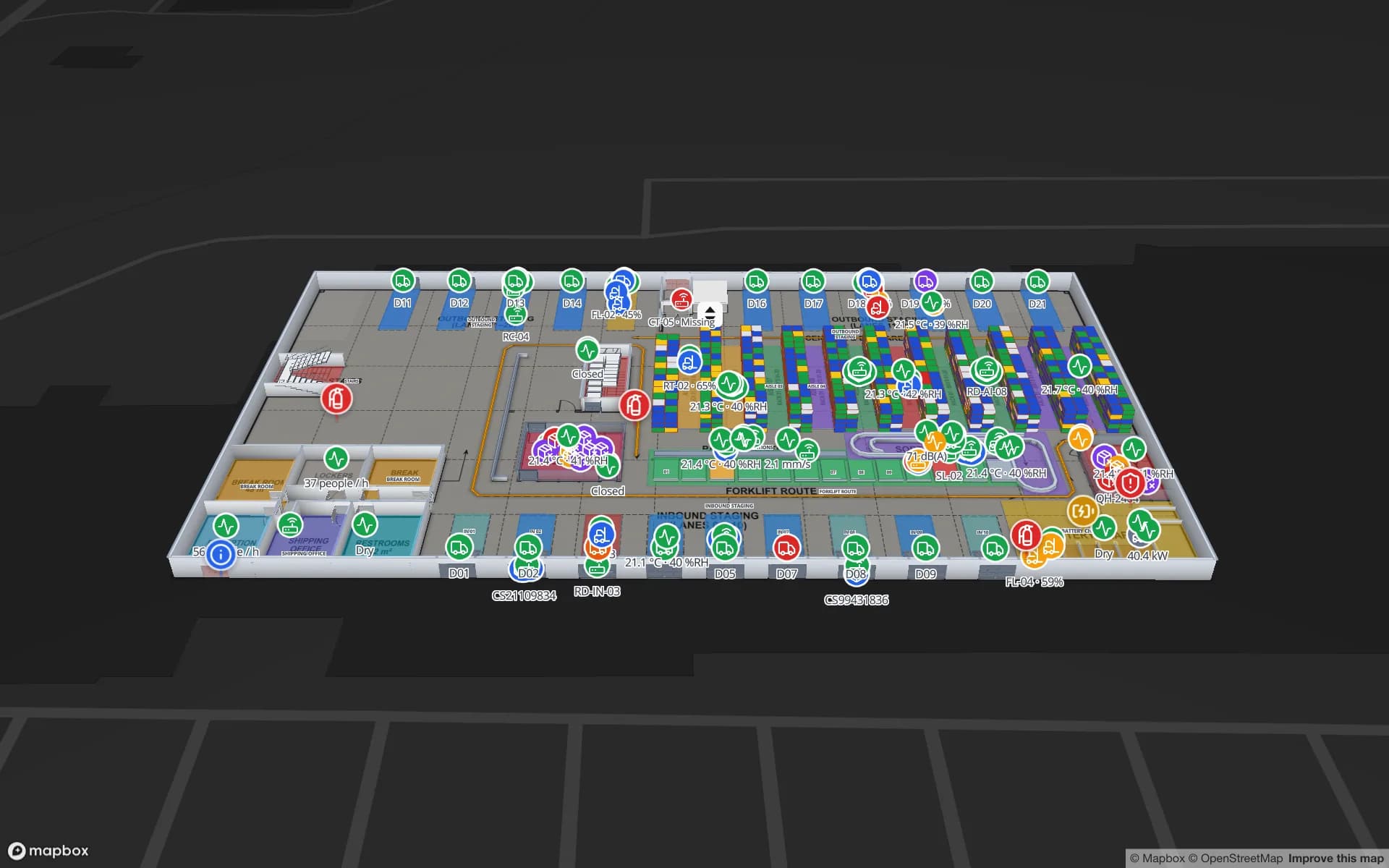
Eastport Cross-Dock Freight Hub, a cross-dock & trailer yard demo, in the Spatial Map 3D viewer with live device markers
Eastport Cross-Dock Freight Hub
Eastport Cross-Dock, a demo freight hub: 50 dock doors, 44 yard slots and 1,180 RFID pallets, with the gate and weighbridge.
Dock doors in the Eastport cross-dock demo
50
RFID pallets moving through Eastport
1,180
Yard slots in the Eastport demo
44
Free trial, up to 5 facilities, no credit card
7 days

Two piers, and the sheds behind them

South Africa’s government news agency calls the Port of Durban “the largest and busiest container terminal in Africa” and says it handles about 60 % of the country’s container traffic. The Durban Container Terminals run on two piers, Pier 1 and Pier 2, and Transnet has been replacing ageing equipment on both, including new ship-to-shore cranes, haulers and trailers. That is port business and stays in the terminal’s own systems.

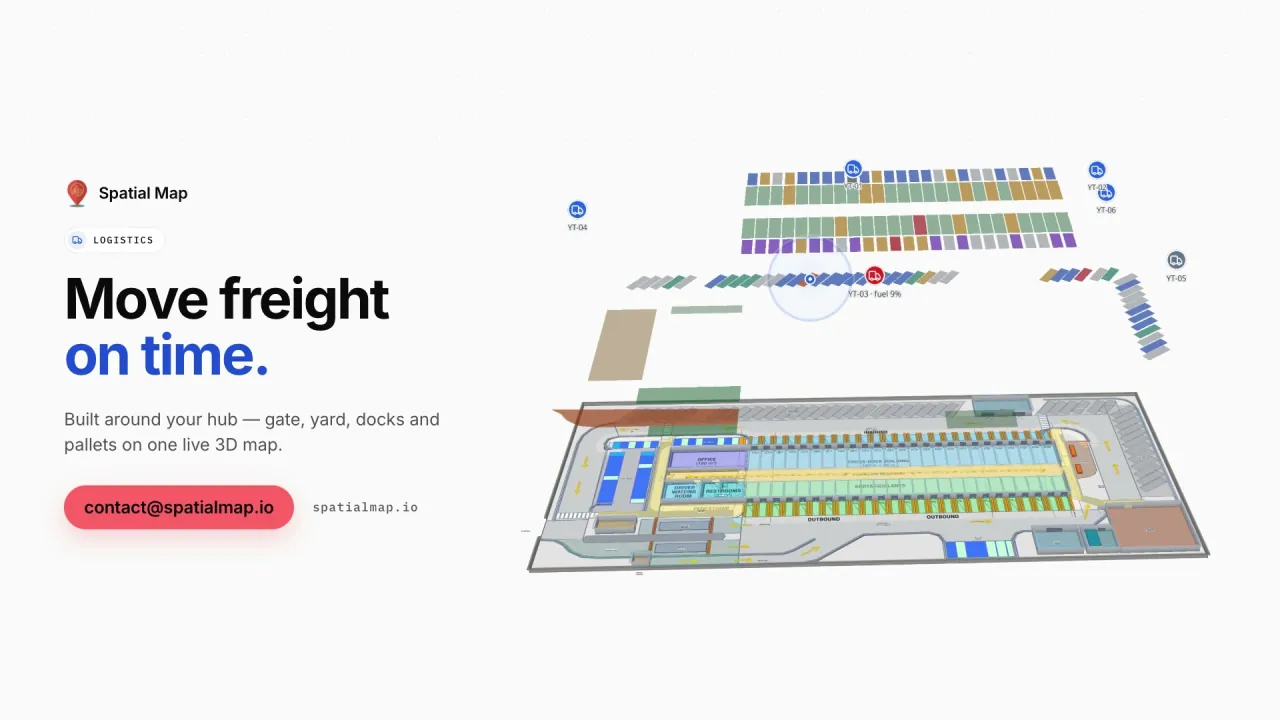
Spatial Map starts at the depot gate. Behind the port sit container depots, freight forwarders’ sheds and cross-docks that unpack boxes, break them down and restage them for road or rail. RFID portals at the dock doors read tagged cartons and pallets as they pass, and the map shows which door and lane each belongs to. The Eastport demo has 50 dock doors, 44 yard slots and 1,180 RFID pallets on one map. Spatial Map does not connect to the terminal, Customs or Transnet; it shows what your own reads say.
The N3: when the truck is the last scan

Most Durban freight for Gauteng goes up the N3. Fleetwatch reported in October 2025 that less than 14 % of long-haul freight moves by rail, that trucks swamp the N3, and that a proposed inland Port of Gauteng hub would sit on about 1,400 hectares at the junction of the N3, N12 and N17. Whatever the mix becomes, the warehouse job is the same: load the right pallets on the right trailer and know it.

RFID makes that a read, not a count. Tag each pallet at receipt, place a portal or a handheld read at the trailer door, and the map shows which pallets of an order are loaded, which are still in the lane, and which trailer is waiting at which door. A row of readers at a door is a gate; the RFID gates page explains how to place them, and RFID read rates and missed tags is worth reading before you drill. The trailer’s journey after it leaves is the carrier’s tracking, not Spatial Map’s.

Dube TradePort: air cargo and an agri-zone

Dube TradePort, beside King Shaka International Airport, lists five businesses: Dube City, Dube TradeZone, Dube AgriZone, Dube Cargo Terminal and iCONNECT. The cargo terminal is described as able to handle 100,000 tonnes a year, and AgriZone is designed for perishables, with produce trucked to the terminal’s cold storage within minutes. In May 2026 Dube announced that a second AgriZone phase was ready to open.

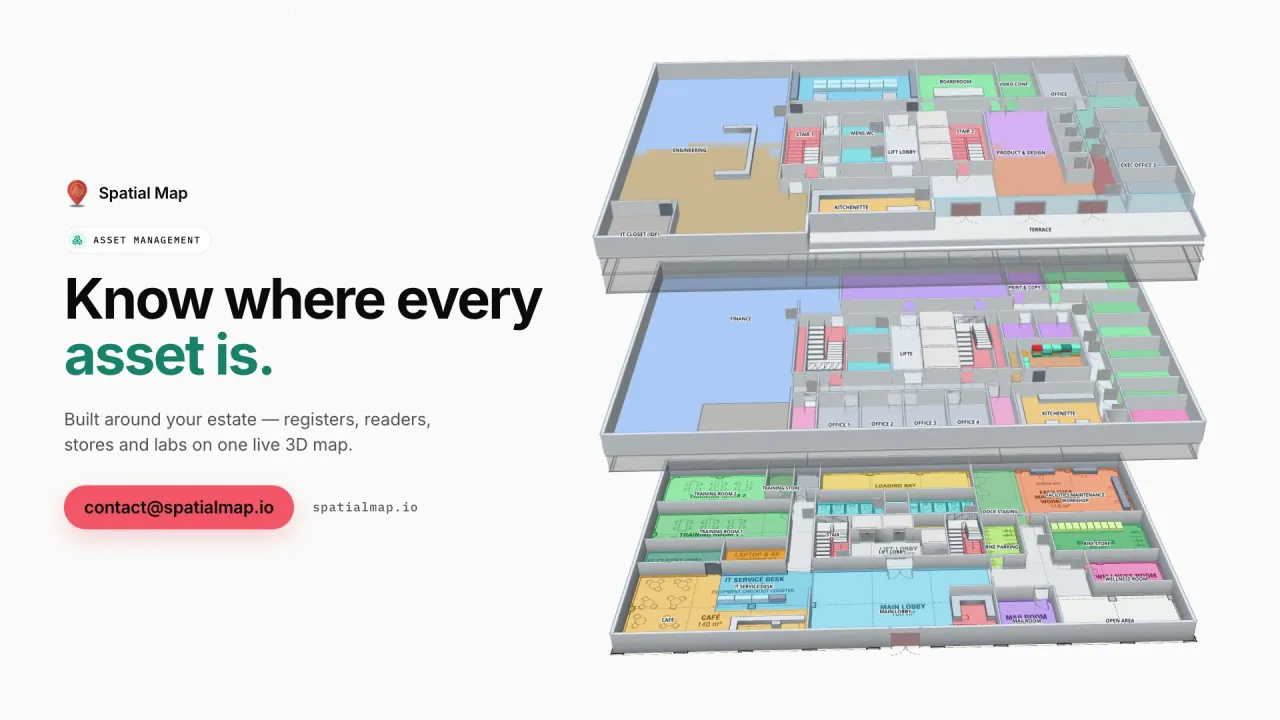
Air cargo is where item-level RFID pays back quickly: small, valuable, time-critical consignments that must be matched to a flight. Tag cartons at build-up, read them at the cool-room door and the loading area, and the map shows which consignments are staged, which are on the airside side and which are still on the floor. Cool rooms carry their temperature on the same plan; see the cold-chain solution. Spatial Map has no connection to the airport’s or Customs’ cargo systems.

Returnable assets and mixed loads

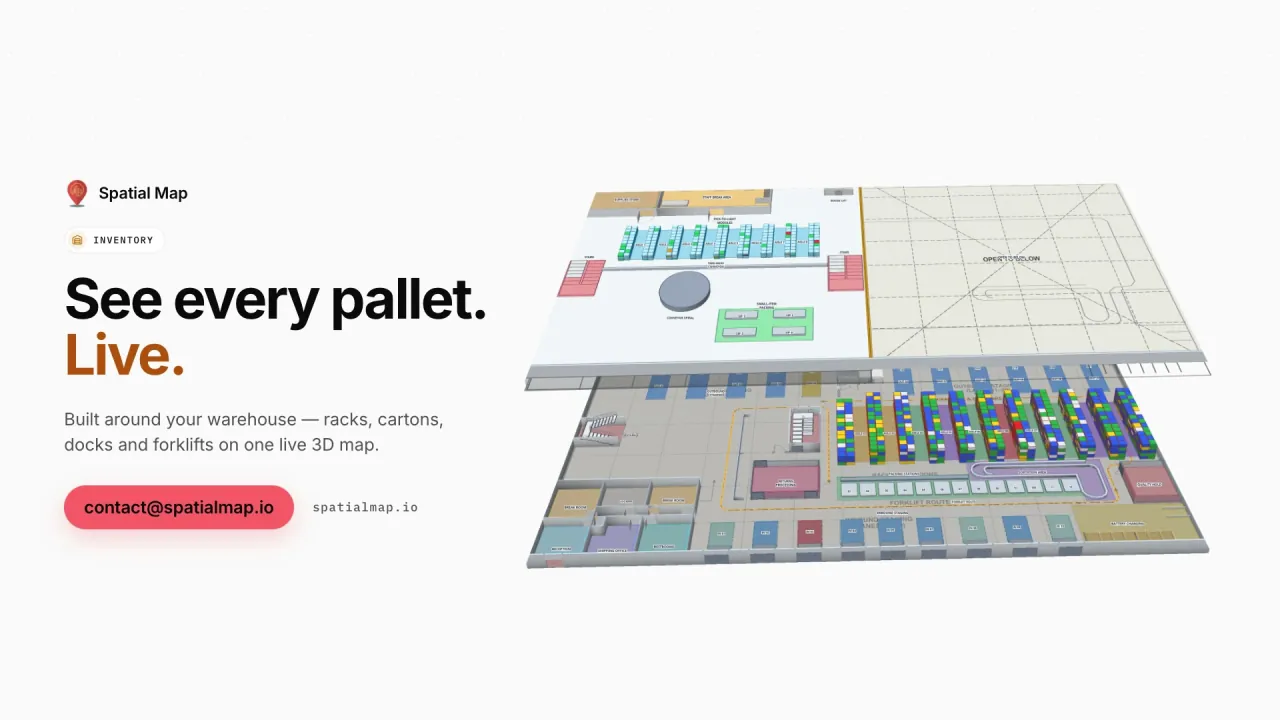
A depot that handles hundreds of consignments a day also owns the things that carry them: pallets, cages, roll containers, dollies and straps. They are cheap one at a time and expensive in bulk, and they disappear into the wrong yard. Tag them with a durable RFID label, read them at the gate and the dock doors, and the map shows how many are on site, where they sit and which customer’s are overdue.

RFID behaves differently on metal, liquids and shrink-wrapped pallets, so test tags in your own shed, at your own read distance, before you buy thousands. The post on RFID tags for metal, liquids and apparel lists what to check, and rolling RFID out in a warehouse explains how to pilot one door first.

Services for teams in Durban

Where Durban teams usually start depends on the building:

Also served nearby

The same approach covers depots and factories in Jacobs, Mobeni, Prospecton and Isipingo, warehouses in Pinetown and Cato Ridge, and Pietermaritzburg and Richards Bay further out. The map opens in a browser, so nothing needs installing at any of them.

How Spatial Map does it

From the depot gate to the trailer door

  1. 01

    Pick one door

    The trailer door where a wrong load costs most, or the receiving door where boxes first enter your control.

  2. 02

    Map doors, lanes and bays

    Upload the plan or photo, let AI Map draft the floor, and name read points the way your middleware names them.

  3. 03

    Connect the reads

    Portals, handhelds or your WMS post rows to a table, or Spatial Map polls a REST endpoint; CSV is enough for a first test.

  4. 04

    Add door and silence rules

    In-app alerts for pallets staged too long, a short load before the trailer leaves, or a reader that stopped reporting.

What Durban teams track

Container depots and cross-docks

Dock doors, yard slots and pallets staged for the right trailer.

Air-cargo build-up areas

Cartons by consignment and cool room, with the latest temperature.

Distribution centres

Rack-level stock and pallets read at the dock door.

Pallets, cages and returnable equipment

Where each asset sits, how long it has been out and what is overdue.

See it on real demo facilities

Fictional names, real floor plans, live sensors, RFID, BLE tags and gateways — open any of them in the browser.

All 13 demo facilities

RFID tracking in Durban — questions we get

No. It has no link to terminal, Customs or rail systems. It shows what happens inside your own building from your own RFID reads, WMS and sensors, so it sits beside the port-level systems rather than replacing them.

Inside your building, yes: pallets read at the trailer door appear against that door and order, and pallets not yet read show as still on the floor. Once the truck leaves, tracking is the carrier’s; Spatial Map does not follow vehicles on the road.

Yes. Rooms take the colour of their latest temperature from a table, consignments show in the room that holds them, and an in-app alert fires when a room is out of range for the minutes you set. Spatial Map does not issue certificates, so your quality system remains the record.

Yes. Each depot is a facility in one workspace; group them in a solution and give managers the Viewer role or a read-only share link. Each building keeps its own floor plan and reader table.

No. Spatial Map is sold online and our team works with South African customers remotely, by video call and through the contact form. There are no local resellers or partners.

In US dollars, the same worldwide: a 7-day free trial for up to 5 facilities with no credit card, then Pro at $60 a month or $600 a year for up to 4 facilities. RFID hardware, if you ask us to source it, is quoted per project and is not part of the subscription.

Map one Durban dock door before the next truck.

Start the free trial and open the Eastport demo, or send us a depot plan and a sample of your RFID reads through the contact form.