Mexico City · Central de Abasto, AIFA and the CTT corridor

Warehouse tracking in Mexico City, from the Central de Abasto docks to the northern logistics belt

Spatial Map does warehouse tracking in Mexico City on a live 3D map of each building: every bin coloured from your WMS stock, dock doors and staging lanes showing what is arriving, RFID-tagged pallets at the door that last read them. The city’s freight is split across three places that rarely look alike: a wholesale market that never closes, two airports that now share the cargo, and a belt of logistics parks in the north of the Valley of Mexico. One workspace can hold all of them, and the app is available in Spanish.

No credit card. Runs in the browser. Pro is $60/month for up to 4 facilities. Book a demo

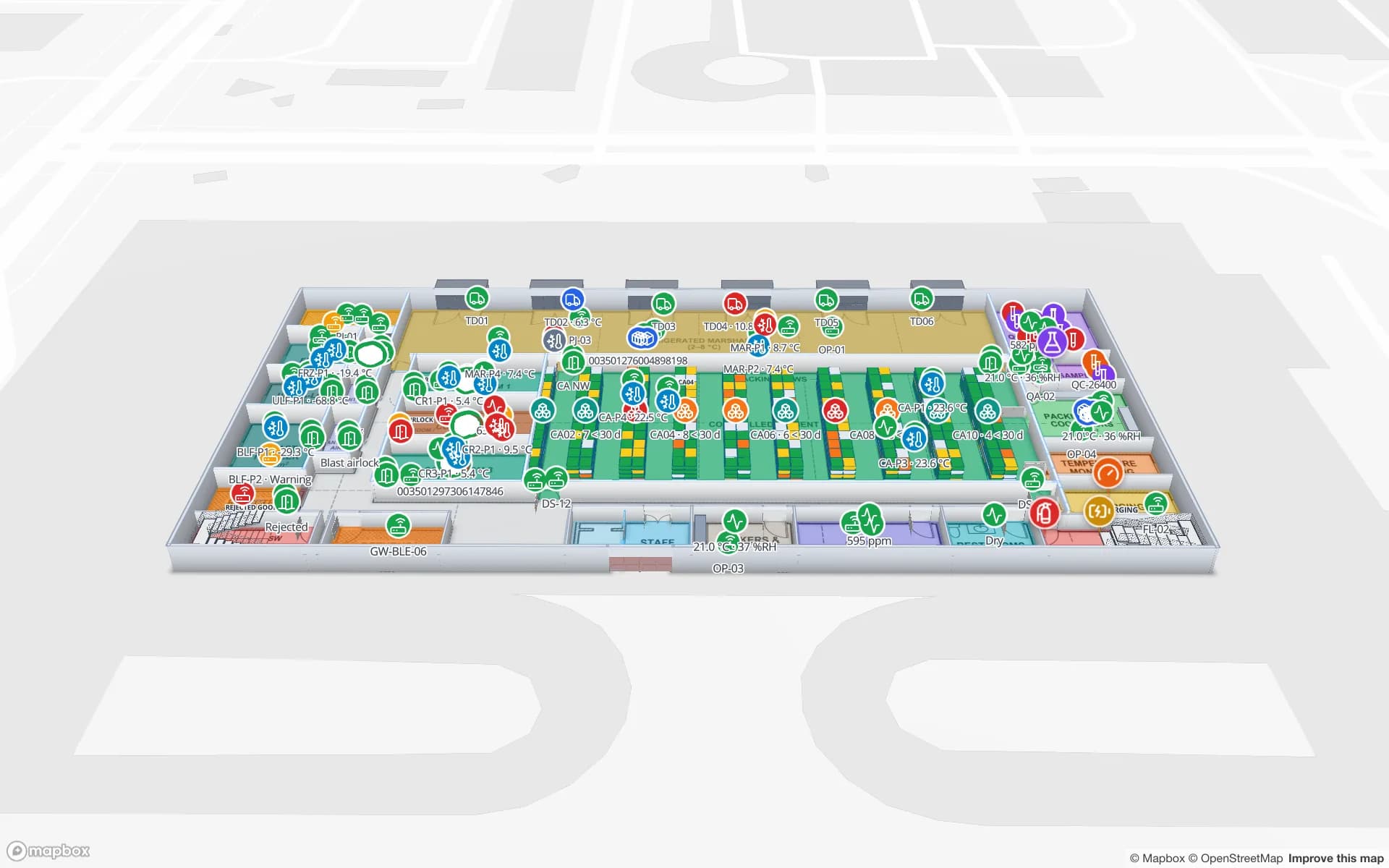
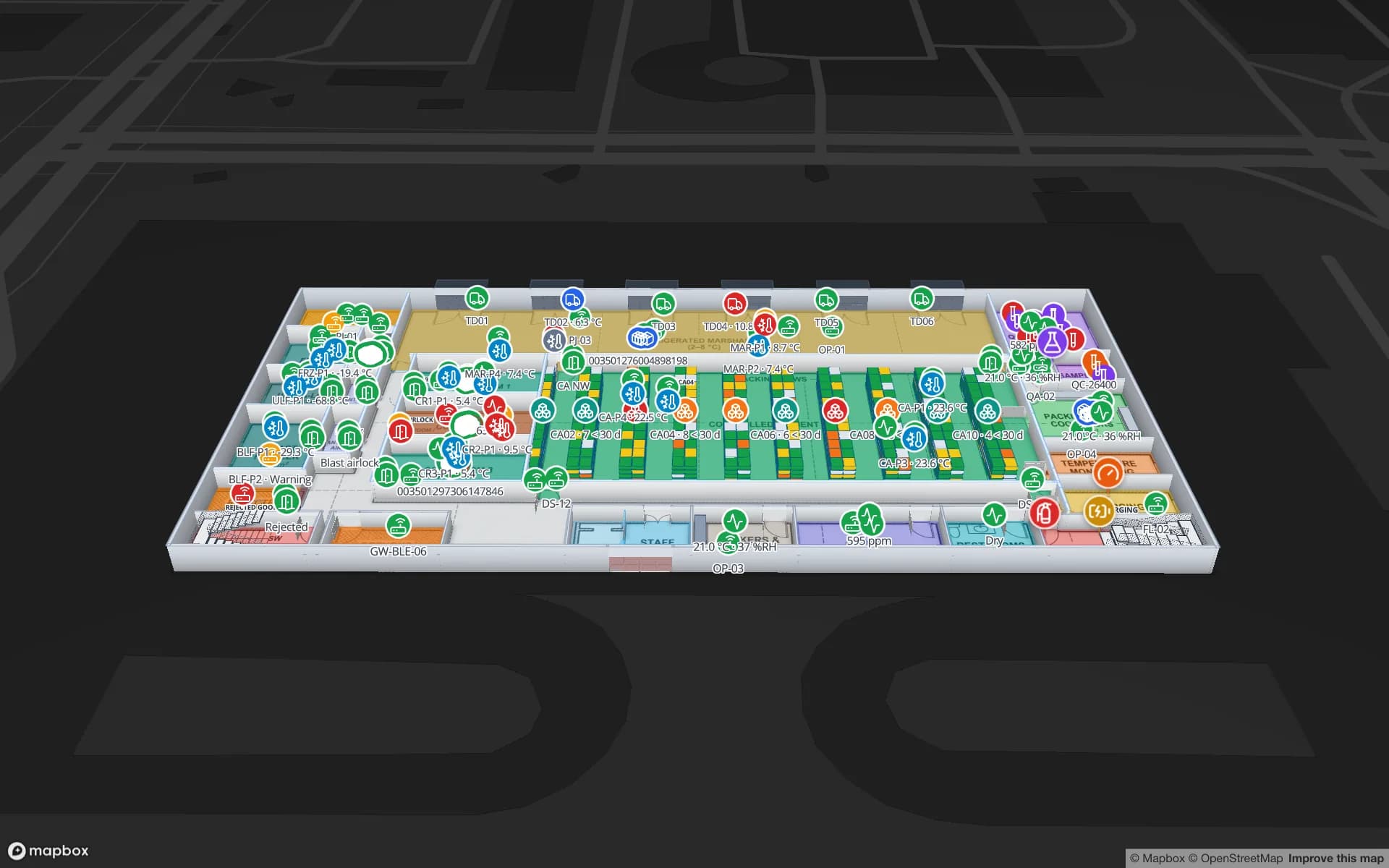
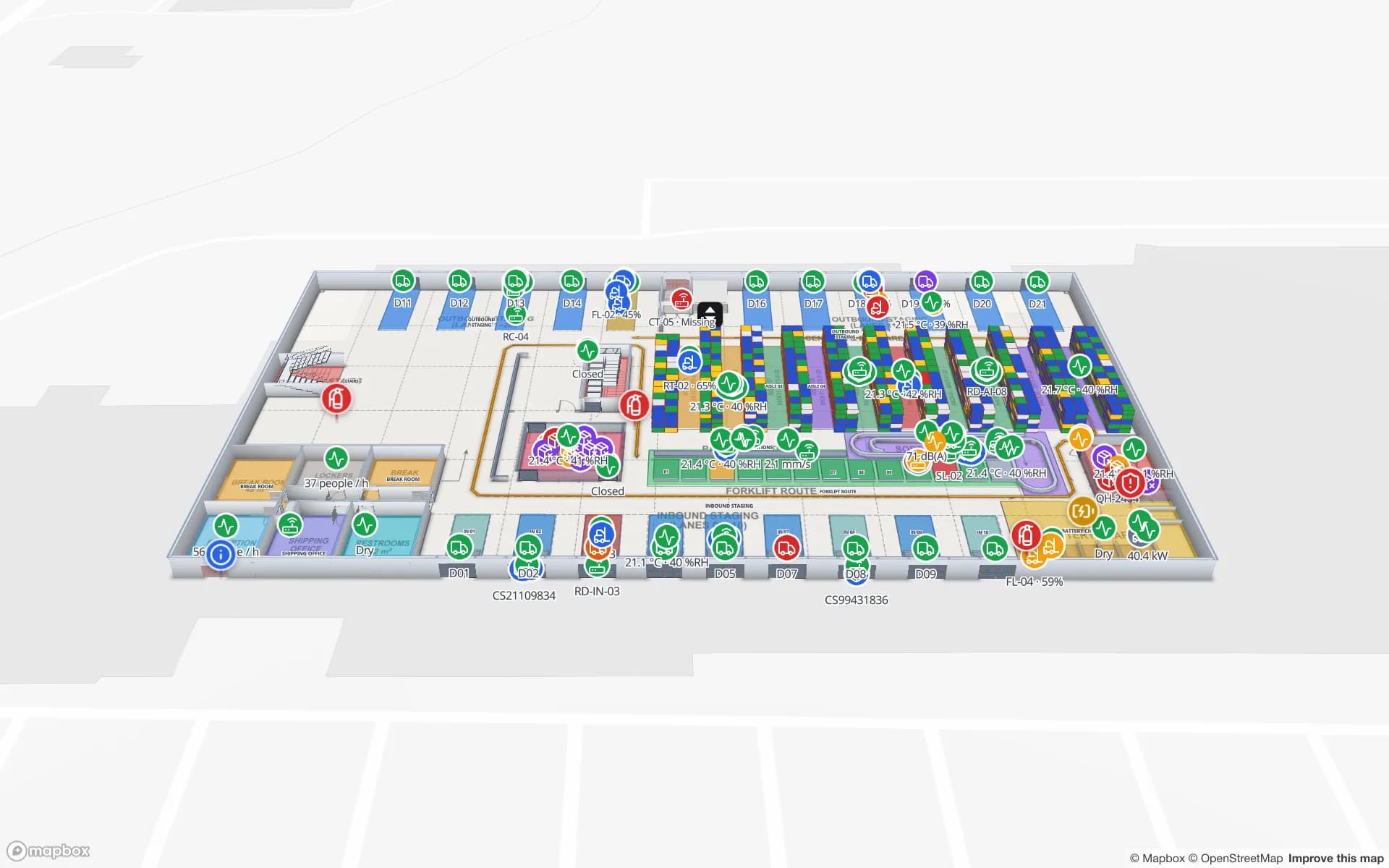
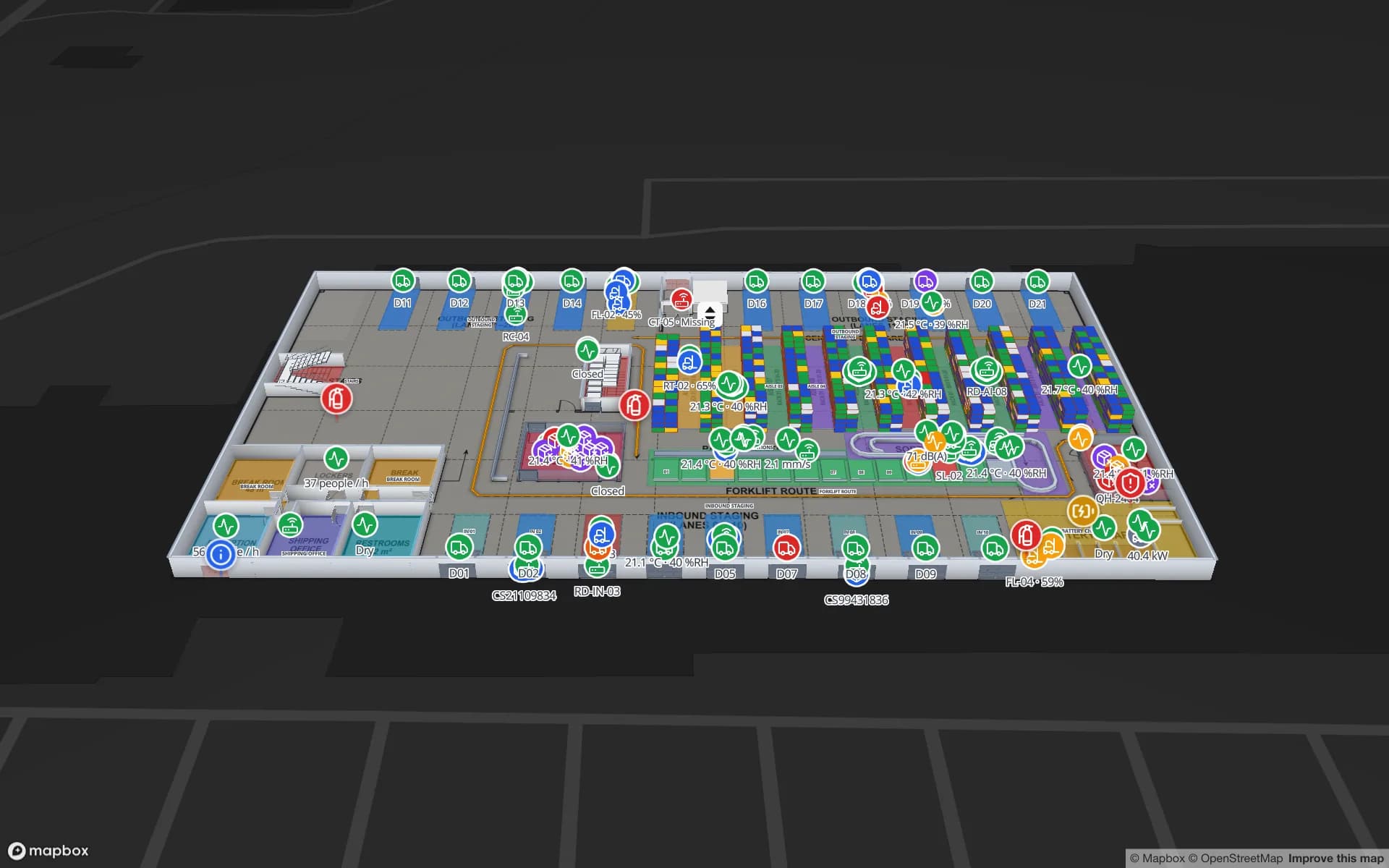
Crestline Fulfillment Center, a fulfillment center demo, in the Spatial Map 3D viewer with live device markers
Crestline Fulfillment Center
Crestline Fulfillment Center, a demo warehouse: 20 racks with 2,204 locations coloured by stock status, dock doors, staging lanes and the trailer yard.
Rack locations coloured by stock in the Crestline demo
2,204
Dock doors in the Eastport cross-dock demo
50
How often alert rules are checked, with alerts shown in the app
15 s
Free trial, up to 5 facilities, no card
7 days

The Central de Abasto: a warehouse district that never closes

The Central de Abasto covers 327 hectares in the borough of Iztapalapa, and the city’s own visitor portal gives its hours as 24 hours a day, every day, with the heaviest supply and unloading in the early morning. Behind its streets are the individual warehouses and cold rooms of wholesalers, and the pattern in each is the same: pallets and crates arrive before dawn, are split by customer, and leave within hours.

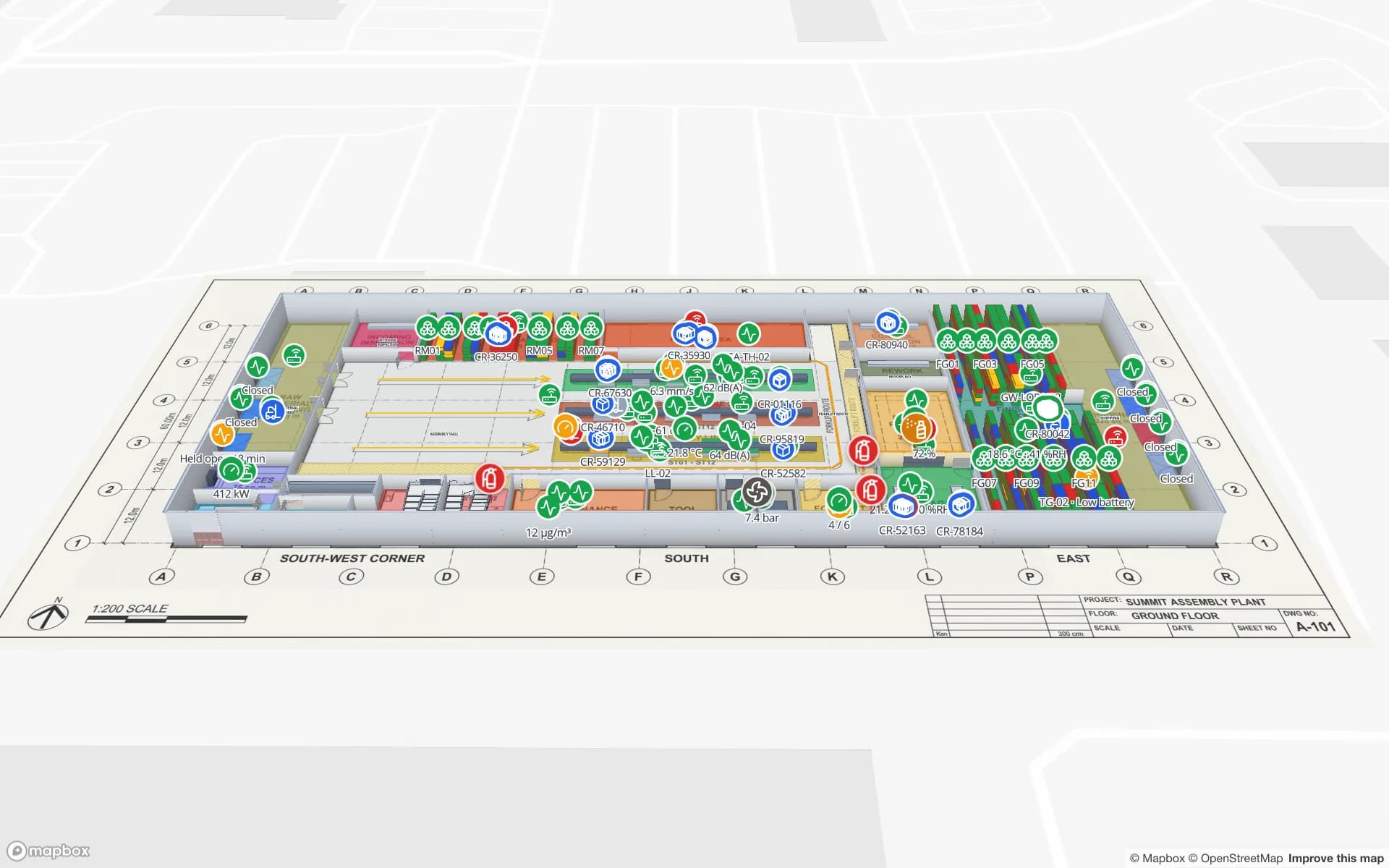
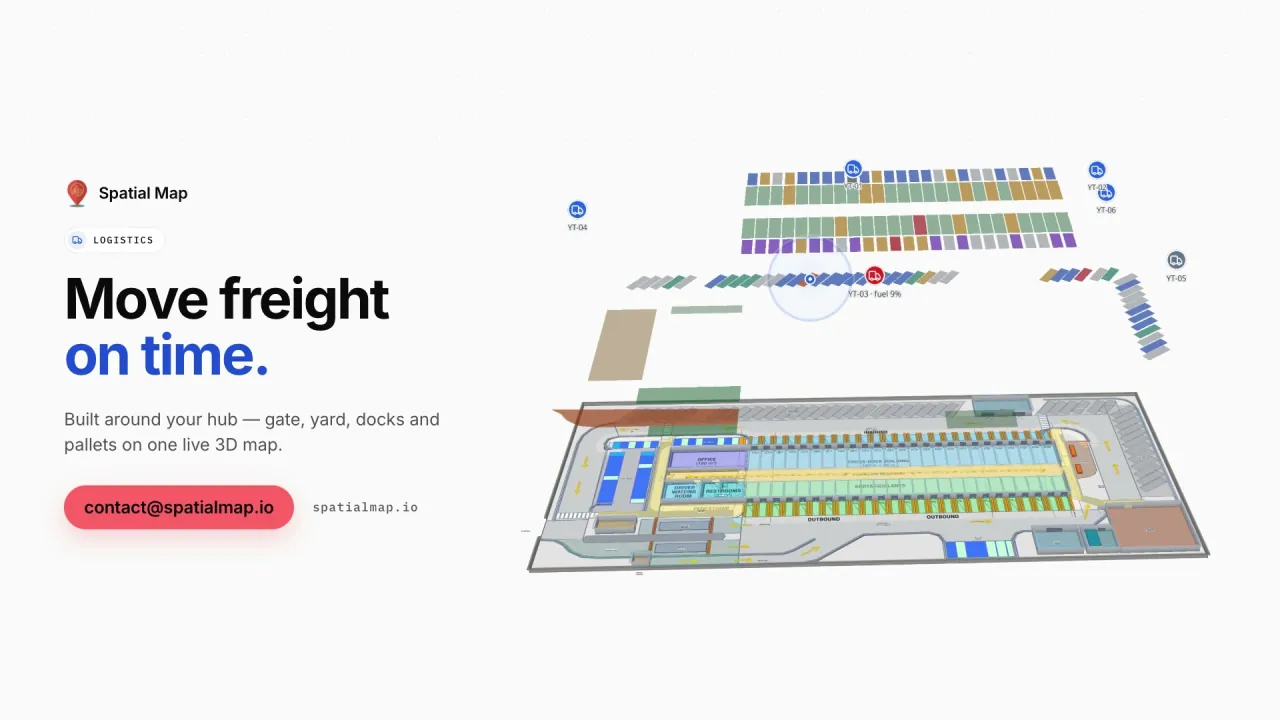
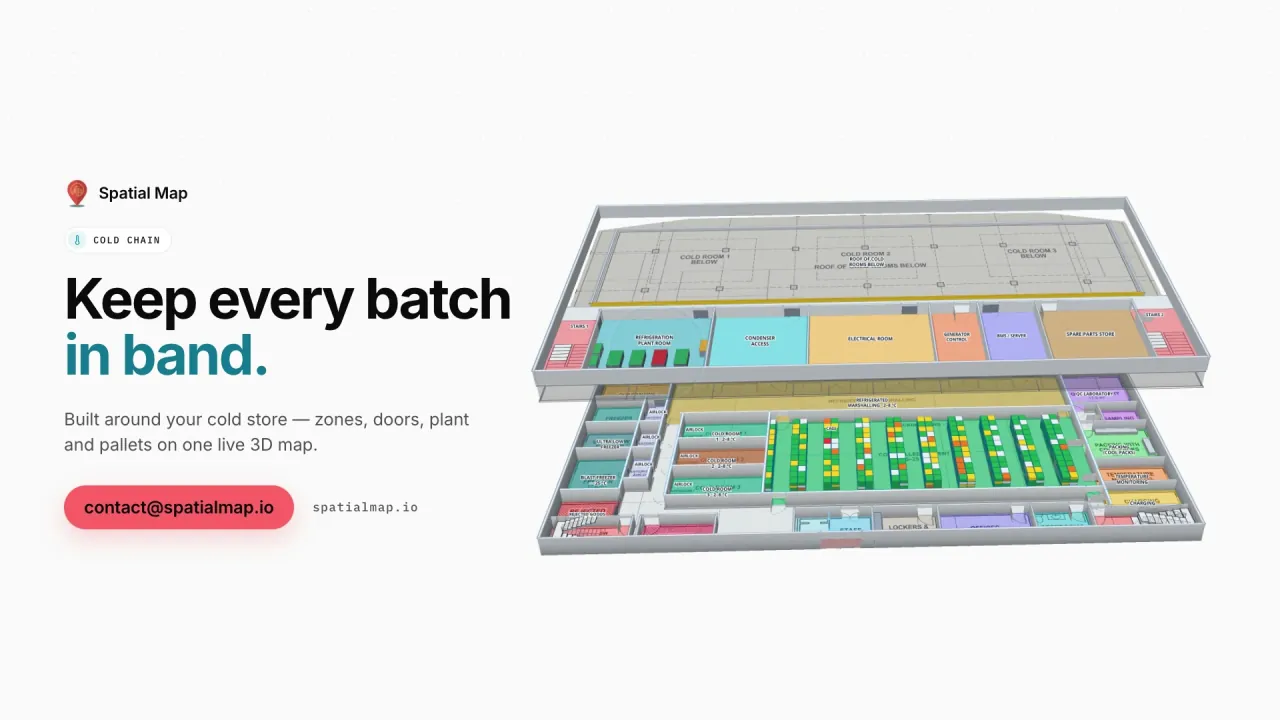
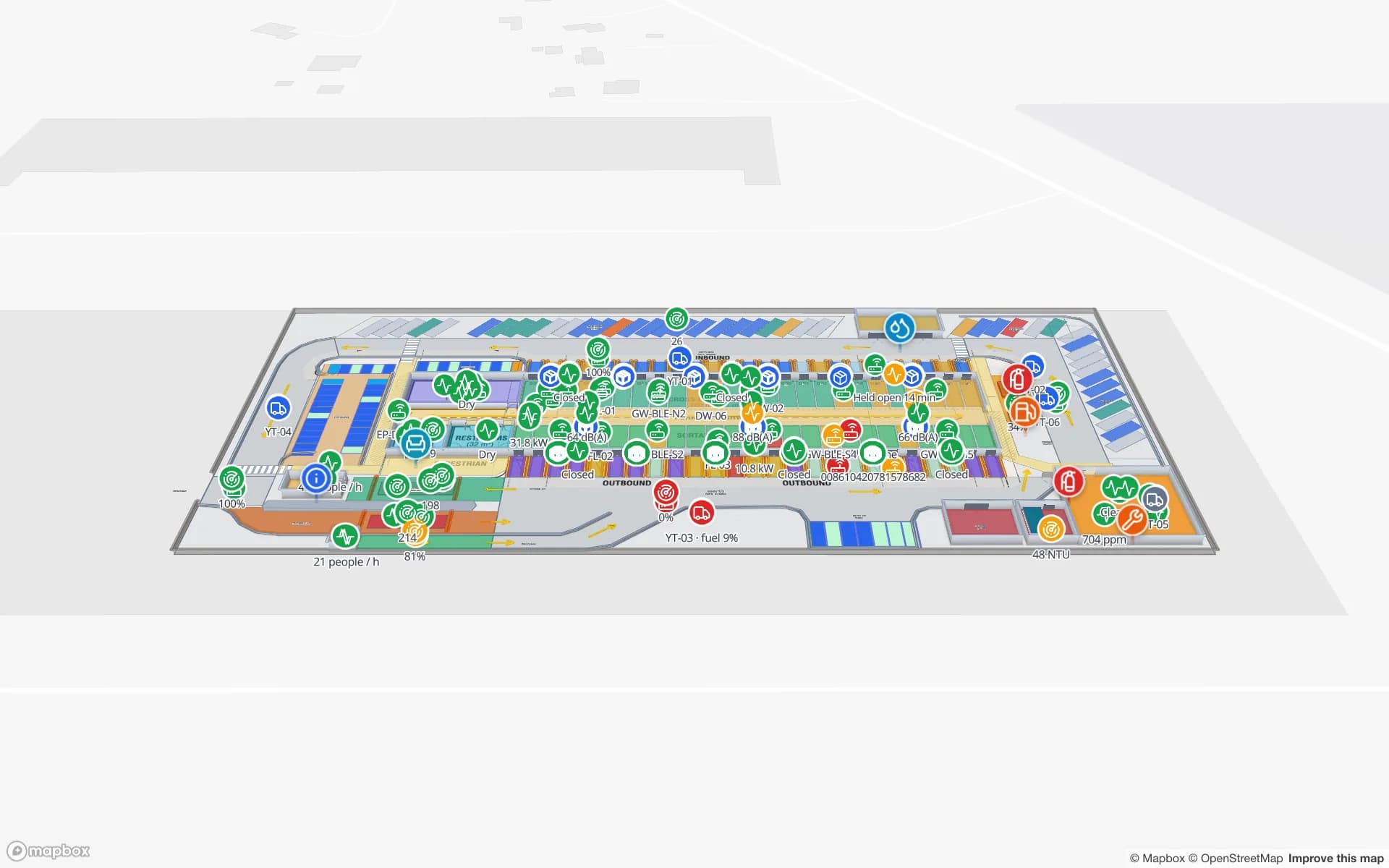
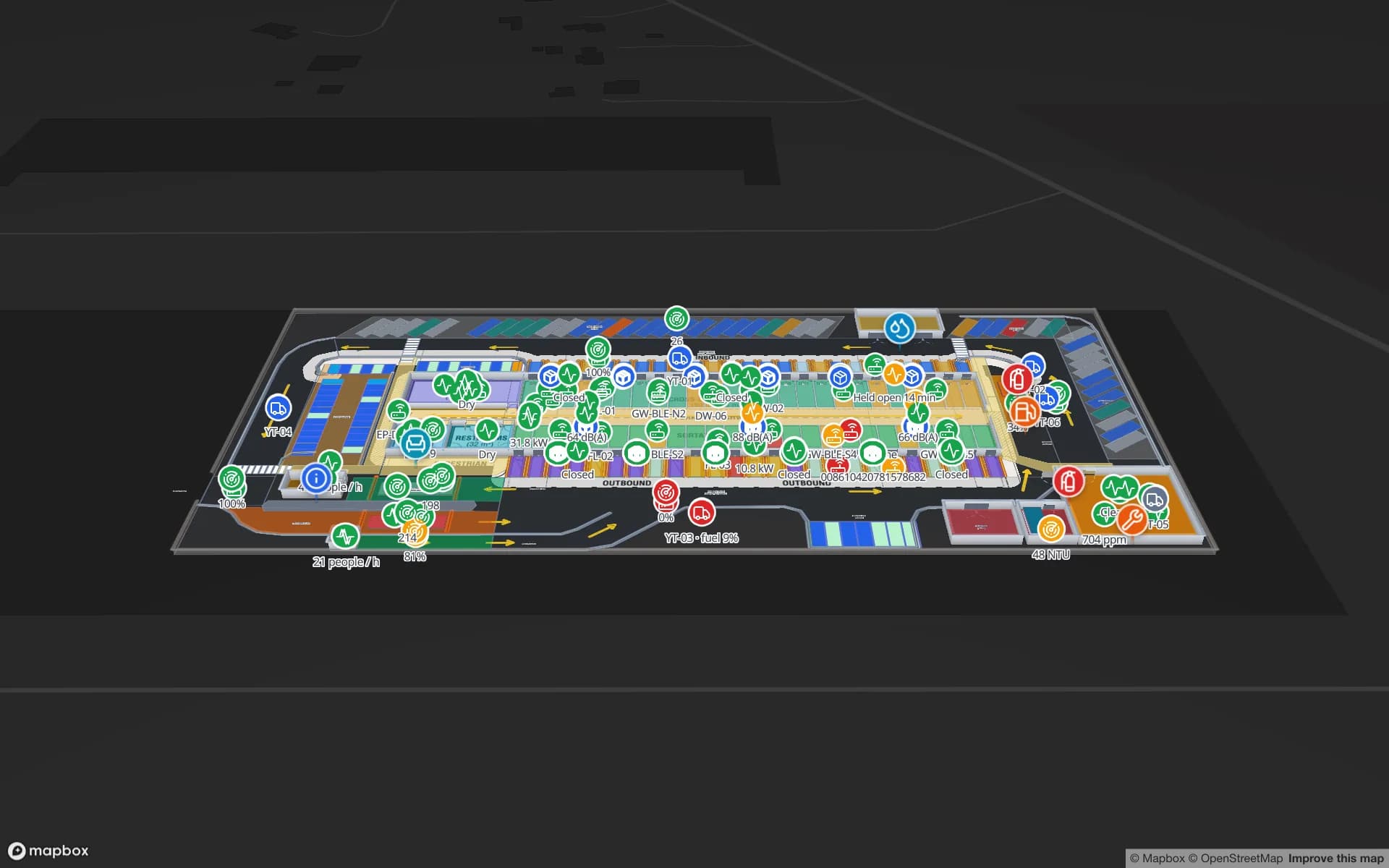
That rhythm is what a live map handles well. Draw the bodega once, with its docks, lanes and cold rooms; show each incoming pallet or returnable crate by the door that last read it; and let a count rule raise an in-app alert when a lane holds more than the day’s plan. Crates and roll cages are the asset to watch, because they leave with the customer and come back late, so a table of crates by owner and status, coloured on the plan, shows who has them. A heatmap of dock reads shows which door is jammed at 5 a.m., and the History player replays the morning for the review. The Eastport Cross-Dock demo shows 50 dock doors and 1,180 RFID pallets; the Polar Pharma demo shows cold rooms tinted from their probes. Spatial Map does not connect to the market’s own systems; it shows your building.
Two airports, one decree: where the cargo went

The Felipe Ángeles International Airport (AIFA) in the State of México opened on 21 March 2022. A federal decree in force from 3 February 2023 then ended cargo operations at the Mexico City international airport (AICM), saying the airport was saturated; airlines that carry cargo on the same aircraft as their passengers were exempt. The decree did not name AIFA, but AIFA was widely reported as the destination, the deadline for cargo operators to move was extended by a later decree, and the transport ministry subsequently said the cargo airlines had completed the move.

For a freight forwarder or a consolidator in the capital, that means a shed that was planned around one airport may now serve another, with new truck routes, new cut-off times and different staging lanes. Re-drawing a warehouse should not take a quarter. Upload the building’s PDF or a photo of the plan, let AI Map draft docks, racks and areas for a person to review, and move staging lanes on the map as the flow changes. The cross-dock yard guide shows how doors and trailers become one picture. Spatial Map does not connect to airport, airline or customs cargo systems; it shows what your own reads and WMS say.

Cuautitlán, Tultitlán and Tepotzotlán: the northern logistics belt

Most of the Valley of Mexico’s big modern sheds are not in the city itself. Trade press, quoting a broker’s market survey, calls the corridor of Cuautitlán, Tultitlán and Tepotzotlán, known as the CTT corridor, the main logistics hub of the north of the metropolitan area, holding about three-quarters of its logistics inventory, and describes Tepotzotlán as one of its most active submarkets. Cuautitlán Izcalli, on the México–Querétaro highway, hosts distribution parks that feed the city’s e-commerce parcels.

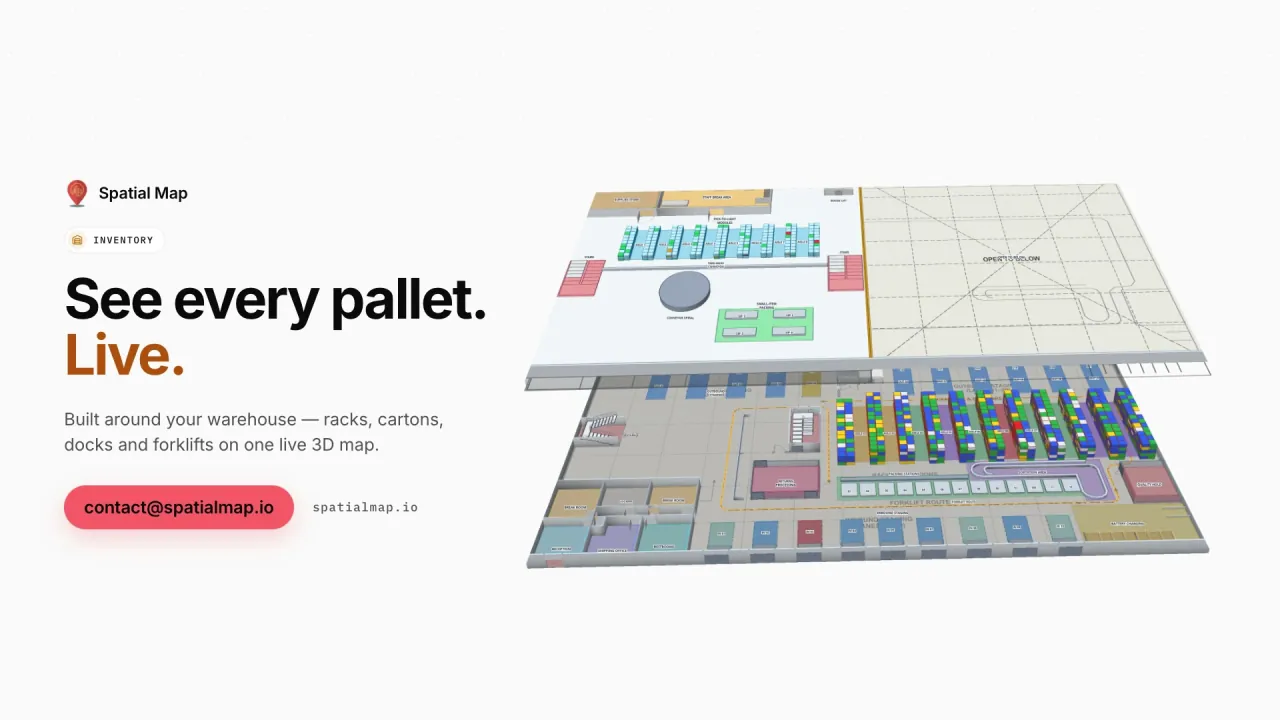
A distribution centre of that kind carries several thousand pick locations on a few levels of racking, and the useful picture is stock: which bins are empty, which are full, which are blocked. The Crestline Fulfillment demo shows 2,204 rack locations coloured by stock status, with pick modules, staging lanes in front of the docks and the trailer yard. Connect the WMS with the table write API, a polled REST endpoint or CSV and Excel uploads; the CSV bin inventory guide turns a stock export into a coloured rack map in an afternoon, and integrating a WMS covers the live version.

Counting without closing: RFID in a metropolitan warehouse

With the stock spread over so many sheds, the cheapest improvement is often the count. A fixed reader at each dock door and a handheld for the rest turn a full count from a weekend into a walk-through; the map shows which aisles have been read and which have not. RFID stock counting explains the method, and how RFID stock counting works sets out what readers and tags can and cannot see. Test tags on your own cartons first, especially on plastic crates and metal shelving.

Services for teams in Mexico City

Where teams in the capital usually start:

  • Distribution centres and forwarders begin with inventory tracking: stock by bin from the WMS, then RFID at the dock doors.
  • Market and wholesale warehouses often add asset tracking for crates, roll cages and forklifts so they are found before the early-morning peak.
  • Perishable lines get temperature monitoring beside the stock map; RTLS and UWB is for large yards only.
  • If you have no readers or tags yet, our team can source RFID readers, antennas and tags on request, quoted per project, with warranty and device support from the manufacturer: see hardware and demo kits on request.
  • Where a team has no developers, our team builds an RFID inventory system, handheld apps and ERP or WMS integrations as client projects. The product runs as cloud or on-premises.

Also served nearby

The same approach covers Tlalnepantla, Naucalpan, Ecatepec, Tizayuca, Zumpango and Toluca around the capital. Nothing needs to be installed at any of them: the map opens in a browser.

How Spatial Map does it

From the market dock to the northern shed

  1. 01

    Pick one building

    A wholesaler’s bodega, a forwarder’s shed or a distribution centre, wherever a lost pallet costs most.

  2. 02

    Map doors, lanes and bins

    Upload the plan or a photo, let AI Map draft the floor, and name bins and read points the way your WMS names them.

  3. 03

    Connect stock and reads

    Your WMS and RFID middleware post rows through the table write API, a polled REST endpoint or CSV and Excel uploads.

  4. 04

    Add peak-hour rules

    In-app alerts for lanes over plan, crates overdue and readers that stopped reporting before the early shift.

What teams in Mexico City track

Wholesale and market warehouses

Docks, crates and cold rooms through the early-morning rush.

Air-cargo consolidators and forwarders

Dock doors, yard slots and pallets staged for the right flight or truck.

E-commerce and distribution centres

Every rack location coloured from WMS stock, staging lanes and packing output.

Plants supplying the metropolitan area

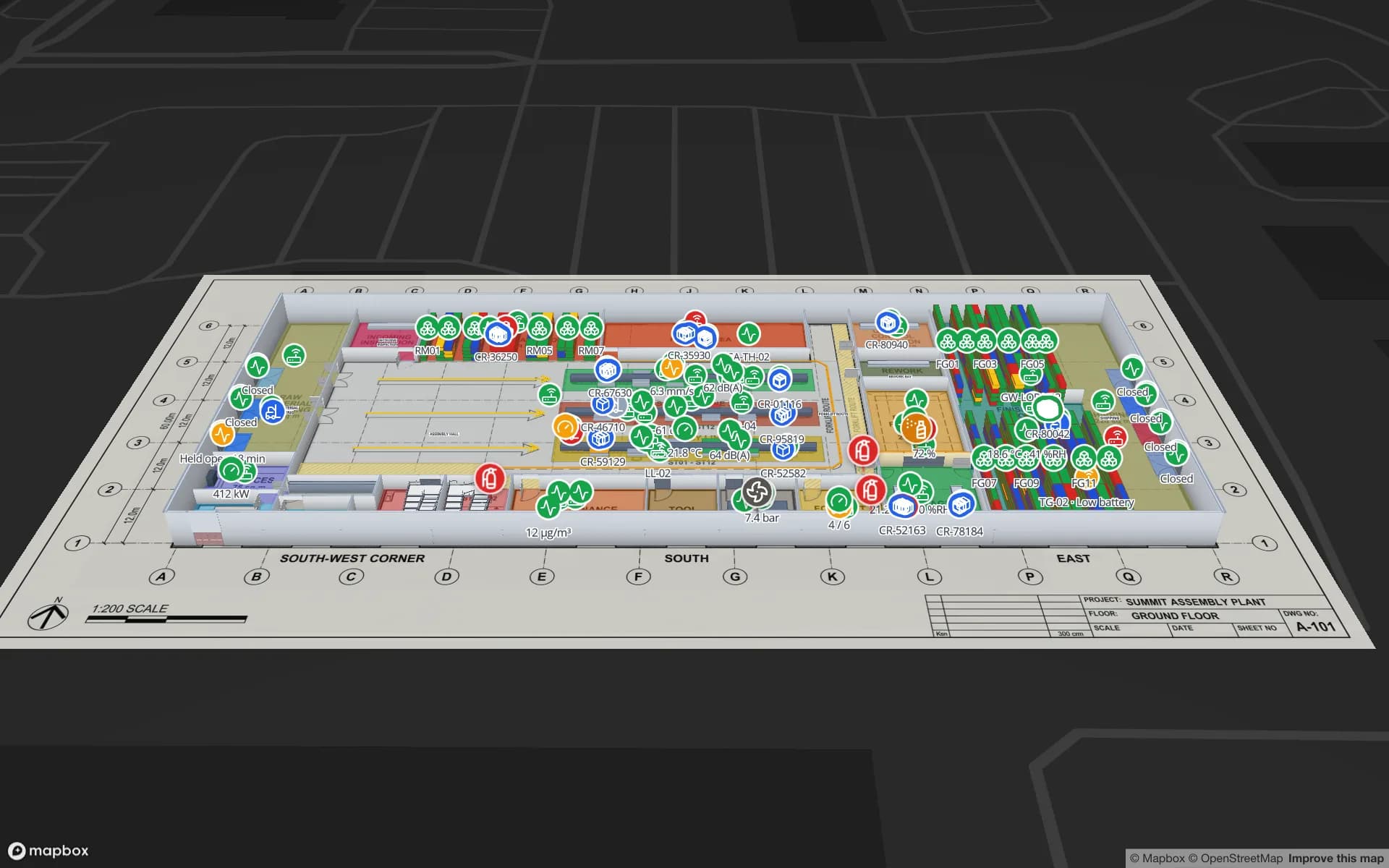
Raw material and finished-goods racks by location.

See it on real demo facilities

Fictional names, real floor plans, live sensors, RFID, BLE tags and gateways — open any of them in the browser.

All 13 demo facilities

Warehouse tracking in Mexico City — questions we get

No. It has no link to AICM, AIFA, airline, customs or tax systems. It shows what happens inside your own building, from your own RFID reads, WMS or ERP and sensors, so it complements the airport-level systems rather than replacing them.

Yes. Photograph a sketch of the outer walls, docks and racks, or measure and draw it in the editor, and align the picture at real size. AI Map can draft from the picture and you correct what it gets wrong. Our services team can also do the mapping remotely for a fixed price.

Yes. Keep each building as its own facility in one workspace, group them into a named solution, and give each its own table of stock; a report or a share link can cover several. Spatial Map does not move stock between systems; your WMS stays the record.

RFID can make counts much faster, but how much depends on tags, materials and layout, so test on your own cartons. The map shows which aisles have been read and which have not; the count itself comes from your readers and WMS.

Yes. Spanish is one of six interface languages and each user picks their own. See the services page in Spanish.

No. Spatial Map is sold online and our team works with customers in Mexico remotely, by video call and through the contact form. There are no local resellers or partners.

In US dollars, the same worldwide: a 7-day free trial for up to 5 facilities with no card, then Pro at $60 a month or $600 a year for up to 4 facilities. RFID hardware, if you ask us to source it, is quoted per project and is not part of the subscription.

Map one Mexico City warehouse before the next peak.

Start the free trial in Spanish or English, or send us the plan of a bodega, forwarder’s shed or distribution centre and a sample of your WMS stock through the contact form.