Bogotá · El Dorado, Fontibón and the Calle 80 corridor

Inventory tracking in Bogotá, from the airport cargo terminal to the Calle 80 warehouse

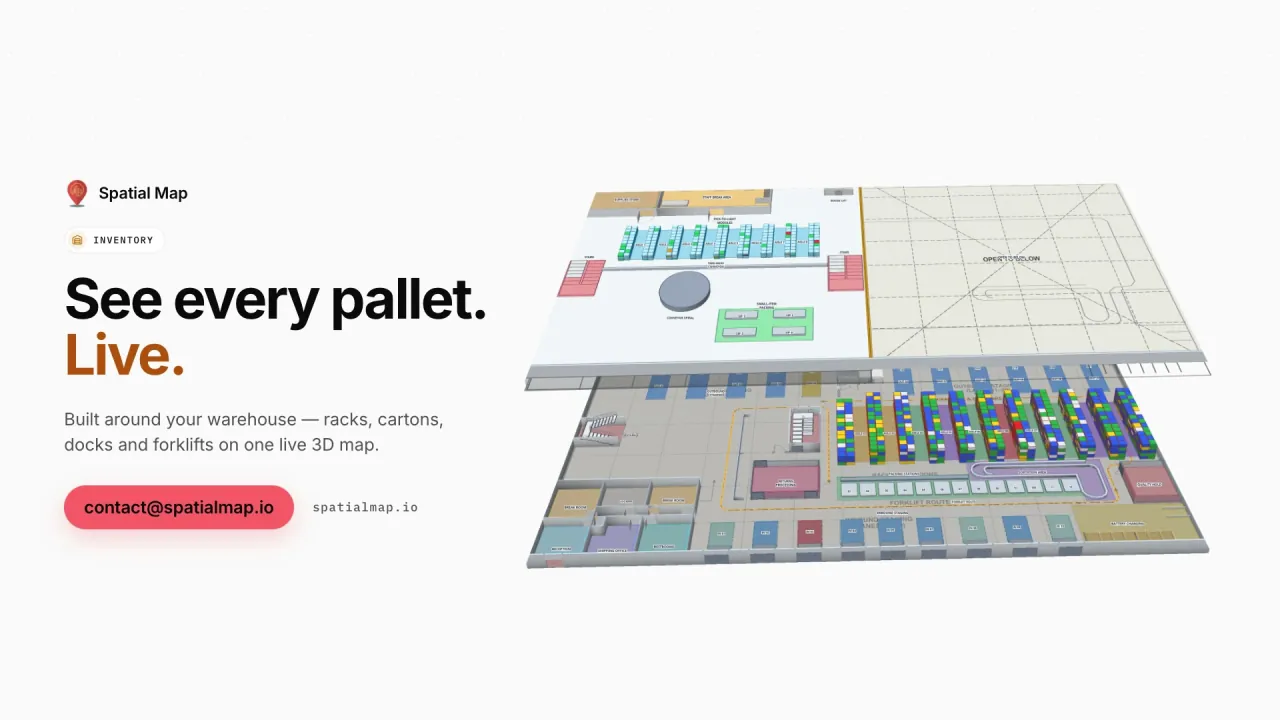
Spatial Map does inventory tracking in Bogotá on a live 3D map of each warehouse: every rack location coloured from your WMS stock, RFID-tagged pallets at the dock door that last read them, cold rooms by their sensors. The city’s stock sits in three overlapping places: the cargo area around El Dorado airport, the free zone in Fontibón, and the industrial-park warehouses along Calle 80 and across the savannah in Funza and Mosquera. One workspace can hold all three, and the app is available in Spanish.

No credit card. Runs in the browser. Pro is $60/month for up to 4 facilities. Book a demo

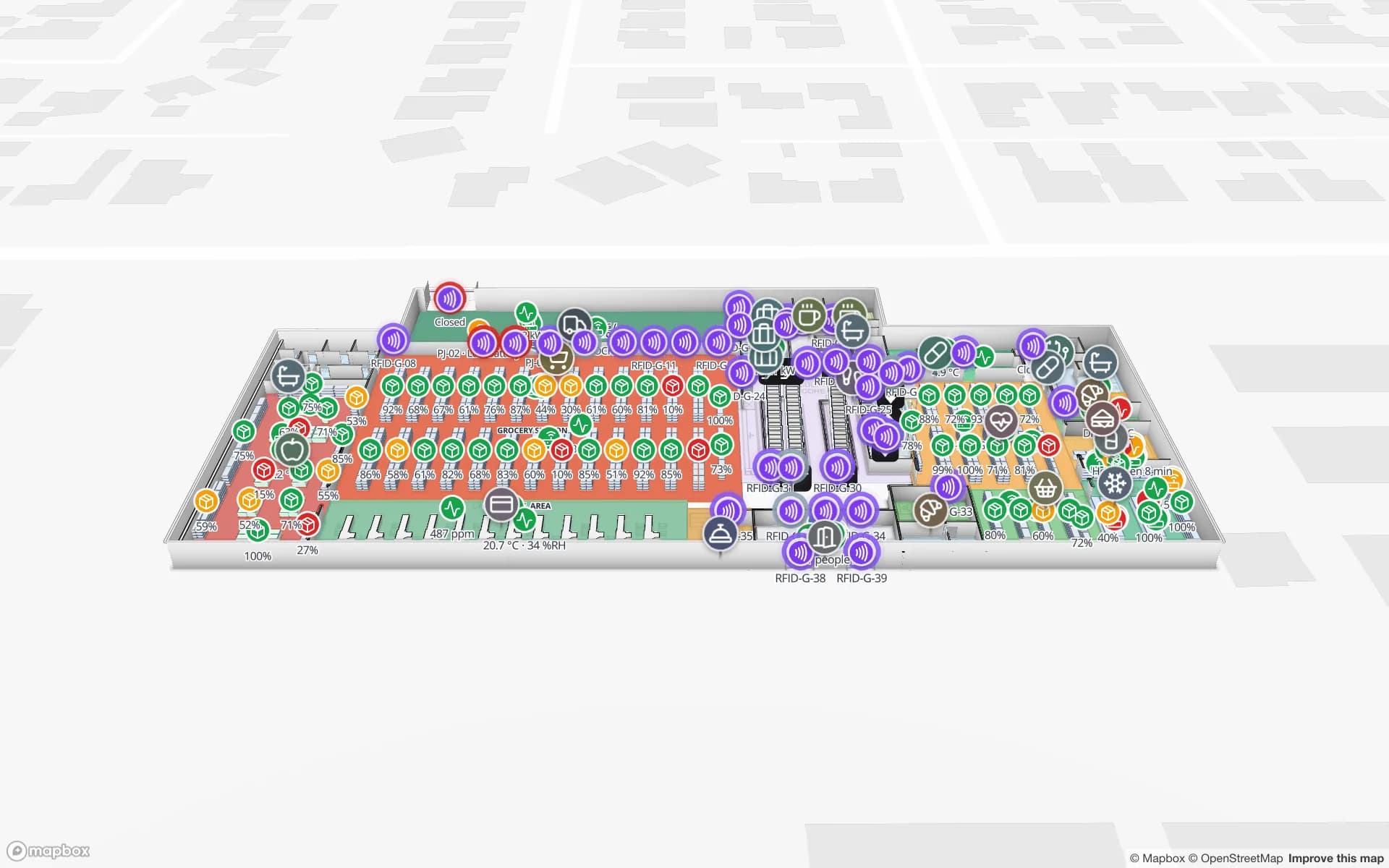
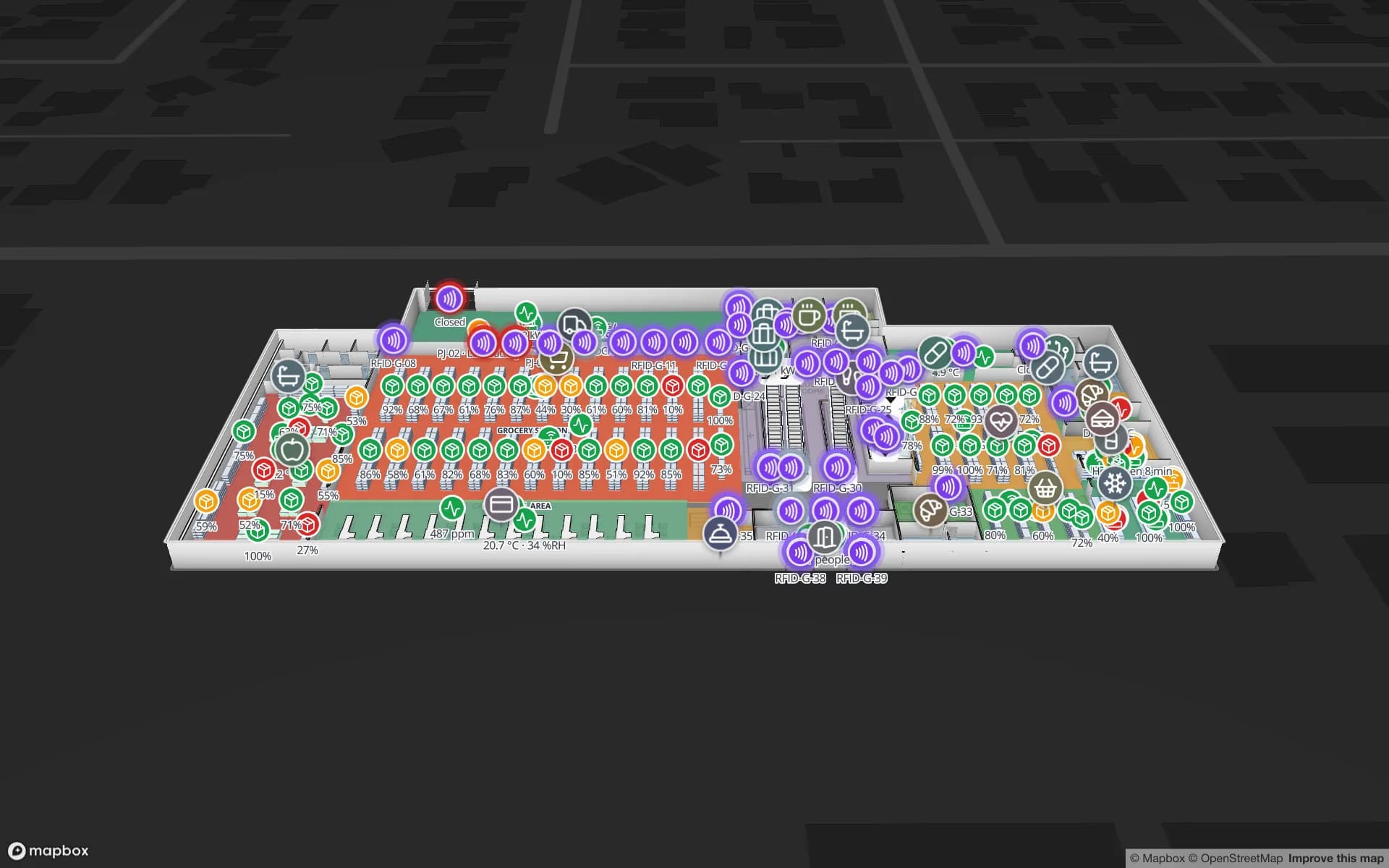
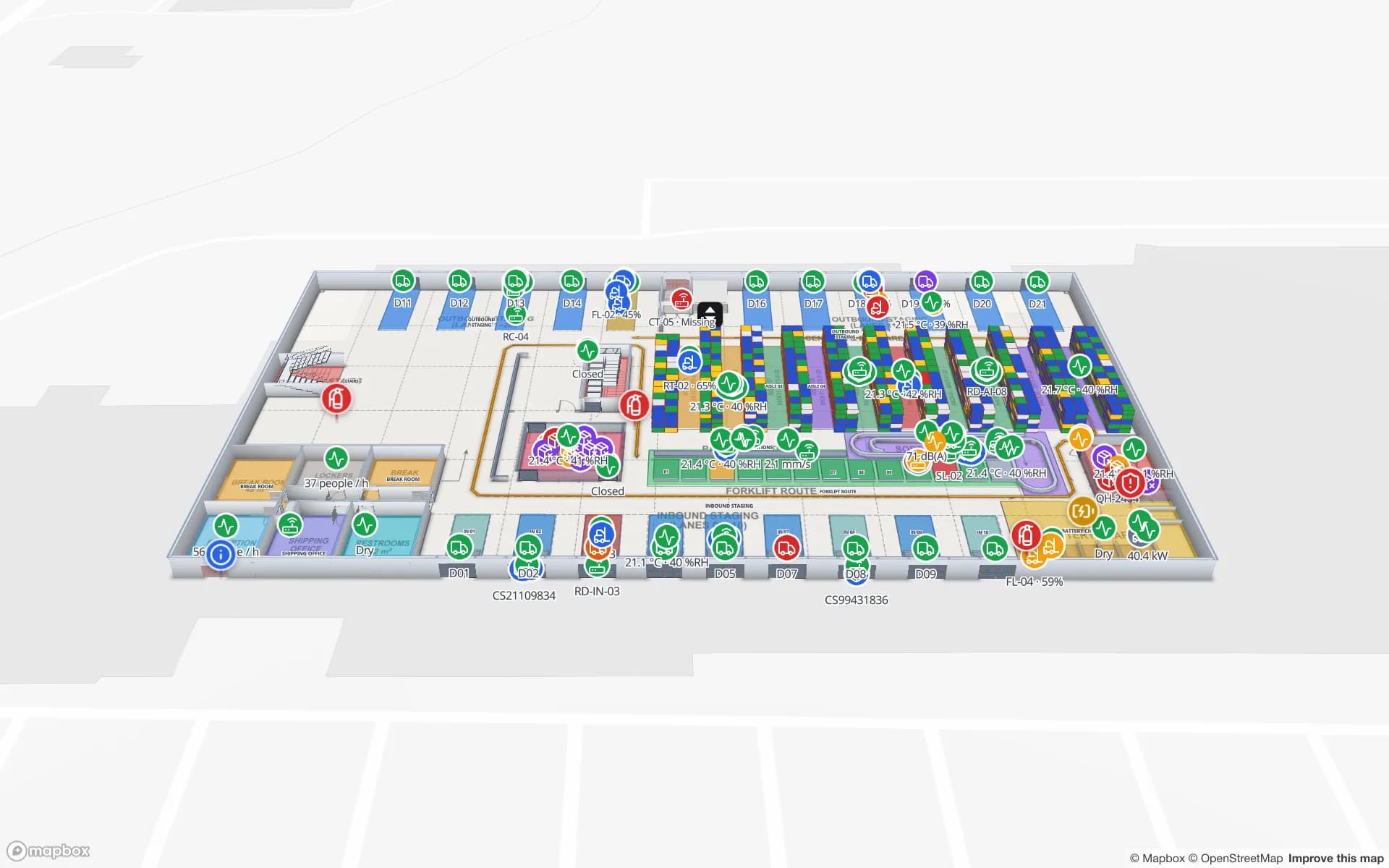
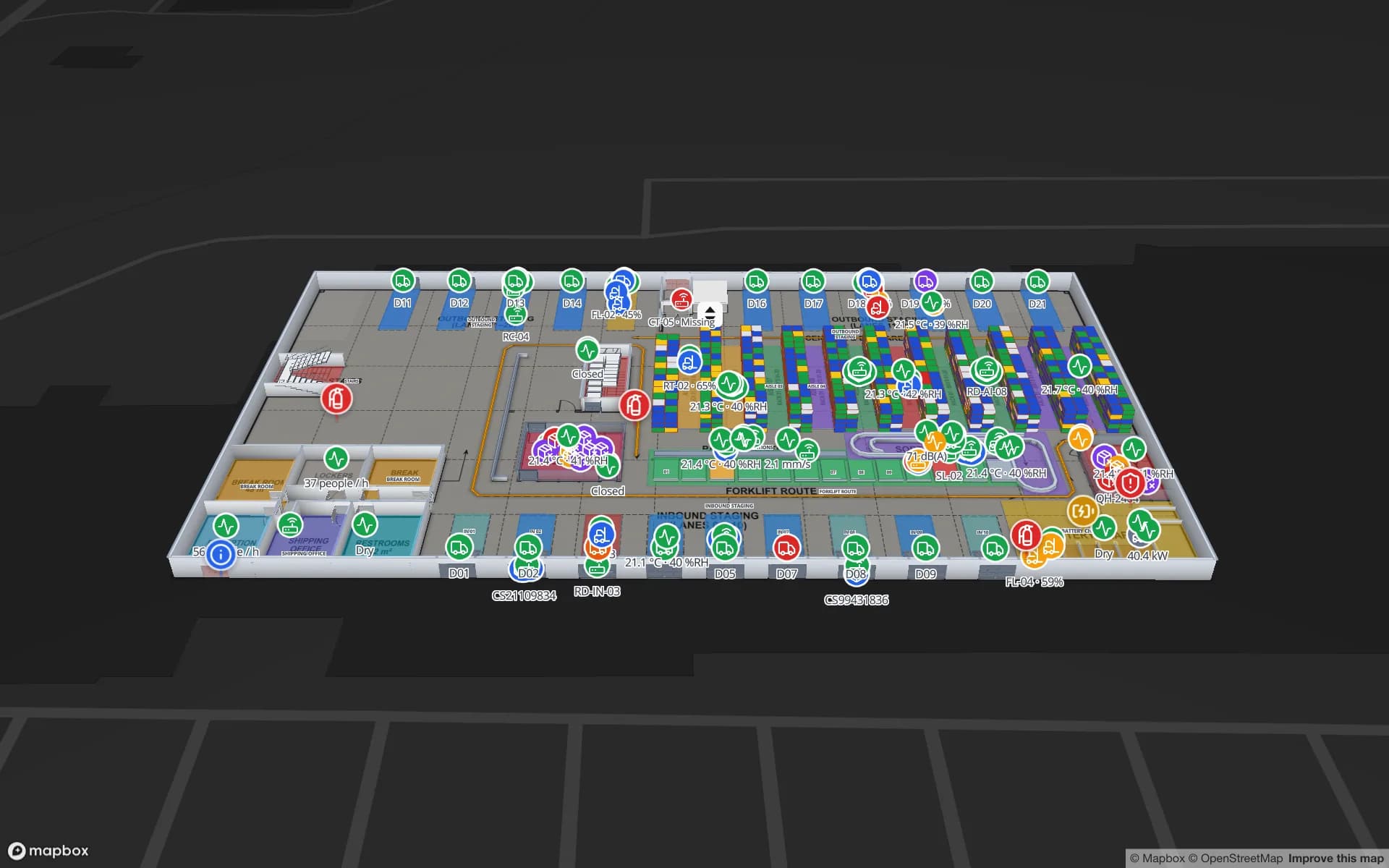
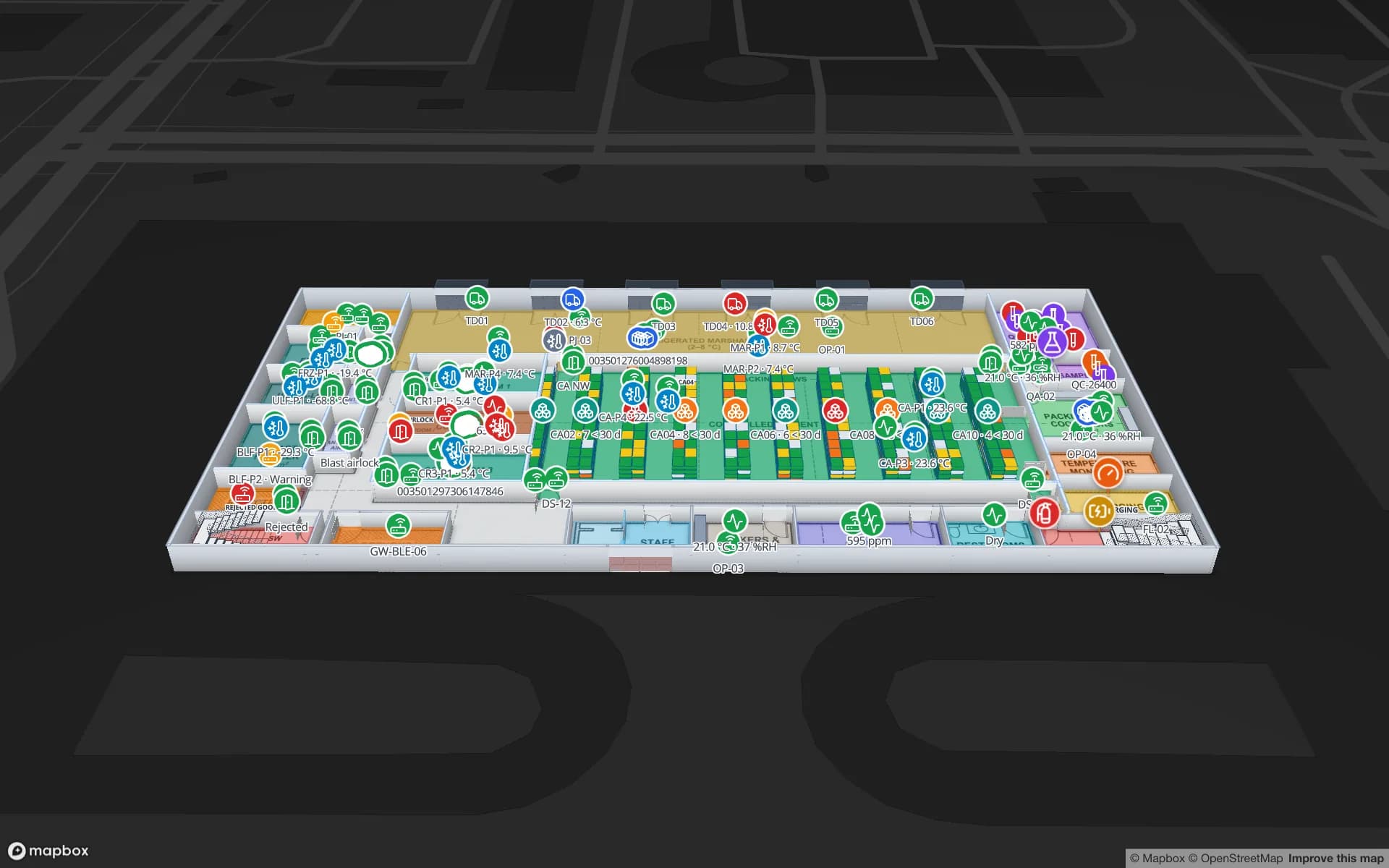
Crestline Fulfillment Center, a fulfillment center demo, in the Spatial Map 3D viewer with live device markers
Crestline Fulfillment Center
Crestline Fulfillment Center, a demo warehouse: 20 racks with 2,204 locations coloured by stock status, dock doors, staging lanes and the trailer yard.
Rack locations coloured by stock in the Crestline demo
2,204
RFID pallets in the Eastport cross-dock demo
1,180
How often alert rules are checked, with alerts shown in the app
15 s
Free trial, up to 5 facilities, no card
7 days

El Dorado: the country’s cargo terminal and its flower season

The airport operator describes El Dorado’s cargo terminal as the largest in Colombia, handling nearly 700,000 tonnes a year out of 924,000 tonnes transported nationwide. Flowers are its top export, with nearly 300,000 tonnes a year passing through the airport. The Ministry of Commerce, Industry and Tourism reports that 94 % of Colombian flower exports leave by air and names El Dorado as the main exit point. Most of the flowers are grown on the savannah around the city: Cundinamarca accounts for 71 % of national production.

For an exporter or a forwarder the inventory problem is the box, not the building: how many boxes of which grower and lot are in which cold room, which are staged for which flight, which are still on the packing line. Tag cartons or pallets with UHF RFID at packing, read them at the cold-room and loading doors, and the map shows the lane each consignment is standing in. Spatial Map does not connect to airline or airport cargo systems or to customs; it shows what your own reads and WMS say. Test tags on wet or waxed cartons in your own room first; RFID tags for metal, liquids and apparel lists what to check.
Fontibón: a free zone beside the airport

The Zona Franca de Bogotá lies in Fontibón, the western locality of the city that also contains El Dorado, close to the Avenida Calle 13 corridor between the airport and the centre. A free-zone warehouse commonly holds stock for several owners at once, and each wants to see only their own bays and lots.

Map the building once and store each owner’s stock as rows in a table. A read-only share link gives an owner their floor and layers, with an expiry date and a view cap, and no account; the History player replays how a lot moved. The customs and free-zone records stay in your own systems and Spatial Map makes no compliance claim. The CSV bin inventory guide shows how a stock export becomes a coloured rack map in an afternoon.

Calle 80, Funza and Mosquera: where the big sheds are

Bogotá’s industrial-park warehouses cluster to the west, along the Calle 80 corridor and across the savannah in Funza and Mosquera. A property-market survey reported by La República at the end of 2015 found these three corridors held more than 80 % of the industrial-park warehouse space around the city, and market reports since then still describe the same belt, with Tocancipá to the north as a second market. Distribution centres of that kind carry several thousand pick locations on a few levels of racking.

The Crestline Fulfillment demo shows the pattern: 20 racks with 2,204 locations coloured by stock status, pick modules, staging lanes in front of the docks and the trailer yard. Upload the building’s PDF or DWG (AutoCAD R2004–R2018, placed as a picture), let AI Map draft racks, doors and areas for a person to review, and connect the WMS with the table write API, a polled REST endpoint or CSV and Excel uploads. See integrating a WMS. For a rollout that starts with one aisle and one dock, the RFID warehouse rollout plan sets out the order.

Two dates that fill the sheds

Valentine’s Day and Mother’s Day together account for 30 % of Colombian flower exports, according to the airport operator, which means two short windows in the year when staging lanes fill, temporary staff arrive and a cold room that is a few degrees off costs real money. Those weeks are where a live map pays back: a heatmap of RFID reads shows which lane is jammed, an alert rule on a cold-room sensor fires in the app, and the day after the peak the History player replays the night for the review.

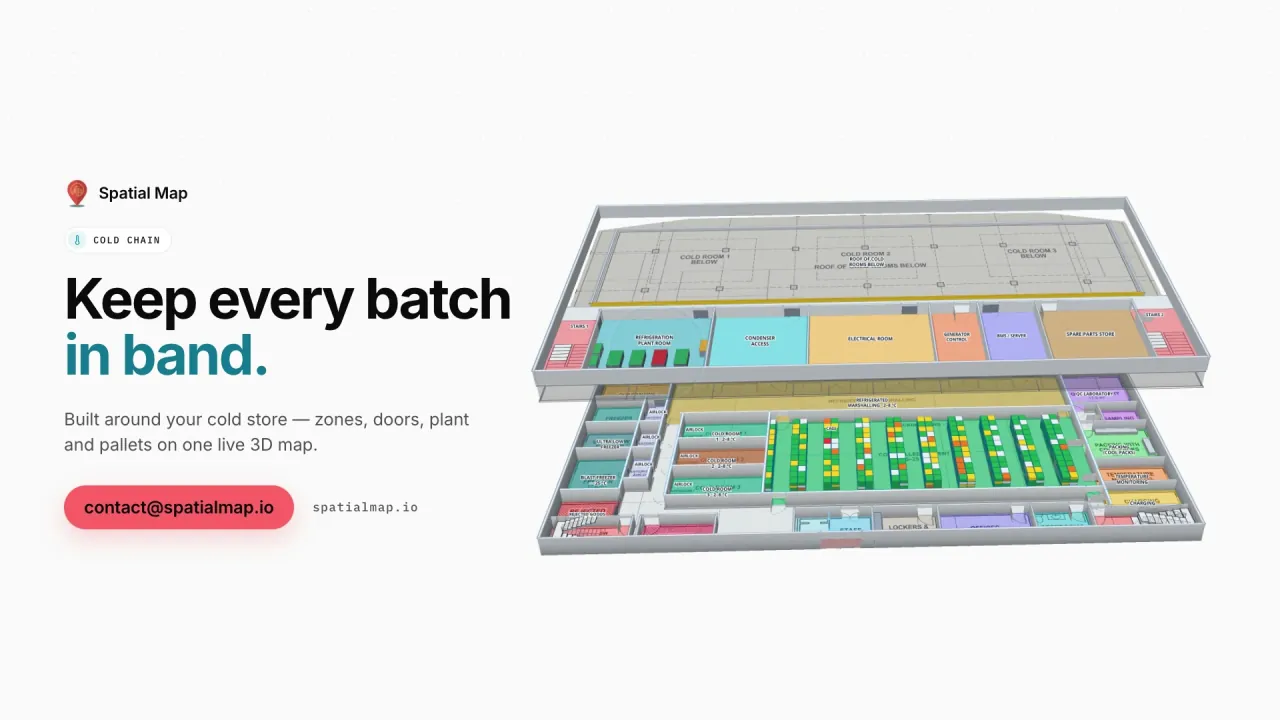
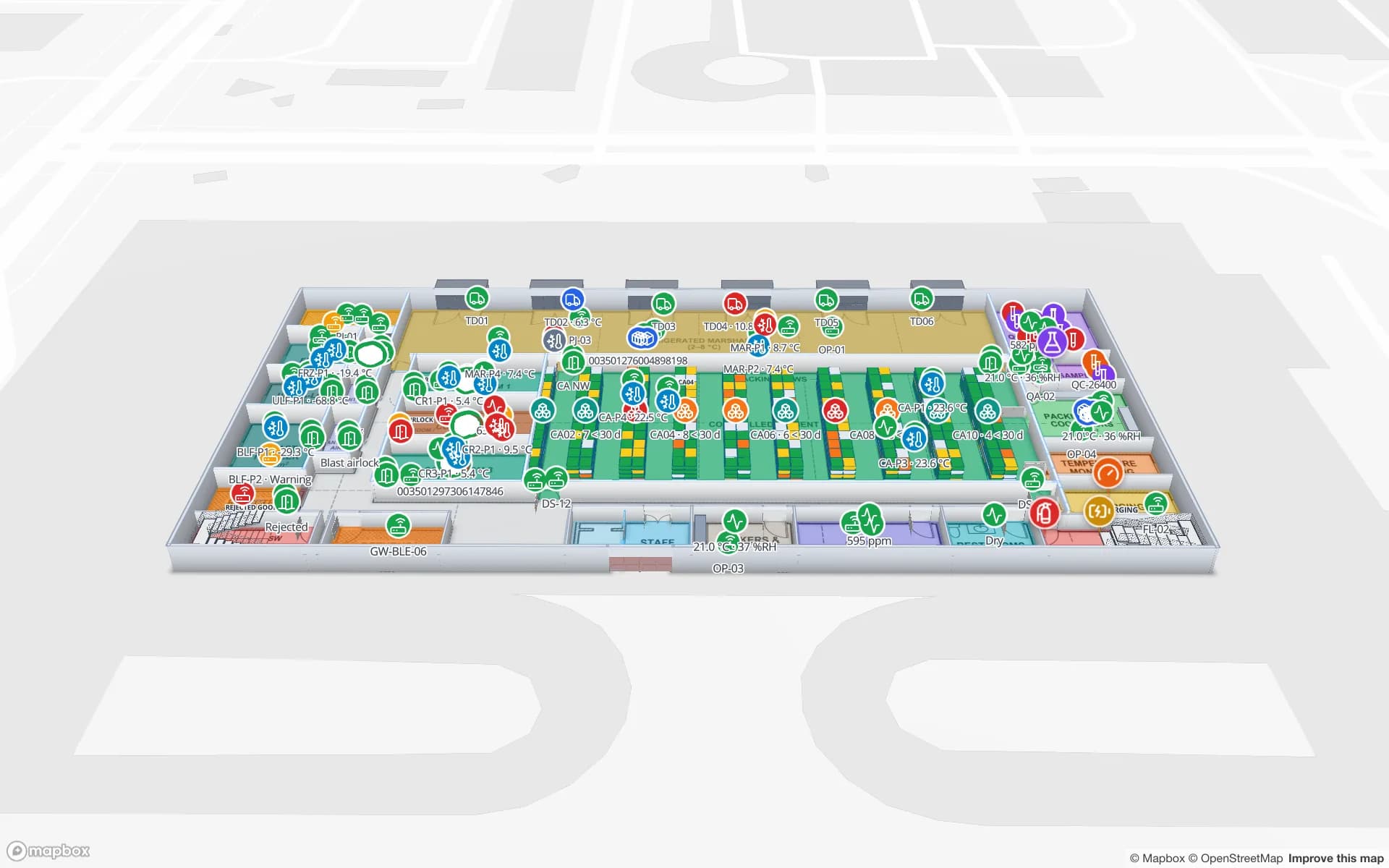
Outside the flower season the same buildings serve pharmaceutical, cosmetics, textile and food flows; the airport operator lists seafood, fruit and vegetables, textiles, cosmetics and pharmaceuticals among its top export categories. The Polar Pharma demo shows cold rooms, reefer docks and quarantine areas on one map.

Services for teams in Bogotá

Where Bogotá teams usually start:

  • Exporters, forwarders and distribution centres begin with inventory tracking: stock by bin from the WMS, then RFID at the dock doors.
  • Free-zone operators and shared warehouses often add asset tracking for trolleys, roll cages and forklifts, so equipment is found before the peak.
  • Cold rooms get temperature monitoring alongside the stock map; RTLS and UWB is for large yards only.
  • If you have no readers or tags yet, our team can source RFID readers, antennas and tags on request, quoted per project, with warranty and device support from the manufacturer: see hardware and demo kits on request.
  • Where a team has no developers, our team builds an RFID inventory system, handheld apps and ERP or WMS integrations as client projects. The product runs as cloud or on-premises.

Also served nearby

The same approach covers Madrid, Cota, Tocancipá, Facatativá, Chía and Soacha around the capital. Nothing needs to be installed at any of them: the map opens in a browser.

How Spatial Map does it

From the airport shed to the Calle 80 warehouse

  1. 01

    Pick one building

    A packhouse near the airport, a free-zone bay or a distribution centre on Calle 80, wherever a lost pallet costs most.

  2. 02

    Map racks and doors

    Upload the plan or a photo, let AI Map draft the floor, and name locations the way your WMS names them.

  3. 03

    Load the stock

    The WMS or middleware posts rows through the table write API, or you start from a CSV or Excel export.

  4. 04

    Add peak-season rules

    In-app alerts for pallets staged too long, cold rooms out of range and readers that stopped reporting.

What Bogotá teams track

Flower exporters and cold rooms

Boxes by lot and flight in cold rooms coloured by live temperature.

Free-zone and shared warehouses

Each owner’s bays and lots on one map, shared by read-only link.

Forwarders and cross-docks

Dock doors, yard slots and RFID pallets between the airport and the inland sheds.

Retail and e-commerce distribution

Item-level stock by bin and by floor for stores and online orders.

See it on real demo facilities

Fictional names, real floor plans, live sensors, RFID, BLE tags and gateways — open any of them in the browser.

All 13 demo facilities

Inventory tracking in Bogotá: questions we get

No. It has no link to airport cargo, airline or customs systems. It shows what happens inside your own building from your own WMS, RFID reads and sensors, so a consignment’s customs and flight records stay where they are.

Yes, as far as your data says so. Each box or pallet is a row with its lot, destination and flight, read at the door by your RFID middleware, and the map colours lanes and bays from those rows. Spatial Map does not read the flight schedule itself; your system supplies it.

Yes. Use a read-only share link per owner with the layers you choose, an expiry date and a view cap, and no account is needed. Inside the workspace, Owner, Admin, Editor and Viewer roles and custom roles control who can change what.

Yes. Export stock to CSV or Excel and upload it to a table; racks colour by status the same day. Later, your developers or ours can push rows through the write API (HTTPS, bearer key, bulk upsert, 60 requests per minute per key).

Yes, in Spanish and five other languages, with each user choosing their own; Portuguese is not available. Rack codes, room names and report titles appear exactly as you type them. See the services page in Spanish.

No. Spatial Map is sold online and our team works with customers in Colombia remotely, by video call and through the contact form. There are no local resellers or partners.

In US dollars, the same worldwide: a 7-day free trial for up to 5 facilities with no card, then Pro at $60 a month or $600 a year for up to 4 facilities. RFID hardware, if you ask us to source it, is quoted per project and is not part of the subscription.

Map one Bogotá warehouse before the next peak.

Start the free trial and open the Crestline demo, or send us the plan of a packhouse, free-zone bay or Calle 80 shed and a stock export through the contact form.