Jaipur · Sanganer, Bagru, Sitapura and the Thar Dry Port

Inventory tracking in Jaipur, from the printing table to the export carton

Spatial Map shows stock by bin, carton and pallet on a live 3D map of the building where it sits, using the counts and reads your own systems already produce. For inventory tracking in Jaipur the shape is unusual, because much of what the city sells is printed in one workshop, washed in another, stitched in a third and packed in a fourth, so the stock is rarely under one roof. Each warehouse, showroom or packing unit you run can be its own facility with its own map, and all of them can sit in one workspace.

No credit card. Runs in the browser. Pro is $60/month for up to 4 facilities. Book a demo

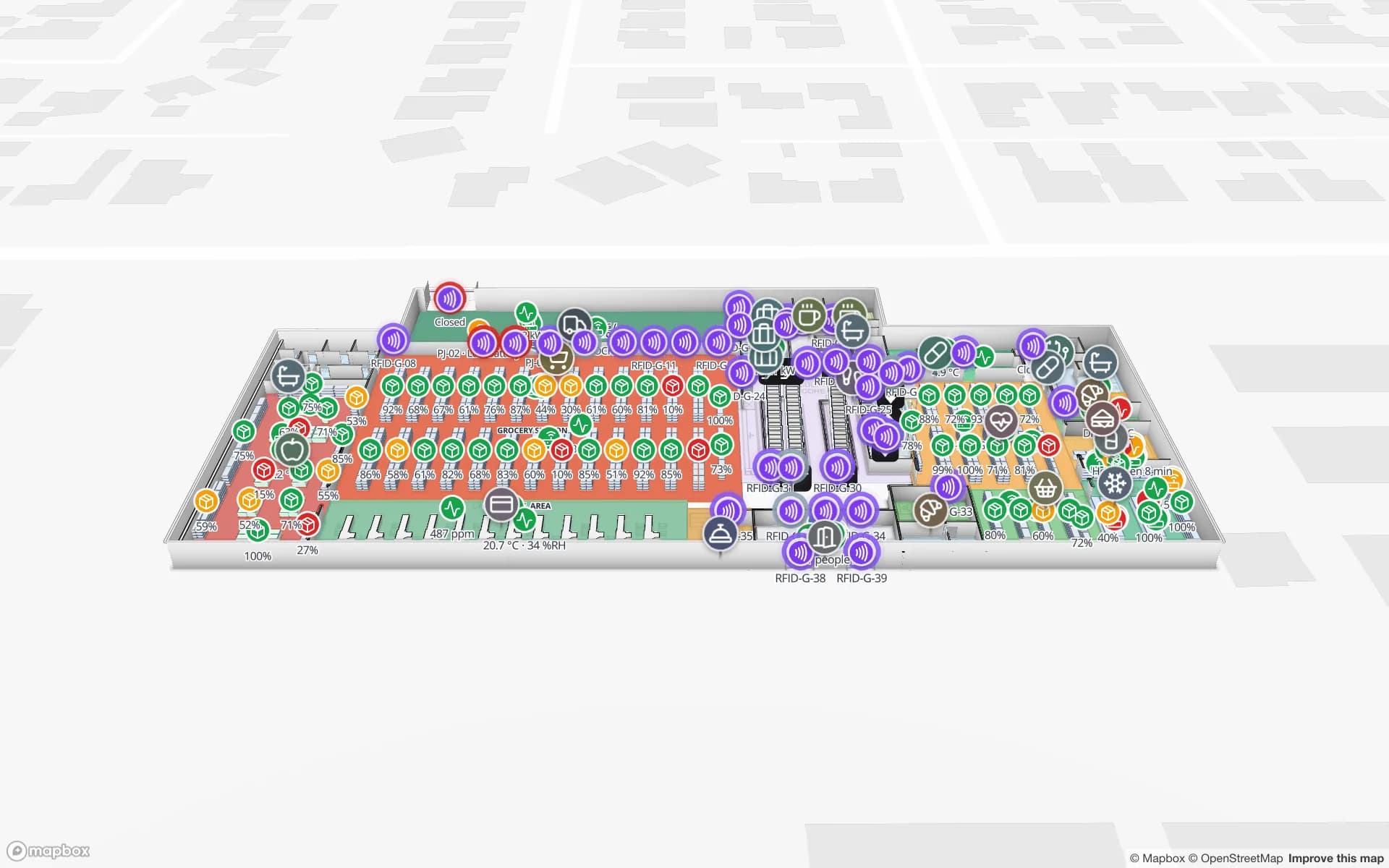
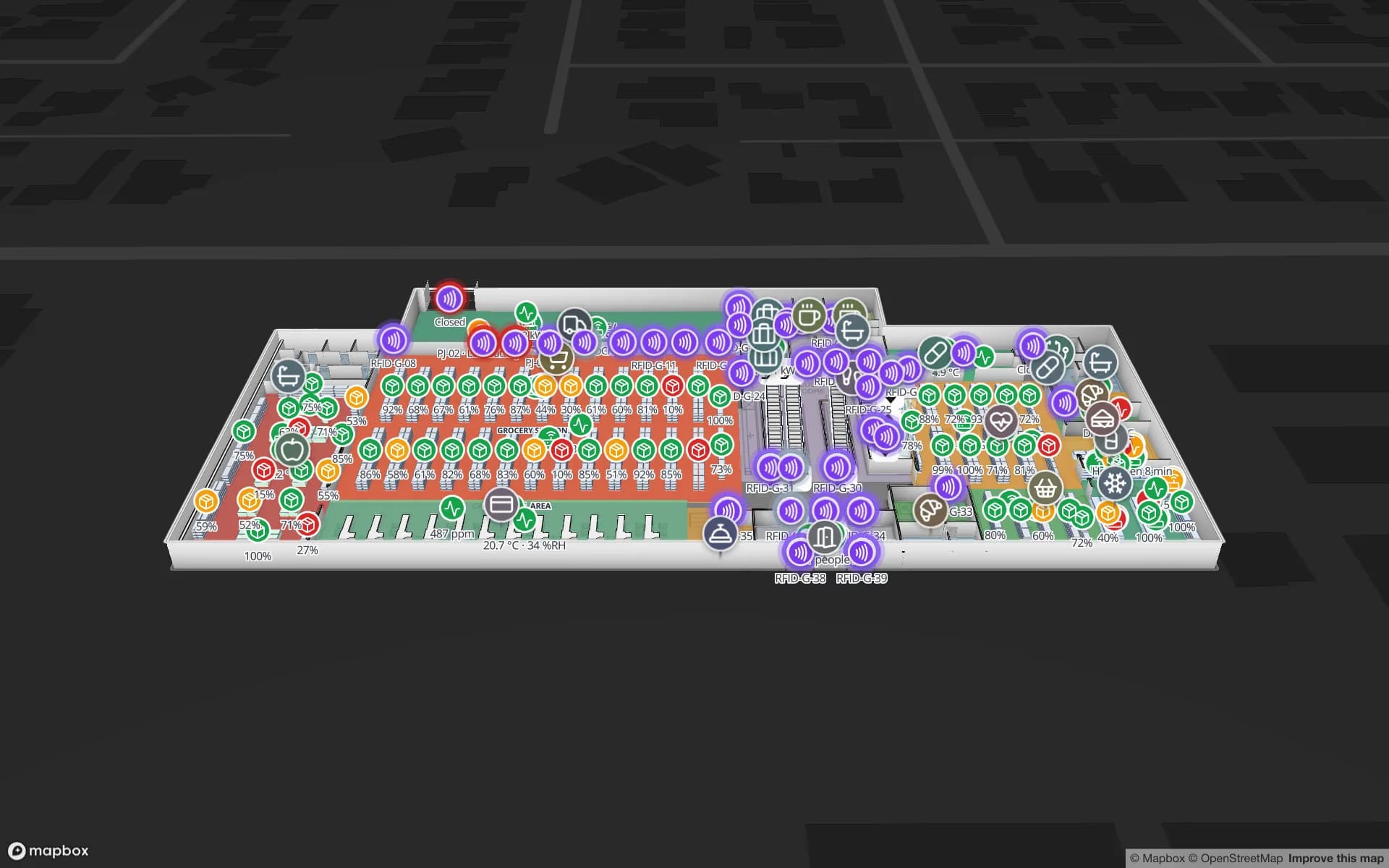
Retail Mart Store, a three-floor retail store demo, in the Spatial Map 3D viewer with live device markers
Retail Mart Store
Retail Mart, a demo store: item-level RFID tags, readers at the entrances and escalators, and shelf and department stock on three floors.
Floors in the Retail Mart demo
3
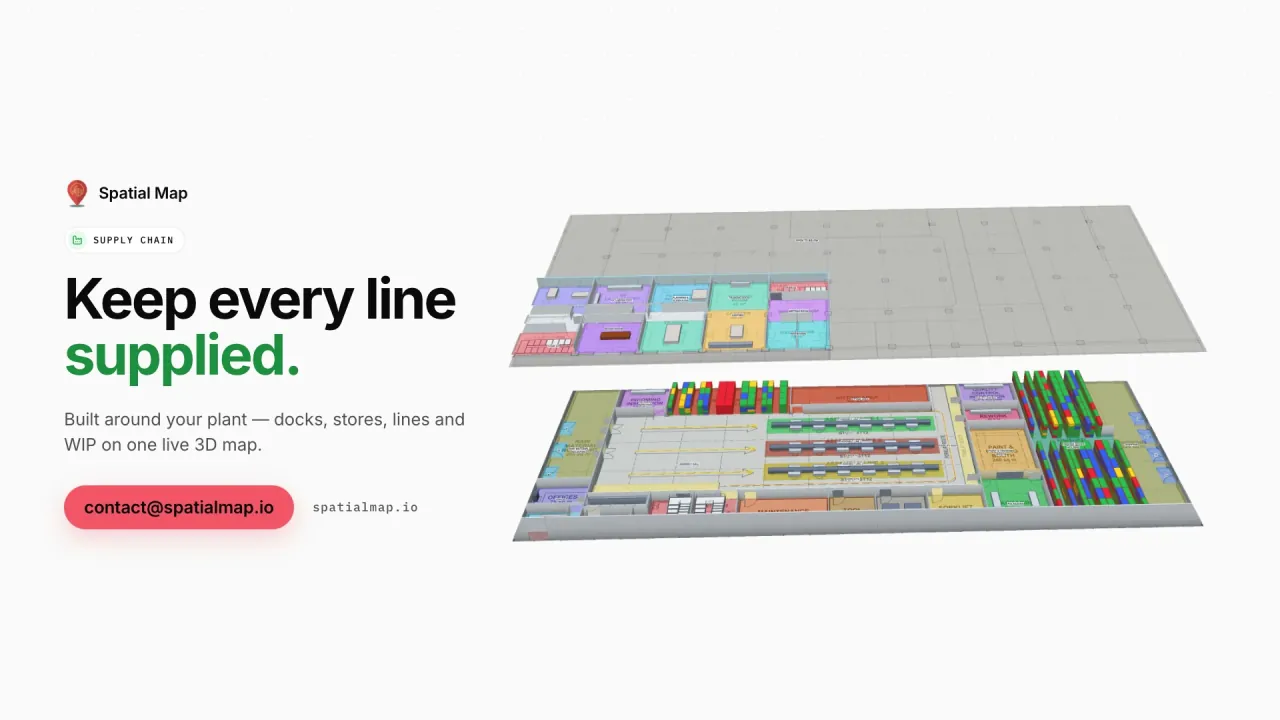
Rack locations in the Crestline fulfilment demo
2,204
How often alert rules are checked, with alerts shown in the app
15 s
Free trial, up to 5 facilities, no card
7 days

A city of block prints and bazaars: stock that changes hands before it ships

Jaipur’s hand block printing is concentrated in a cluster that takes in Sanganer, Bagru, Kaladera and Amber; an industry newsletter from December 2023 counted 235 printing units there, 15 of them large. Sanganeri and Bagru prints both carry a geographical-indication registration. The Walled City of Jaipur was added to the UNESCO World Heritage List in 2019, and the nomination lists the craft streets and bazaars among the features that carry its value, with a market laid out for each craft.

That history has a practical consequence for stock. A printed fabric is a design, in several colourways, cut into several lengths, and every combination is a separate line to count. Add garments in size runs and made-ups such as quilt covers and cushions, and a mid-sized exporter can hold thousands of variants. Stock that lives in a spreadsheet by name and shelf number goes wrong as soon as two people name a design differently. A bin map keyed on one code per variant fixes the naming problem, and the CSV-to-rack-map guide shows how a stock sheet becomes a coloured rack grid.


Sitapura and Sanganer: the exporters’ side of town

Sitapura and Sanganer are industrial areas in the south of the city, and RIICO, the state industrial development corporation, runs multi-product special economic zone phases at Sitapura. A city profile from 2016 lists the main export items as printed cloth and textiles, ready-made garments, handloom products and woollen carpets. For a garment unit the unit of stock that matters is the carton: an order is split into cartons by size, colour and destination, and a short carton is usually discovered at the loading door.

Tag each carton with a UHF RFID label at pack-out, read it at the despatch door, and the map shows which cartons of an order are staged, which are still on the floor and which have left. Item-level tags on garments are a separate step that tends to start with a few lines, not the whole range; the post on RFID tags for metal, liquids and apparel lists what to test, because zari trims and metal buttons behave differently from plain cloth. The Crestline demo shows 2,204 rack locations coloured by stock status, with staging lanes in front of the docks.

The Thar Dry Port at Hirnoda: where the export box ends up

The Thar Dry Port is an inland container depot at Hirnoda, about 55 km from Jaipur on more than 100 acres, and was reported open in June 2026. It is described as having direct rail to the Gujarat ports of Mundra and Pipavav and a link to the Western Dedicated Freight Corridor, and the clusters it names as its catchment include Sitapura, Bagru and Dadu, with the Alwar district beyond. The sectors named are textiles and apparel, handicrafts, marble and natural stone, engineering goods and agro-products.

What changes inside your own building is the pack-out lane. A container booking becomes a staging lane, cartons are read into the lane, and a count rule can raise an in-app alert when a booking’s lane holds fewer cartons than the order says. Spatial Map stops at your gate: it does not connect to the depot, customs or shipping-line systems, and shows what your own reads say. The Eastport demo shows dock doors, yard slots and gate lanes on one map.

Old buildings, one-of-a-kind pieces and the plan that does not exist

Many showrooms and godowns in the older parts of the city occupy multi-storey buildings, and few have a current drawing. Upload what you have — a photographed sketch, a scan or a DWG (AutoCAD R2004–R2018, placed as a picture) — align it at real scale and let AI Map draft walls, doors and shelving for a person to review. AI Map is available on paid plans and the trial, with a monthly limit.

Handicrafts add a second problem: many pieces are one of a kind, so a count by design is not enough. Give each piece its own tag or barcode ID and treat it like an object in a collection; the museum demo shows object tags and climate readings gallery by gallery, which is the same pattern.

Services for teams in Jaipur

Where Jaipur teams usually start depends on what they hold:

  • Printers and exporters usually begin with inventory tracking by bin and carton, because the variant count is what hurts first.
  • Showrooms and handicraft sellers tend to start with an asset tracking style register for individual pieces, often before any RFID is bought.
  • RTLS and UWB matters mainly for large packing halls where trolleys and people must be located continuously; most units will not need it first.
  • If you have no readers or tags yet, our team can source RFID readers, antennas and tags on request, quoted per project, with warranty and device support from the manufacturer: see hardware and demo kits on request.
  • Many Jaipur exporters run a spreadsheet or an accounting package; where an integration is needed, our team builds RFID inventory systems, handheld apps and other custom software such as POS or booking systems as client projects. The product itself runs as cloud or on-premises.

Also served nearby

The same approach covers Sanganer, Bagru, Kaladera and Amber, the Sitapura and Dadu industrial areas, Phulera, and Hirnoda itself. Nothing needs to be installed at any of them: the map opens in a browser.

How Spatial Map does it

From a stock sheet to a Jaipur bin map

  1. 01

    Clean one variant code

    One code per design, colourway and size, in a CSV or Excel sheet, so every shelf and carton counts the same thing.

  2. 02

    Map the godown or pack-out hall

    Upload the plan, photo or sketch, let AI Map draft the floor, and name bins and lanes the way your sheet does.

  3. 03

    Connect counts and reads

    Stock sheets are uploaded, or your accounting or WMS data is posted through the table write API or a polled REST endpoint; RFID middleware posts reads the same way.

  4. 04

    Add staging and silence rules

    In-app alerts for cartons staged too long, short loads before a container booking and readers that stopped reporting.

What Jaipur teams track

Block-print fabric and made-up stores

Stock by design, colourway and length on a bin map, with job-work out and back as a status.

Export garment cartons

Cartons read at pack-out and the despatch door, with each order’s status by lane.

Showroom and handicraft stock

Item-level counts by floor, with approval and sample stock marked separately.

Dry-port despatch staging

Dock doors, yard slots and a lane per container booking before the truck leaves.

See it on real demo facilities

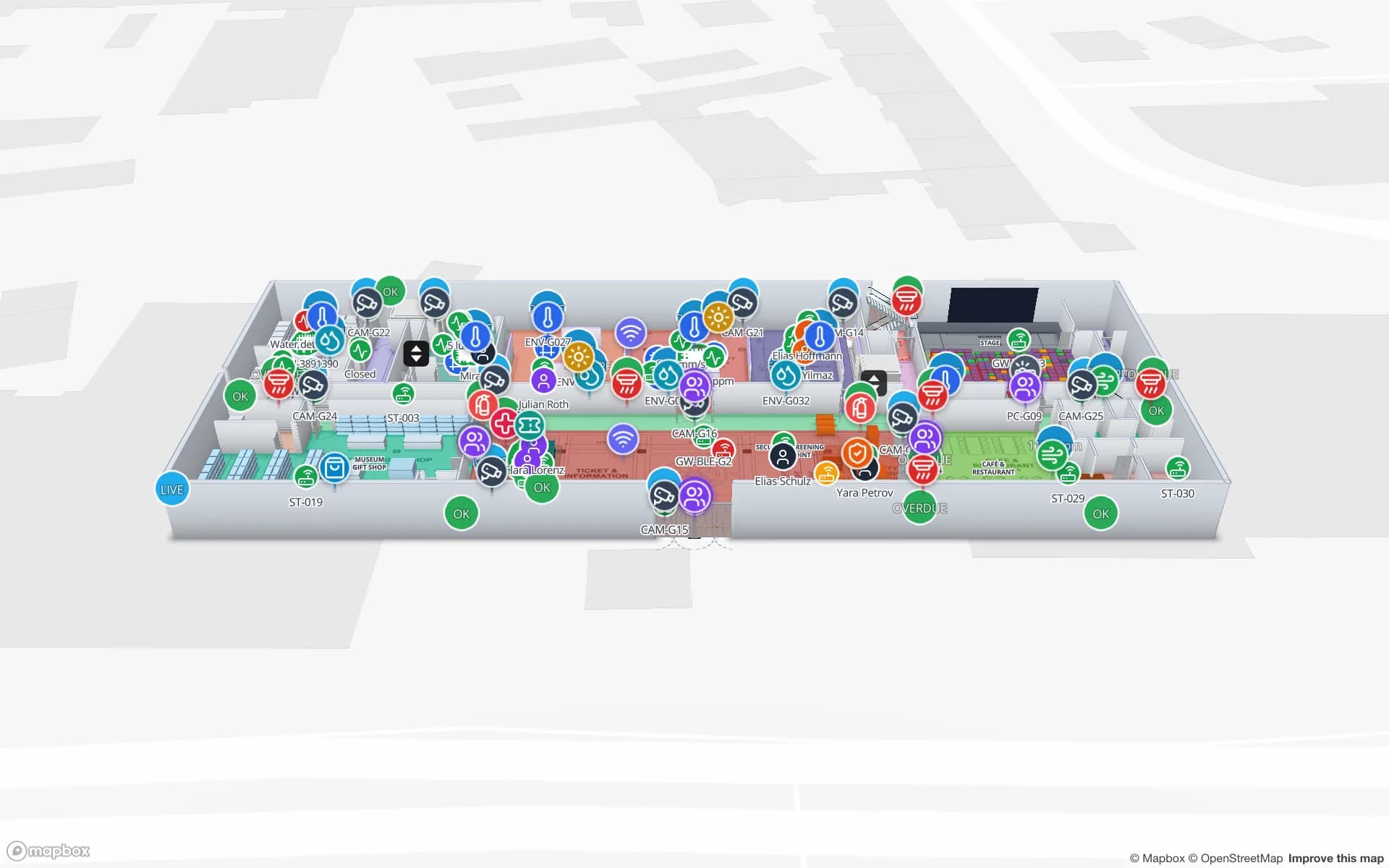
Fictional names, real floor plans, live sensors, RFID, BLE tags and gateways — open any of them in the browser.

All 13 demo facilities

Inventory tracking in Jaipur — questions we get

Only as far as your own data goes. Keep a status and a date in the stock table — out for printing, out for stitching, back — and update it with a handheld scan at your gate. A live position inside a job-worker’s unit would need their own readers and their own map.

No. It has no link to depot, customs or shipping-line systems. It shows what happens inside your own building, from your own counts, RFID reads and sensors, so it complements those systems rather than replacing them.

Give each piece its own code, on a barcode label or an RFID tag, and keep one row per piece with its location and status. The map then shows where each piece is, and the History player replays where it has been.

Yes. Photograph a hand sketch, or scan whatever plan exists, and align it at real size. AI Map can draft from the picture and you correct what it gets wrong. Our services team can also do the mapping remotely for a fixed price.

Not yet. It is in English, Arabic, Chinese, French, German and Spanish. Design names, rack codes and report titles can be typed in Devanagari or any other script and appear as written.

No. Spatial Map is sold online and our team works with customers in India remotely, by video call and through the contact form. There are no local resellers or partners.

In US dollars, the same worldwide: a 7-day free trial for up to 5 facilities with no card, then Pro at $60 a month or $600 a year for up to 4 facilities. RFID hardware, if you ask us to source it, is quoted per project and is not part of the subscription.

Map one Jaipur godown before the next order.

Start the free trial and open the Crestline demo, or send us the plan of a godown or pack-out hall and your stock sheet through the contact form.