South Asia · India

Indoor mapping, RFID tracking and RTLS software for India

Spatial Map is indoor mapping, RFID and RTLS software for India: it turns a floor plan into a live 3D map in the browser and places your tag reads, positions and sensor data on it. That covers the Grade-A warehouses and 3PL parks rising around the big metros, multi-floor malls, some of Asia’s busiest airport terminals and fast-growing electronics and pharma plants. It works with the tags, readers and gateways your Indian integrator already supplies.

No credit card. Runs in the browser. Pro is $60/month for up to 4 facilities. Book a demo

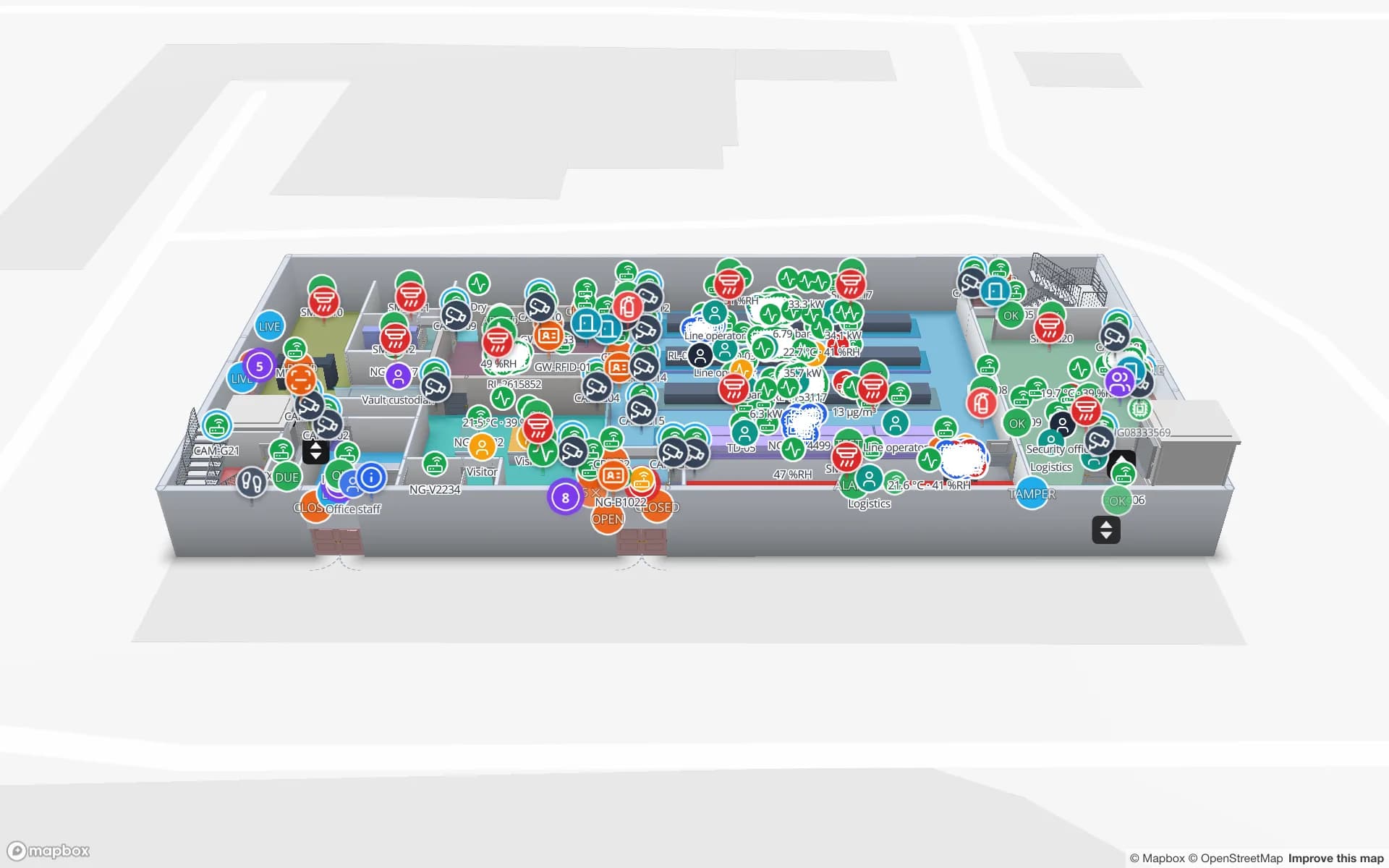
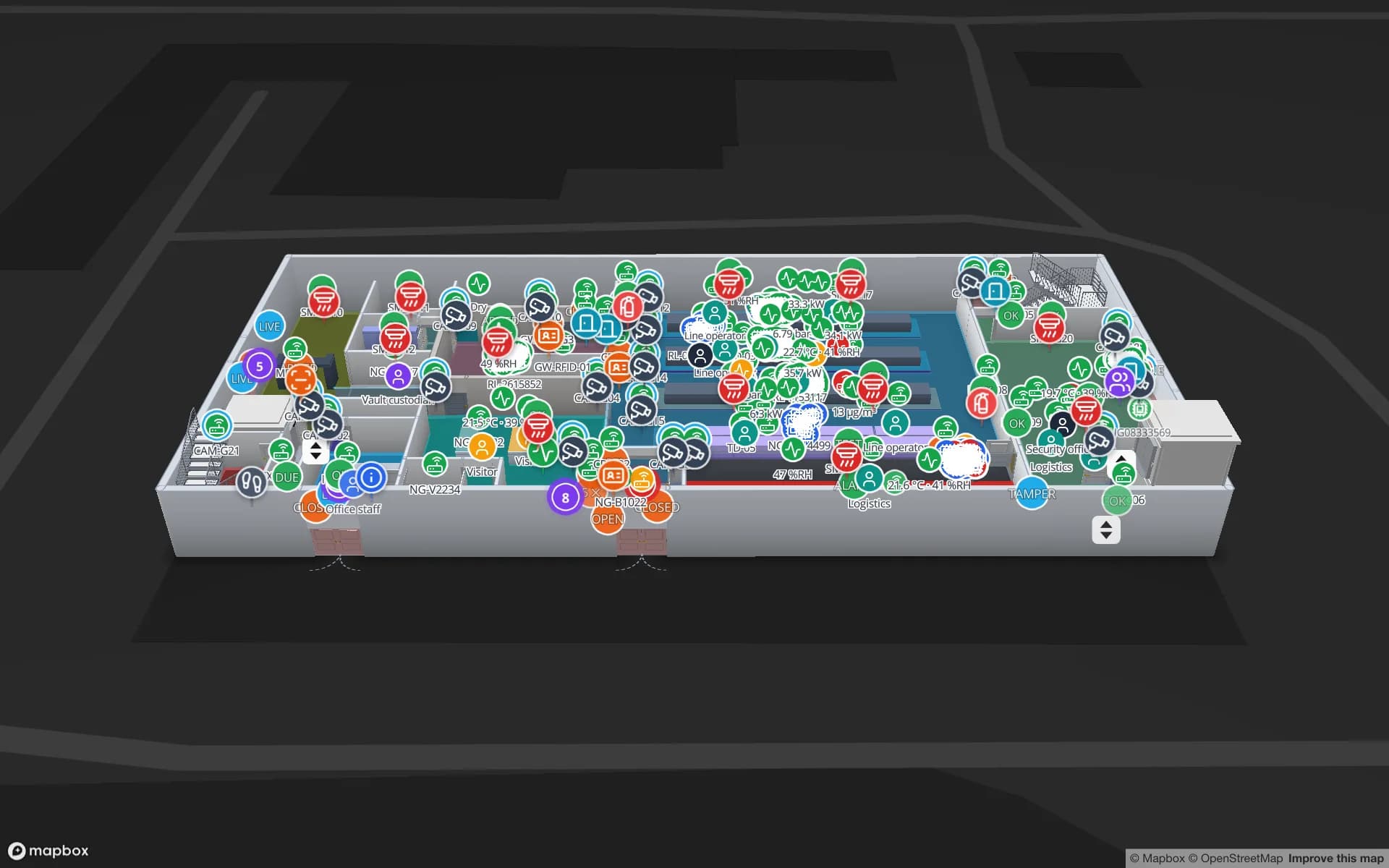
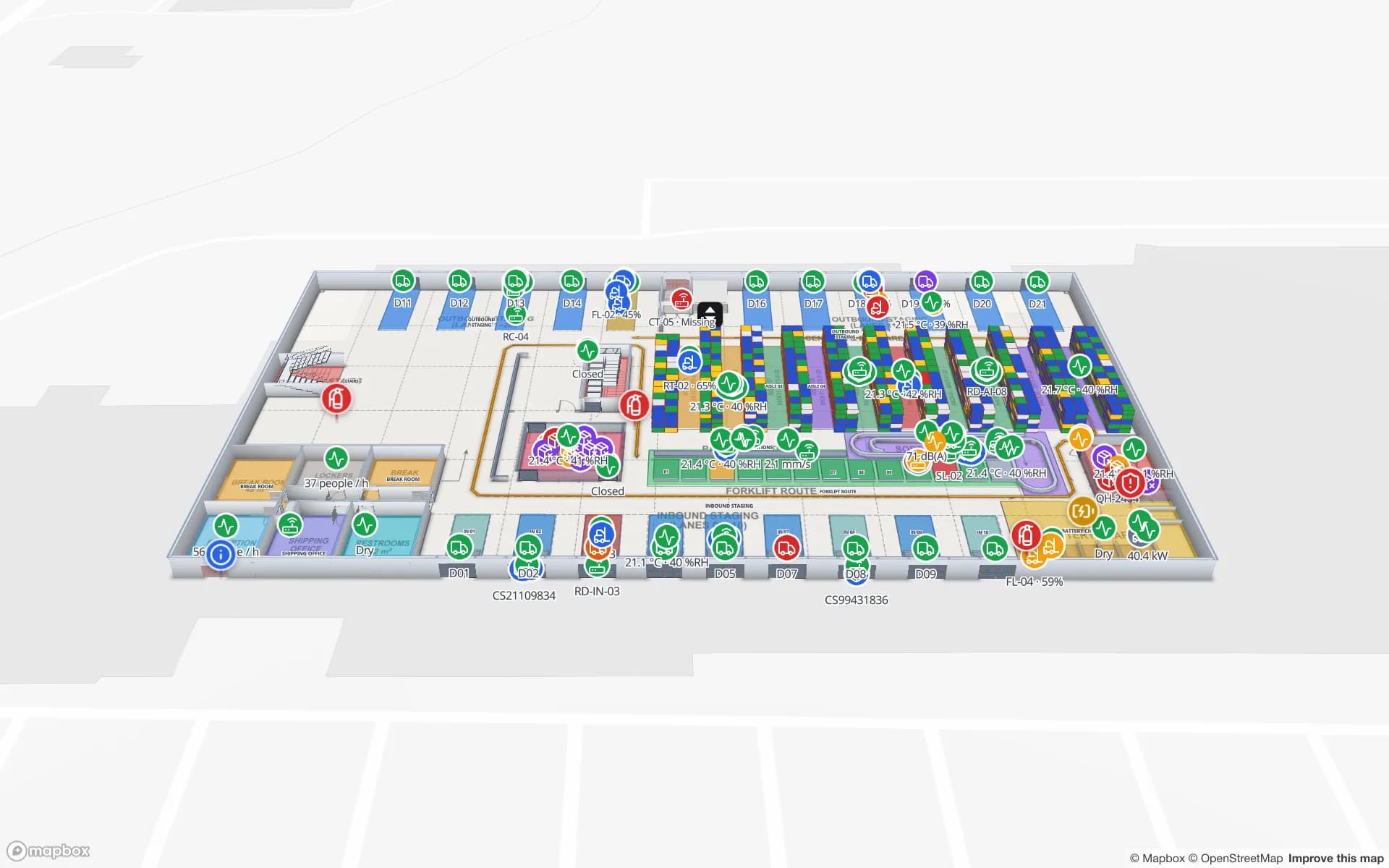
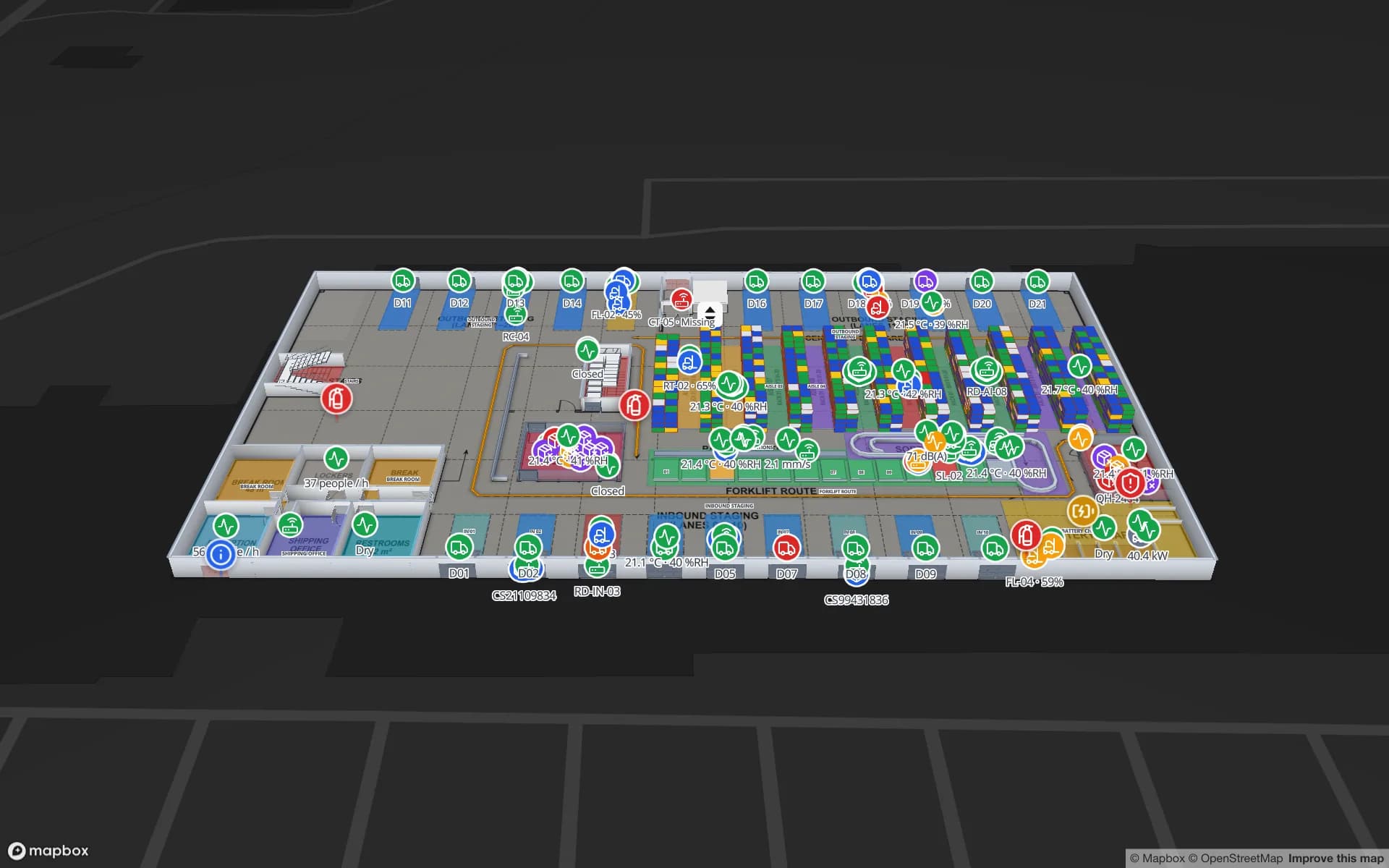
Crestline Fulfillment Center, a fulfillment center demo, in the Spatial Map 3D viewer with live device markers
Crestline Fulfillment Center
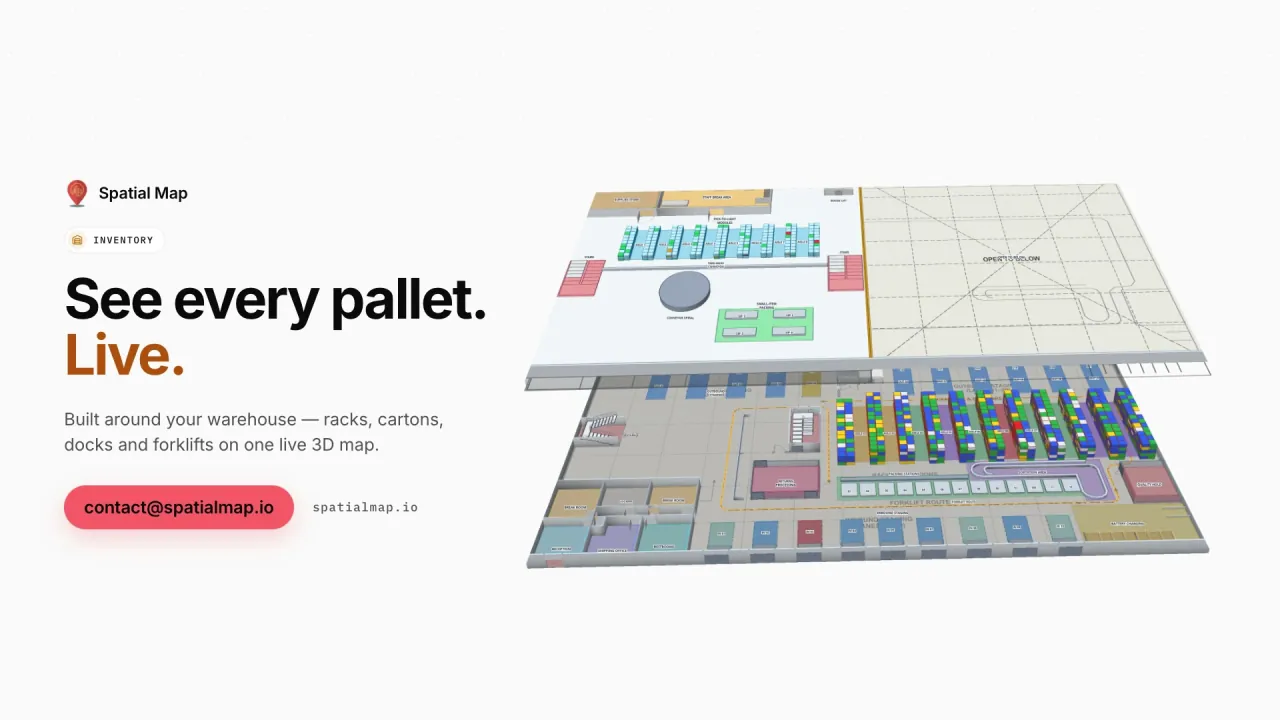
Crestline Fulfillment Center, a demo fulfilment centre: 20 racks and 2,204 rack locations, pick-to-light, packing, staging lanes, forklifts and the trailer yard.
India’s UHF RFID band — your readers, our map
865–867 MHz
Rack locations in the Crestline demo
2,204
Indian city pages: Bengaluru, Mumbai, Delhi NCR
3
Free trial, up to 5 facilities, no card
7 days

Warehousing has moved from godowns to Grade-A parks

The single Goods and Services Tax, introduced in 2017, removed much of the reason to keep a small depot in every state, and many companies have since consolidated into fewer, larger distribution hubs. E-commerce, quick commerce and organised retail have added demand, and modern warehouse parks with high roofs and racking now ring Mumbai, Delhi NCR, Bengaluru, Chennai, Pune, Hyderabad and Kolkata. Many are run by 3PLs for several clients under one roof.

Spatial Map draws those sheds as they are: racks with their bin locations, pick zones, packing lines, dock doors and the truck yard. Stock by bin comes from your WMS, cartons and pallets from RFID reads at the doors, forklifts from your RTLS. Each 3PL client can get a read-only share link to its own zone, and reports export to PDF, Excel, CSV and JSON for the monthly review.

  • Bengaluru: tech parks, fulfilment belts on Tumkur Road, Hoskote and Hosur Road, and BLR air cargo.
  • Mumbai: JNPA at Nhava Sheva, Bhiwandi’s warehousing cluster, two airports and the SEEPZ jewellery zone.
  • Delhi NCR: DEL and the new Noida airport, the Gurugram and NH-48 corridor, inland container depots and NCR malls.
Organised retail and multi-floor malls

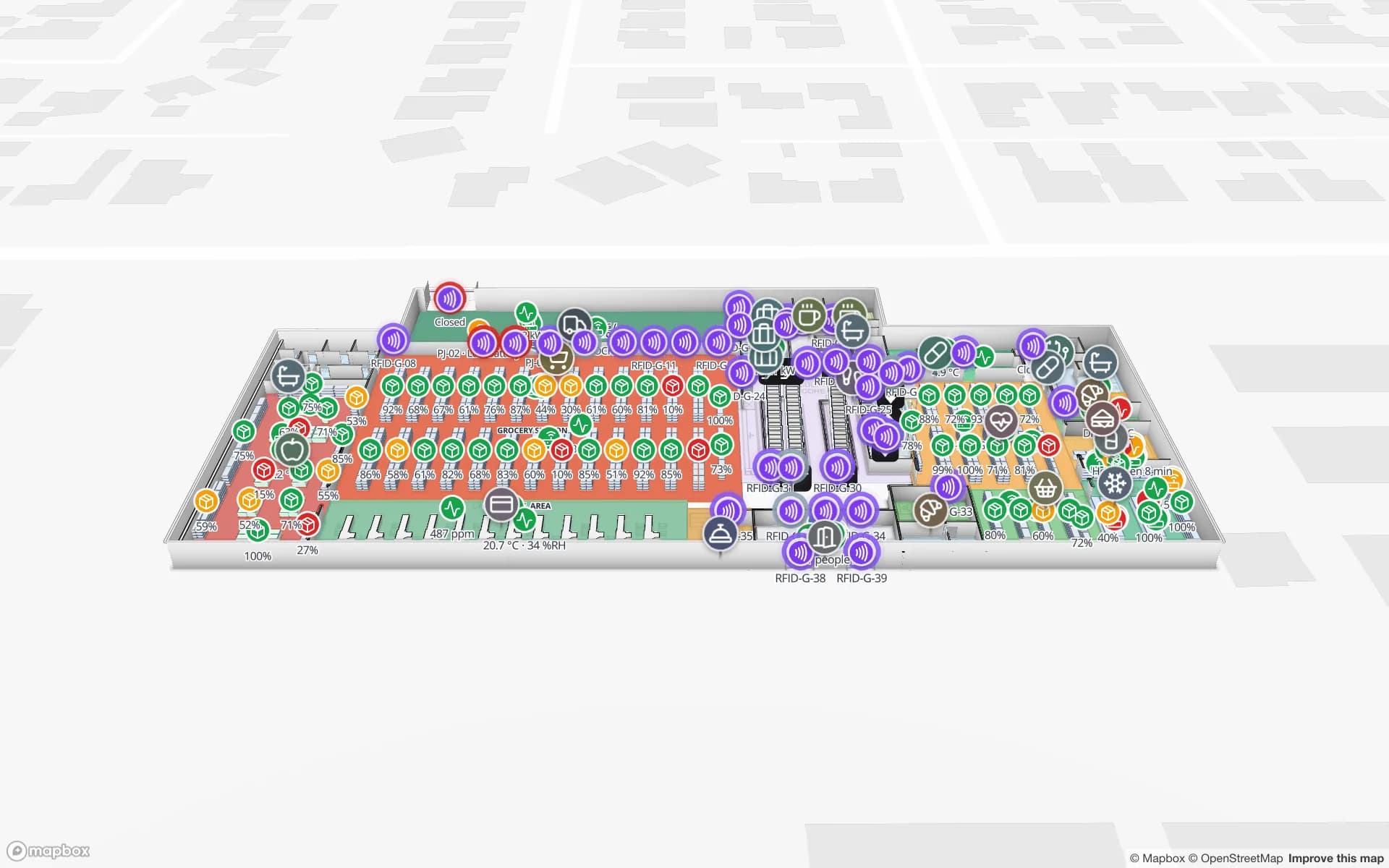
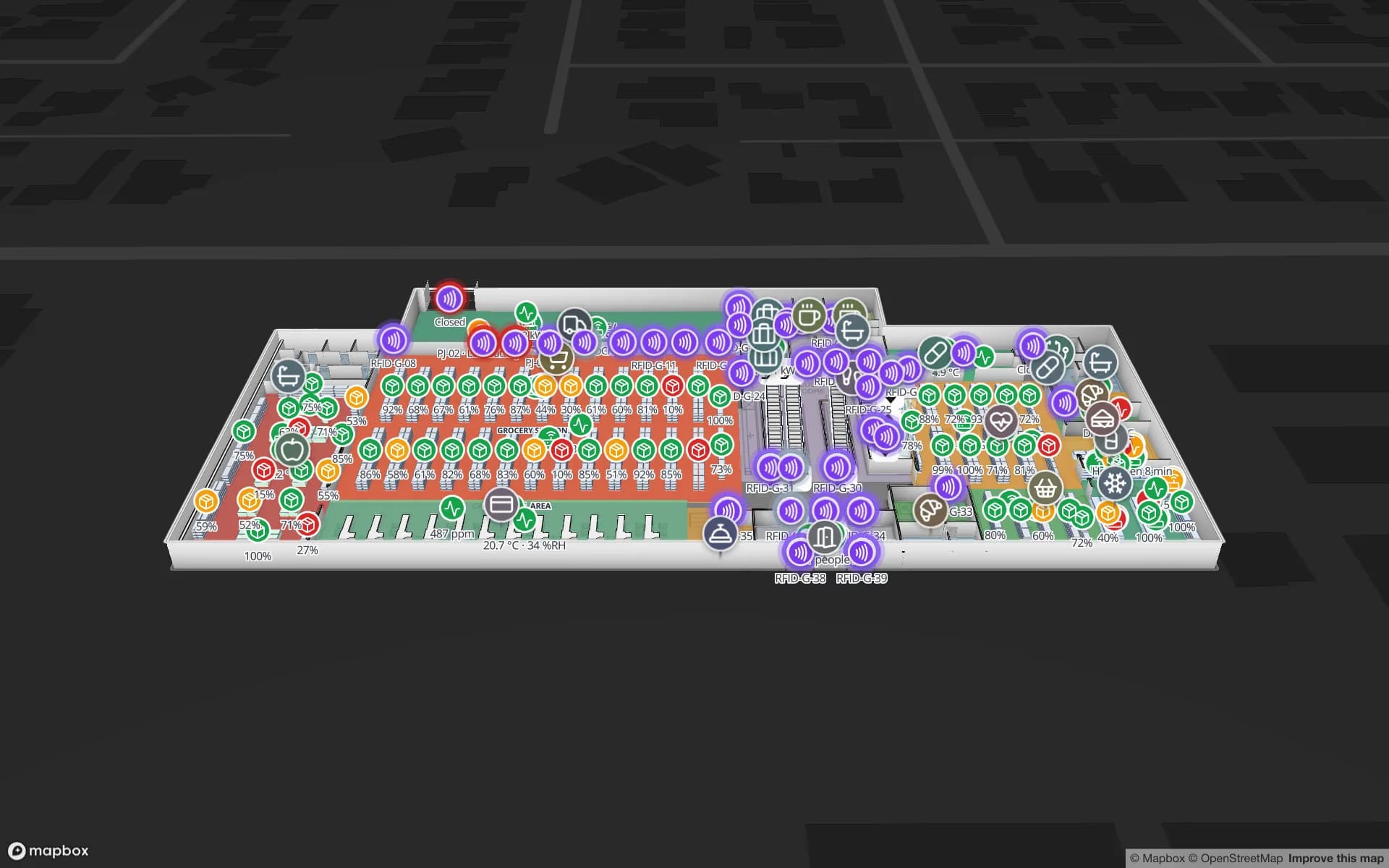
Organised retail has spread from the metros into tier-2 cities, and a typical mall now stacks a hypermarket, fashion anchors, a food court, a multiplex and several parking levels around escalator cores. Apparel retail is where item-level RFID tends to start, often with tags applied by the supplier.

The Retail Mart demo shows what that looks like on a map: three floors joined by escalators and lifts, 85 RFID readers at the entrances and escalator landings, shelf and department stock, and fridge temperatures. Mall management can keep service corridors, loading bays and vacant units on internal layers while visitors get a public link with shops, toilets and lifts.

Airports that keep getting bigger

Delhi’s Indira Gandhi International Airport is the country’s busiest, Mumbai and Bengaluru are not far behind, and new capacity keeps opening: Bengaluru’s Terminal 2 in 2022, Navi Mumbai International Airport for commercial flights in December 2025 and Noida International Airport at Jewar in June 2026. New terminals need maps for operations staff, ground handlers and contractors long before the signage settles.

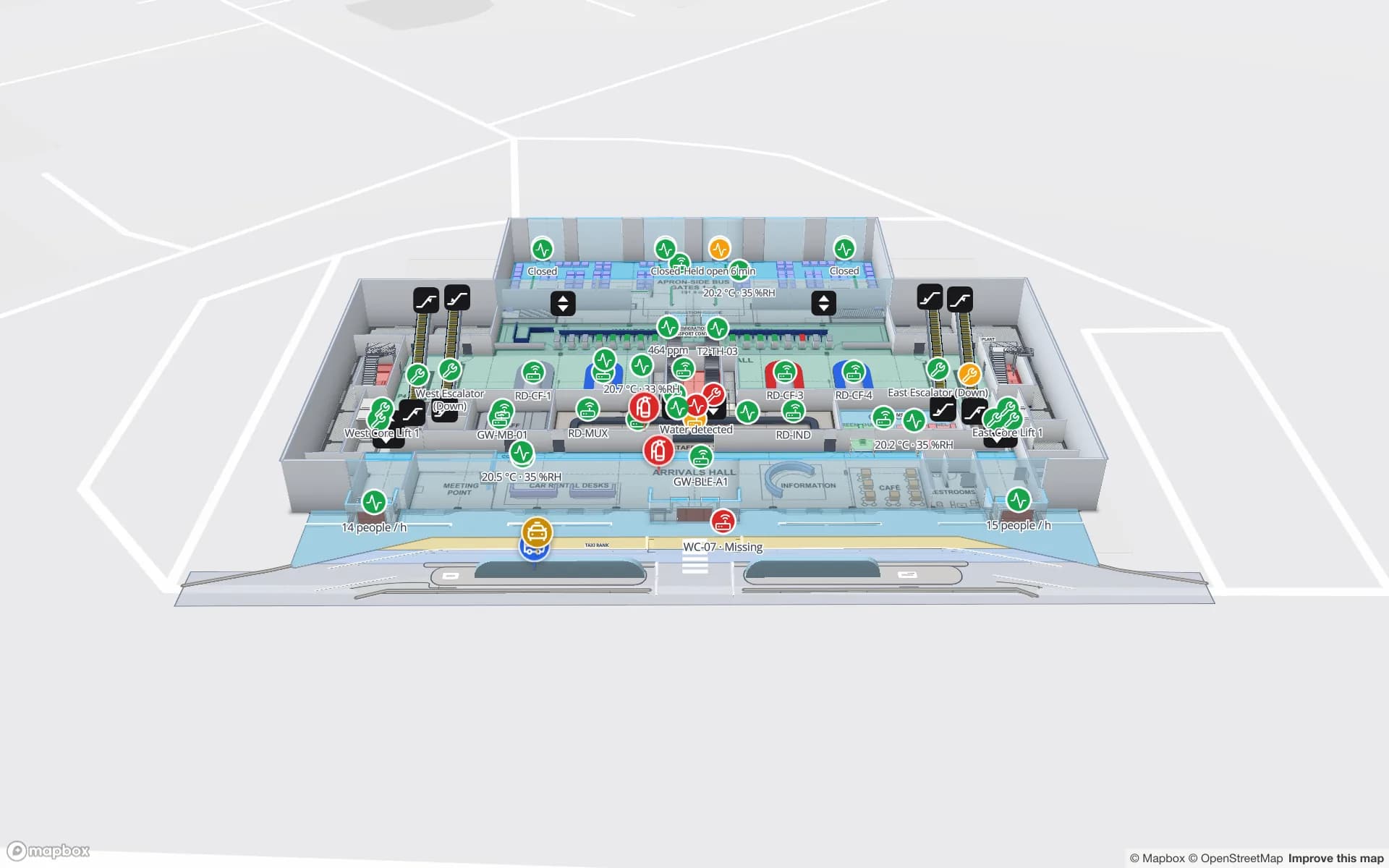
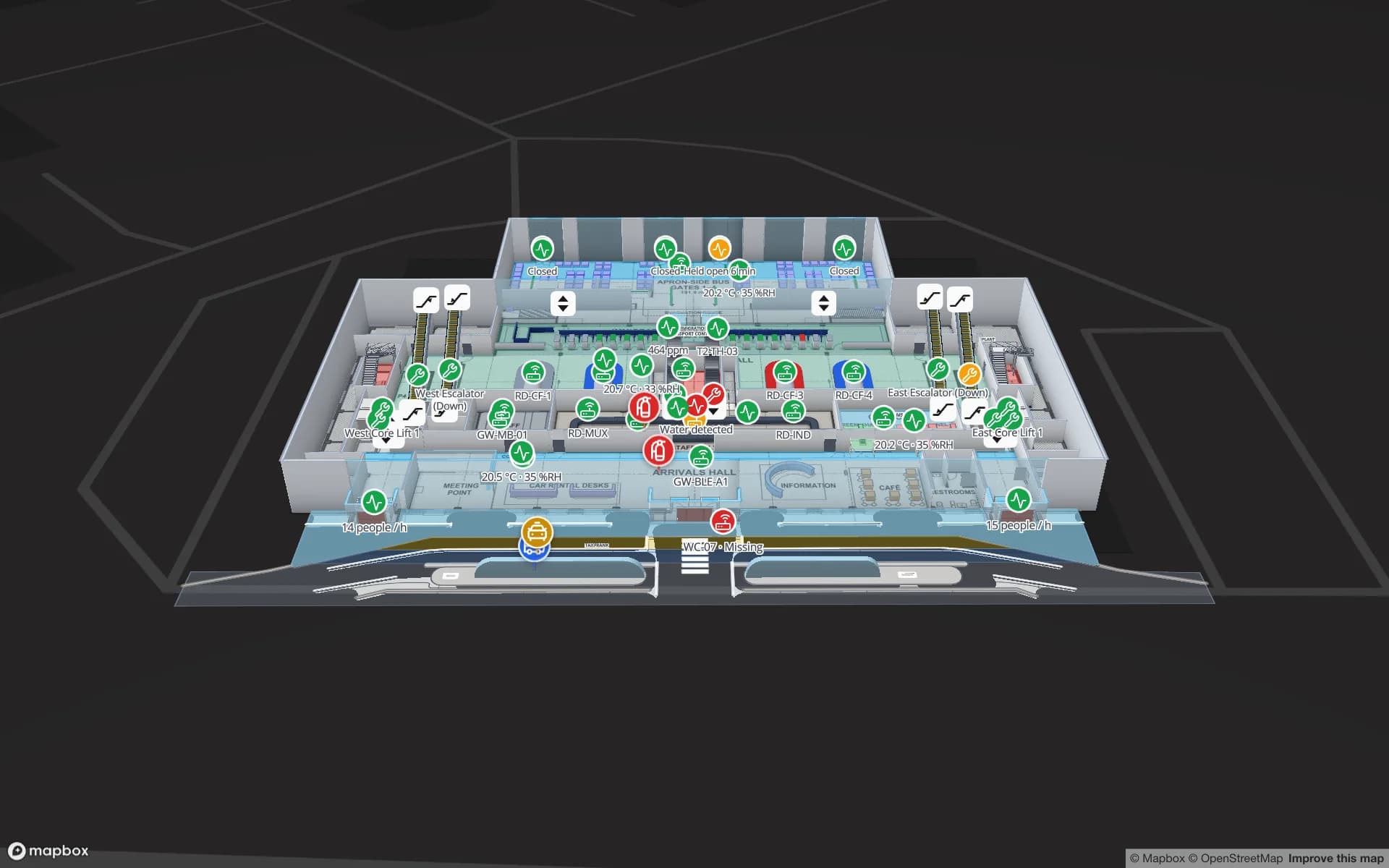
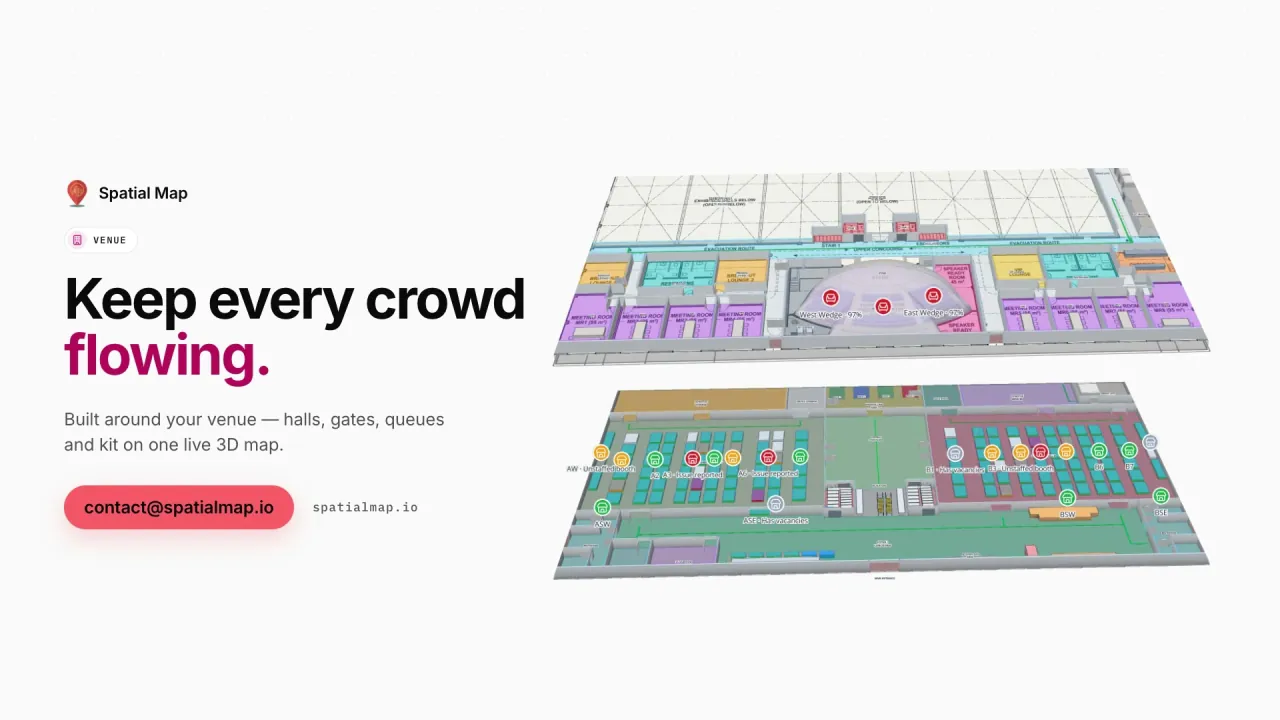
The Silverbay demo maps a two-floor terminal with check-in islands, security lanes, immigration, gates, carousels and retail, each coloured by live throughput or crowding, and bag tags read from bag drop to the carousel. Routes run across floors through stairs, lifts and escalators, with a step-free option.

Electronics, automotive and pharma plants

Production-linked incentive schemes have drawn electronics and mobile-phone assembly into India alongside its long-established automotive clusters, and the country is one of the world’s largest producers of generic medicines. Each of those plants has high-value stores, line-side bins, cold rooms or quarantine areas that someone needs to find fast.

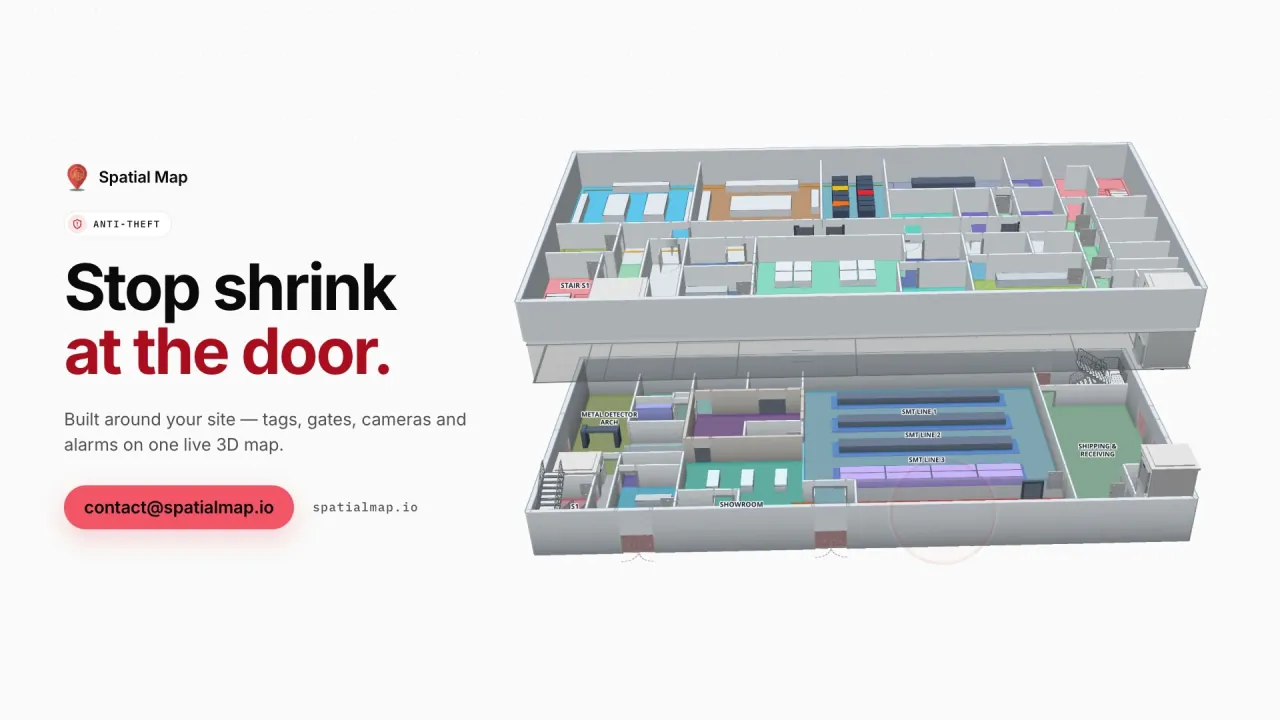
In the Northgate demo, 863 tagged units move reader by reader through an electronics secure store; in Polar Pharma, cold rooms are coloured by live temperature and held pallets are marked in place. Spatial Map makes no GMP or Schedule M claim — your quality system stays the record.

RFID at 865–867 MHz, RTLS from your vendor

India uses 865–867 MHz for UHF RFID, a band the Wireless Planning and Coordination (WPC) wing of the Department of Telecommunications exempts from licensing within set power limits; later rules extend short-range devices to 865–868 MHz. Readers must be configured for the Indian band and normally carry WPC equipment type approval; most global UHF tags are designed to read across the world’s bands. RFID tracking in India goes into the details.

For real-time location, Spatial Map is the map, not the radio. BLE, UWB or Wi-Fi systems compute positions; Spatial Map shows the zone or x/y they write to a table, with history playback. See RTLS software and indoor mapping in India for positioning and navigation in public buildings.

The DPDP Act, language and working with us

The Digital Personal Data Protection Act, 2023 is India’s data-protection law, and its Rules, notified in November 2025, bring the obligations in over a phased period of about 18 months. Tags on pallets, cartons and tools identify no one; reads tied to an employee badge or a visitor’s phone may be personal data. Your legal advisers decide what the Act requires of you. Spatial Map does not claim DPDP compliance on your behalf; the DPA and security page describe how it handles your data.

The interface is in English (plus Arabic, Chinese, French, German and Spanish), not Hindi or any other Indian language. Spatial Map is sold online in US dollars, with no Indian office, partner or rupee price list. Our team works with Indian customers remotely through the contact form.

How Spatial Map does it

From an Indian site plan to a live map

  1. 01

    Upload the plan

    The architect’s PDF, a DWG or a scan of the sanctioned layout, placed in metres.

  2. 02

    Draft with AI Map

    Walls, doors, racks and areas drafted on the plan, reviewed and added by your team.

  3. 03

    Connect WMS, readers and RTLS

    Your integrator’s middleware posts rows, or Spatial Map polls a REST endpoint.

  4. 04

    Run, alert and share

    In-app alerts on table rules, reports in PDF or Excel, and read-only links per client.

What Indian teams use it for

Multi-client 3PL warehouses

Bins coloured by client and status, RFID cartons at the doors and a link per client.

Mall and apparel store stock

Item-level reads across floors, escalators and lifts.

Airport terminal operations

Check-in, security, gates and carousels coloured by live load.

Electronics secure stores

High-value units followed through the cage, with a replayable trail.

Pharma cold rooms

Temperature zones, quarantine areas and held batches on the plant map.

See it on real demo facilities

Fictional names, real floor plans, live sensors, RFID, BLE tags and gateways — open any of them in the browser.

All 13 demo facilities

Questions from teams in India

No. It is software: the live map that sits above your RFID readers, BLE gateways or UWB anchors. Your integrator supplies and installs the hardware and middleware; Spatial Map receives their rows through a table write API or by polling a REST endpoint and shows them on the floor plan.

UHF readers in India operate in the 865–867 MHz band, licence-exempt under WPC rules within power limits. Ask your supplier for a reader configured for India with WPC equipment type approval. Spatial Map itself never talks to the radio, so it works with any compliant reader.

No tool does that on its own. The Digital Personal Data Protection Act, 2023 applies to how you collect and use personal data; tracking assets rather than people avoids most of the question. Spatial Map shows only the data you send and offers a DPA; your legal advisers decide what the Act requires.

No. Spatial Map is sold online and our team works with Indian customers remotely, by video call and through the contact form. Nothing is installed on site, so no visit from us is needed.

Prices are in US dollars only: a 7-day free trial for up to 5 facilities with no card, then Pro at $60 a month or $600 a year for up to 4 facilities. Larger rollouts are quoted as custom services. The MIT-licensed open-source edition can be self-hosted at no licence cost.

Not yet. It is in English, Arabic, Chinese, French, German and Spanish. Rack codes, room names and report titles can be typed in Devanagari or any other script and appear as written.

Map your first Indian site this week.

Start the free trial, or send a warehouse, store or terminal plan with a sample of your WMS or reader data through the contact form.