Leipzig · Leipzig/Halle Airport, the freight village and central Germany

Warehouse tracking in Leipzig, from the airport apron to the last dock door

Spatial Map shows warehouse stock, pallets and shipments on a live 3D map of each building, using the reads and rows your WMS, RFID readers and scanners already produce. For warehouse tracking in Leipzig one fact shapes the working day: Leipzig/Halle Airport lets cargo flights operate 24 hours a day, so the handling halls and distribution sheds around it run through the night. Each hall, cross-dock or shed can be its own facility, with dock doors, staging lanes and racks drawn as they are on the floor.

No credit card. Runs in the browser. Pro is $60/month for up to 4 facilities. Book a demo

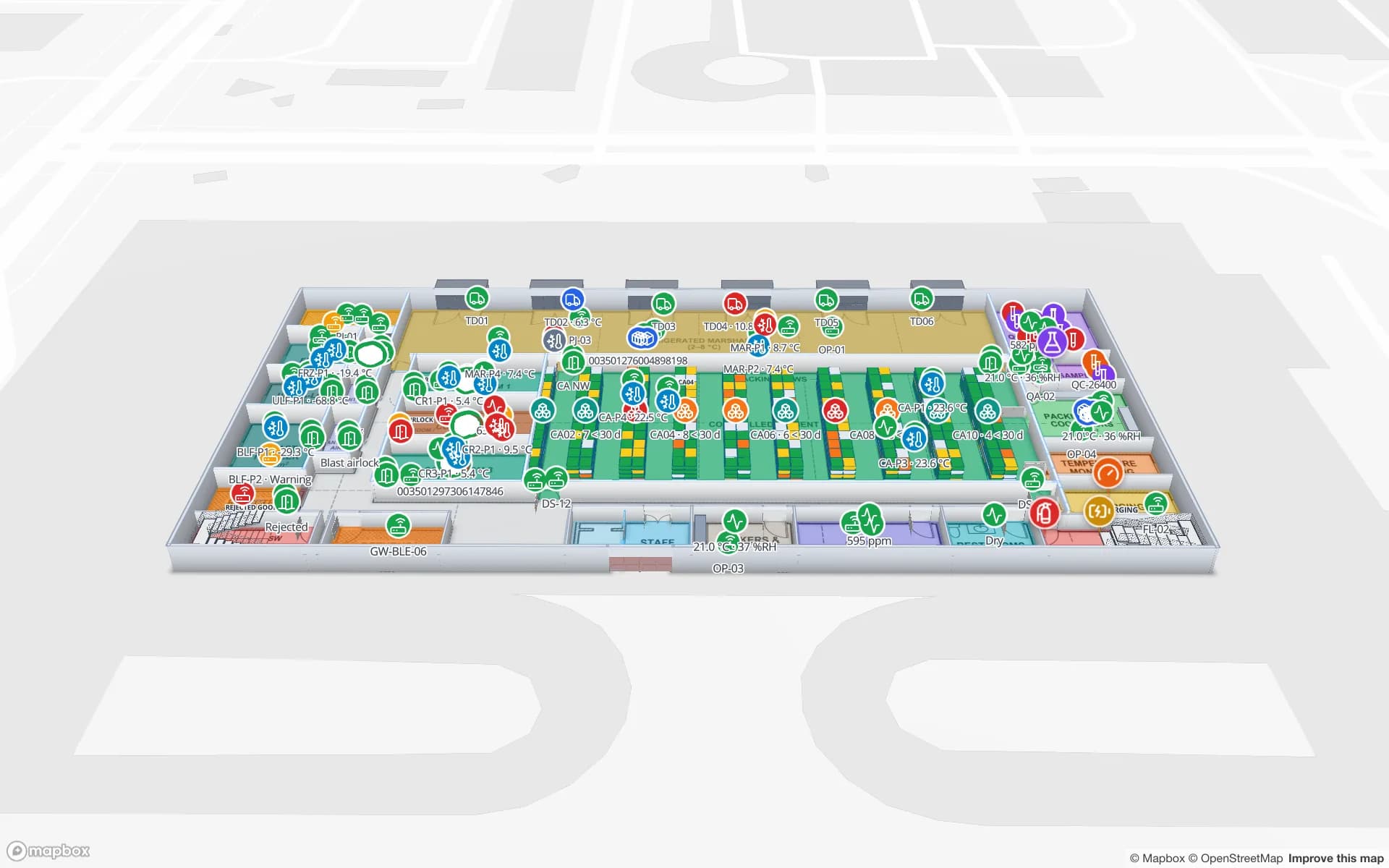
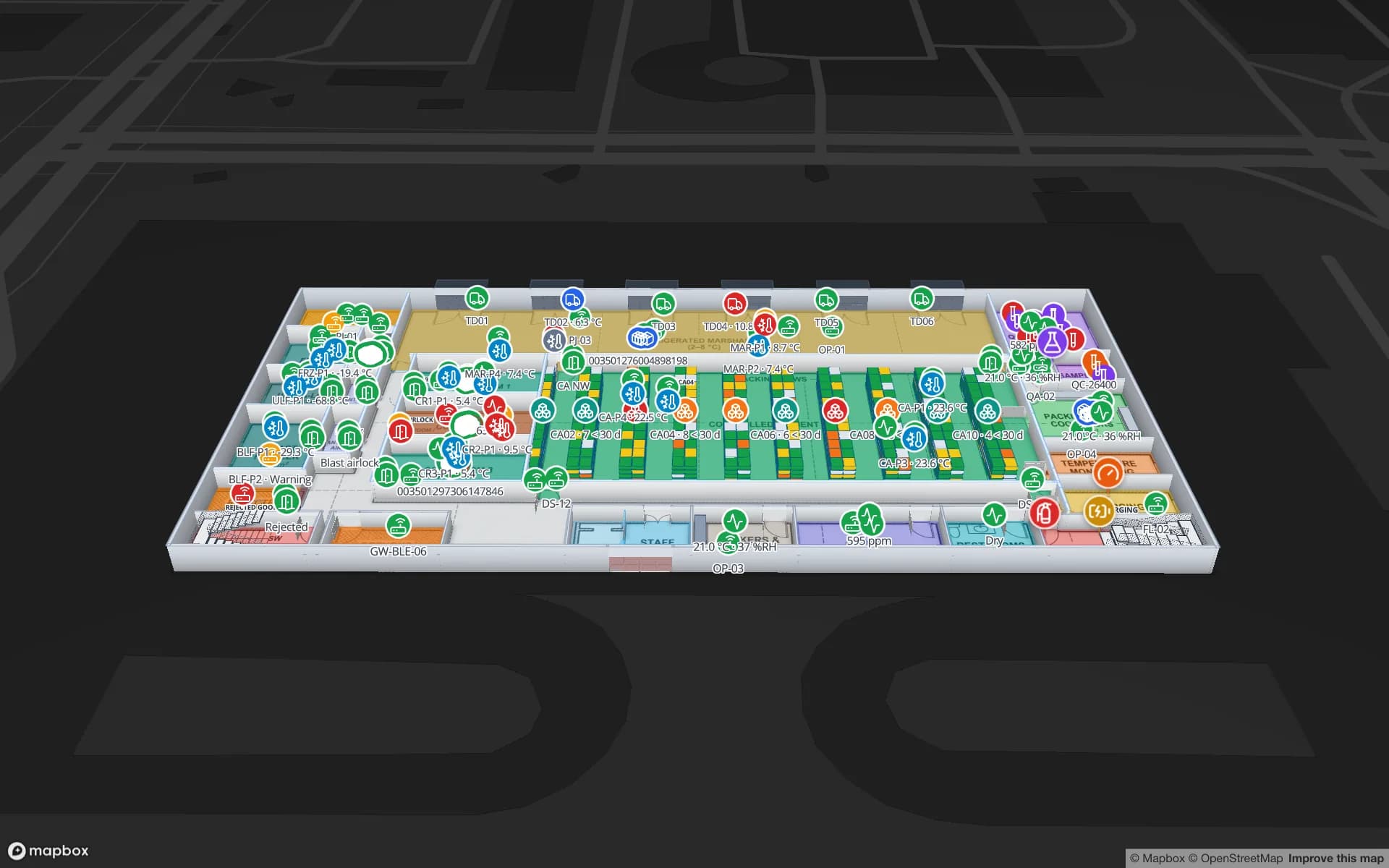
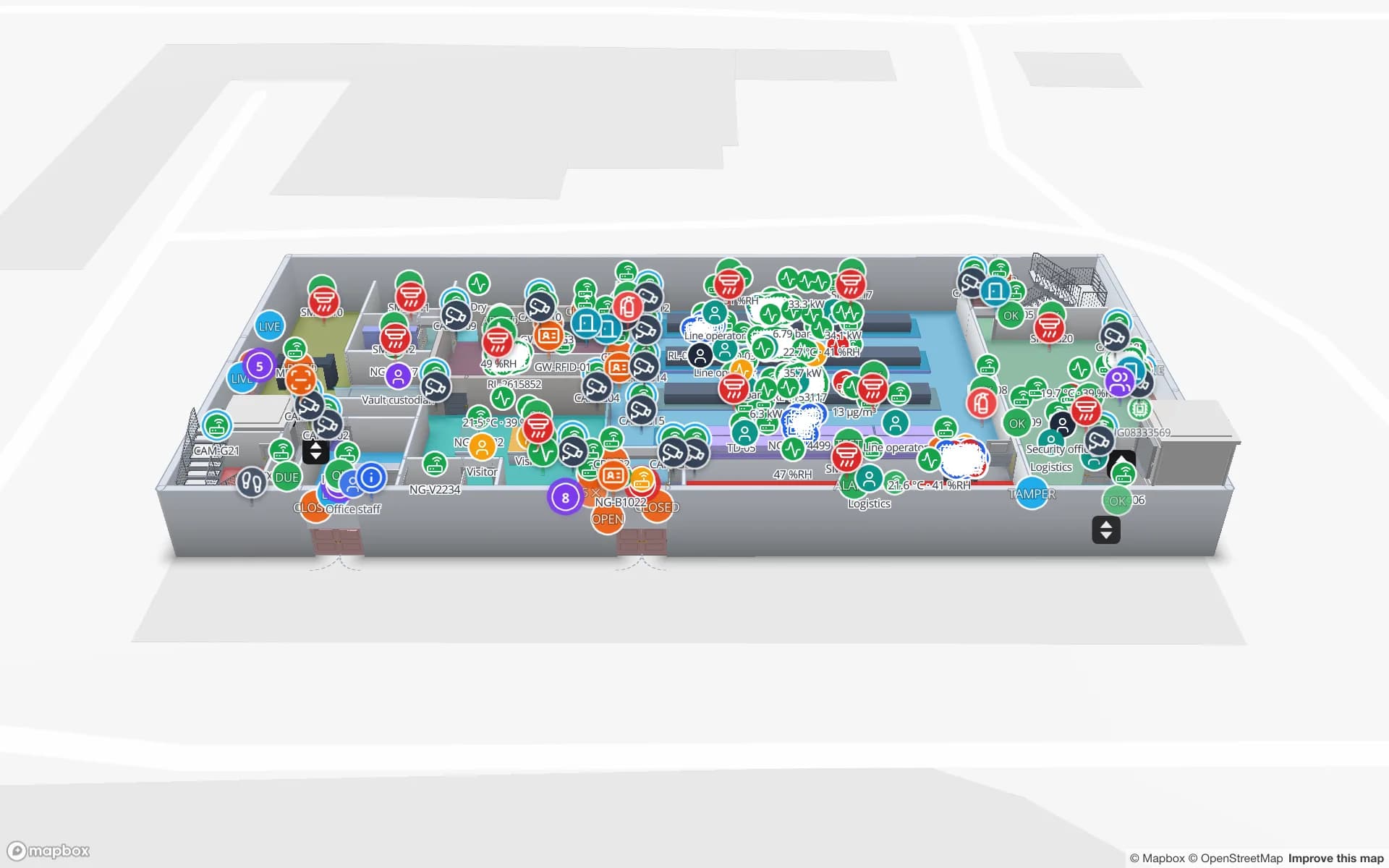
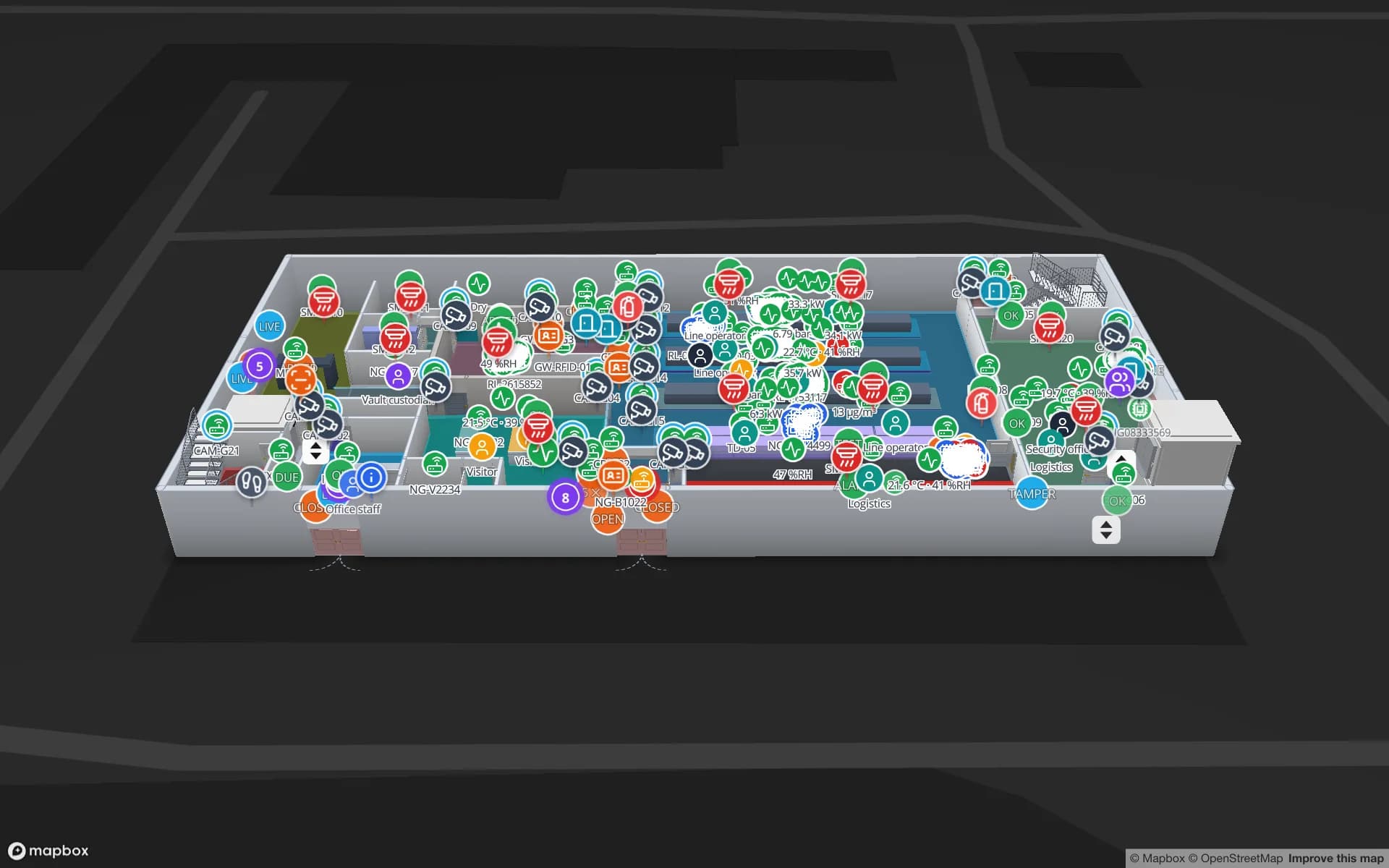
Crestline Fulfillment Center, a fulfillment center demo, in the Spatial Map 3D viewer with live device markers
Crestline Fulfillment Center
Crestline Fulfillment Center, a demo warehouse: 20 racks with 2,204 locations, staging lanes, dock doors and the trailer yard.
Rack locations in the Crestline fulfillment demo
2,204
Dock doors in the Eastport cross-dock demo
50
How often alert rules are checked, with alerts shown in the app
15 s
Free trial, up to 5 facilities, no card
7 days

A cargo airport that does not close at night

Leipzig/Halle Airport has two separate 3,600 m runways. The city’s investor pages say cargo flights can operate 24 hours a day and that the airport has no slot restrictions; they also report that air freight rose from around 1.3 million to almost 1.6 million tonnes in 2021. Cargo that lands at 3 a.m. may be on a truck to a consignee’s dock by 5 a.m., and a building that feeds or receives from an airport works in shifts that a daytime warehouse never sees.

In a night shift the supervisor has fewer people and less time to look around, so the question “what is staged where, and for which departure?” has to be answered by a screen, not a walk. Draw the hall once, mark staging lanes and dock doors, let your handhelds or RFID portals post what they read, and colour each lane by status or cut-off. Spatial Map is a viewer for your own building: it has no connection to airline, ground-handler, customs or terminal systems, and it shows what your own scans and your WMS say.


Handling halls: bays, staging and the cold room

The airport’s own World Cargo Center gives a feel for the scale of a modern handling hall: 35,325 m², direct apron access, 38 loading bays, parking for 171 lorries, a refrigeration unit and an annual handling capacity of 200,000 tonnes, according to the investor pages. The airport operator’s subsidiary also says it handles temperature-sensitive shipments around the clock. Halls like this, and the smaller ones around the airport, have the same three problems: a shipment is split across several pallets, a pallet is staged in the wrong lane, and a cold-room door stays open.

Map each bay and lane as an area and the cold room as its own area with a temperature sensor reporting into a table. A count rule can raise an in-app alert when a lane holds more pallets than its plan; a “not updated for N minutes” rule flags a probe that went quiet. The Eastport demo shows 50 dock doors, 44 yard slots and 1,180 RFID pallets, and Polar Pharma shows temperature zones, door sensors and reefer docks. Spatial Map makes no compliance claim for temperature-sensitive cargo; your quality system remains the record.

The airport region and the freight village

The region is marketed as “airea – The Airport Region in Central Germany”, under a joint economic area agreement from 2022, and the airport lists daily rail freight services to major European ports among its links. A 2023 trade article describes the nearby GVZ Leipzig freight village as more than 600 hectares gross and the largest in Germany, with a rail container terminal and the A14 and A9 motorways close by. Between them, the airport, the freight village and the logistics parks around them hold the multi-client sheds where one building stores goods for several companies.

A multi-client shed is where one map per building pays off. Draw it once, tag each rack zone with the client it belongs to, and give each client a read-only share link limited to its own layers and floors, so a client can see its stock without a phone call. Stock by bin can start as a CSV or Excel upload from your WMS; the CSV bin inventory guide shows the pattern, and the Crestline demo shows 2,204 rack locations coloured by status.

Mapping the shed you already have

Most older halls have a drawing that no longer matches the floor. Upload it as it is — PDF, DWG (AutoCAD R2004–R2018, placed as a picture) or image — align it at real scale, and let AI Map draft walls, doors, racks and areas for a person to review. AI Map is available on paid plans and the trial, with a monthly limit. Then rename racks to match the labels on the aisle ends, so a row in your WMS lands on the right rack.

The interface is available in German as well as English, French, Spanish, Arabic and Chinese, and each user picks their own, so a night-shift lead can work in German while group logistics uses English; this page is also available in German at country level. Room and rack names stay as you type them.

Services for teams in Leipzig

Where Leipzig teams usually start depends on the building:

Also served nearby

The same approach covers Halle (Saale), Schkeuditz, Markranstädt and the Merseburg–Leuna chemical-industry area, along with the logistics parks that line the A14 and A9. Nothing needs to be installed at any of them: the map opens in a browser.

How Spatial Map does it

From the dock door to a live hall map

  1. 01

    Pick one building

    A handling hall, a cross-dock or a multi-client shed — wherever a wrongly staged pallet costs a departure.

  2. 02

    Map doors, lanes and racks

    Upload the plan or photo, let AI Map draft the floor, and name areas the way your WMS names them.

  3. 03

    Connect scans and stock

    Your WMS and handhelds post rows through the table write API, a polled REST endpoint, or CSV and Excel uploads.

  4. 04

    Add lane and silence rules

    In-app alerts for lanes over plan, cold rooms out of range and probes that stopped reporting overnight.

What Leipzig teams track

Airport-side handling and cross-dock

Dock doors, staging lanes and pallets staged for the right departure.

Multi-client contract logistics

Stock by bin per client, with a read-only link for each.

Temperature-sensitive cargo

Cold rooms, door sensors and reefer docks on the same plan.

Forklifts and cages in large halls

Where each truck and roll cage is, and which are idle.

See it on real demo facilities

Fictional names, real floor plans, live sensors, RFID, BLE tags and gateways — open any of them in the browser.

All 13 demo facilities

Warehouse tracking in Leipzig — questions we get

No. It has no link to airline, ground-handling, customs or terminal systems. It shows what happens inside your own building, from your own scans, WMS or ERP and sensors, so it complements the systems that run the airport rather than replacing them.

Mostly through rules. Staging lanes over their planned count, cold-room probes out of range and readers that stopped reporting each raise an in-app alert, checked every 15 seconds, and the alert shows on the map. Alerts appear in the app only; there is no SMS, email or push, so keep the map open on the screen the shift watches.

Yes, as readings: temperature probes post rows to a table and the cold-room area is coloured by its value, with history you can replay. Spatial Map is a monitoring view and makes no claim about compliance for any regulated goods; your quality system stays the record.

Yes. Upload a scan or photographed plan, align it at real scale, or sketch the outer walls and racks and photograph the sketch. AI Map can draft from the picture and you correct what it gets wrong. Our services team can also do the mapping remotely for a fixed price.

Yes. The interface is available in German alongside English, French, Spanish, Arabic and Chinese, and each user chooses their own language. Names you type, such as racks and areas, stay as written.

No. Spatial Map is sold online and our team works with customers in Germany remotely, by video call and through the contact form. There are no local resellers or partners.

In US dollars, the same worldwide: a 7-day free trial for up to 5 facilities with no card, then Pro at $60 a month or $600 a year for up to 4 facilities. RFID hardware, if you ask us to source it, is quoted per project and is not part of the subscription.

Map one Leipzig dock before tonight’s flights.

Start the free trial and open the Crestline demo, or send us the plan of a handling hall or shed and a sample of your scans through the contact form.