Manama · Khalifa Bin Salman Port, Salman Industrial City and the airport

Inventory tracking in Manama, for stock that is bonded, cleared or in transit

Spatial Map shows stock by rack, bin and lane on a live 3D map of each warehouse, coloured from the figures your WMS, ERP or RFID reads already produce. Inventory tracking in Manama has one extra question that most cities do not: is this stock bonded or cleared? Goods land at the port, wait in a logistics zone, leave by air or cross the causeway by road, and the same pallet changes status on the way. The map is where that status becomes a bay.

No credit card. Runs in the browser. Pro is $60/month for up to 4 facilities. Book a demo

Crestline Fulfillment Center, a fulfillment center demo, in the Spatial Map 3D viewer with live device markers
Crestline Fulfillment Center
Crestline Fulfillment Center, a demo warehouse: 20 racks and 2,204 locations coloured by stock status, with staging lanes, packing and the trailer yard.
Rack locations in the Crestline demo
2,204
Racks in that demo
20
How often alert rules are checked, with alerts shown in the app
15 s
Free trial, up to 5 facilities, no card
7 days

Khalifa Bin Salman Port: where a pallet’s status starts

The port stands on 110 hectares of reclaimed land inside Salman Industrial City, with a 1,800 m quay for general cargo, Ro-Ro and passengers and four 61 m post-Panamax cranes serving the container terminal, according to the Ministry of Transport and Telecommunications. It is linked to the older Mina Salman port close to Manama. The terminal operator describes a customs-bonded facility where cargo can be stored and then cleared and sent by road over the King Fahd Causeway.

For a warehouse operator the lesson is that the same stock keeping unit sits in two legal states, and a pick list that ignores it is a problem. Keep the state as a column in the stock table, such as bonded, cleared or on hold, and let a style rule colour each bin by it. The map then shows a picker which bay is free to release. It is a view of your own data; customs records stay in your customs systems and Spatial Map makes no compliance claim.


Port to airport in two hours: a lane for stock in a hurry

The airport is 13 km from the port, and since December 2021 the operator has described a sea-to-air hub between them with a two-hour end-to-end bonded lead time for containers. Whatever the route, time-critical stock, whether electronics, spares or perishables, needs somewhere to wait that is close to the dock and obvious on the floor.

Draw that as an express staging lane beside the dock doors, name the bays the way your WMS names them, and add a count or age rule: an in-app alert if a pallet sits in the lane for more than an hour. The Crestline demo shows staging lanes, packing output and the trailer yard in front of the docks, and the post on cross-dock and yard visibility covers the door and lane pattern.

Salman Industrial City and its neighbours: one site, many owners’ stock

The Bahrain Economic Development Board describes Salman Industrial City as connected to the Bahrain International Investment Park, the Bahrain Investment Wharf and the Bahrain Logistics Zone, which in turn link to airport cargo and port terminals. A shed in that cluster often holds stock for several owners at once, each with its own rules, counts and reports.

Put the owner in a column of the rack table, draw bin locations with the rack tool, and colour by owner or by status as the viewer needs. A client can have a read-only share link limited to the floors and layers you choose, with an expiry date, and the Excel or PDF stock report can be exported per owner. The post on CSV bin inventory to a live rack map walks through the first upload, without any RFID at all.

The airport’s new terminal: duty-free stock and a cargo village to come

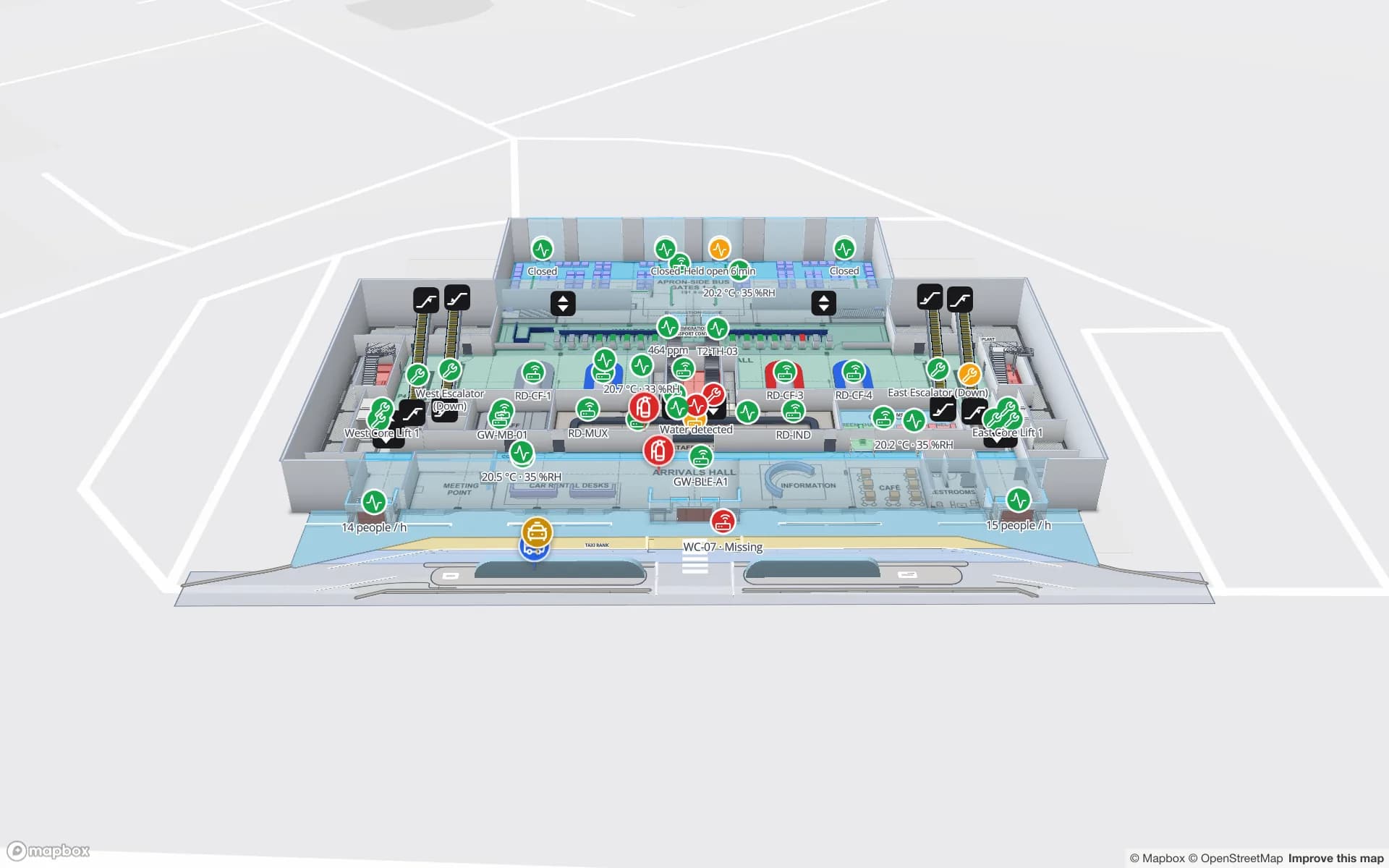
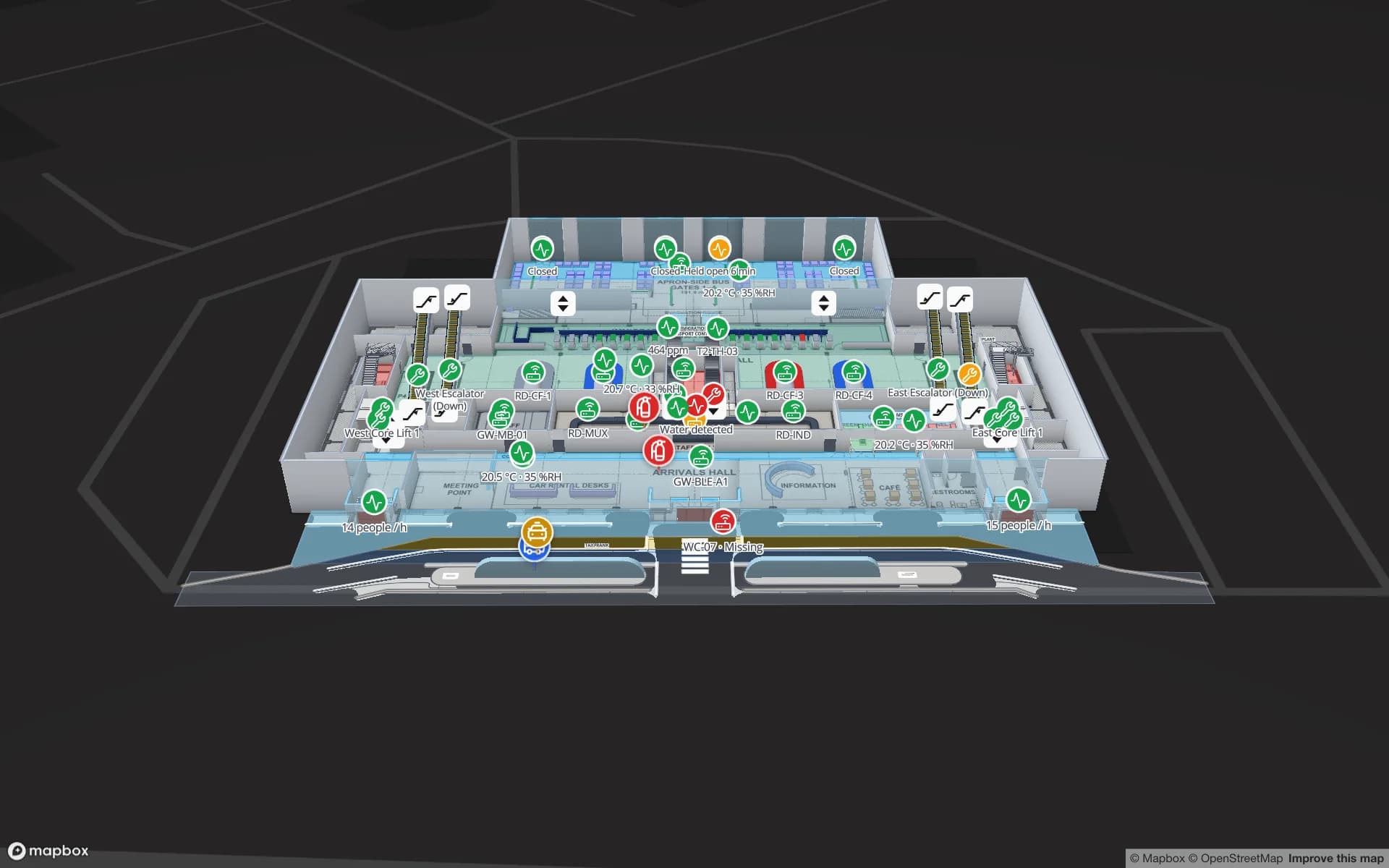
The new passenger terminal at Bahrain International Airport covers about 210,000 square metres, roughly four times the old facilities, and was designed for 14 million passengers a year; it began operating on 28 January 2021. It includes about 3,300 square metres of duty-free space, and every shop and stockroom in a terminal has the same problem as a small supermarket: what is on the shelf, what is in the back and what has gone missing.

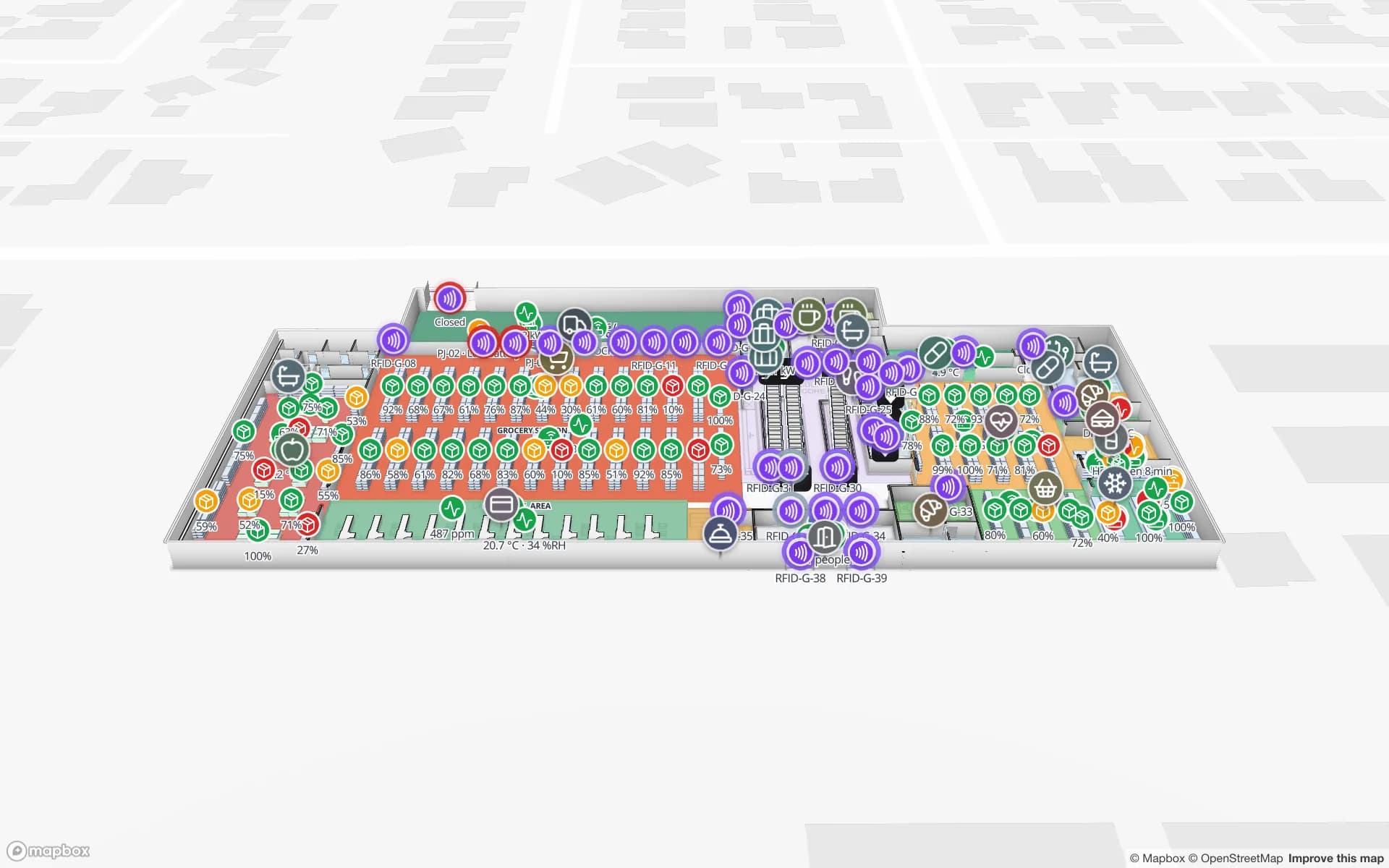
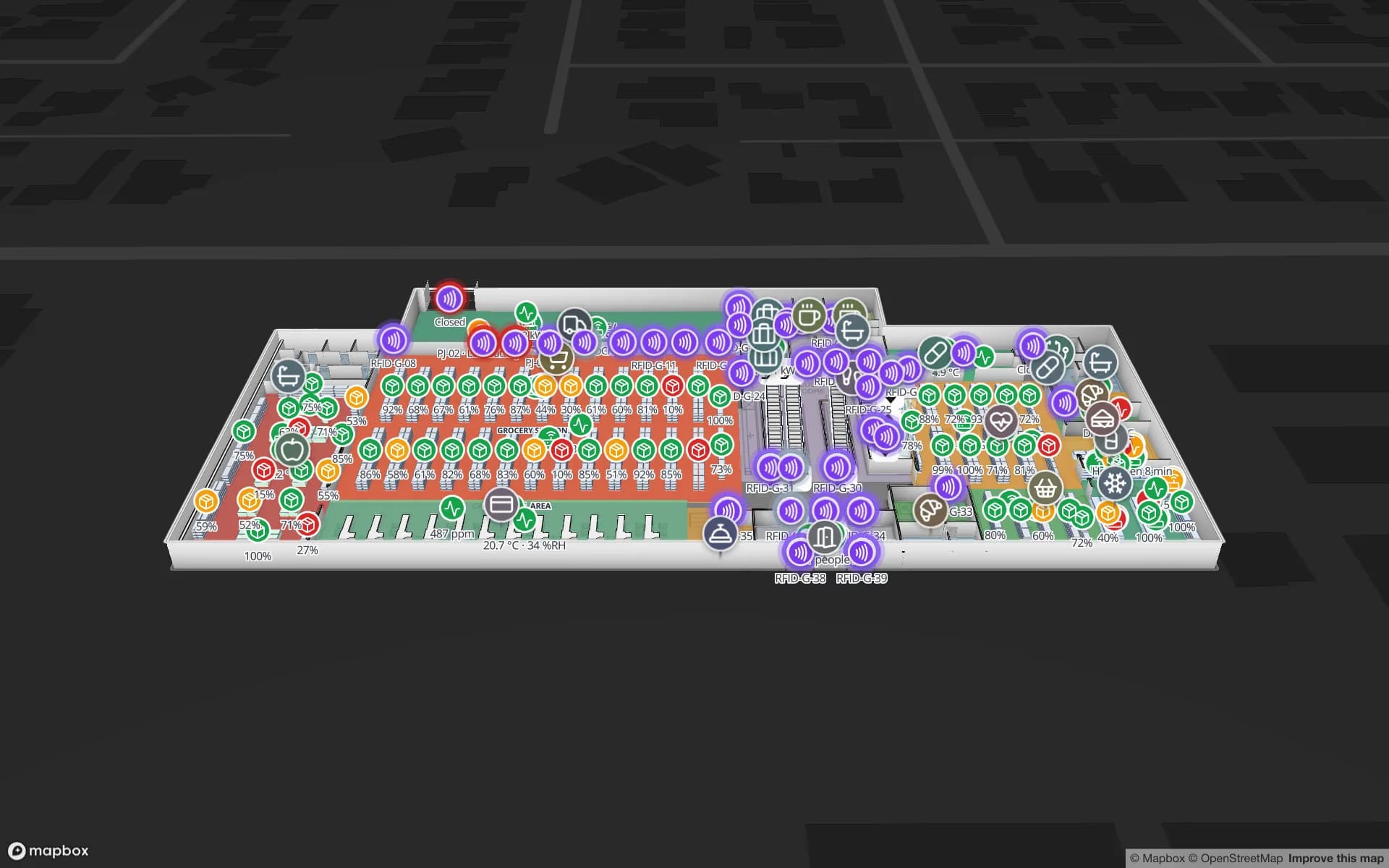
Item-level RFID makes that countable, and the post on how RFID stock counting works explains how a handheld walk replaces a manual count. The Retail Mart demo shows shelf and department stock, with RFID readers at exits and escalators, over three floors. Separately, a foundation stone was laid in June 2022 for an Express Cargo Village north of the runway; when it opens, its sheds will need maps like any other warehouse, and Spatial Map has no connection to the airport’s own cargo systems.

Services for teams in Manama

Where Manama teams usually start:

  • Third-party warehouses start with inventory tracking, rack by rack, from a spreadsheet, then add RFID at the dock doors.
  • Companies that move parts and equipment between sites add asset tracking for pallets, returnable containers and forklifts.
  • RTLS and UWB matters mainly for big yards and plants where vehicles must be located continuously.
  • Mapping is quick from the shed’s own CAD file or a photographed plan; see warehouse indoor mapping.
  • Readers, antennas and tags can be sourced on request, quoted per project, with warranty from the manufacturer: hardware and demo kits on request.
  • Where the WMS is home-grown and needs a bridge, our team builds integrations, handheld apps and other custom software as client projects. The product runs as cloud or on-premises.

Also served nearby

The same approach covers Hidd, Sitra, Muharraq, Sakhir and Riffa, and anything along the King Fahd Causeway road. Nothing needs to be installed at any of them: the map opens in a browser, in Arabic or English.

How Spatial Map does it

From a spreadsheet to a stock map in Manama

  1. 01

    Start from the stock file

    Upload a CSV or Excel list of bins and quantities, with a status and owner column, as a table.

  2. 02

    Draw racks and lanes

    Upload the shed’s plan, align it, and draw racks with bin locations, dock doors and staging lanes named like your WMS.

  3. 03

    Colour by status

    A style rule shows bonded, cleared or on-hold bins in different colours, and by owner when you need it.

  4. 04

    Add rules and links

    In-app alerts for stock waiting too long, and read-only links for owners, with exports to PDF and Excel.

What Manama teams track

Bonded and cleared stock by bin

Rack grid coloured by status and owner, from your WMS export.

Express lane at the dock

Pallets for the airport, with an age rule on the staging lane.

Shared sheds for several owners

One map, each owner’s stock filtered and shared by link.

Terminal retail and stockrooms

Shelf and back-room stock by floor, counted with RFID handhelds.

See it on real demo facilities

Fictional names, real floor plans, live sensors, RFID, BLE tags and gateways — open any of them in the browser.

All 13 demo facilities

Inventory tracking in Manama — questions we get

It shows it; it does not decide it. Your WMS or customs system keeps the legal record. You send a status column to a table and the map colours each bin by it, so staff can see which bays are free to release. Spatial Map makes no compliance claim and has no connection to customs systems.

Yes. Add an owner column to the rack table, filter or colour by it, export a PDF or Excel report per owner, and give each owner a read-only share link limited to the floors and layers you choose, with an expiry date.

No. Most warehouses start with a CSV or Excel stock list and a drawn rack grid, then add RFID at dock doors or handheld counts once the layout is right. Your developers can post rows through the write API, or Spatial Map can poll a REST endpoint.

For the part inside your own buildings, yes. The trailer in the yard, the dock door and the staging lane are on the map. Spatial Map does not track a truck on the road or receive border data; a status row from your own system can mark a load as dispatched.

Yes, with a full right-to-left layout, alongside English, Chinese, French, German and Spanish; each user picks their own. Bin codes and area names are your own text.

No. Spatial Map is sold online and our team works with customers in Bahrain remotely, by video call and through the contact form. There are no local resellers or partners.

In US dollars, the same worldwide: a 7-day free trial for up to 5 facilities with no card, then Pro at $60 a month or $600 a year for up to 4 facilities. RFID hardware, if you ask us to source it, is quoted per project and is not part of the subscription.

Put one Manama warehouse’s stock on a map.

Start the free trial and open the Crestline demo, or send us a stock export and the plan of a warehouse through the contact form.