Tashkent · Airport cargo, the Yangi Avlod zone and the Fergana route

Inventory tracking in Tashkent, from the cargo terminal to the shop floor

Spatial Map is inventory tracking software that shows stock where it is: bins, racks, shelves and floors on a live 3D map, coloured from your WMS, ERP, barcode and RFID data. Inventory tracking in Tashkent covers a capital that is also the country’s commercial centre: an airport with a new cargo terminal, a planned rail-connected logistics hub on its outskirts, wholesale and retail distribution that serves the whole country, and a rebuilt city whose buildings come with drawings of very different ages.

No credit card. Runs in the browser. Pro is $60/month for up to 4 facilities. Book a demo

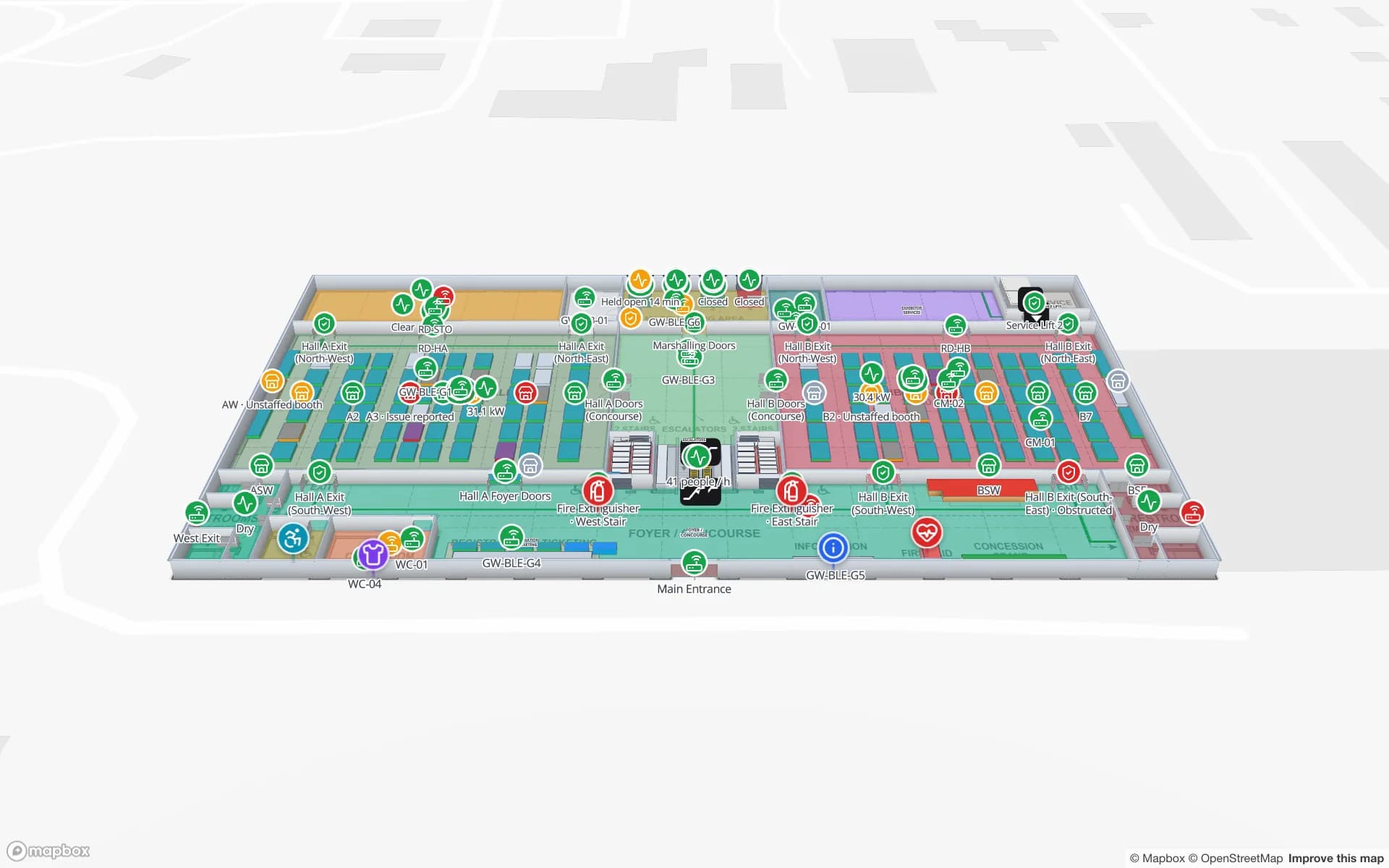
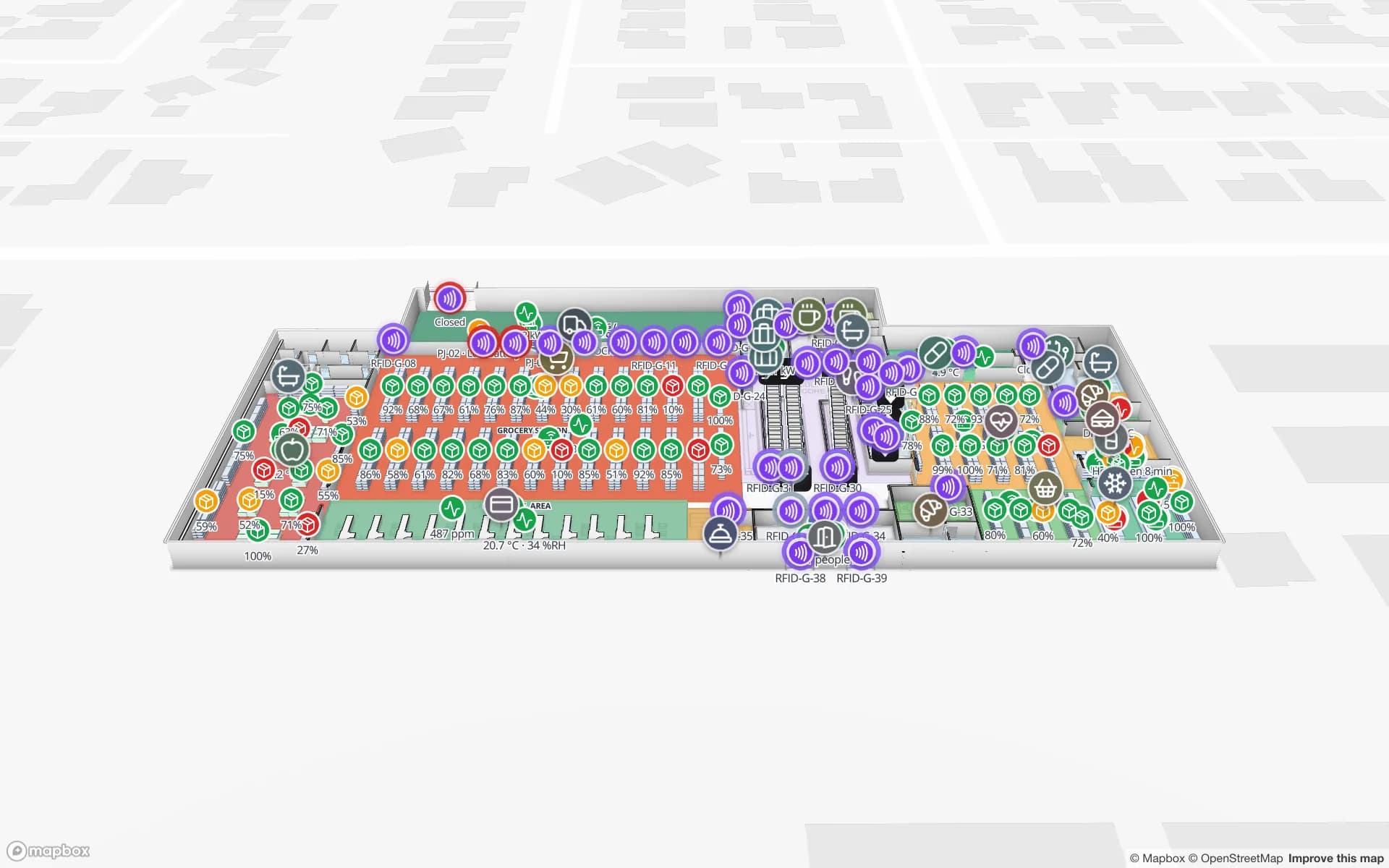
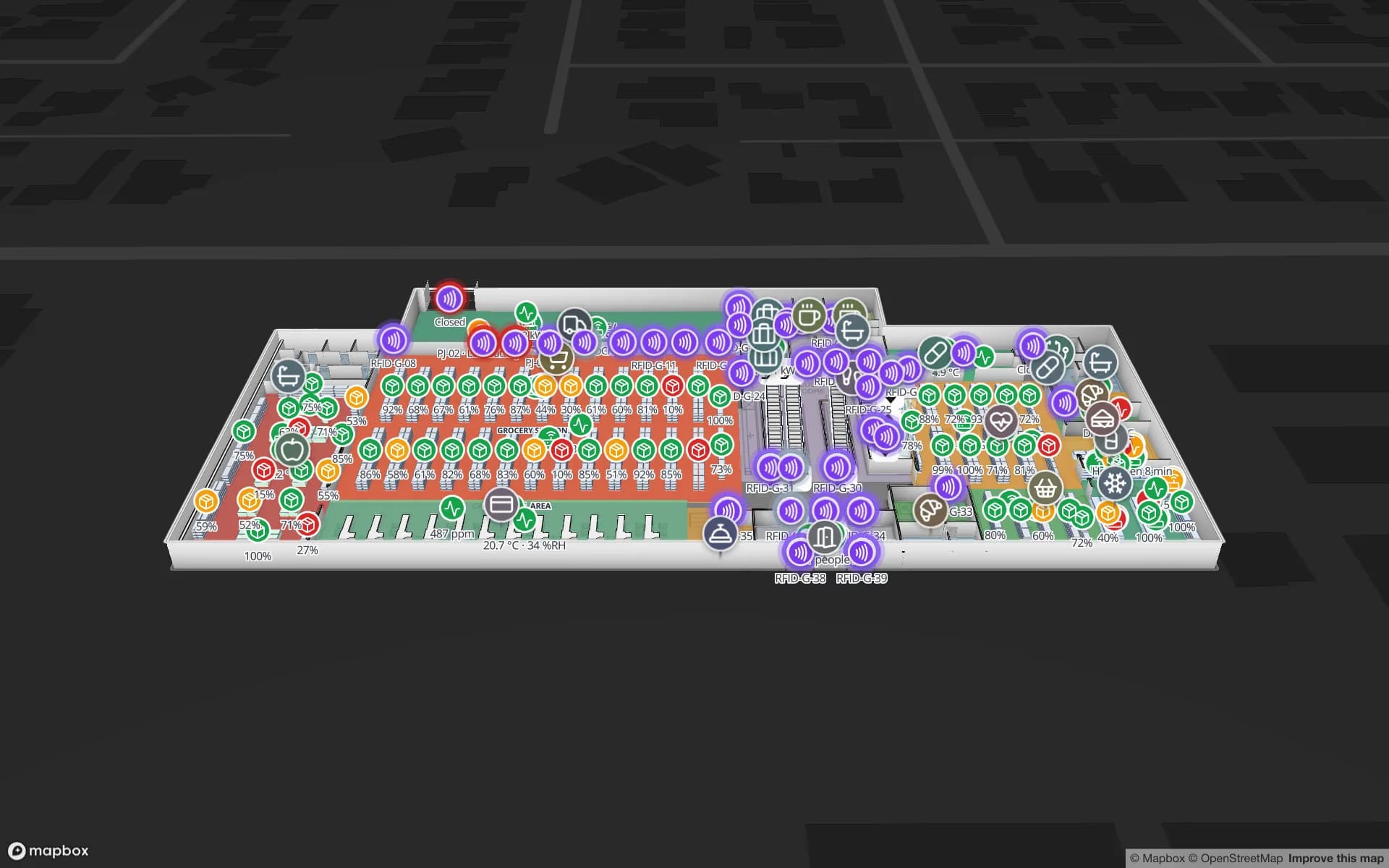
Retail Mart Store, a three-floor retail store demo, in the Spatial Map 3D viewer with live device markers
Retail Mart Store
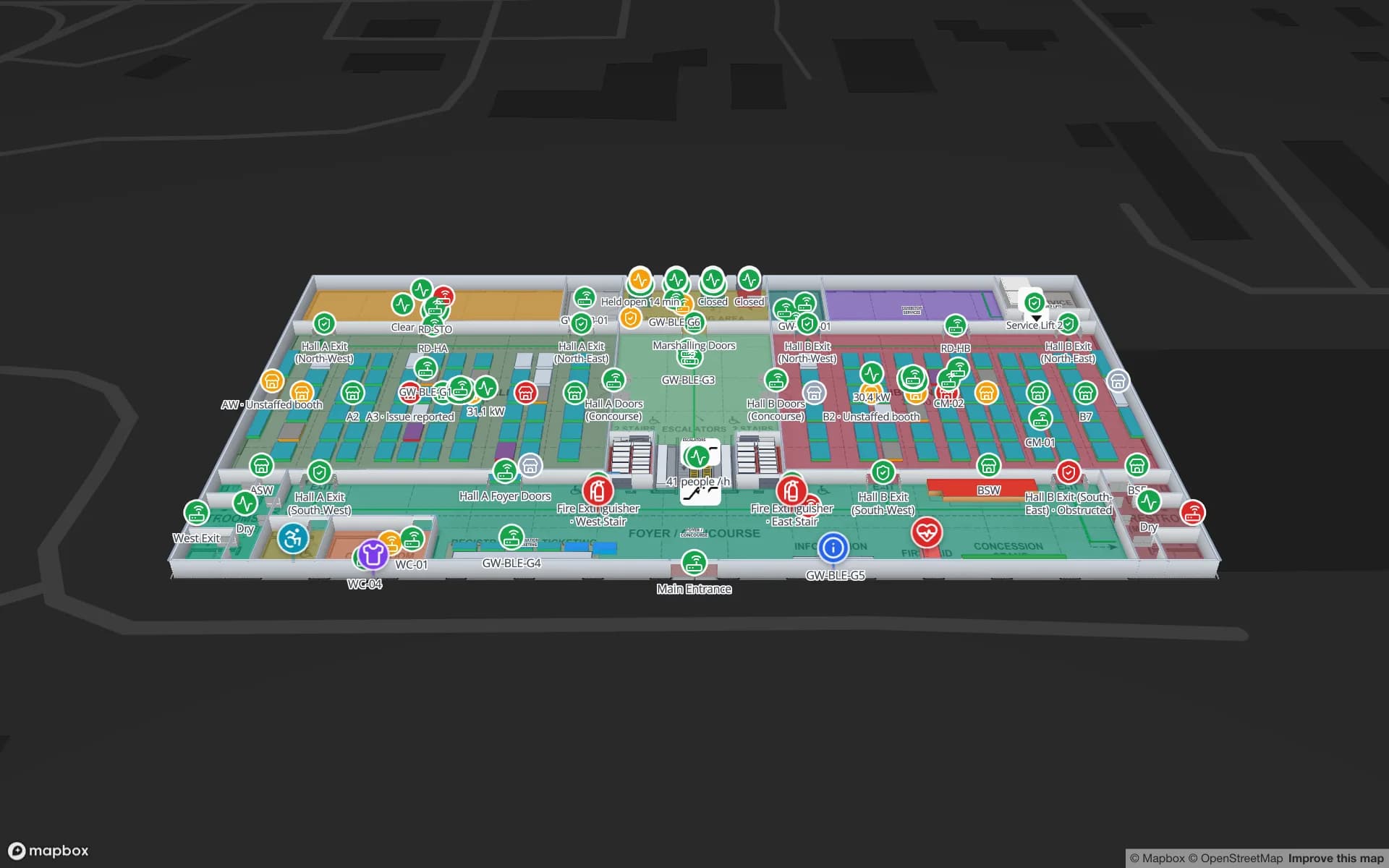
Retail Mart, a demo three-floor store: 167 shelving runs, RFID readers at the entrances and escalators, fridges with temperature markers and trolleys located by BLE.
Floors in the Retail Mart store demo
3
Shelving runs in the same store
167
Rack locations in the Crestline warehouse demo
2,204
Free trial, up to 5 facilities, no card
7 days

The airport, its cargo terminal and a rebuilt arrivals hall

Tashkent International Airport has added cargo-terminal capacity. In June 2025 the first phase of the arrivals-hall reconstruction was completed, adding 2,100 m²; when the work is done the arrivals and departures halls are due to merge into one complex of more than 10,000 m² handling up to 2,400 passengers per hour. A cargo terminal like that sits at the front of a chain: goods come off a flight, are checked, and are collected by a forwarder or a distributor.

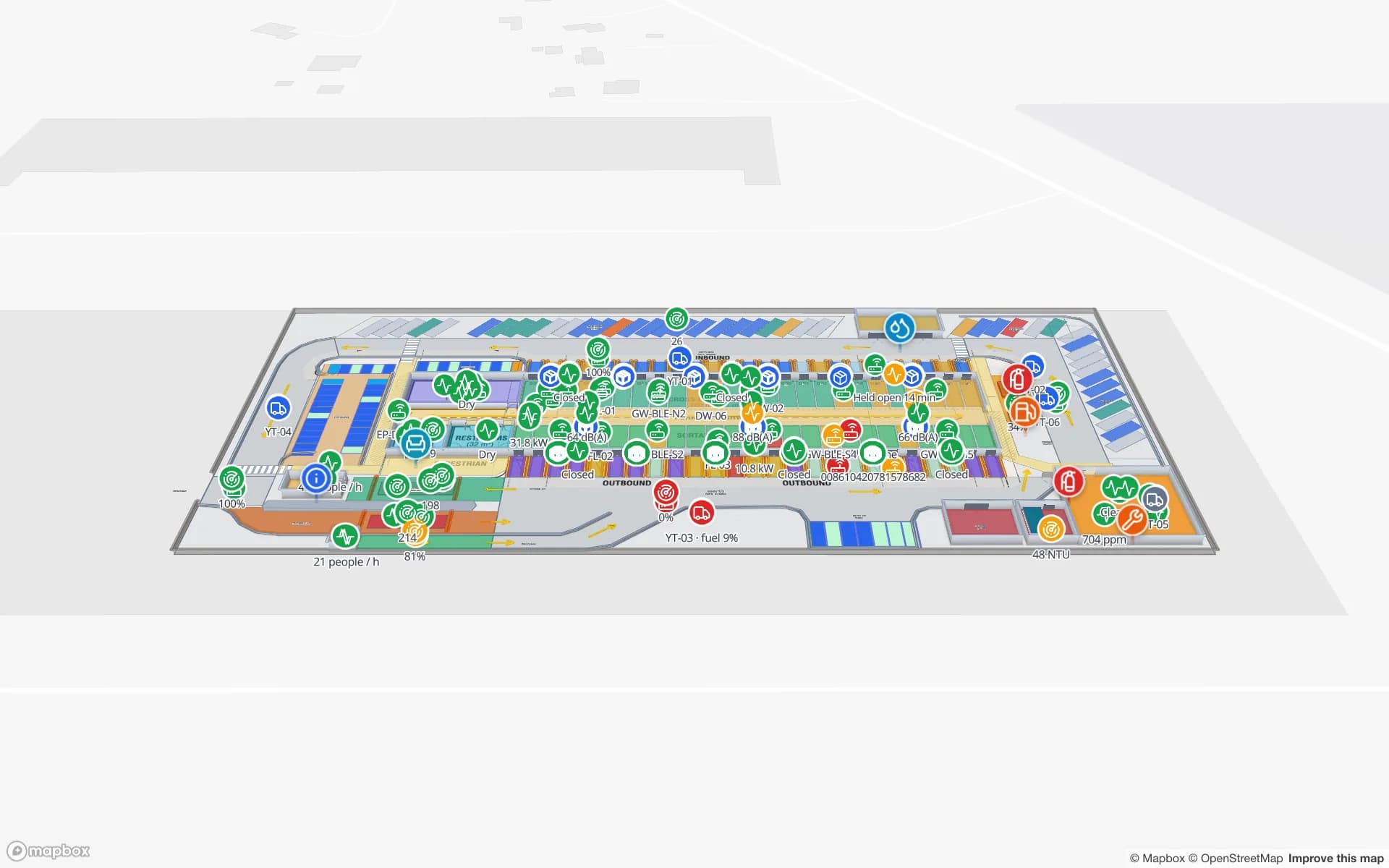
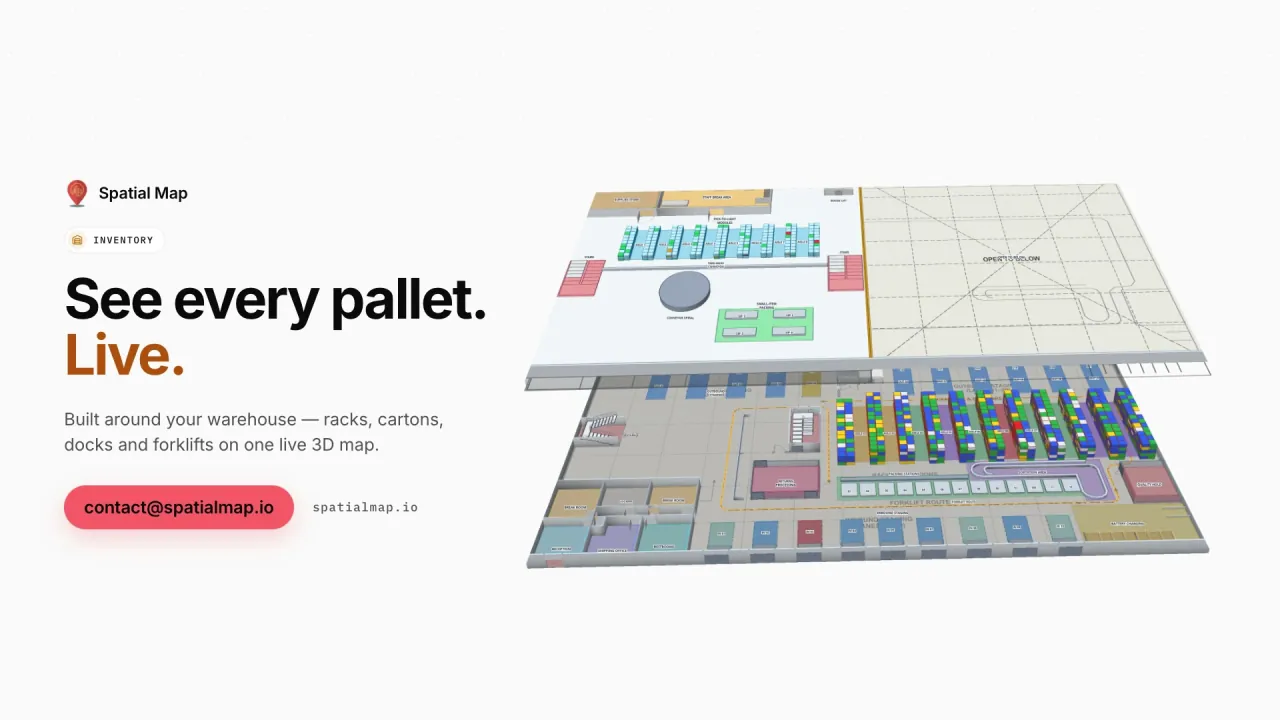
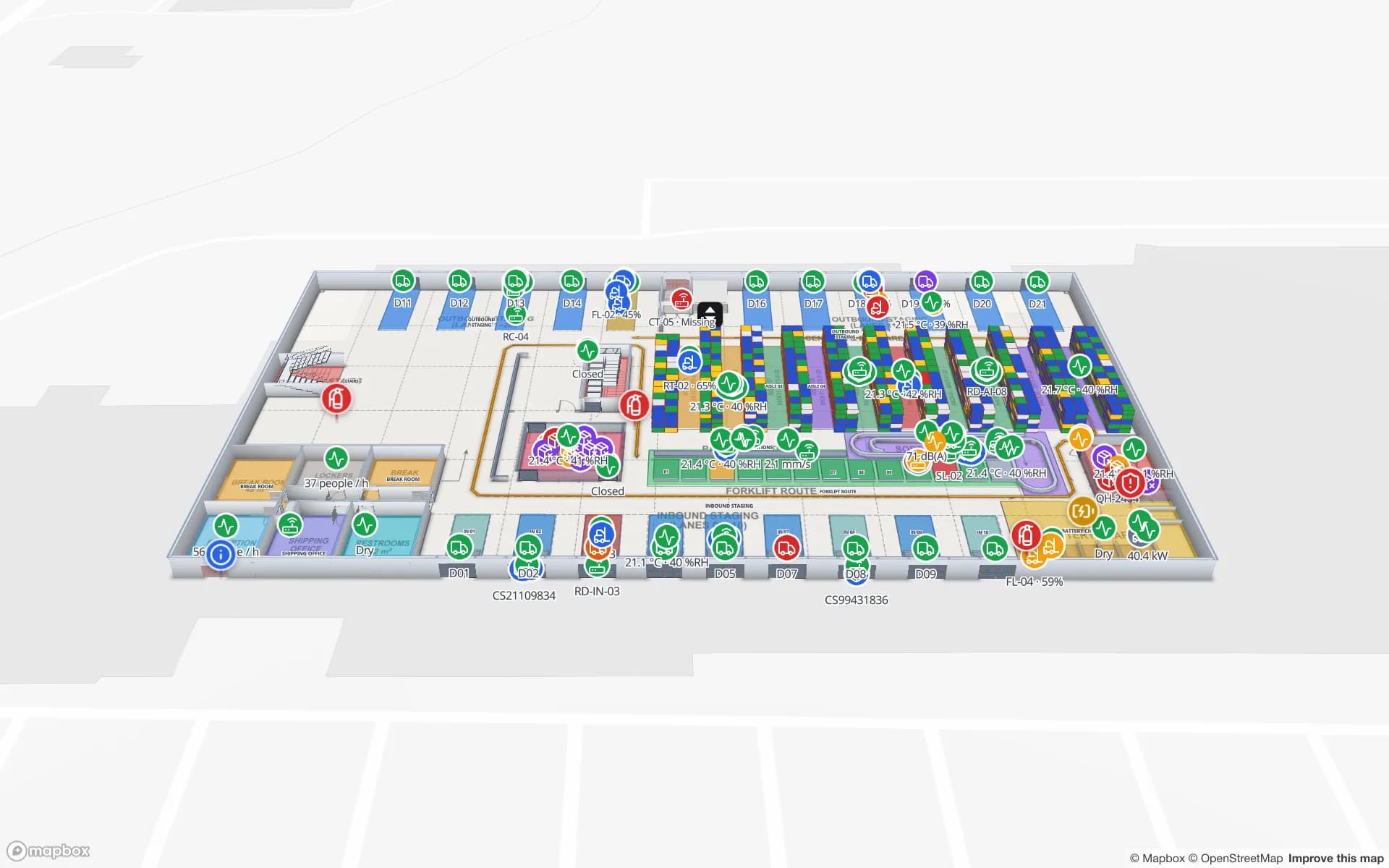
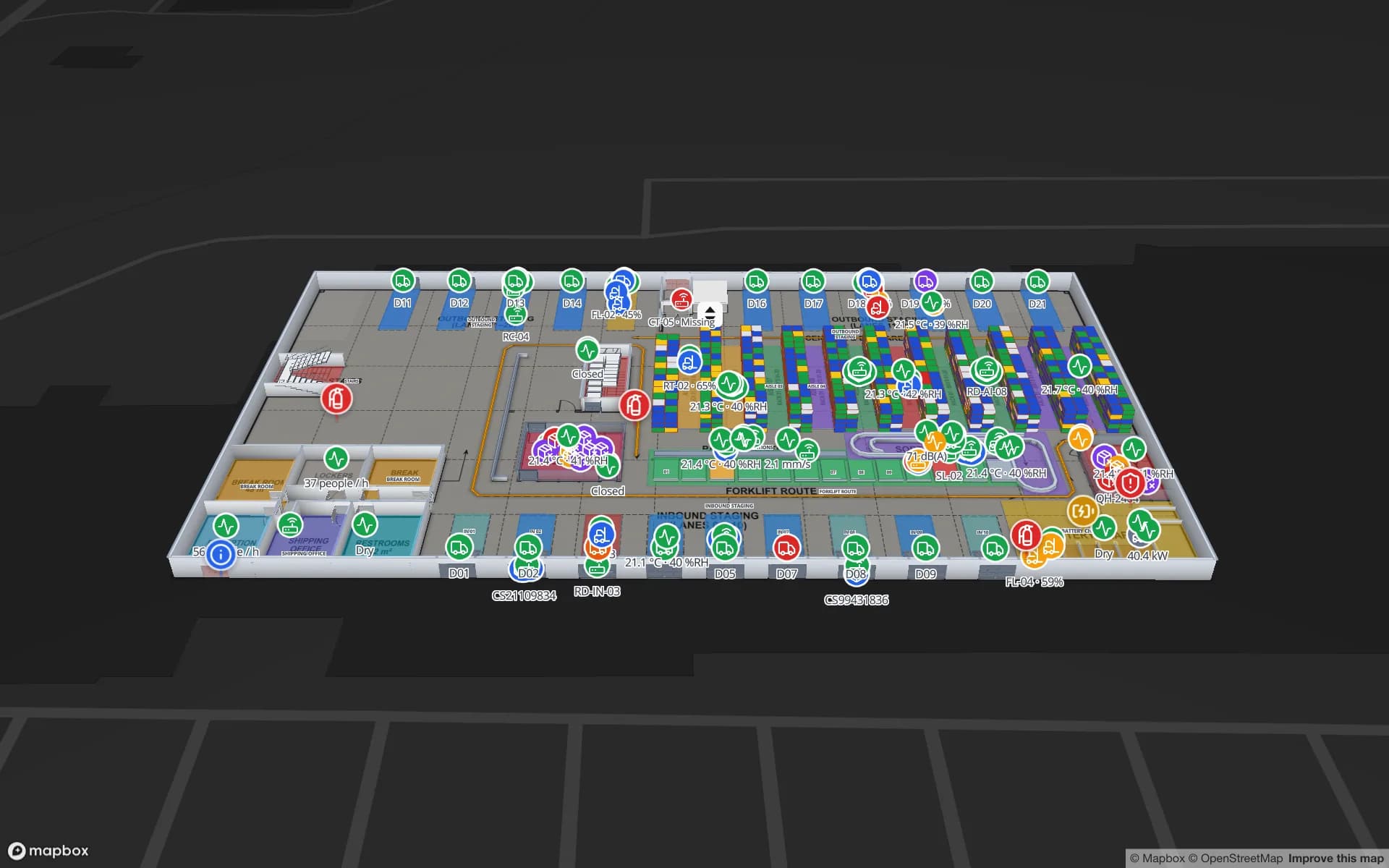
For the forwarder or the importer’s warehouse next door, the question is stock in transit between the airport shed and the shelf: which shipments have arrived, which are cleared, which are on a truck. Tag the cartons, read them at the door, and a map shows a delivery as staged, loaded or delivered. The Crestline demo shows 2,204 rack locations and the lanes in front of the docks.
A planned logistics hub on the edge of the city

Press reports in August 2026 describe a planned multimodal logistics terminal in the Yangi Avlod special industrial zone in Tashkent’s Yangihayot district. It is to cover about 82 hectares with a rail-connected dry port, customs clearance facilities, vehicle storage, truck parking and warehouses with cross-docking, built in three phases; the first phase is planned for up to 150,000 TEU a year plus a 63,000 m² warehouse complex. The article says groundbreaking was planned for October 2026, so treat all of it as planned until it is built.

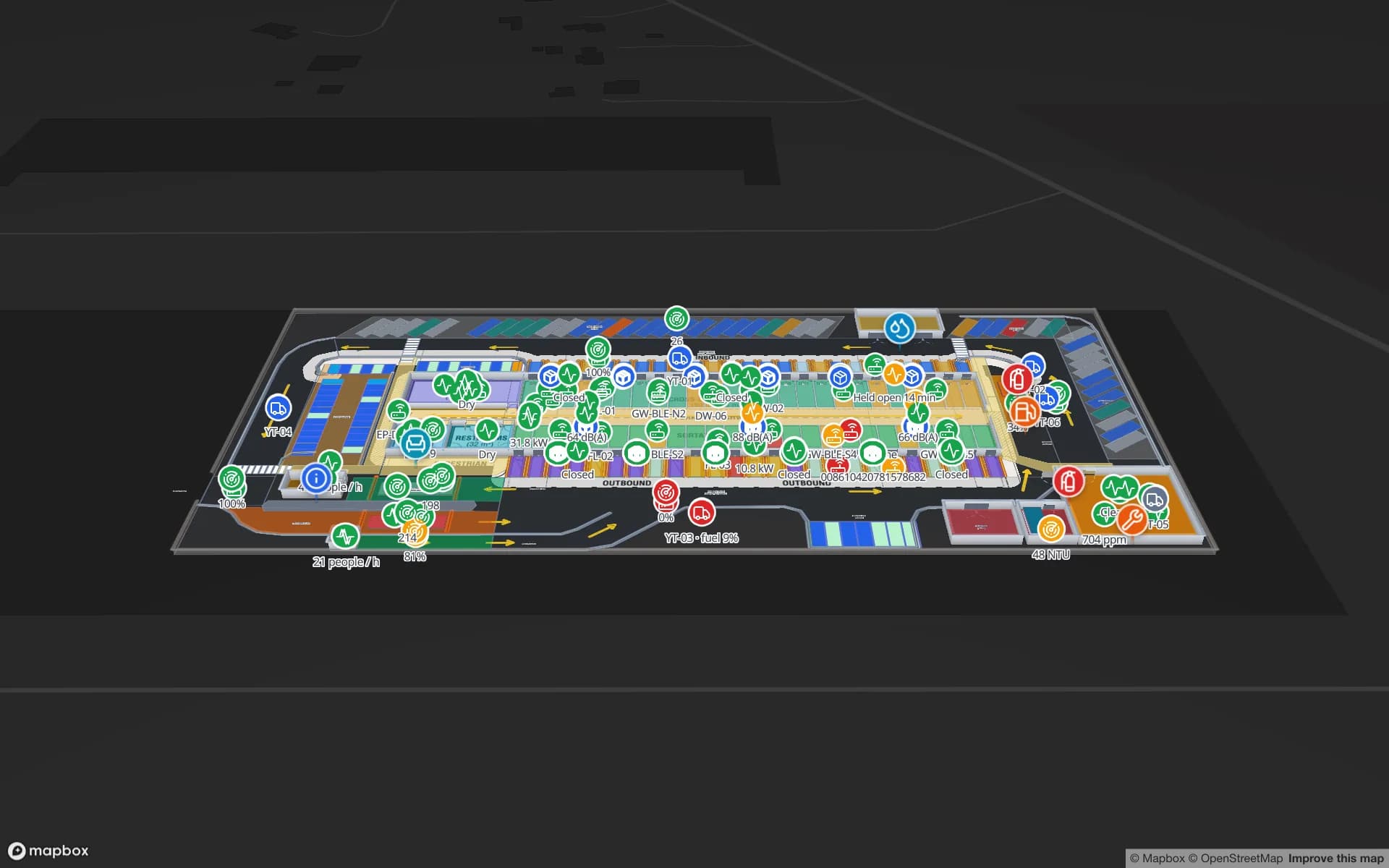
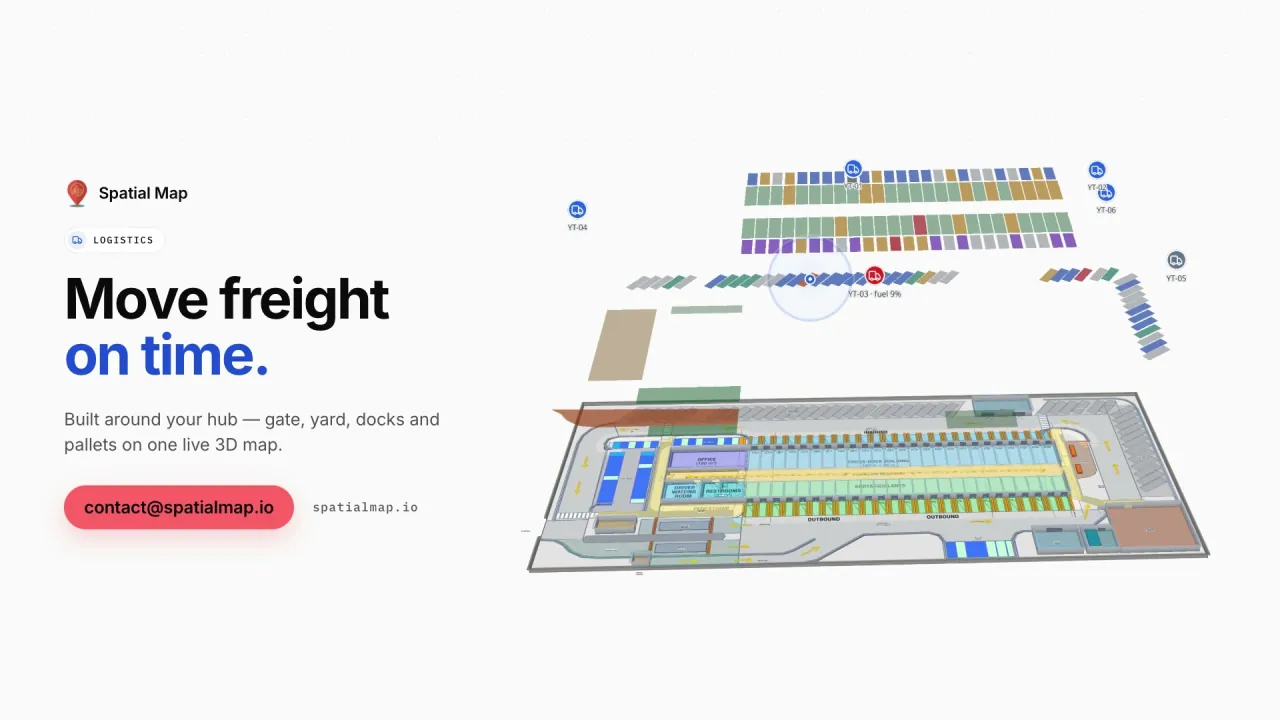
Whether or not that terminal is finished, the pattern repeats in every cross-dock: a door with a trailer waiting, pallets staged by destination, a yard with slots. The Eastport demo shows 50 dock doors and 44 yard slots, and the post on cross-dock and yard visibility walks through the layout.

A rebuilt capital, with drawings of every decade

A major earthquake struck Tashkent in 1966. Planning of the metro began in 1968 and the first line, the first metro in Central Asia, opened on 6 November 1977. The city’s buildings are therefore a mix of Soviet-era blocks, later construction and new districts, and the drawings that exist for them range from complete CAD files to a scan of an old plan.

That suits Spatial Map’s intake: upload a PDF, DWG (AutoCAD R2004–R2018, placed as a picture) or photograph, align it at real scale and let AI Map draft the floor for review. The post on digitising a paper floor plan covers the paper case. Once a shop, store or warehouse is on a map, stock by shelf and bin sits on top of it. The Retail Mart demo shows three floors with department stock, readers at doors and escalators, and cold-chain sensors.

Distribution to the Fergana side: the Kamchiq tunnel

The Angren–Pap railway, opened in June 2016, runs through the Kamchiq tunnel, about 19 km long and the longest in Central Asia, and links Tashkent province with Namangan province and the Fergana side of the country without crossing another country’s territory. Distributors who ship from Tashkent to the east send stock along this route by rail or over the pass road.

For an inventory view, that means a warehouse in Tashkent holds stock for several destinations, each with its own truck or wagon. A map where each lane is a destination, each pallet carries its order, and a rule raises an in-app alert when a pallet waits in a lane longer than planned, keeps the dispatch plan honest. Pallet counts by lane go into a report for dispatchers; see RFID stock counting for the handheld count side.

Trade shows, buyers and the investment forum

The Tashkent International Investment Forum, an annual event, drew more than 8,000 participants including close to 3,000 guests from 97 countries in its 2025 edition, according to the government. Events of that kind bring exhibitors’ stock in and out of halls: crates, display stands and demo units. A booth block drawn as areas, crates tagged and read at the loading dock, and a table of freight bookings give the organiser the same picture a warehouse has.

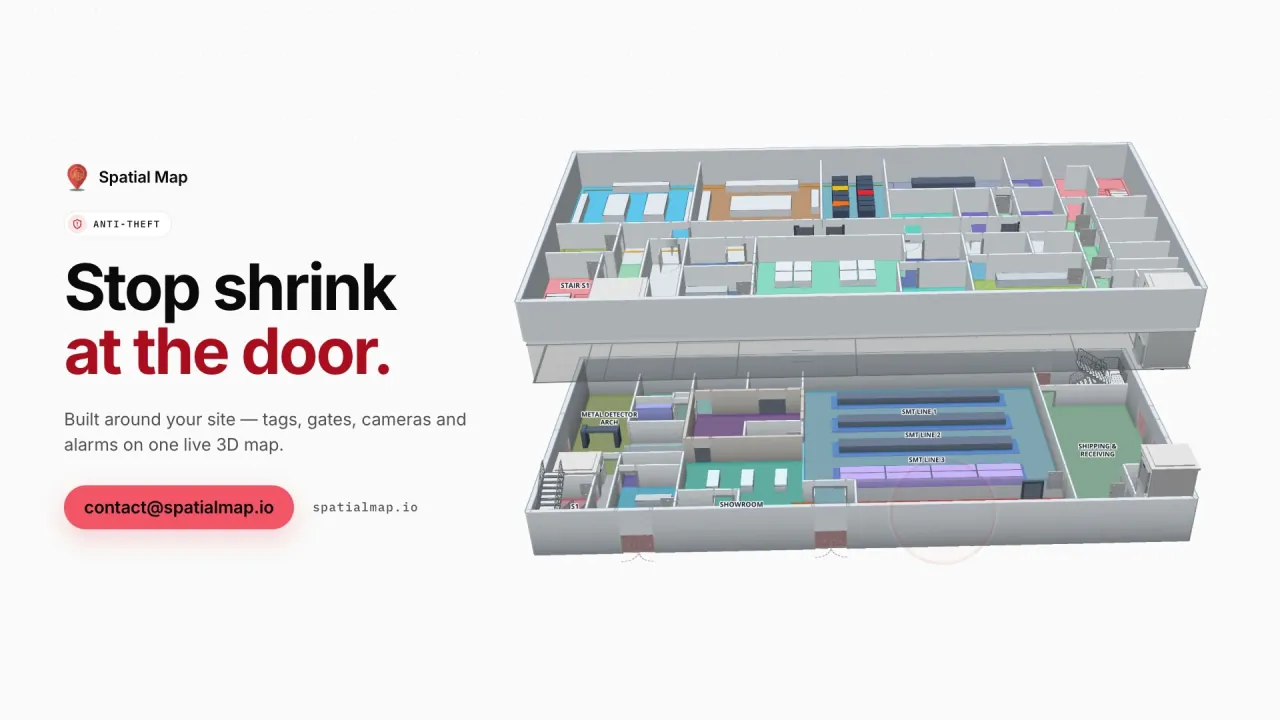
The Lakeside demo shows exhibition halls, booth blocks and loading docks on two floors. It reflects what your scanners and bookings report; it does not count visitors by itself.

Services for teams in Tashkent

Tashkent teams usually start from the building:

Also served nearby

The same page covers Yangiyul, Akhangaran and the other towns of Tashkent province. The map opens in a browser at all of them.

How Spatial Map does it

From a stock list to a live shelf map

  1. 01

    Load your stock

    Upload a CSV or Excel export of bins, shelves and quantities as a table.

  2. 02

    Map the building

    Import the plan or a scan, align it, and let AI Map draft racks and shelves for review.

  3. 03

    Connect scans and reads

    Barcode and RFID systems post rows through the write API or a polled REST endpoint.

  4. 04

    Add rules and counts

    In-app alerts for low stock, pallets waiting too long and readers that stopped reporting, plus handheld count reports.

What Tashkent teams track

Multi-floor stores

Department and shelf stock with readers at doors and escalators.

Distribution and cargo warehouses

Rack-level stock by bin and lanes by destination.

Cross-docks and truck yards

Dock doors, yard slots and pallets staged for the next truck.

Exhibition freight and crates

Crate tags read from the docks to the booths.

See it on real demo facilities

Fictional names, real floor plans, live sensors, RFID, BLE tags and gateways — open any of them in the browser.

All 13 demo facilities

Inventory tracking in Tashkent — questions we get

No. It does not post stock movements, invoices or orders. Your WMS or accounting system stays the record, and Spatial Map shows its data, plus RFID and barcode reads and sensors, on the building map. Your developers can push rows with the write API, or Spatial Map can poll a REST endpoint.

Yes. Upload a CSV or Excel file with bin or shelf codes and quantities as a table, link it to the racks on the map, and rows colour by stock status. Later, scans and RFID reads keep it current. The post on CSV bin inventory to a live rack map shows how.

No. It has no link to customs, airport or terminal systems. It shows what happens inside your own building, from your own reads and WMS.

No. The app is available in English, Spanish, French, German, Arabic and Chinese. Product names, shelf codes and report titles you write can be in Uzbek or Russian.

No. Spatial Map is sold online and our team works with customers in Uzbekistan remotely, by video call and through the contact form. There are no local resellers or partners.

In US dollars, the same worldwide: a 7-day free trial for up to 5 facilities with no card, then Pro at $60 a month or $600 a year for up to 4 facilities. Larger estates are quoted as custom services.

Put one Tashkent warehouse or store on a live map.

Start the free trial and open the Retail Mart and Crestline demos, or send us a stock export and the plan of one building through the contact form.