Uzbekistan · Tashkent, Navoi, industrial zones and textiles

Indoor mapping & RFID tracking in Uzbekistan, from Navoi’s runway to the packing table

Spatial Map is indoor mapping and RFID tracking software that turns warehouses, plants and terminals into live 3D maps in the browser, with reads, stock and sensor readings shown where they happen. Indoor mapping & RFID tracking in Uzbekistan matters because the country is doubly landlocked, one of only two in the world, and is building its own logistics: new cargo terminals, free zones, industrial zones and a railway tunnel through the mountains. The buildings inside that network can each carry their own map.

No credit card. Runs in the browser. Pro is $60/month for up to 4 facilities. Book a demo

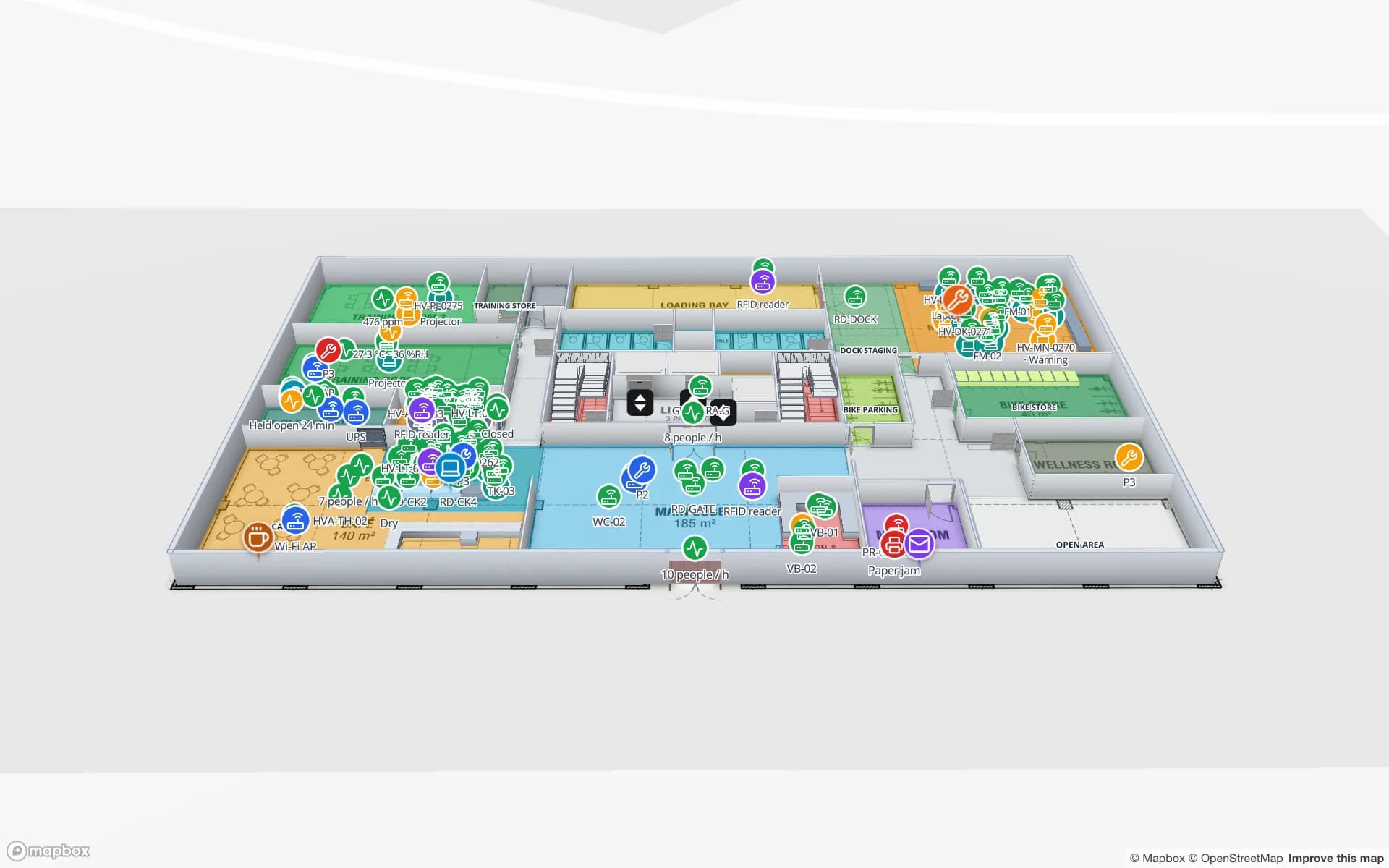
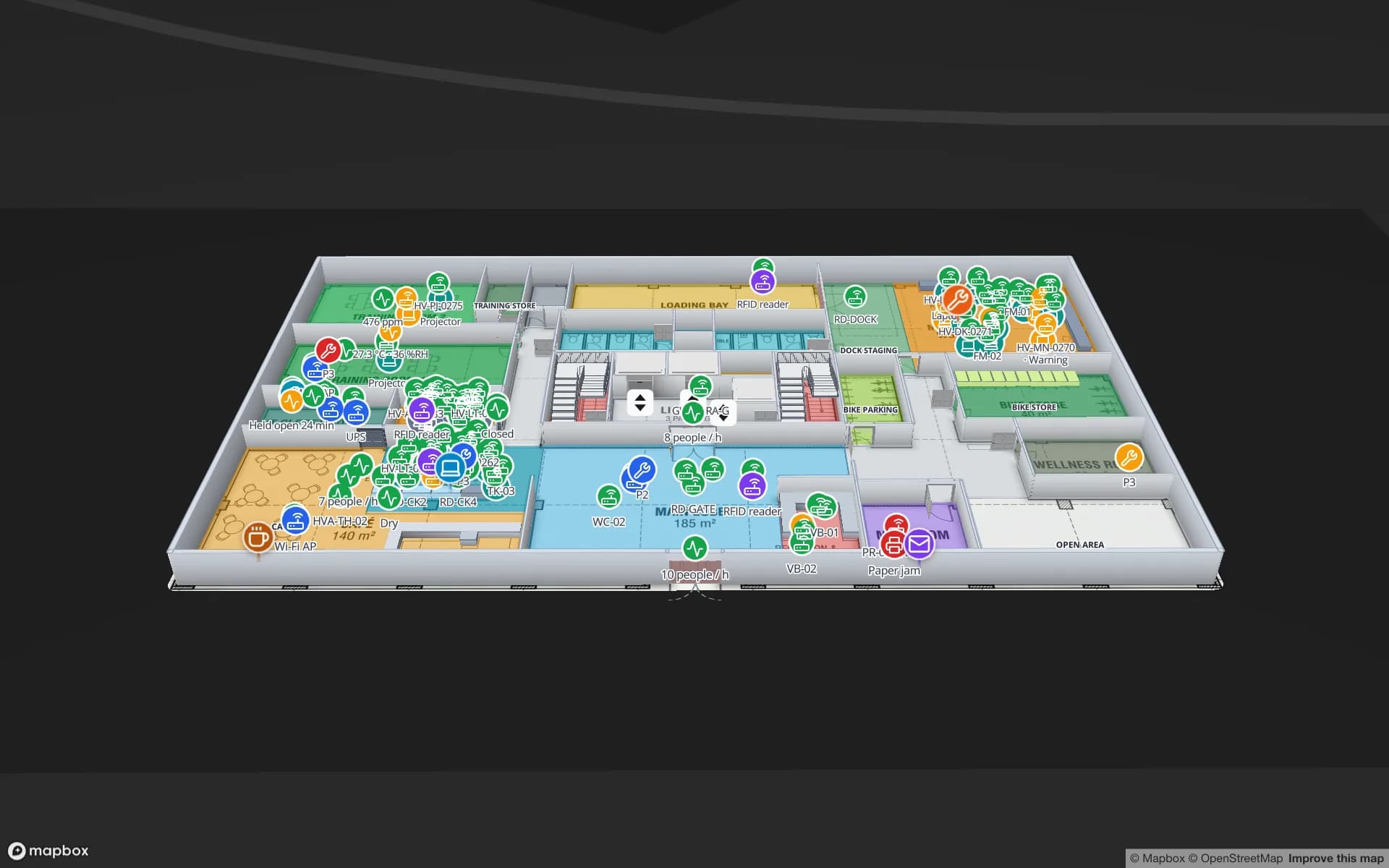
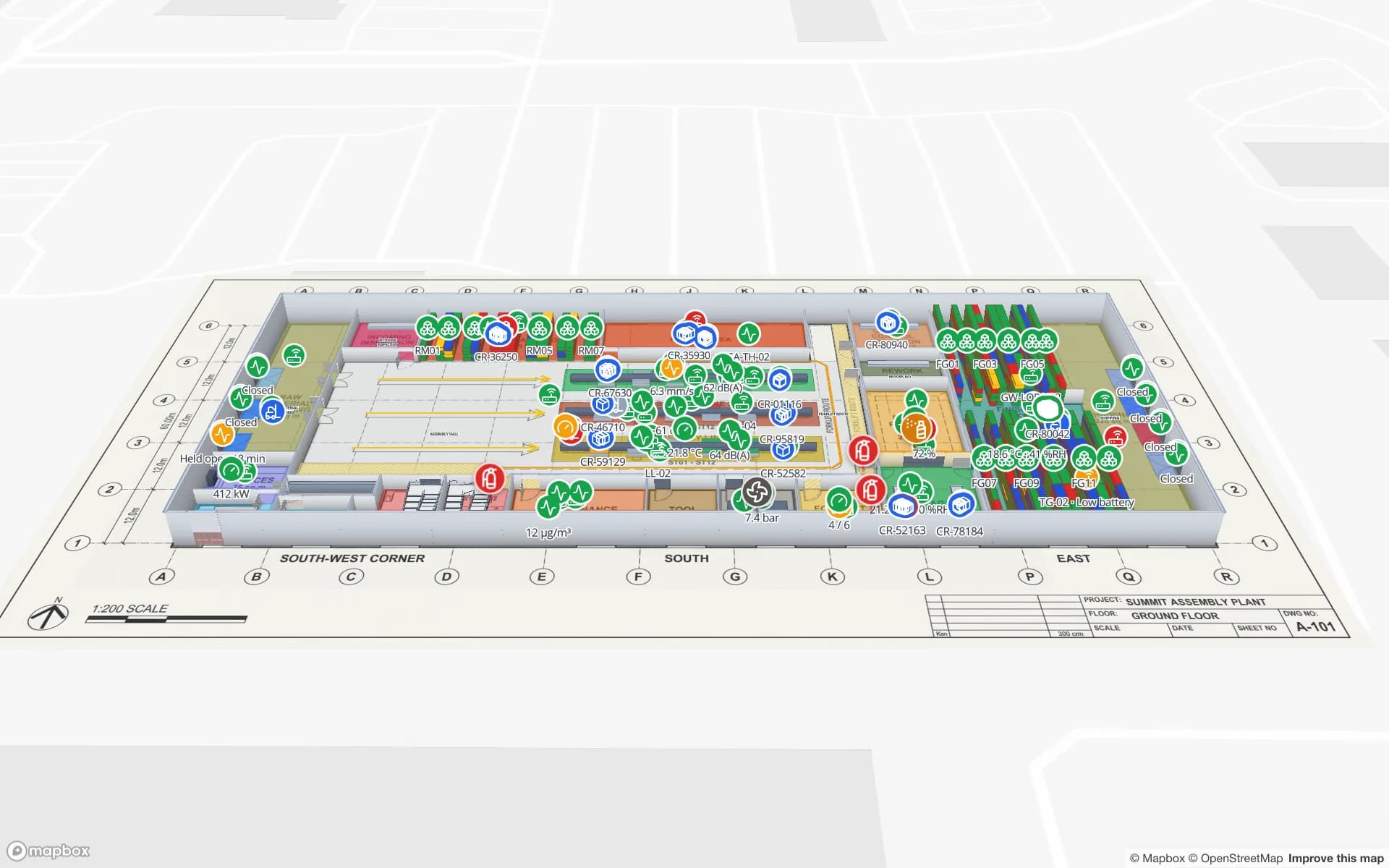
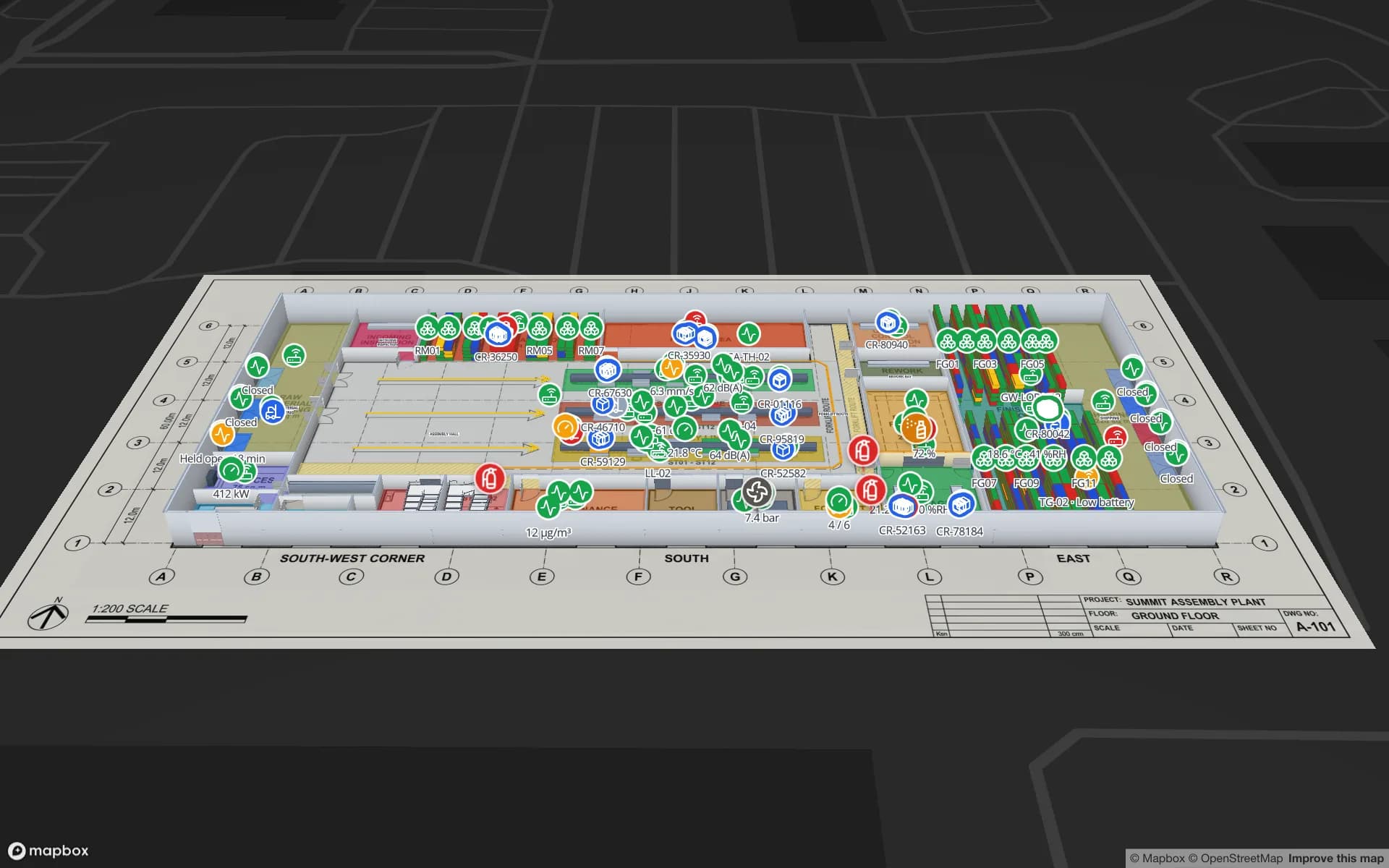
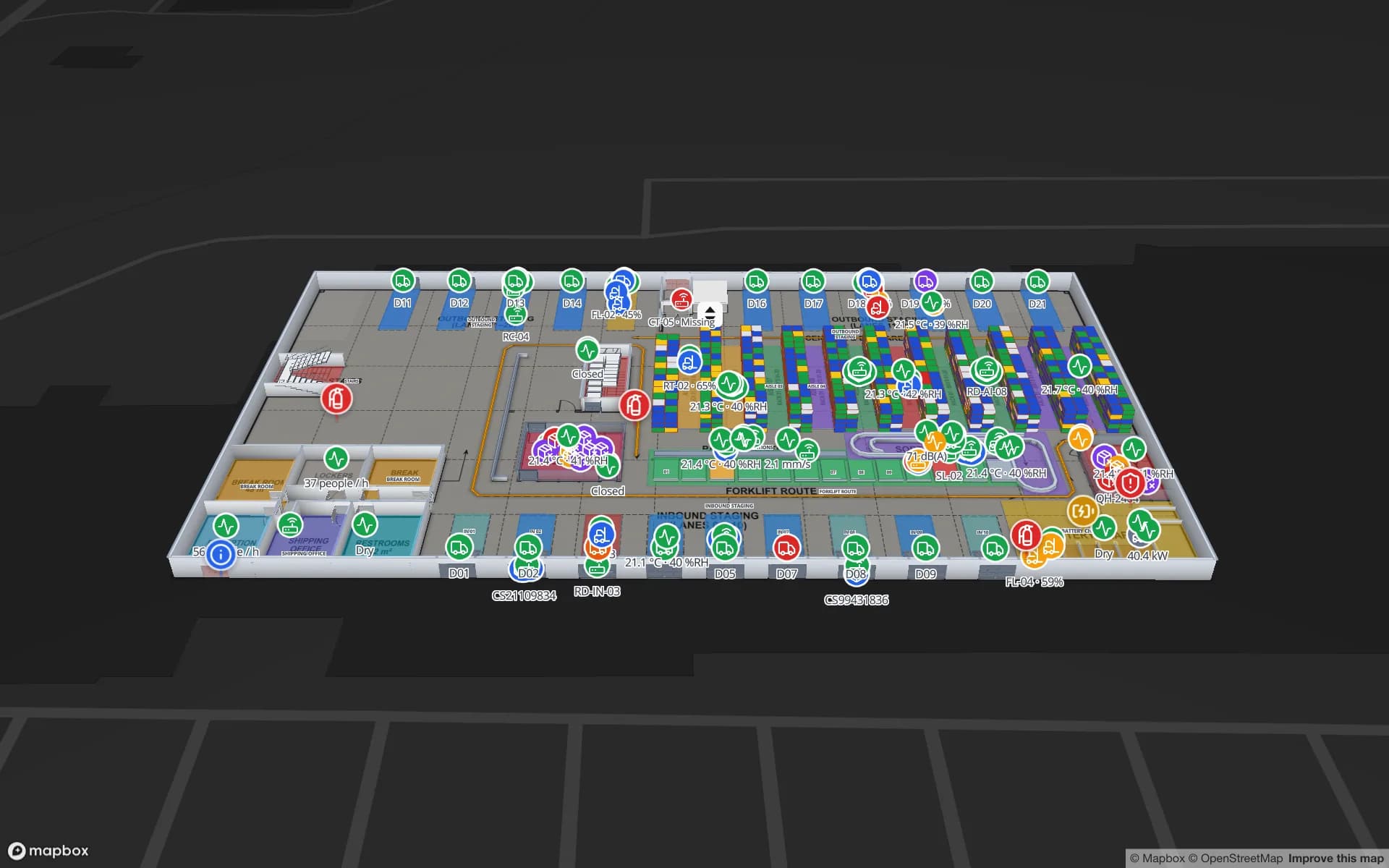
Summit Assembly Plant, a assembly plant demo, in the Spatial Map 3D viewer with live device markers
Summit Assembly Plant
Summit Assembly Plant, a demo plant: 3 assembly lines, 7 docks, 867 rack locations and 351 RFID work-in-progress carriers.
RFID work-in-progress carriers in the Summit plant demo
351
Rack locations in the same plant
867
App languages: English, Spanish, French, German, Arabic and Chinese
6
Free trial, up to 5 facilities, no card
7 days

A doubly landlocked country with a logistics plan

Uzbekistan has more than 39 million people and is one of only two doubly landlocked countries in the world. Goods reach it by rail, road and air, and the building of its own transport links is a visible national priority. The Angren–Pap railway opened in June 2016 with the Kamchiq tunnel, about 19 km long and the longest in Central Asia, cutting through the Kamchiq pass that carries the only road between Tashkent province and Pap in Namangan province.

In air cargo, Navoi’s airport started cargo operations in May 2009, and a presidential decree published in February 2026 sets out a new phase: a free economic zone and a free customs zone on airport land, a new 16,000 m² cargo terminal next to the existing one, an aircraft maintenance centre by the end of 2028, and 2030 targets of 7,000 flights and 45,000 tonnes of cargo. These are plans, not facts on the ground, but they show where new buildings will appear. Each needs a map of its own stores, doors and lanes.
Tashkent: the commercial centre

Most trade in Uzbekistan passes through or near the capital. Tashkent’s airport opened a new cargo terminal in March 2025, and press reports in August 2026 describe a planned multimodal terminal in the Yangi Avlod special industrial zone with a rail-connected dry port, customs clearance and warehouses on about 82 hectares; the first phase is planned for up to 150,000 TEU a year, and its groundbreaking was announced for October 2026, so it should be treated as planned.

What a warehouse needs from such a hub is the last-mile picture: which pallets arrived, which are in which lane and which left in which truck. The inventory tracking in Tashkent page covers the airport, the new terminal and the retail side.

Textiles and garments: from cotton to carton

Trade press describes textiles and garments as one of the country’s priority sectors, with policy aimed at moving away from raw cotton and yarn exports towards finished goods. That changes what a factory handles: more cut pieces, more cartons, more orders by size and colour. A plant that ships garments needs to know which cartons of an order are staged and which are still on the floor.

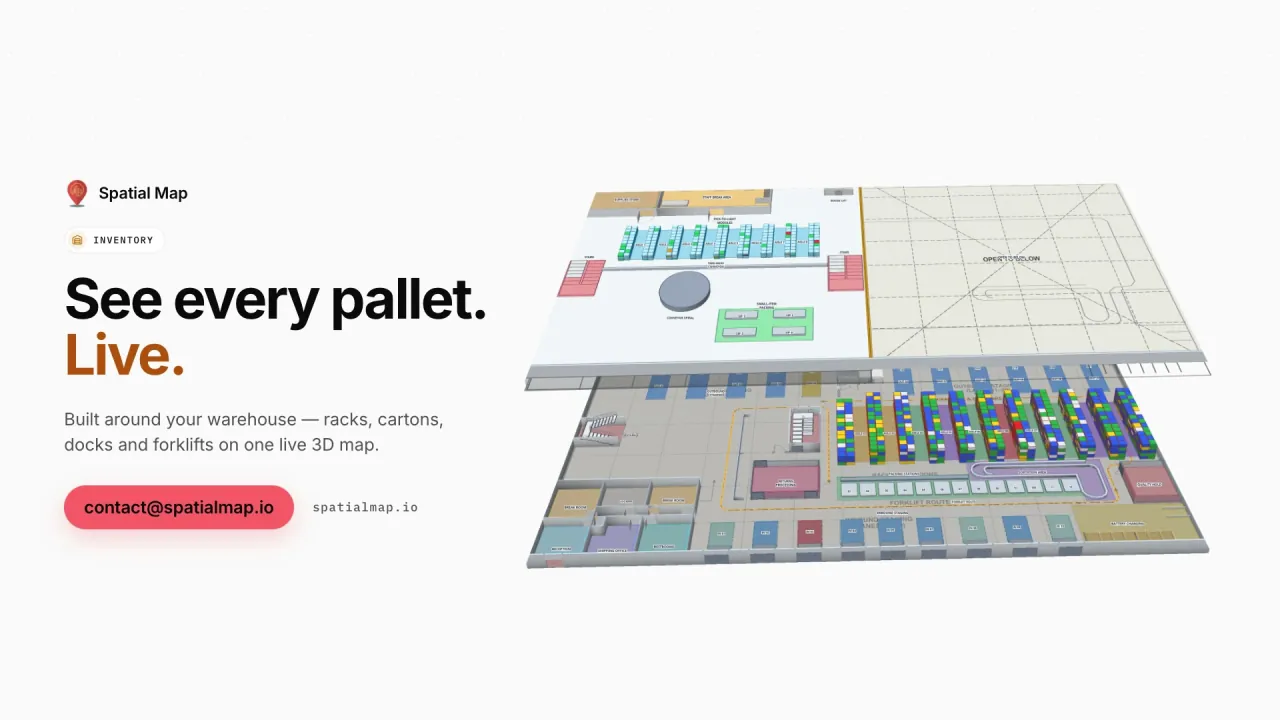
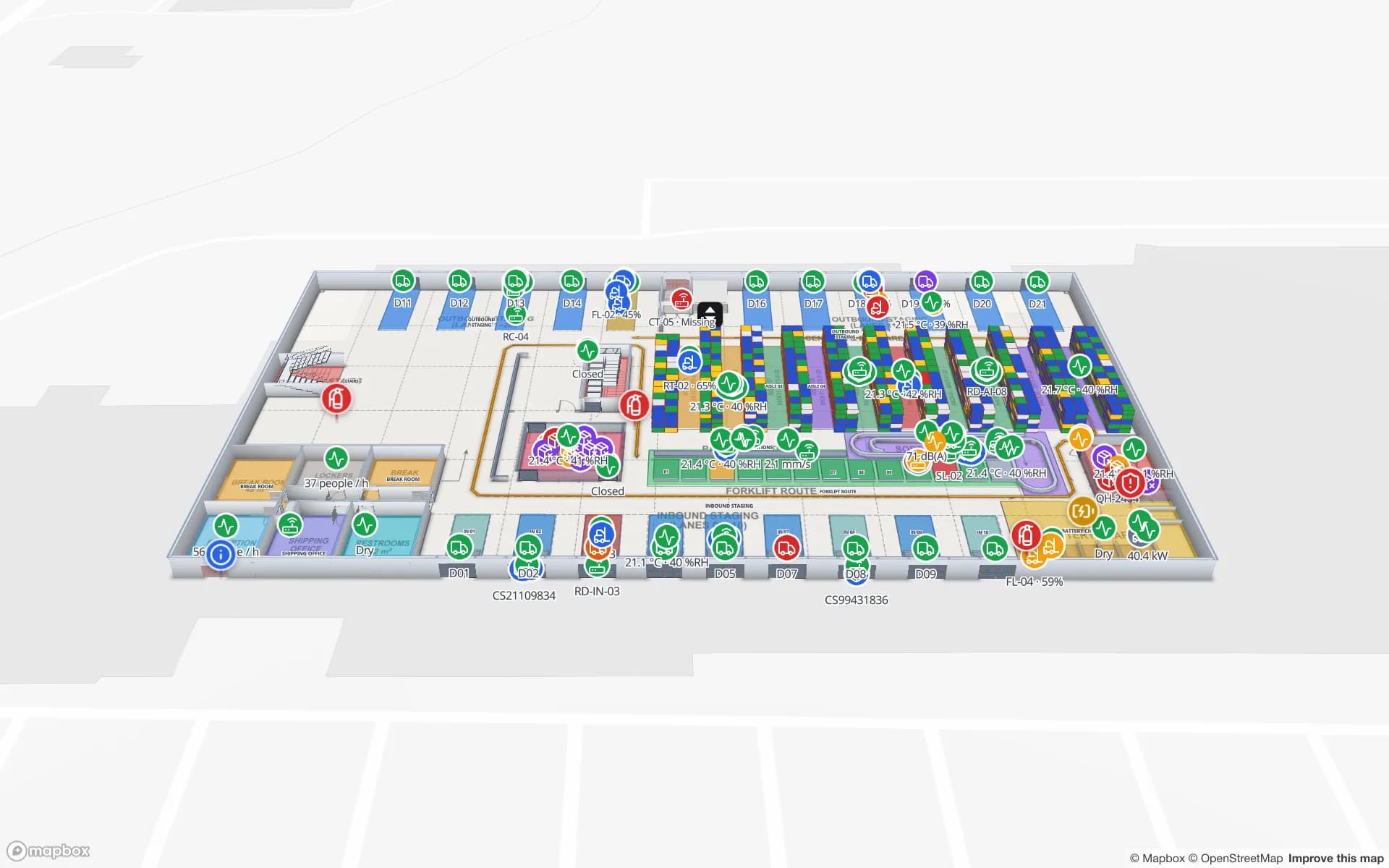
Label each carton with a UHF RFID tag at packing, read it at the despatch door, and the map shows each order by status and lane. A row of readers at a door is a gate; the RFID gates page explains placement. Tags on apparel and metal fittings behave differently, so test them in your own packing area; the post on RFID tags for metal, liquids and apparel lists what to check. The Crestline demo shows 2,204 rack locations with staging lanes in front of the docks.

Industrial zones and new plants

Uzbekistan uses special economic zones and industrial zones heavily, and in January 2025 the government said 589 companies were operating in the special economic zones, with a stated push to focus them on exports. New plants in zones like these change layout often in their first years as lines and stores move, which is why a map that can be redrawn from a CAD file or a photographed plan is useful.

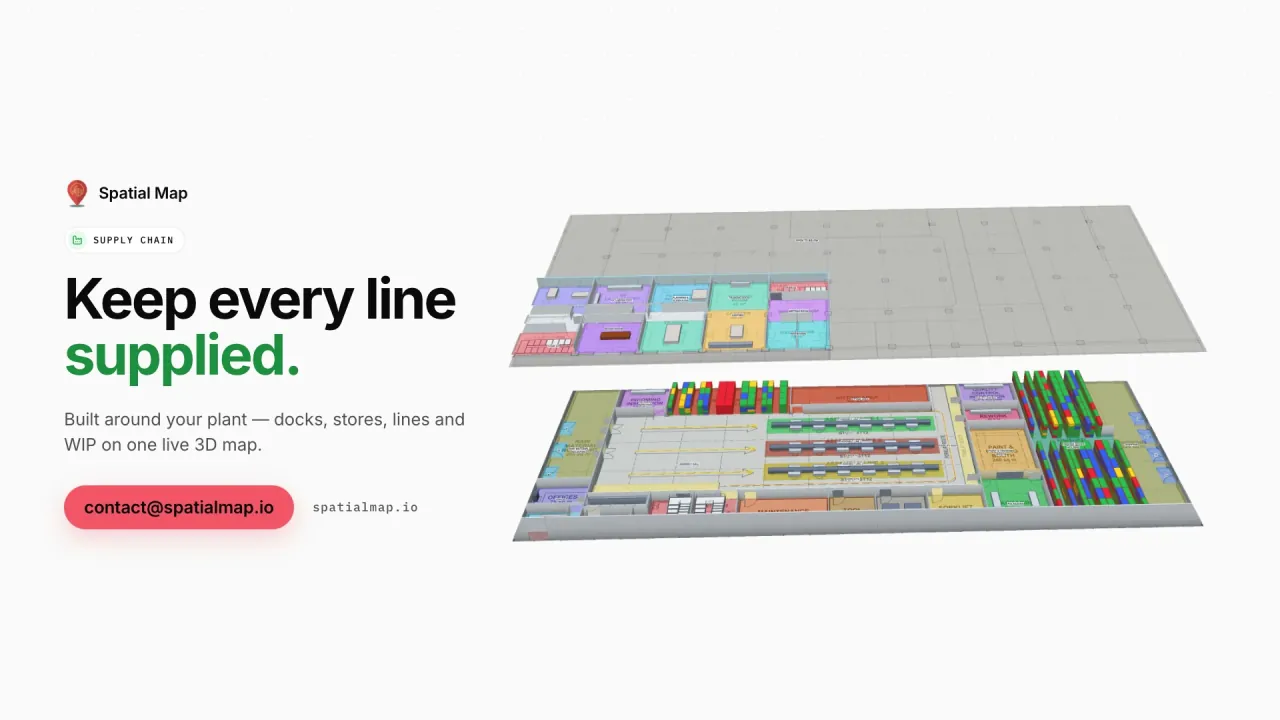
Upload the layout, let AI Map draft walls, doors, racks and areas, and review the draft; the post on manufacturing supply-chain visibility on an indoor map shows what to connect first. The Summit demo shows lines, workstations and 351 work-in-progress carriers on one plant map.

Language, data rules and hardware

Uzbek is the official language, and Russian is widely used as a common language. The interface is not available in either; it is available in English, Spanish, French, German, Arabic and Chinese, and the names and labels you write can be in any language.

Uzbekistan has a data-localisation rule: Article 27-1 of the Law on Personal Data, in force from April 2021, required citizens’ personal data to be stored on technical means located in the country, and reports say 2026 amendments narrowed it to specific categories such as biometric and genetic data. Your legal advisers decide what applies. Most warehouse and plant projects tag cartons, pallets and tools rather than people, and teams that must keep all data inside their own network can self-host the MIT-licensed open-source edition. We make no claim about hosting locations.

Services for teams in Uzbekistan

Uzbek teams usually start from the building:

Also served

The same approach covers Samarkand, Bukhara, Namangan, Andijan, Fergana and Nukus. Nothing needs to be installed: the map opens in a browser.

How Spatial Map does it

From plant layout to live RFID map

  1. 01

    Upload the layout

    A PDF, DWG (AutoCAD R2004–R2018, placed as a picture) or image of each floor, placed at real-world scale.

  2. 02

    Draft and check the floor

    AI Map drafts walls, doors and racks; you review them and add lines, stores and readers.

  3. 03

    Connect reads and stock

    RFID middleware, your WMS and sensors post rows through the table write API, or Spatial Map polls a REST endpoint.

  4. 04

    Follow every carton

    Live reads by zone, history playback, in-app alerts and reports for the shipping team.

What teams in Uzbekistan use it for

Cargo and distribution warehouses

Racks, dock doors and staging lanes by status.

Garment cartons and despatch

Cartons read at packing and at the dock, with order status by lane.

Plant floors in new industrial zones

Lines, stations and work-in-progress carriers on one map.

Tools, moulds and shared equipment

Check-out, last-seen store and overdue items.

See it on real demo facilities

Fictional names, real floor plans, live sensors, RFID, BLE tags and gateways — open any of them in the browser.

All 13 demo facilities

Questions from teams in Uzbekistan

No. The app is available in English, Spanish, French, German, Arabic and Chinese, and each user picks their own. Your own content, such as zone names, rack codes and report titles, can be written in Uzbek or Russian.

We cannot give legal advice, and rules change: the rule that came into force in 2021 was reported to have been narrowed in 2026. Your advisers decide what applies to your data. Teams that must keep every record inside their own network can self-host the open-source edition, which is the same app under the MIT licence with no plans or limits.

Yes, from the reads your RFID system already makes. Each read (tag, reader, time) is posted to a table, and Spatial Map shows the carton at its last read point, replays its path and counts cartons by zone. Printing and encoding tags stays with your RFID system.

No. It has no link to customs, airport or terminal systems. It shows what happens inside your own building, from your own reads, WMS and sensors.

No. Spatial Map is sold online and our team works with customers in Uzbekistan remotely, by video call and through the contact form. There are no local resellers or partners.

In US dollars, the same worldwide: a 7-day free trial for up to 5 facilities with no card, then Pro at $60 a month or $600 a year for up to 4 facilities. RFID hardware, if you ask us to source it, is quoted per project.

Put one Uzbek warehouse or plant on a live map this week.

Start the free trial and open the Summit demo, or send us a plant or warehouse plan and a sample of your RFID or WMS data through the contact form.