Almaty · Zhetysu terminal, Bayserke and airport cargo

Warehouse tracking in Almaty, from the import terminal to the shelf

Spatial Map is warehouse tracking software that puts RFID reads, scans and stock levels on a live 3D map of each warehouse. Warehouse tracking in Almaty starts at the rail and road link to China: containers reach import terminals around the city, are consolidated, cleared and unpacked, and the goods go on to distribution centres that serve the country’s largest city and the region around it. Every one of those buildings can carry its own map, and all of them can sit in one workspace.

No credit card. Runs in the browser. Pro is $60/month for up to 4 facilities. Book a demo

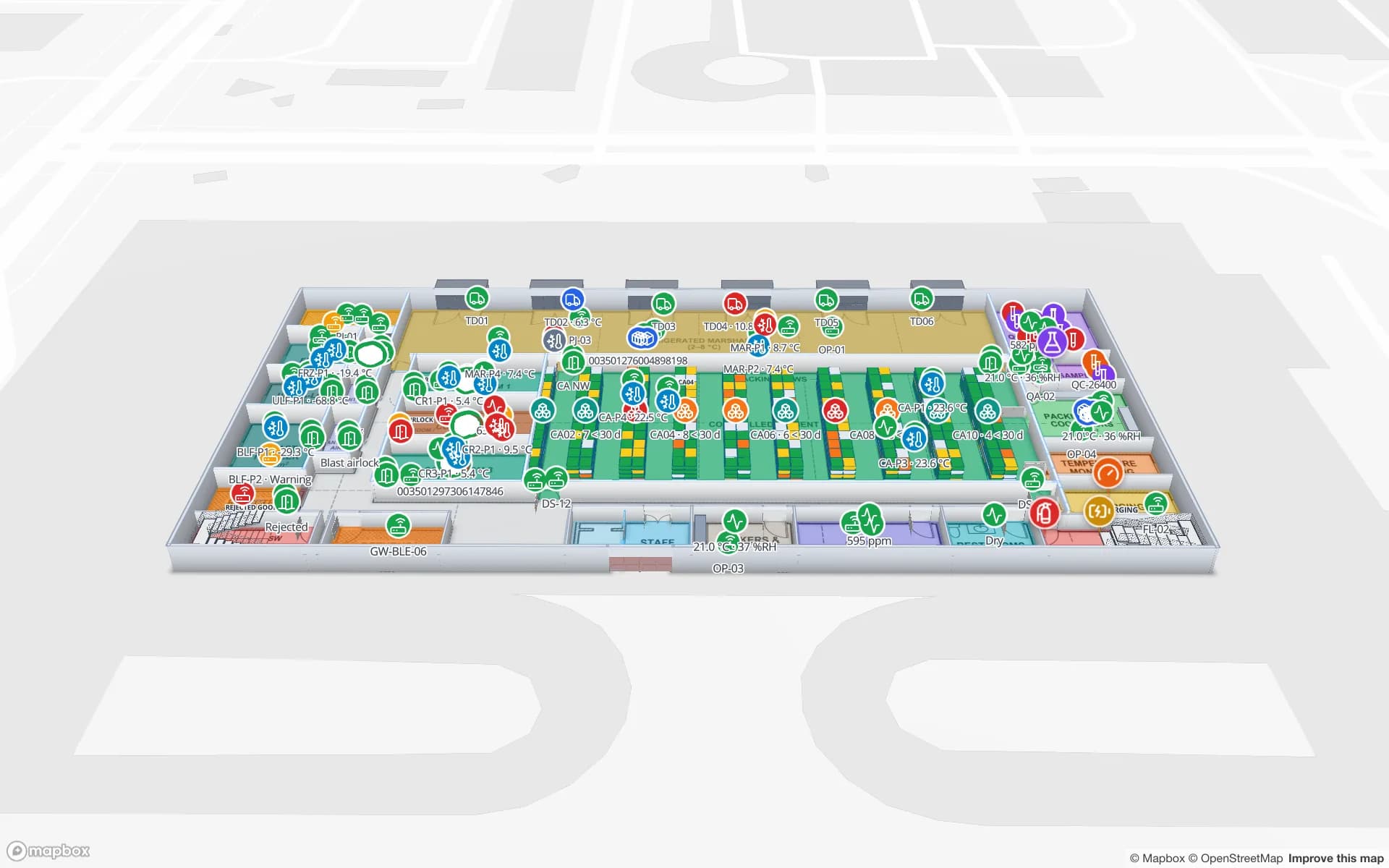
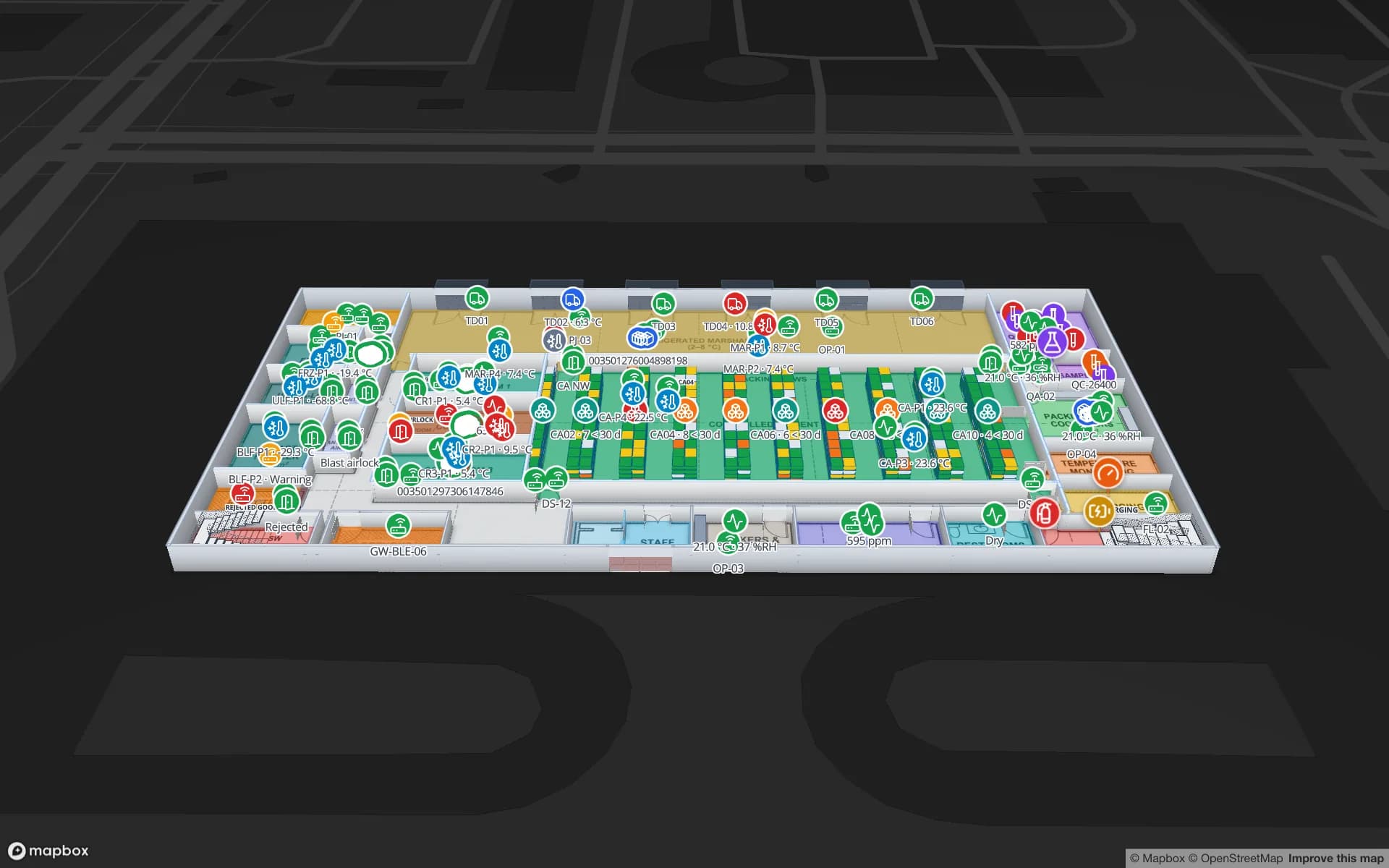
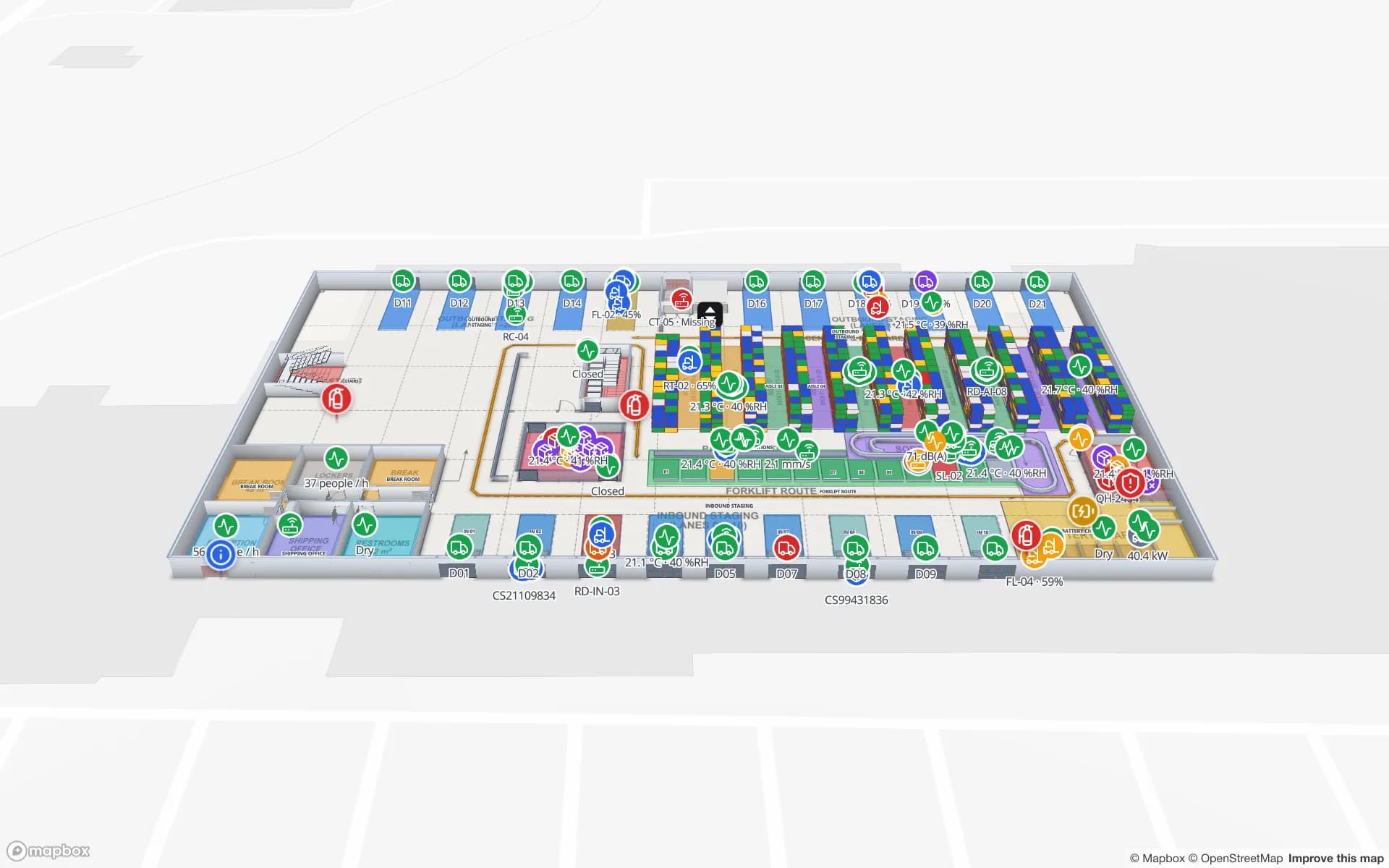
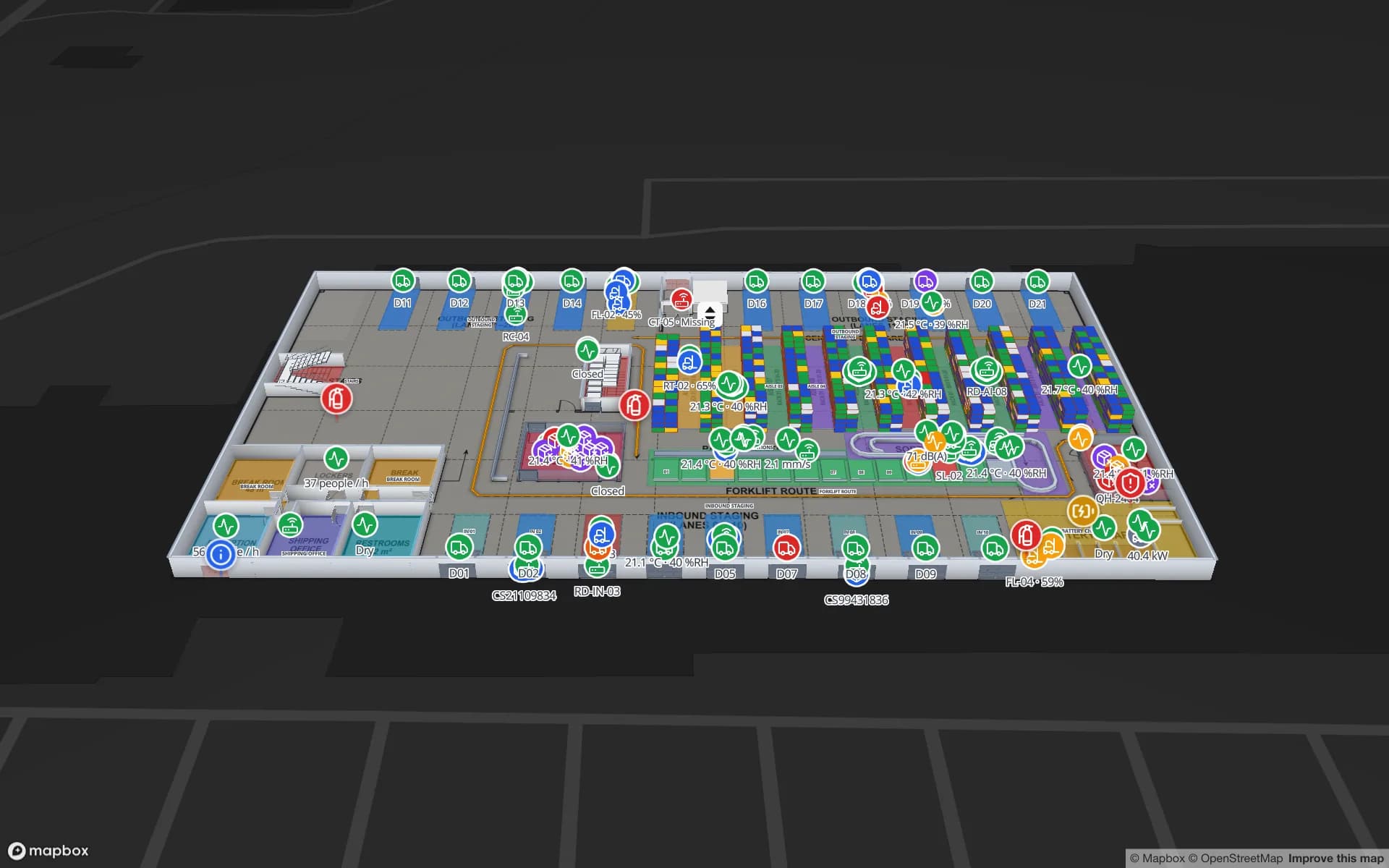
Crestline Fulfillment Center, a fulfillment center demo, in the Spatial Map 3D viewer with live device markers
Crestline Fulfillment Center
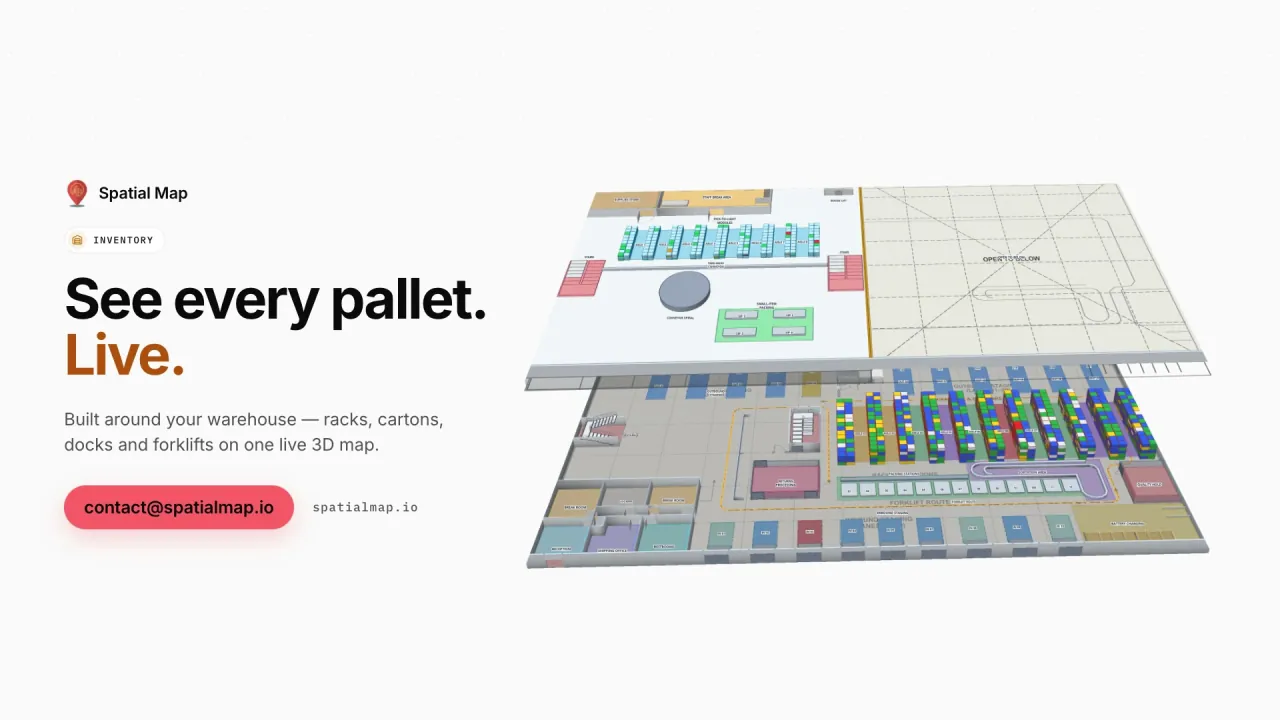
Crestline Fulfillment Center, a demo warehouse: 20 racks with 2,204 locations coloured by stock status, with dock doors and staging lanes.
Rack locations in the Crestline fulfilment demo
2,204
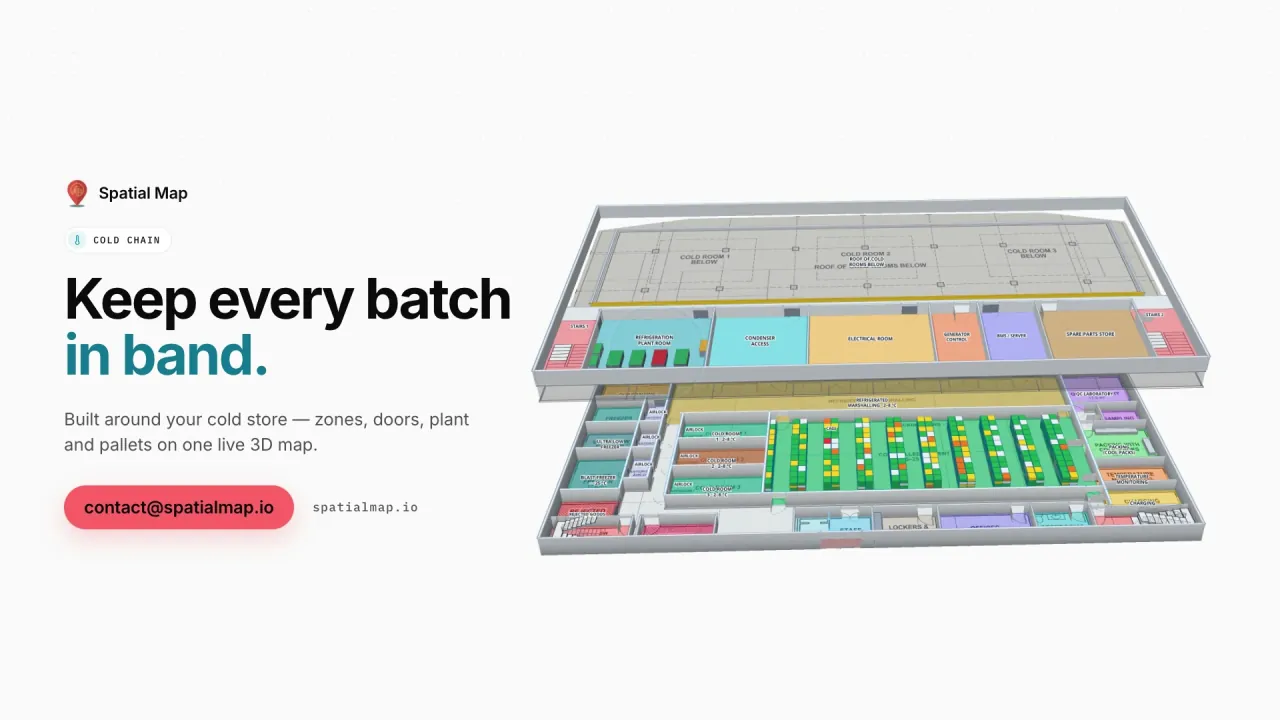
Rack locations in the Polar Pharma cold-store demo
1,140
How often alert rules are checked, with alerts shown in the app
15 s
Free trial, up to 5 facilities, no card
7 days

Zhetysu and Bayserke: import terminals around the city

The Zhetysu container terminal opened in Almaty on 10 June 2025, when the first container train from Xi’an in China arrived. The national railway gives its design capacity as 115,000 TEU a year, its site as 9.8 hectares, with a container yard of 9,200 m² for up to 1,101 TEU at a time, 23,400 m² of warehouse space and 8,900 m² of truck parking, and describes it as intended to become the largest import hub in Kazakhstan. Another rail-connected terminal, at Bayserke station in the Almaty region, offers a container depot, block-train handling, bonded storage for import cargo, an open bonded yard and the transfer of bulk cargo from rail wagons into containers.

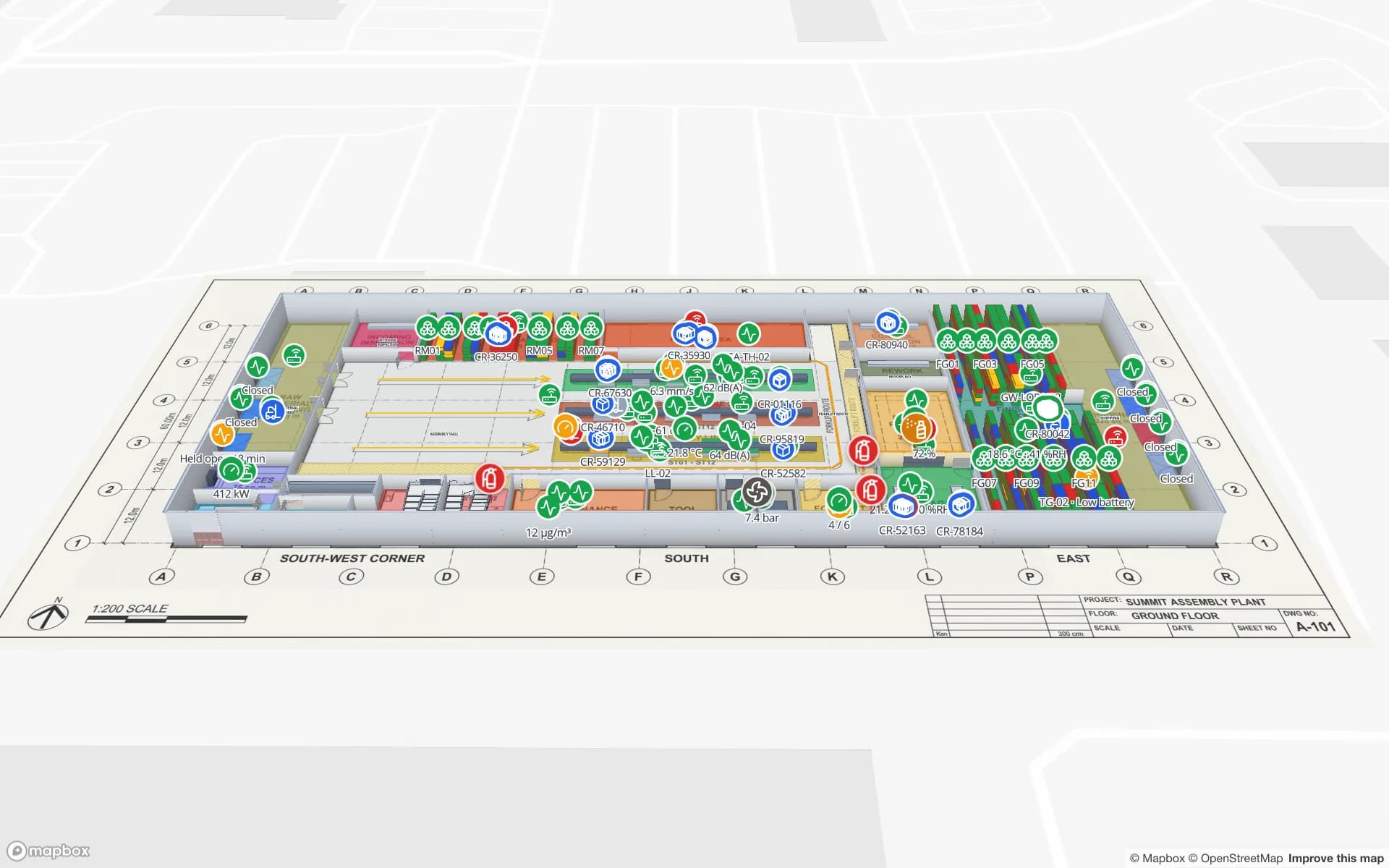
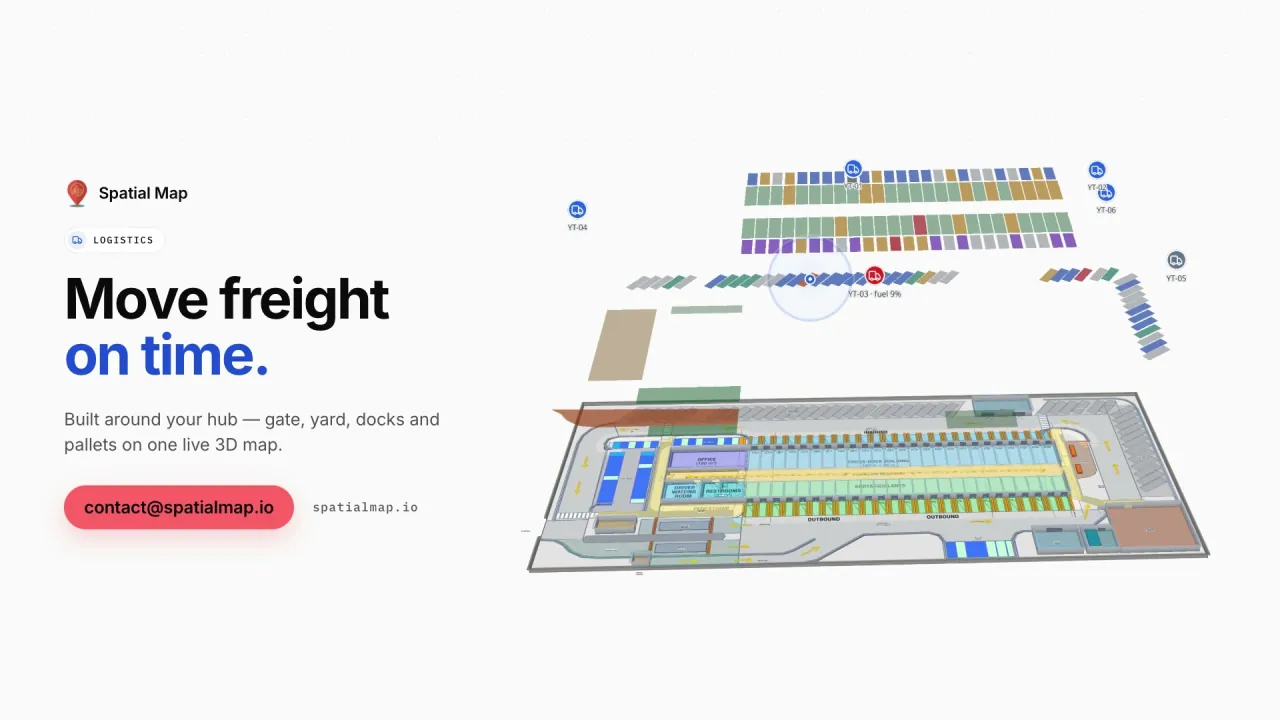
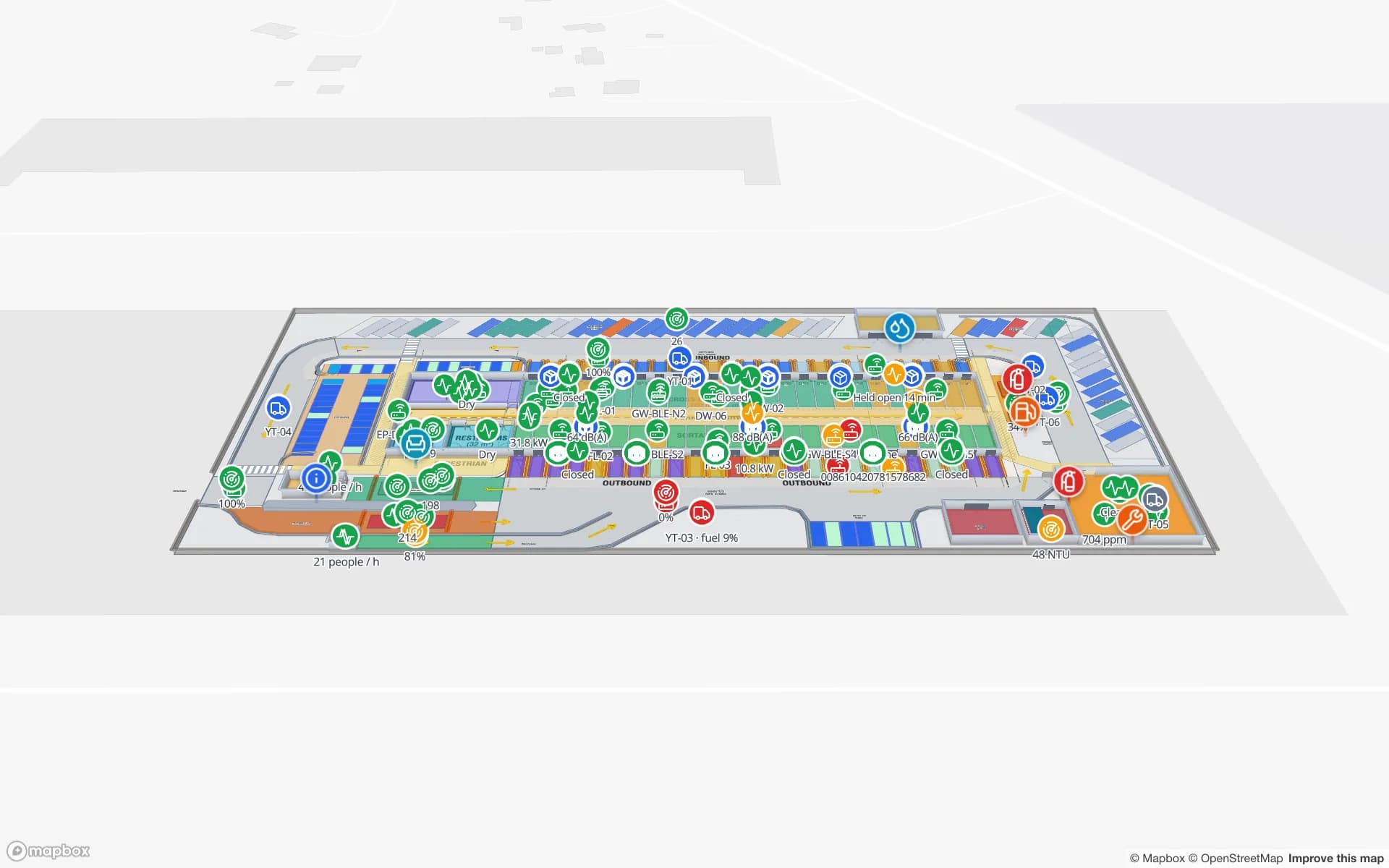
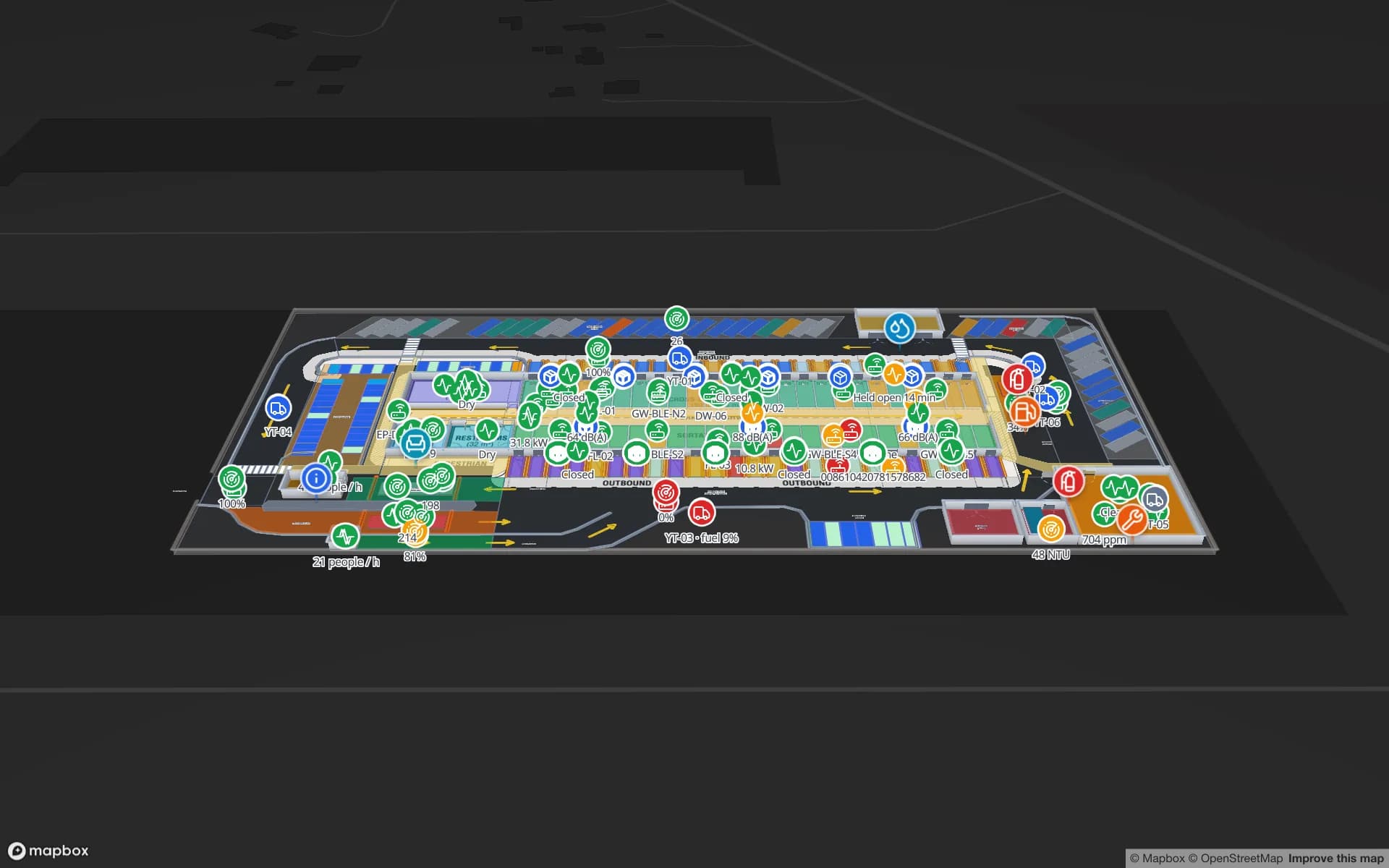
Inside a terminal like these, three questions repeat every day: where is each box, what state is it in (on rail, in the bonded yard, cleared, unpacked), and which pallet left in which truck. A yard drawn as slots and a warehouse drawn as lanes and racks answer them on one screen, and a style rule can colour bonded and cleared areas differently. Spatial Map does not connect to customs or to the terminal operator’s own systems; it shows what your reads and your WMS say. The Eastport demo shows 44 yard slots, gates and weighbridges, and the Crestline demo shows 2,204 rack locations and the staging lanes in front of the docks.
Khorgos is 304 km away, and its boxes end up here

The Almaty–Khorgos section of the Western Europe–Western China road corridor is about 304 km long. At the other end, the Khorgos Gateway dry port reported more than 372,000 TEU in 2025. A warehouse in Almaty is the last link of that chain: the wagon has been unloaded and the declaration has been cleared, and what is left is to know which pallets of an order have arrived, which are still in the terminal and which are on a truck.

Consolidated cargo is where this gets difficult. One container can carry goods for several consignees, and a short pallet is found at the consignee’s dock, not the terminal’s. Tag each pallet at unpacking, read it at the door, and the map shows a delivery as staged, loaded or on its way. The post on cross-dock and yard visibility covers the door and yard pattern, and the RFID gates page explains how to place readers at a door.

Air cargo and cold rooms near the airport

Almaty International Airport, about 15 km north-east of the centre, handled around 130,000 tonnes of freight in 2024, according to trade press, and its chief executive says the aim is 200,000 tonnes in the coming years. The cargo terminal has been re-equipped for sensitive goods, with cold storage and a room for radioactive materials, with a stated focus on pharmaceuticals, perishables and high-value cargo.

Forwarders’ warehouses near an airport live on tight handover times: a pharmaceutical consignment waits in a cold room for a flight or for collection, and the question is where it is and what temperature it has seen. Temperature probes can be posted to a table and shown as tinted rooms and zones with the history of each reading; an alert rule can raise an in-app alert when a room stays above a limit for N minutes. Spatial Map makes no compliance claim, and your quality system remains the record. The Polar Pharma demo shows cold rooms, reefer docks and 1,140 rack locations, and warehouse temperature mapping shows the method.

Mountain foothills, earthquakes and the racking plan

Almaty, with more than two million residents, lies at the foot of the Trans-Ili Alatau mountains and was the capital until 1997. It also lies in an earthquake zone: in June 1887 a magnitude 7.3 earthquake destroyed nearly all of the adobe buildings of what was then the town of Verny, and the Kemin earthquake of January 1911, about 40 km away, was magnitude 7.8. Sources disagree on casualty figures, so none are quoted here. The city’s own investment portal gives an average annual temperature of +10.0 °C and relative humidity of 20% to 65%.

For a warehouse operator that history is context for racking and layout decisions that belong to structural engineers; Spatial Map makes no safety or code claim. What the map does give is knowledge of what is stored where: which aisle holds heavy or hazardous stock, which bays are empty, and which pallets sit on upper levels. After any event your own inspection decides what is safe to use, and the map and its row history tell you what was in the affected bays.

Services for teams in Almaty

Almaty teams usually start from the building they spend most time in:

Also served nearby

The same page covers the Bayserke station area and the rest of the Ili district, Talgar and the other towns of the Almaty region. The map opens in a browser at all of them, with nothing installed.

How Spatial Map does it

From a terminal plan to a live warehouse map

  1. 01

    Choose a building

    An import terminal yard, a bonded warehouse or a distribution centre, wherever stock waits longest.

  2. 02

    Map yard, doors and racks

    Upload a plan, photo or sketch, let AI Map draft the floor, and name slots and read points the way your middleware does.

  3. 03

    Connect stock and reads

    Your WMS, RFID middleware and sensors post rows through the table write API, a polled REST endpoint or CSV and Excel uploads.

  4. 04

    Add waiting and silence rules

    In-app alerts for containers or pallets waiting beyond a limit, rooms out of range and readers that stopped reporting.

What Almaty teams track

Import terminals and consolidation warehouses

Yard slots, dock doors and pallets staged by consignee.

Distribution centres

Rack-level stock by bin and lanes by status.

Pharmaceutical and perishable cold rooms

Temperature zones, quarantine and returns areas on one map.

Supply-chain flows between plant and store

Receiving, finished goods and shipping docks tied to the same table.

See it on real demo facilities

Fictional names, real floor plans, live sensors, RFID, BLE tags and gateways — open any of them in the browser.

All 13 demo facilities

Warehouse tracking in Almaty — questions we get

No. It has no link to railway, customs or terminal systems. It shows what happens inside your own terminal or warehouse, from your own RFID reads, WMS and sensors.

Yes, if each pallet or carton carries a tag or a code that your system links to a consignee. Rows in a table carry the consignee, the style rule colours pallets by status, and a filter shows one customer’s goods. Customers can be given a read-only share link limited to chosen floors.

No. Racking, building safety and any seismic requirement are for engineers and your inspectors, and Spatial Map makes no safety or code claim. It records what was stored where, which helps you know what to check after an event.

Yes. Photograph or scan the plan and align it at real size, or sketch the outer walls and racks and photograph the sketch. AI Map can draft from the picture, and you correct what it gets wrong; our services team can also do the mapping remotely for a fixed price.

No. Spatial Map is sold online and our team works with customers in Kazakhstan remotely, by video call and through the contact form. The app has no Russian or Kazakh interface; names and labels you write can be in either.

In US dollars, the same worldwide: a 7-day free trial for up to 5 facilities with no card, then Pro at $60 a month or $600 a year for up to 4 facilities. A terminal yard, a warehouse and a cold room fit in one Pro plan.

Follow one consignment from terminal gate to shelf.

Start the free trial and open the Crestline and Eastport demos, or send us the plan of a terminal yard or warehouse and a sample of your pallet list through the contact form.