Tunis · Radès, Mghira and the Ben Arous zones

Inventory tracking in Tunis, from the Radès gate to the plant store

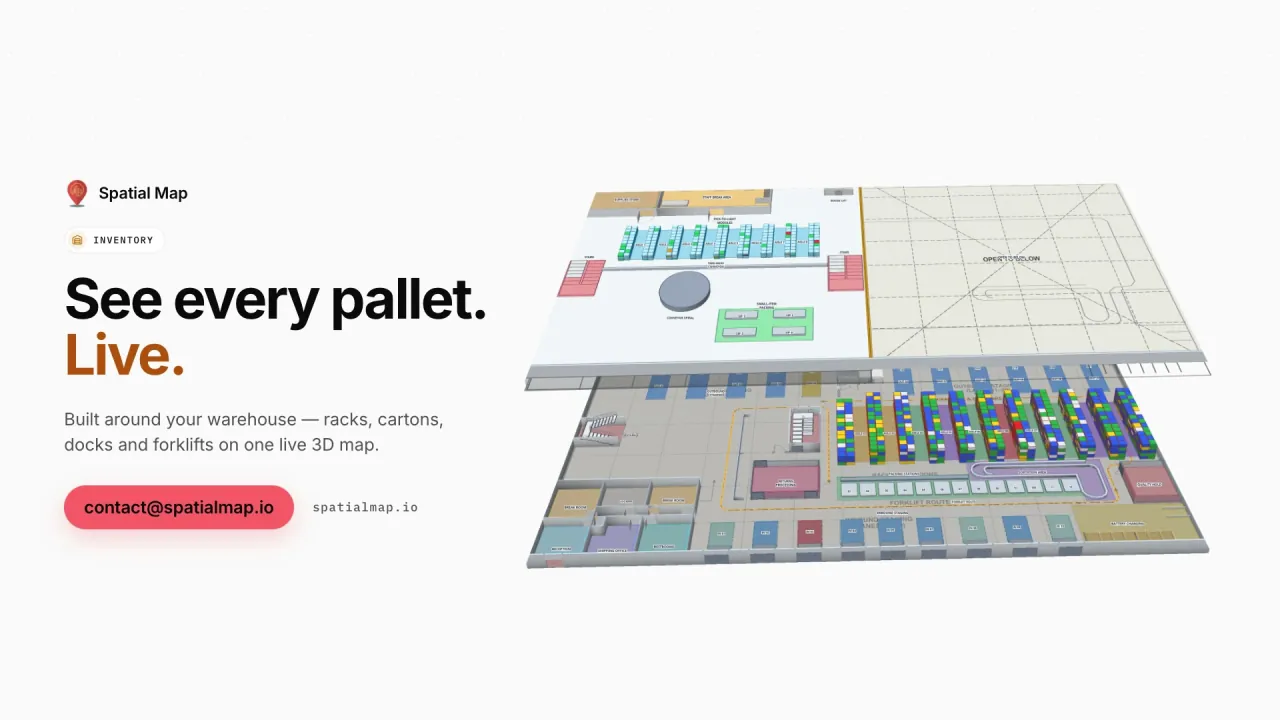
Spatial Map shows stock as a live 3D map: racks and bins coloured from your inventory list, RFID reads placed at the door that last saw each pallet, tote or carton, and the lane or area each lot is staged in. Inventory tracking in Tunis is shaped by geography: the container port of Radès sits on the city’s edge, export plants fill the industrial zones of Ben Arous to the south, and an aeronautical park at Mghira holds precision machining and assembly. Each building is its own facility, and all of them can share one workspace.

No credit card. Runs in the browser. Pro is $60/month for up to 4 facilities. Book a demo

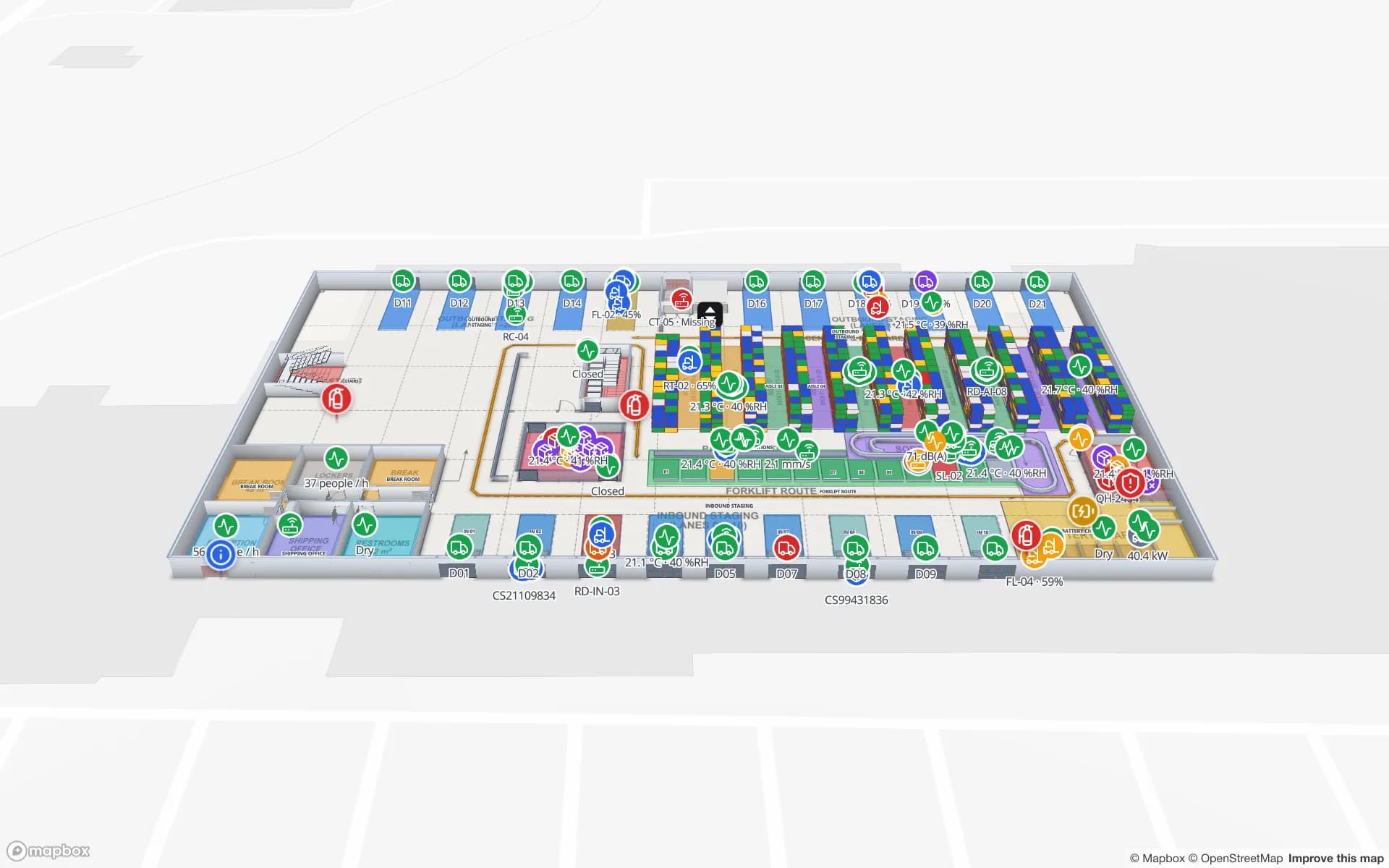
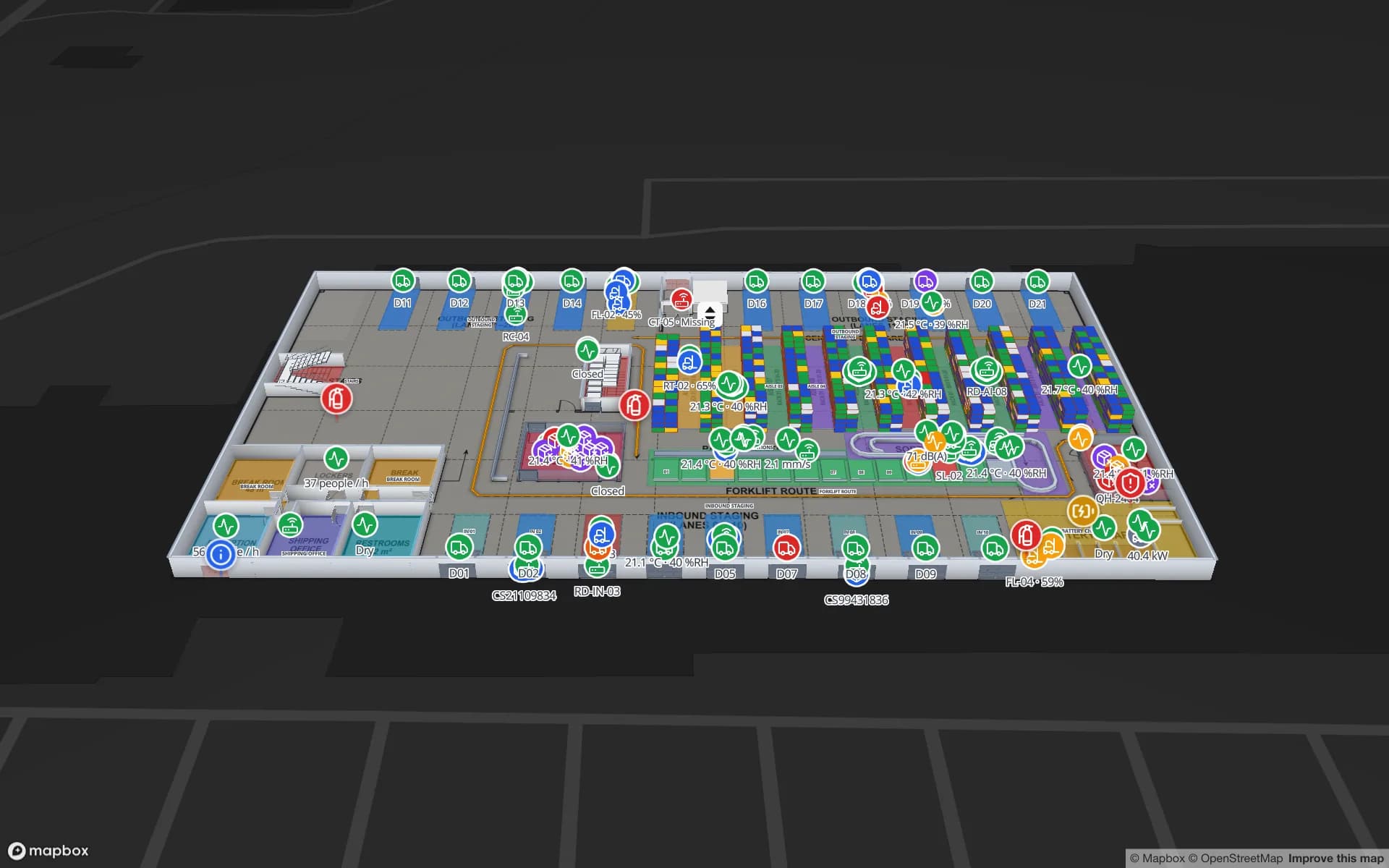
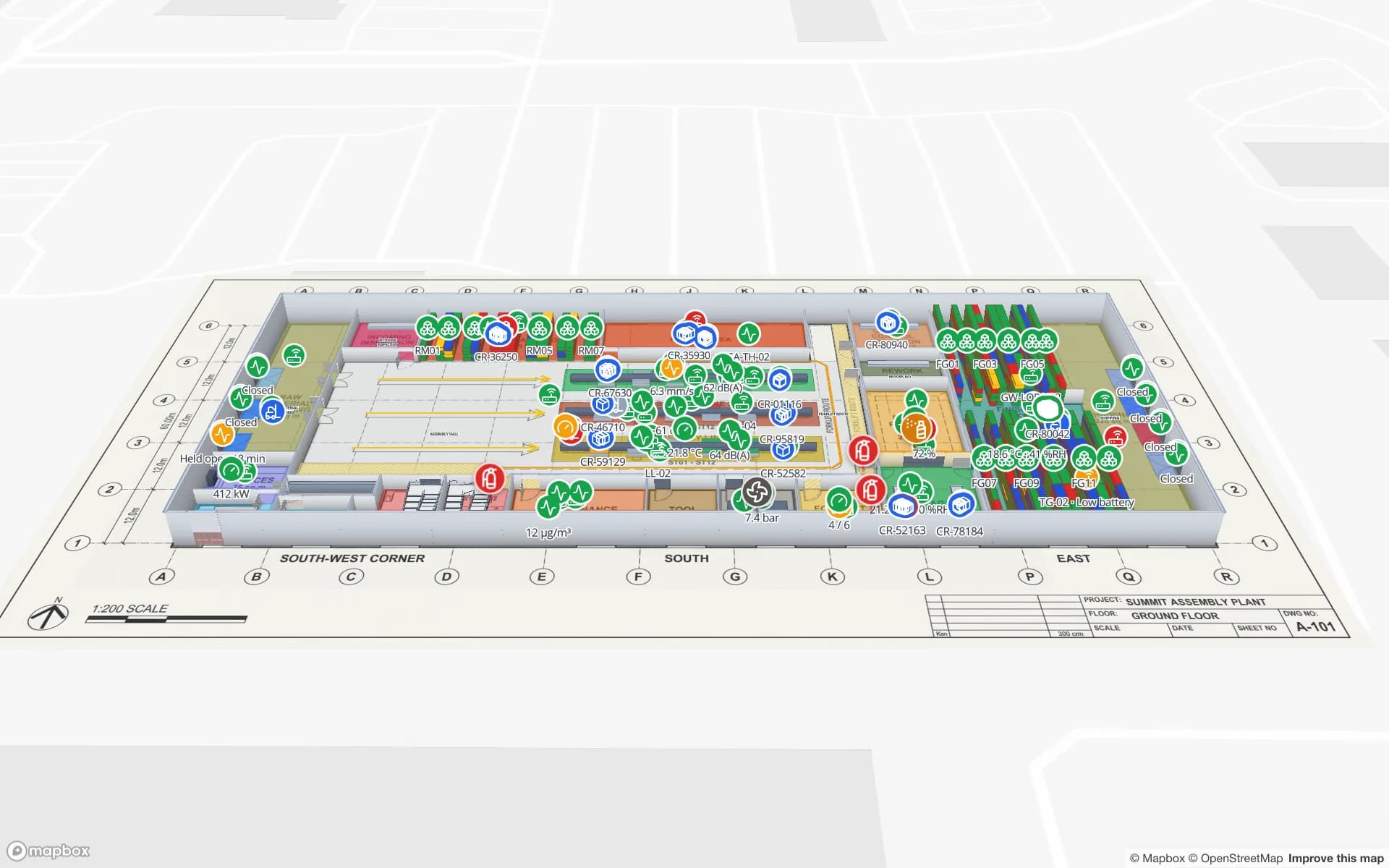
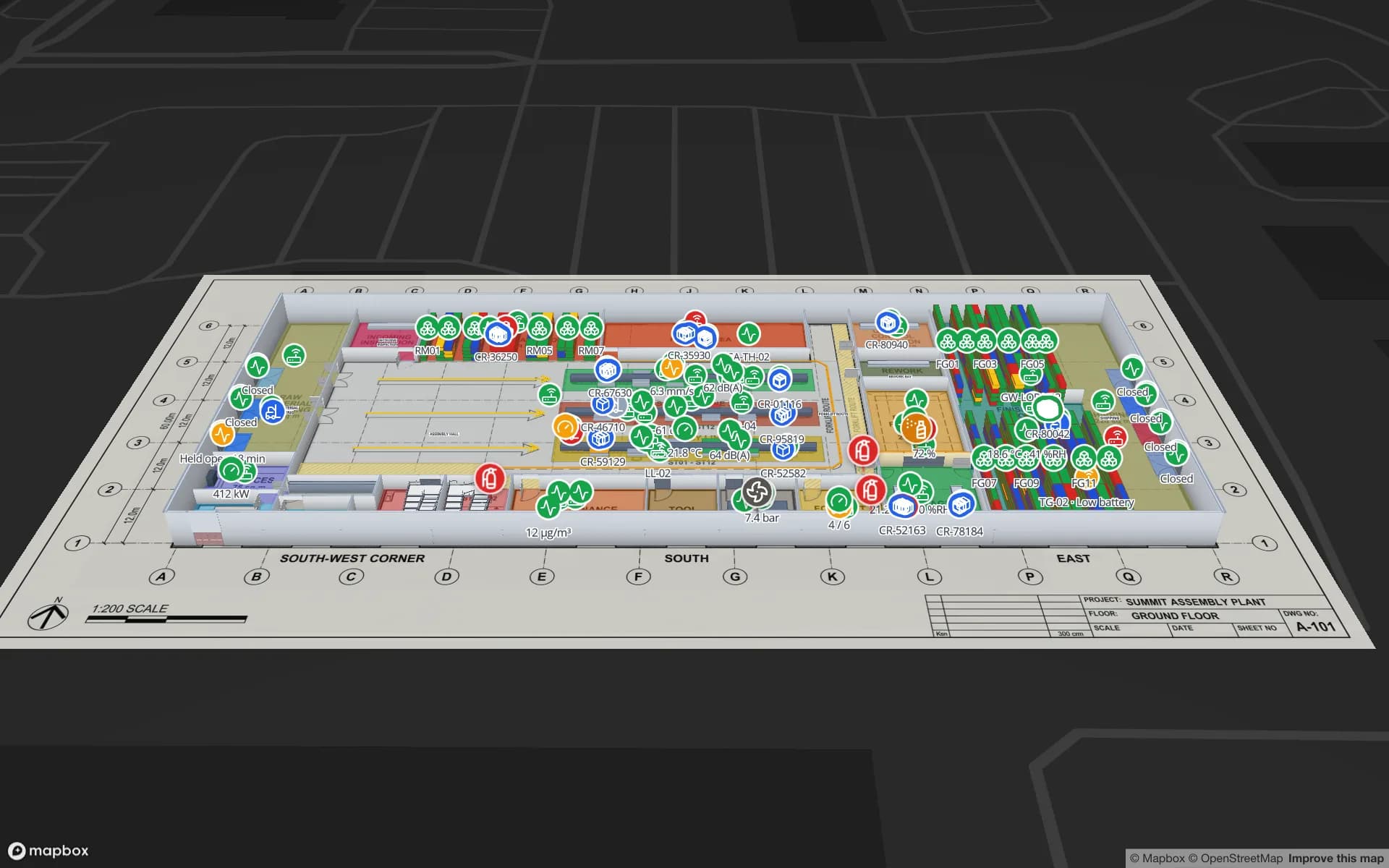
Summit Assembly Plant, a assembly plant demo, in the Spatial Map 3D viewer with live device markers
Summit Assembly Plant
Summit Assembly, a demo assembly plant: production lines, workstations and 867 raw-material and finished-goods rack locations on one map.
Rack locations in the Summit assembly-plant demo
867
Rack locations in the Crestline fulfillment demo
2,204
How often alert rules are checked, with alerts shown in the app
15 s
Free trial, up to 5 facilities, no card
7 days

Radès: containers, trailers and the buildings behind the gate

The port of Radès is managed by the OMMP, and its container concession is held by a single public terminal company. In 2019 the terminal announced a terminal operating system with a container pick-up appointment system, real-time tracking of containers inside the port, automated gates with plate recognition and a doubling of storage to 16,000 TEU; in April 2026 the transport minister asked for the smart gate to be switched on, and new port tractors had entered service. A ministry presentation also describes a planned 50-hectare logistics zone at Radès, divided into a customs-bonded part and a part outside customs, though its status should be checked before you rely on it.

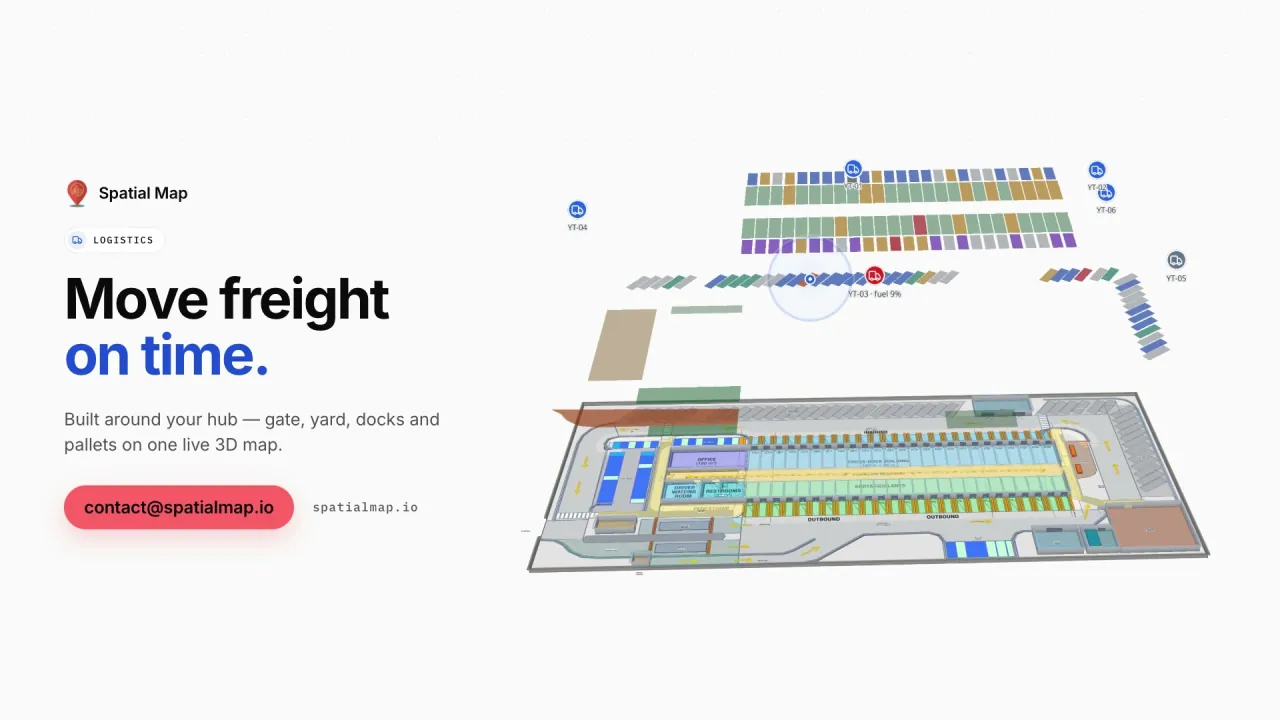
Those systems run the port. Inside a freight station or an importer’s shed the question is different: which pallet came out of which box, which lane it is staged in and which order it belongs to. RFID portals at the dock doors answer it, and the Eastport demo shows 50 dock doors, 44 yard slots and 1,180 RFID pallets on one map. Because Radès takes trailers as well as containers, draw the trailer lane next to the container lane. Spatial Map does not connect to the terminal system, customs or Tunisie TradeNet.


Mghira and Ben Arous: aerospace parts and a thousand hectares of zones

A French Treasury note from 2025 describes the aeronautical park at Mghira, in Fouchana in the governorate of Ben Arous, as home to about ten aeronautical industrial firms, mostly French, employing more than 3,300 people. Around it, Ben Arous has 22 industrial zones covering 1,065 hectares, according to a 2025 report, nine of them developed by the public Agence Foncière Industrielle, which has existed since 1973.

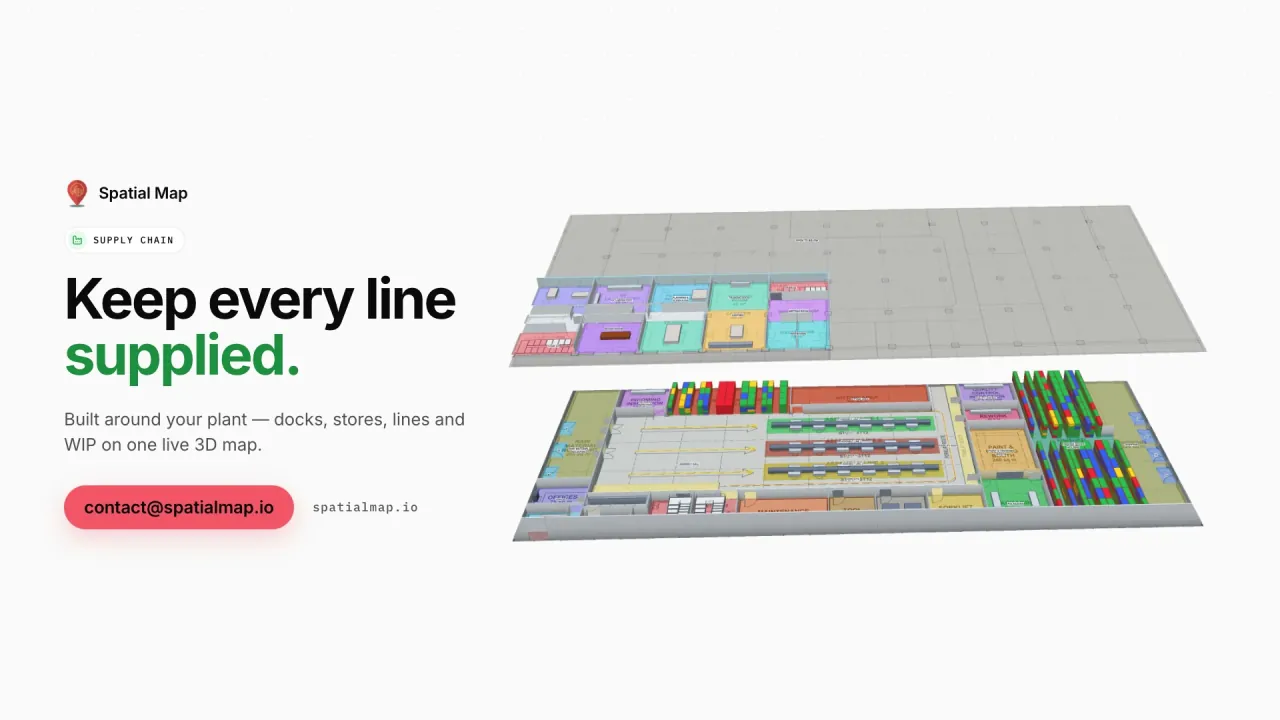
A machining and assembly plant lives on kits and work in progress: castings and raw bar in the store, parts in a queue at each machine, tooling in a crib, finished parts waiting for inspection and packing. Draw each of those as an area, tag the bins and trays, and the map shows what is where and how long it has waited. Quality systems and customer traceability stay in your own records, and Spatial Map makes no compliance claim. RFID tool tracking covers the crib pattern, and the Summit demo shows lines, workstations and 867 rack locations.

Export plants and the count that never ends

A plant under the offshore regime exports what it makes, so nearly everything it holds is either inbound material or outbound goods with a destination. The two stock counts that cost the most time are the raw-material store and the finished-goods store, because both are counted by hand against a list. An RFID handheld walks the aisle and reads every tagged bin in seconds; Spatial Map takes the counted rows, compares them with your ERP’s list and colours the locations that disagree. The post on how RFID stock counting works explains the method.

Start with one store and one count. Import the ERP’s stock list as a CSV or Excel file, colour the racks by status, and add readers at the door only after the first count shows where the differences are. The Crestline demo shows 2,204 rack locations coloured from a rack inventory table.

Tunis-Carthage and the air-freight shed

Tunis-Carthage airport is run by the state Office of Civil Aviation and Airports (OACA). Express and general air freight arrives in sheds on the airport estate, where parcels and boxes wait for clearance and collection. For a forwarder or an express handler that is a stock problem on a short clock: what has arrived, what is cleared, what is still waiting for a document.

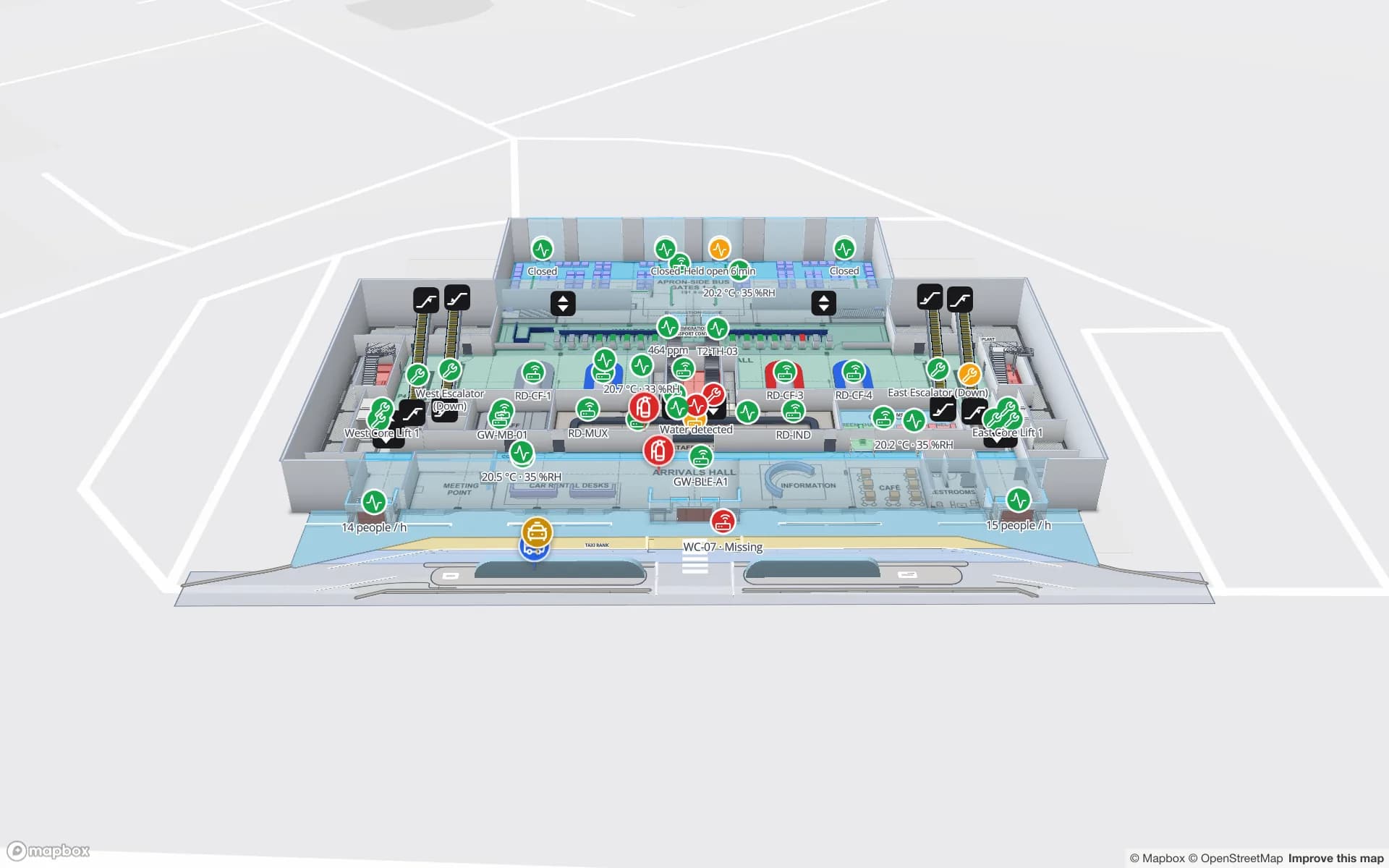
Draw the shed as areas — arrivals, held, cleared, collection — tag or scan each consignment, and the map shows its stage and the time it has spent there; an in-app alert flags a consignment that has stayed in “held” too long. The airport demo and the post on airport baggage and RFID show how a large operation reads on the same map.

Hot days, long outages

Summer 2026 was ranked the hottest in Tunisia since 1950, and the electricity company said outages that sometimes lasted over ten hours, including in the capital, were load shedding. A plant store, a freight station and a cold room all feel it, and so do the readers and sensors in them.

A “not updated for N minutes” rule on the reader table raises an in-app alert when a portal goes quiet, and the History player shows which hours have no reads, so a gap is not mistaken for stock that did not move. Ask your integrator to buffer reads on site; Spatial Map shows what it receives. For stores with temperature limits, see warehouse temperature mapping.

Services for teams in Tunis

Where Tunis teams usually start depends on the building:

  • Export plants and kit stores usually begin with inventory tracking: one store, one count, then the despatch door.
  • Freight stations and forwarders around Radès add asset tracking for trailers, forklifts and returnable pallets once the dock doors are read.
  • RTLS and UWB matters mainly for large plants where people and vehicles must be located continuously; most stores will not need it first.
  • If you have no readers or tags yet, our team can source RFID readers, antennas and tags on request, quoted per project, with warranty and device support from the manufacturer: see hardware and demo kits on request.
  • Where in-house IT is thin, our team builds Android RFID handheld apps, ERP integrations and other custom software such as POS or booking systems as client projects. Run the product as cloud or on-premises. The interface is available in French and Arabic.

Also served nearby

The same page covers Radès, La Goulette, Mégrine, Fouchana, Mornag and Ariana. Sfax, Sousse and Bizerte are covered with the Tunisia overview.

How Spatial Map does it

From the port gate to the plant store

  1. 01

    Pick one store

    A raw-material store, a finished-goods store or a freight-station lane — wherever a miscount stops a line or a truck.

  2. 02

    Map areas, racks and doors

    Upload the plan, photo or sketch, let AI Map draft the floor for review, and name locations the way your ERP does.

  3. 03

    Connect stock and reads

    The ERP stock list and RFID reads arrive through the table write API, a polled REST endpoint or CSV and Excel uploads.

  4. 04

    Compare, then add rules

    Colour locations that disagree with the list, then add in-app alerts for lots staged too long and readers that stopped reporting.

What Tunis teams track

Kits, bins and work in progress

Parts by area and queue, with tooling and finished parts waiting for inspection.

Freight stations near Radès

Dock doors, yard slots and pallets staged by order.

Raw-material and finished-goods stores

Stock by bin against the ERP list, with the locations that disagree highlighted.

Air-freight sheds

Consignments by stage, from arrival to collection.

See it on real demo facilities

Fictional names, real floor plans, live sensors, RFID, BLE tags and gateways — open any of them in the browser.

All 13 demo facilities

Inventory tracking in Tunis — questions we get

No. It has no link to terminal, customs or Tunisie TradeNet systems. It shows what happens inside your own building, from your own ERP, RFID reads and sensors, so it complements the port-level systems rather than replacing them.

Yes. Post the counted rows to a table, keep the ERP’s list in another, and a style rule colours the locations where the two disagree. The map shows where the differences cluster, which usually points to a process problem rather than a miscount.

Yes. Upload the photo or scan and align it at real size, or sketch the outer walls and racks and photograph the sketch. AI Map can draft from the picture and a person corrects it. Our services team can also do the mapping remotely.

Yes. French and Arabic are two of the six interface languages, and Arabic uses a right-to-left layout. Names you type yourself appear exactly as typed.

A “not updated for N minutes” rule on the reader table raises an in-app alert, and the History player shows the gap. Your RFID middleware should buffer on site and post the reads when the connection returns.

No. Spatial Map is sold online and our team works with customers in Tunisia remotely, by video call and through the contact form. There are no local resellers or partners.

In US dollars, the same worldwide: a 7-day free trial for up to 5 facilities with no card, then Pro at $60 a month or $600 a year for up to 4 facilities. RFID hardware, if you ask us to source it, is quoted per project and is not part of the subscription.

Map one Tunis store before the next count.

Start the free trial and open the Summit demo, or send us the plan of a plant store or freight station and a sample of your stock list through the contact form.