Africa · Tunisia

Indoor mapping & RFID tracking in Tunisia

Spatial Map is browser-based software for indoor mapping & RFID tracking in Tunisia: it turns the floor plan of a warehouse, export plant or packing house into a live 3D map fed by your readers, gateways and sensors. Tunisia sells much of what it makes abroad, from wiring and aircraft parts to olive oil, and nearly all of it leaves through a handful of ports, with Radès the container gateway. The app speaks French and Arabic as well as English, so a plant manager and a head office can read the same map in their own language.

No credit card. Runs in the browser. Pro is $60/month for up to 4 facilities. Book a demo

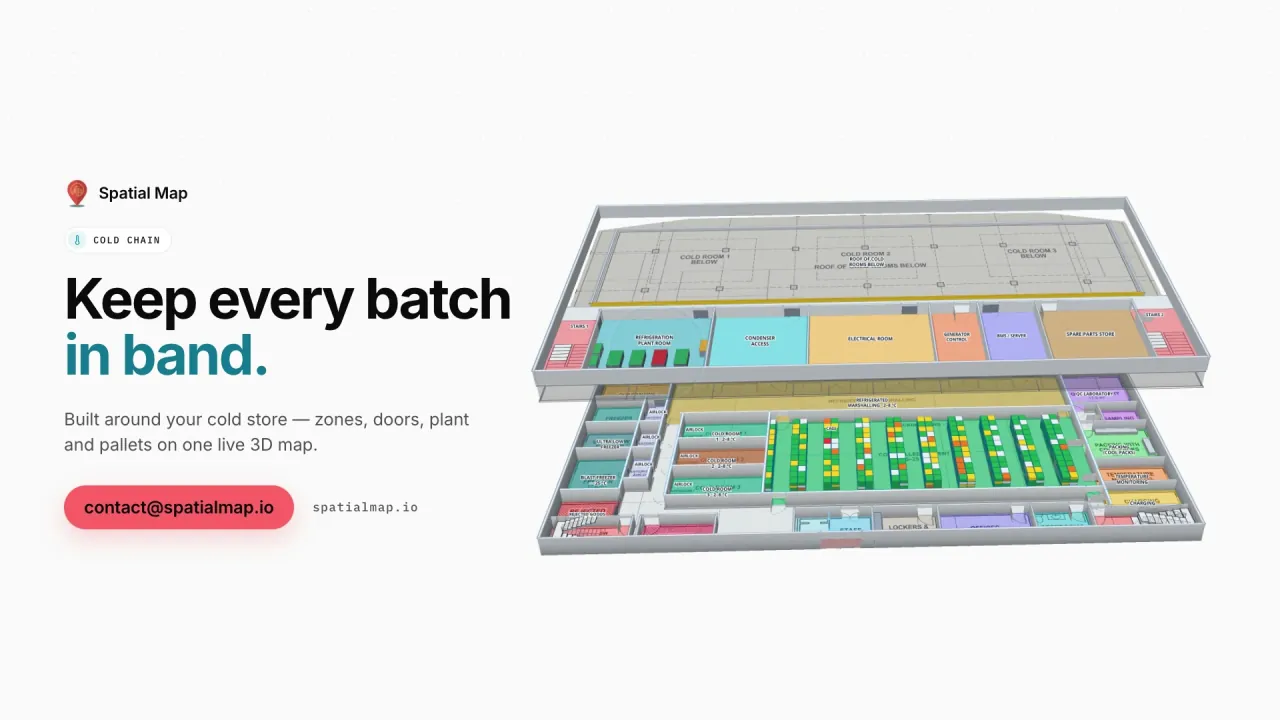
Inventory film: “See every pallet. Live.” beside the two floors of Crestline Fulfillment Center in 3D
The Inventory film: racks coloured by stock status, RFID reads at the dock doors and pick activity in the Crestline fulfillment demo.
Rack locations in the Crestline fulfillment demo
2,204
Interface languages, including French and Arabic
6
How often alert rules are checked, with alerts shown in the app
15 s
Free trial, up to 5 facilities, no card
7 days

Eight commercial ports, one container gateway

The Office de la Marine Marchande et des Ports (OMMP) manages Tunisia’s commercial ports, which recent reports list as eight: La Goulette, Radès, Bizerte–Menzel Bourguiba, Sousse, Sfax, Skhira, Gabès and Zarzis. Radès, beside Tunis, is the main container port; trade press put its share at 176,400 of the 278,000 TEU that Tunisia’s container ports handled in the first half of 2026. It was built in 1987 for roll-on roll-off ships and later took containers as well, so trailers and boxes share one port. A deep-water port at Enfidha has been planned for years; the ministry said in February 2026 that studies and tenders should be finalised by the end of the year, and September 2026 press spoke of works from early 2028, so treat it as a project, not a place.

Foreign-trade paperwork runs through Tunisie TradeNet, the electronic single window that has operated since February 2000 and serves more than 2,500 public and private actors. Spatial Map does not connect to it, to customs or to terminal systems. It shows what is inside your own shed: which pallet is in which lane, which box belongs to which order, which trailer waits at which door. The Eastport demo shows 50 dock doors, 44 yard slots and 1,180 RFID pallets on one map, and the city page, inventory tracking in Tunis, goes through the buildings around Radès.
Offshore plants: wires, parts and export cartons

Law 72-38 of April 1972 created Tunisia’s offshore regime for fully exporting firms, which the World Bank describes as the basis for the later investment code, and the free zones at Bizerte and Zarzis are populated by offshore companies with customs on site. The US Commercial Service counts more than 260 automotive component companies in Tunisia, 65% of them fully exporting, employing about 90,000 people directly in 2022, with electrical cables and wires among the products.

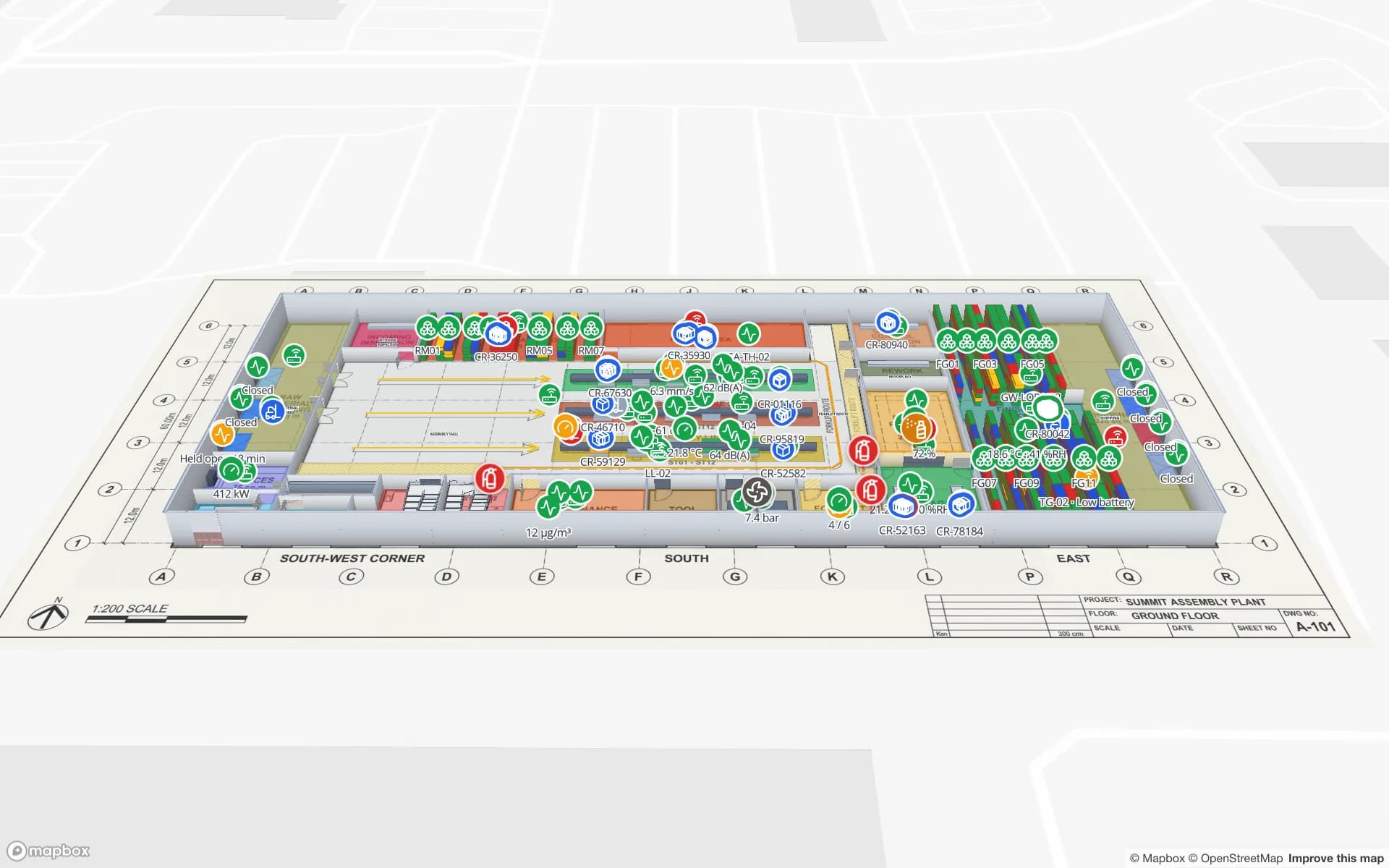
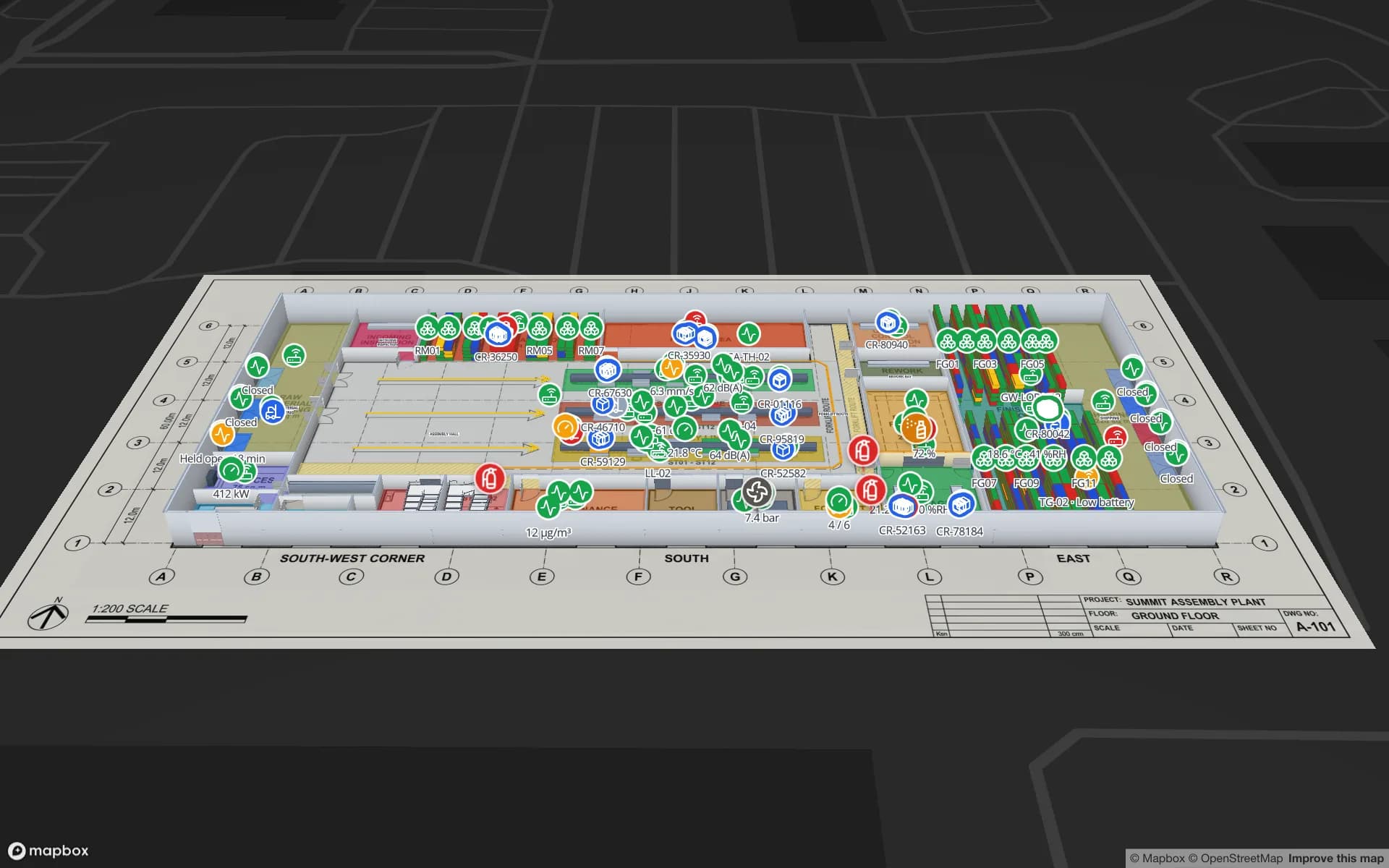
An export plant’s stock problem is lots and kits: reels of wire, bins of terminals, trays of cut leads and cartons that must leave with the right paperwork. Tag the bins, totes and cartons, read them at the store door and the despatch door, and the map shows what is in each area, which lot is staged and which carton is short before the truck leaves for Radès. Your customer’s quality system remains the record, and Spatial Map makes no compliance claim. The Summit assembly-plant demo shows 867 raw-material and finished-goods rack locations, and the post on manufacturing supply-chain visibility covers the pattern.

Olive oil and agri-food

Olive oil is Tunisia’s best-known export. According to ONAGRI figures reported in the press, Tunisia exported 381,200 tonnes between November 2025 and August 2026, 50.8% more than a year earlier. Mills, bottling lines and packing houses handle that volume through tank halls, pallet stores and label stores, and a lot that is mixed up there is costly to trace.

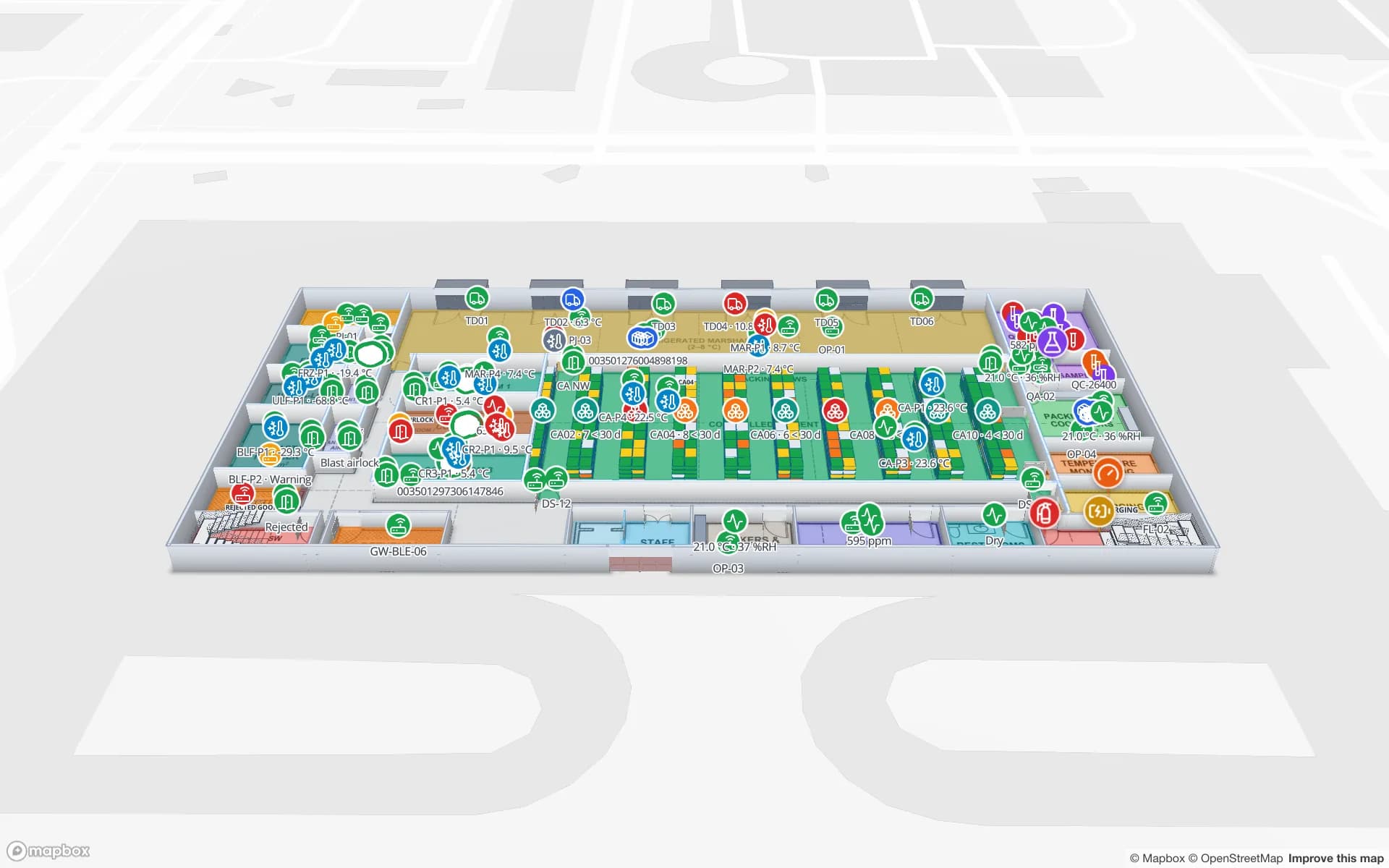
On the map each store takes the colour of its latest sensor reading, pallets and cartons carry their lot and best-before fields from your ERP, and a style rule highlights lots near expiry. Warm stores and quiet sensors raise an in-app alert, and the History player replays the week for an audit. The Polar Pharma demo shows the same pattern with 1,140 rack locations, and the cold-chain solution explains the rules.

A hot summer and a stretched grid

Tunisia’s National Meteorological Institute ranked summer 2026 the hottest since 1950, about 2.9 °C above the previous record, with Kairouan reading 49.7 °C in mid-July. The state electricity company described outages that sometimes lasted over ten hours, including in the capital, as load shedding. For a warehouse, that means two things: stores get hot, and readers, gateways and sensors go quiet.

Spatial Map cannot keep the lights on, but it notices. A rule set to “not updated for N minutes” on the reader or sensor table raises an in-app alert when a portal falls silent, a heatmap shows which side of the shed ran hottest, and the History player shows the gap afterwards so reads that were never made are not mistaken for pallets that never moved. Ask your integrator to buffer reads on site and post them when the connection returns.

French and Arabic, side by side

Arabic is Tunisia’s official language, and French is widely used in business and trade documents. Spatial Map’s interface is available in French and Arabic as well as English, Spanish, German and Chinese; Arabic switches the layout to right-to-left, and each user picks their own language. Names you type yourself — rooms, racks, report titles — appear exactly as typed, in French, Arabic or Tunisian Arabic written in either script. There is no Italian or Amazigh interface.

Tunisia’s Organic Act 2004-63 of 27 July 2004 covers personal data and is overseen by the INPDP. It matters when location data can be linked to a person, such as a driver’s or picker’s badge; tags on pallets, reels and cartons do not identify anyone. Your legal advisers decide what applies. A data processing agreement is available and the security page explains how data is protected.

Also served

The same approach covers Sfax, Sousse, Bizerte, Monastir, Gabès and Zarzis. They have no pages of their own, and nothing needs to be installed at any of them: the map opens in a browser. Spatial Map is sold online, and our team works with customers in Tunisia remotely, by video call and through the contact form.

How Spatial Map does it

From floor plan to live map

  1. 01

    Import the plan

    A PDF, a DWG from AutoCAD R2004–R2018 or a scan of the plant, store or packing house.

  2. 02

    Draw the building

    Racks with their locations, dock doors, cold rooms and lanes, or let AI Map draft them for review.

  3. 03

    Connect the data

    ERP, RFID middleware and sensor gateways post rows to a table, or Spatial Map polls a REST endpoint.

  4. 04

    Add door and silence rules

    In-app alerts for cartons staged too long, stores out of range and readers that stopped reporting.

What teams in Tunisia map first

Export plants and kit stores

Bins, reels and cartons by area, with lots staged for despatch.

Port-side warehouses

Dock doors, yard slots and pallets staged by order before the truck leaves.

Olive-oil and food stores

Stores by live temperature, lots by expiry.

Distribution centres

Rack-level stock by bin, staging lanes and the trailer yard.

See it on real demo facilities

Fictional names, real floor plans, live sensors, RFID, BLE tags and gateways — open any of them in the browser.

All 13 demo facilities

Questions from teams in Tunisia

Yes. The app is available in English, French, Arabic, Spanish, German and Chinese, and Arabic uses a right-to-left layout. Each user picks their own language. Names you type yourself appear exactly as typed.

No. It shows your own buildings — dock doors, yard slots, racks and stores — coloured by the data your ERP, readers and sensors send. Customs, single-window and terminal records stay in their own systems.

Yes. Tag the bins, reels and cartons, read them at the store and despatch doors, and let your ERP post lot and order fields to a table. The map shows where each lot is and what is staged. Your customer’s quality system stays the record.

Spatial Map shows what it is sent. A “not updated for N minutes” rule raises an in-app alert when a reader or sensor goes quiet, and the History player shows the gap. Your RFID middleware or gateway should buffer on site and post the reads when the connection returns.

It is context when location data can be linked to a person, for example through a staff badge. Your legal advisers decide what applies. Spatial Map only shows the data you send it, and a data processing agreement is available.

No. Spatial Map is sold online and our team works with Tunisian customers remotely, by video call and through the contact form. There are no local resellers or partners.

The same worldwide, in US dollars: a 7-day free trial for up to 5 facilities with no card, then Pro at $60 a month or $600 a year for up to 4 facilities. Larger networks are quoted as custom services.

Map your first Tunisian site this week.

Start the free trial, or send us a floor plan and a sample of your ERP, RFID or sensor data through the contact form.