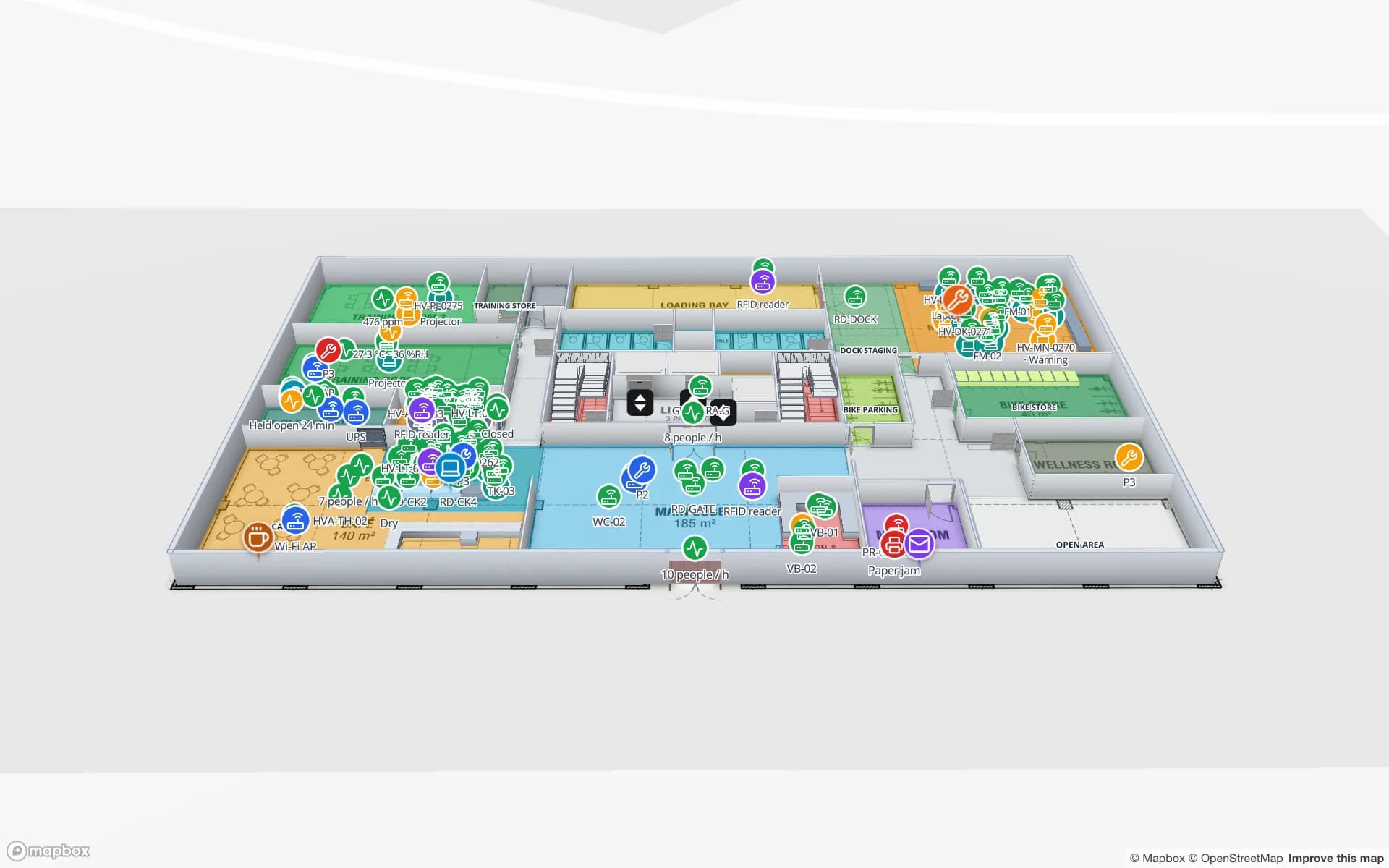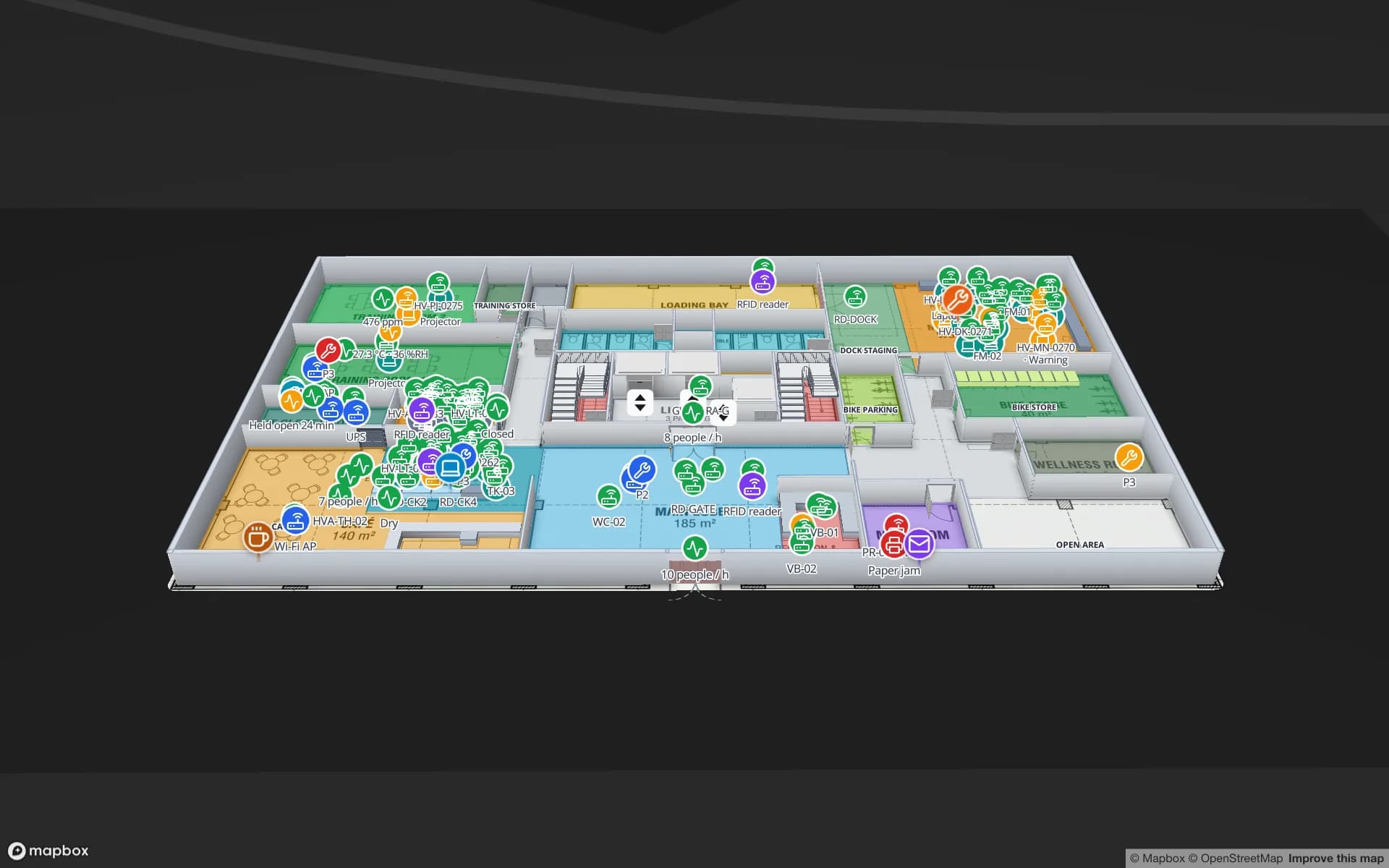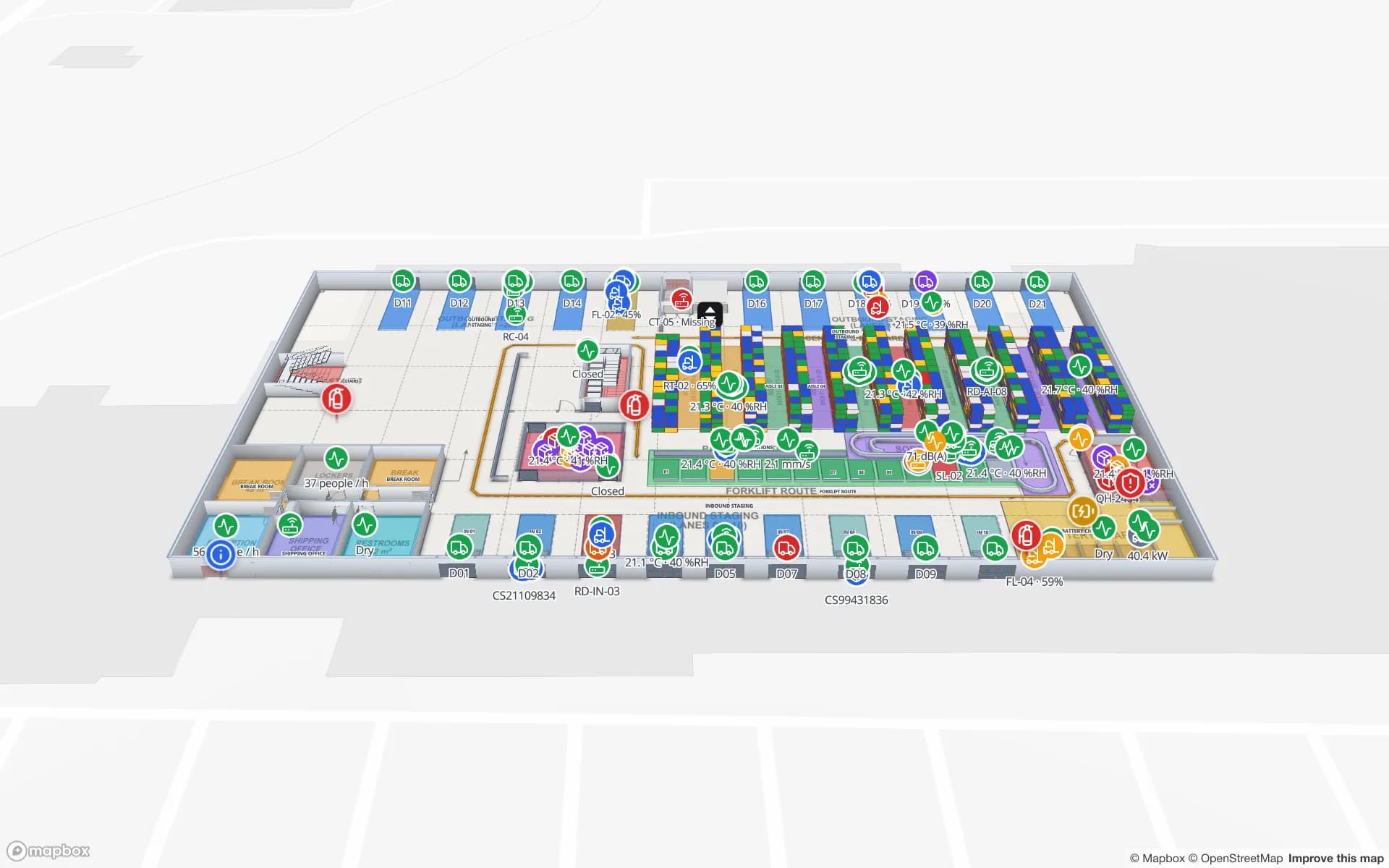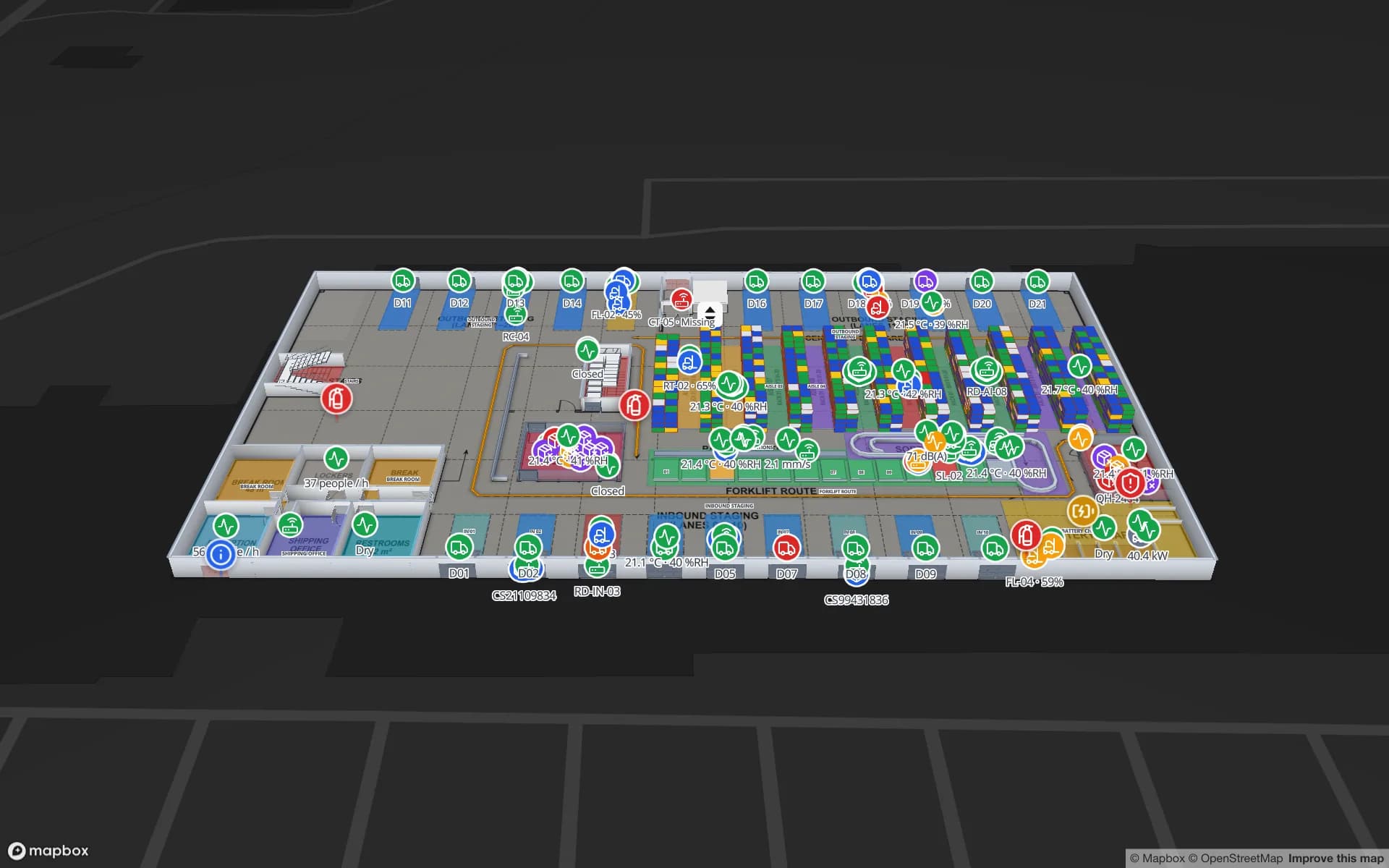
South Korea · Incheon airport zone, Busan port zone and Seoul

Indoor mapping & RFID tracking in South Korea, from Incheon to Busan

Spatial Map is browser-based indoor mapping software that turns a floor plan into a live 3D map and shows RFID reads, assets and sensor readings in the place they happen. Indoor mapping & RFID tracking in South Korea starts with two logistics gateways that are also legal free trade zones, Incheon airport and the Busan port, and continues into Seoul’s offices, labs and transit buildings. The interface is English, not Korean; this page says plainly what that means.

No credit card. Runs in the browser. Pro is $60/month for up to 4 facilities. Book a demo

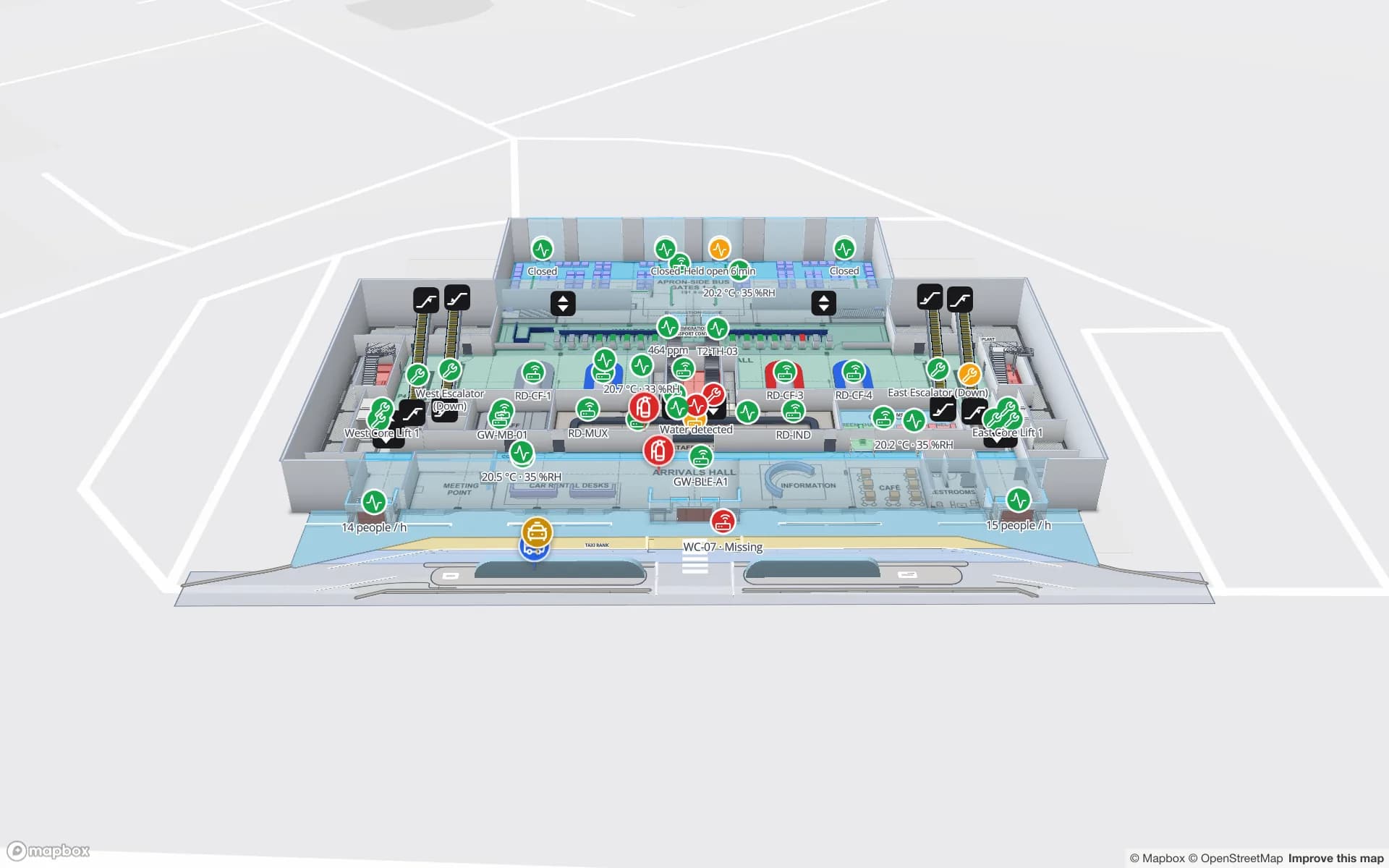
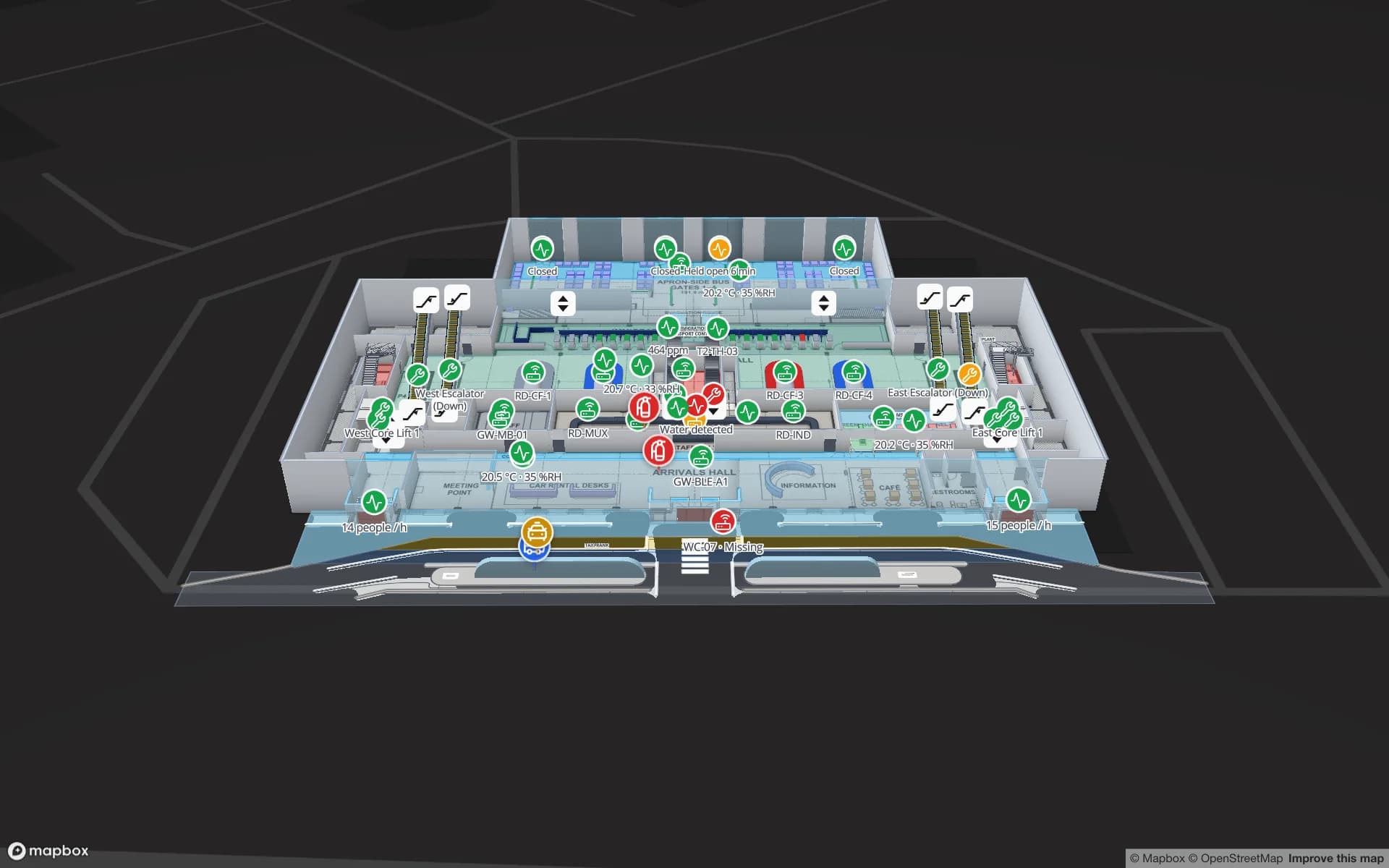
Silverbay International Airport — Terminal 2, a airport terminal demo, in the Spatial Map 3D viewer with live device markers
Silverbay International Airport — Terminal 2
Silverbay Airport, a demo terminal: check-in, security screening, gates, baggage reclaim and retail on two floors, with routes that cross floors by lift, escalator or stairs.
Floors in the Silverbay airport demo
2
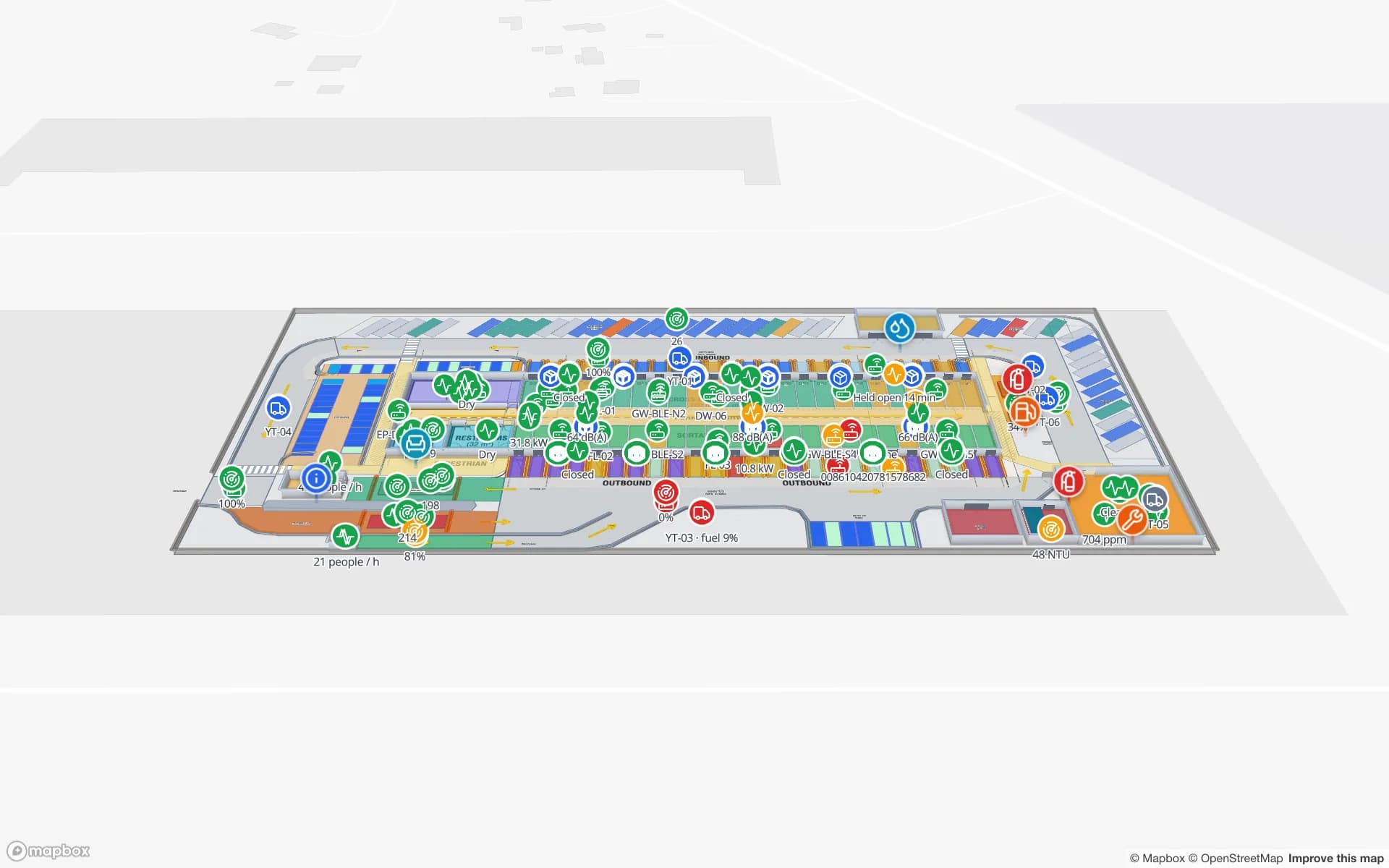
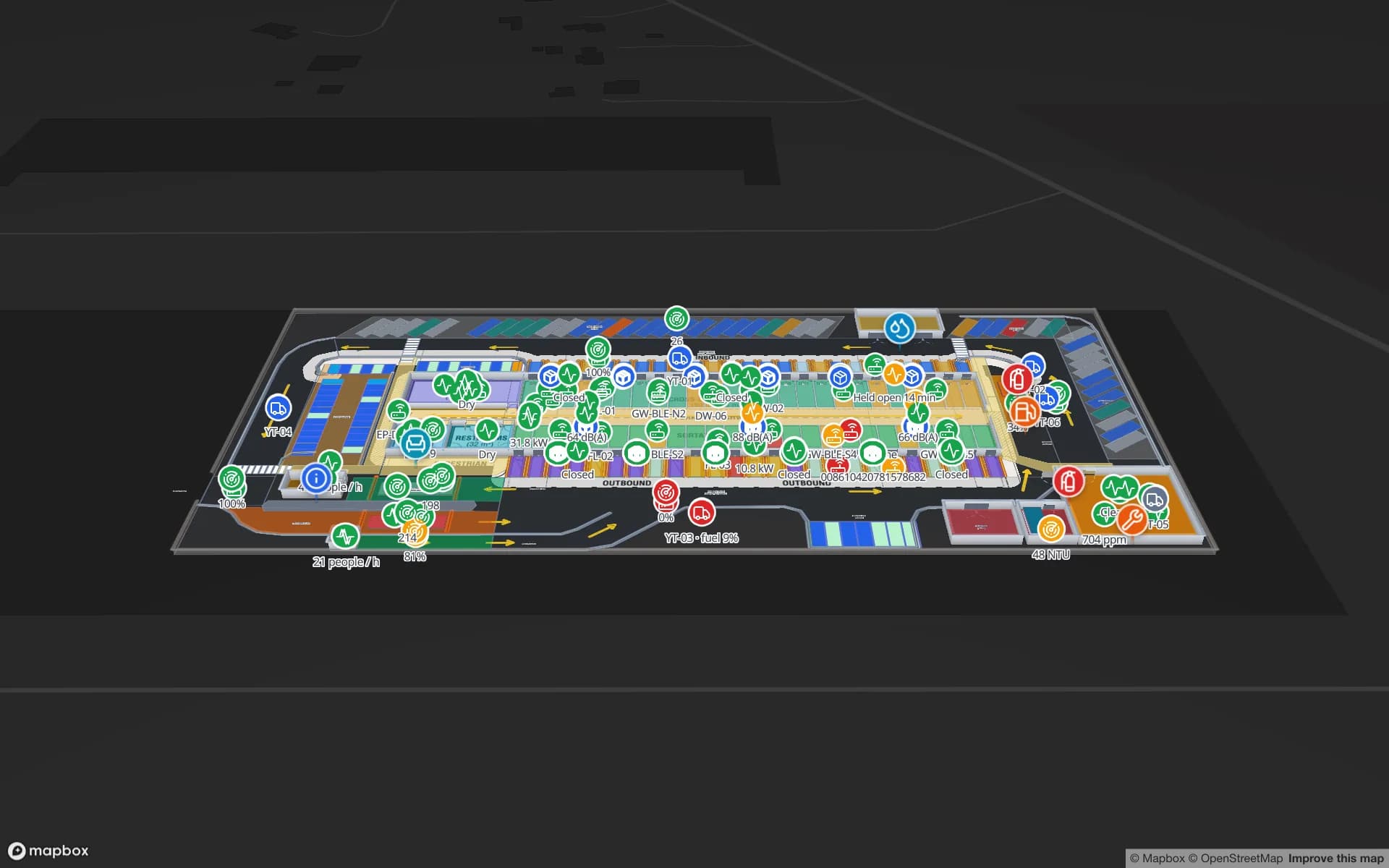
Dock doors in the Eastport cross-dock demo
50
Interface languages, none of them Korean
6
Free trial, up to 5 facilities, no card
7 days

Incheon: an airport on made land, with a free trade zone

Incheon International Airport opened in 2001 on land created between Yeongjong and Yongyu islands, and its Terminal 2 opened on 18 January 2018. Its airport free trade zone lists cargo terminals, global express cargo, cargo warehouses and special-purpose facilities among its key activities. Phase 1 of the airport included three cargo terminals, and later phases added more.

For a building inside such a zone the daily questions are about dwell: which pallet is in which bay, which shipment is waiting for a release, which unit load device is back in the shed. Spatial Map shows those answers on a map of your own building from your own reads and your own warehouse system; it does not connect to the airport authority, customs or carrier systems. Airport indoor mapping covers the passenger side, with a two-floor terminal demo, and the Seoul page looks at equipment tracking around the airport.
Busan: a port since 1876 and a free economic zone since 2003

Busan’s port opened in 1876, the Busan Port Authority was established in 2004, and the Busan-Jinhae Free Economic Zone was designated on 30 October 2003 with a development period running to 2027. The Busan Port Free Trade Zone has two parts, Busan New Port, which spans Gangseo District in Busan and Jinhae District in Changwon, and Busan North Port. Its own page says the zone facilitates value-added logistics activities.

The Busan page looks at the warehouse side. For the country as a whole the point is that a Korean exporter or forwarder often has stock in a zone building and in an ordinary warehouse at once, and the map can show both facilities in one workspace, each with its own plan, roles and share links.

Seoul and the rest: offices, labs and transit

Seoul’s mix is different: research districts, media offices, a metro with several operators and large campuses. Assets there are portable and shared, such as instruments, test rigs, cameras and loan laptops. The Seoul page covers asset tracking. Gwangyang on the south coast, whose port opened on 5 December 1986, is covered under “Also served” below. For buildings in general, office and campus maps show how floors, rooms and equipment fit together.

With many similar floors to draw, AI Map drafts walls, doors, racks and areas on each uploaded plan for a person to review, and lifts and escalators connect the floors in 3D.

Personal data: context, not a claim

South Korea’s Personal Information Protection Act dates from 2011, when the Personal Information Protection Commission was also set up, on 30 September 2011; an amendment in 2020 made the commission an independent regulator. Most warehouse and facility projects tag cartons, pallets and equipment, not people. If yours tags staff or visitors, your legal advisers decide what applies.

Spatial Map shows only the data you send it, four built-in roles (Owner, Admin, Editor, Viewer) plus custom roles limit who sees each facility, and a data processing agreement is available. The security page describes how data is protected; Spatial Map makes no claim of legal compliance.

Korean labels, English interface

The app is available in English, Spanish, French, German, Arabic and Chinese. There is no Korean interface, so menus, buttons and the built-in report headings appear in the language each user picks from those six. Text you write yourself appears as you write it: room names, rack codes, tag descriptions and report titles can be in Hangul, and so can the values in your tables.

For UHF RFID, the band and power limits are set nationally; confirm them for your readers with your supplier. Our team can source devices on request, quoted per project, with manufacturer warranty, and the services team works in English.

Services for teams in South Korea

Where teams usually start depends on the building:

Also served

Beyond the three city pages, the same approach covers Incheon city, Pyeongtaek, Daegu, Daejeon, Gwangju, Ulsan, Changwon and Gwangyang, and Pangyo and Suwon around Seoul. Nothing is installed: the map opens in a browser, and the same plan and price apply everywhere.

How Spatial Map does it

From one Korean building to a live map

  1. 01

    Pick one building

    A zone warehouse, a lab floor or a terminal level, wherever a lost item costs most.

  2. 02

    Upload the plan and draft the floor

    PDF, DWG or image, aligned at real scale; AI Map drafts the walls, doors and racks for review.

  3. 03

    Connect reads and rows

    RFID middleware, WMS and sensors post rows through the write API, a polled REST endpoint or CSV and Excel uploads.

  4. 04

    Add rules and share a view

    In-app alerts for stale reads and idle doors, and read-only links limited to chosen floors.

What teams in South Korea track

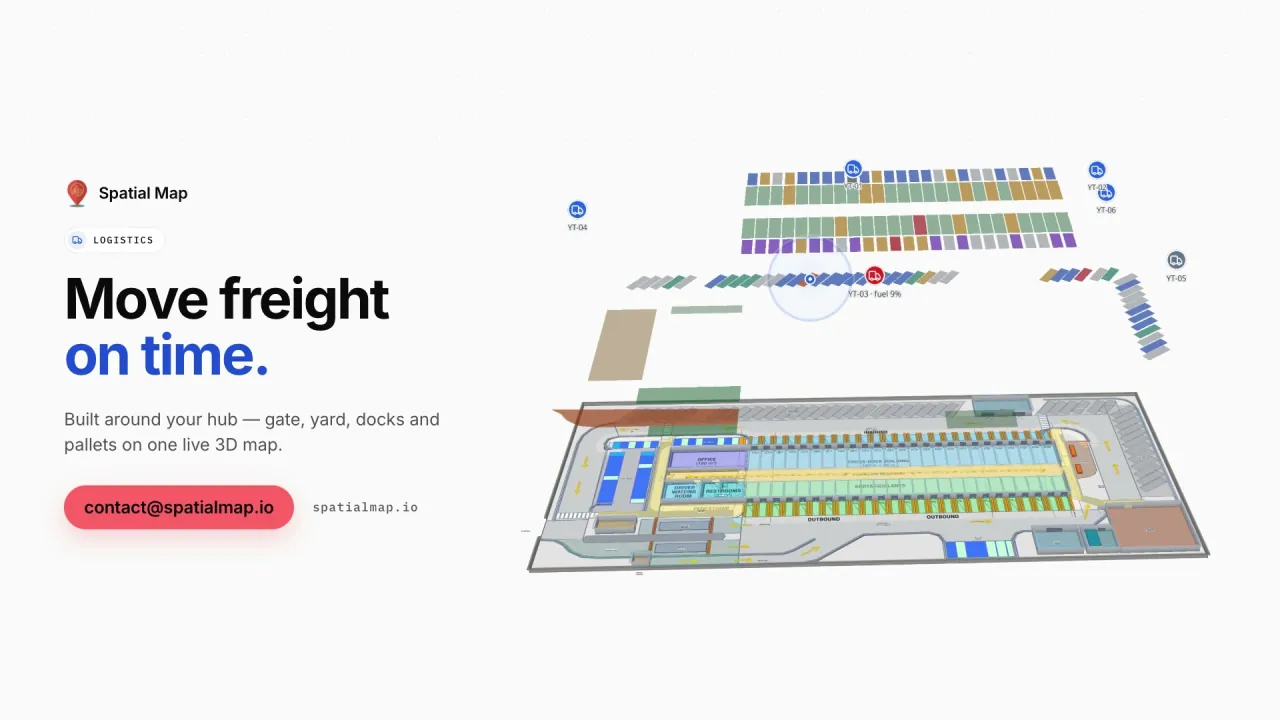
Airport-zone cargo sheds

Bays, dock doors and pallets, with reads at the door.

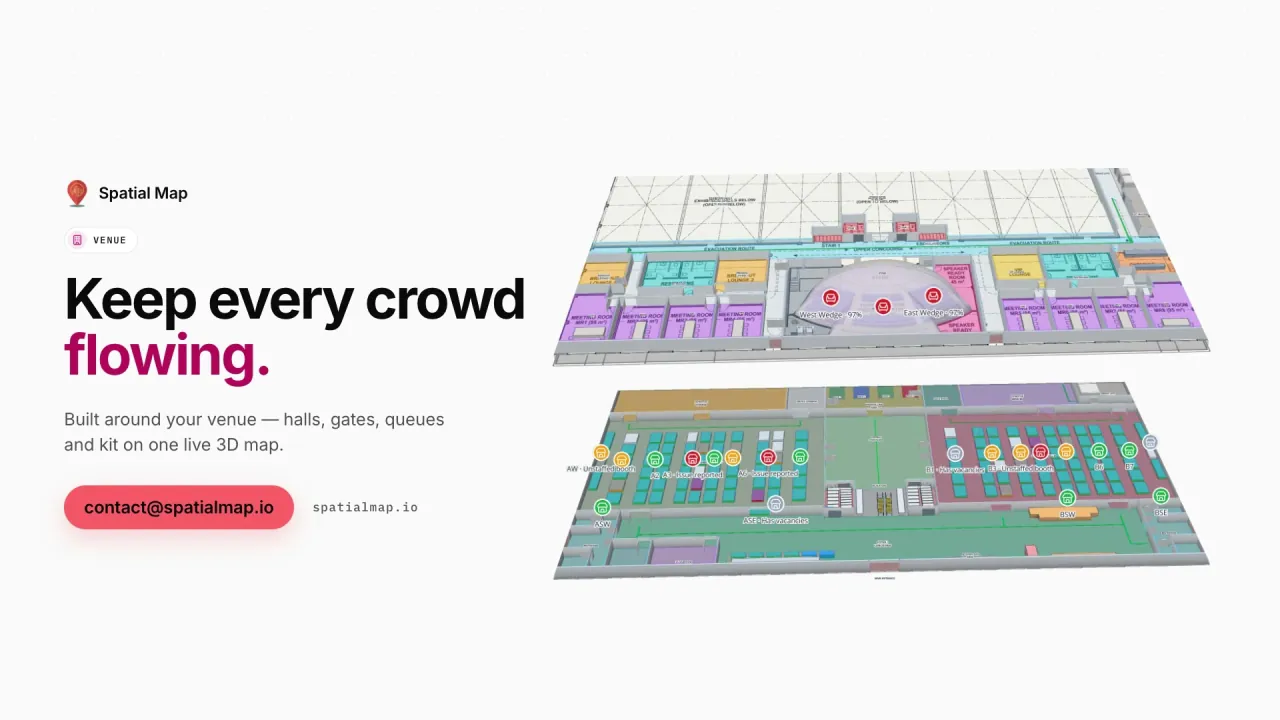
Terminal operations

Zones coloured by crowding, gates and baggage reclaim.

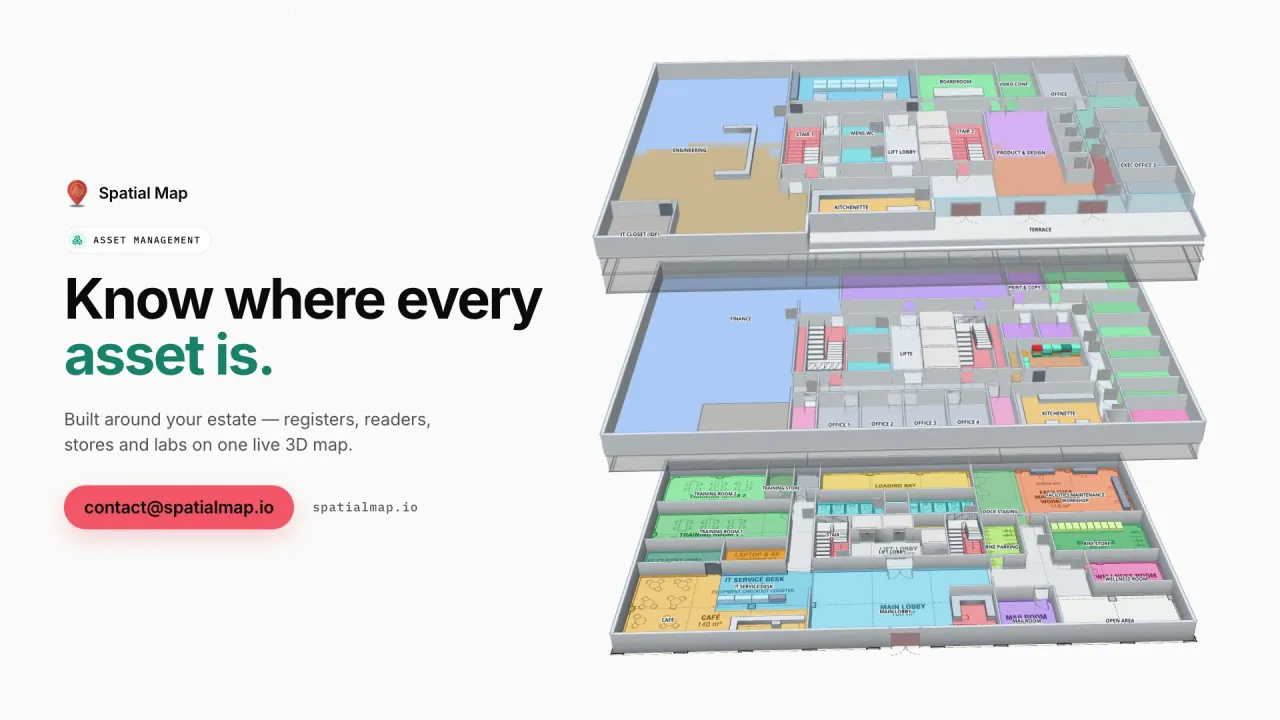
Offices, labs and studios

Asset register, equipment check-out and stores by floor.

Fulfilment and zone warehouses

Rack-level stock by bin, with staging lanes before the docks.

See it on real demo facilities

Fictional names, real floor plans, live sensors, RFID, BLE tags and gateways — open any of them in the browser.

All 13 demo facilities

Indoor mapping & RFID tracking in South Korea: questions we get

No. The app is available in English, Spanish, French, German, Arabic and Chinese, and each user picks one. Names, labels, rack codes and report titles you write yourself can be in Hangul and appear as written. A Korean interface is not planned on any date we can give.

No. It has no link to customs, port community, terminal or airport cargo systems. It shows what happens inside your own building from your own reads, warehouse system and sensors.

Yes, as a map of your own building. Status such as bonded or released comes from your own system; Spatial Map shows it as a colour or a badge but is not a customs system and makes no compliance claim.

The UHF band and power limits are set nationally, and sources differ on the details, so confirm them with your hardware supplier and the national radio authority. Spatial Map works with whatever your RFID middleware reports.

No. The Personal Information Protection Act is context for your project when data can identify people, and your legal advisers decide what applies. Spatial Map shows only the data you send it, and a data processing agreement is available.

No. Spatial Map is sold online and our team works with customers in South Korea remotely, in English, by video call and through the contact form. There are no local resellers or partners.

In US dollars, the same worldwide: a 7-day free trial for up to 5 facilities with no card, then Pro at $60 a month or $600 a year for up to 4 facilities. Larger estates are quoted as custom services.

Map one Korean building this week.

Start the free trial and open the Eastport demo, or send us the plan of a warehouse, lab floor or terminal level and a sample of your data through the contact form.