Japan · Item-level RFID, two port groups, a truck-hour cap

Indoor mapping & RFID tracking in Japan, from store shelf to port gate

Spatial Map is browser-based indoor mapping software: it turns a floor plan into a live 3D map of each building and shows RFID reads, stock and sensor readings where they happen. Indoor mapping & RFID tracking in Japan has three recurring settings: retail chains that have discussed item-level tags for years, distribution buildings behind the Keihin and Hanshin ports, and plants and campuses with equipment on many floors. The app is in English, not Japanese, and this page says plainly what that means for a team in Japan.

No credit card. Runs in the browser. Pro is $60/month for up to 4 facilities. Book a demo

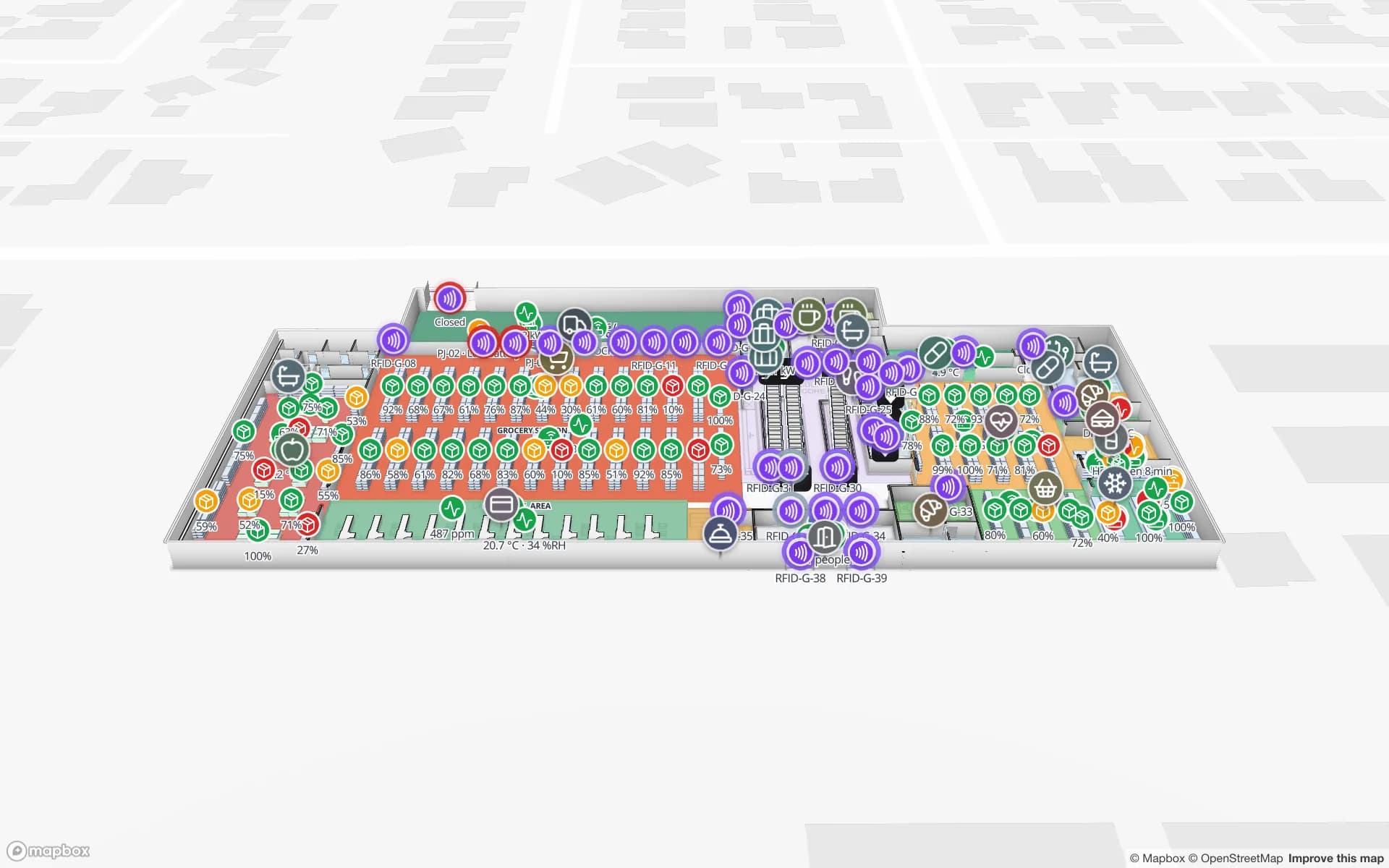
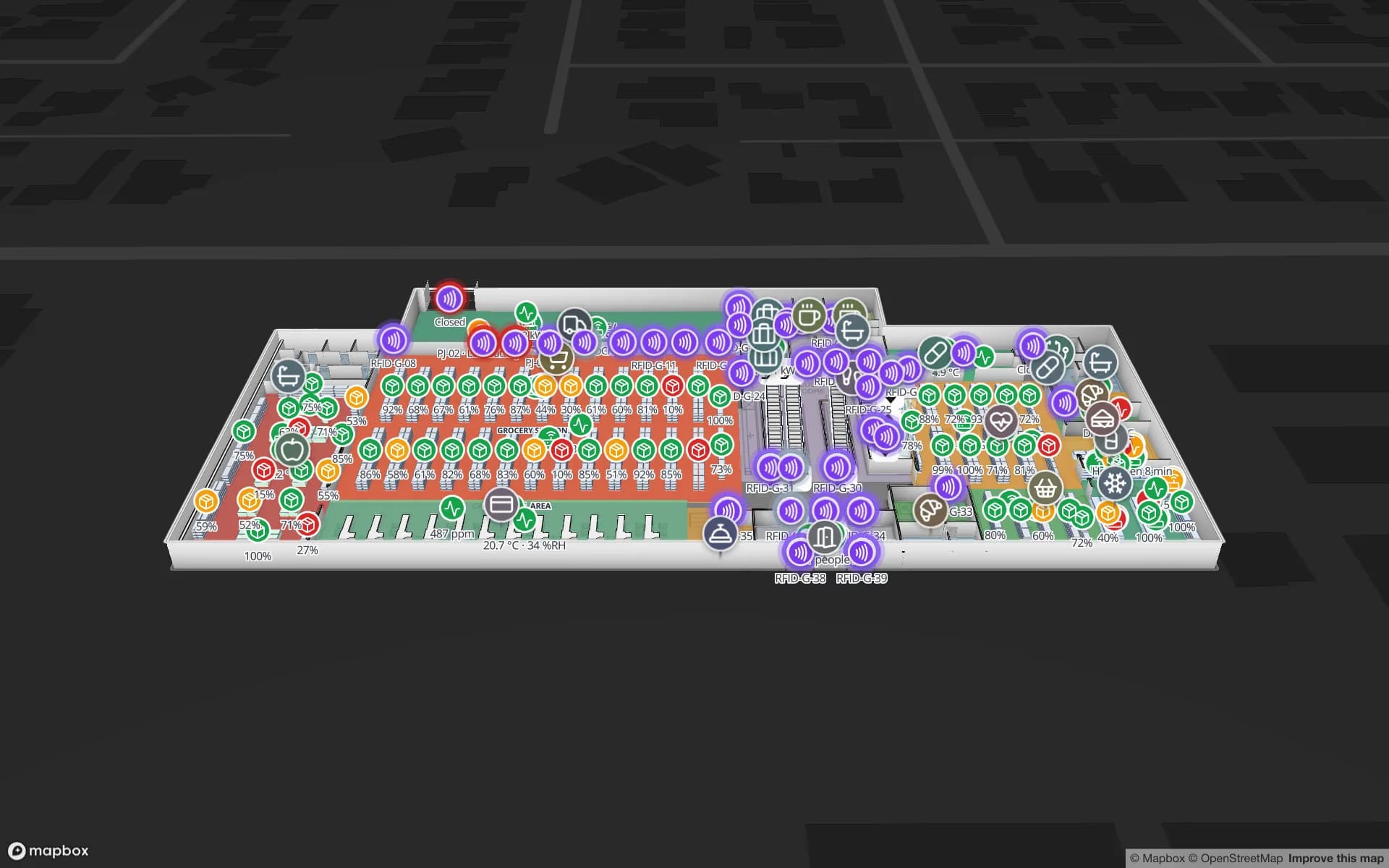
Retail Mart Store, a three-floor retail store demo, in the Spatial Map 3D viewer with live device markers
Retail Mart Store
Retail Mart, a demo store: three floors of departments and 167 shelving runs, an escalator core and lifts, with RFID readers, stock and cold-chain layers on every floor.
Floors in the Retail Mart demo store, with escalators and lifts
3
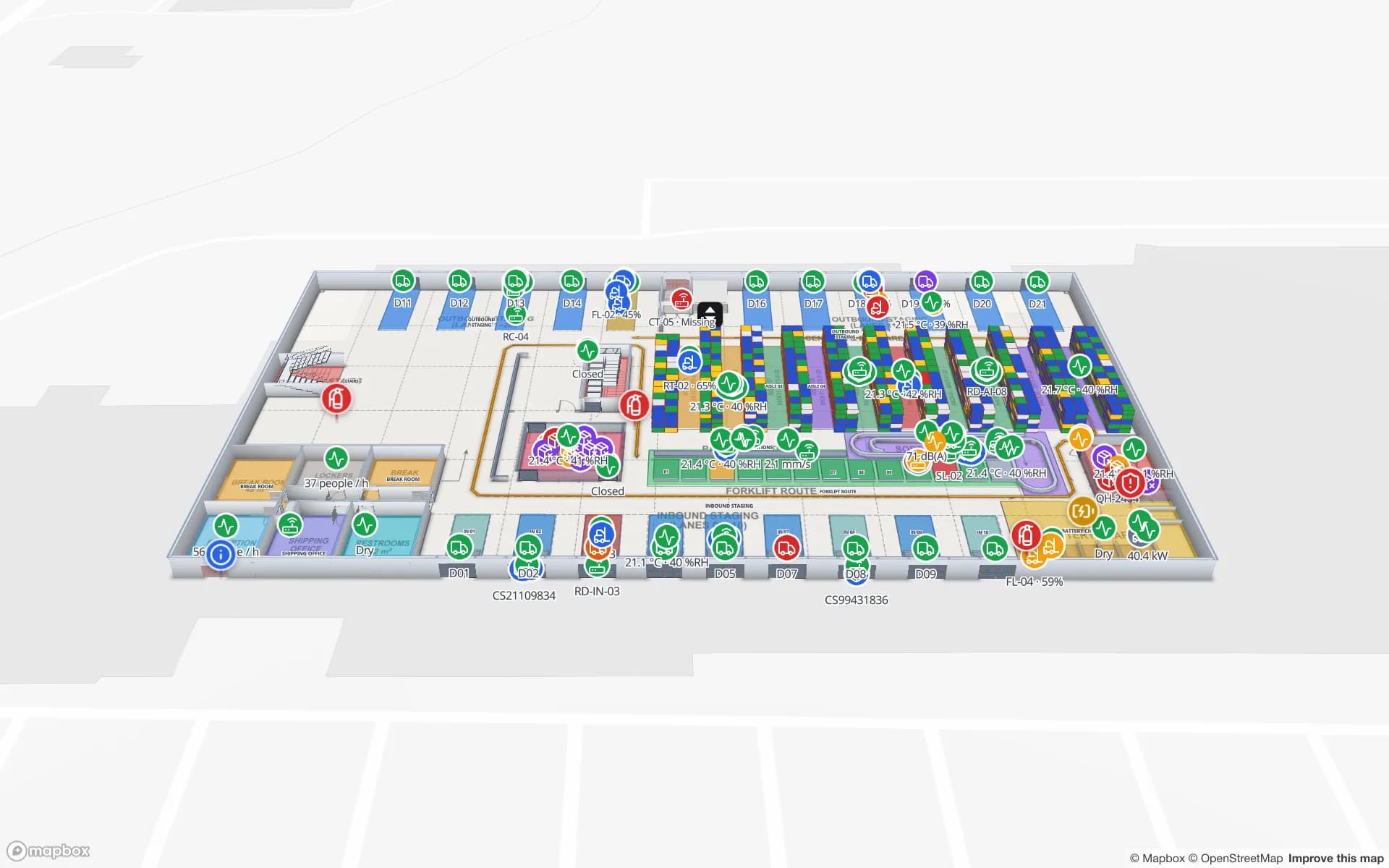
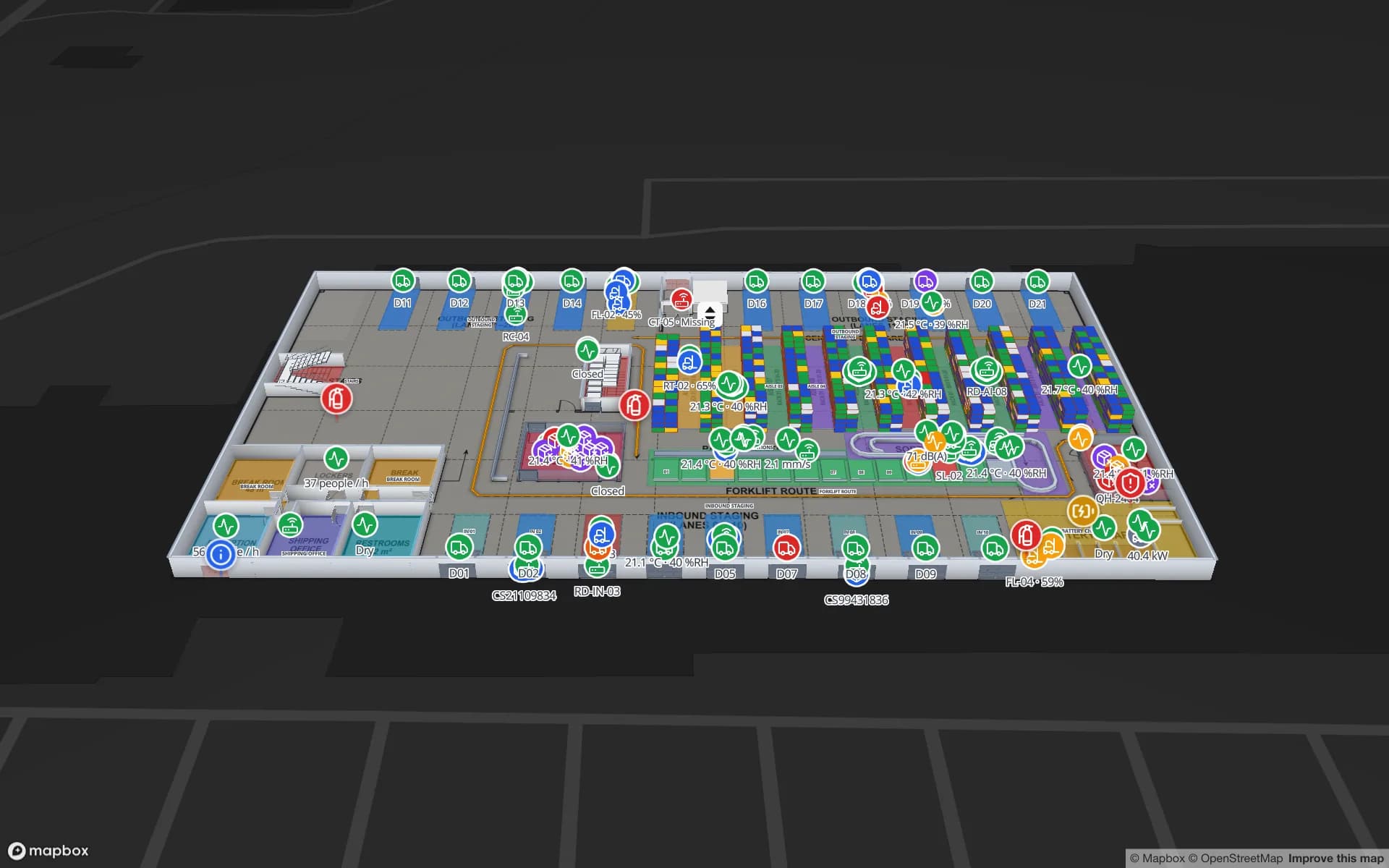
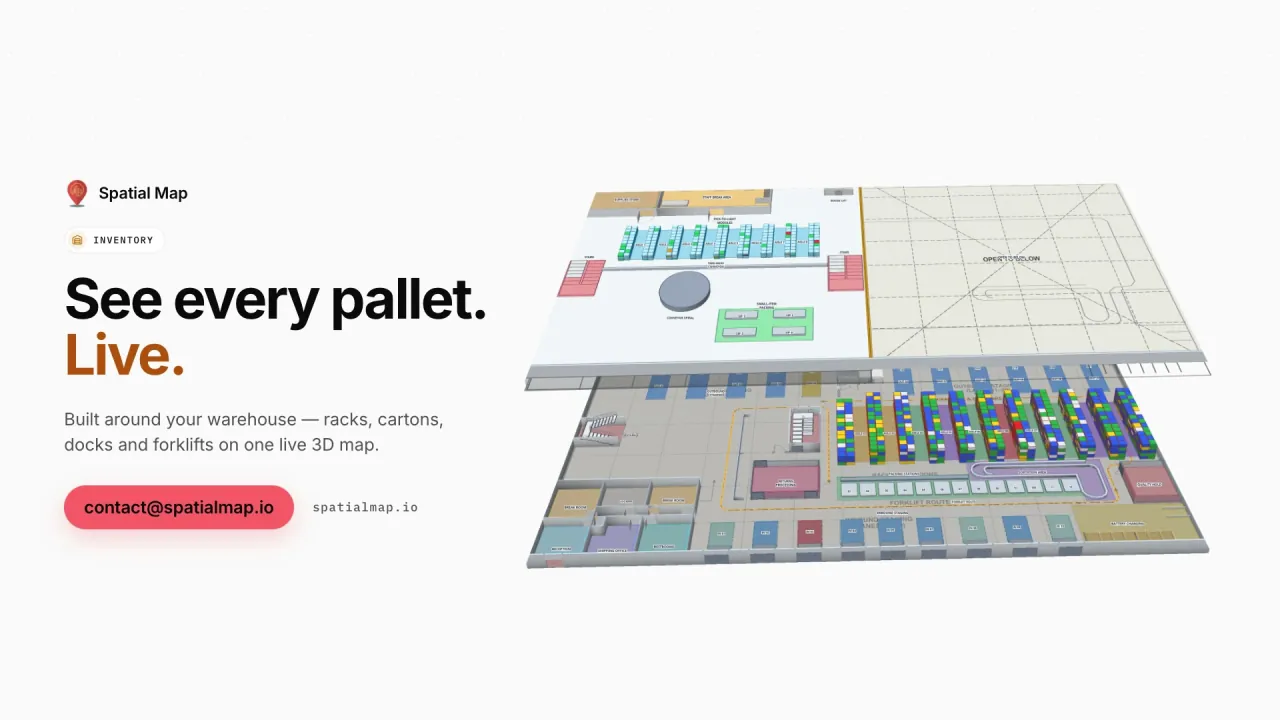
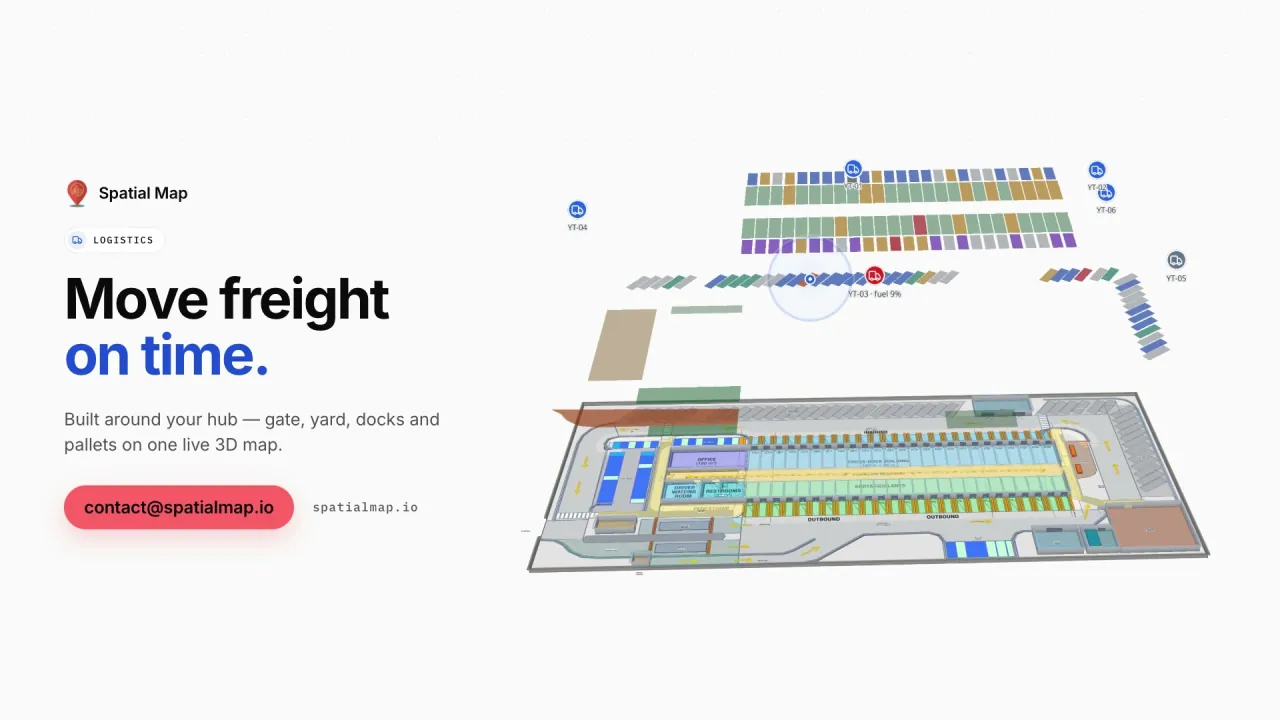
Dock doors in the Eastport cross-dock demo
50
Interface languages, none of them Japanese
6
Free trial, up to 5 facilities, no card
7 days

Item-level RFID: a national target, a store-level problem

In April 2017 Japan’s Ministry of Economy, Trade and Industry (METI) and five convenience-store chains signed a declaration that set a target of RFID tags on every item sold in their stores by 2025, an estimated 100 billion items a year. METI’s work later extended to drugstores. Whatever each chain has achieved since, the declaration put item-level tagging in front of every supplier, packer and shelf-stocker that serves Japanese retail.

Item-level tags change what a map has to show. Instead of a rack of cartons there are thousands of reads an hour in one room, and the useful question becomes where the counts disagree: stockroom against sales floor, one floor against another, a roll cage that has not been scanned out. Spatial Map does not read tags; your readers and middleware do, and post rows through the table write API. The map then colours each area from the rows, per floor. The Retail Mart demo shows a three-floor store with 85 RFID readers, and RFID for retail and how RFID stock counting works cover the pattern. Tag choice matters for apparel and metal fittings; see RFID tags for metal, liquids and apparel.


Two port groups and a cap on truck hours

Japan’s Ministry of Land, Infrastructure, Transport and Tourism selected Keihin Port (Tokyo, Kawasaki and Yokohama) and Hanshin Port (Osaka and Kobe) as strategic international container ports in August 2010; the ports of Osaka Bay had begun to work as one “Hanshin Port” in 2007. The warehouses and cross-docks behind those two groups are where most import and export cartons change hands, and the Tokyo and Osaka pages look at each side.

Since April 2024 a legal ceiling of 960 overtime hours a year has applied to truck drivers, who had no such limit before; the change is widely called the “2024 problem”. For a warehouse the practical effect is that a driver’s waiting time is something to design out: which trailer is at which door, which pallets are staged for it, which door is idle. The Eastport demo shows 50 dock doors, 44 yard slots and 1,180 RFID pallets on one map, and yard visibility at dock doors explains the setup. Spatial Map does not book slots or dispatch trucks; your booking system stays, and the map shows what it and your reads say.

Radio band and personal data: context, not claims

UHF RFID in Japan uses the 920 MHz band. The industry body ARIB’s standard T107 sets the technical requirements for low-power passive systems under the Radio Law, and a separate standard covers high-power systems. Readers and tags built for other regions do not automatically work here, so confirm the band and power with your supplier. If you ask us to source devices, say that the project is in Japan; our team can source devices on request, quoted per project, with manufacturer warranty.

The Act on the Protection of Personal Information is supervised by the Personal Information Protection Commission; the 2020 amendment took full effect on 1 April 2022. Most warehouse and store projects tag cartons, carriers and equipment rather than people; if yours tags staff or visitors, your legal advisers decide what applies. Spatial Map shows only the data you send it, roles limit who sees each facility, a data processing agreement is available, and the security page describes how data is protected. It makes no claim of legal compliance.

Japanese drawings, English interface

The app is available in English, Spanish, French, German, Arabic and Chinese. There is no Japanese interface, so menus, buttons, error messages and the built-in report headings appear in the language each user picks from those six. Text you write yourself appears as you write it: room names, rack codes, tag descriptions and report titles can be in kanji and kana, and so can the values in your tables.

Plans can arrive in any of the usual forms: PDF, DWG (AutoCAD R2004–R2018, placed as a picture) or image. Upload, align at real scale, and let AI Map draft walls, doors, racks, areas, stairs, lifts and escalators for a person to review; its drafts come from the placed picture, and you correct what it gets wrong. If your team needs a Japanese interface, say so before you start: it is not something we can promise or date.

Services for teams in Japan

Where teams usually start depends on the building:

  • Retail and distribution teams start with inventory tracking: racks, stockrooms and dock doors from the plan, then RFID reads at the doors.
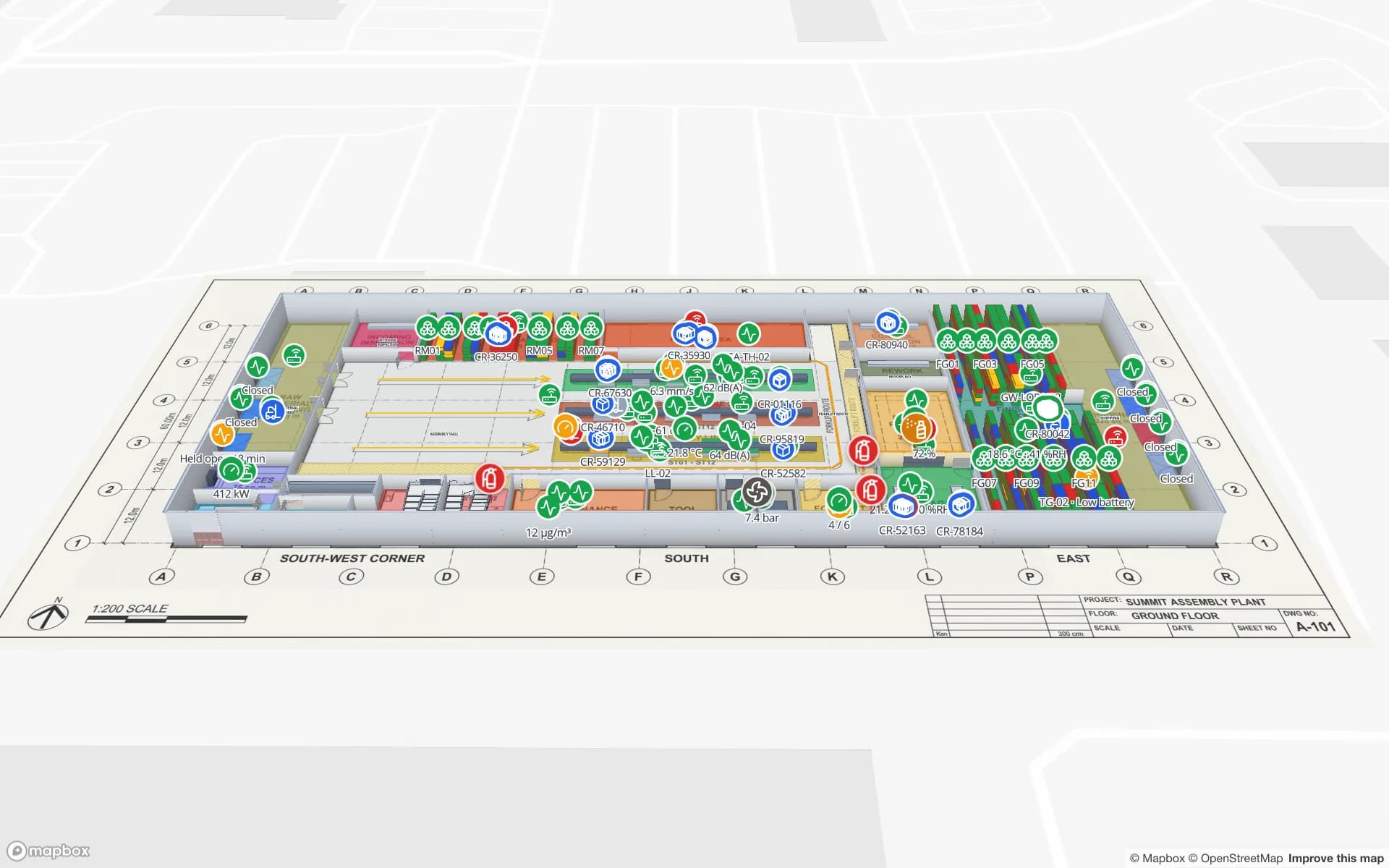
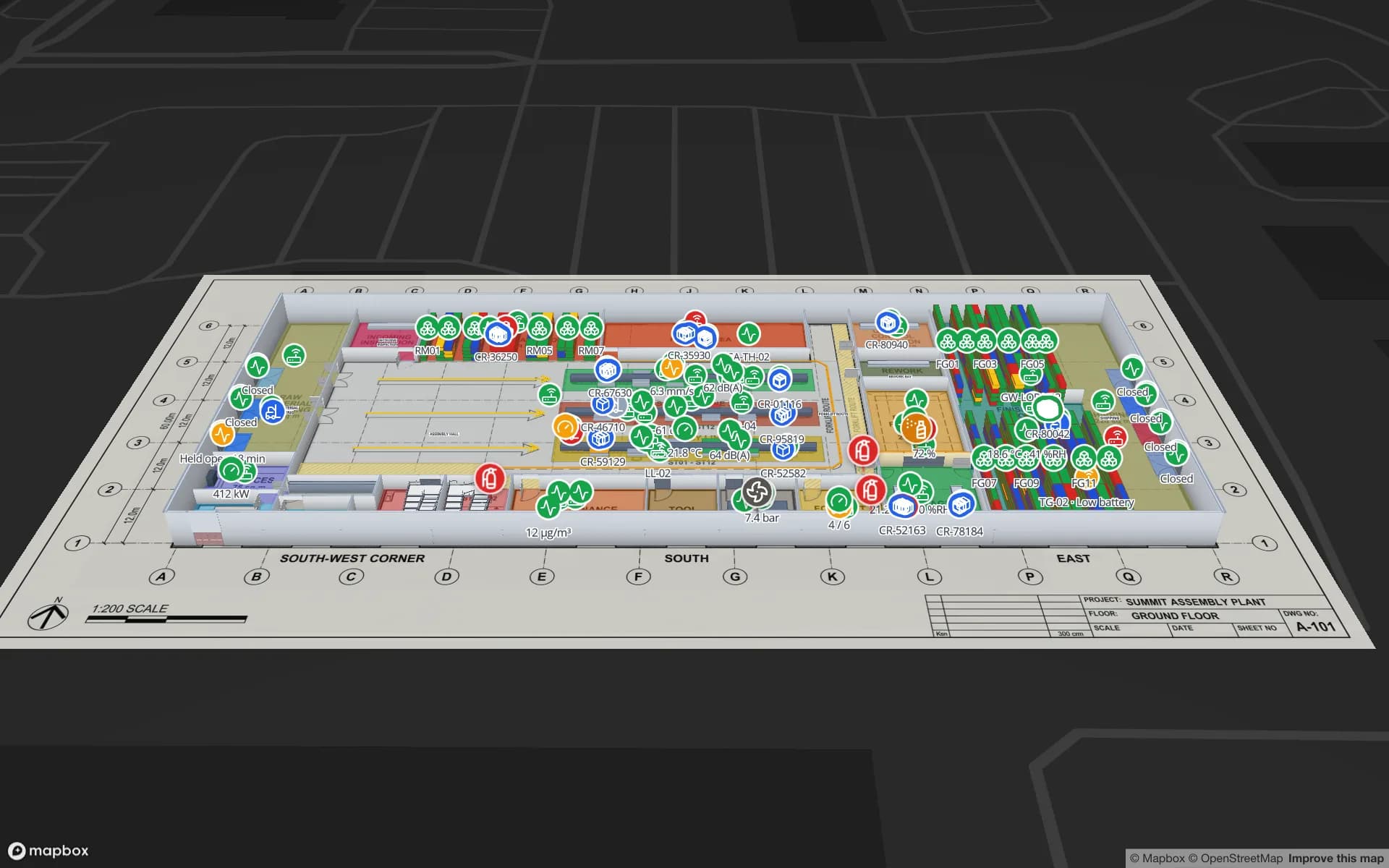
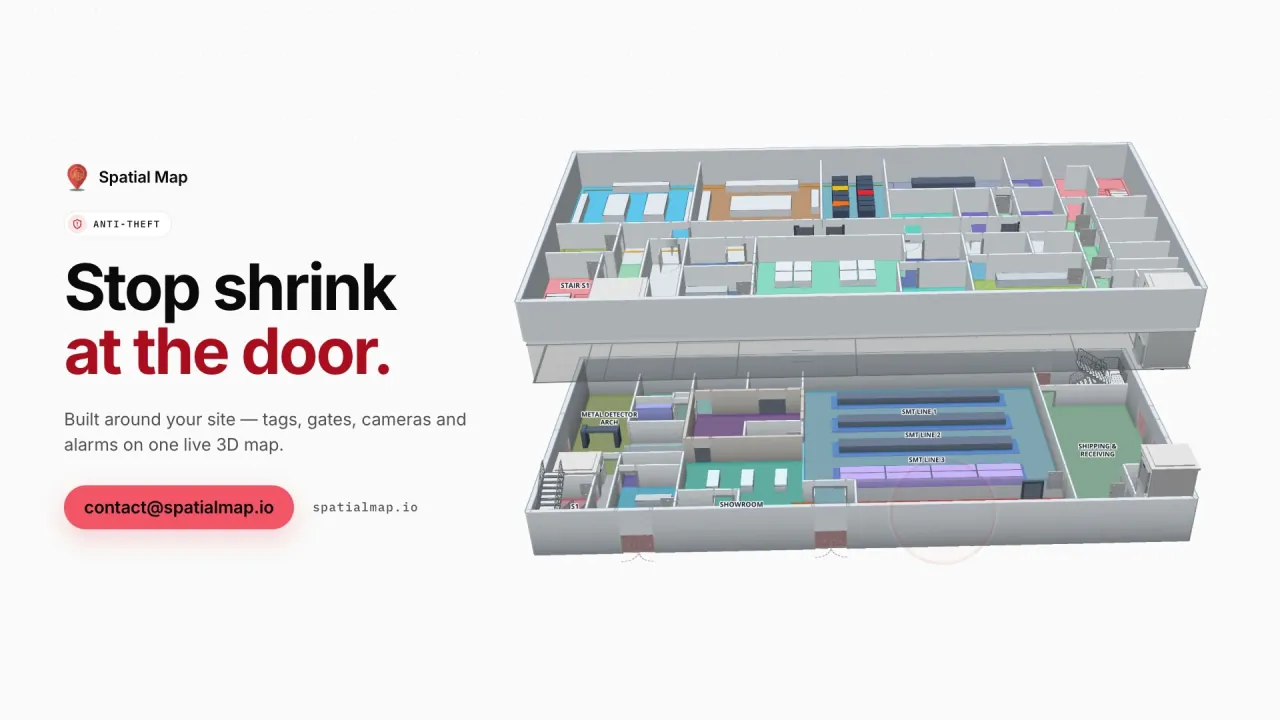
  • Plants, labs and campuses start with asset tracking for tooling, instruments and shared equipment.
  • Large halls, stations and terminals start with indoor maps: floors, rooms, lifts and routes across floors, with no live blue dot.
  • RTLS and UWB is for yards and plants where people or vehicles must be located continuously; a BlueIOT server connects directly and other engines through the write API.
  • Devices and demo kits are sourced on request, quoted per project: see hardware and demo kits on request. Handheld apps, ERP integrations and POS or booking systems are built as client projects, and the product runs as cloud or on-premises.

Also served

Beyond the two city pages, the same approach covers Yokohama and Kawasaki on Tokyo Bay, Nagoya, Kobe and Kyoto, Fukuoka, Sapporo, Sendai and Hiroshima. Nothing is installed: the map opens in a browser, and the same plan and price apply everywhere.

How Spatial Map does it

From one building to a map your team can use

  1. 01

    Pick one building

    A store with its stockroom, a warehouse dock or a plant floor, wherever a miscount costs most.

  2. 02

    Upload the plan and draft the floor

    PDF, DWG or image, aligned at real scale; AI Map drafts the walls, doors and racks for review.

  3. 03

    Connect reads and stock

    RFID middleware, WMS or POS rows post through the write API, a polled REST endpoint or CSV and Excel uploads.

  4. 04

    Add rules and share a view

    In-app alerts for stale reads and idle doors, and read-only links limited to the floors and layers you choose.

What teams in Japan track

Store and stockroom stock

Item-level reads by floor, with counts per department and shelf run.

Port-side warehouses and cross-docks

Dock doors, yard slots and pallets staged for the right trailer.

Plants and shared equipment

Machines, tooling and finished goods tied to the line or store they sit in.

Retail loss prevention

Tagged items read at exits and fitting areas, shown on the floor where the alert began.

See it on real demo facilities

Fictional names, real floor plans, live sensors, RFID, BLE tags and gateways — open any of them in the browser.

All 13 demo facilities

Indoor mapping & RFID tracking in Japan: questions we get

No. The app is available in English, Spanish, French, German, Arabic and Chinese, and each user picks one. Names, labels, rack codes and report titles you write yourself can be in Japanese and appear as written. A Japanese interface is not planned on any date we can give.

The 920 MHz band, with technical requirements set in ARIB standards under the Radio Law. Confirm the band and power for your readers with your supplier; Spatial Map works with whatever your RFID middleware reports.

It can show the counts and reads your system produces, by floor and area, but it does not read tags itself. Your readers and middleware post rows; the map colours areas and lists the differences. Test tags on your own merchandise first.

No. It has no link to port community, customs or truck-booking systems. It shows what happens inside your own building from your own reads, WMS and sensors, and your booking system stays in place.

No. The Act on the Protection of Personal Information is context for your project when data can identify people, and your legal advisers decide what applies. Spatial Map shows only the data you send it, roles limit who sees each facility, and a data processing agreement is available.

No. Spatial Map is sold online and our team works with customers in Japan remotely, in English, by video call and through the contact form. There are no local resellers or partners.

In US dollars, the same worldwide: a 7-day free trial for up to 5 facilities with no card, then Pro at $60 a month or $600 a year for up to 4 facilities. Larger estates are quoted as custom services; hardware, if you ask us to source it, is quoted per project.

Map one Japanese building this week.

Start the free trial and open the Retail Mart demo, or send us the plan of a store, dock or plant and a sample of your reads through the contact form.