Serbia · Србија · Free zones, Expo 2027, the Danube and the rail line to Budapest

Indoor mapping & RFID tracking in Serbia, from the free zones to the Expo site

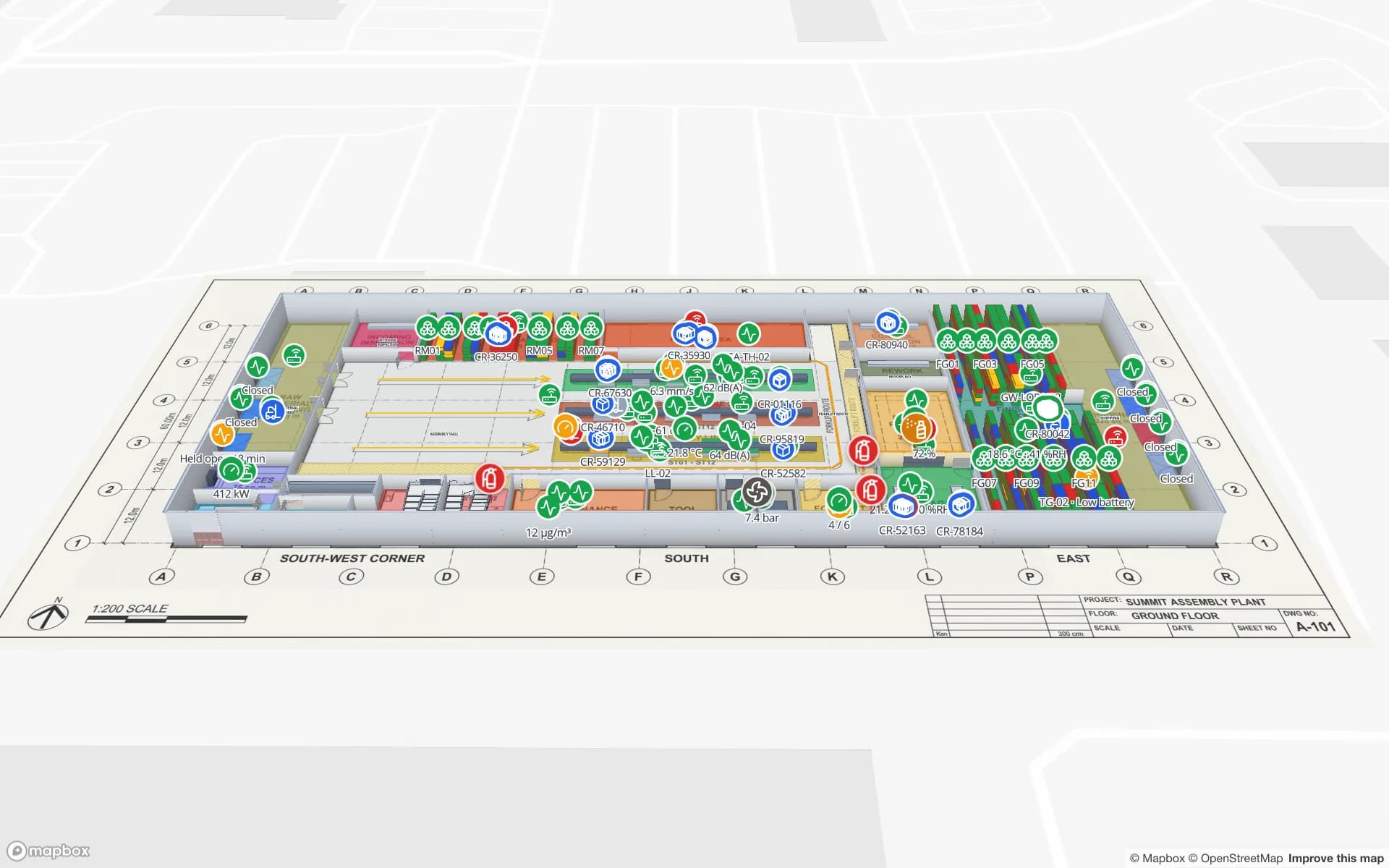
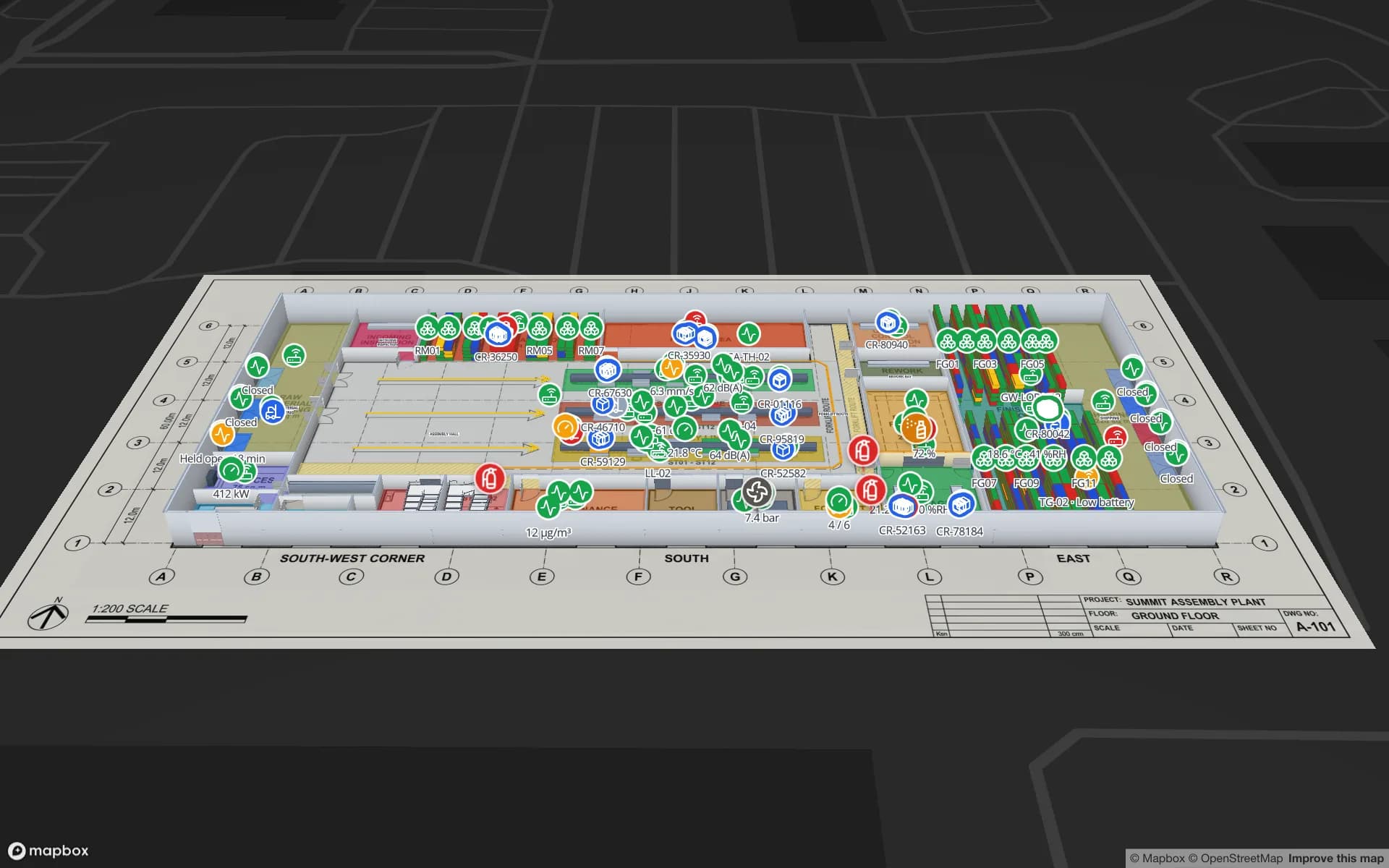
Spatial Map turns a warehouse, a factory hall or a venue into a live 3D map in the browser, with racks coloured by stock, RFID-tagged pallets read at the dock and equipment as moving markers, fed by the WMS, readers and sensors you already run. Indoor mapping & RFID tracking in Serbia is shaped by a few public facts: 15 government-listed free zones, a Danube and motorway crossroads at Belgrade, a rebuilt rail line to Budapest and a specialised international exhibition due to open at Surčin in May 2027. Each building is its own facility, and one workspace holds them all.

No credit card. Runs in the browser. Pro is $60/month for up to 4 facilities. Book a demo

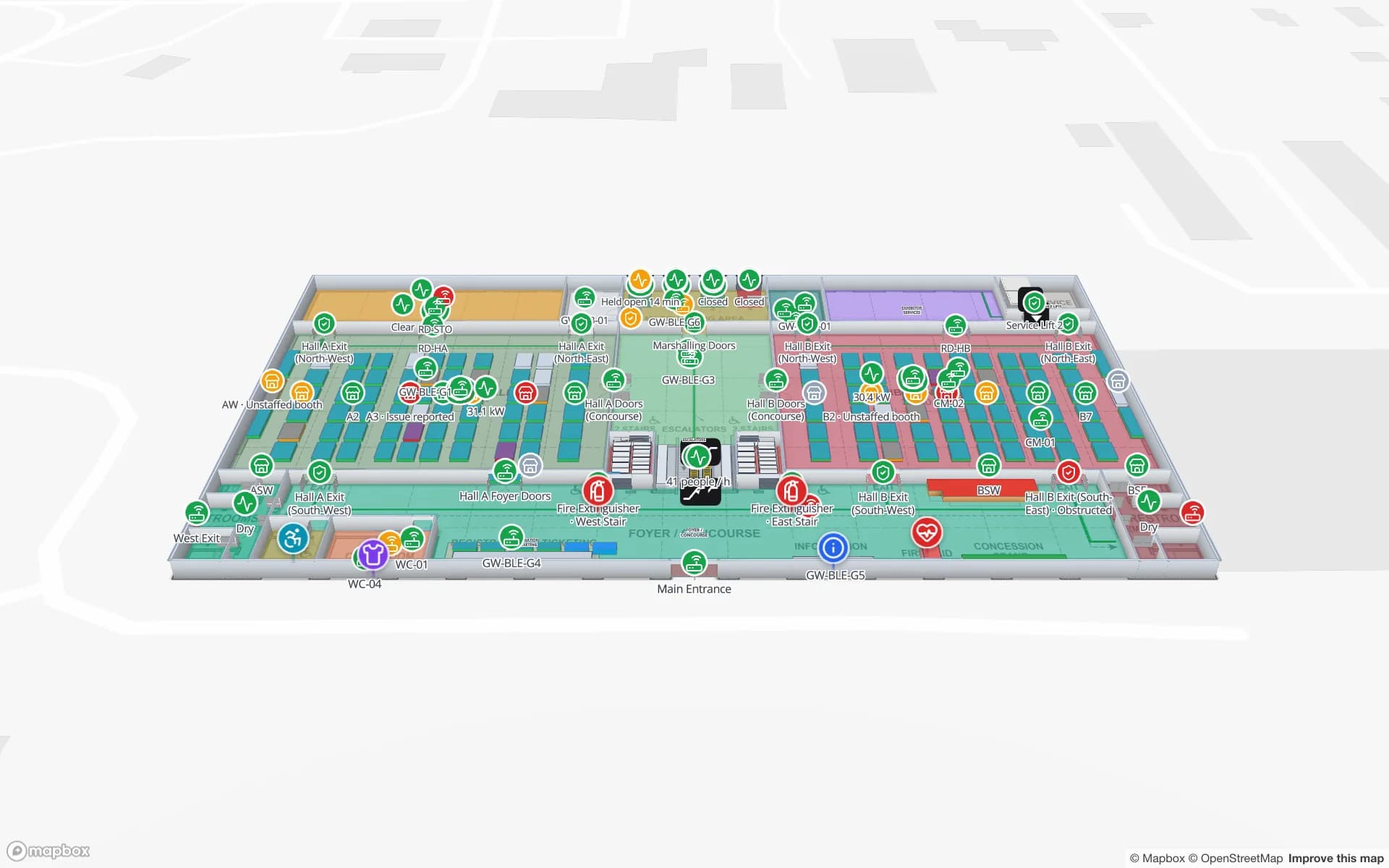
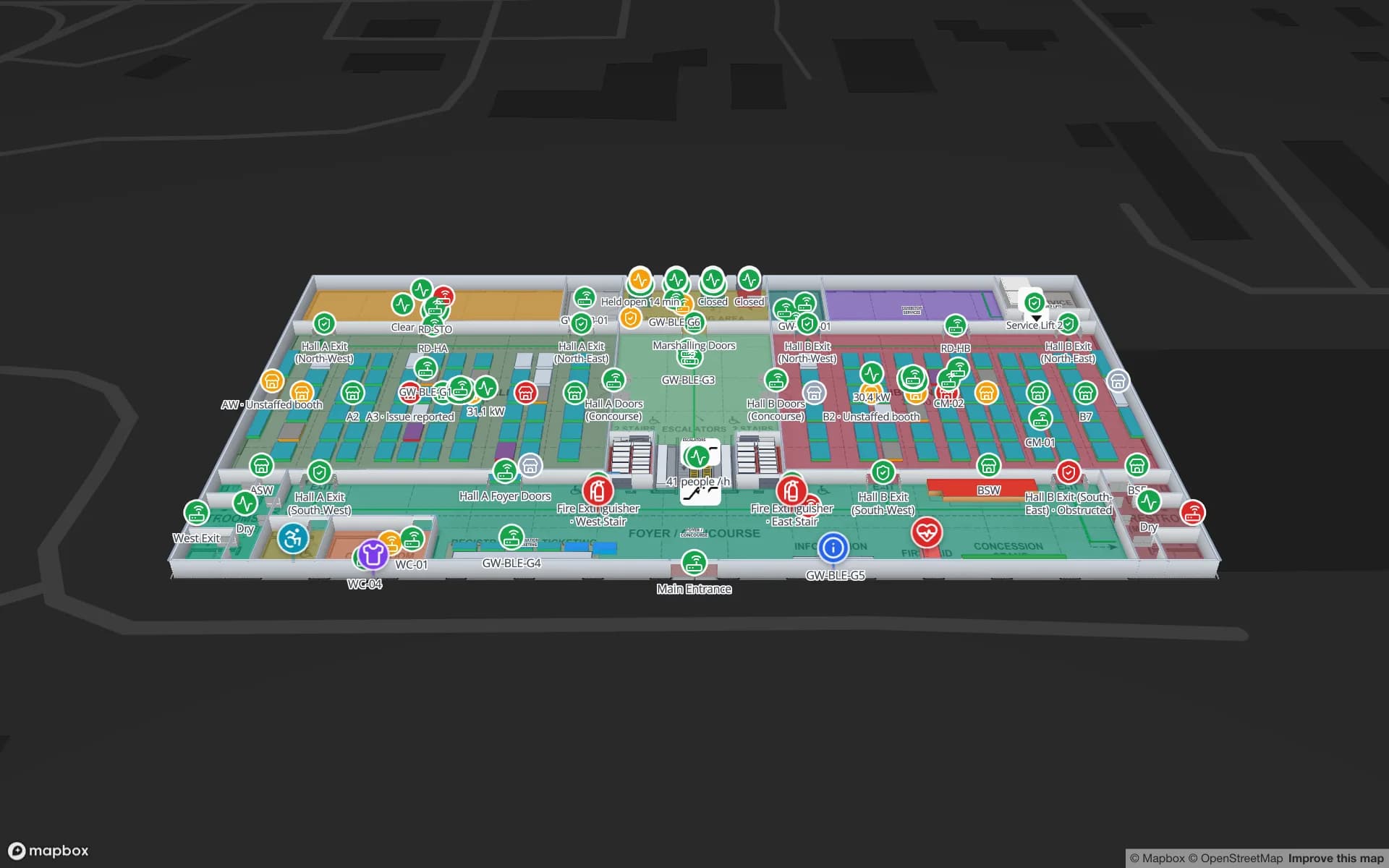
Lakeside Convention Center, a convention center demo, in the Spatial Map 3D viewer with live device markers
Lakeside Convention Center
Lakeside Convention Center, a demo venue on two floors: halls with live occupancy, booths and session rooms, registration and freight docks.
Free zones on the Serbian government’s list
15
Floors in the Lakeside convention demo
2
Interface languages (Serbian not yet available)
6
Free trial, up to 5 facilities, no card
7 days

Fifteen free zones, and what happens inside the fence

The Serbian government’s page on free zones lists fifteen: Subotica, Pirot, Zrenjanin, Novi Sad, Kragujevac, Šabac, Užice, Svilajnac, Smederevo, Kruševac, Apatin, Vranje, Priboj, Belgrade and Šumadija. It describes an exemption from customs taxes and other import levies for goods used for activities within the zone, and a VAT exemption on goods entering the zone for its users. What the exemptions do not do is tell you where a pallet is.

A zone user, whether a manufacturer or a warehouse operator, normally has to keep goods that are inside the zone apart from goods that are not, and to be able to show which is which. Draw the zone building with its areas and lanes, tag the pallets and read them at the gate and dock doors, and a table of status values colours each area on the map. The Eastport demo shows the building type, with a gate, a weighbridge, 50 dock doors and 1,180 RFID pallets. Spatial Map holds your own reads and counts; it is not a customs system and makes no customs or compliance claim, and what counts as “in the zone” stays defined by your customs procedures.


Expo 2027 at Surčin: a venue map before the doors open

The organiser describes Expo 2027 Belgrade as a specialised international exhibition running from 15 May to 15 August 2027 at the new Expo complex in Surčin, under the theme “Play for Humanity – Sport and Music for All”. Trade press reports that halls, pavilions and accommodation are being built next to the National Stadium. A site like that has the problems of any big venue: dozens of temporary and permanent buildings, crowds that peak in a few hours, freight arriving for exhibitors and many people who need to find a hall.

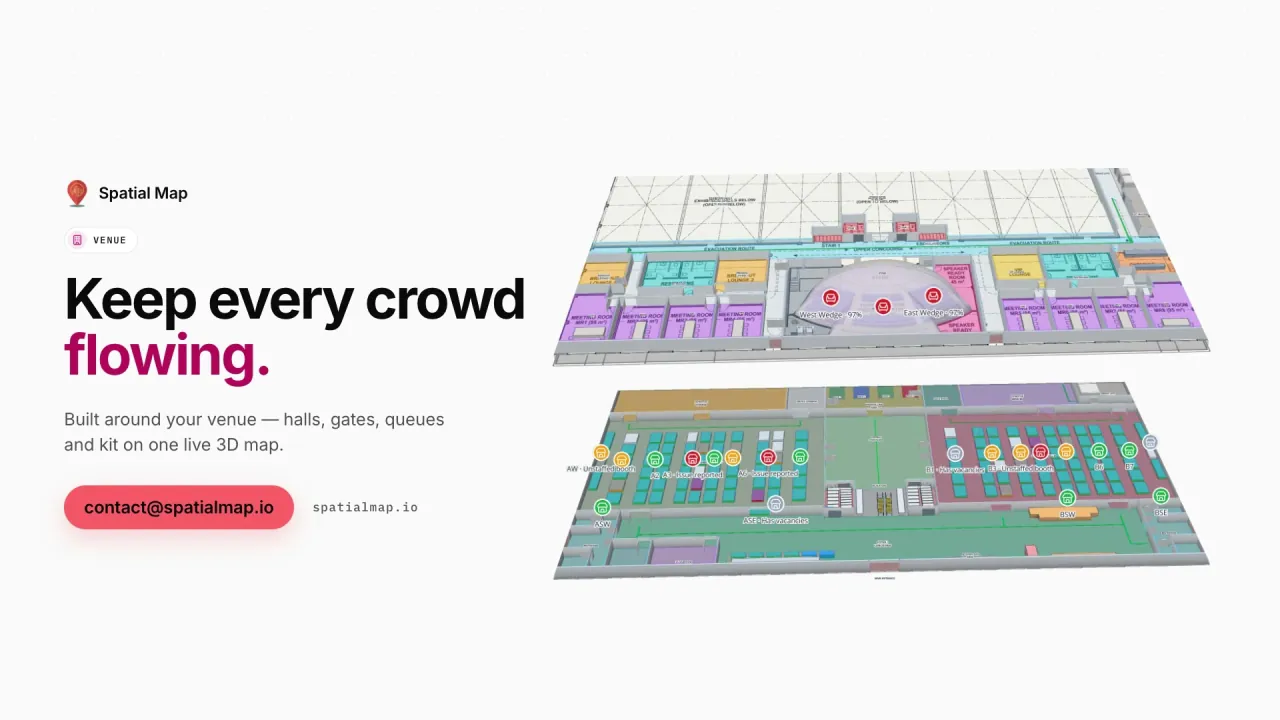
On a venue plan Spatial Map draws halls, entrances, loading docks and service areas, colours halls by live occupancy from your counters and shows exhibitor and freight bookings as rows on the same map. The Lakeside demo is a two-floor convention centre built that way, and stadium and venue indoor mapping explains the pattern. For visitors there is indoor wayfinding with turn-by-turn routes and walking minutes between floors; it does not show a visitor’s own position, so there is no blue dot. Spatial Map has no link to Expo ticketing or accreditation systems.

The airport and the rail line to Budapest

Belgrade Nikola Tesla Airport reported 8.91 million passengers in 2025, 6.5 % more than in 2024, and August 2025 was its first month above one million. It lies 18 km west of downtown, next to the Expo site. Freight also has a rail route: the modernised Budapest–Belgrade line is about 350 km, 184 km of it in Serbia, double-track and electrified, and freight service on the entire line began on 27 February 2026, the first train terminating at Novi Sad. Sources disagree on when passenger trains start, so we say nothing about that.

For an operator the lesson is that goods now enter Serbia on a new line from Hungary, along the Danube, on the motorway and by air, and warehouse teams need to see which of those a pallet came by. Name the dock doors and lanes after the routes, post each arrival to a table and the map shows what is staged, late or gone; cross-dock and yard visibility walks through the pattern. Spatial Map does not connect to rail, customs, airport or airline systems.

A young warehouse market

A property adviser reported modern A-class industrial space in Serbia above 1.2 million sqm and net take-up of 52,450 sqm in the first quarter of 2025. For the second quarter it gave gross take-up of 65,080 sqm, 54 % of it logistics, and a vacancy rate down 50 basis points on the year, primarily due to the Belgrade submarket. Treat the figures as one adviser’s view; the point is that much of the modern stock is new, leased by a few tenants at a time and run from a WMS from day one.

In a new building the layout is the easy part: upload the PDF or DWG (AutoCAD R2004–R2018, placed as a picture), align it at scale and let AI Map draft racks, doors and areas for a person to review. Then connect the stock export: stock by bin on a rack grid shows how a CSV from the WMS colours each location. The Crestline demo has 20 racks and 2,204 locations. The city page for warehouse tracking in Belgrade goes into the airport belt, the port and the free zone.

Cyrillic, Latin and the interface language

Serbian is written in both Cyrillic and Latin letters, and Serbian companies use both. The interface itself is not available in Serbian. Teams typically use English; German, French, Spanish, Arabic and Chinese are also available, and each user picks their own. Room names, rack codes and report titles can be in either script, diacritics included (Šabac, Niš, Čačak), and appear on the map and in exported reports exactly as typed.

Serbia has its own law on personal-data protection, and your legal advisers decide what applies to monitoring staff. Most warehouse projects tag pallets, forklifts and trailers rather than people. A data processing agreement is available and the security page explains how data is protected.

Working with us from Serbia, and where else we serve

Spatial Map is sold online at the same USD price worldwide, not in dinars, and our team works with customers in Serbia remotely, by video call and through the contact form, in English. If you have no readers or tags yet, our team can source devices on request, quoted per project, with warranty and support from the manufacturer: see RFID readers and tags. The same offer covers Novi Sad, Niš, Subotica, Kragujevac, Smederevo and Šabac; the Belgrade page is the only city with its own page. Neighbours with their own pages are Hungary, Romania and Bulgaria.

How Spatial Map does it

From a building plan to a live map

  1. 01

    Import the layout

    Upload a PDF or DWG (AutoCAD R2004–R2018, placed as a picture) of the building, zone or venue and place it at scale; AI Map drafts racks, doors and areas for a person to review.

  2. 02

    Name areas, docks and halls

    Use the codes your WMS or venue plan uses, in Cyrillic or Latin letters, so every row finds its place on the map.

  3. 03

    Connect stock and reads

    CSV or Excel exports, a polled REST endpoint, or the table write API for bulk upserts from your WMS and RFID middleware.

  4. 04

    Alert and report

    In-app alerts for short lanes and silent readers, History playback, and reports to PDF or Excel.

What Serbian teams use it for

Free-zone and cross-border cargo sheds

Dock doors, gate lanes and pallets staged by route.

Distribution centres

Rack-level stock, pick zones and staging lanes from the WMS.

Exhibition halls and large venues

Hall occupancy, bookings and loading docks on one map.

Forklifts and returnable carriers

Tagged equipment as live markers with row history.

See it on real demo facilities

Fictional names, real floor plans, live sensors, RFID, BLE tags and gateways — open any of them in the browser.

All 13 demo facilities

Questions from Serbian teams

Not yet. The app is available in English, German, French, Spanish, Arabic and Chinese, and each user picks their own language. Your own content — rack codes, room names, report titles — can be in Cyrillic or Latin letters and displays exactly as typed.

It can show them apart on the map: draw the zone areas, tag the pallets and mark each one’s status from your own reads or exports. It is not a customs system and does not decide what counts as inside the zone; that stays with your customs procedures and records.

Yes. Halls, entrances, loading docks and service areas are drawn like any building, coloured by live occupancy from your counters, and indoor wayfinding gives visitors routes across floors. There is no visitor positioning (no blue dot), and no link to ticketing systems.

Through REST polling, file uploads (CSV, Excel, JSON, GeoJSON) or the table write API: HTTPS, a bearer API key and bulk upserts, at 60 requests a minute per key. Spatial Map does not write back to the WMS.

No. Spatial Map is sold online and our team works with customers in Serbia remotely, by video call and through the contact form, in English. There are no local resellers or partners.

Neither. Pricing is the same worldwide and in US dollars: a 7-day free trial for up to 5 facilities with no card, then Pro at $60 a month or $600 a year for up to 4 facilities. Readers and tags, if you ask us to source them, are quoted per project.

Map your first Serbian building this week.

Start the free trial in English, or send us a floor plan and a CSV export of your stock through the contact form.