Hungary · Magyarország · Air cargo, parks, plants

Indoor mapping & RFID tracking in Hungary, from the cargo airport to the car plant

Spatial Map turns a warehouse, a plant or a cargo shed into a live 3D map in the browser, with racks coloured by stock, RFID-tagged carriers read at the dock and forklifts as moving markers, fed by the WMS, readers and sensors you already run. Indoor mapping & RFID tracking in Hungary centres on Budapest, where an airport cargo operation and most of the country’s modern warehouse space meet, and extends to the car and battery plants in the provinces. Each building is its own facility, and one workspace holds them all.

No credit card. Runs in the browser. Pro is $60/month for up to 4 facilities. Book a demo

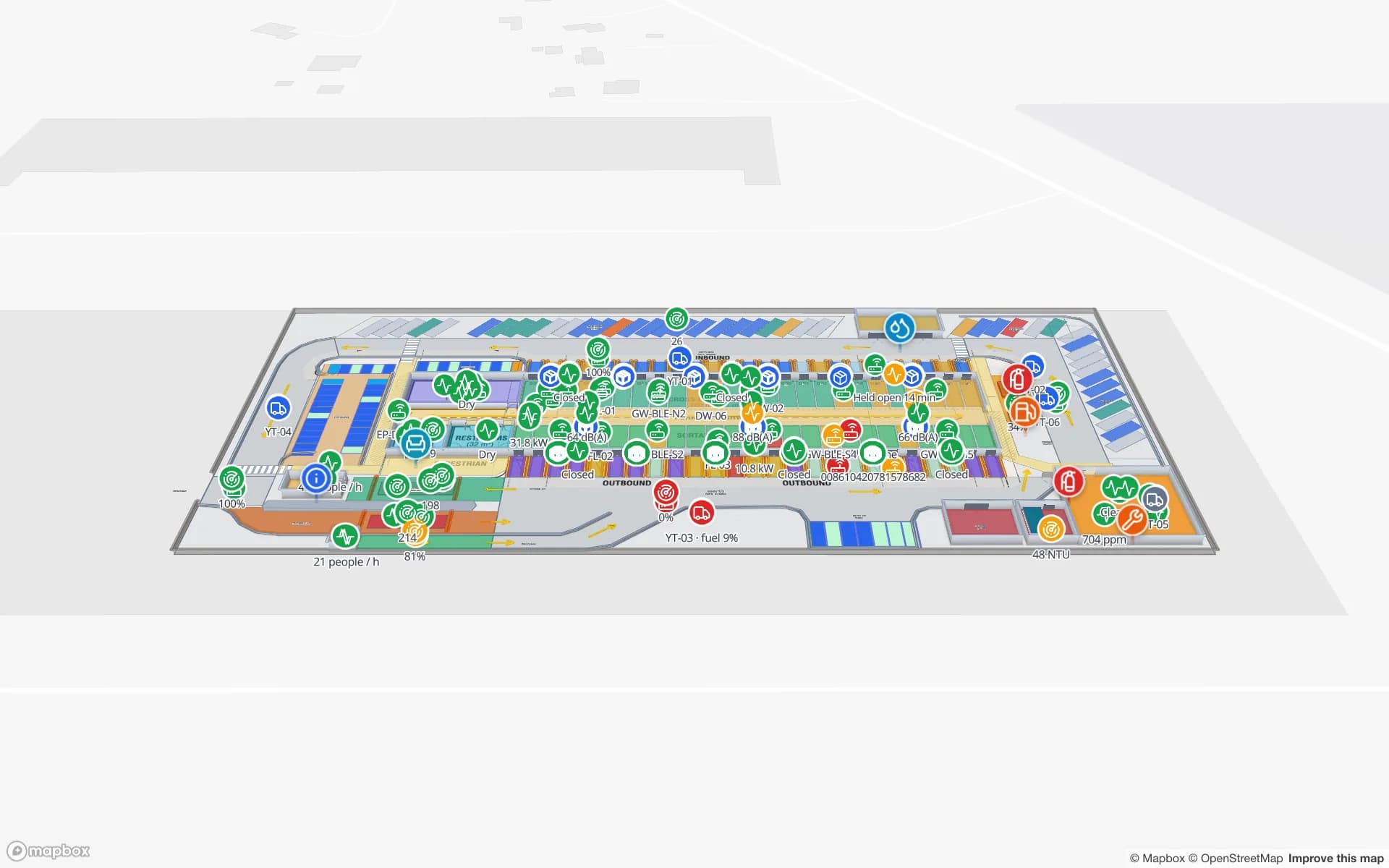
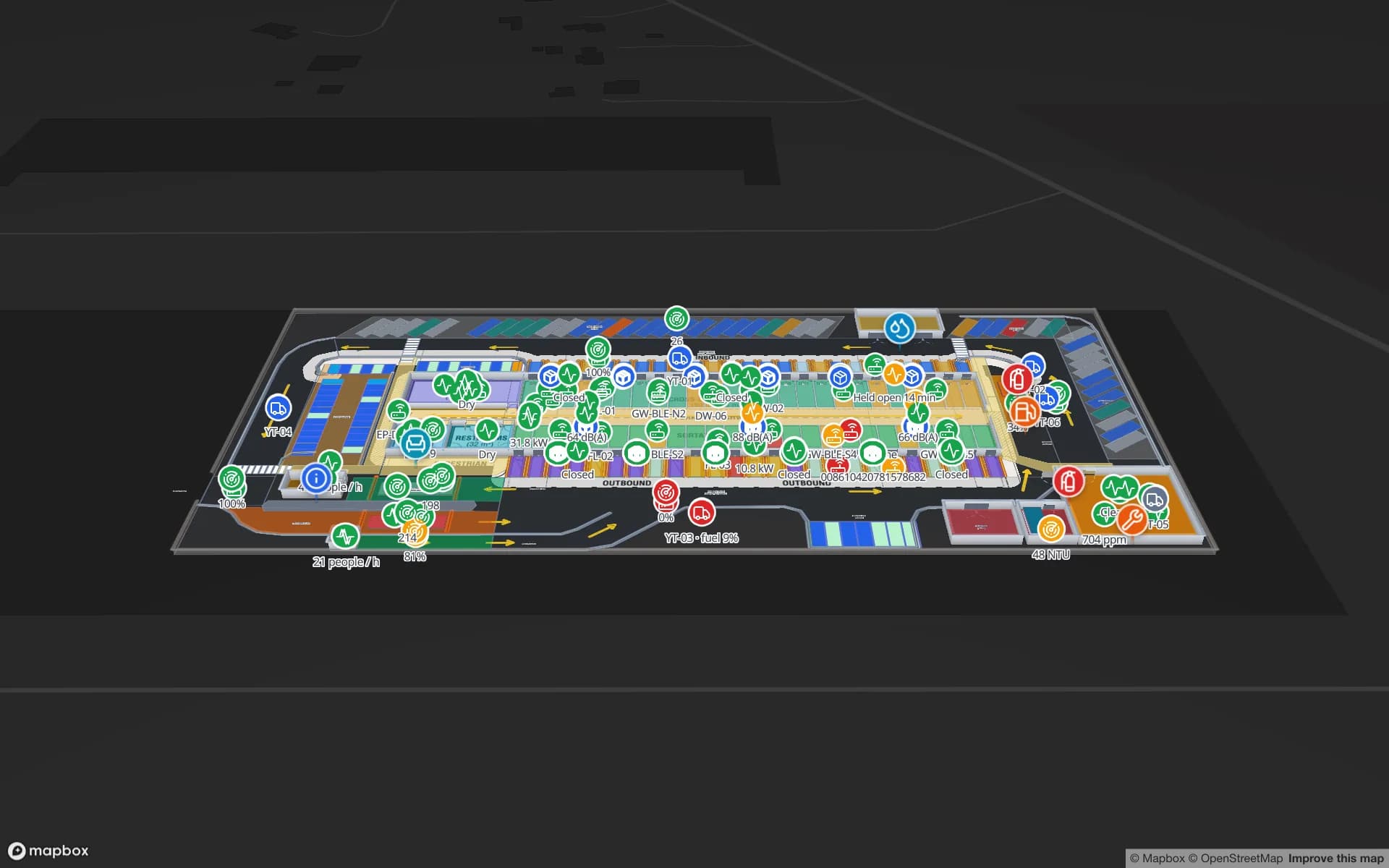
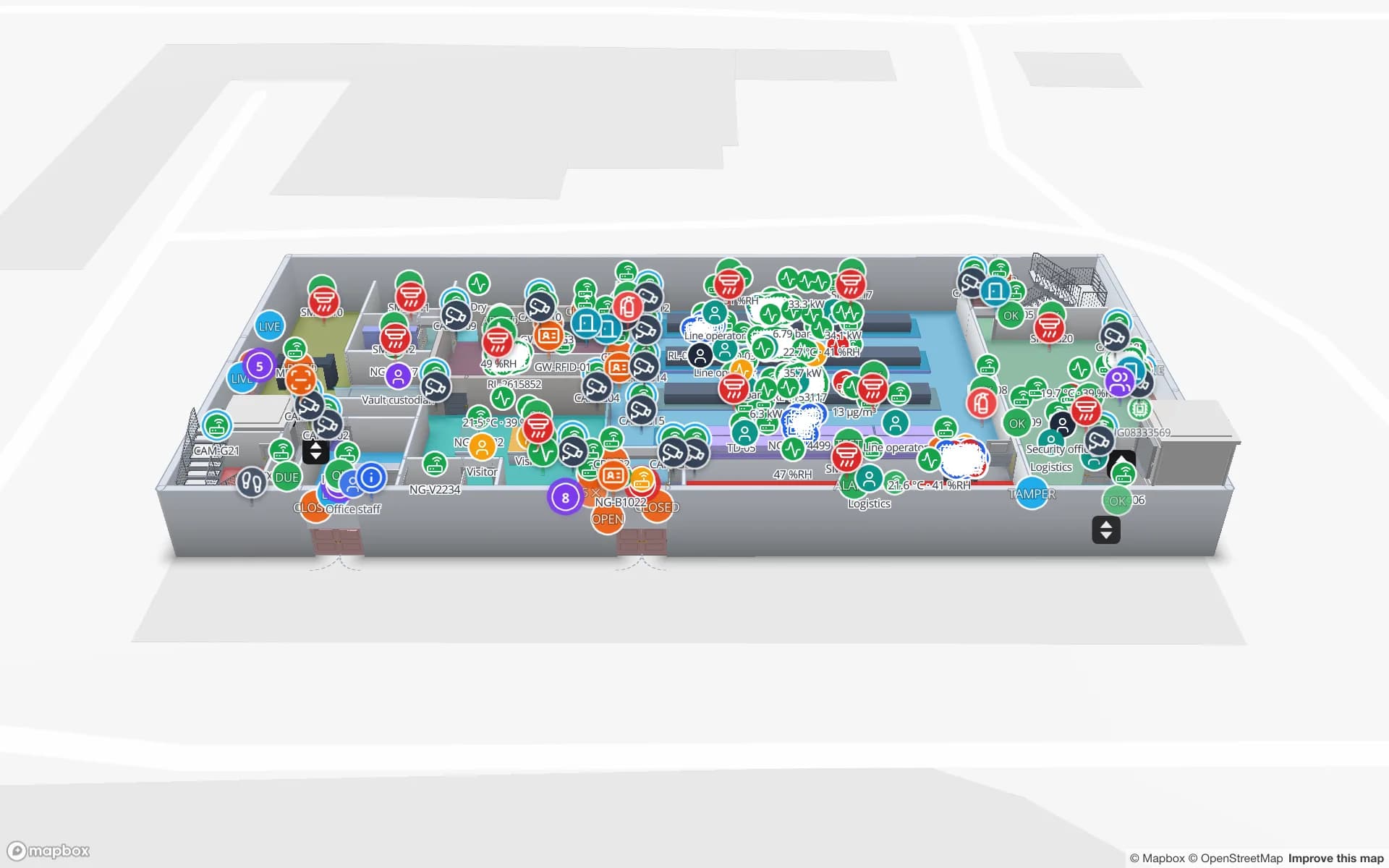
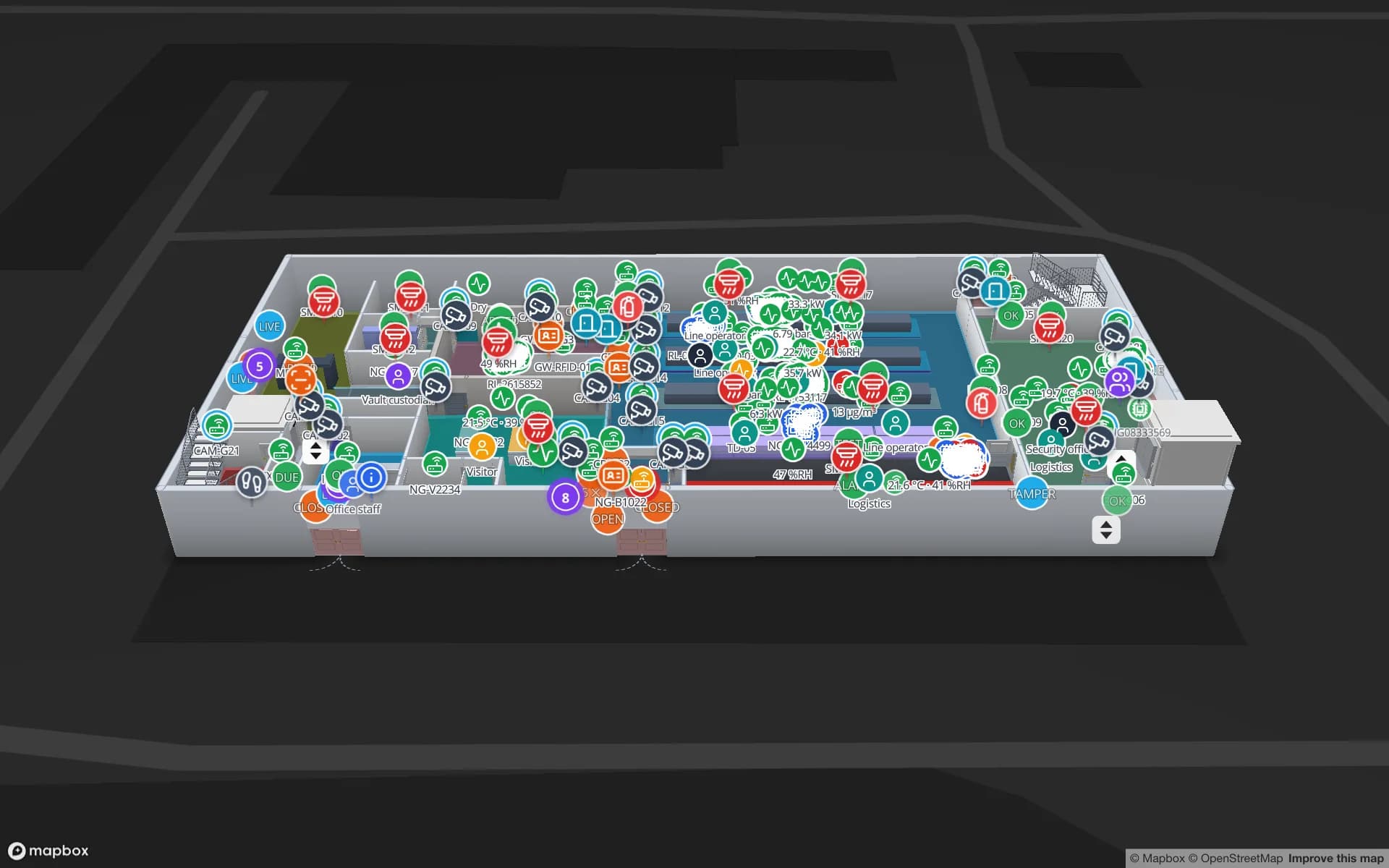
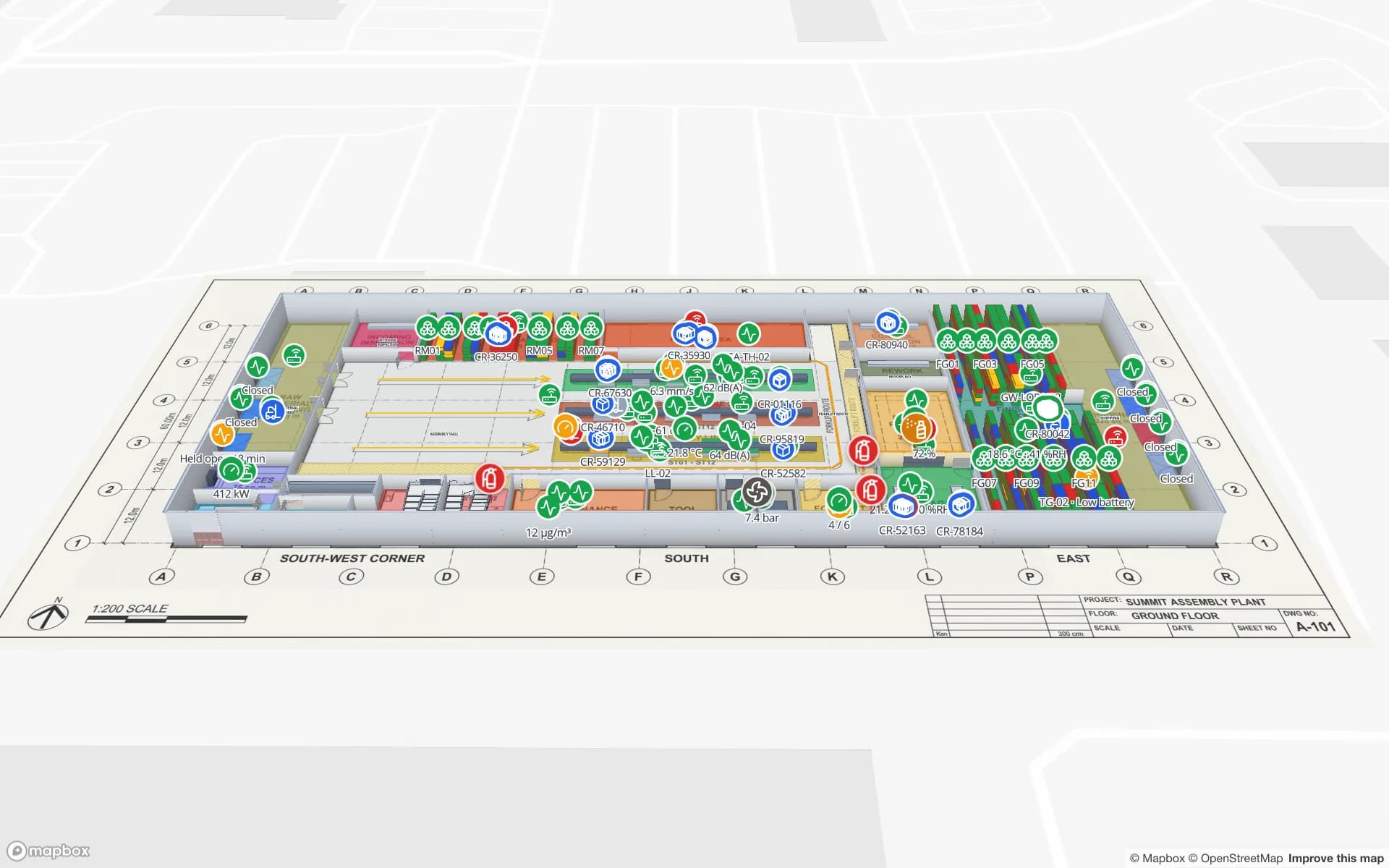
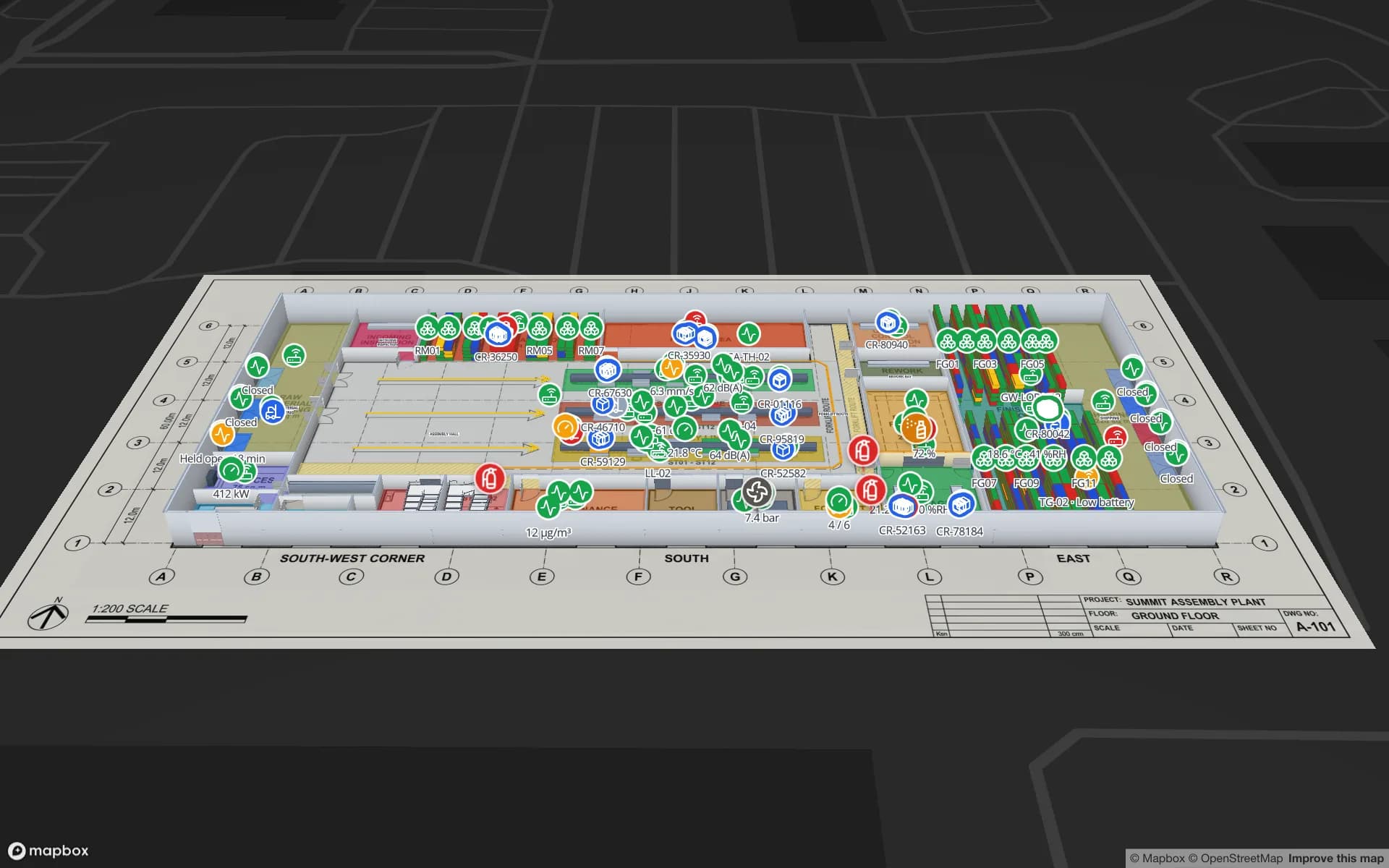
Summit Assembly Plant, a assembly plant demo, in the Spatial Map 3D viewer with live device markers
Summit Assembly Plant
Summit Assembly, a demo assembly plant: three lines, WIP carriers and 867 rack locations.
Rack locations in the Summit Assembly demo plant
867
Interface languages for Hungarian teams (Hungarian not yet available)
EN · DE
Demo facilities to explore in the browser
13
Free trial, up to 5 facilities, no card
7 days

A cargo airport that outgrew its terminal

Budapest Airport reported a record 426,519 tonnes of cargo in 2025, 42.3 % more than in 2024, together with almost 20 million passengers. The Polish Centre for Eastern Studies (OSW) describes its BUD Cargo City, opened in 2020, as a base with about 21,600 m² of warehouse space and 32,000 m² of handling space that serves two wide-body aircraft at once, with capacity expanded to 420,000 tonnes in 2024; the Hungarian state regained an 80 % stake in the airport in 2024.

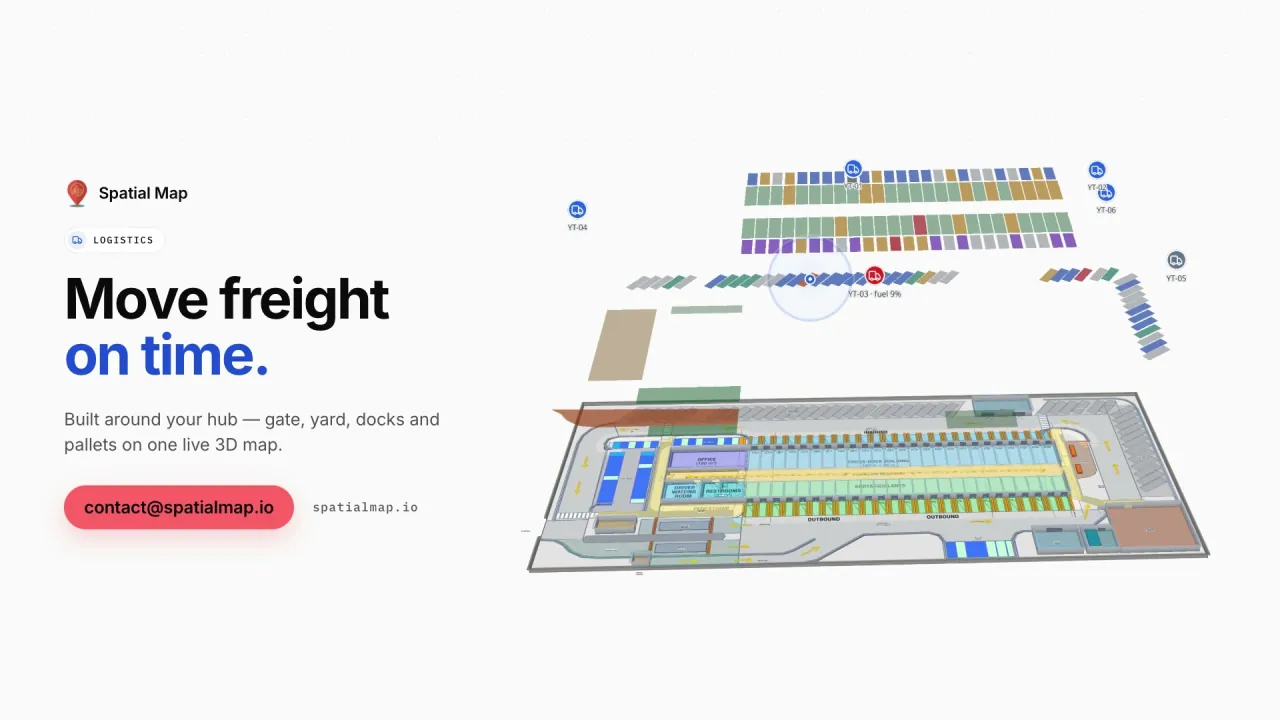
Low-value parcels under €150 are about 40 % of arriving goods, according to the same analysis, and most are re-exported, so a sorting floor handles many small items moving fast. Asset tracking in Budapest goes into the airport-side detail. Spatial Map does not connect to airport, airline or customs systems.
Greater Budapest holds most of the stock

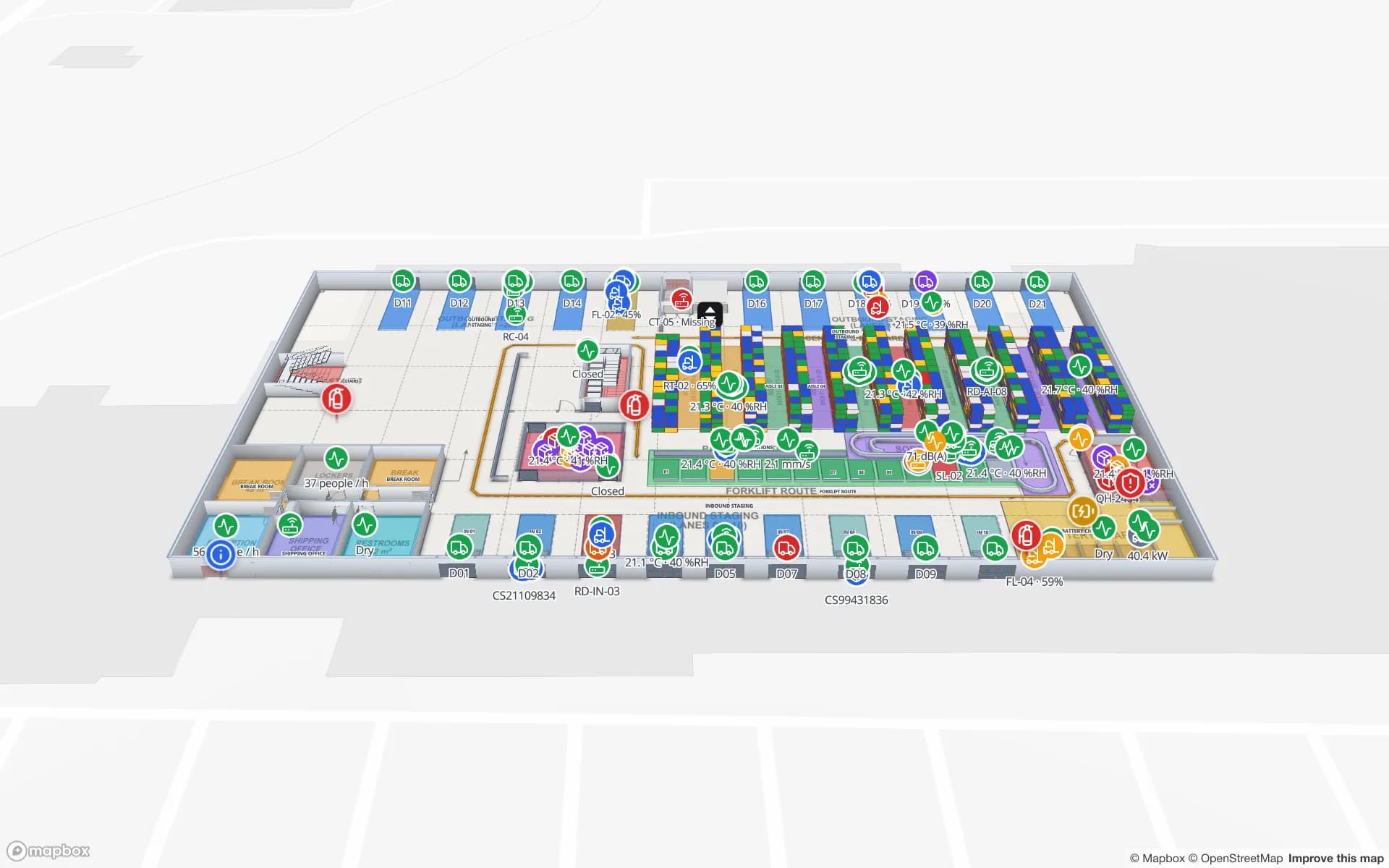
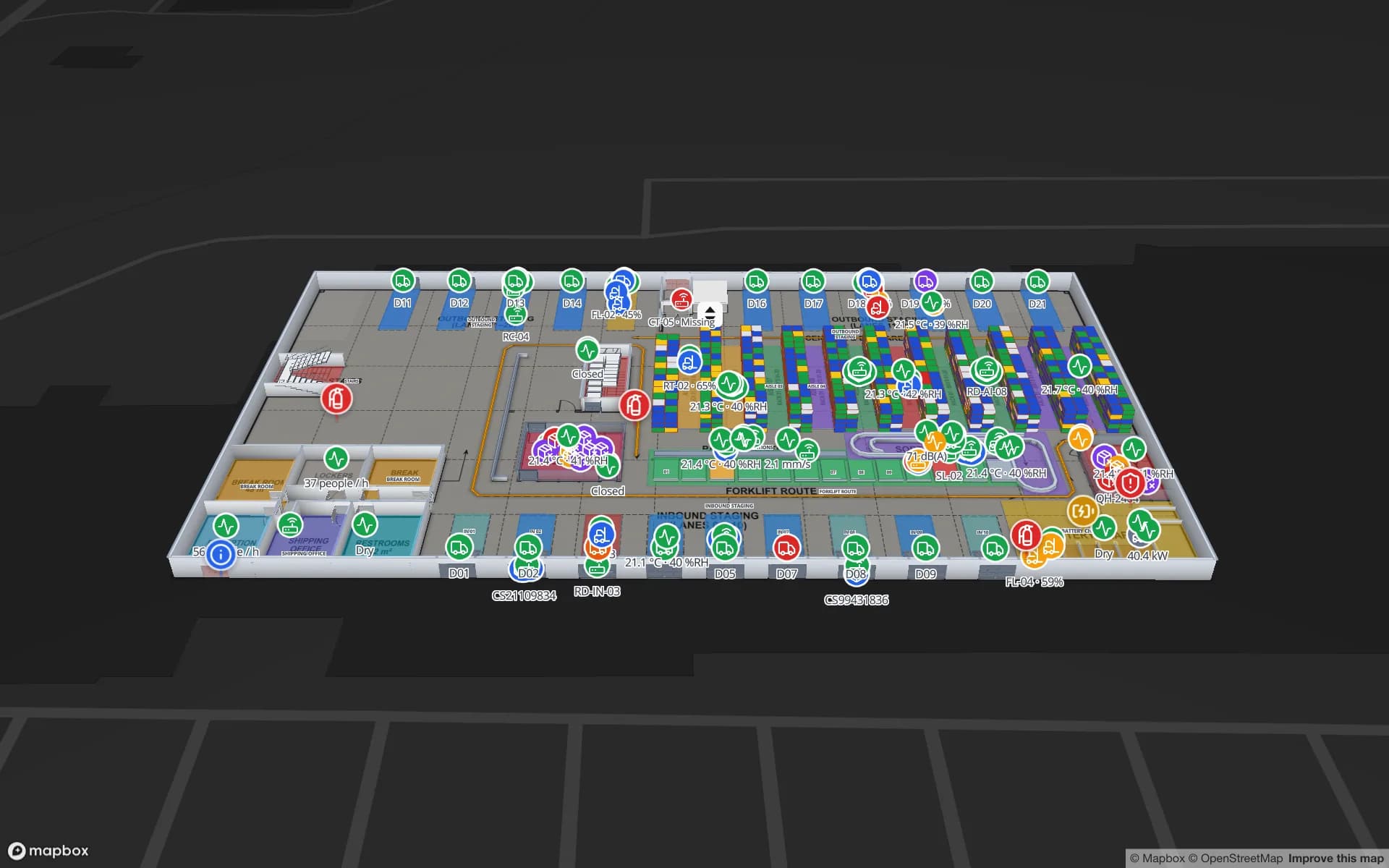
At the end of Q2 2026 Hungary’s modern industrial stock stood at 6,510,150 sqm, according to the Budapest Research Forum, of which Greater Budapest accounted for 4,179,890 sqm and regional Hungary for 2,330,260 sqm. In the same quarter, the Northern Great Plain added 89,125 sqm of the 117,975 sqm completed nationwide.

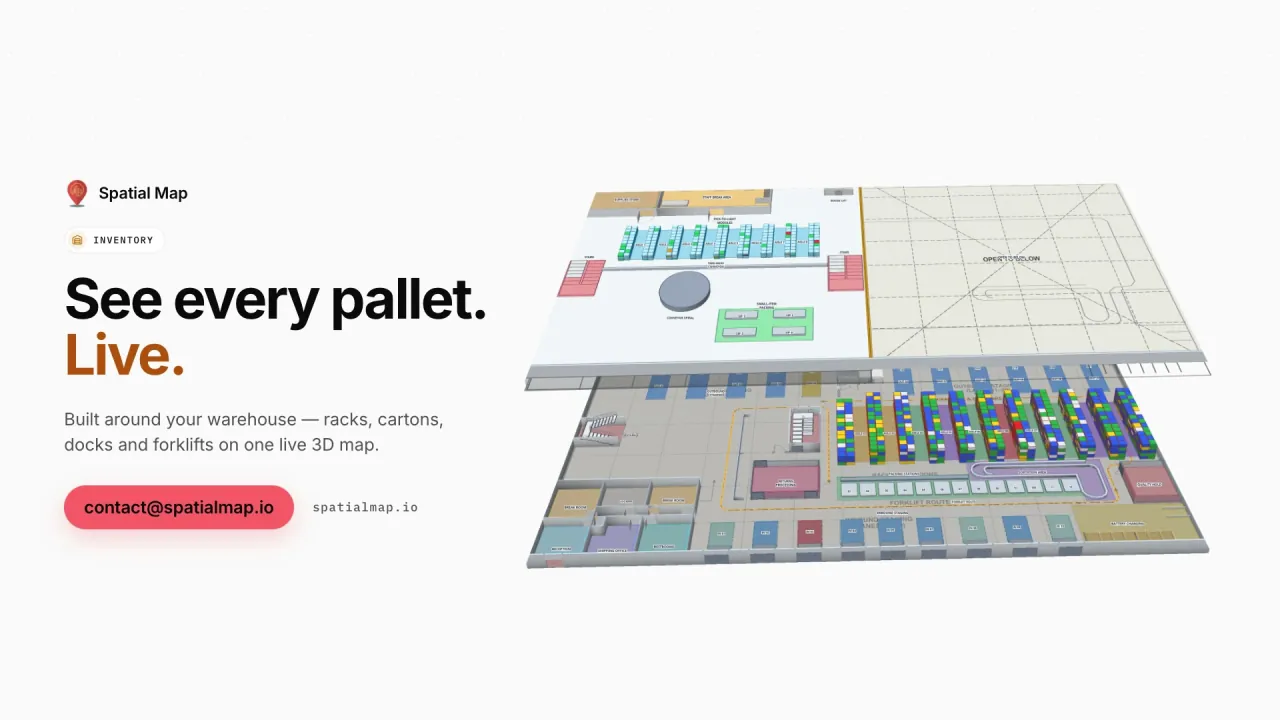
So there are two kinds of warehouse customer: operators with several parks around the capital, and operators with one big building in a regional centre. Both need the same picture. The Crestline demo shows 20 racks with 2,204 locations coloured from stock, and stock by bin on a rack grid shows how a WMS export drives those colours.

Car and battery plants in the provinces

Vehicle plants stand at Győr, Kecskemét, Esztergom and Debrecen, and sources put the automotive sector at roughly a quarter of manufacturing output (25–27 %, depending on source). Battery production has been volatile: GKI reported a 22.4 % fall in 2024, and the sector’s output has swung with European demand.

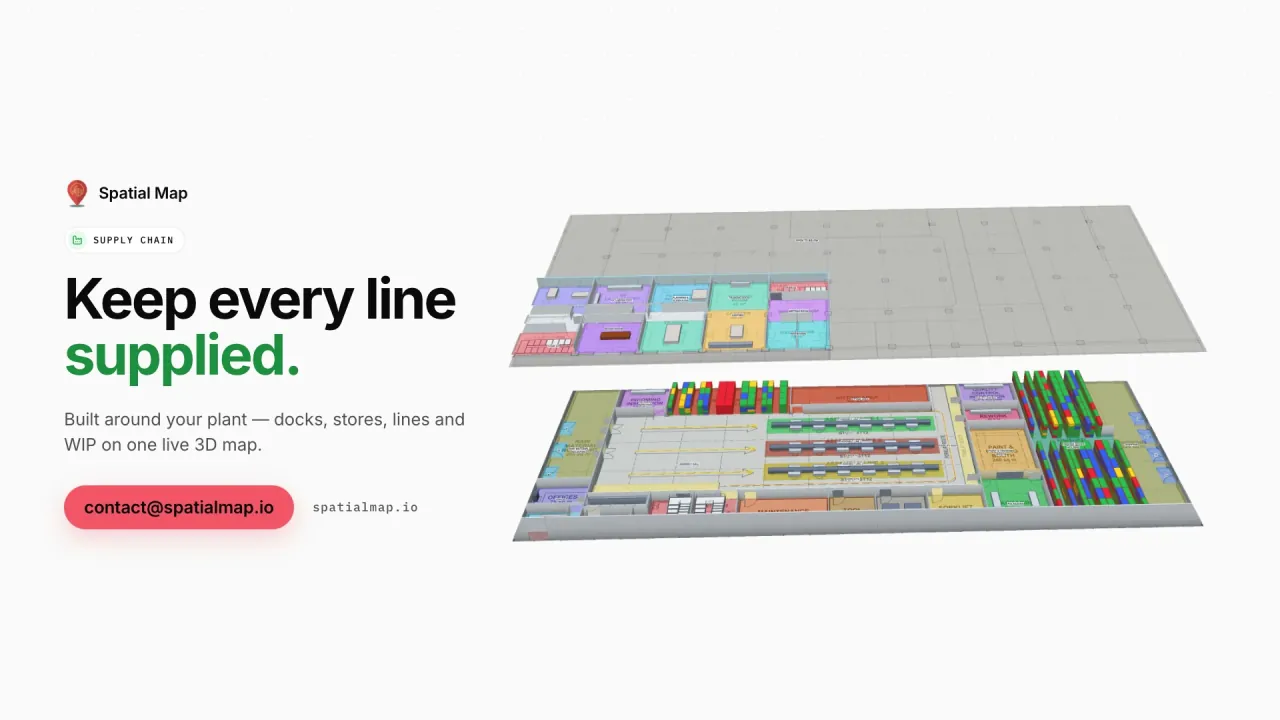
We do not claim any link to those plants. For their suppliers and logistics providers the problem is generic: raw materials and purchased parts in, finished goods out, in bulky units that fill a warehouse quickly, with returnable packaging and tools that must be where they are meant to be. Manufacturing supply-chain visibility explains the approach, and the Summit Assembly demo shows three lines, WIP carriers and 867 rack locations.

Language, GDPR and workplace monitoring

The interface is not available in Hungarian. Teams typically use English, and German is available too, which helps with German-owned plants and customers; French, Spanish, Arabic and Chinese complete the list. Room names, rack codes and report titles can be in Hungarian, accents included, and appear on the map and in exported reports exactly as typed.

Under the GDPR, location data linked to employees is personal data, and the National Authority for Data Protection and Freedom of Information (NAIH) supervises it; the Hungarian Labour Code has its own rules on monitoring employees. Your legal advisers decide what applies. Most warehouse projects tag pallets, forklifts and trailers rather than people. A data processing agreement is available and the security page explains how data is protected.

Working with us from Hungary

Spatial Map is sold online at the same USD price worldwide, not in forints, and our team works with customers in Hungary remotely, by video call and through the contact form, in English or German. If you have no readers or tags yet, our team can source devices on request, quoted per project, with warranty and support from the manufacturer: see RFID readers and tags. Handheld apps and WMS or ERP integrations are built as client projects, and the product runs as cloud or on-premises.

Also served

The same offer covers Győr, Debrecen, Szeged, Pécs, Miskolc, Székesfehérvár and Kecskemét, and the industrial towns around them. Only Budapest has its own page.

How Spatial Map does it

From a building plan to a live map

  1. 01

    Import the layout

    Upload a PDF or DWG (AutoCAD R2004–R2018, placed as a picture) of the hall and yard and place it at scale; AI Map drafts racks, doors and areas for a person to review.

  2. 02

    Name lines, racks and docks

    Use the codes your ERP or WMS uses so every row finds its place on the map.

  3. 03

    Connect stock and reads

    CSV or Excel exports, a polled REST endpoint, or the table write API for bulk upserts from your WMS and RFID middleware.

  4. 04

    Report each shift

    In-app alerts for late carriers or silent readers, History playback, and reports to PDF or Excel.

What Hungarian teams use it for

Supplier halls and plants

Raw materials, WIP carriers and finished goods from line to dock.

Distribution parks

Rack-level stock, pick zones and staging lanes on one map.

Air-cargo forwarding

Staging lanes by flight cut-off, with an in-app alert for a short lane.

Equipment and returnable packaging

Tagged forklifts, dollies and roll cages as live markers with row history.

See it on real demo facilities

Fictional names, real floor plans, live sensors, RFID, BLE tags and gateways — open any of them in the browser.

All 13 demo facilities

Questions from Hungarian teams

Not yet. The app is available in English, German, French, Spanish, Arabic and Chinese, and each user picks their own language. Your own content — rack codes, room names, report titles — can be in Hungarian.

No. It reads from them and shows their data on the building: stock by rack location, carriers by line, pallets by dock door. Data comes in through REST polling, file uploads (CSV, Excel, JSON, GeoJSON) or the table write API, and Spatial Map does not write back.

Yes. Read-only share links show only the layers and floors you choose, with an expiry date and a view cap, and can be revoked at any time. Facilities, reports and data can also be grouped per client into named solutions.

Yes. DWG files from AutoCAD R2004–R2018 are placed as a picture at real-world units, and PDFs are scaled from standard sheet sizes. DXF is not supported; export a PDF or DWG instead.

No. Spatial Map is sold online and our team works with customers remotely, by video call and through the contact form, in English or German. There are no local resellers or partners.

No. Pricing is the same worldwide and in US dollars: a 7-day free trial for up to 5 facilities with no card, then Pro at $60 a month or $600 a year for up to 4 facilities. Readers and tags, if you ask us to source them, are quoted per project.

Map your first Hungarian warehouse or plant this week.

Start the free trial in English or German, or send us a hall layout and a sample of your stock export through the contact form.