Bulgaria · България · Black Sea ports, the Danube and the Sofia belt

Indoor mapping & RFID tracking in Bulgaria, from the Varna quays to Sofia’s industrial park

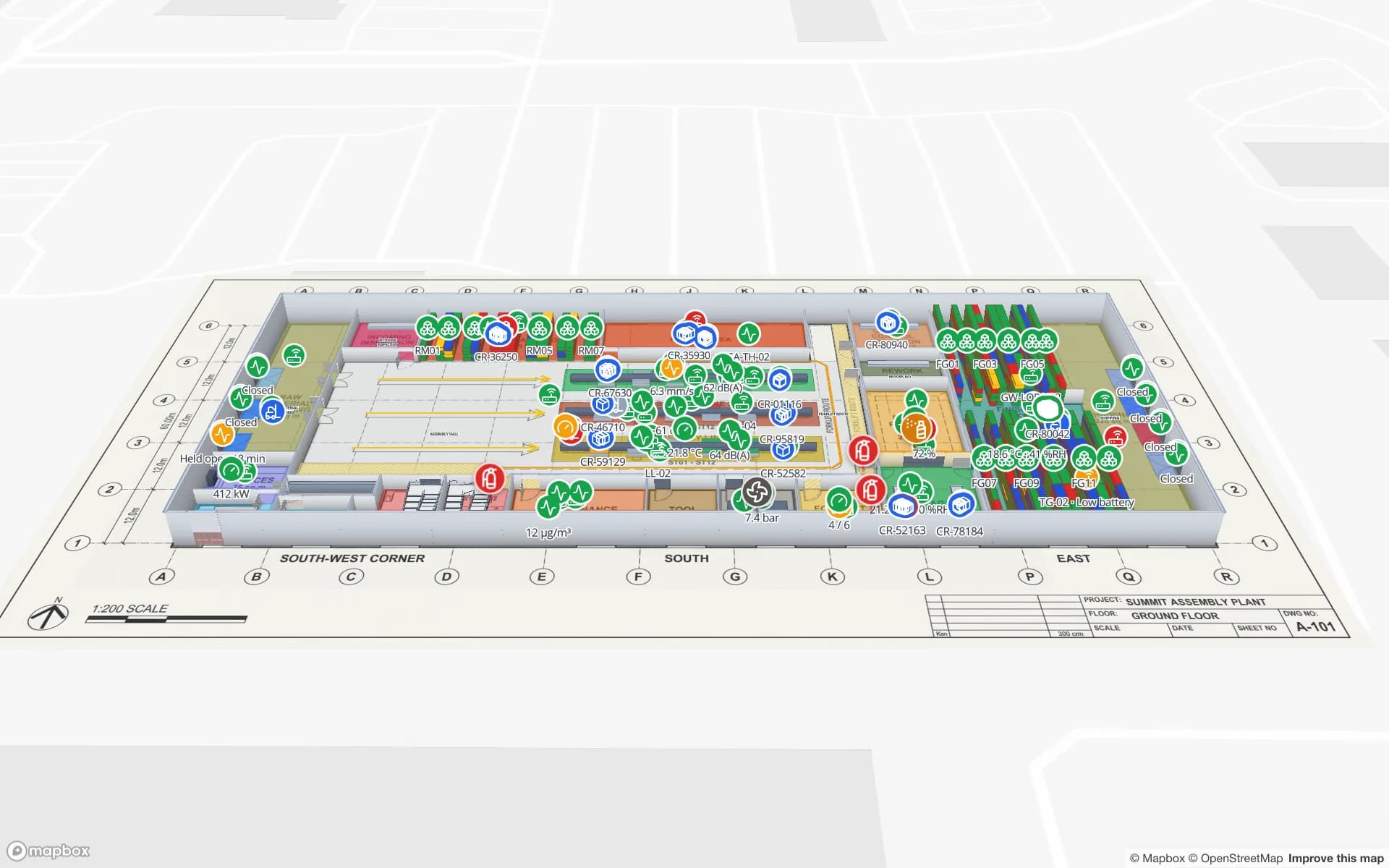
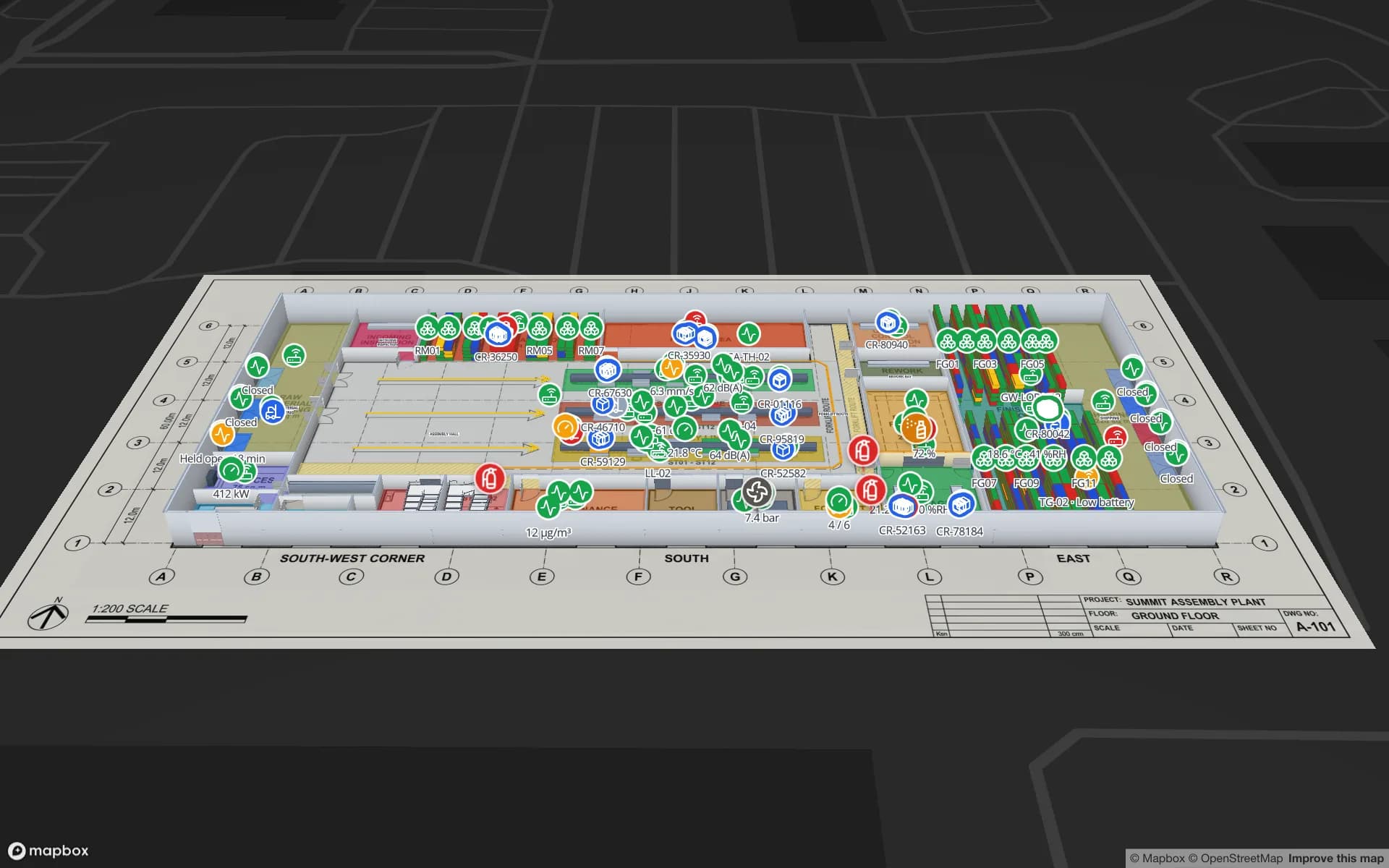
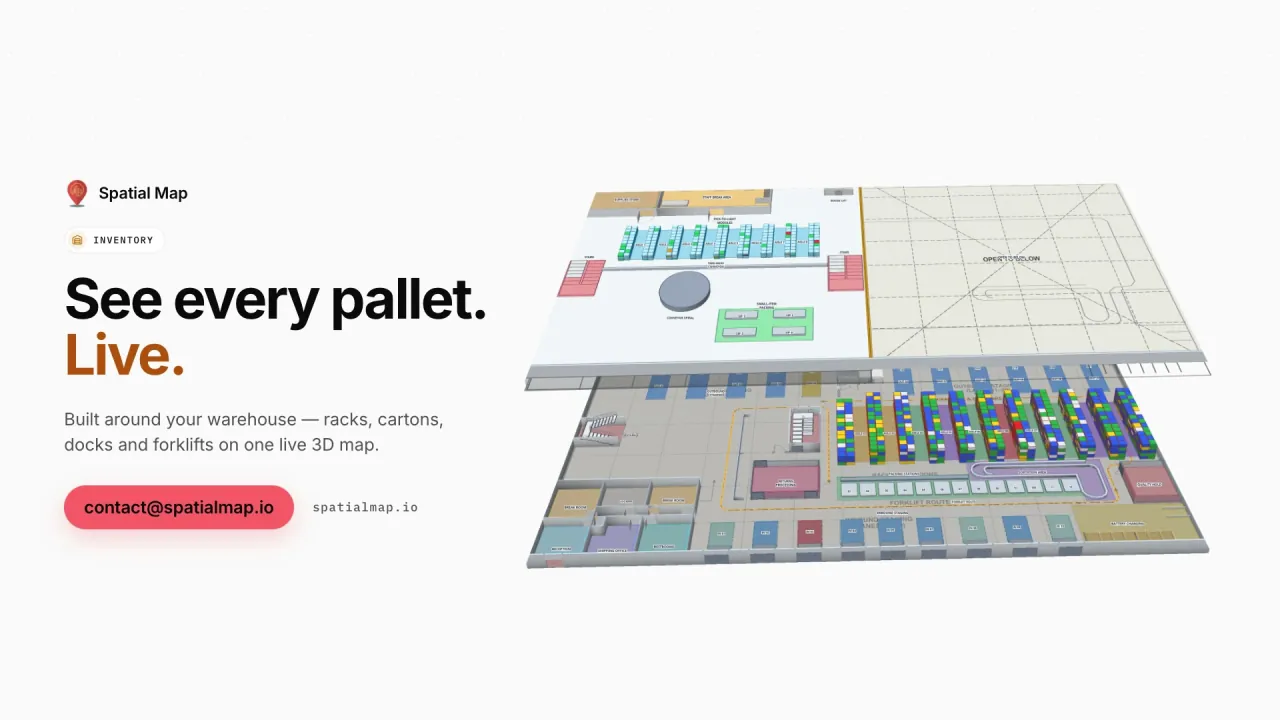
Spatial Map turns a warehouse, a port shed or a plant into a live 3D map in the browser, with racks coloured by stock, RFID-tagged pallets read at the dock and forklifts as moving markers, fed by the WMS, readers and sensors you already run. Indoor mapping & RFID tracking in Bulgaria follows two axes: the Black Sea, where Varna’s two terminals handle containers, grain and bulk cargo, and the road and rail inland to Sofia, where demand for warehouse space is led by fast-moving consumer goods. Each building is its own facility, and one workspace holds them all.

No credit card. Runs in the browser. Pro is $60/month for up to 4 facilities. Book a demo

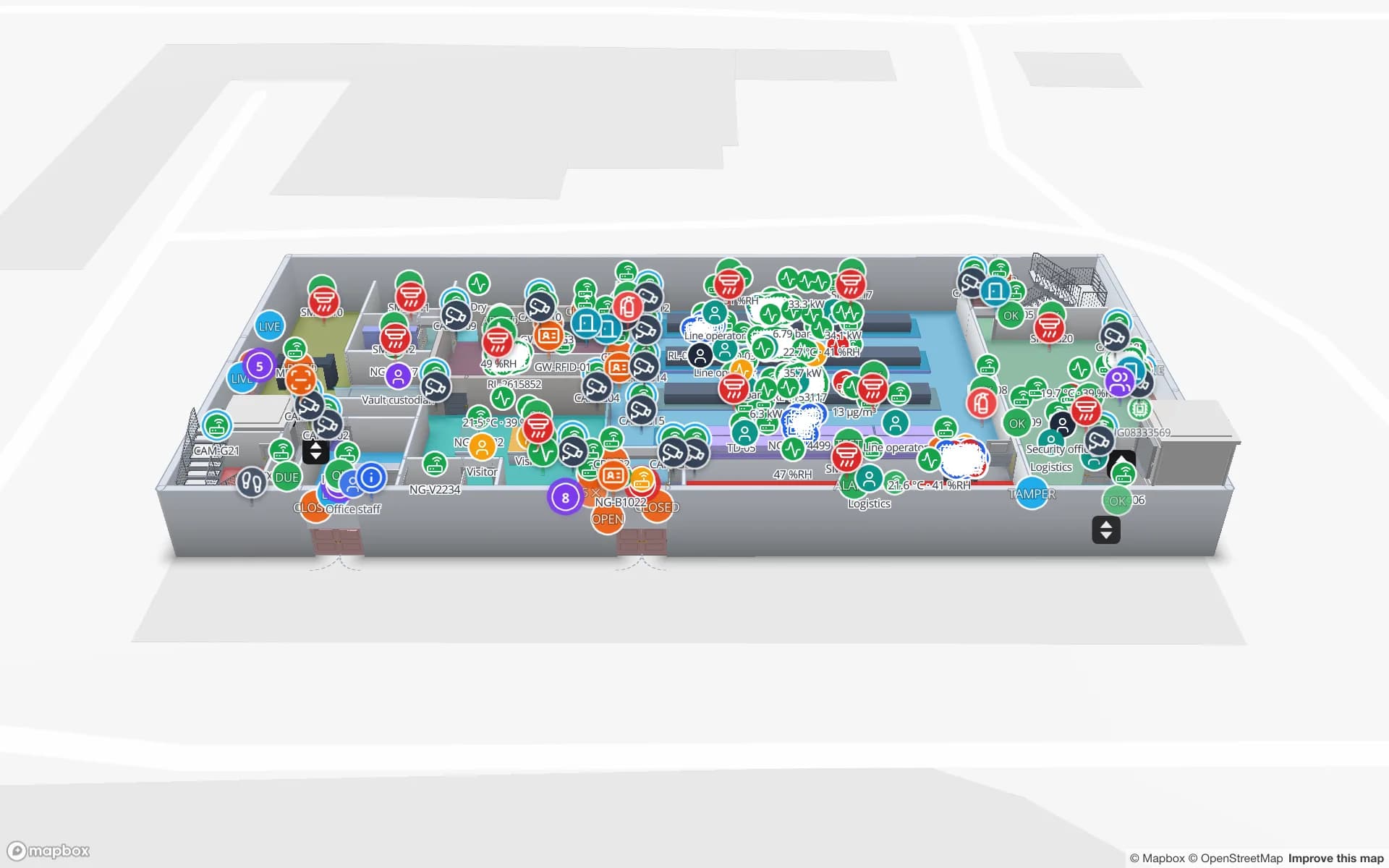
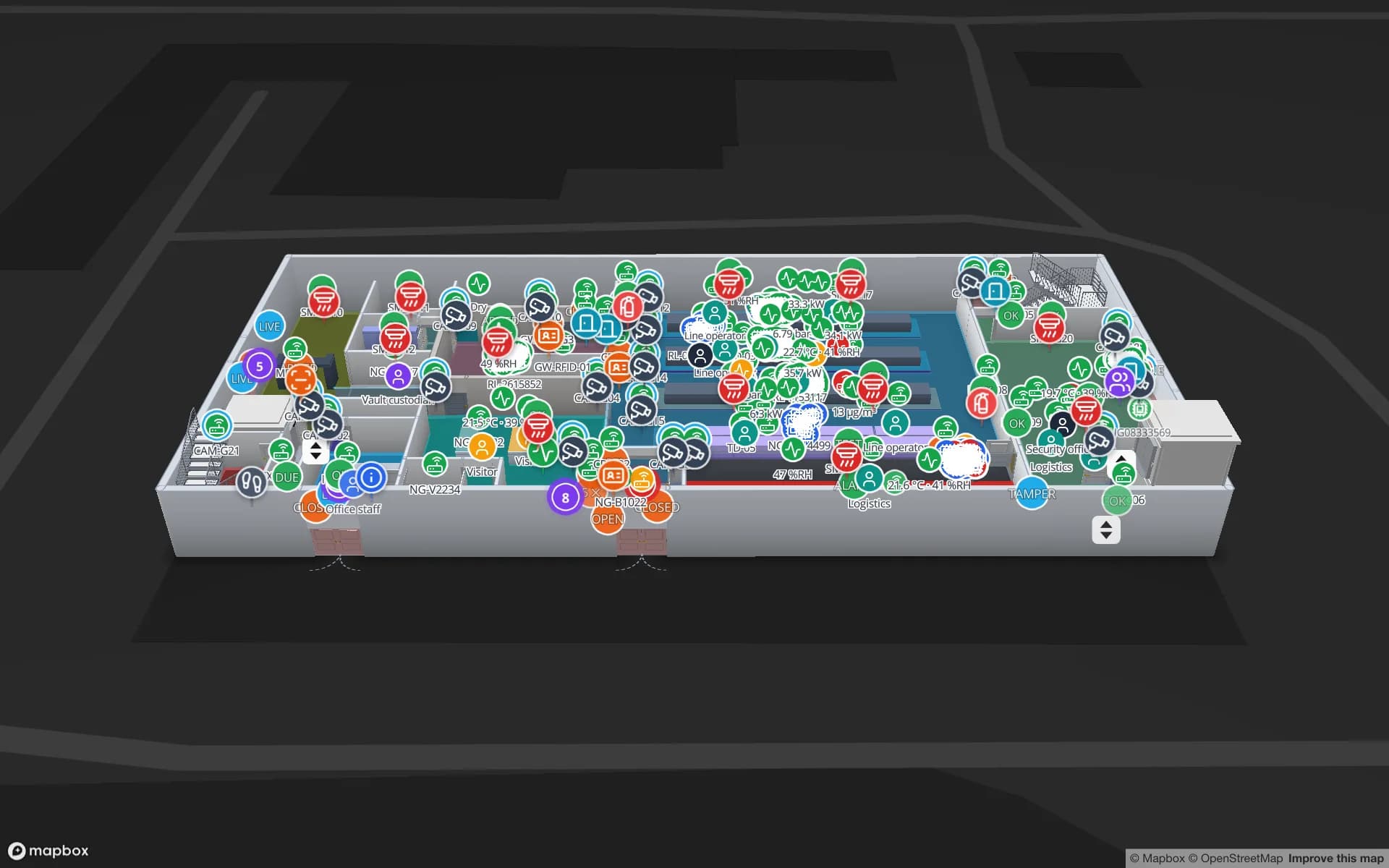
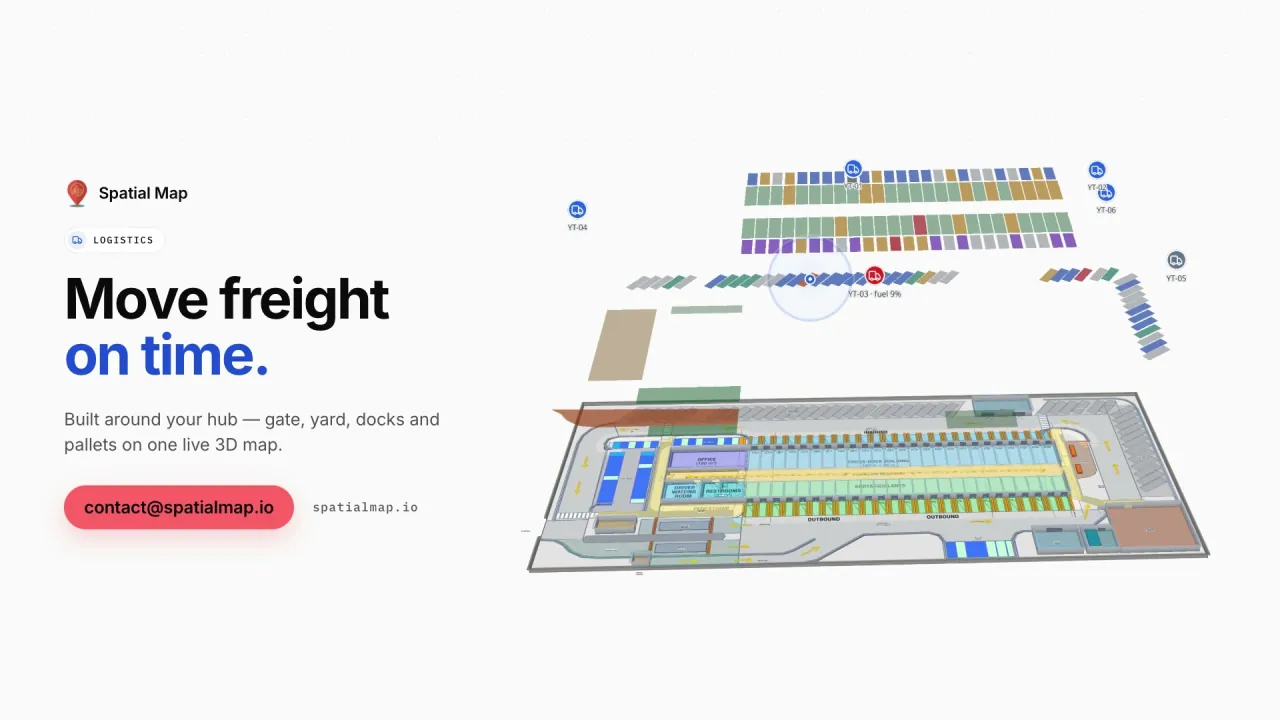
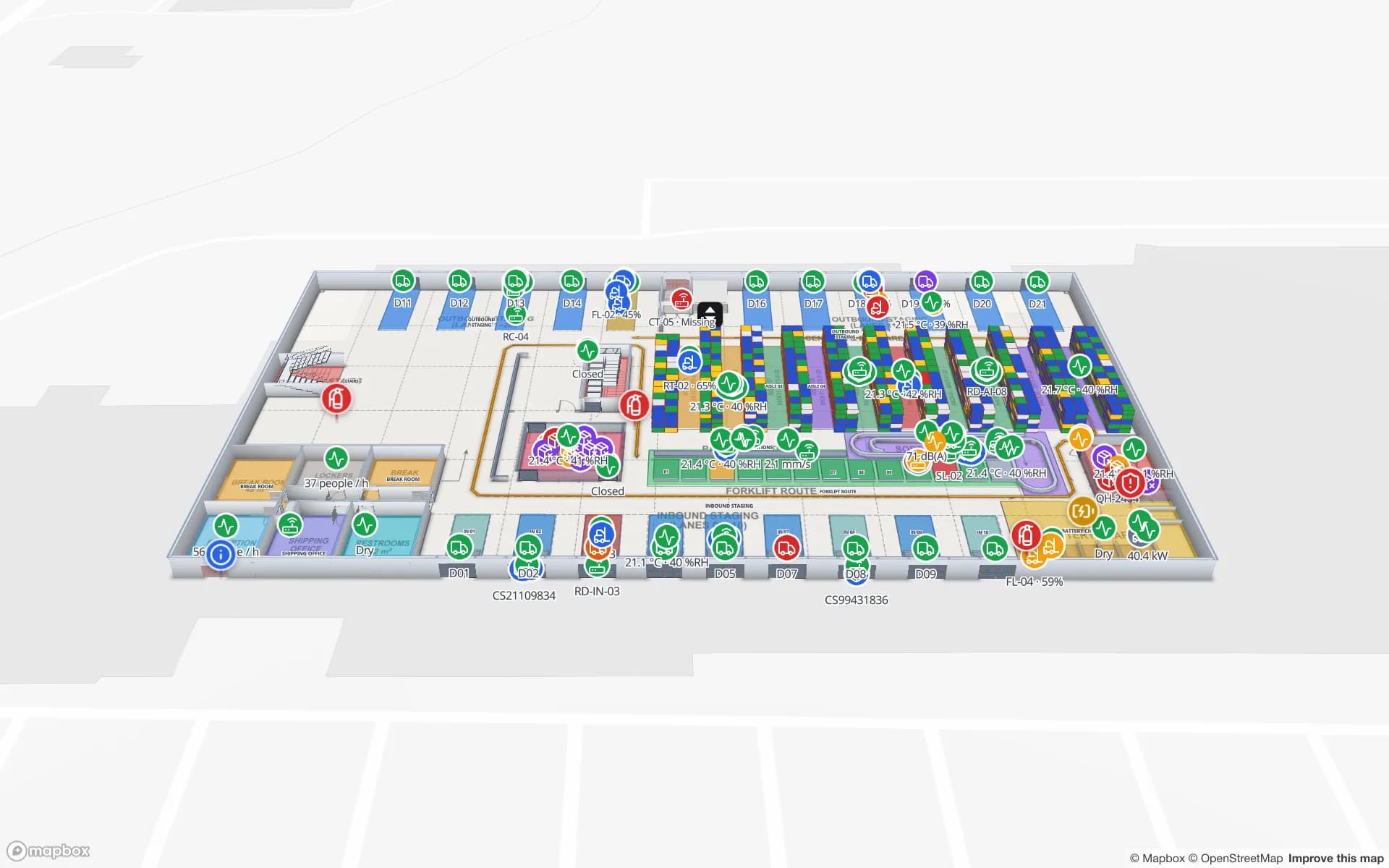
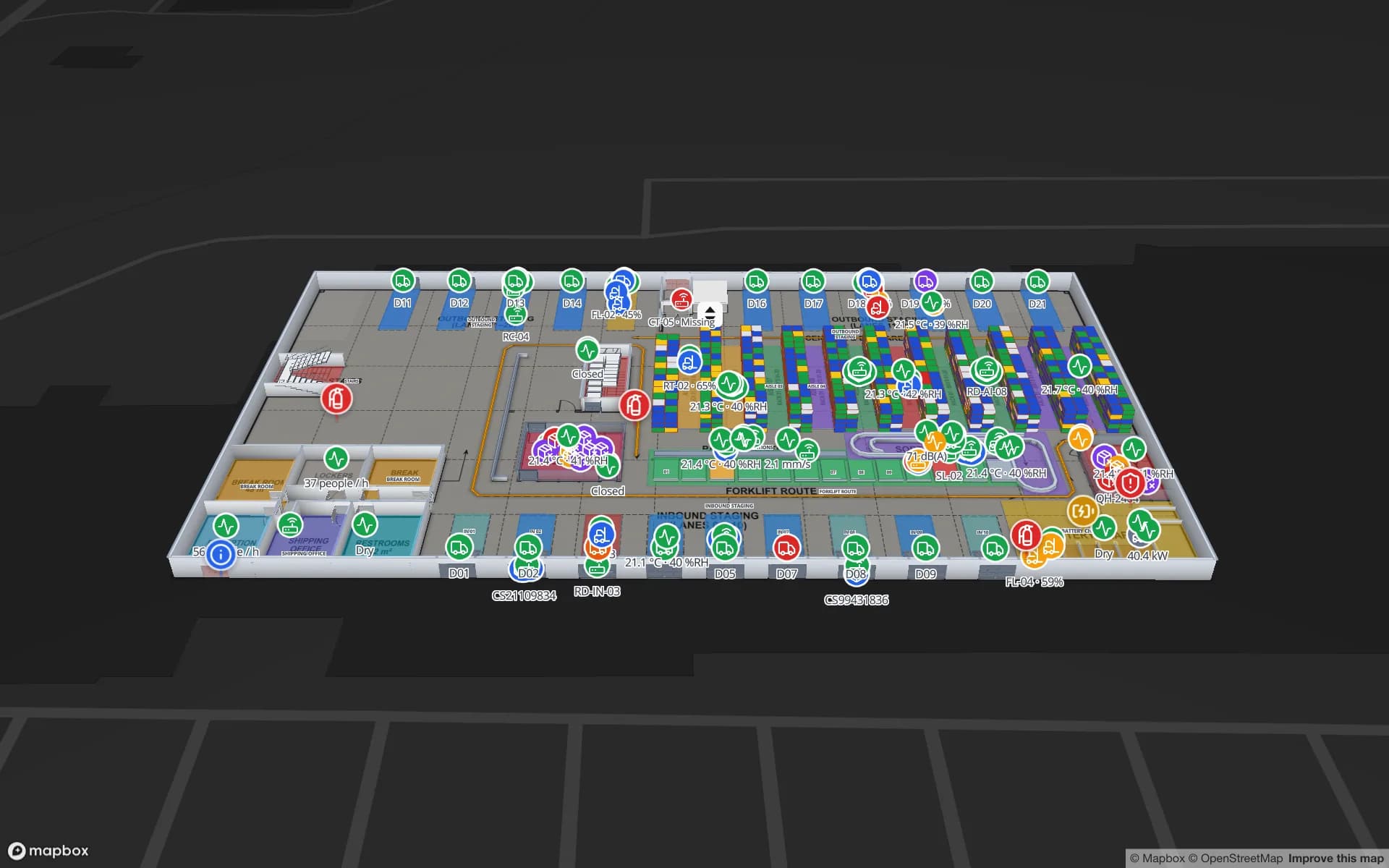
Eastport Cross-Dock Freight Hub, a cross-dock & trailer yard demo, in the Spatial Map 3D viewer with live device markers
Eastport Cross-Dock Freight Hub
Eastport Cross-Dock, a demo freight hub: 50 dock doors, 44 yard slots and 1,180 RFID pallets, with the gate and weighbridge.
Dock doors in the Eastport cross-dock demo
50
RFID pallets in the Eastport demo
1,180
Interface languages (Bulgarian not yet available)
6
Free trial, up to 5 facilities, no card
7 days

Varna: two terminals, thirty kilometres apart

The Port of Varna describes Varna East as officially opened on 18 May 1906, with 14 berths and a 2,345 m quay about 1 km from the downtown area. Varna West became operational in 1974, about 30 km to the west on Beloslav Lake next to the Devnya chemical plants, and its deep-water channel to the sea was completed in 1976. The port calls it Bulgaria’s container hub: “In 2018, it handled more than 160 thousand TEU.” Its terminal has 22 berths, 19 of them operational for cargo ships, a 3,430 m quay, 37,806 m² of warehouses and 346,393 m² of open storage.

The port runs its own information system for container condition and location. Inside your own shed the question is different: which pallet is in which lane, which carton went into which box, which trailer waits at which door. RFID portals at the dock doors answer it, and the Eastport demo shows 50 dock doors, 44 yard slots and 1,180 RFID pallets on one map. Spatial Map does not connect to port, customs or terminal systems. The city page for inventory tracking in Varna goes into the two terminals, grain and the lake-side rail ferry.
The Danube: Ruse and the free zones

The Ruse Free Zone, a state-founded company on the Danube, lists a river port equipped for bunkering and mooring of river vessels, a railway loading and unloading station with four tracks, and 29 industrial buildings. The European Commission’s list of free zones, as of 30 August 2023, includes Plovdiv and Ruse. A site that has river, rail and road access in one fence is a map-friendly problem: barges at the quay, wagons on the siding, trucks at the gate and goods in storage in between.

Draw the tracks, quay and storage areas as one facility, post each movement to a table (barge, wagon or truck, in or out) and the map colours each area by what it holds. Cross-dock and yard visibility walks through the yard side. Spatial Map is not a customs system and makes no customs or compliance claim.

Sofia and the road from the sea

A property adviser reports 1,488,500 sqm of available speculative Class A and B logistics space in Sofia in the first half of 2026, up 39,900 sqm on the end of 2025, with take-up of 78,900 sqm and FMCG companies absorbing half of it. Inland from the coast, the Hemus motorway towards Varna is still being finished: the regional development minister said on 5 October 2025 that it is expected to be fully completed by the end of 2029 or the beginning of 2030, and a 10 km section between the Boaza and Dermantsi interchanges opened that month.

For the operator, a new road means trucks arriving from a new direction, and a distribution centre that serves both ends of the country needs to know which stock is where. Inventory tracking at rack level from the WMS is where most teams start. The city page for RFID tracking in Sofia covers the park at Bozhurishte, the airport and the market numbers.

The euro, Schengen and what they change in a warehouse

Bulgaria adopted the euro on 1 January 2026 as the 21st euro-area member, at a fixed 1.95583 leva to the euro, and Bulgaria and Romania became full Schengen members on 1 January 2025, when checks on persons at internal land borders were lifted. Neither changes what a pallet is doing, but the euro changes the paperwork around it: price lists, ERP exports and reports now carry euro amounts.

Spatial Map’s own price is not in either: it is in US dollars worldwide. What helps is that reports export to PDF, Excel, CSV and JSON, so a stock report that must show euro values can take them from your ERP export instead of a conversion done by hand. The Crestline demo shows 20 racks with 2,204 locations coloured by stock status.

Cyrillic, GDPR and the interface language

The interface is not available in Bulgarian. Teams typically use English; German, French, Spanish, Arabic and Chinese are also available, and each user picks their own. Room names, rack codes and report titles can be in Bulgarian Cyrillic and appear on the map and in exported reports exactly as typed.

Under the GDPR, location data linked to employees is personal data, and your legal advisers decide what applies to monitoring staff. Most warehouse projects tag pallets, forklifts and trailers rather than people. A data processing agreement is available and the security page explains how data is protected.

Working with us from Bulgaria, and where else we serve

Spatial Map is sold online at the same USD price worldwide, not in euros or leva, and our team works with customers in Bulgaria remotely, by video call and through the contact form, in English. If you have no readers or tags yet, our team can source devices on request, quoted per project, with warranty and support from the manufacturer: see RFID readers and tags. The same offer covers Plovdiv, Burgas, Ruse, Stara Zagora, Vidin and Pleven. Sofia and Varna have their own pages.

How Spatial Map does it

From a building plan to a live map

  1. 01

    Import the layout

    Upload a PDF or DWG (AutoCAD R2004–R2018, placed as a picture) of the building and yard and place it at scale; AI Map drafts racks, doors and areas for a person to review.

  2. 02

    Name docks, lanes and racks

    Use the codes your WMS uses, in Cyrillic or Latin letters, so every row finds its place on the map.

  3. 03

    Connect stock and reads

    CSV or Excel exports, a polled REST endpoint, or the table write API for bulk upserts from your WMS and RFID middleware.

  4. 04

    Alert and report

    In-app alerts for short lanes and silent readers, History playback, and reports to PDF or Excel.

What Bulgarian teams use it for

Port and free-zone cargo sheds

Dock doors, yard slots and pallets for goods arriving by sea, river and rail.

Retail and FMCG distribution

Rack-level stock, pick zones and staging lanes.

Manufacturing halls

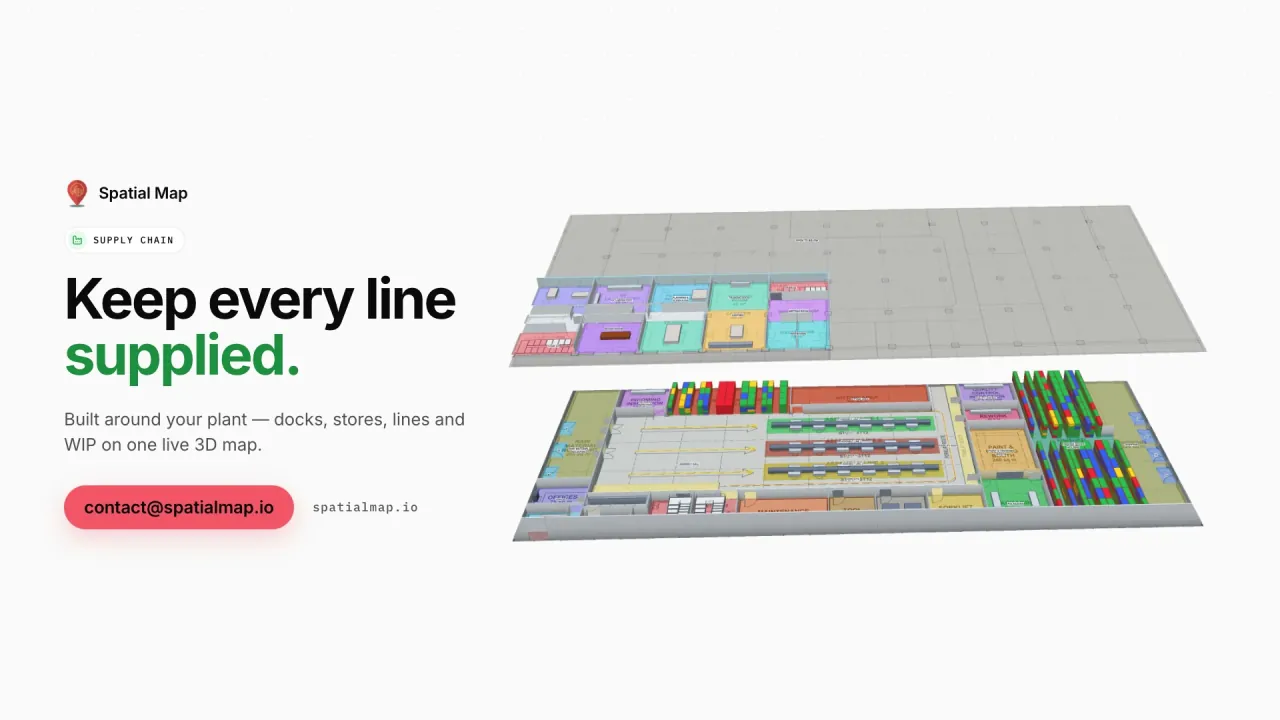
Raw materials, WIP carriers and finished goods from line to dock.

Forklifts and returnable carriers

Tagged equipment as live markers with row history.

See it on real demo facilities

Fictional names, real floor plans, live sensors, RFID, BLE tags and gateways — open any of them in the browser.

All 13 demo facilities

Questions from Bulgarian teams

Not yet. The app is available in English, German, French, Spanish, Arabic and Chinese, and each user picks their own language. Your own content — rack codes, room names, report titles — can be in Bulgarian Cyrillic and displays exactly as typed.

No. It has no link to terminal, port, customs or airline systems. It shows what your own WMS, readers and handhelds send it, so it complements those systems rather than replacing them.

Yes. Draw the quay, tracks, gates and storage areas as one facility, post each movement to a table and colour the areas from it. Spatial Map shows your own data; it is not a customs or port-community system.

Through REST polling, file uploads (CSV, Excel, JSON, GeoJSON) or the table write API: HTTPS, a bearer API key and bulk upserts, at 60 requests a minute per key. Spatial Map does not write back to the WMS.

No. Spatial Map is sold online and our team works with customers in Bulgaria remotely, by video call and through the contact form, in English. There are no local resellers or partners.

Neither. Pricing is the same worldwide and in US dollars: a 7-day free trial for up to 5 facilities with no card, then Pro at $60 a month or $600 a year for up to 4 facilities. Readers and tags, if you ask us to source them, are quoted per project.

Map your first Bulgarian warehouse this week.

Start the free trial in English, or send us a warehouse layout and a CSV export of your stock through the contact form.