Kampala · Namanve, Mukono, Port Bell and Entebbe

Inventory tracking in Kampala, from the corridor to the shelf

Spatial Map shows inventory where it physically is: racks coloured by stock status from your WMS or a nightly CSV, RFID pallets placed at the reader that last saw them, and the receiving docks and staging lanes in front of them. Inventory tracking in Kampala is about the inland stretch of the Northern Corridor: stock that has travelled from Mombasa by road or rail is received, split and sent on to shops, factories and customers in Uganda and its neighbours. Each warehouse is its own facility, and all of them can share one workspace.

No credit card. Runs in the browser. Pro is $60/month for up to 4 facilities. Book a demo

Crestline Fulfillment Center, a fulfillment center demo, in the Spatial Map 3D viewer with live device markers
Crestline Fulfillment Center
Crestline Fulfillment Center, a demo fulfillment center: 20 racks with 2,204 rack locations, pick-to-light, packing, staging lanes, forklifts and the trailer yard.
Rack locations in the Crestline demo
2,204
Racks in the Crestline demo
20
How often alert rules are checked, with alerts shown in the app
15 s
Free trial, up to 5 facilities, no card
7 days

Inland on the corridor, stock meets the shelf

The Northern Corridor authority lists six member states: Kenya, Uganda, Rwanda, Burundi, the Democratic Republic of the Congo and South Sudan, with the Port of Mombasa as the maritime gateway. Kampala sits well inland on that route, and a warehouse here often serves buyers in more than one of those countries. Uganda’s revenue authority lists a Single Customs Territory, transit cargo management and an electronic single window among its pages, which affect how cargo moves but not how a shelf is stocked.

Inside the warehouse the question is plain: which bin holds which product, and what is waiting for which customer. Import a CSV or Excel export from your stock system, colour racks by status, and add RFID portals at the dock doors where losses hurt most. The post on CSV bin inventory to a live rack map walks through the first day. Spatial Map does not connect to customs or corridor systems.


Namanve and Mukono: the eastern belt

The Kampala Industrial and Business Park at Namanve, developed by the Uganda Investment Authority, lies about 15 kilometres east of the city centre on the Kampala–Jinja highway and is meant for manufacturing, warehousing and distribution. Further east, Uganda Railways Corporation lists the Mukono inland container depot and commissioned a concrete-sleeper line between Kampala and Mukono on 21 December 2024.

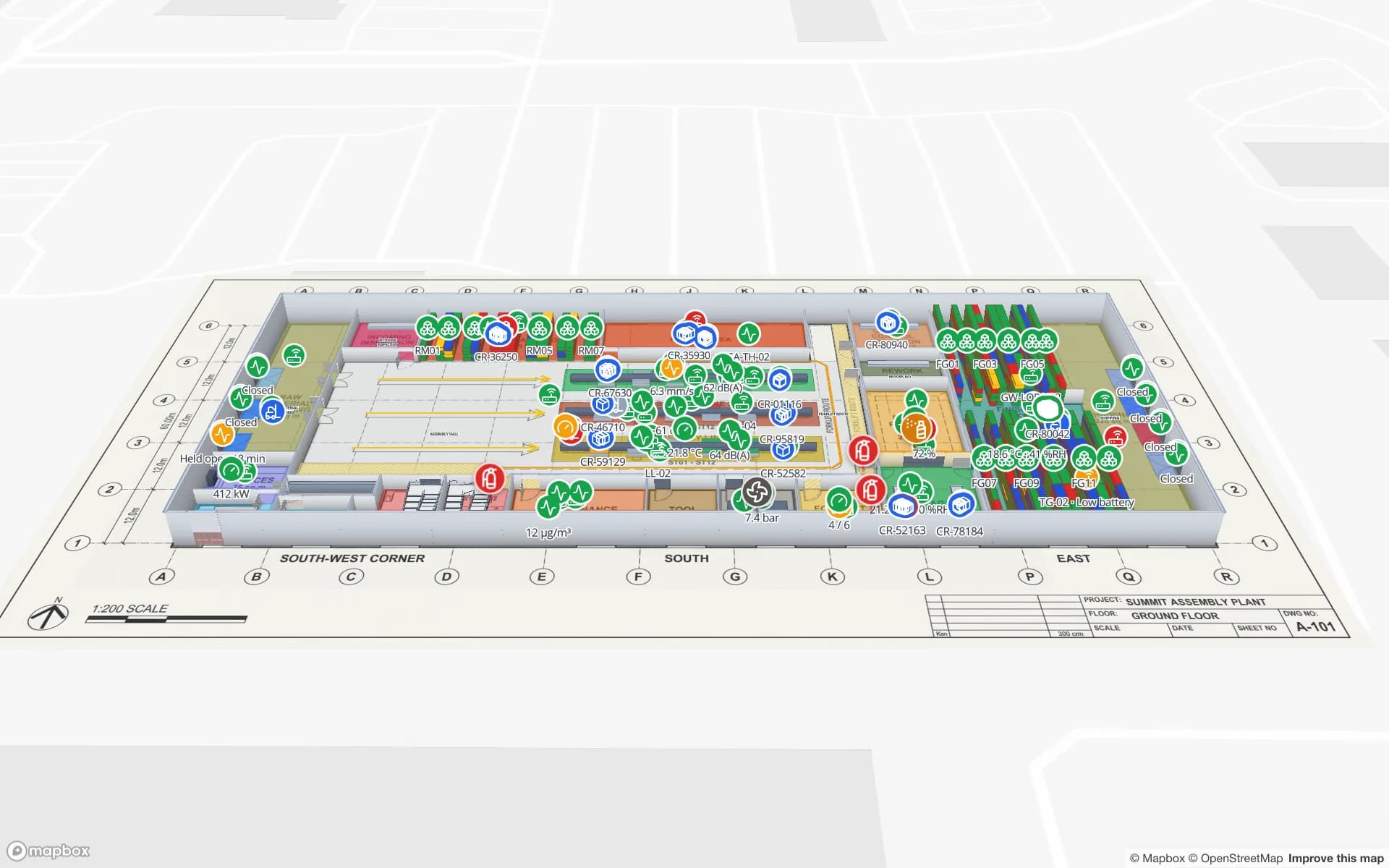
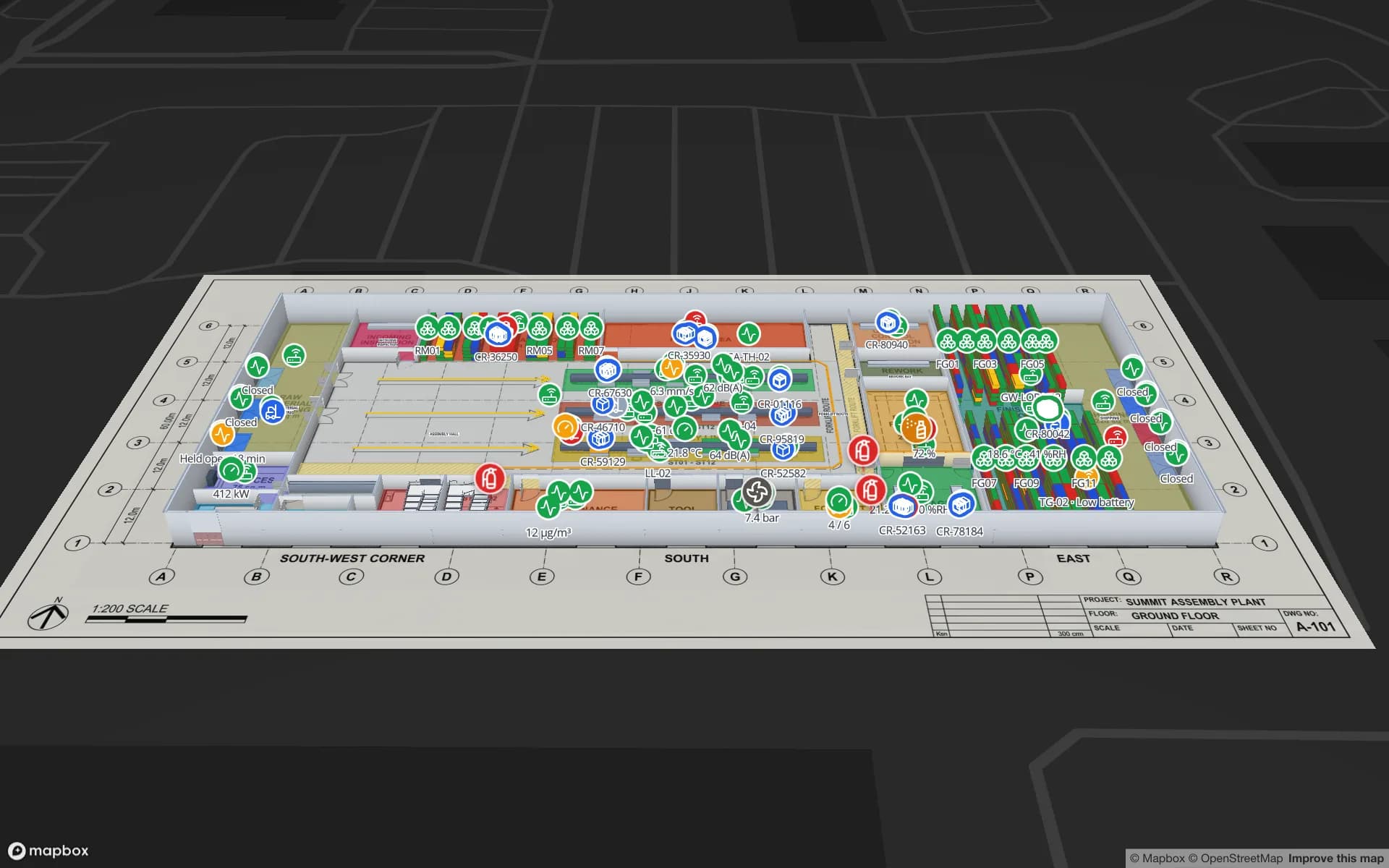
A factory in the park has two inventories: raw materials coming in and finished goods going out. Draw both on one plant map — receiving, the line, the finished-goods racks, the despatch dock — and the map shows what is staged for which truck. The Summit demo shows lines and 867 rack locations on one plant map. For stock held at a depot, numbered slots, a gate and a weighbridge are drawn the same way.

Port Bell, Luzira and the lake

Port Bell sits in Luzira, in Nakawa Division, about 11 kilometres south-east of the city centre; a branch of the Kampala–Jinja railway serves it, and its wharf handles lake traffic to Tanzania and Kenya. Uganda Railways Corporation lists the Portbell line and marine services among its operations. Sheds and stores around the lake take cargo that arrives by rail or water and leaves by truck.

In a transit shed, pallets for different consignees wait for different vehicles. Draw one lane per consignee, tag each pallet at receiving, and the map shows what is waiting for whom and for how long; an in-app alert rule can flag a pallet that has been in a lane for a set number of days. The post on yard visibility, dock doors and trailers walks through the pattern.

Entebbe cargo and the coffee stores

Entebbe International Airport is about 40 kilometres south-west of Kampala by an all-weather road, and its Cargo Terminal Building houses clearing and forwarding firms offering customs clearance, documentation, warehousing and packaging, with cargo handled 24 hours a day by the Civil Aviation Authority. Cut flowers and horticultural exports pass through it. Coffee, which the Uganda Coffee Development Authority says makes Uganda Africa’s leading coffee exporter, passes through stores and mills before it goes to market.

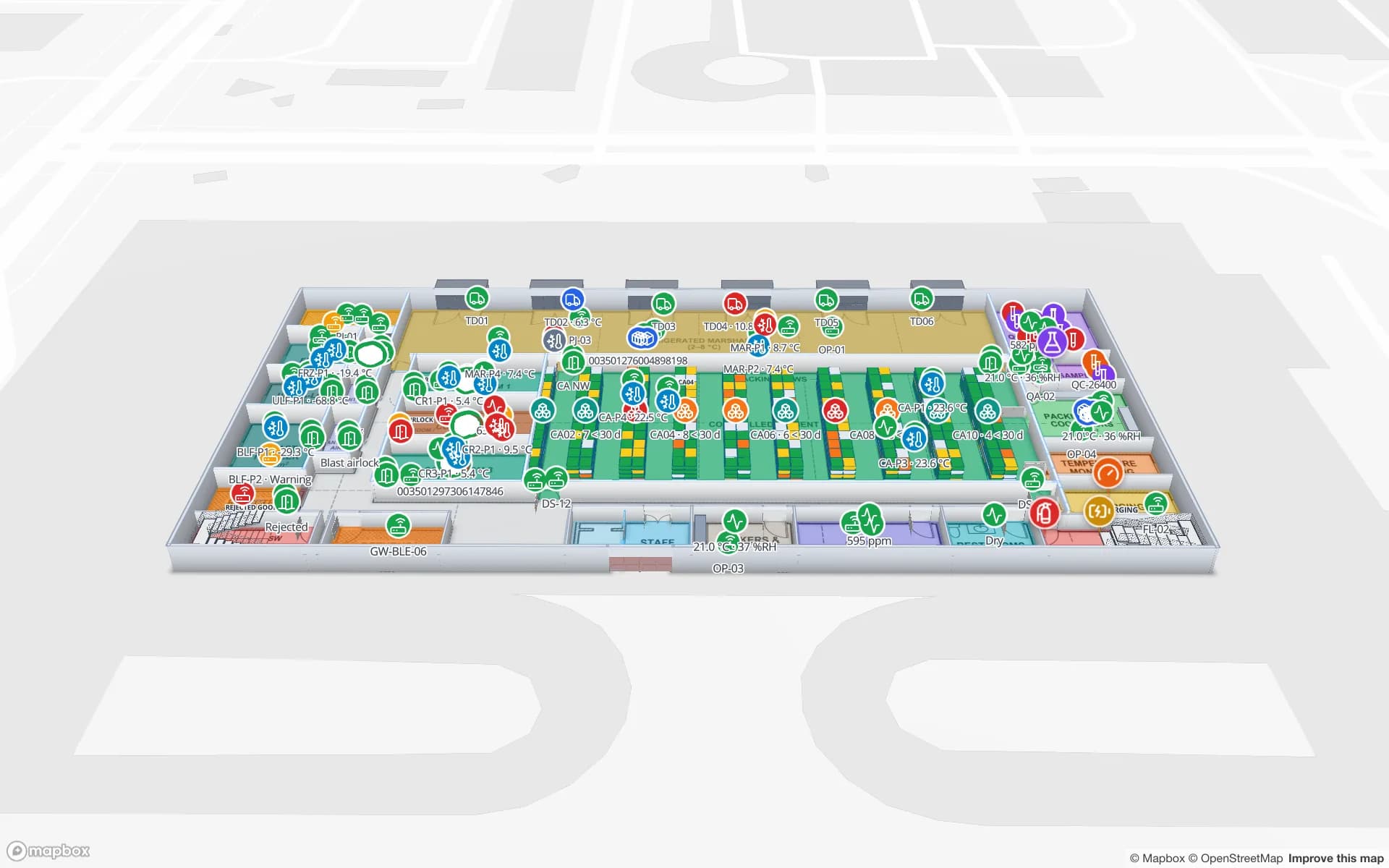
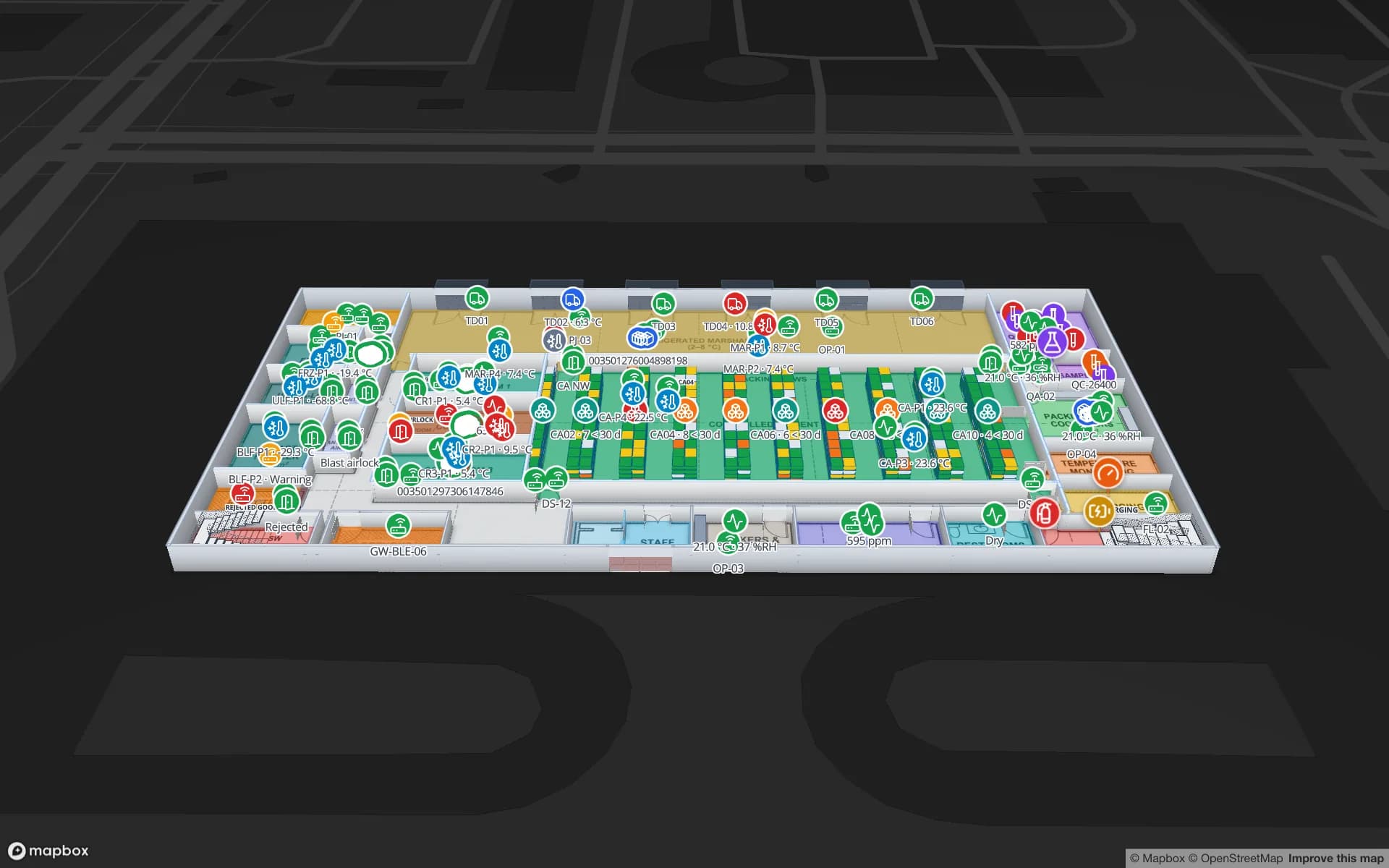
A store that holds coffee, flowers or produce is a cold-chain or condition problem. Map each room, post its sensor reading, and the plan shows which room drifts. The Polar Pharma demo shows temperature zones with 1,140 rack locations; the cold-chain solution shows the pattern.

Services for teams in Kampala

Kampala teams tend to begin at one of these points:

Also served nearby

The same page covers Entebbe, Mukono, Wakiso, Kira and Nansana around the capital. Jinja and the rest of Uganda are covered with the Uganda overview.

How Spatial Map does it

From the stock list to the shelf

  1. 01

    Pick one warehouse

    A distribution centre, a factory store or a transit shed — wherever a missing pallet costs a delivery.

  2. 02

    Map racks, lanes and docks

    Upload the plan, let AI Map draft the floor for review, and name racks and bins the way your stock system does.

  3. 03

    Connect stock and reads

    A nightly CSV or Excel export, your WMS through the table write API, or RFID middleware posting rows.

  4. 04

    Add stock and silence rules

    In-app alerts for low stock by bin, pallets waiting too long and readers that stopped reporting.

What Kampala teams track

Distribution centres

Rack-level stock by bin, staging lanes and the trailer yard.

Transit and import sheds

Lanes per consignee, pallets waiting for trucks, days in the shed.

Factory stores in the park

Raw materials in, finished goods out, staged by truck.

Cold rooms for flowers and produce

Cold rooms by live temperature, with alerts when one drifts.

See it on real demo facilities

Fictional names, real floor plans, live sensors, RFID, BLE tags and gateways — open any of them in the browser.

All 13 demo facilities

Inventory tracking in Kampala — questions we get

No. Your stock system or WMS stays the record. Spatial Map shows its rows on the map: racks coloured by status, pallets at the dock that last read them, and in-app alerts when rules match.

No. It shows what happens inside your own building, from your own stock list, RFID reads and sensors, so it complements customs and corridor systems rather than replacing them.

Yes. Upload the sheet as a table, map the racks, and colour them by quantity or status. RFID can follow where it pays back first, and our team can source readers and tags on request, quoted per project.

Yes. They can push rows to a table through the write API — HTTPS, a bearer API key, bulk upsert, 60 requests per minute per key — or expose a REST endpoint that Spatial Map polls. CSV and Excel uploads work too.

No. Spatial Map is sold online and our team works with customers in Uganda remotely, by video call and through the contact form. There are no local resellers or partners.

In US dollars, the same worldwide: a 7-day free trial for up to 5 facilities with no card, then Pro at $60 a month or $600 a year for up to 4 facilities. RFID hardware, if you ask us to source it, is quoted per project and is not part of the subscription.

Map one Kampala warehouse before the next delivery.

Start the free trial and open the Crestline demo, or send us the plan of a warehouse and a sample of your stock list through the contact form.