Zaragoza · PLAZA, the airport, the inland sea terminal

Inventory tracking in Zaragoza, for warehouses that store for several clients

Spatial Map is browser-based software that shows stock by rack, bin and client on a live 3D map of each warehouse. Inventory tracking in Zaragoza is mostly a contract-logistics problem: the city sits between Madrid, Barcelona, Valencia and Bilbao, and a large share of its warehouse space is run by logistics providers who store and ship for many clients at once. Each building becomes a facility, each client a table, and the app speaks Spanish for the floor and English for the head office.

No credit card. Runs in the browser. Pro is $60/month for up to 4 facilities. Book a demo

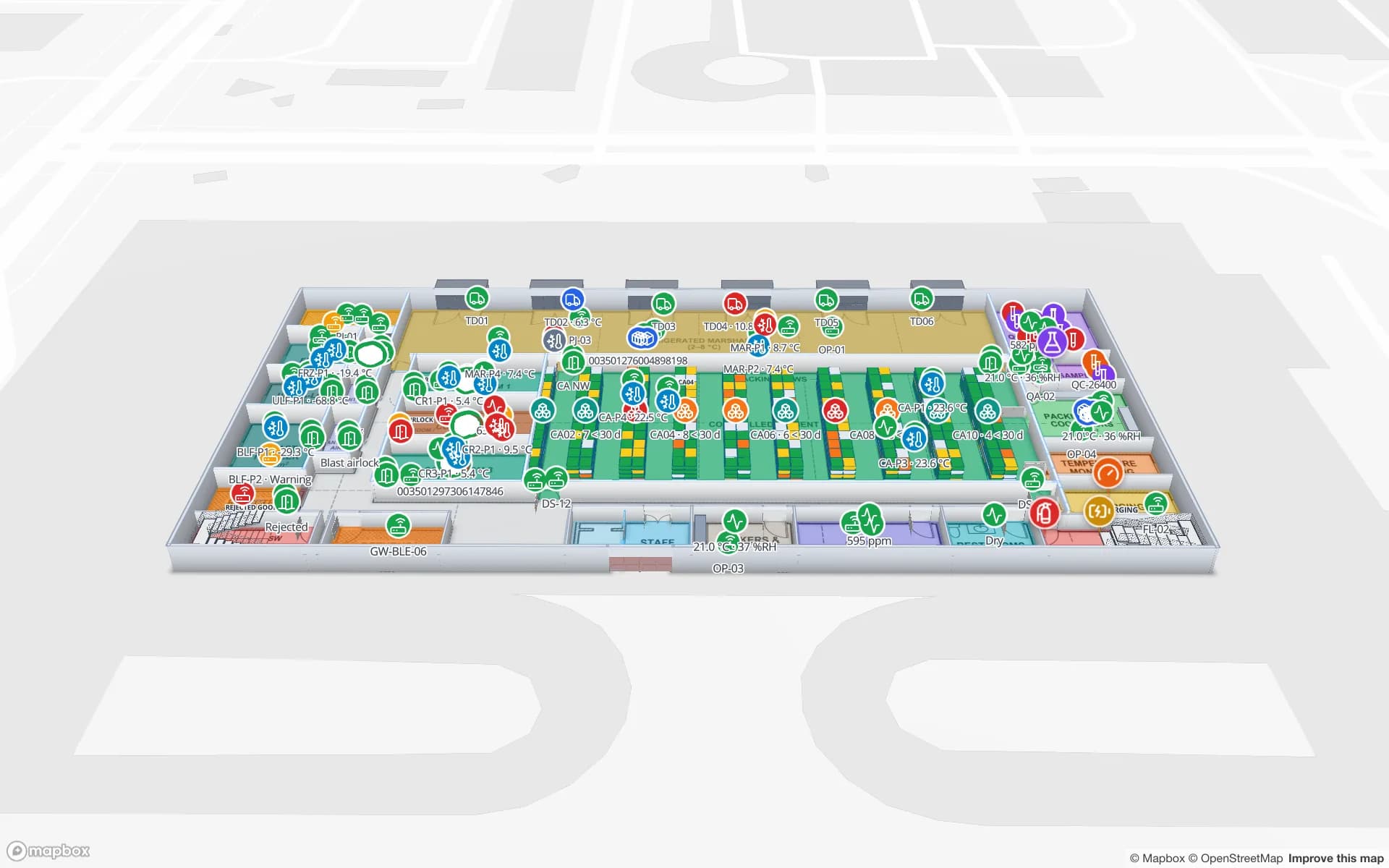
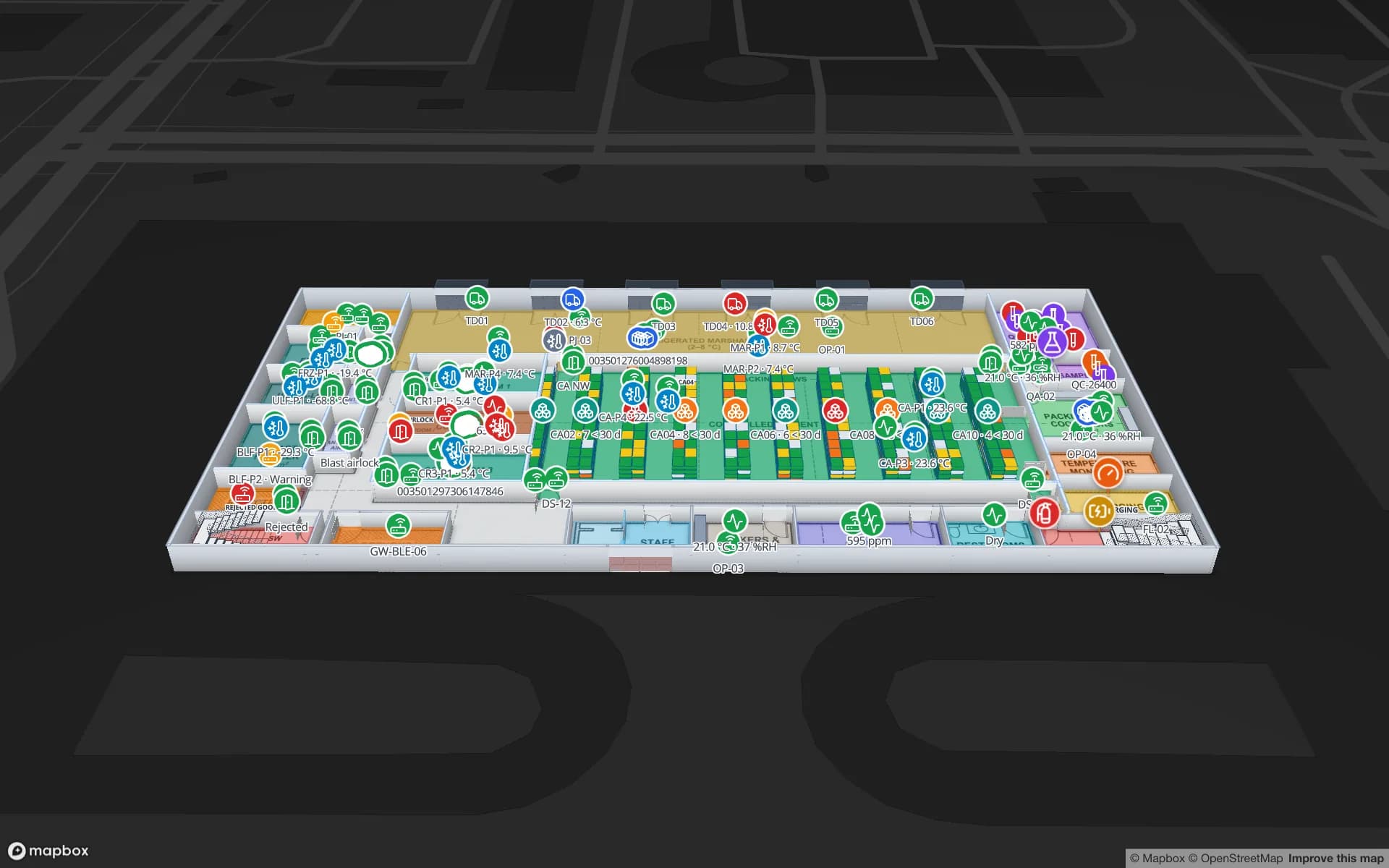
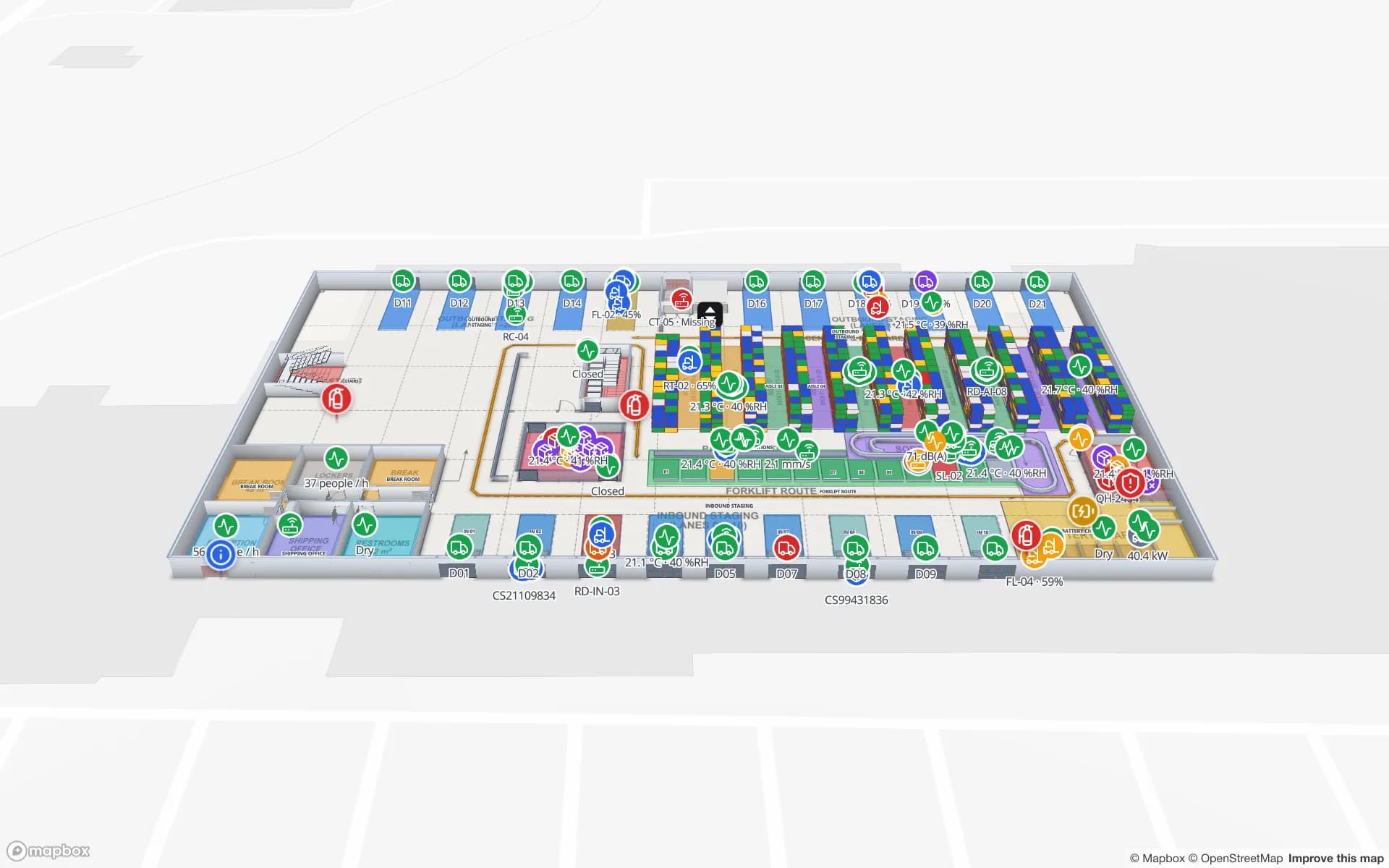
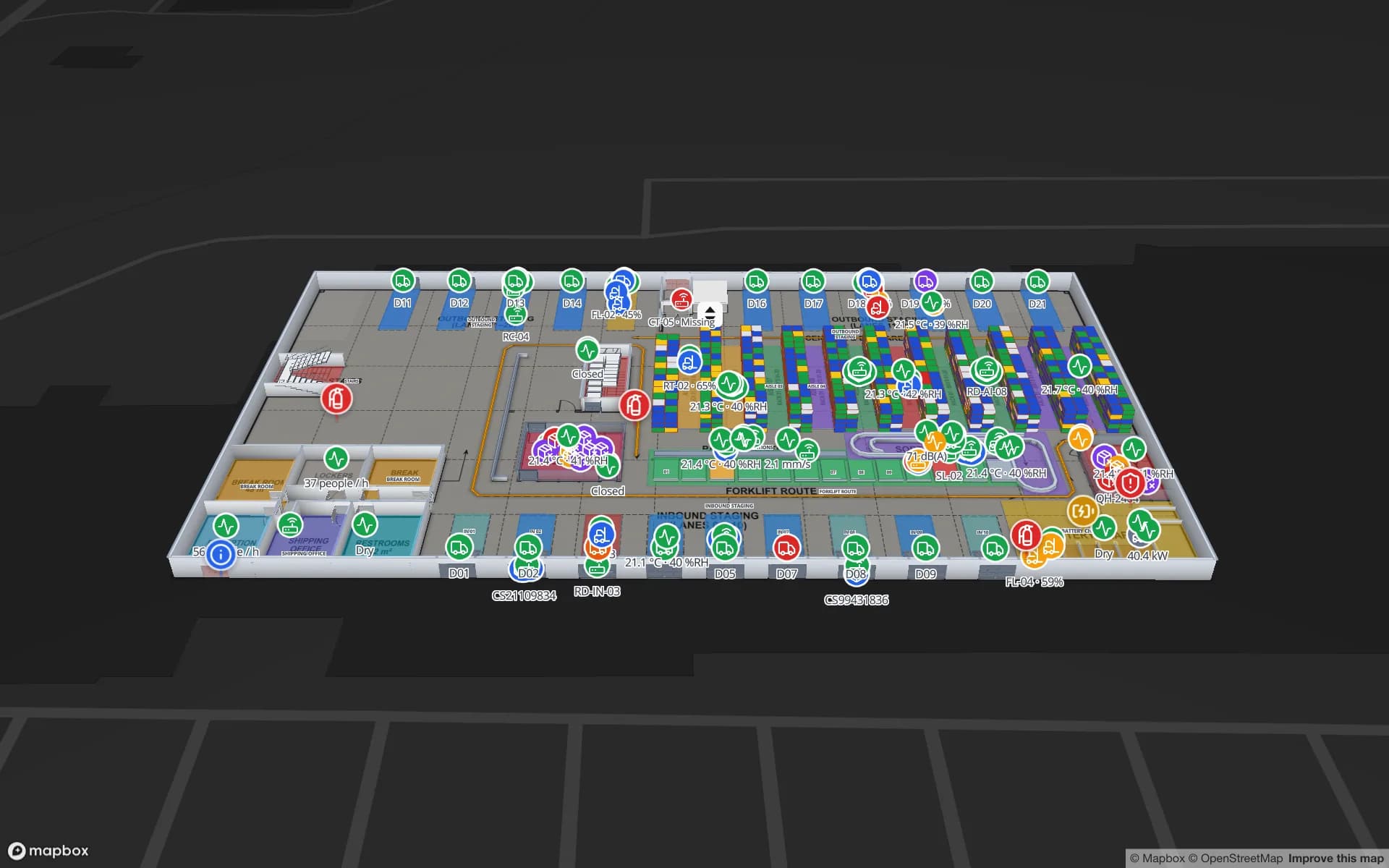
Crestline Fulfillment Center, a fulfillment center demo, in the Spatial Map 3D viewer with live device markers
Crestline Fulfillment Center
Crestline Fulfillment Center, a demo fulfillment center: 2,204 rack locations, pick-to-light, packing, staging lanes, forklifts and the trailer yard.
Rack locations in the Crestline fulfilment demo
2,204
Racks drawn in the Crestline demo
20
Spanish interface, alongside English, French, German, Arabic and Chinese
Español
Free trial, up to 5 facilities, no card
7 days

PLAZA: a platform measured in square kilometres

The Aragon government’s logistics site gives the Zaragoza Logistics Platform, PLAZA, an area of 13,117,977 square metres, calls it the largest in Europe, and places it about 10 km south-east of Zaragoza, at “kilometre 0” from the city airport. Its rail terminal is part of Adif’s basic network of logistics facilities. The “largest” claim is the promoter’s own, and counts of companies on the platform vary between outlets, so we quote only the area.

On 30 August 2024 the regional minister said PLAZA was very close to full, that talks were advancing to add almost 3 million square metres and that a new northern access bridge to the A-2 would be completed in 2027. A platform that full is an environment where every square metre of a rented shed is paid for, and where a provider’s margin depends on how well it fills racks and how quickly it turns them. Inventory accuracy is the product.


Stock by client, bin and lot

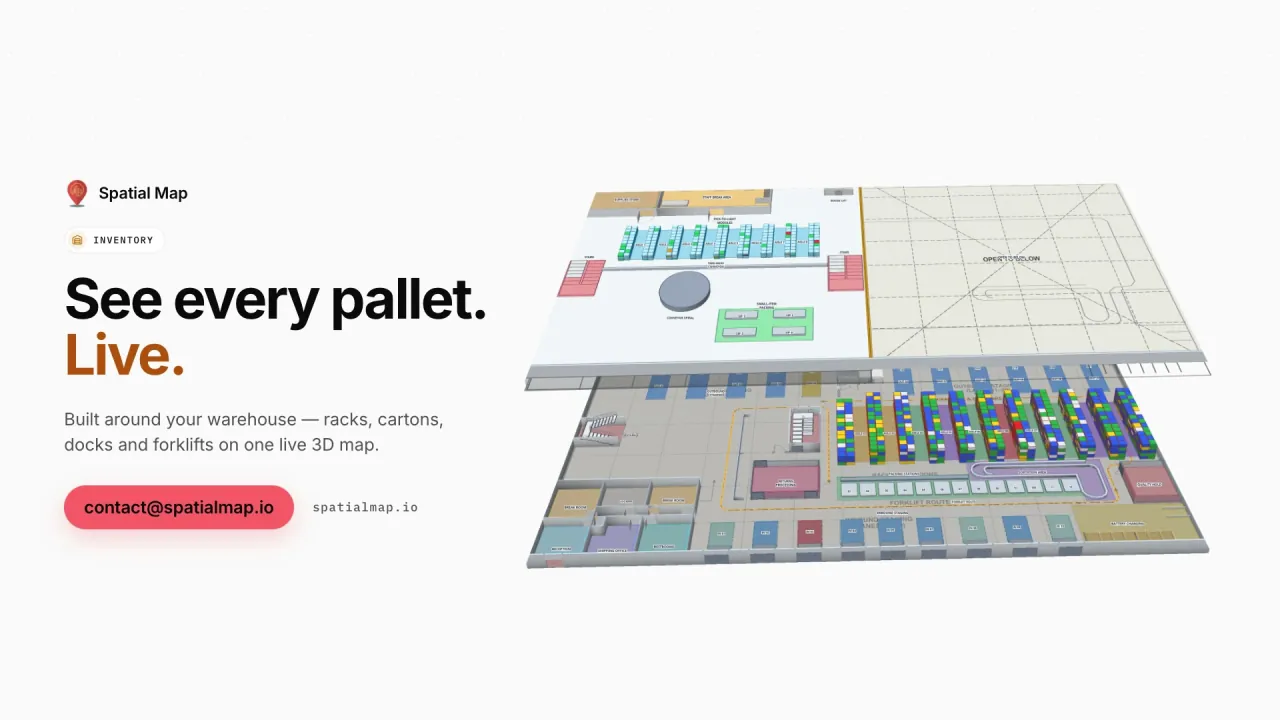
A shared warehouse holds the same aisle for several clients, and the reports that matter are per client: stock on hand, stock by location, goods received and shipped, and what is blocked or on hold. Draw the racks with their locations, keep each client’s stock in its own table (client, SKU, lot, bin, quantity, status), and style rules colour each location by status. The stock-by-bin guide walks through the grid, and the post on turning a CSV of bins into a live rack map shows a first version built from an export in an afternoon.

Where a client wants to see their own goods, a read-only share link opens only the floors and layers you choose, with an expiry date and a view cap. A public read-only report link can carry the weekly stock summary, and reports export to PDF, Excel, CSV or JSON. The Crestline demo shows 20 racks and 2,204 locations coloured from the rack inventory, with staging lanes and the trailer yard.

Between the ports: the inland sea terminal

Zaragoza has its own inland port. The Terminal Marítima de Zaragoza, tmZ, sits inside the Mercazaragoza market complex and was created in 2001 by the Port of Barcelona and Mercazaragoza. A dedicated rail link joins it to the Port of Barcelona, and it has road access to the AP-68 towards Bilbao and the A-2 between Madrid and Barcelona. Reported weekly rail frequencies differ between sources and between years, so we give none.

For a shed near an inland terminal, the working question is the cut-off: which boxes are unpacked, which pallets are staged and which are still waiting for a missing document. RFID at dock doors answers part of it; your WMS answers the rest. Spatial Map puts both on one plan, and the RFID inventory management page explains how reads become stock movements. It does not connect to port, rail or customs systems.

The airport and the cargo that arrives by air

Zaragoza airport handled 182,886 tonnes of cargo in 2025, 0.8 % more than in 2024, according to Aena’s press release on the year. Air cargo is the small, urgent end of a logistics platform: high-value, time-critical consignments that are built up, held briefly and moved to a truck or a customer within hours.

A consignment that stays in the building for hours needs a different view from a pallet that sits for weeks. Put a build-up area, a staging lane and a few doors on their own floor of the plan, tag the cages or pallets, and read them at each door. A count-versus-threshold alert rule raises an in-app alert when the staging area holds more than you want before a departure.

Beyond Zaragoza: a network of Aragon platforms

PLAZA is the largest of several public logistics platforms in Aragon; the regional government also lists platforms in Huesca, Teruel and Fraga and has said it wants to catalogue available land for investors. A provider with sites in more than one of them has the same problem as one with sites in more than one country: each building has its own plan and its own people, but the client wants one view.

One workspace holds the buildings as separate facilities, each duplicated from a template layout where the design repeats. Roles and share links apply per facility, and a table can be filtered to a client or a site. The map opens in a browser at any of them, with no software to install.

Services for teams in Zaragoza

Where Zaragoza teams usually start depends on the contract:

  • Contract-logistics providers start with inventory tracking, because stock accuracy by client and location is what the contract is measured on.
  • Teams with high-value or fast-moving goods add RFID at dock doors and RFID stock counting, which turns a day-long count into a walk with a handheld.
  • Asset tracking follows for pallet containers, roll cages and forklifts; RTLS and UWB matters mainly in large sheds where people and trucks must be located continuously.
  • If you have no readers or tags yet, our team can source devices on request, quoted per project, with warranty and device support from the manufacturer: see hardware and demo kits on request.
  • Where a connector or a handheld app is missing, our team builds custom software such as POS or booking systems and WMS integrations as client projects. The product runs as cloud or on-premises.

Also served nearby

The same page covers Figueruelas, Pedrola and Alagón along the Ebro axis, Villanueva de Gállego and Utebo around the city, Cuarte de Huerva to the south and the Malpica and Cogullada industrial estates. Nothing needs to be installed at any of them: the map opens in a browser.

How Spatial Map does it

From a client export to a live rack map

  1. 01

    Take one client’s stock

    A CSV or Excel export from your WMS: SKU, lot, bin, quantity, status.

  2. 02

    Draw the racks

    Upload the plan, draw racks with their location codes, or let AI Map draft them for a person to review.

  3. 03

    Connect the WMS

    Your developers post rows through the table write API, or Spatial Map polls a REST endpoint; a CSV upload is enough to begin.

  4. 04

    Share and alert

    Read-only links per client, in-app alerts for blocked locations and stock waiting too long in staging.

What Zaragoza teams track

Shared warehouses by client

Rack locations coloured by stock status, with a table per client.

Cross-docking and yard turns

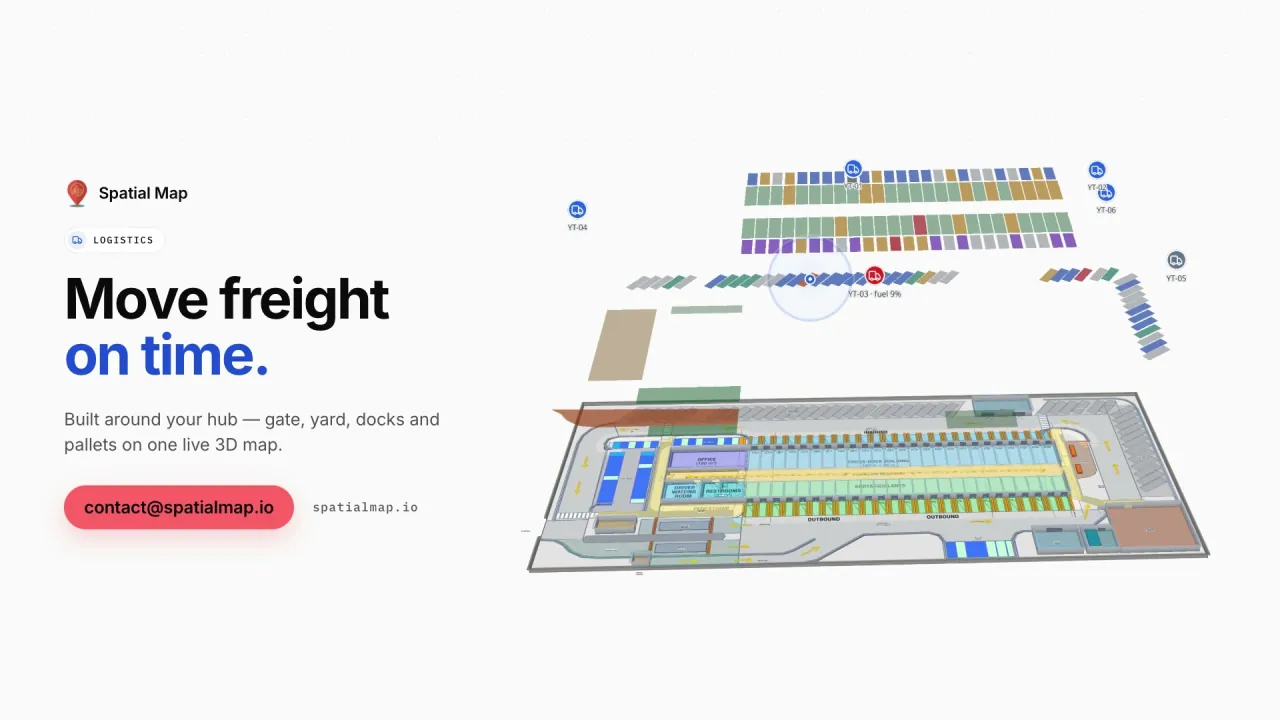
Dock doors, yard slots and pallets staged for the right trailer.

Chilled and food distribution

Cold rooms and reefer docks coloured by live temperature.

Plant stores and line-side stock

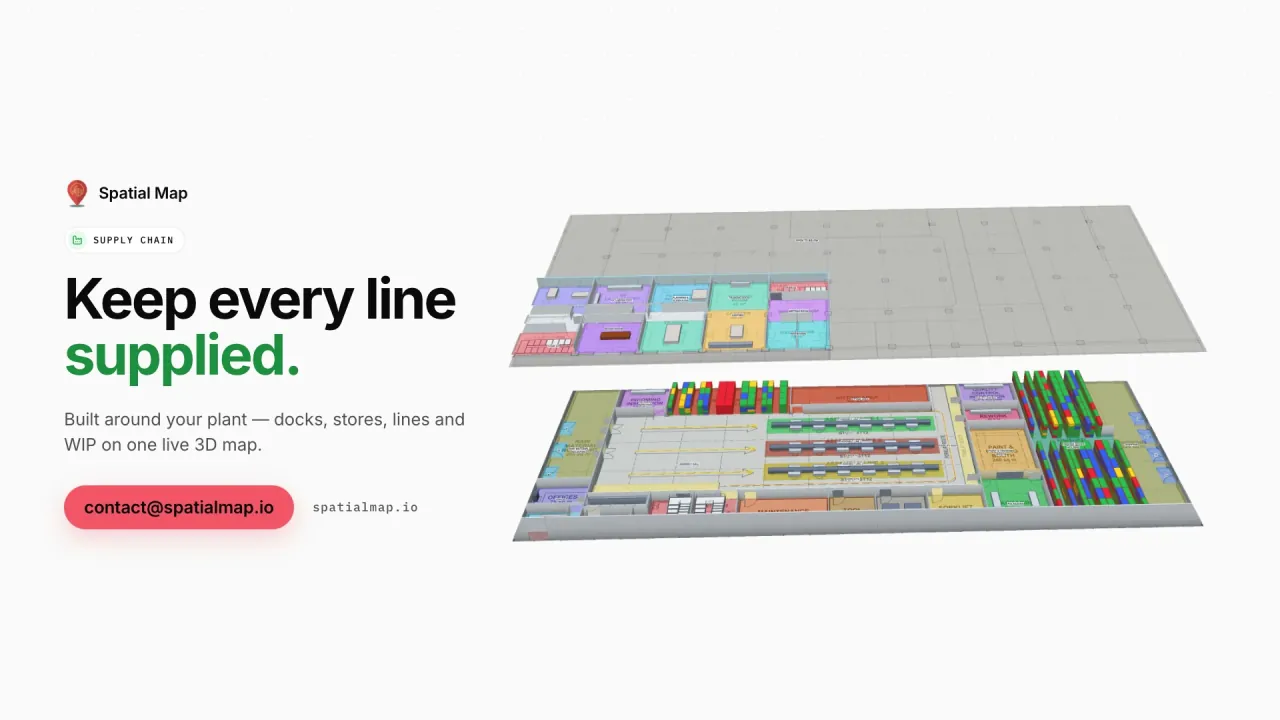
Raw material and finished-goods racks beside the lines they feed.

See it on real demo facilities

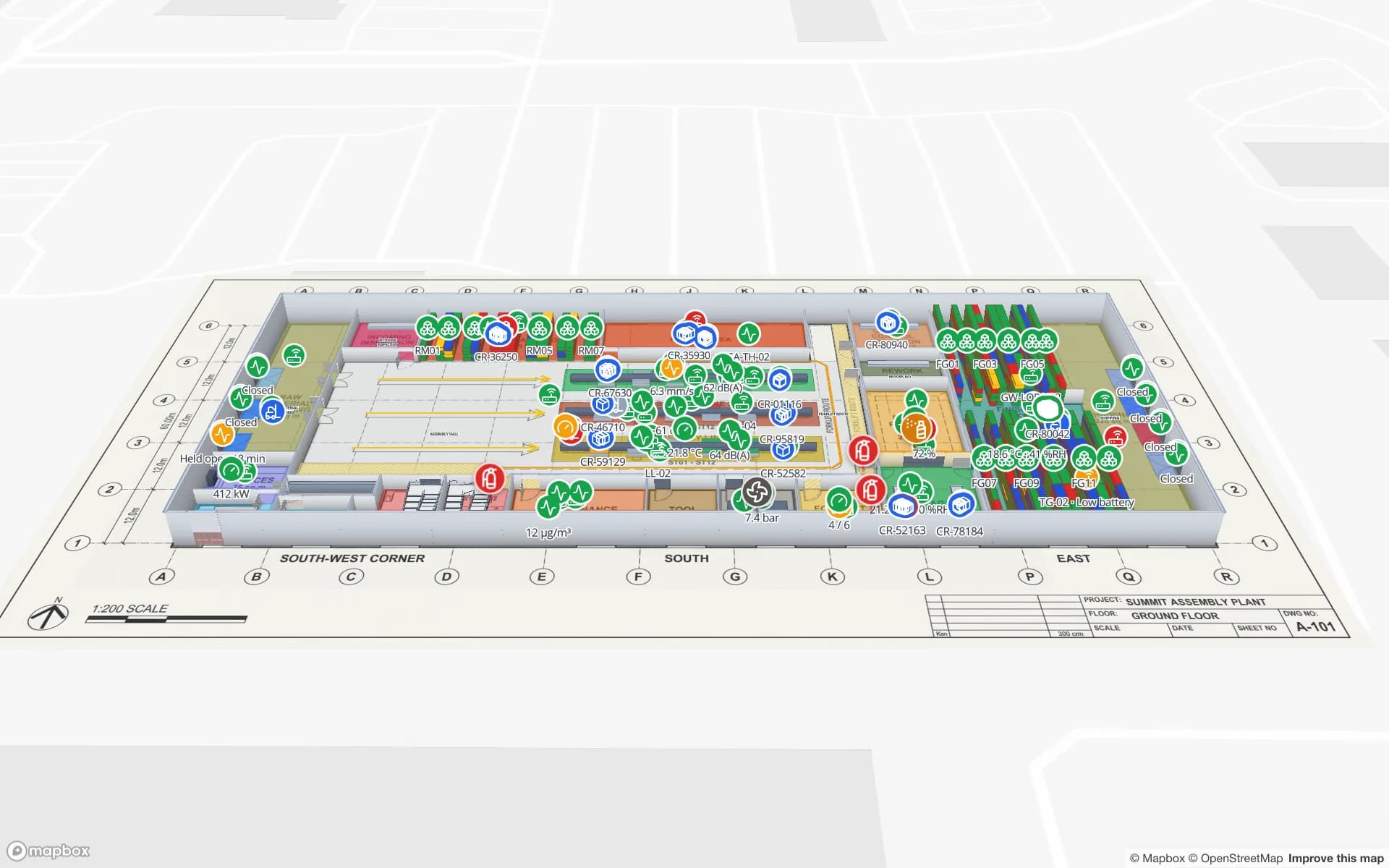
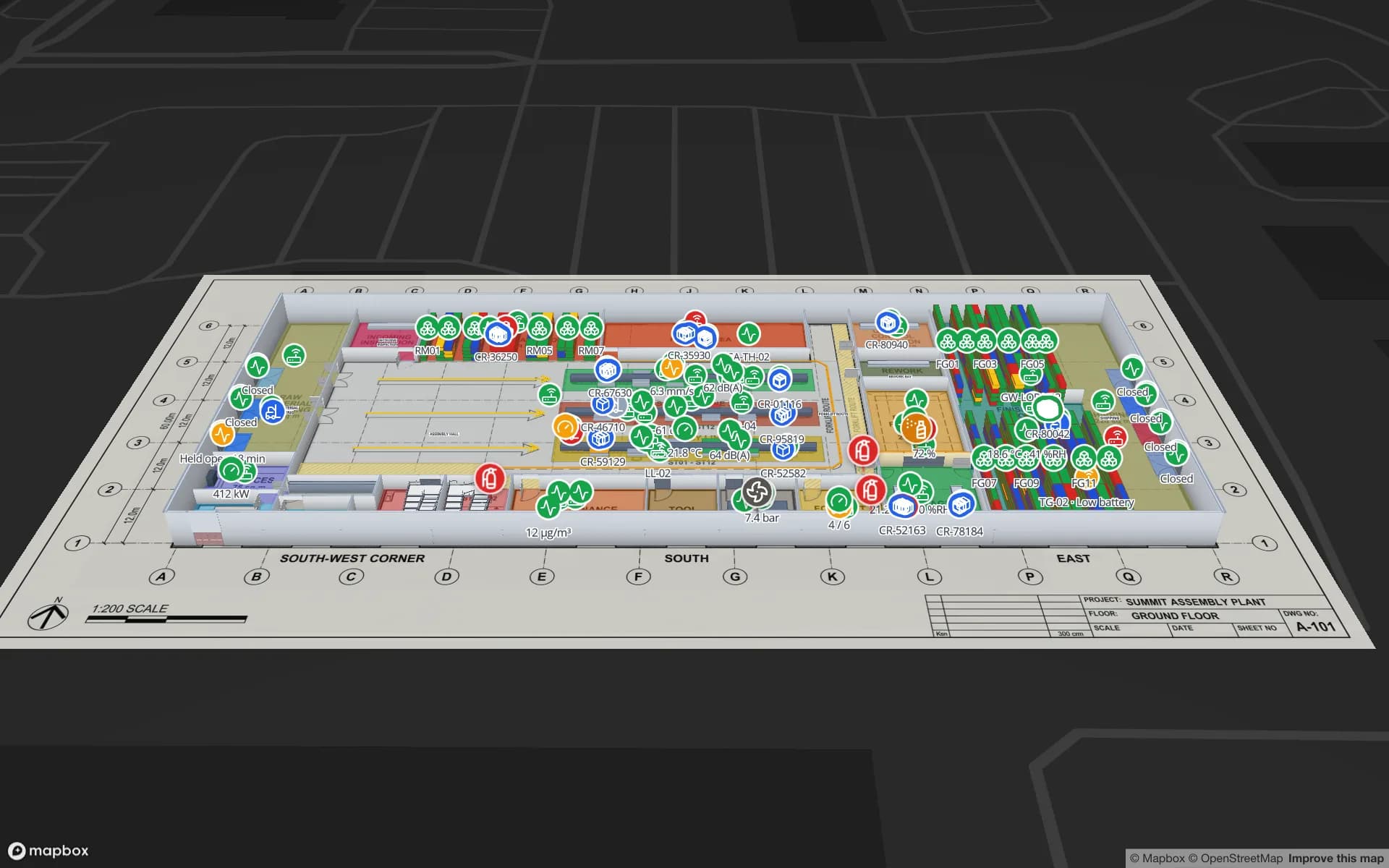
Fictional names, real floor plans, live sensors, RFID, BLE tags and gateways — open any of them in the browser.

All 13 demo facilities

Inventory tracking in Zaragoza — questions we get

Yes. Keep each client’s stock in its own table and send a read-only share link that opens only the floors and layers you choose, with an expiry date and a view cap. Roles control who inside your team can change what.

No. Your WMS stays the system of record. Spatial Map shows its stock on the plan of the building, with RFID reads and sensors beside it, and it writes nothing back to the WMS or ERP.

Yes. Upload a CSV or Excel export of SKU, lot, bin and quantity and map the columns to rack locations. The stock-by-bin guide shows how, and your developers can later automate it through the write API.

No. It has no link to port, rail, customs or airport systems. It shows the data your own systems post through the write API, a polled REST endpoint or a CSV or Excel upload.

Yes. Spanish is available alongside English, French, German, Arabic and Chinese, and each user picks their own language. Client names, bin codes and report titles stay exactly as you write them.

No. Spatial Map is sold online and our team works with customers in Spain remotely, by video call and through the contact form, in Spanish or English. There are no local resellers or partners.

In US dollars, the same worldwide: a 7-day free trial for up to 5 facilities with no card, then Pro at $60 a month or $600 a year for up to 4 facilities. Larger estates are quoted as custom services; RFID hardware is quoted per project.

Map one client’s racks before the next audit.

Start the free trial in Spanish or English and open the Crestline demo, or send us a plan of a warehouse and a CSV of one client’s stock through the contact form.