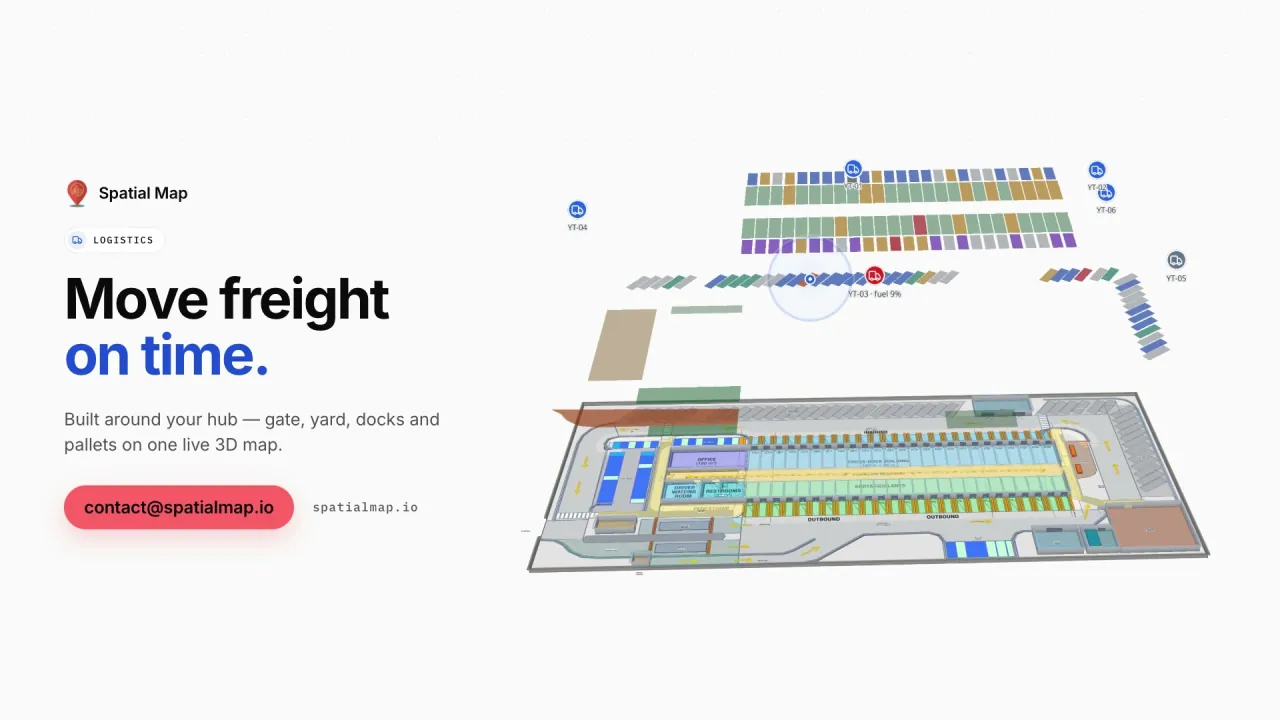
Barcelona · Port, Zona Franca, retail and fulfilment

RFID tracking in Barcelona, from the Zona Franca dock to the shop floor

Spatial Map puts RFID reads on a live 3D map of the building where they happen, so a tag at a dock door becomes a pallet in a lane, a garment on a shop floor or a returned parcel in a sorting bay. RFID tracking in Barcelona runs along one chain: containers arrive at the port, move through the logistics platform and the Zona Franca estate beside it, and leave as cartons for stores and customers. Your readers and middleware do the reading; Spatial Map shows each read in place, in Spanish or English.

No credit card. Runs in the browser. Pro is $60/month for up to 4 facilities. Book a demo

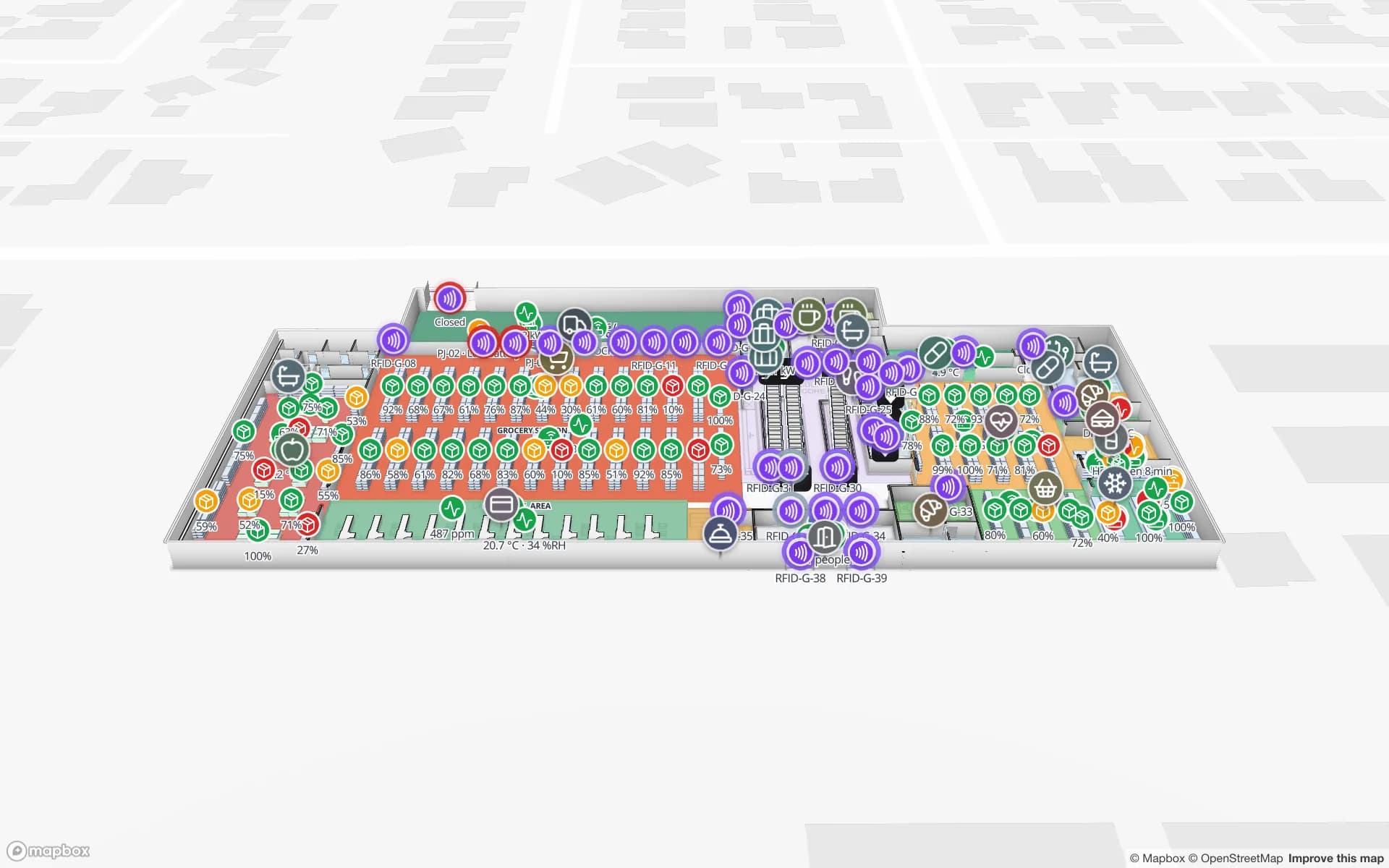
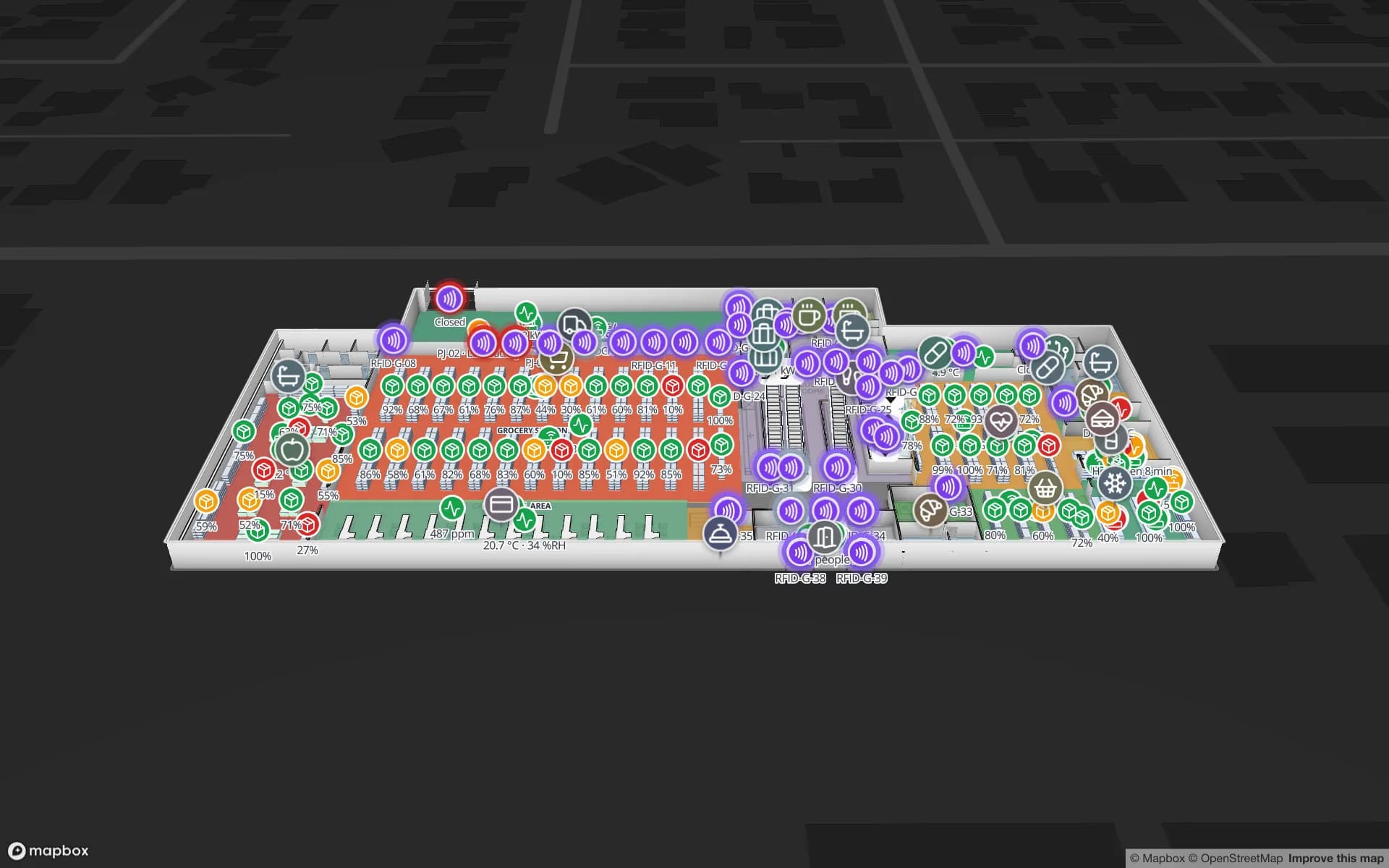
Retail Mart Store, a three-floor retail store demo, in the Spatial Map 3D viewer with live device markers
Retail Mart Store
Retail Mart, a three-floor demo store: 85 RFID readers at doors, escalators and lifts, shelf and department stock, and fridge and freezer temperatures.
RFID readers in the Retail Mart demo store
85
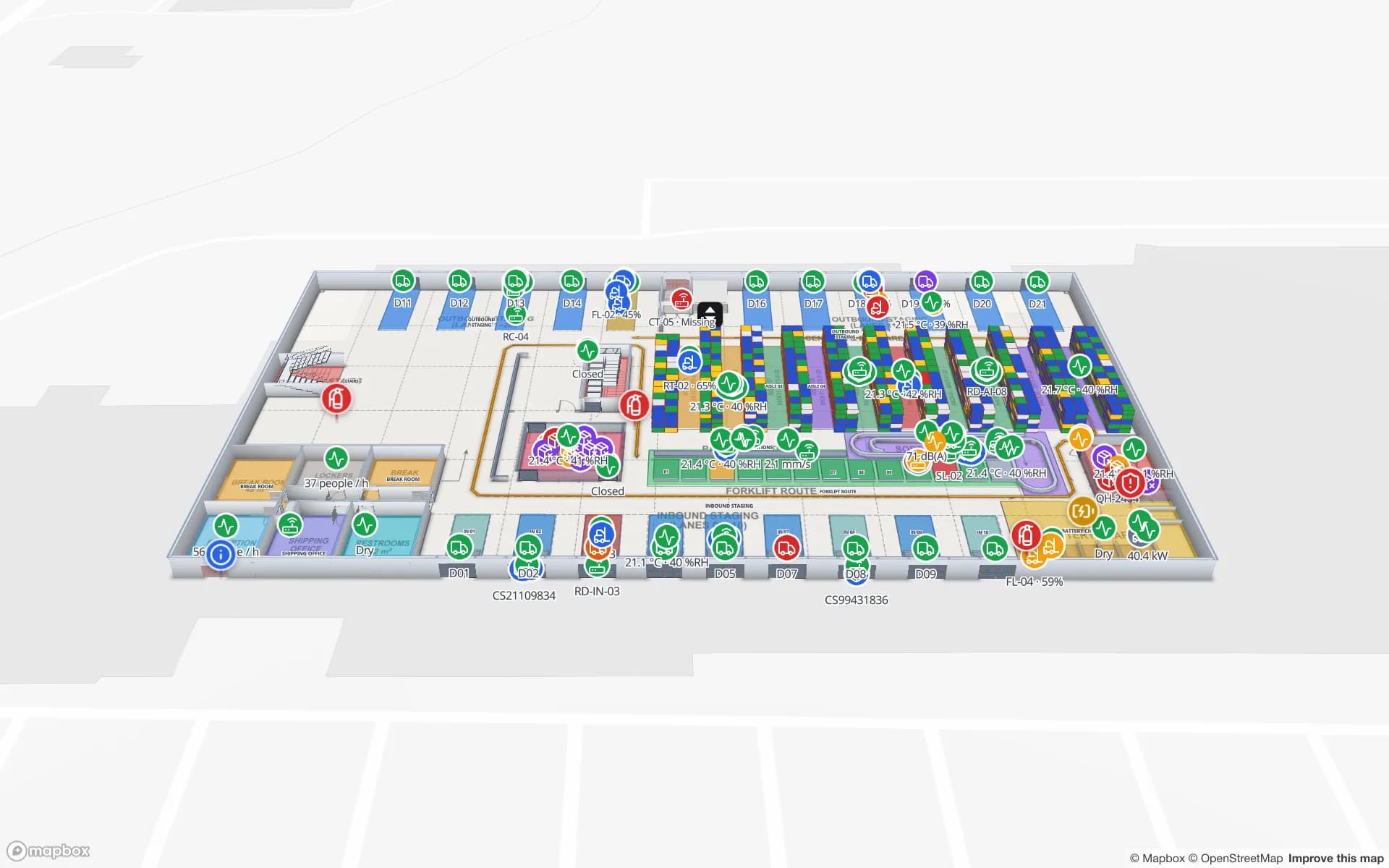
Rack locations in the Crestline fulfilment demo
2,204
Spanish interface, alongside English, German, French, Arabic and Chinese
Español
Free trial, up to 5 facilities, no card
7 days

The port and its logistics platform

The Port of Barcelona describes the ZAL Port as its intermodal logistics platform, aimed at bringing in maritime traffic and adding value to cargo, with more than 100 companies on site; the port itself has two large container terminals. Between a container arriving and a pallet leaving, the warehouse in the ZAL does the work that adds value: stripping, labelling, kitting, repacking and returns. Hectare figures for the ZAL differ between port documents, so none is quoted here.

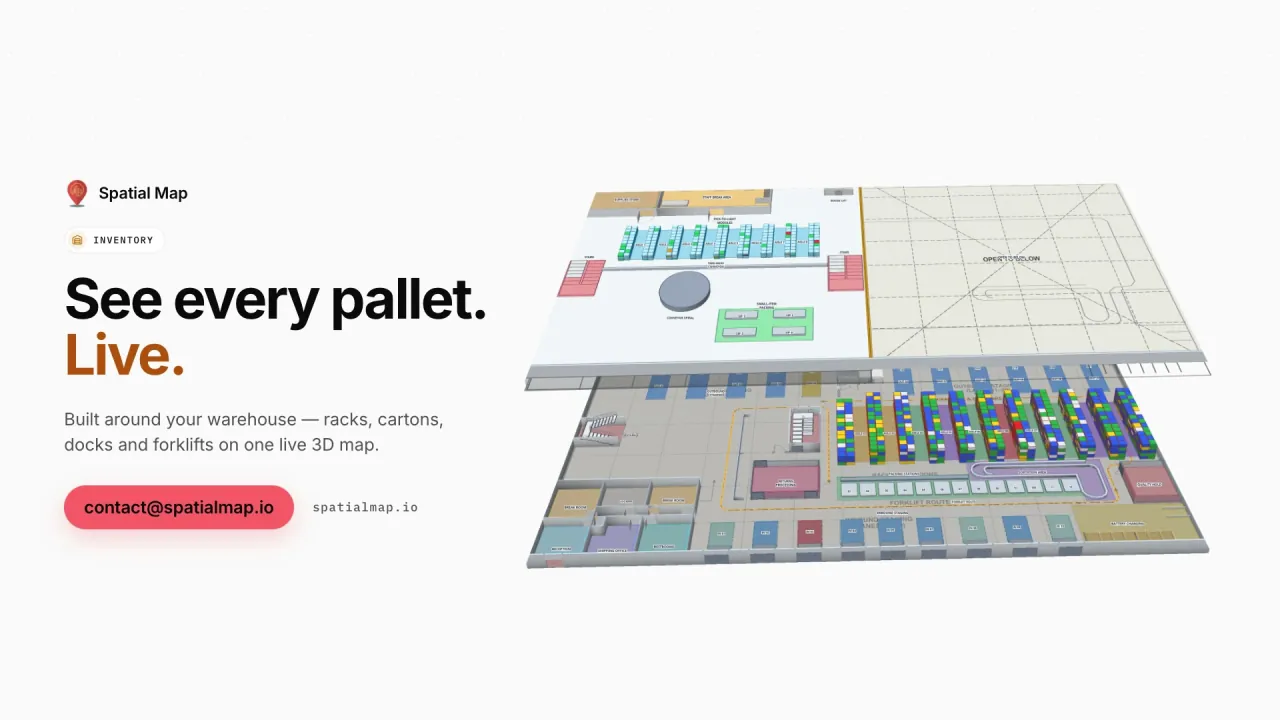
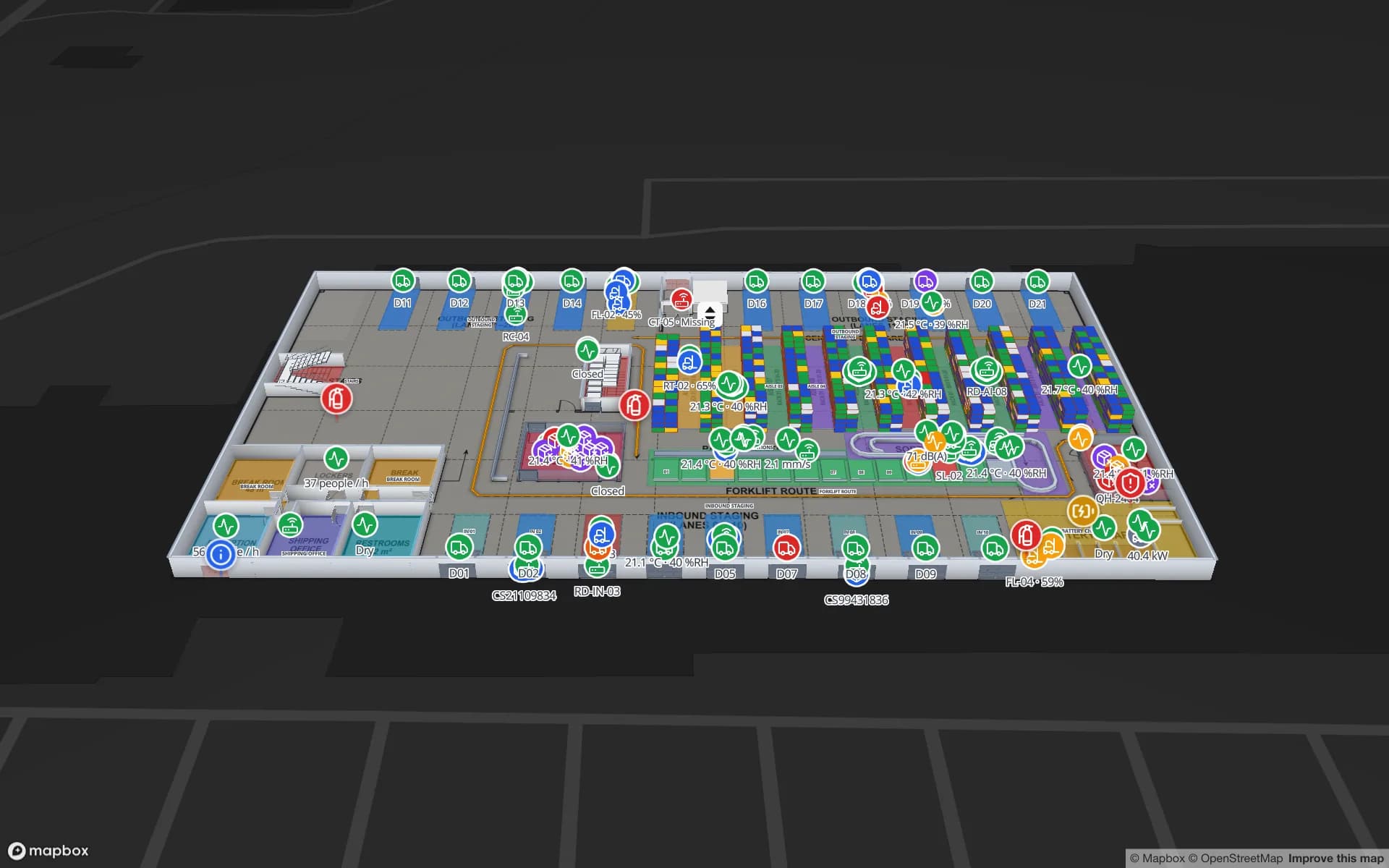
That value-adding work is where RFID helps most. A tag applied or encoded at the packing point follows the carton through the shed to the door, and the map shows which cartons of an order are staged and which are still on the floor. The Crestline demo shows 2,204 rack locations with staging lanes and packing output; the RFID gates page explains how a row of readers at a door becomes a gate. Spatial Map does not connect to the port community system or to customs.
The Zona Franca: an estate older than the port’s containers

The Consorci de la Zona Franca de Barcelona was constituted in November 1916 and today manages the Zona Franca industrial estate and its customs zone; Barcelona’s history museum describes the estate as about 600 hectares of industrial and, now, logistics land on the left bank of the Llobregat. The Consorci also runs DFactory Barcelona, its urban-industry district, and the L9 Sud metro line now serves the northern part of the estate.

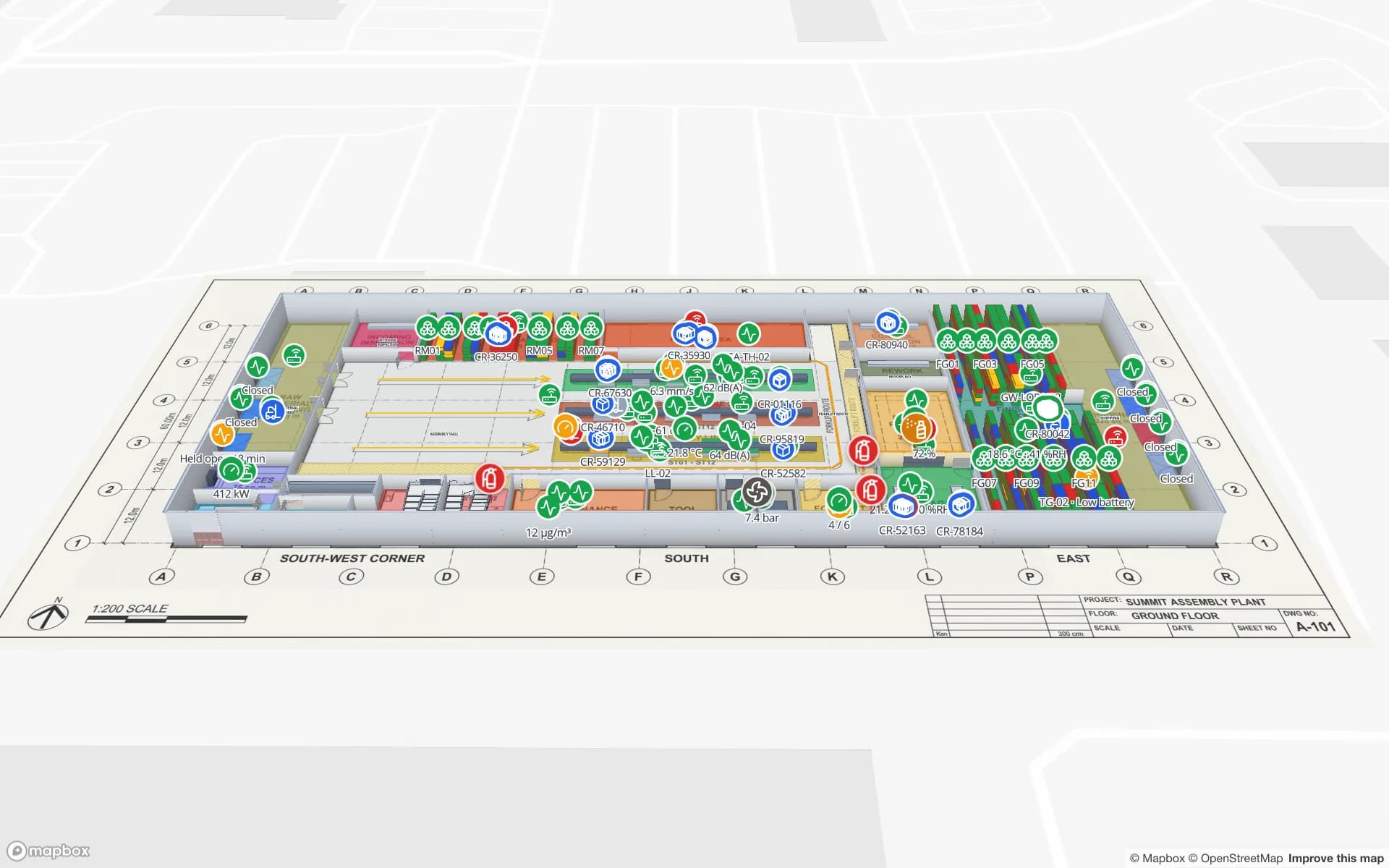
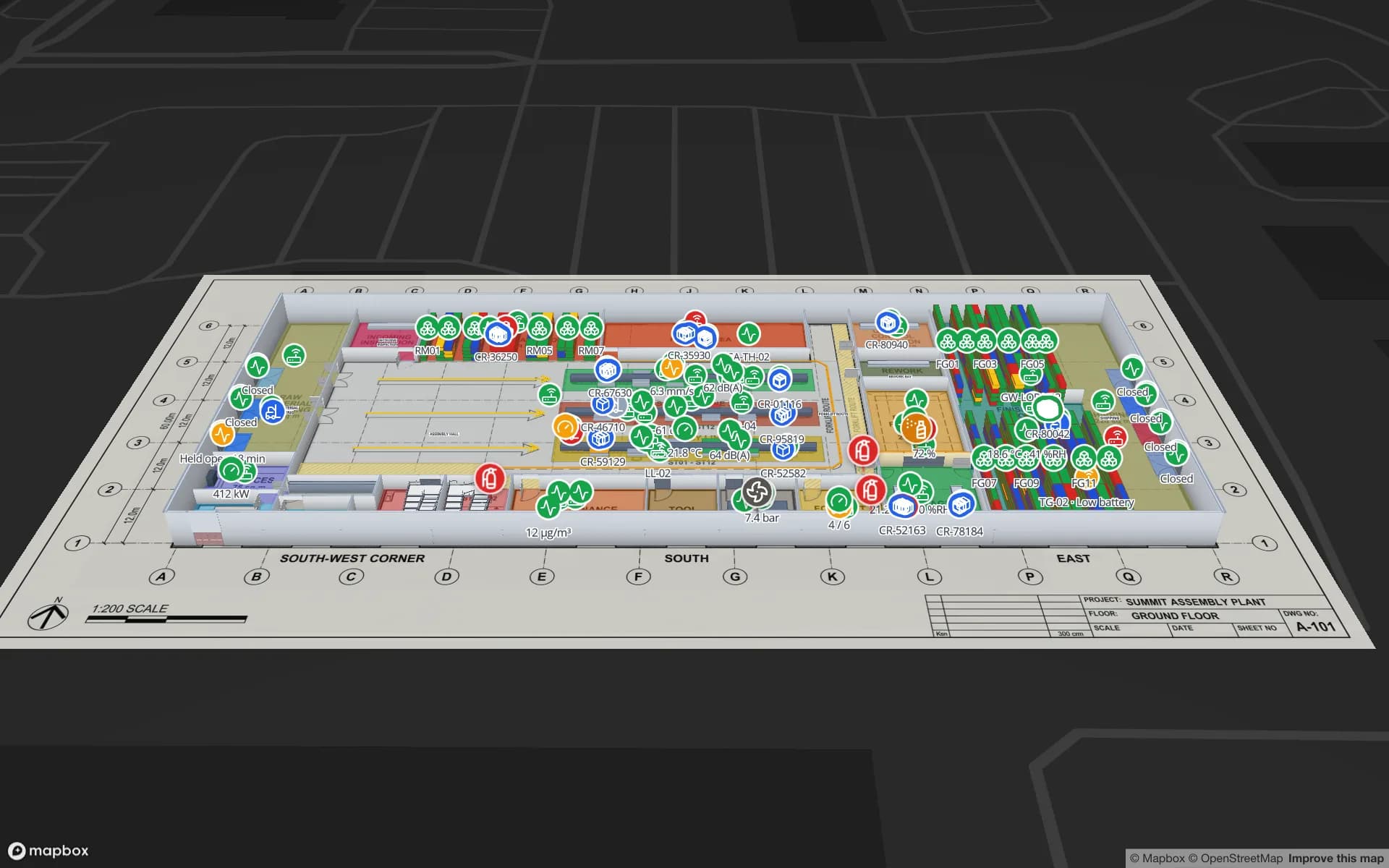
An estate of that age holds buildings of every era, with plant, storage and offices mixed on one plot. Draw each building as a facility, import whatever plan exists — PDF, DWG placed as a picture, or a photographed drawing — and let AI Map draft the walls, doors and racks for a person to check. For a plant, the useful RFID points are the ones where material changes hands: goods-in, the line-side buffer and despatch. The Summit demo shows that flow, with raw-material and finished-goods racks and receiving and shipping docks.

Fashion retail and e-commerce: item-level RFID and the returns bay

Barcelona is a fashion and design city, and its stores depend on stock that is right to the item: the size on the rail, the one in the stockroom, the one on the way back from a customer. Item-level tags let a handheld or a fixed reader count a rail in seconds, and a few readers at the stockroom door and the fitting-room corridor show what moves where. The Retail Mart demo has 85 RFID readers at doors, escalators and lifts over three floors, with shelf and department stock counted daily; RFID for retail and RFID stock counting cover the counting side.

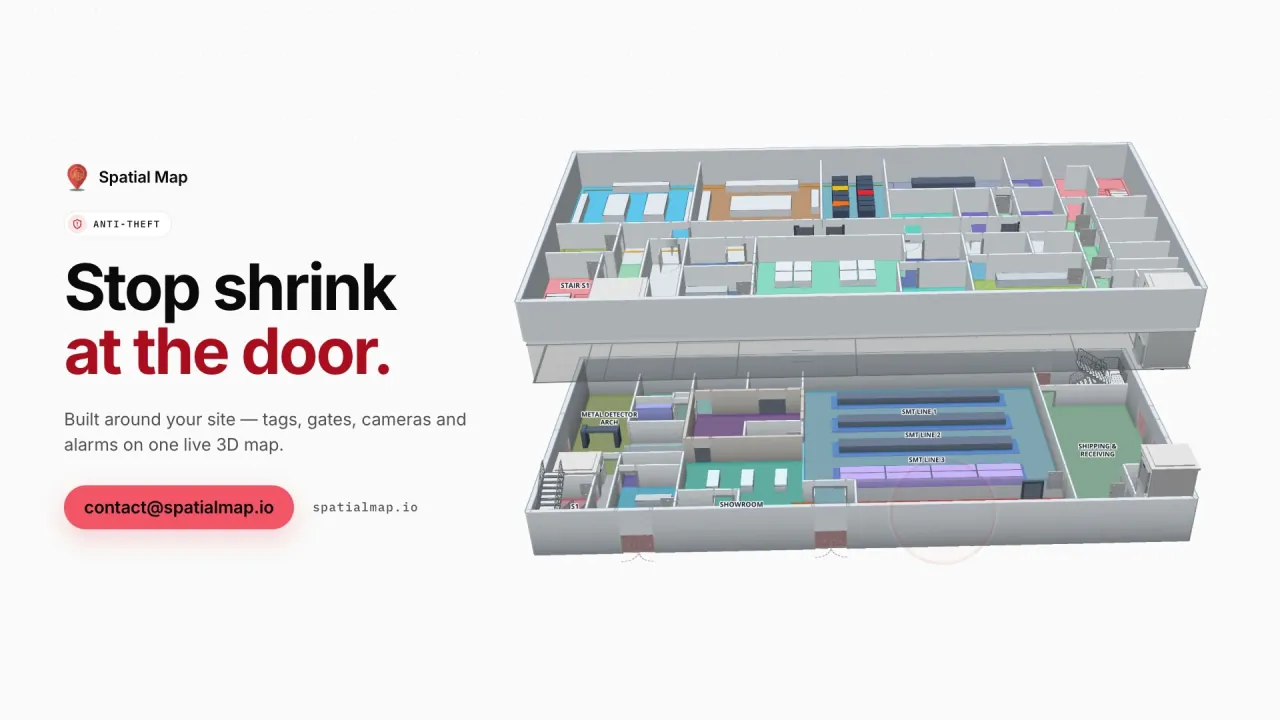
E-commerce adds the returns bay. A parcel comes back, is scanned, graded, and either sent to a rail or to a bin; the map shows how many returns sit in each lane and for how long. Post counts per lane to a table, colour by age, and add an in-app alert rule for lanes over limit. Spatial Map does not decide whether an item is resold, and it does not sound alarms at an exit; for the loss-prevention picture see RFID retail anti-theft.

Spanish, Catalan and the people on the floor

The app is available in Spanish, English, French, German, Arabic and Chinese, and each user picks their own language. Catalan is not an interface language; names, notes and report titles you write yourself — rack codes, aisle names, store names — stay as written, in Catalan, Spanish or both, on the map and in exported PDF and Excel reports. For multi-site retail groups, one workspace with a facility per store keeps the stores apart; roles (Owner, Admin, Editor, Viewer, or custom roles) decide who sees which.

Services for teams in Barcelona

Barcelona teams usually start in one of these places:

Also served nearby

The same page covers El Prat de Llobregat beside the airport, L’Hospitalet, Cornellà and Sant Boi along the Llobregat, and the industrial areas of the Vallès. The map opens in a browser at any of them.

How Spatial Map does it

From the port to the shop floor

  1. 01

    Pick one chain

    A port-side shed, a plant buffer or a store stockroom: wherever a wrong count costs most.

  2. 02

    Map doors, lanes and rails

    Upload the plan, let AI Map draft the floor, and name read points the way your middleware names them.

  3. 03

    Connect reads and stock

    RFID middleware and your WMS or ERP post rows through the write API, a polled REST endpoint or CSV and Excel uploads.

  4. 04

    Count and alert

    Daily counts per department, returns lanes over limit and readers that stopped reporting, shown in the app.

What Barcelona teams track

Port-side value-adding sheds

Cartons labelled at packing, staged by order and read at the door.

Stores with item-level RFID

Counts by shelf and department, with readers at doors and escalators.

Plant buffers in the industrial estate

Raw material, WIP carriers and finished goods read between stations and docks.

Cross-docks and yards

Dock doors, yard slots and pallets staged for the right trailer.

See it on real demo facilities

Fictional names, real floor plans, live sensors, RFID, BLE tags and gateways — open any of them in the browser.

All 13 demo facilities

RFID tracking in Barcelona — questions we get

No. It has no link to port community, customs or terminal systems. It shows what happens inside your own building, from your own RFID reads, WMS and sensors, so it complements the port-level systems rather than replacing them.

No. The app is available in Spanish, English, French, German, Arabic and Chinese. Names and notes you write yourself — rack codes, aisle names, store names, report titles — stay exactly as you write them, in Catalan or Spanish.

Yes, if your RFID system reads the item tags. A handheld or fixed readers post counts per location to a table, and Spatial Map colours the stockroom or department by stock status. It does not read tags itself. The post on how RFID stock counting works covers what to expect.

Treat each returns lane as an area, post the parcel count and the oldest return’s age per lane to a table, and colour lanes by age. An in-app alert rule can flag a lane over its limit. Individual parcels are a job for your returns system, which can post rows to the same table.

No. It shows reads at the door on the map and in reports and can raise in-app alerts, but it does not drive an alarm or a barrier. Loss prevention at the exit stays with your existing system.

No. Spatial Map is sold online and our team works with customers in Spain remotely, by video call and through the contact form, in Spanish or English. There are no local resellers or partners.

In US dollars, the same worldwide: a 7-day free trial for up to 5 facilities with no card, then Pro at $60 a month or $600 a year for up to 4 facilities. RFID hardware, if you ask us to source it, is quoted per project and is not part of the subscription.

Map one Barcelona door before the next season.

Start the free trial in Spanish or English and open the Retail Mart demo, or send us the plan of a shed or store and a sample of your reads through the contact form.