Manila · Port of Manila, Cavite, Laguna and Clark

Warehouse tracking in Manila, from the harbour gate to the Laguna dock

Spatial Map puts a warehouse on a live 3D map, so a dock door, a pallet in a lane or a trailer in the yard is a shape with a status instead of a line in a spreadsheet. Warehouse tracking in Manila starts at the harbour: cargo comes through the Port of Manila’s North and South harbours, then fans out to sheds in the city and to the economic-zone plants of Cavite and Laguna to the south. Your RFID readers, WMS and sensors send the data; Spatial Map shows it where it happens.

No credit card. Runs in the browser. Pro is $60/month for up to 4 facilities. Book a demo

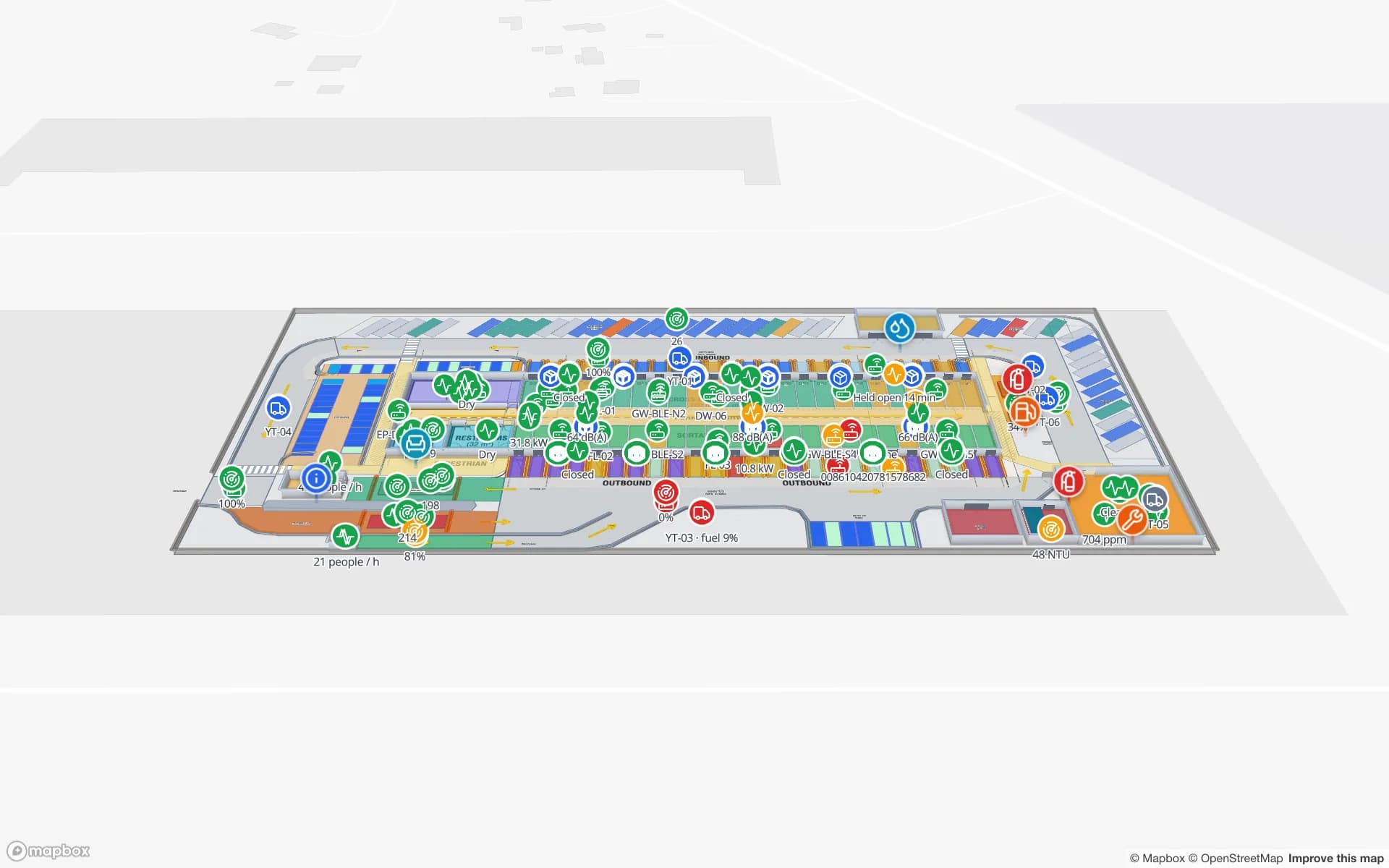
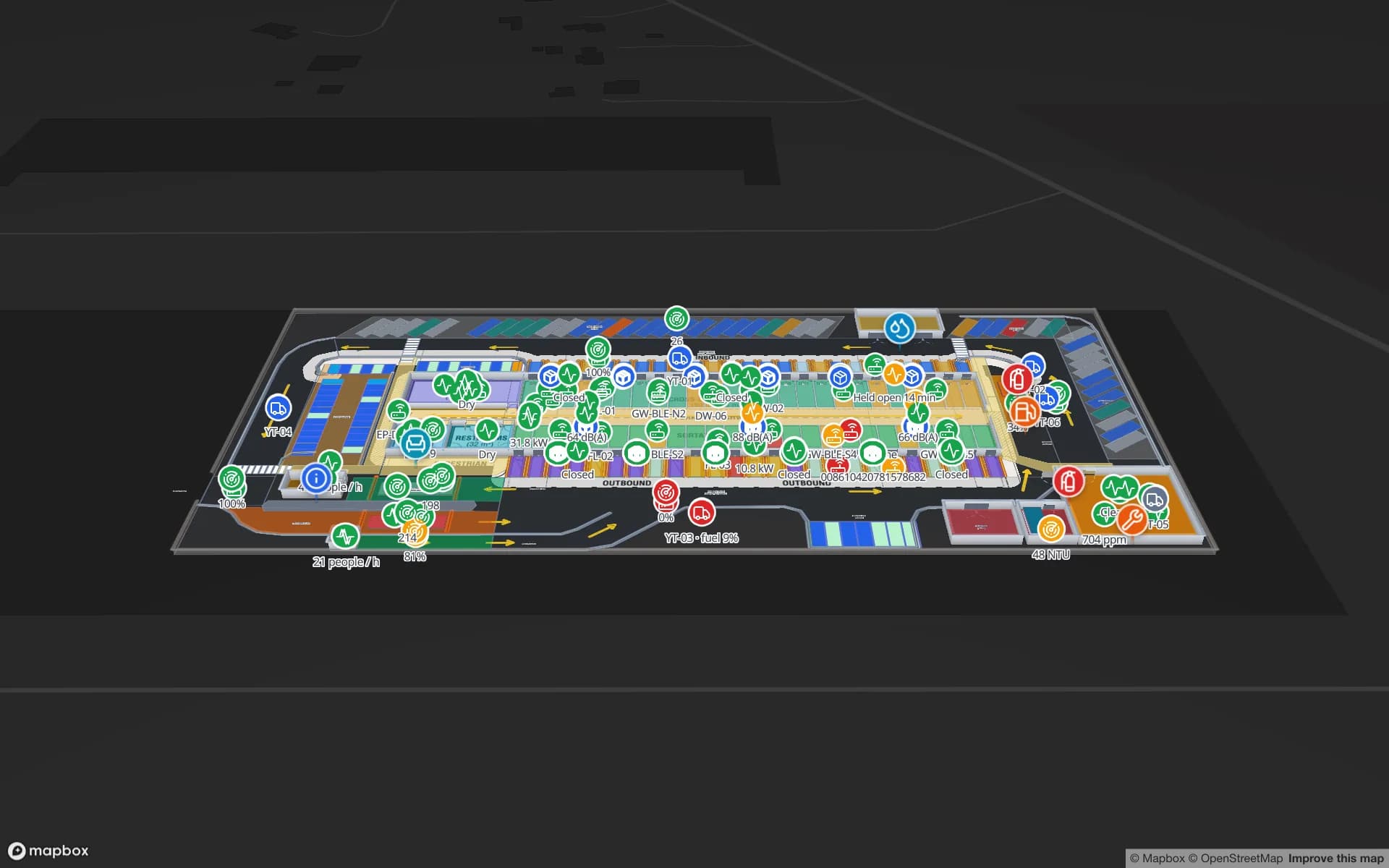
Eastport Cross-Dock Freight Hub, a cross-dock & trailer yard demo, in the Spatial Map 3D viewer with live device markers
Eastport Cross-Dock Freight Hub
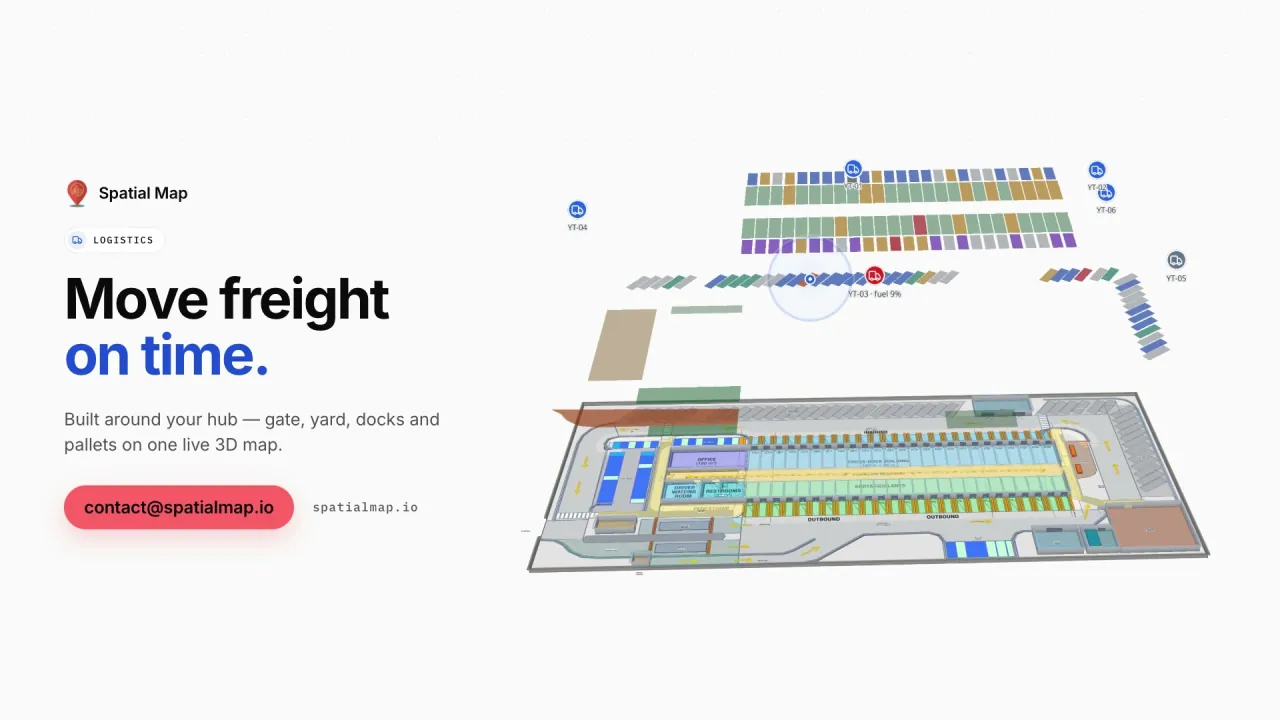
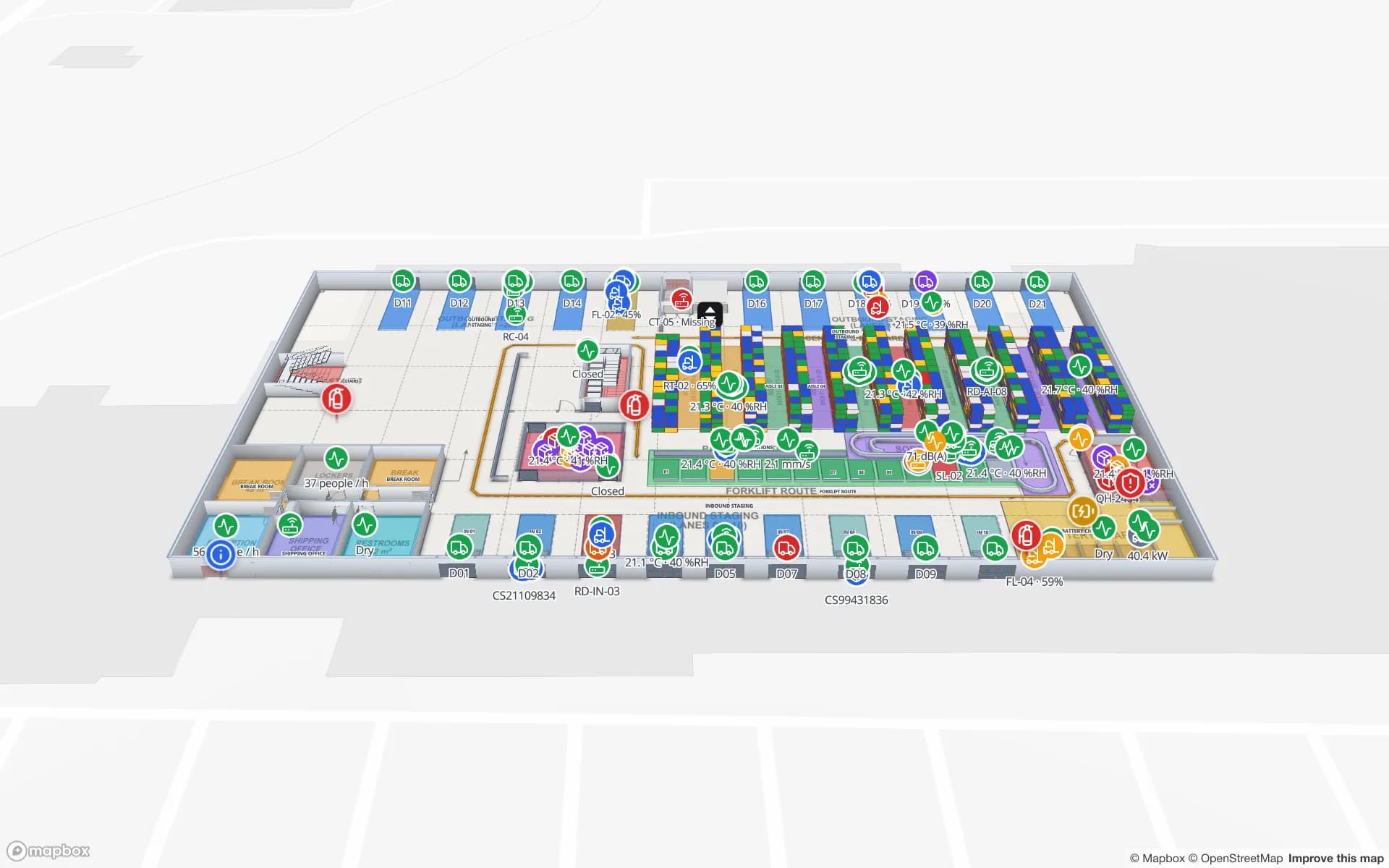
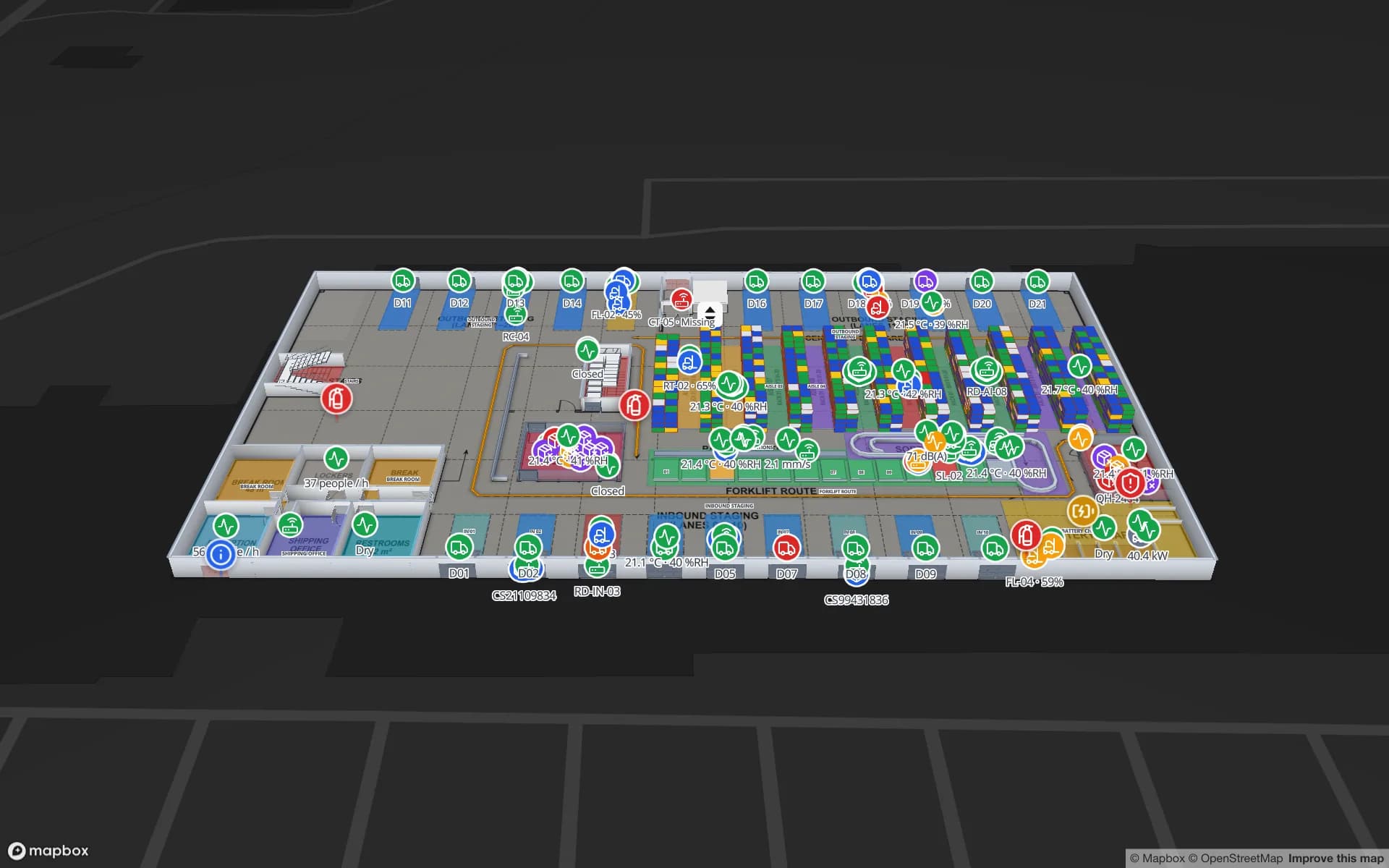
Eastport Cross-Dock, a demo freight hub: 50 dock doors, 44 yard slots and 1,180 RFID pallets, with the gate and weighbridge.
Dock doors in the Eastport cross-dock demo
50
Yard slots in the Eastport demo
44
Rack locations in the Crestline fulfilment demo
2,204
Free trial, up to 5 facilities, no credit card
7 days

Two harbours, one container terminal, and the sheds around them

The Port of Manila lies in Tondo and the Port Area on Manila Bay and is managed by the Philippine Ports Authority, a government-owned corporation. North Harbor covers about 53 hectares with seven piers and includes the passenger terminal for inter-island ferries; South Harbor covers about 80 hectares with five piers; a container terminal sits between the two. Cargo that comes through those gates is stored, sorted and loaded in warehouses nearby, where the bottleneck is usually the dock, not the quay.

The questions a port-side warehouse asks are specific: which pallet belongs to which container, which door is free, which trailer arrived first and which one has been waiting. Dock doors, yard slots and staging lanes become shapes, a WMS or RFID read colours each one, and the Eastport demo shows how: gates and weighbridges log arrivals, yard tractors move trailers, and 1,180 pallets are followed through the cross-dock. Spatial Map does not connect to port or customs systems, and the cross-dock yard visibility guide shows the data you would need to feed it.
When trucks wait: what a 2014 truck ban taught the dock

In February 2014 Manila’s city government imposed a truck ban at certain hours. The Philippine Institute for Development Studies reported that it backfired: drivers waiting for their allowed windows formed long queues, which worsened congestion on city streets and in the port area, and containers accumulated at the port. We do not state what rules apply today; check with the city and the port authority.

The lesson for a warehouse is lasting. When truck windows are tight, a dock that knows which trailer is next, and a yard where each slot shows who is in it and for how long, saves minutes on every turn. An alert rule such as “trailer in yard slot for more than N minutes” raises an in-app alert on the Alerts page and the bell, with Show on map to jump to the slot; alerts are in the app only, not by email or SMS. The RFID gates page explains gate readers at the yard entrance.

South of the city: Cavite, Laguna and the expressway between

The Cavite Economic Zone began as the Cavite Export Processing Zone by presidential proclamations of 1980 and became the Cavite Economic Zone under the Special Economic Zone Act of 1995, which also created the Philippine Economic Zone Authority. It covers 275 hectares at Rosario and General Trias, about 30 km south of Manila. A March 2021 release from the Philippine Information Agency said PEZA manages 61 economic zones in Calabarzon, Laguna having the most locator companies, then Cavite and Batangas.

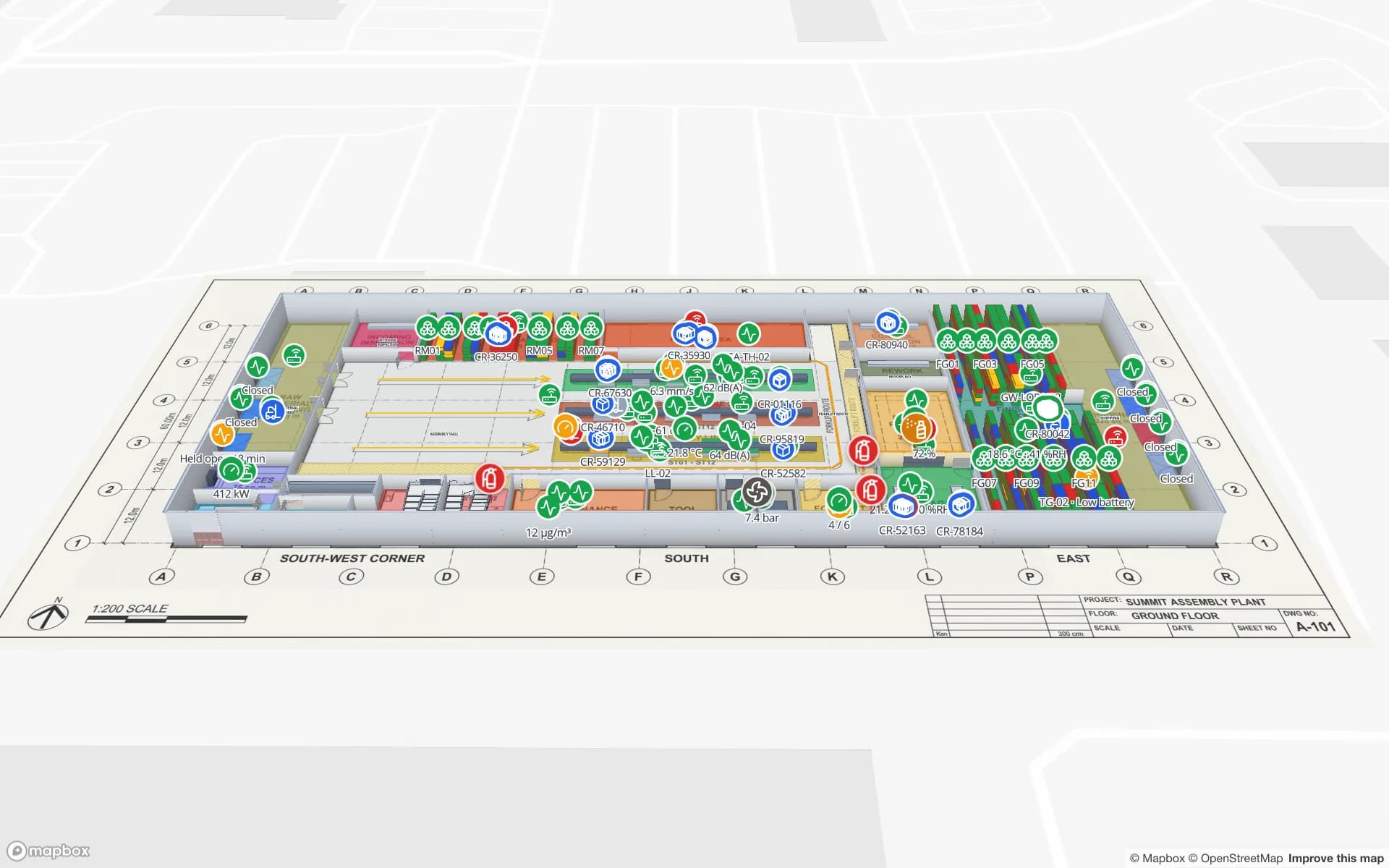
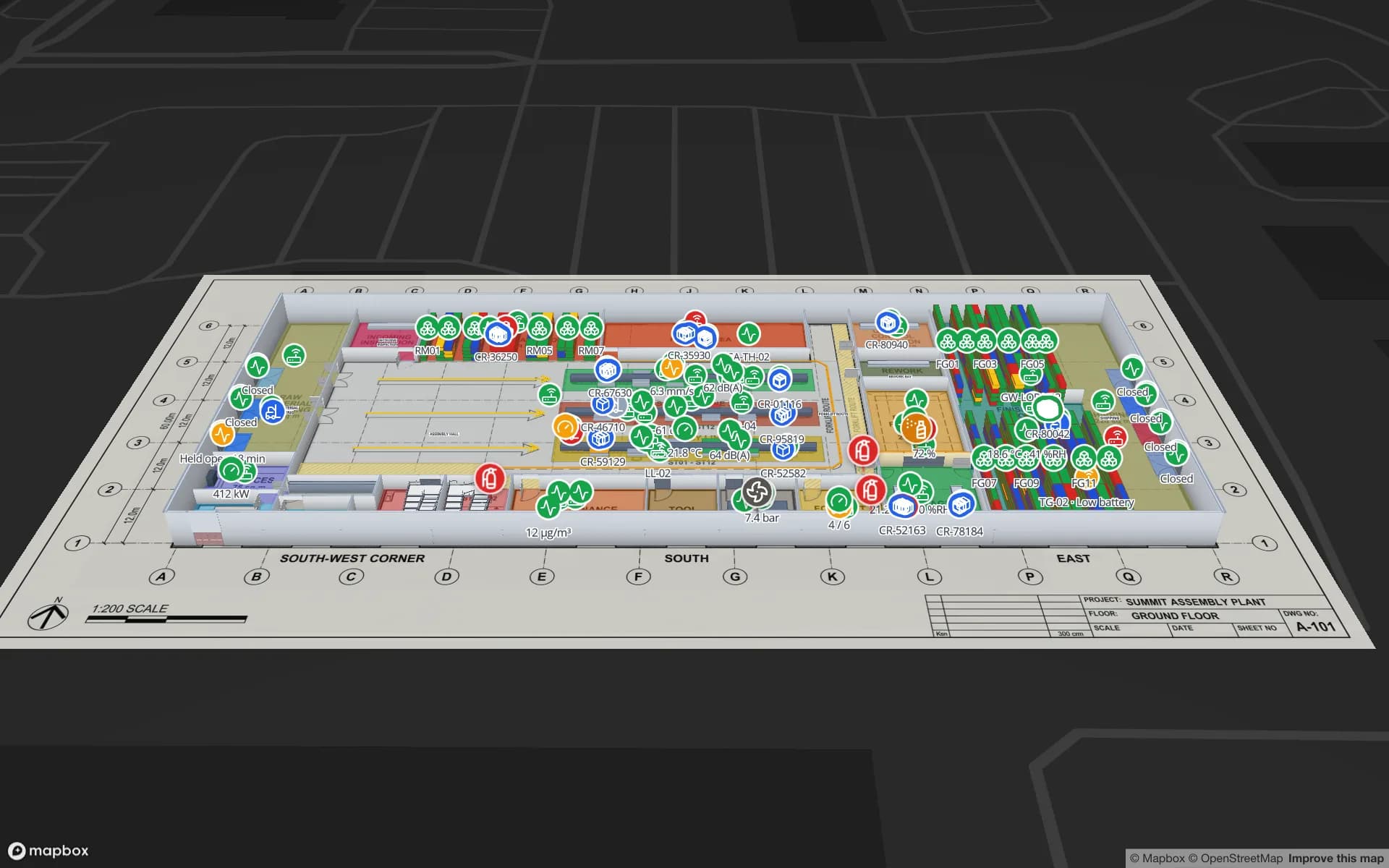
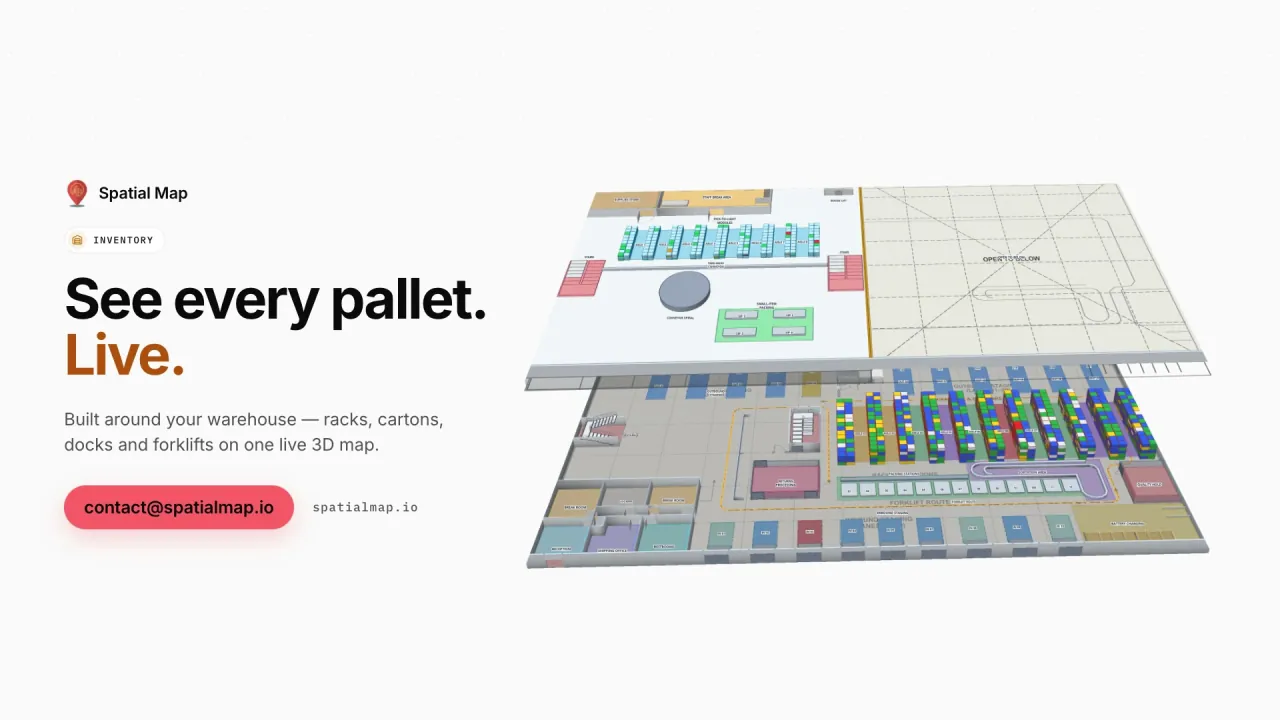
Between those zones and the harbour runs the traffic that decides each plant’s receiving schedule. The Cavite-Laguna Expressway, planned as a four-lane tolled road linking the Manila-Cavite Expressway at Kawit with SLEX at Mamplasan in Biñan, opened its first segment in late October 2019 and has been extended since. A plant in Laguna and a distribution centre in Cavite can sit in one workspace, each building drawn from its own plan, and the Summit Assembly demo shows what a zone plant looks like with 351 RFID carriers, 867 rack locations and seven docks. The Crestline demo shows 2,204 rack locations coloured by stock status for a distribution centre.

Clark and the typhoon months

Clark Air Base Proper, 4,400 hectares, was declared a freeport zone under Republic Act 7227, and Clark International Airport sits on it. For a Manila company this is context rather than a neighbour: an air cargo or distribution building at Clark is one more facility in the same workspace, with its own floor plan and tables, grouped with the Manila and Cavite buildings into one solution.

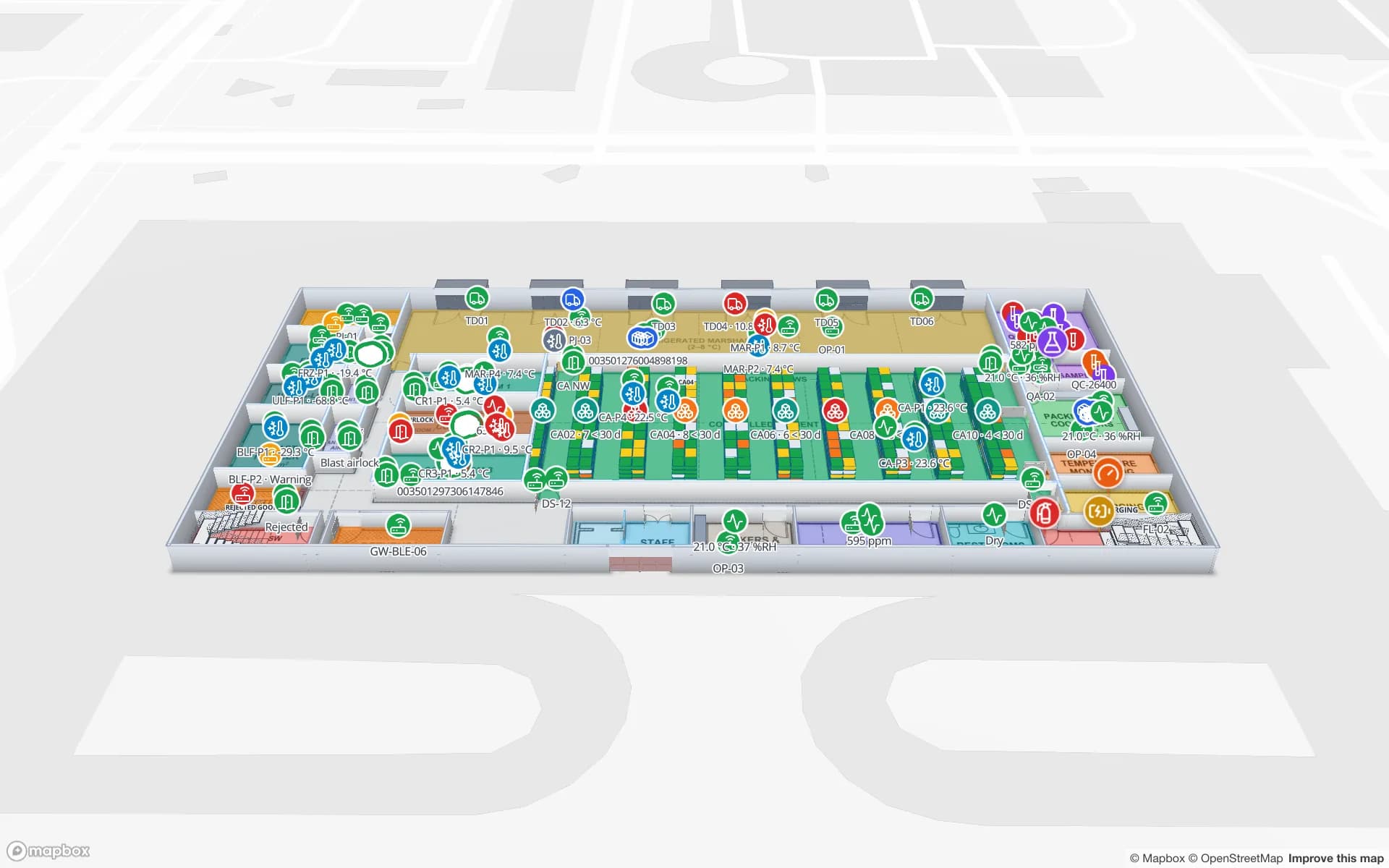
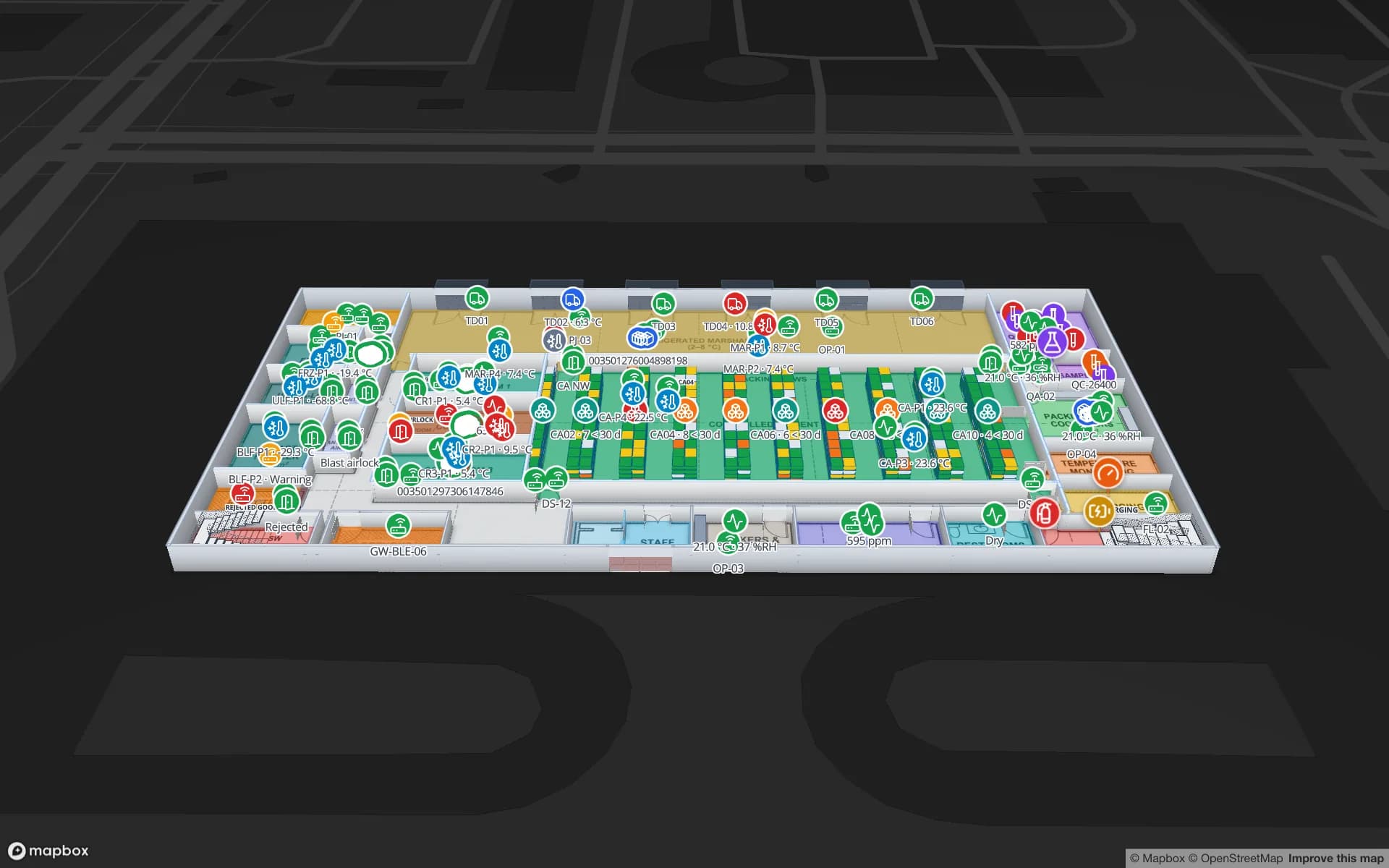
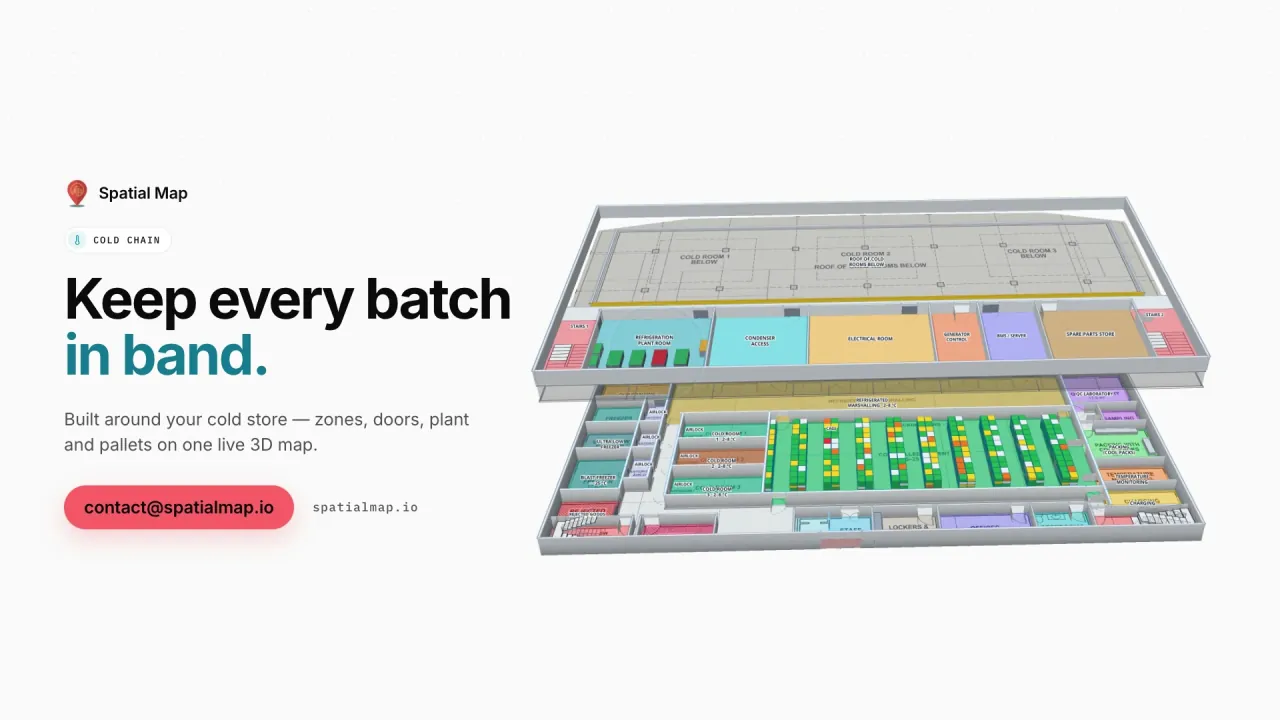
PAGASA says about 20 tropical cyclones enter the Philippine Area of Responsibility in an average year, with nearly 70 per cent forming from July to October. A cold room or a sealed pharma store needs to know when a door has been left open or a probe has stopped reporting; the Polar Pharma demo shows door states and temperature zones with 1,140 rack locations, and warehouse temperature mapping explains the readings.

Services for teams in Manila

Manila teams usually start in one of these places:

  • Forwarders and port-side sheds begin with inventory tracking at dock doors and yard slots.
  • Distribution centres and e-commerce fulfilment add RFID warehouse management with handheld counts and gate reads.
  • Zone plants in Cavite and Laguna begin with asset tracking for carriers, moulds, pallets and crates.
  • RTLS and UWB is for large yards and halls where forklifts and trailers must be located continuously; it is rarely the first step.
  • If you have no readers or tags, our team can source RFID, BLE and UWB hardware on request, quoted per project, with warranty and device support from the manufacturer: see hardware and demo kits on request. Our team also builds WMS and ERP integrations, Android RFID handheld apps and other custom software as client projects, and the product runs as cloud or on-premises.

Also served nearby

The same approach covers Valenzuela, Caloocan, Pasig, Parañaque and Las Piñas in Metro Manila, and Calamba, Santa Rosa, Biñan, Dasmariñas and Batangas to the south. Nothing needs to be installed at any of them: the map opens in a browser.

How Spatial Map does it

From the harbour gate to the dock door

  1. 01

    Pick one warehouse

    A port-side shed, a Cavite or Laguna plant store or a distribution centre, wherever a missing pallet costs most.

  2. 02

    Map docks, lanes and racks

    Upload the plan, photo or sketch, let AI Map draft the floor, and name the doors the way your WMS names them.

  3. 03

    Connect reads and stock

    RFID middleware and your WMS post rows through the table write API, a polled REST endpoint or CSV and Excel uploads.

  4. 04

    Add yard and dock rules

    In-app alerts for trailers waiting too long, short loads before cut-off and readers that stopped reporting.

What Manila teams track

Port-side cross-docks

Dock doors, yard slots and trailers by turn, with pallets read through the building.

Distribution centres

Rack-level stock, staging lanes and packing output on one map.

Economic-zone plants

Work-in-progress carriers, raw-material racks and receiving docks.

Cold and pharma stores

Temperature zones, door states and quarantine stock.

See it on real demo facilities

Fictional names, real floor plans, live sensors, RFID, BLE tags and gateways — open any of them in the browser.

All 13 demo facilities

Warehouse tracking in Manila — questions we get

No. It has no link to port, terminal or customs systems. It shows what happens inside your own warehouse, from your own RFID reads, WMS or ERP and sensors, so it complements the port-level systems rather than replacing them.

It can show which trailer is in which yard slot and for how long, which dock door is free and which pallets are staged, and an alert rule raises an in-app alert when a trailer has waited past a limit. It does not set or read truck windows; those stay with your dispatch process.

Yes. Each building is its own facility with its own plan and tables, and facilities can be grouped into named solutions. Roles decide who can edit each one, and read-only share links give a contractor one facility without an account.

Yes. Upload the photo or scan and align it at real size, or sketch the outer walls and racks and photograph the sketch. AI Map can draft from the picture, and you correct what it gets wrong.

No. Spatial Map is sold online and our team works with customers in the Philippines remotely, by video call and through the contact form. There are no local resellers or partners.

In US dollars, the same worldwide: a 7-day free trial for up to 5 facilities with no credit card, then Pro at $60 a month or $600 a year for up to 4 facilities. RFID hardware, if you ask us to source it, is quoted per project and is not part of the subscription.

Map one Manila dock before the next shipment.

Start the free trial and open the Eastport demo, or send us the plan of a port-side shed or Laguna warehouse and a sample of your WMS data through the contact form.