Southeast Asia · Philippines

Indoor mapping & RFID tracking in the Philippines, island by island

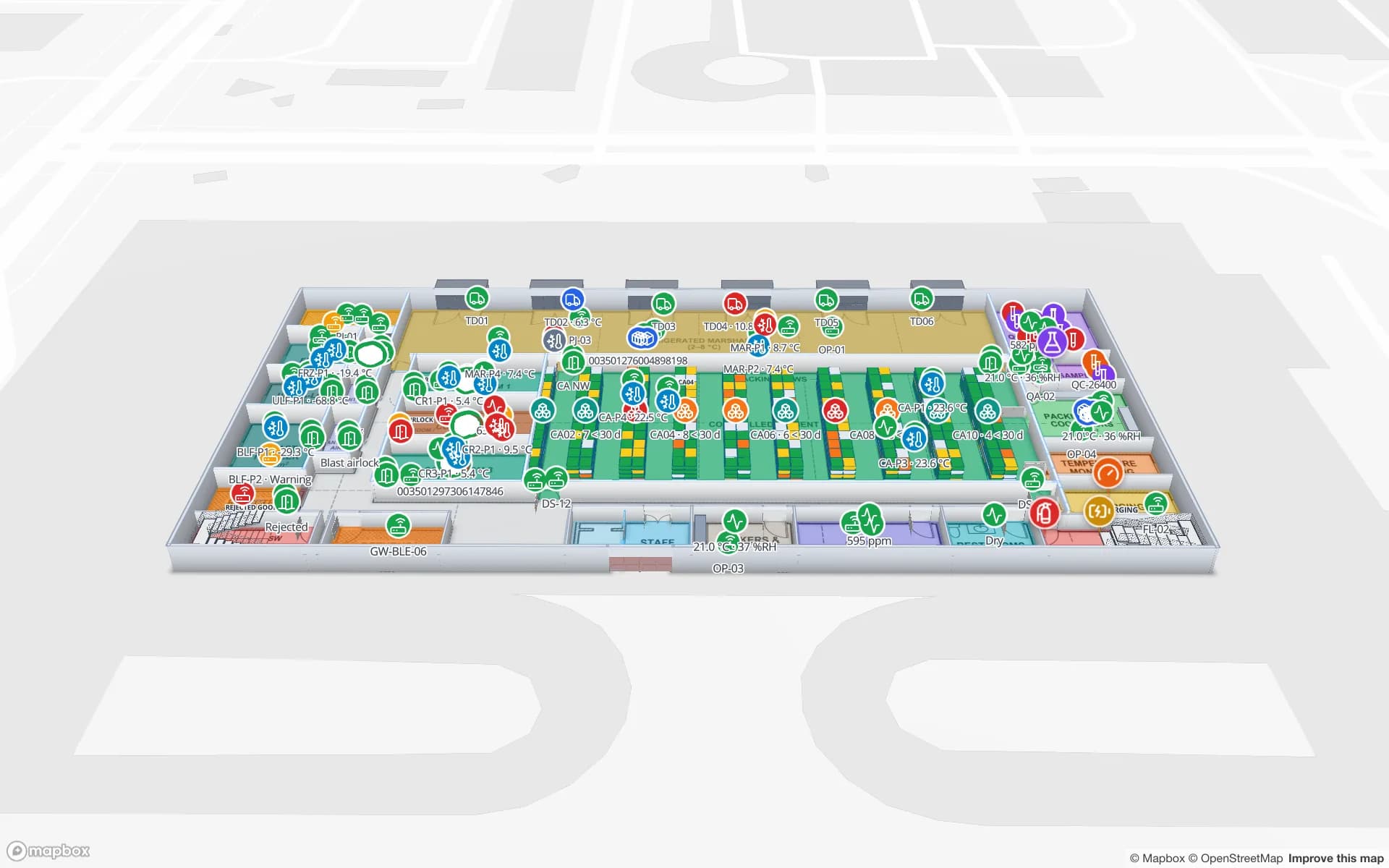
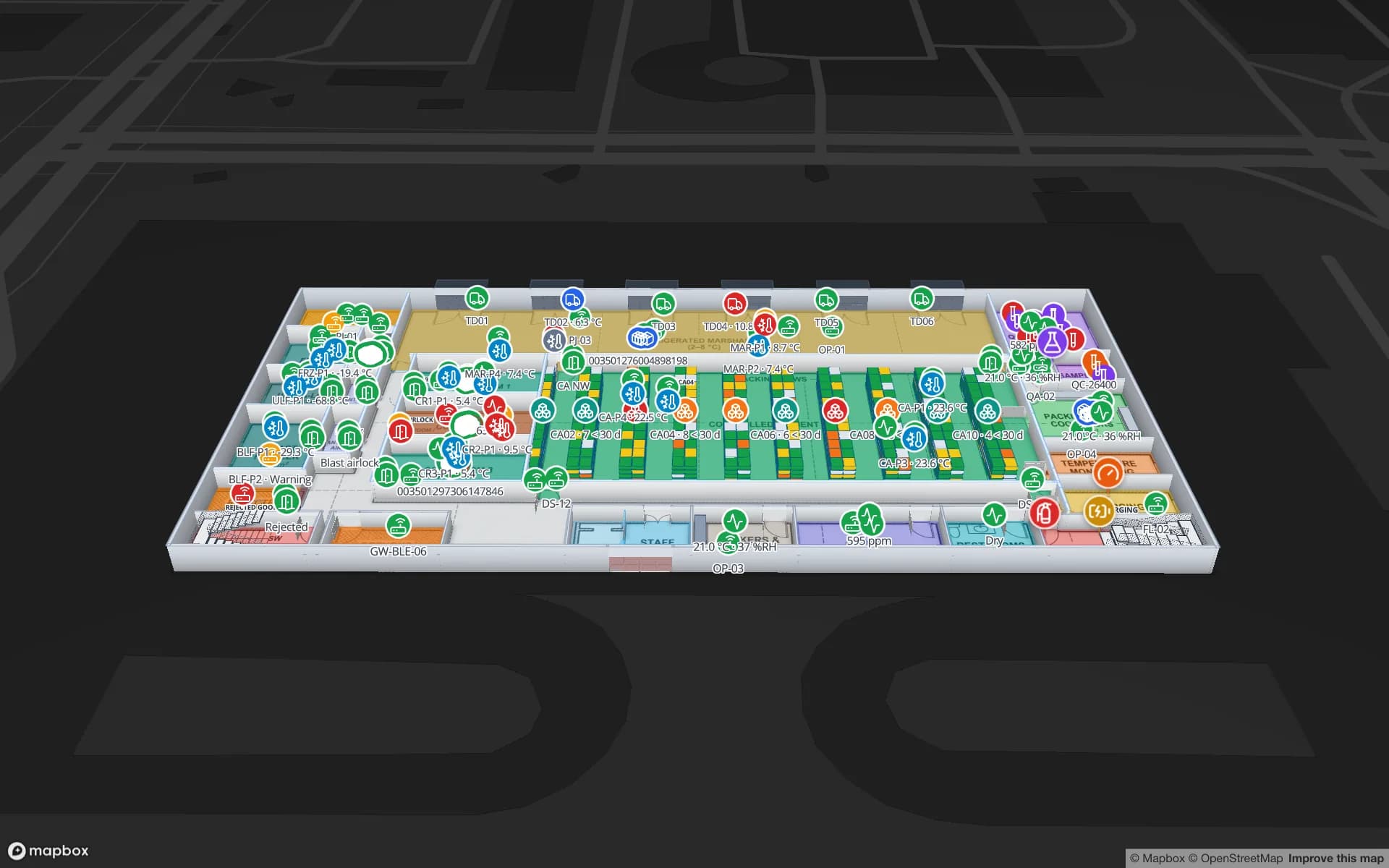
Spatial Map is browser-based software for indoor mapping & RFID tracking in the Philippines: it turns warehouses, economic-zone plants and distribution centres into live 3D maps, with RFID reads, sensor readings and stock shown where they happen. The country is an archipelago of 7,641 islands according to its national mapping agency, so goods hop between ports, ferries and trucks, and one company often runs sheds on several islands. A single workspace can hold all of them, and the interface is in English.

No credit card. Runs in the browser. Pro is $60/month for up to 4 facilities. Book a demo

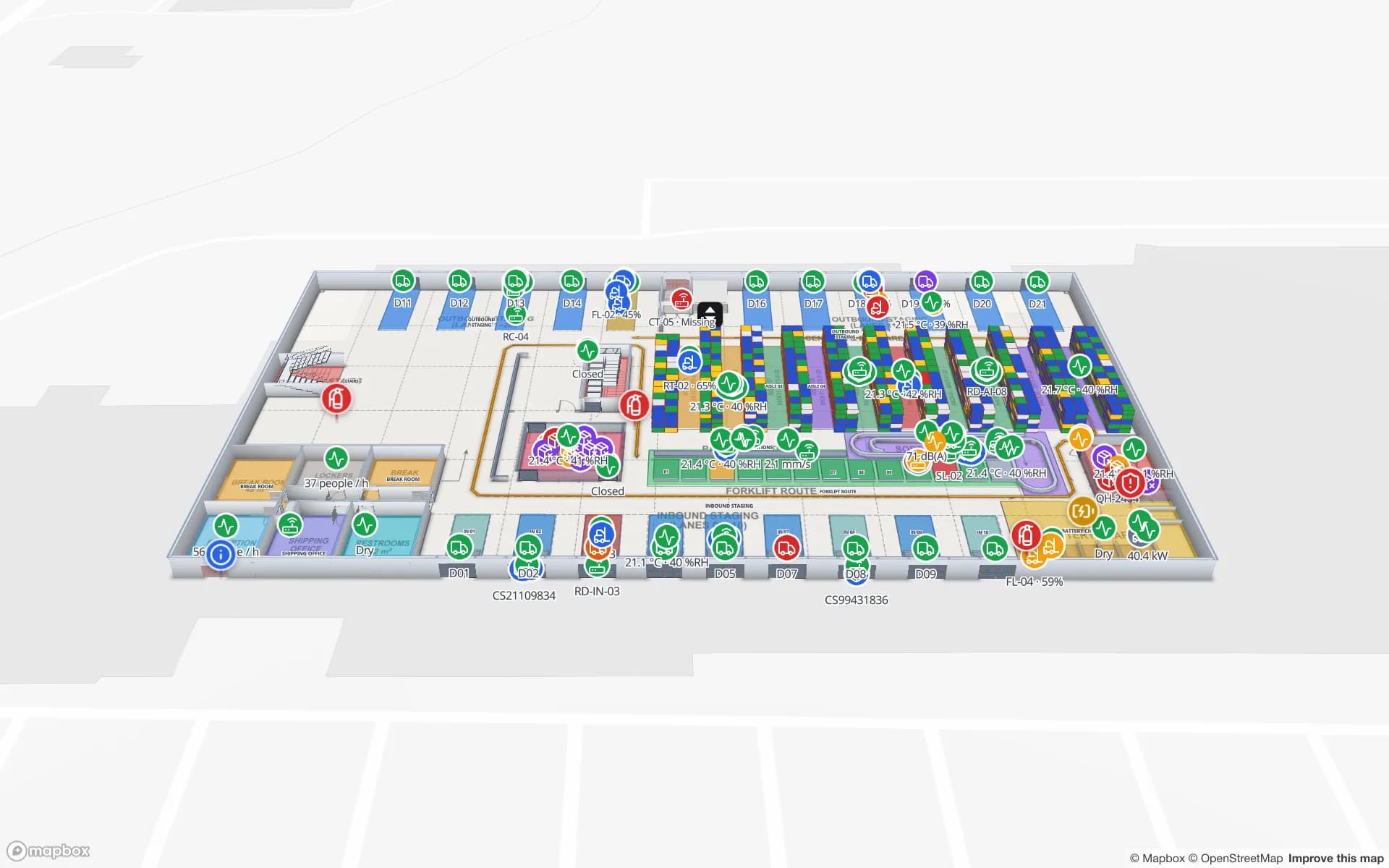
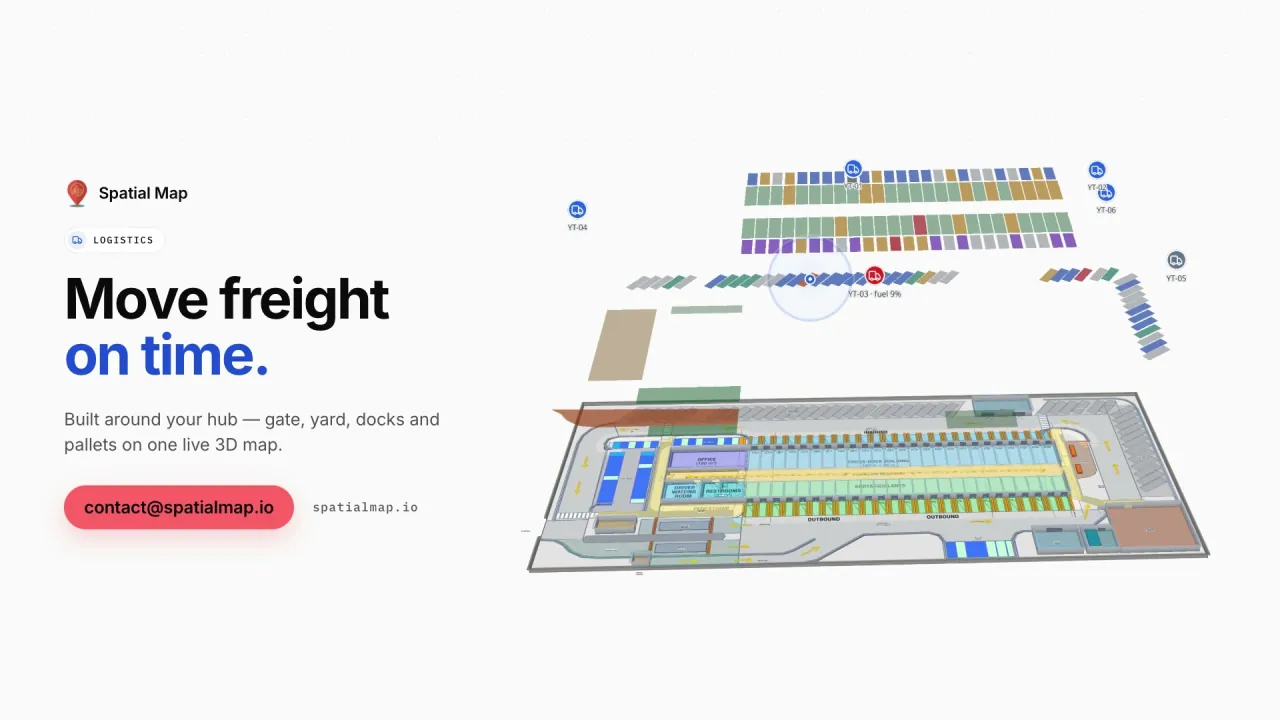
Logistics film: “Move freight on time” beside Eastport Cross-Dock and its trailer yard in 3D
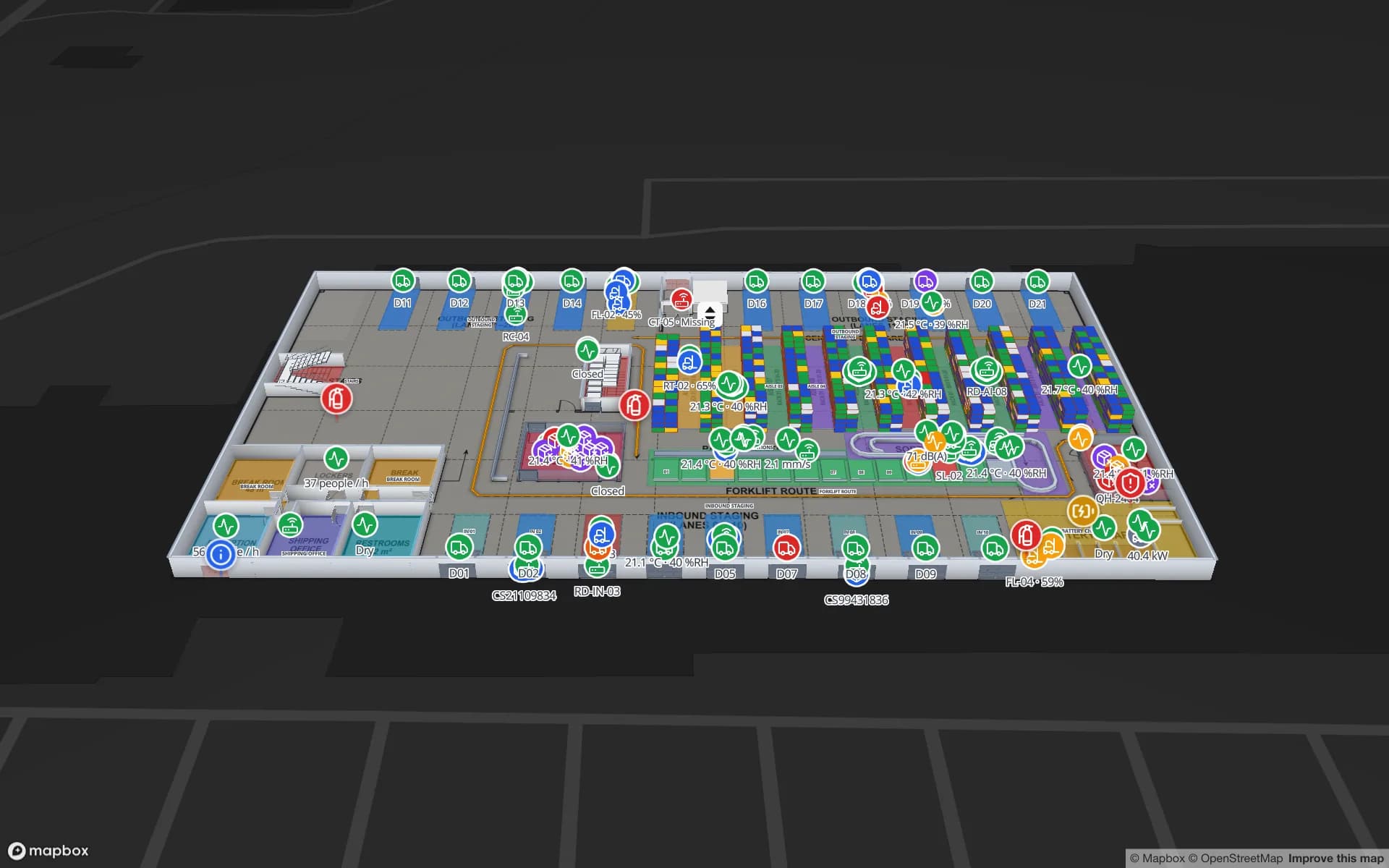
The Logistics film: Eastport Cross-Dock, a demo freight hub, with dock doors, a trailer yard, gate lanes and weighbridges.
Islands counted by NAMRIA, the national mapping agency
7,641
Dock doors in the Eastport cross-dock demo
50
Interface languages, including English
6
Free trial, up to 5 facilities, no credit card
7 days

An archipelago changes how stock moves

NAMRIA, the national mapping agency, now counts 7,641 islands, replacing the long-used figure of 7,107; only about 2,000 are inhabited. The Philippine Ports Authority, a government-owned corporation, manages the Port of Manila and most of the country’s public ports, and the passenger terminal at Manila’s North Harbor serves inter-island ferries. For a distributor that means a consignment may leave Manila by truck, ferry and truck again, and a regional shed in Cebu or Davao is stocked by a different route from one in Calabarzon.

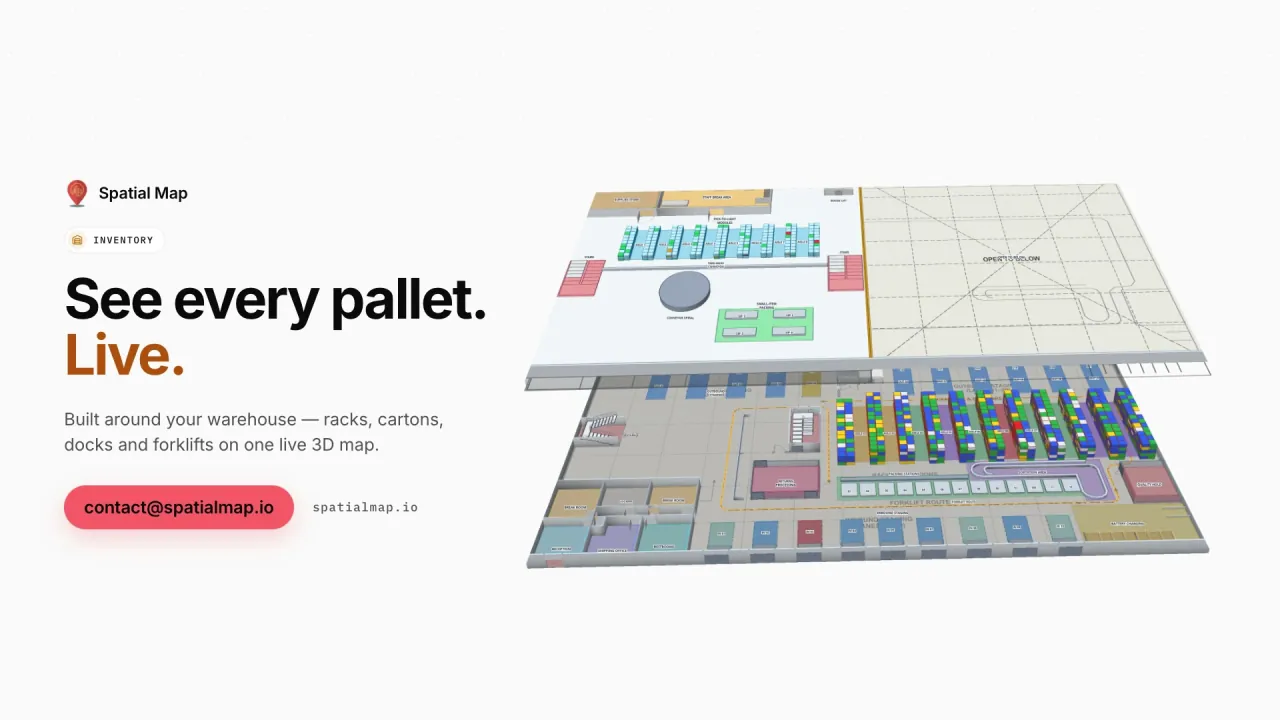
On a map the useful unit is the building, not the island: each shed has dock doors, lanes and racks, and each gets its own facility in the workspace, grouped into named solutions by region or by business line. A head-office team in Metro Manila then sees every regional shed on the same live screens. The Eastport demo shows the pattern with 50 dock doors, 44 yard slots and 1,180 RFID pallets, and the Crestline demo shows 2,204 rack locations coloured by stock status.


Economic zones: PEZA, Subic and Clark

The Special Economic Zone Act of 1995 (Republic Act 7916) was signed on 24 February 1995 and created the Philippine Economic Zone Authority. A March 2021 release from the Philippine Information Agency said PEZA manages 61 economic zones in Calabarzon with 2,022 locator companies, Laguna having the most locators, then Cavite and Batangas. Republic Act 7227 earlier set up the Subic Bay Metropolitan Authority for the Subic freeport and declared the 4,400-hectare Clark Air Base Proper a freeport zone.

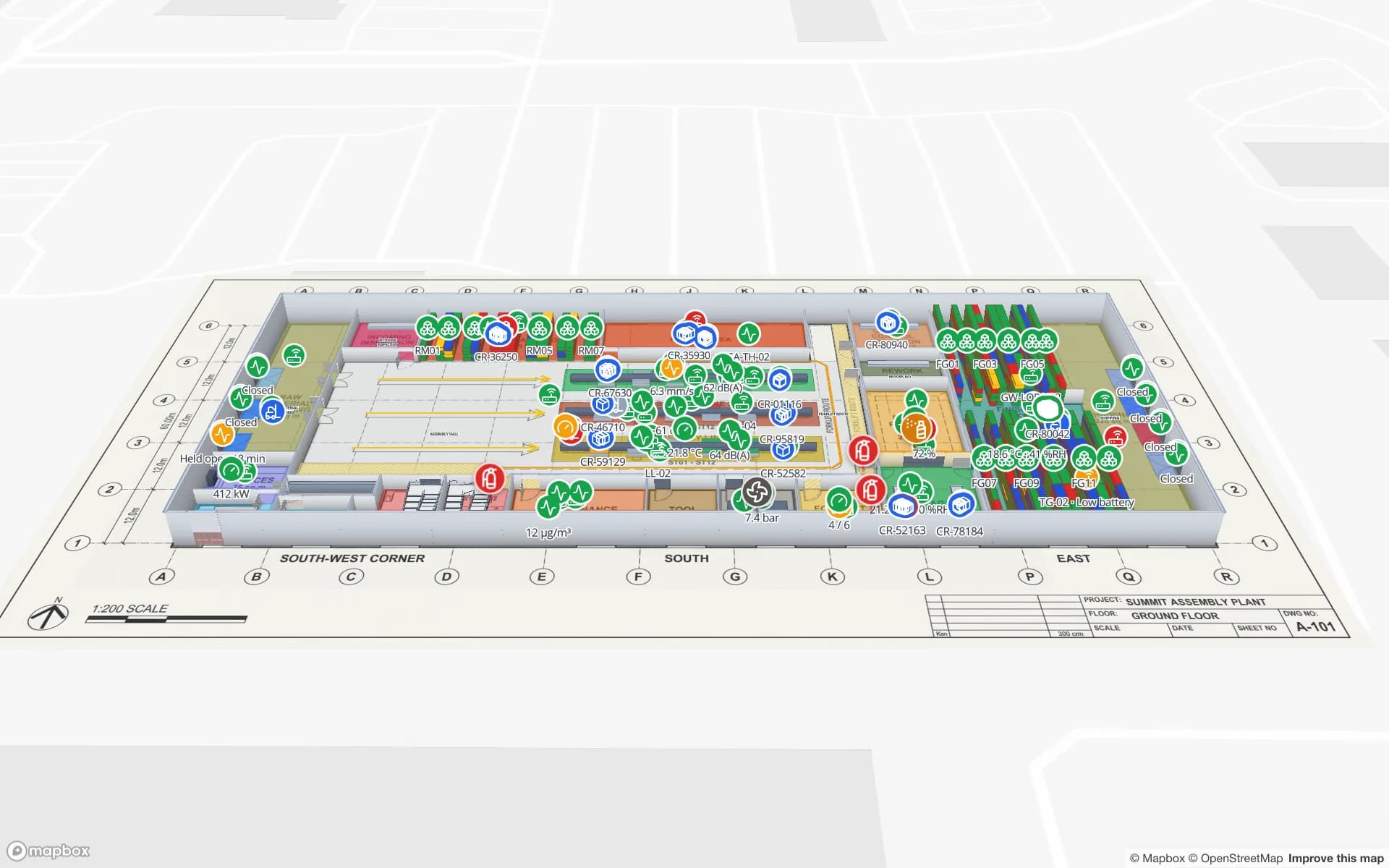
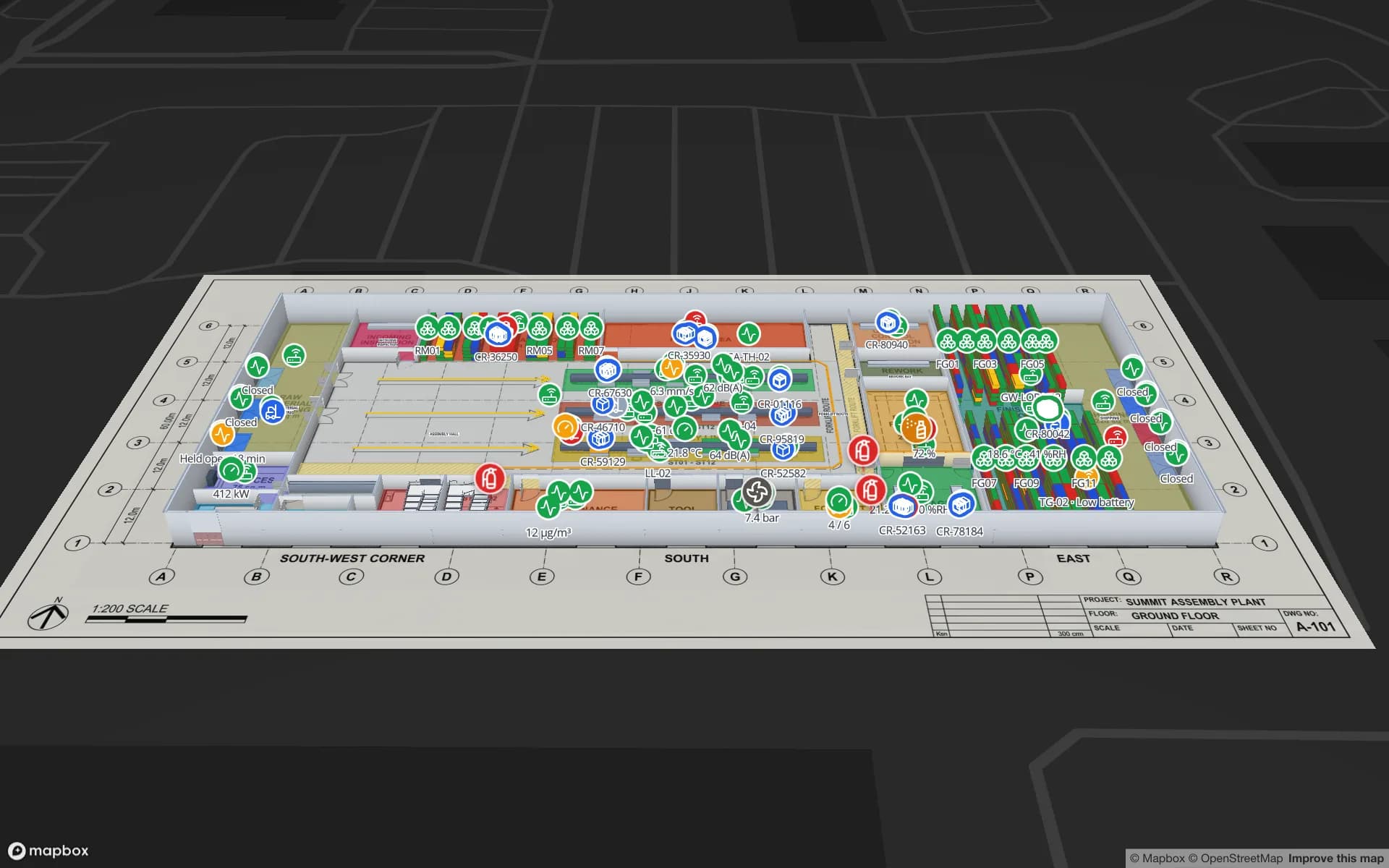
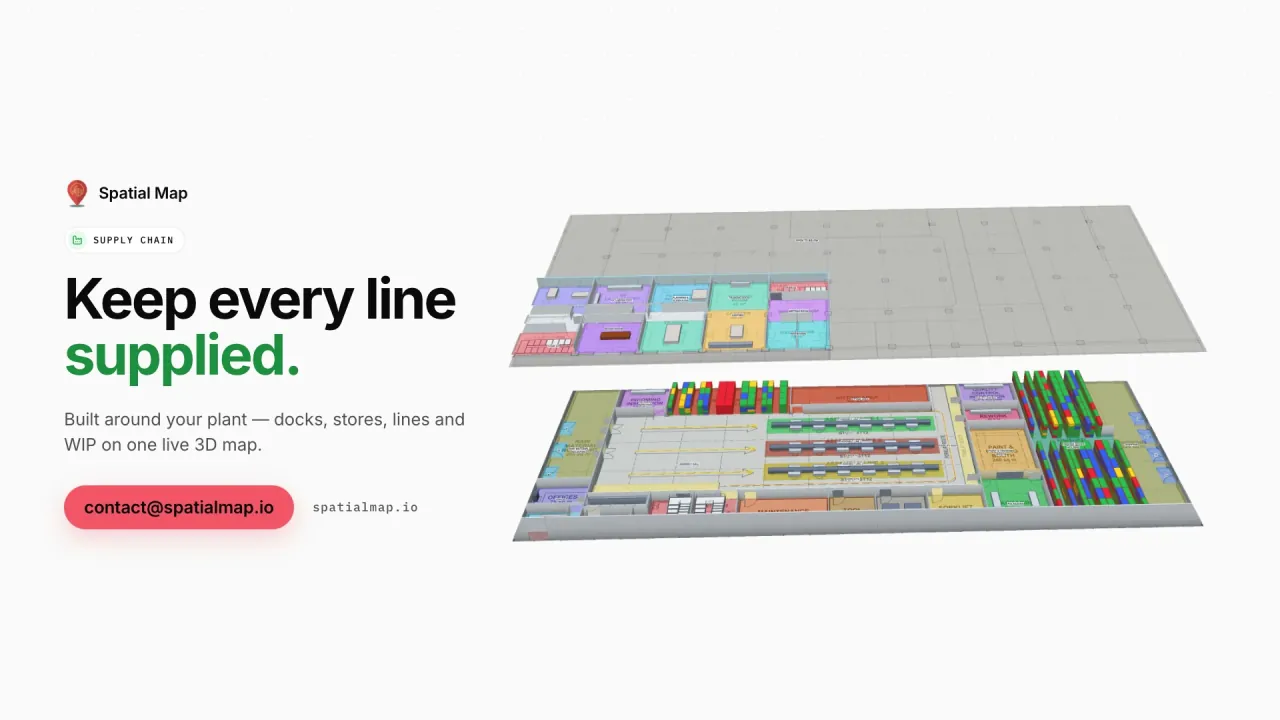
A zone has a boundary and gates, and inside the boundary each locator runs its own plant. Mapping one is mostly the same job as mapping any plant: lines, stores, racks, docks, and the gate where every vehicle and consignment enters. The Summit Assembly demo tracks 351 RFID work-in-progress carriers with 867 rack locations and seven docks. Spatial Map does not connect to PEZA or customs systems; it shows what your own RFID, MES and WMS rows say.

Typhoon season, written into the plan

According to PAGASA, about 20 tropical cyclones enter the Philippine Area of Responsibility in an average year and about 8 or 9 of them cross the country, with nearly 70 per cent forming from July to October. Warehouse teams know the routine: stock raised off low bays, doors closed, yard loads secured, trucks held back.

Spatial Map does not read weather warnings, but it can carry your routine. Keep a table with one row per bay or yard slot and a status your team updates, colour the map by it, and use door sensors to show which dock doors are still open; an alert rule set to “not updated for N minutes” notices a sensor that has gone quiet. Alerts appear in the app only, not by email, SMS or push. For cold rooms, the temperature monitoring page explains how readings are coloured on the plan.

Language, hardware and data privacy

English is an official language in the Philippines, and the app’s interface is available in English, Spanish, French, German, Arabic and Chinese, so most teams simply work in English. It is not available in Filipino or Cebuano. Your own content, such as bay names, rack codes, column names and report titles, appears exactly as you write it, in any language.

Spatial Map does not drive readers itself. Your RFID middleware, RTLS engine or BLE gateways post rows through the table write API or expose a REST endpoint that Spatial Map polls, and the readers and the frequency band approved for the Philippines are chosen with your hardware supplier. The country has its own data privacy law, which is context for your legal advisers to assess; most projects tag stock and equipment rather than people. A data processing agreement is available.

Services for teams in the Philippines

Where teams usually start depends on the building:

  • Distributors, forwarders and third-party logistics sheds usually begin with inventory tracking at dock doors and staging lanes.
  • Zone plants begin with asset tracking for carriers, moulds, tools and returnable crates, then add RFID for stock.
  • RTLS and UWB matters mainly for large yards and halls; most buildings will not need it first.
  • If you have no readers or tags, our team can source RFID, BLE and UWB hardware on request, quoted per project, with warranty and device support from the manufacturer: see hardware and demo kits on request.
  • Where your IT team is small, our team builds ERP and WMS integrations, Android RFID handheld apps and other custom software as client projects. The product runs as cloud or on-premises.

Also served

The same approach covers Manila (see warehouse tracking in Manila), Cebu, Davao, Cagayan de Oro, Iloilo, Bacolod, General Santos and Batangas. Nothing needs to be installed at any of them: the map opens in a browser.

How Spatial Map does it

From one shed to a national estate

  1. 01

    Pick one building

    A port-side shed, a zone plant or a regional distribution centre, wherever a missing consignment costs most.

  2. 02

    Upload and align the plan

    A PDF, DWG (AutoCAD R2004–R2018, placed as a picture) or photographed plan, placed at real scale; AI Map drafts the floor for a person to review.

  3. 03

    Connect reads and records

    RFID middleware, WMS or ERP rows through the write API, REST polling or CSV and Excel uploads.

  4. 04

    Add the other sites

    Each island’s shed becomes a facility in the same workspace, grouped into named solutions with roles per person.

What teams in the Philippines track

Port-side cross-docks

Dock doors, yard slots and pallets staged for the right vessel or truck.

Distribution and fulfilment

Rack-level stock, staging lanes and packing output on one map.

Zone plants

Work-in-progress carriers between stations, racks and docks.

Cold rooms

Temperature zones, door states and stock on hold.

See it on real demo facilities

Fictional names, real floor plans, live sensors, RFID, BLE tags and gateways — open any of them in the browser.

All 13 demo facilities

Questions from teams in the Philippines

No. The app is available in English, Spanish, French, German, Arabic and Chinese, and each user picks their own. English works for most teams in the Philippines. Your own content, such as bay names, rack codes and report titles, can be written in Filipino or any other language.

Yes. Each building is a facility, and facilities can be grouped into named solutions by region or business line. Roles decide who can edit each one, and read-only share links give a contractor or customer a view of one facility without an account.

No. It has no link to economic-zone, customs or port systems. It shows what happens inside your own building, from your own RFID reads, WMS or ERP and sensors.

Yes. Upload a photographed plan or a scan and align it at real size, or sketch the outer walls and racks and photograph the sketch. AI Map can draft from the picture, and you correct what it gets wrong.

No. Spatial Map is sold online and our team works with customers remotely, by video call and through the contact form. There are no local resellers or partners.

In US dollars, the same worldwide: a 7-day free trial for up to 5 facilities with no credit card, then Pro at $60 a month or $600 a year for up to 4 facilities. RFID hardware, if you ask us to source it, is quoted per project.

Map your first Philippine shed this week.

Start the free trial and open the Eastport demo, or send us a plan of a warehouse or plant and a sample of your RFID or WMS data through the contact form.