Asia-Pacific · Malaysia

RFID tracking and indoor mapping software for Malaysia

Malaysia builds chips in Penang, moves containers through Port Klang and Tanjung Pelepas, and runs halal supply chains that keep goods apart from the plant to the shelf. Spatial Map puts those operations on live 3D maps in the browser — RFID-tagged units read zone by zone, segregated storage drawn on the floor plan, stock and sensors in place.

No credit card. Runs in the browser. Pro is $60/month for up to 4 facilities. Book a demo

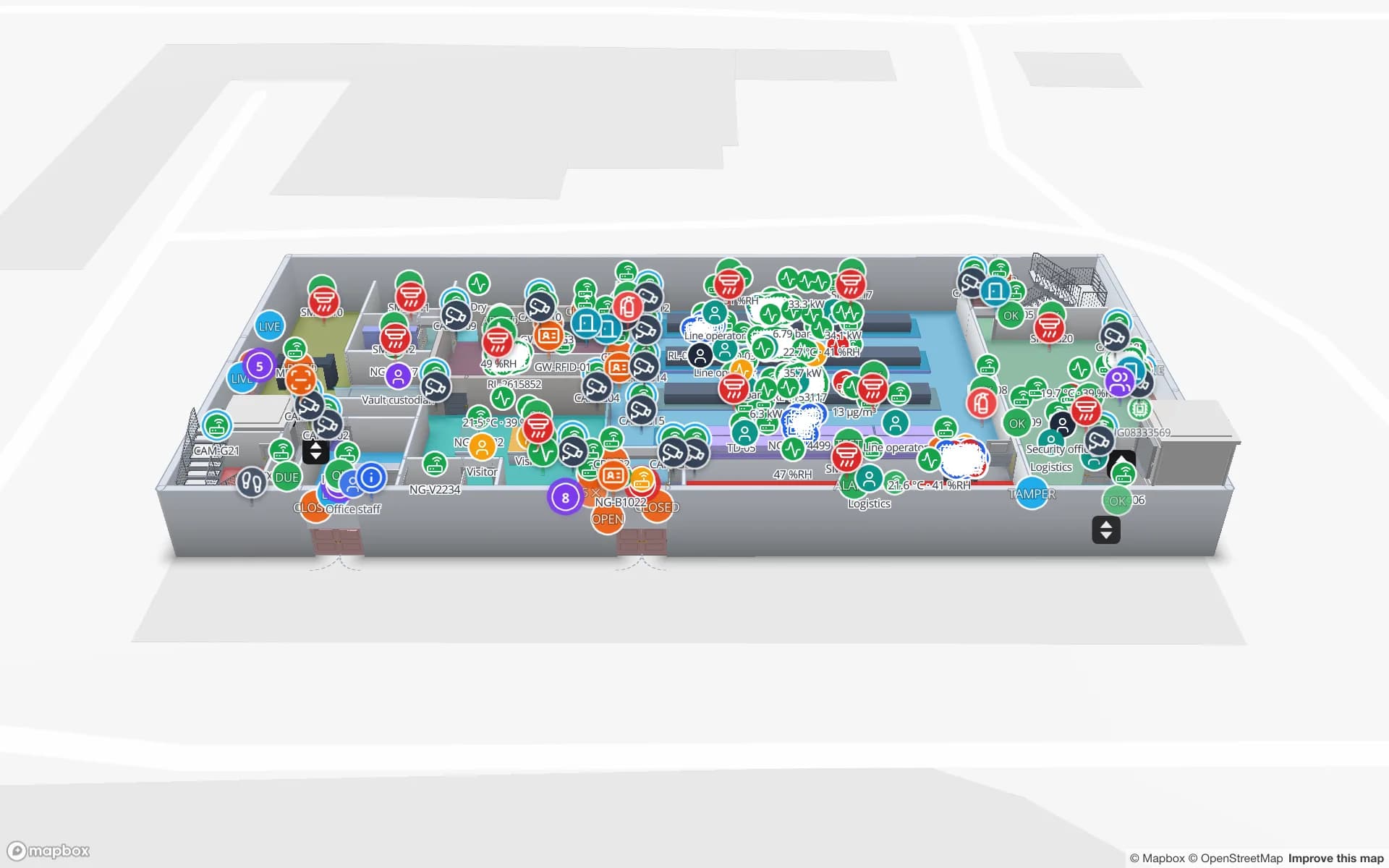
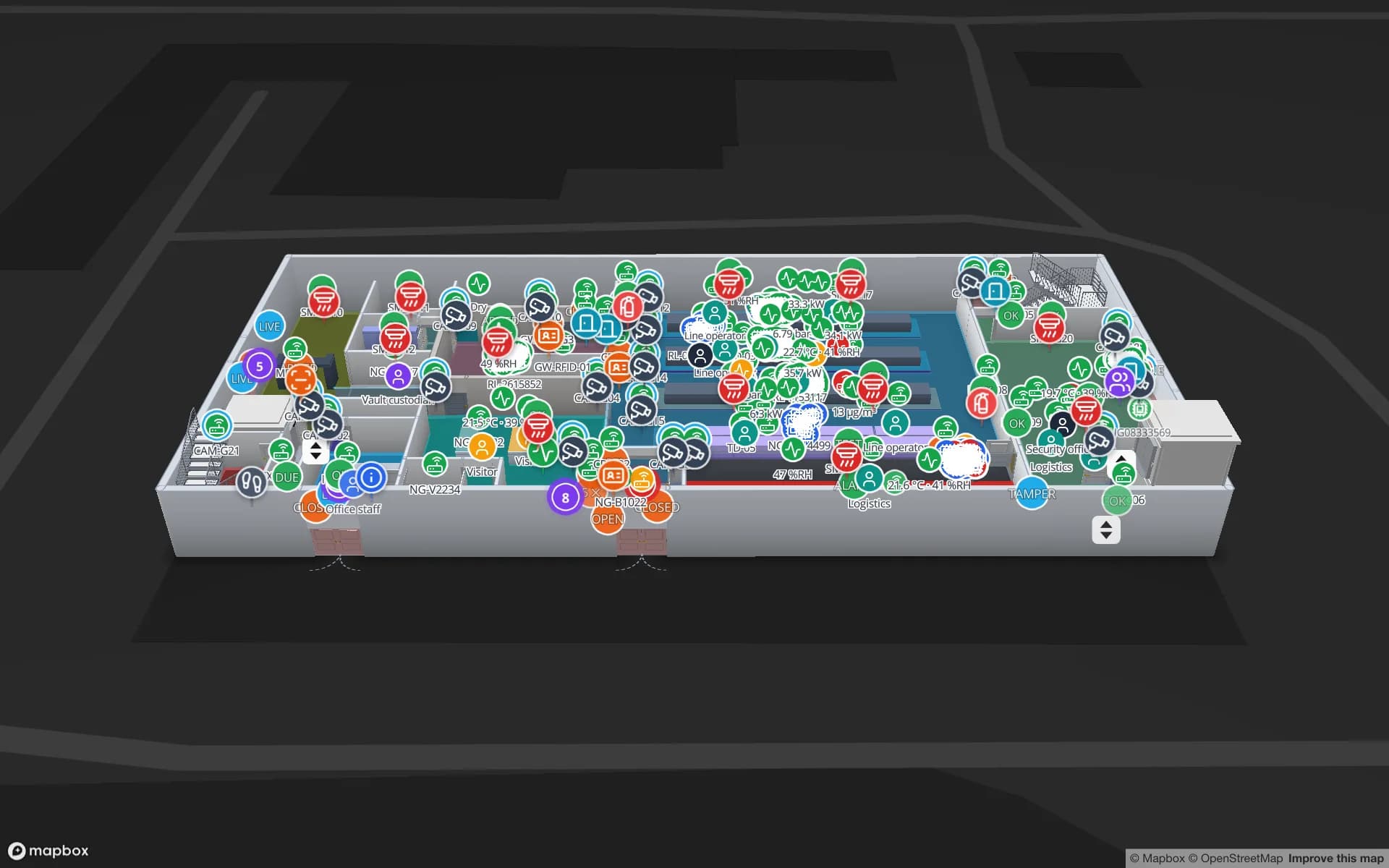
Northgate Electronics — Assembly & Secure Store, a electronics assembly & secure store demo, in the Spatial Map 3D viewer with live device markers
Northgate Electronics — Assembly & Secure Store
Northgate Electronics, a demo electronics assembly plant and secure store: 863 RFID-tagged units followed through security zones, access points and choke points.
RFID-tagged units in the Northgate demo
863
English and Chinese interfaces (Malay not yet available)
EN · 中文
Software to install — runs in any modern browser
0
Free trial, up to 5 facilities, no credit card
7 days

Electronics and semiconductors in Penang

Penang has been one of Asia’s major electronics manufacturing centres for decades, with semiconductor assembly and test, component makers and contract manufacturers clustered around the Bayan Lepas Free Industrial Zone, and further plants in Kedah and Johor. Their stores hold reels, trays and finished units that are small, valuable and easy to misplace between the SMT line, test, the cage and the dock.

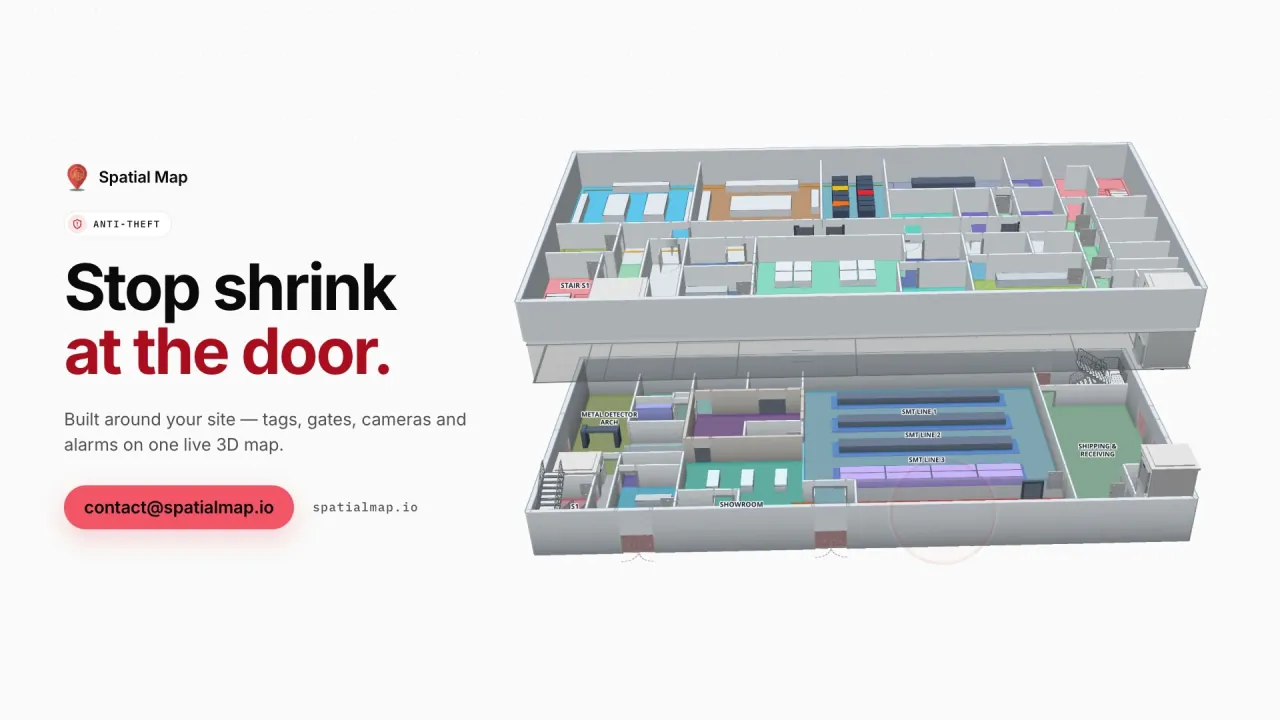
Spatial Map shows each tagged unit where its last RFID read put it, reader by reader, and replays its path with the History player. Security zones, access points and choke points are drawn on the plant layout and coloured by their live status. The Northgate Electronics demo follows 863 RFID-tagged units from SMT line to test, the secure cage and the dock, with a shrink report.
Port Klang, Tanjung Pelepas and the warehouses behind them

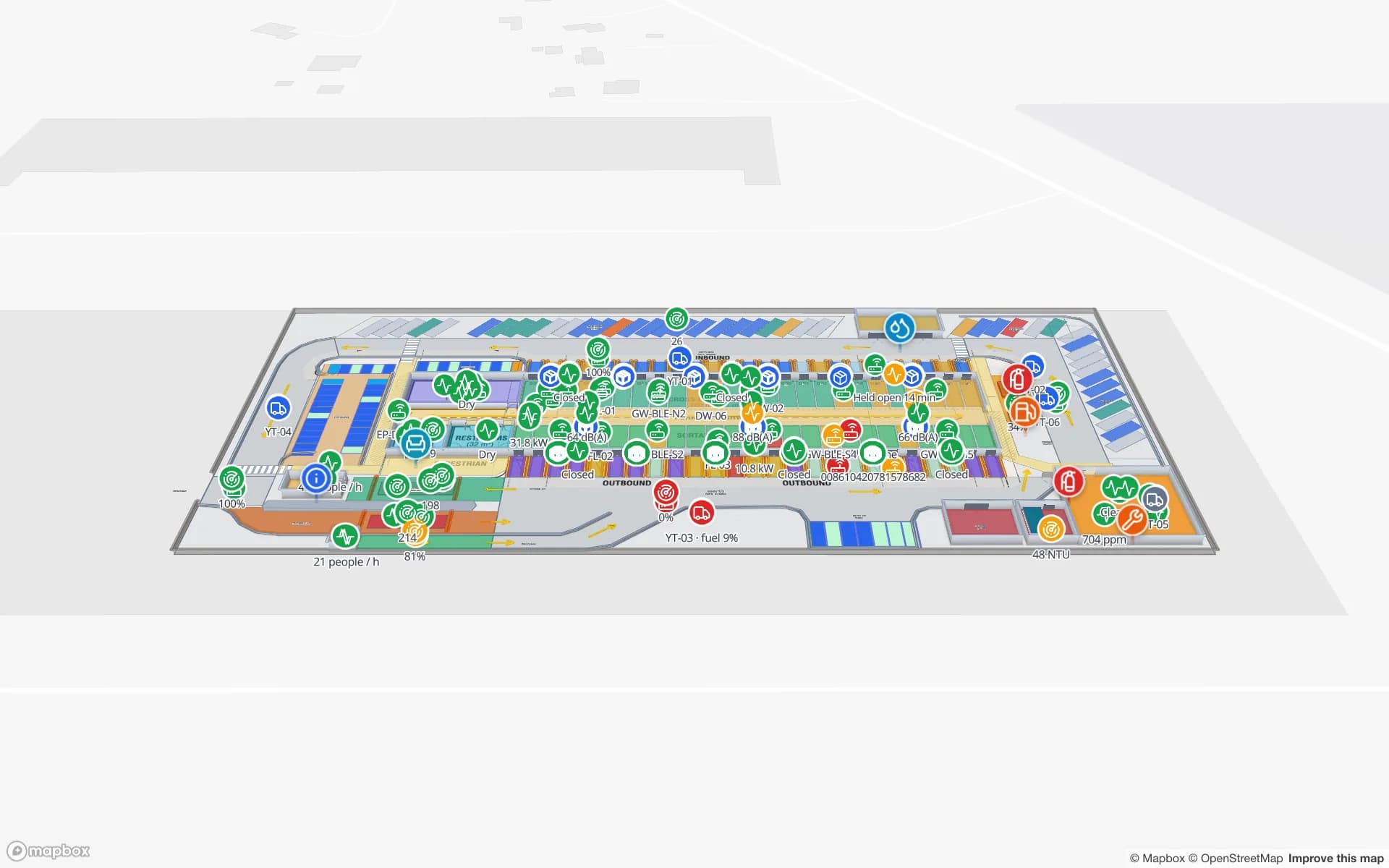
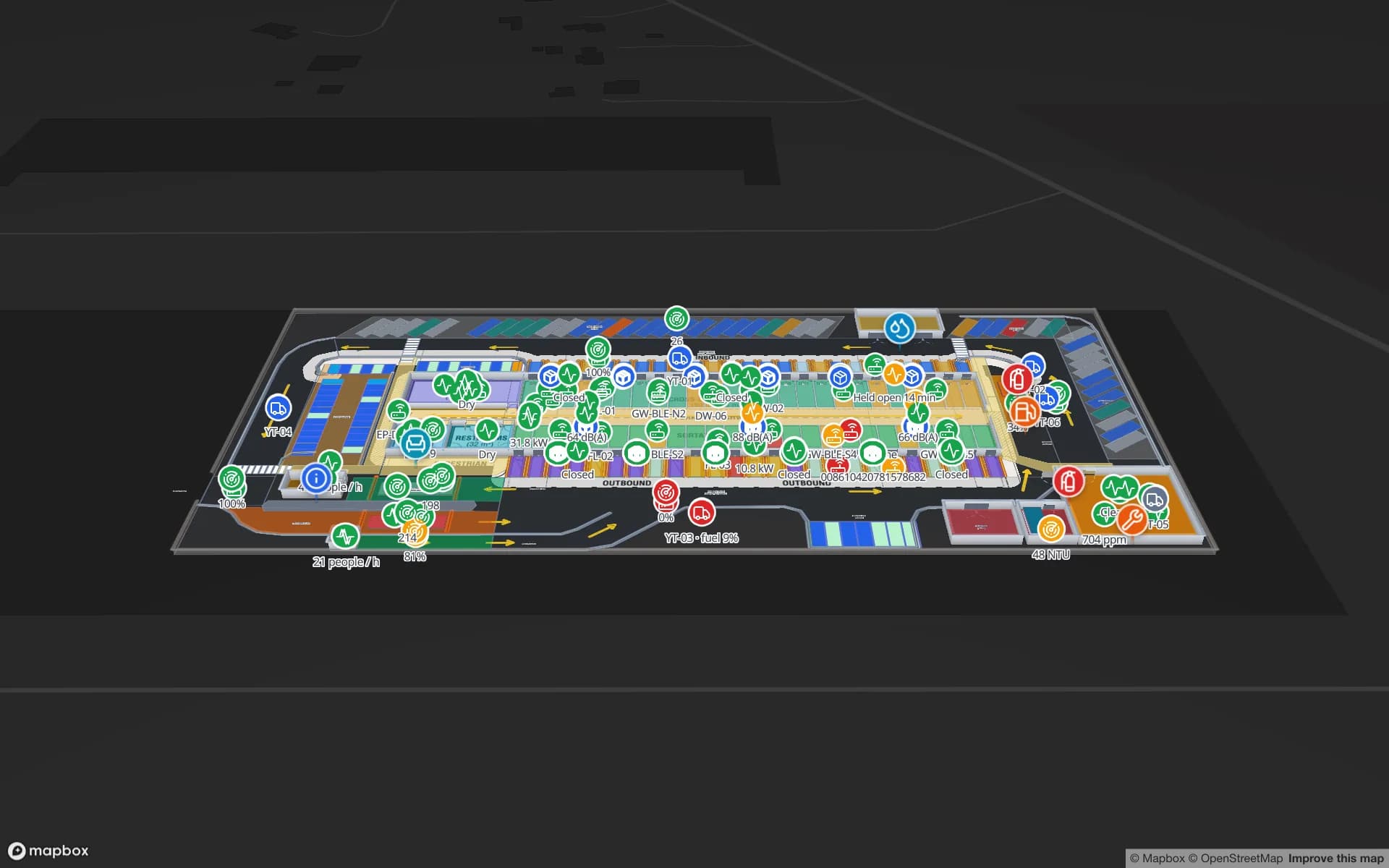
Port Klang is Malaysia’s largest port and the main gateway for the Klang Valley, while the Port of Tanjung Pelepas in Johor is a major transhipment port at the southern tip of the peninsula. Distribution centres, bonded warehouses and container freight stations around both turn containers into pallets and pallets into outbound loads.

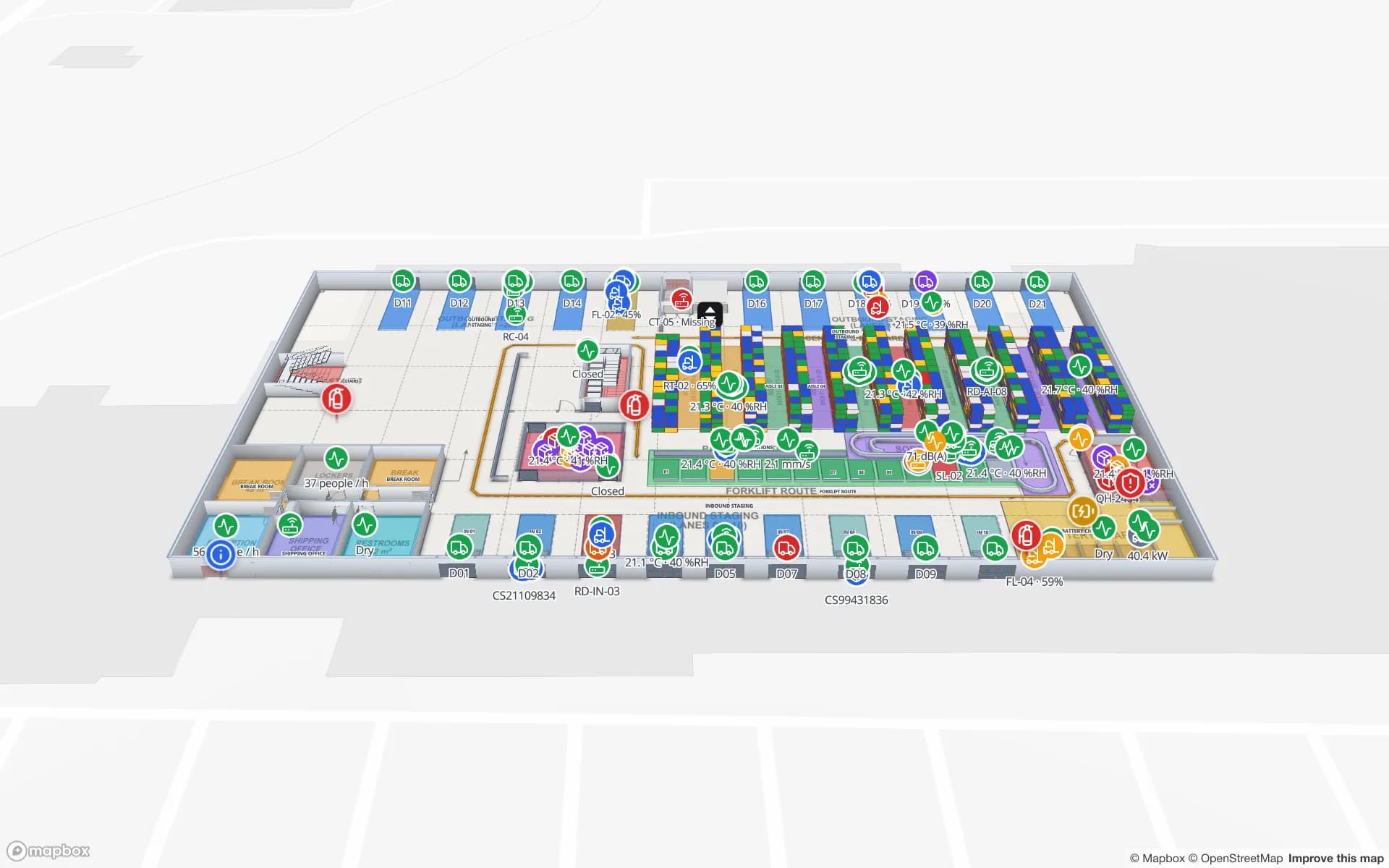
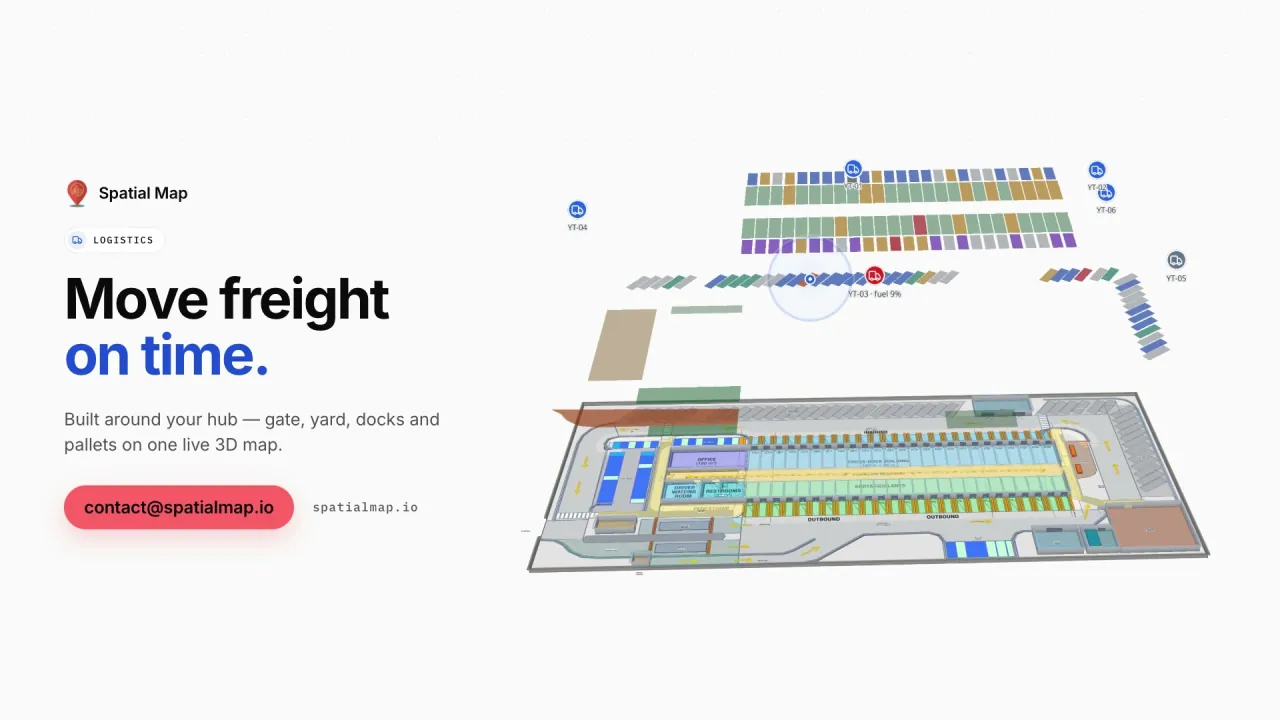
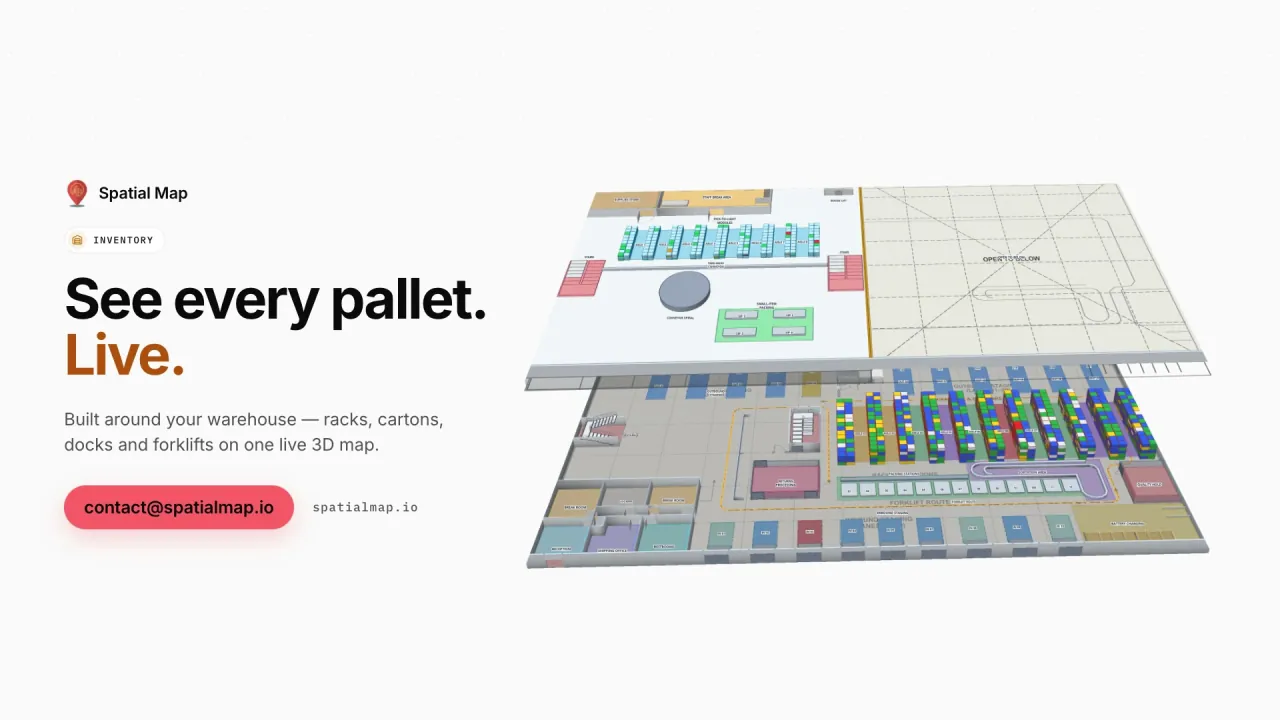
Dock doors, yard slots and staging lanes are drawn on the site plan and coloured from your WMS or yard data; RFID-tagged pallets are followed door to door. The Eastport Cross-Dock demo shows 50 dock doors, 44 yard slots and 1,180 RFID pallets, and Crestline Fulfillment shows rack-level stock across 2,204 locations.

Halal supply chains: segregation you can see

Halal logistics depends on keeping halal and non-halal goods apart in storage, handling and transport. In a shared warehouse, that segregation exists as zones, racks and dock lanes — and as a rule people need to follow every shift.

Spatial Map makes those zones visible. Draw the halal and non-halal storage areas, racks and staging lanes on the floor plan, give them their own colours, and bind your WMS stock by bin so each pallet appears in the zone it is actually in. A pallet in the wrong zone shows up on the map and in reports. Spatial Map does not certify anything: halal certification, such as JAKIM’s, belongs to your business and its procedures, and your records remain the evidence.

Malls in Kuala Lumpur and the Klang Valley

Kuala Lumpur and the wider Klang Valley have some of the largest shopping malls in the region, with multi-level retail floors, food courts and car parks. Retailers inside them use RFID for stock accuracy and loss prevention, and mall operators want footfall and operations on one view.

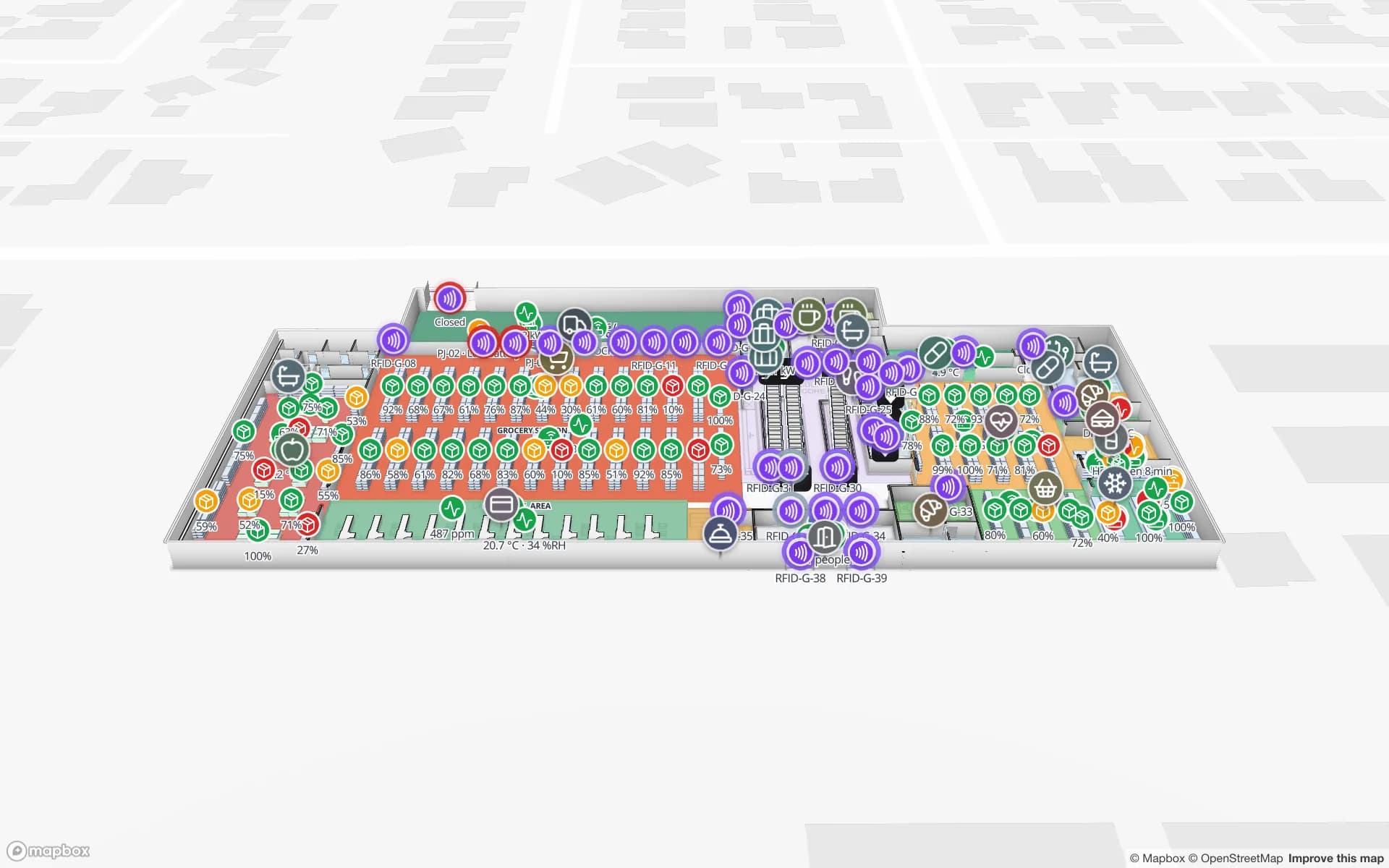
The Retail Mart demo shows a three-floor store with escalators, lifts and 85 RFID readers at doors, escalators and lifts, alongside shelf stock and fridge sensors. Wayfinding builds walking routes around walls and through doors, on every floor.

PDPA, languages and working with us

Where location data relates to people, the Personal Data Protection Act 2010 is the context; your legal advisers decide what applies, and most plant and warehouse projects tag units, pallets and equipment rather than staff. A data processing agreement is available and the security page describes how data is protected.

The interface is available in English and Chinese, among six languages, which suits Chinese-speaking supervisors; it is not available in Malay. Rack codes, zone names and report titles appear exactly as you write them, in Malay or any other language. Spatial Map is sold online at the same USD price worldwide, and our team works with Malaysian customers remotely, by video call and through the contact form. See also our Singapore page for cross-strait operations.

How Spatial Map does it

From plant layout to live RFID map

  1. 01

    Import the layout

    A PDF or DWG (AutoCAD R2004–R2018) of the plant, warehouse or store, placed at scale.

  2. 02

    Draw zones and racks

    Security zones, halal and non-halal areas, racks with their locations, docks and readers.

  3. 03

    Connect RFID and WMS

    Your RFID middleware or WMS posts rows to a table with the write API, or Spatial Map polls its REST endpoint.

  4. 04

    See, replay, report

    Live reads by zone, history playback and reports in PDF or Excel.

What Malaysian teams use it for

Semiconductor and electronics stores

RFID-tagged reels, trays and finished units read zone by zone.

Halal segregated storage

Halal and non-halal zones drawn and coloured, with stock bound by bin.

Port-side warehouses

Dock doors, yard slots and pallets staged for outbound loads.

Mall retail and RFID stock

Item-level stock across floors, escalators and lifts.

Contract manufacturing lines

Lines, WIP and raw-material racks coloured from your MES.

See it on real demo facilities

Fictional names, real floor plans, live sensors, RFID, BLE tags and gateways — open any of them in the browser.

All 13 demo facilities

Questions from Malaysian teams

Yes. You draw the zones, racks and lanes on the floor plan and colour them, and your WMS stock by bin shows which pallets sit in which zone. Spatial Map does not certify anything; halal certification is your business’s own, and your procedures and records remain the evidence.

Not yet. The app is available in English, Chinese, Spanish, French, German and Arabic, and each user picks their own. Your own content — zone names, rack codes, report titles — can be in Malay.

The ones you already run. Your RFID middleware posts reads (tag, reader, time) to a table through the write API — HTTPS, bearer API key, bulk upsert, 60 requests per minute per key, so reads are sent in batches — or exposes a REST endpoint that Spatial Map polls. Spatial Map does not read tags itself.

No. Spatial Map is sold online and our team works with customers remotely, by video call and through the contact form, in English or Chinese.

The same worldwide, in US dollars: a 7-day free trial for up to 5 facilities with no credit card, then Pro at $60 a month or $600 a year for up to 4 facilities. Larger sites are quoted as custom services.

Map your first Malaysian site this week.

Start the free trial, or send us a plant or warehouse layout and a sample of your RFID or WMS data through the contact form.