Tangier · Tanger Med, the free zones and the logistics zone

RFID tracking in Tangier, from the Tanger Med quay to the warehouse door

Spatial Map puts RFID reads on a live 3D map of the building where they happen, so a tag at a dock door becomes a pallet in a lane, a returnable rack at a production line or a carton in a trailer. RFID tracking in Tangier starts at the Tanger Med port complex on the Strait of Gibraltar and spreads into the free and industrial zones around it, where plants and 3PL warehouses feed Europe. Your readers and middleware do the reading; Spatial Map shows each read in place.

No credit card. Runs in the browser. Pro is $60/month for up to 4 facilities. Book a demo

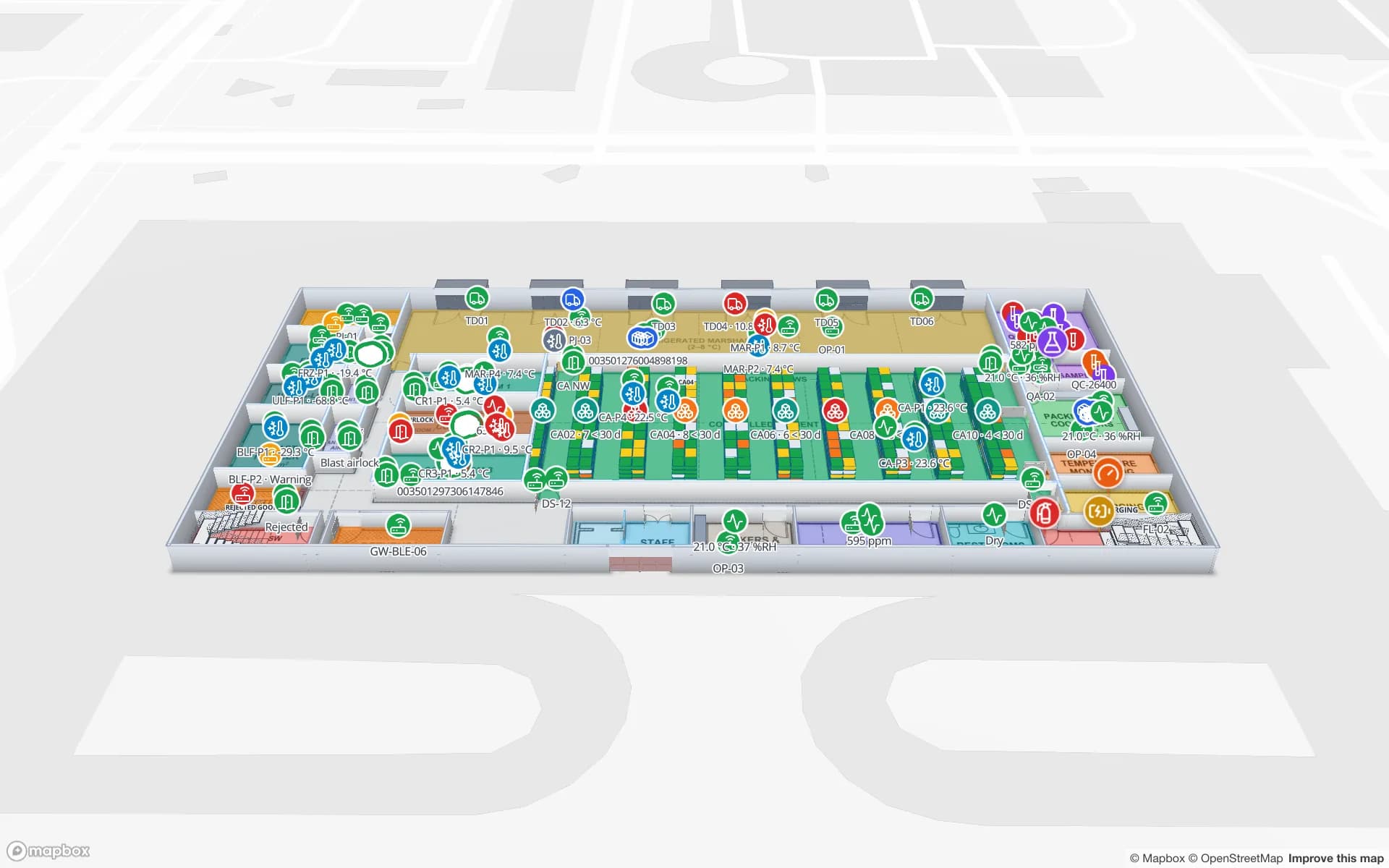
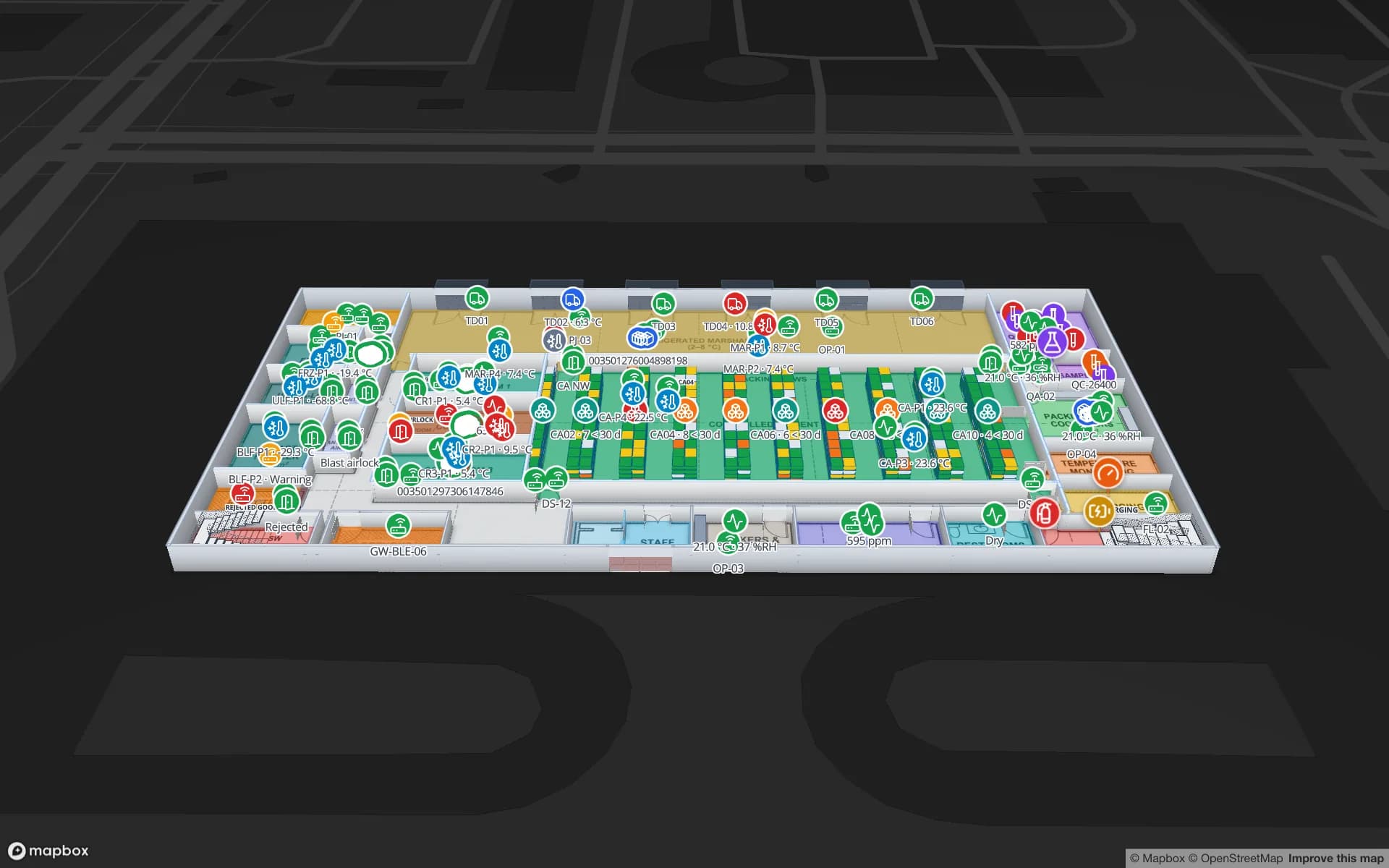
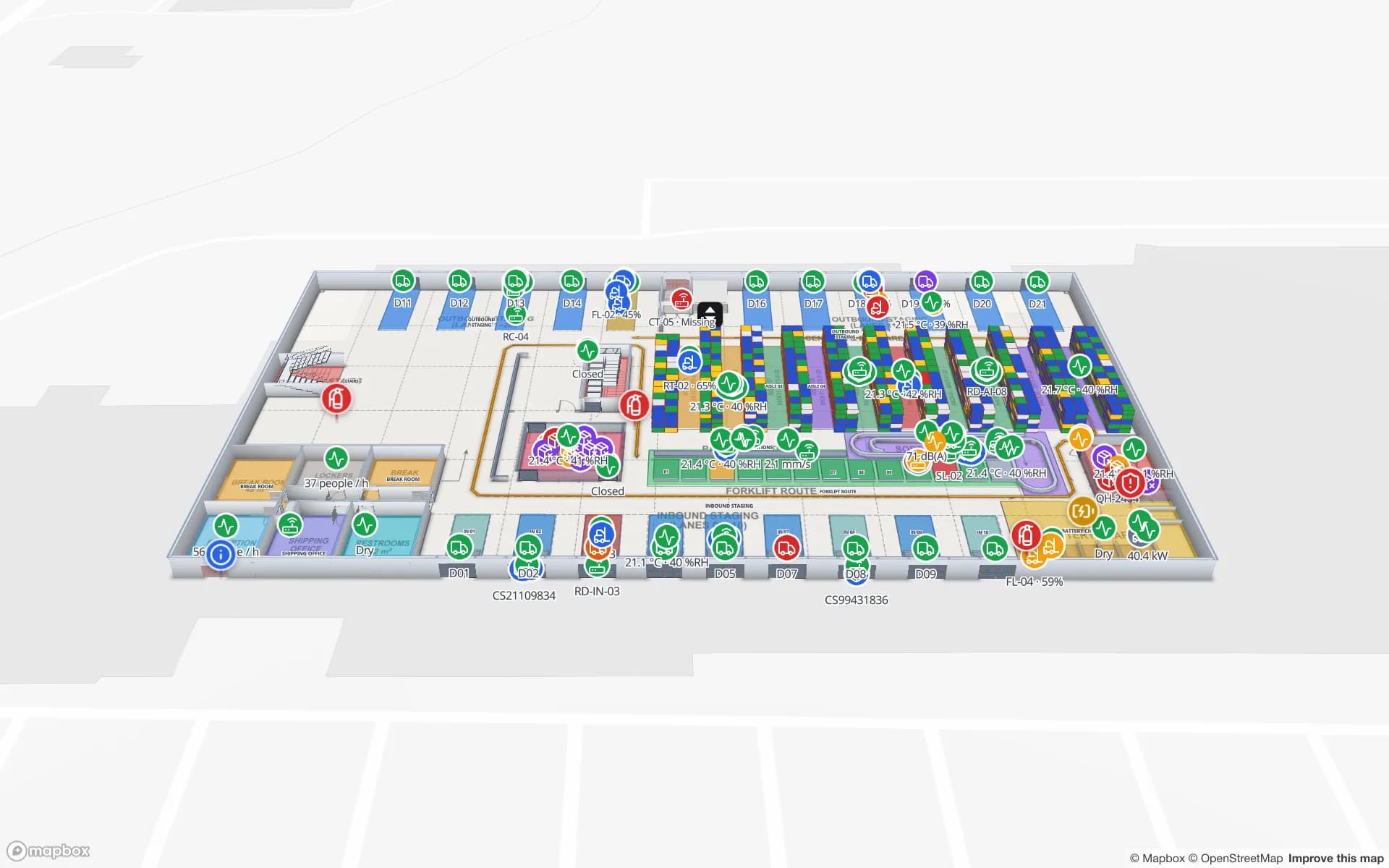
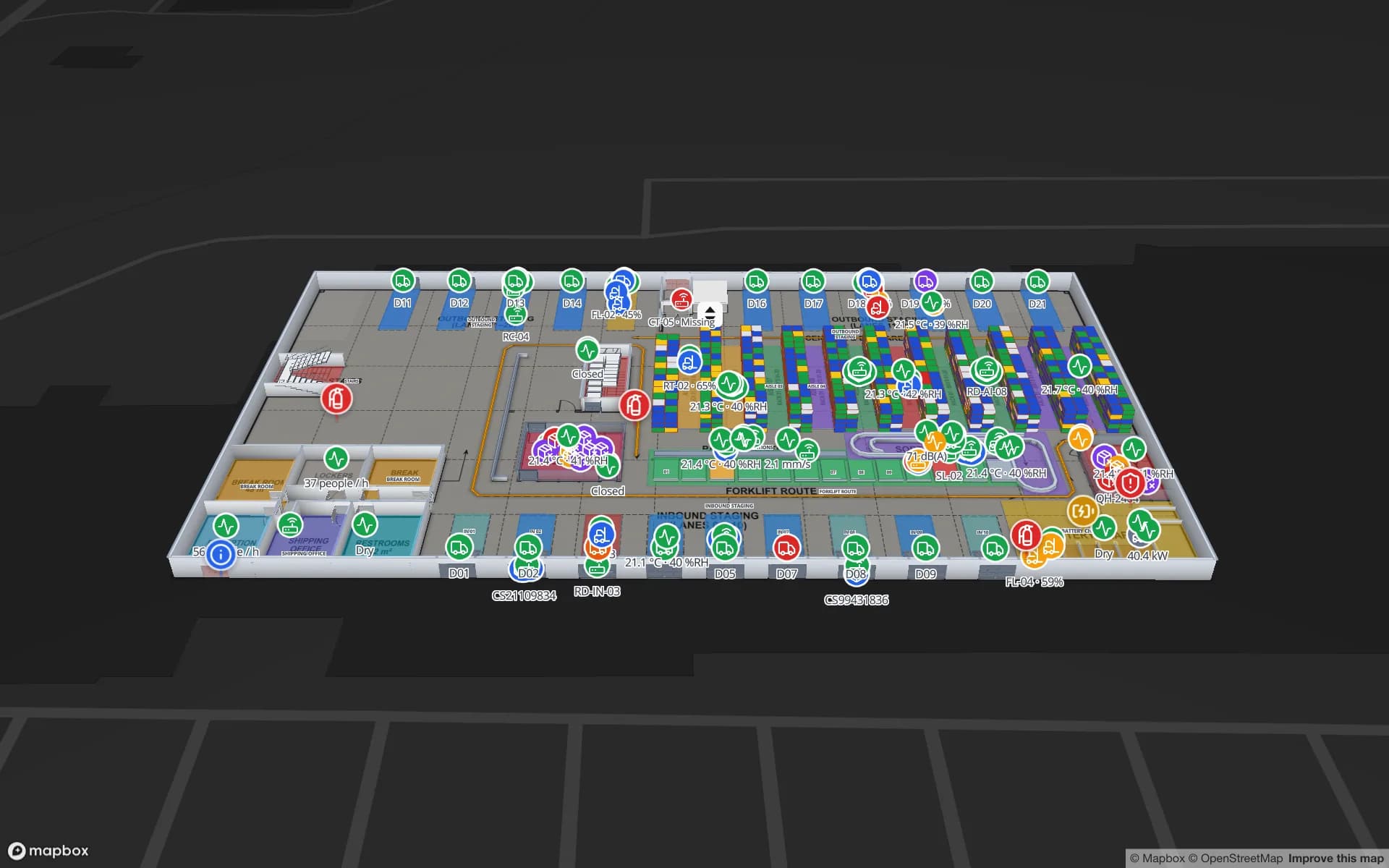
Eastport Cross-Dock Freight Hub, a cross-dock & trailer yard demo, in the Spatial Map 3D viewer with live device markers
Eastport Cross-Dock Freight Hub
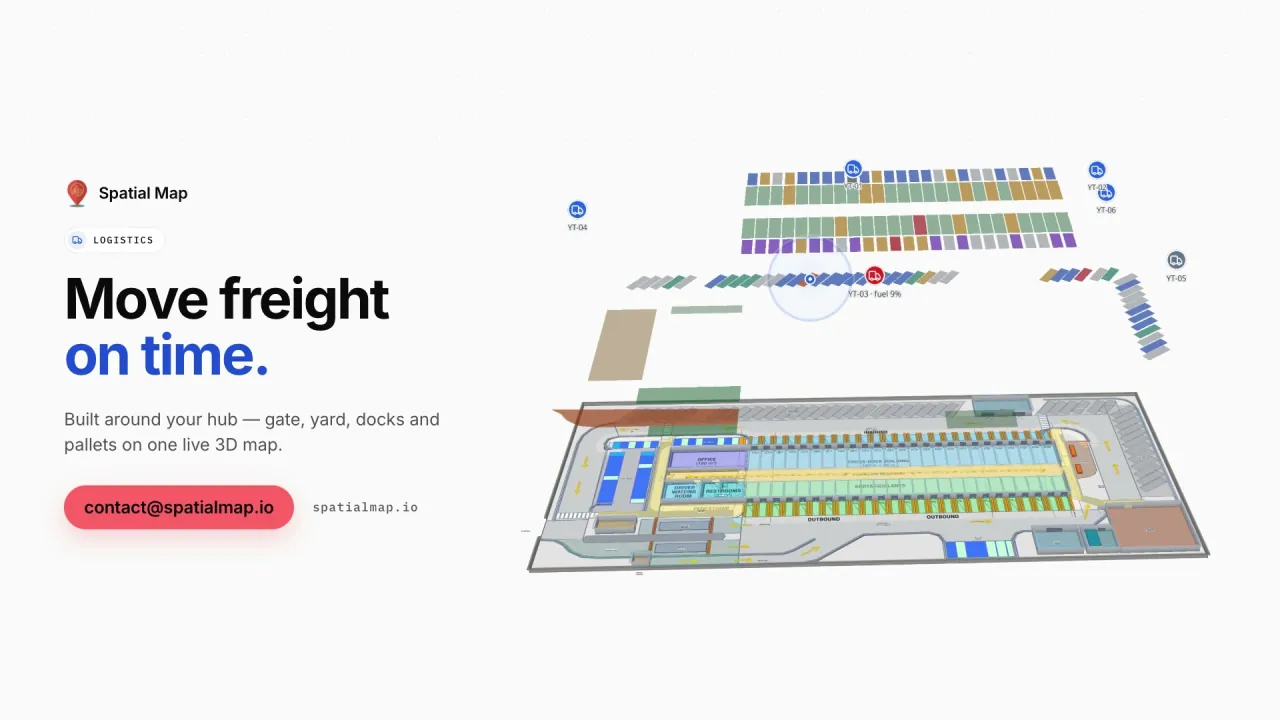
Eastport Cross-Dock, a demo freight hub: 50 dock doors, 44 yard slots and 1,180 RFID pallets, with the gate and weighbridge.
Dock doors in the Eastport cross-dock demo
50
Yard slots in the Eastport demo
44
RFID pallets moving through Eastport
1,180
Free trial, up to 5 facilities, no card
7 days

A port complex with three parts

The operator describes Tanger Med as a port complex developed over 1,000 hectares, made up of Tanger Med 1, a trucks and passengers port and Tanger Med 2. It handles containers, TIR trucks, hydrocarbons, passengers and new vehicles, and works both as a transshipment hub and as the gateway for import and export cargo. Every one of those flows ends at a building: a container freight station, a bonded shed, a trailer yard, a vehicle compound.

Inside such a building, RFID answers questions the port systems do not: which pallet is in which lane, which carton went into which container, which trailer is waiting at which door. Portals at the dock doors read each tagged pallet as it passes, your middleware posts the reads to a table, and the map shows each pallet in the lane it was last read, as in the Eastport demo with 1,180 RFID pallets. Spatial Map does not connect to port, terminal or customs systems.
Six activity zones around the port

Tanger Med Zones, a subsidiary of the Tanger Med Special Agency, plans and develops six activity zones: Tanger Free Zone, Tangier Automotive City, Tetouan Shore, a vehicle-manufacturing zone, Tetouan Park and the Fnideq Economic Activity Zone. Together the group says its zones cover more than 3,000 hectares and host over 1,500 companies in automotive, aerospace, electronics, textiles, agri-business, offshoring, retail and logistics.

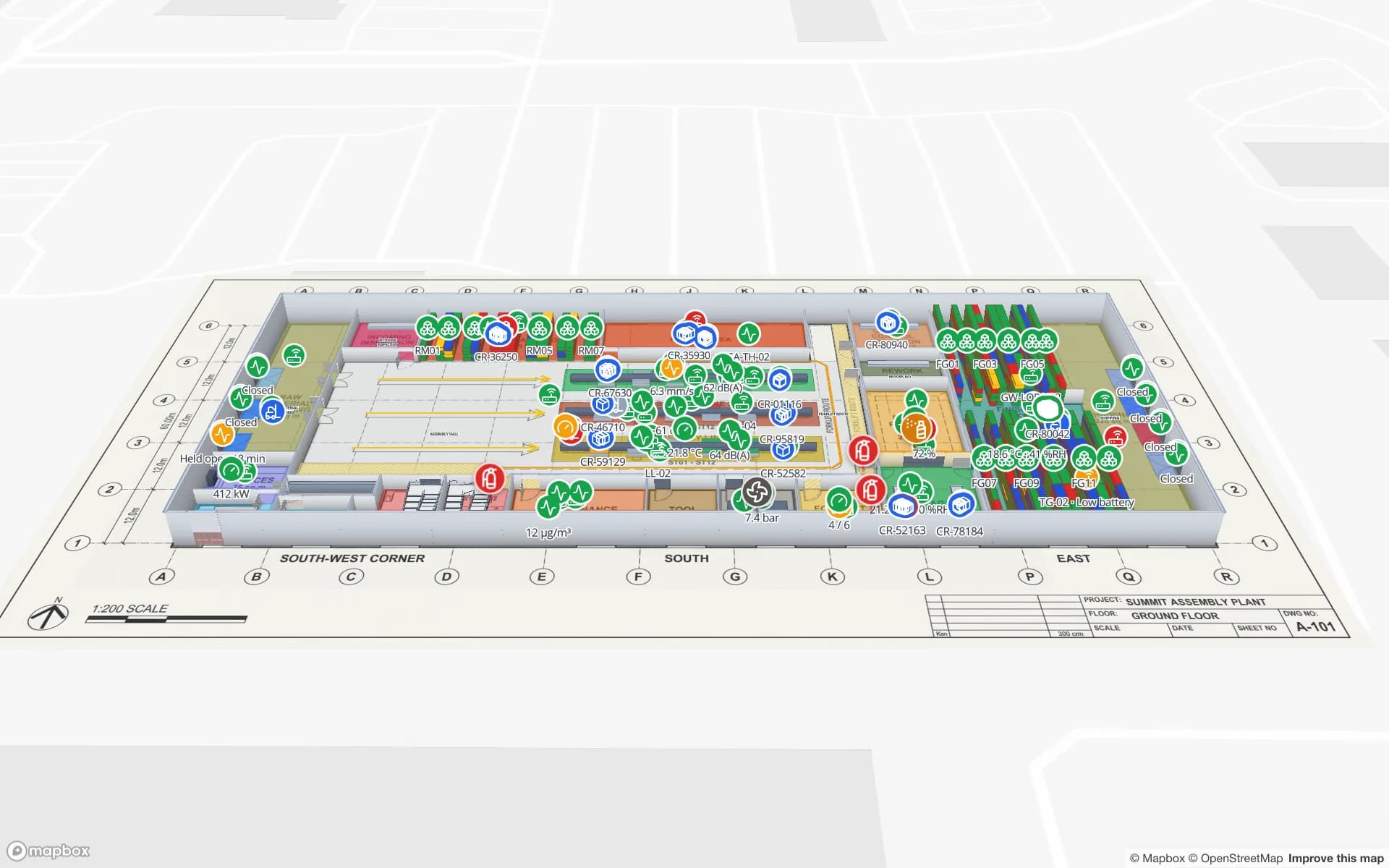
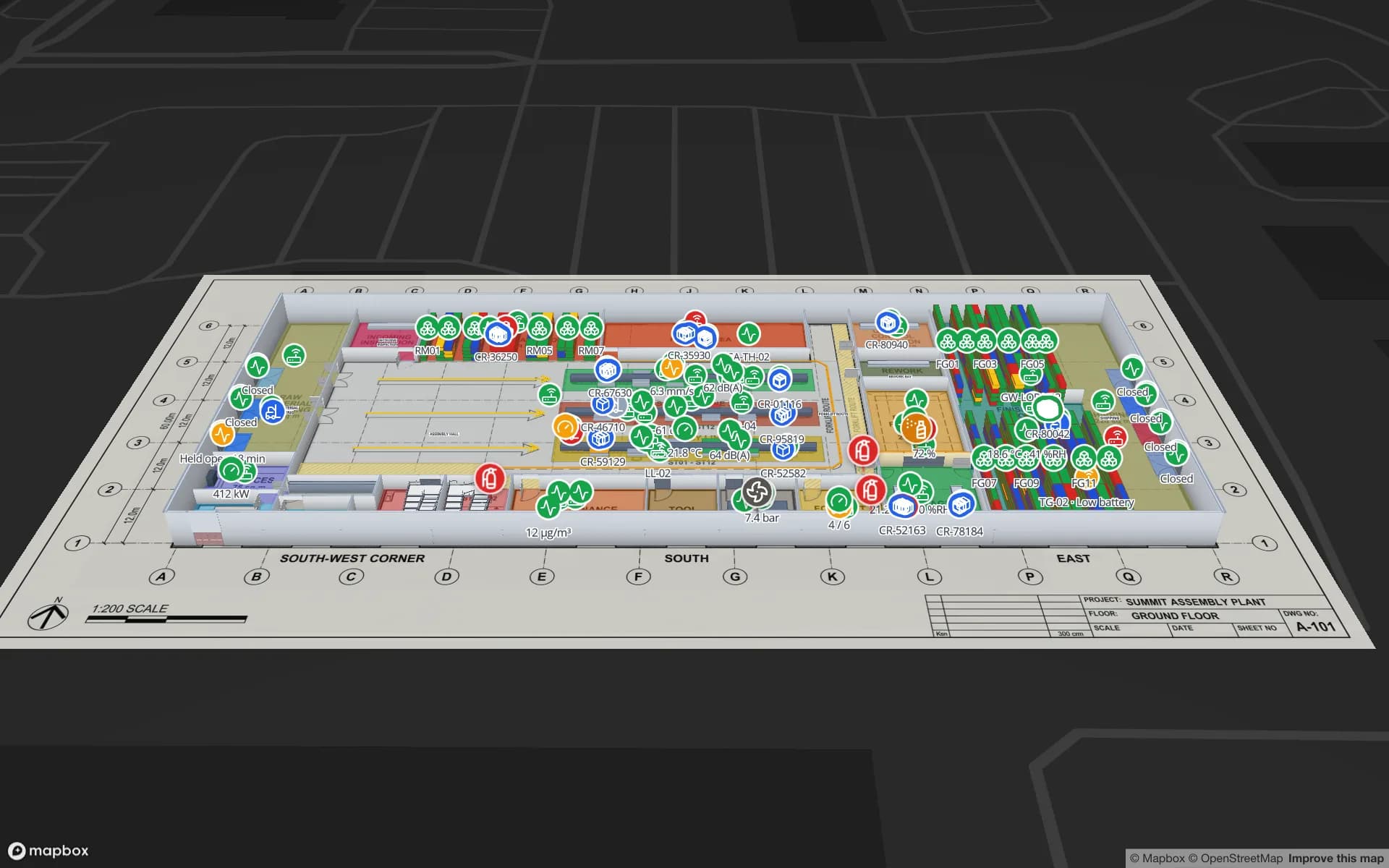
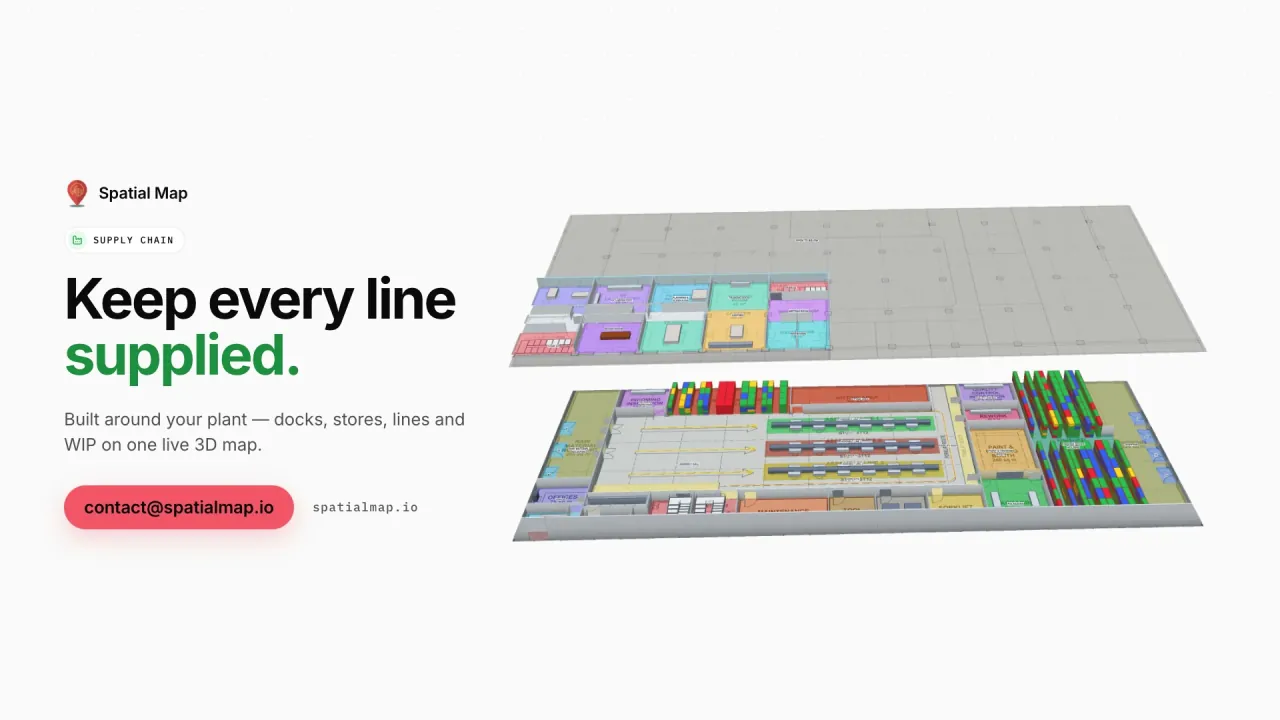
Tangier Automotive City alone is described as a 720-hectare site with several extensions scheduled for 2024 and 2025. A plant in a zone like that has a short list of things that must never be lost, and most are containers: returnable racks and totes that carry parts from supplier to line and back. Tag each one, read it at the line-side door and the dock, and the map shows how many are in the plant, how many are with the supplier and which lane each is in. Line-side stock comes from your ERP; the Summit demo shows lines, workstations and 867 rack locations on one plant map.

The logistics zone: many customers, one shed

Close to the port complex, the group is developing a logistics zone with a projected area of 200 hectares, a single customs area and Class A and B warehouses. Its listed services — groupage, distribution, procurement, order picking, packaging, labelling, assembly and quality control — describe a 3PL business, where one building holds the goods of many customers and each pallet must be billed and found.

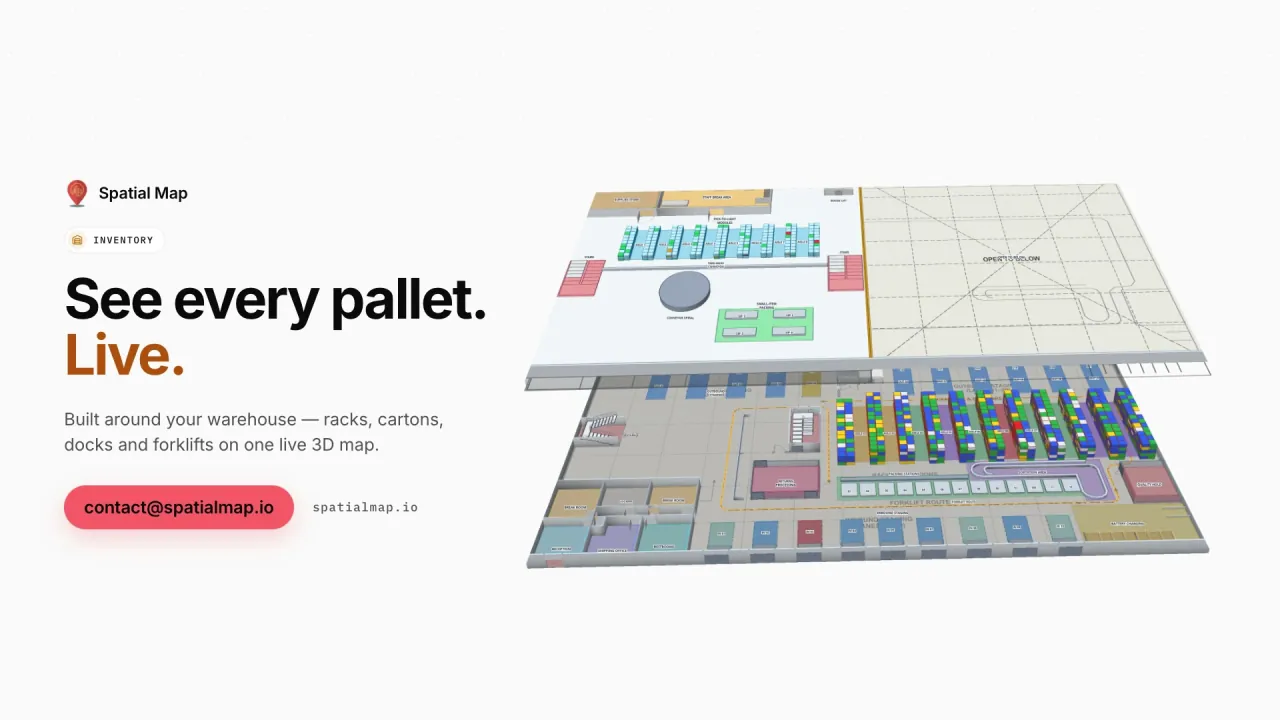
RFID makes the pallet the unit of record: a tag at receiving links it to a customer and an order, a read at the dock door confirms what left on which truck, and the map colours each customer’s stock. Draw each customer’s area on the plan and give them a read-only share link locked to their floor and layers, with an expiry date and a view cap, instead of an email with a spreadsheet. The Crestline demo shows 2,204 rack locations coloured by stock status, with staging lanes in front of the docks.

Fnideq and Tetouan: distribution and light industry

Further along the coast, the Fnideq Economic Activity Zone covers 95 hectares and is, in the group’s words, exclusively for distribution and trade; its first phase covers 10 hectares and houses 76 warehouses. Tetouan Park is a 156-hectare site for light industry and manufacturing that the group says is home to 126 projects. Both are made of many mid-sized warehouses and workshops, each with its own stock and its own IT.

For a small distributor the useful starting point is not RFID on every item but the table: import the stock list by bin from CSV or Excel, colour the racks by stock status and add RFID where it pays back first, such as the returns bay or the fast-moving rows. RFID stock counting shows how a handheld count updates the map room by room.

TIR trucks and the yard

A complex that handles TIR trucks, vehicles and containers lives or dies in its yards. In your own yard, Spatial Map draws the gate, the weighbridge, the parking and numbered slots, and colours each slot from the data you send: a trailer present, a container loaded, a vehicle waiting. A weighbridge or gate-camera system can post the arrival as a row; the map shows the slot occupied and an in-app alert rule can flag a trailer that has sat in a slot for too long. The post on yard visibility, dock doors and trailers walks through the pattern.

Services for teams in Tangier

Tangier teams usually begin with one of the following:

  • Zone plants and 3PL warehouses start with inventory tracking at the dock doors, because a pallet lost there delays a truck for a ferry or a vessel.
  • Automotive suppliers add asset tracking for returnable racks, moulds and forklifts.
  • RTLS and UWB matters mainly for large plants and yards where vehicles and people must be located continuously; most buildings will not need it first.
  • If you have no readers or tags yet, our team can source RFID readers, antennas and tags on request, quoted per project, with manufacturer warranty: see hardware and demo kits on request.
  • Where your IT team is small, our team builds Android RFID handheld apps, WMS and ERP integrations and a stock system for stores as client projects. Run it as cloud or on-premises. The interface is available in French and Arabic.

Also served nearby

The same approach covers Asilah, Larache, Tetouan, M’diq and Cabo Negro, Fnideq and Ksar el-Kebir. Kenitra to the south is covered with the Morocco overview.

How Spatial Map does it

From the Tanger Med gate to the shipping lane

  1. 01

    Pick one building

    A container freight station, a zone plant or a 3PL shed — wherever a missing pallet costs a departure.

  2. 02

    Map doors, lanes and racks

    Upload the plan, let AI Map draft the floor for review, and name read points the way your middleware names them.

  3. 03

    Connect reads and stock

    RFID middleware and your WMS post rows through the table write API, a polled REST endpoint or CSV and Excel uploads.

  4. 04

    Share per customer

    Read-only links locked to one customer’s area, and in-app alerts for pallets staged too long or a reader that went quiet.

What Tangier teams track

Container freight stations and port sheds

Dock doors, yard slots and pallets staged for the right trailer.

3PL warehouses in the logistics zone

Each customer’s pallets by lane and rack, with share links per customer.

Automotive-supplier plants

Returnable racks, lines and WIP by area.

Textile and agri-food cold rooms

Cold rooms by live temperature, pallets on hold marked.

See it on real demo facilities

Fictional names, real floor plans, live sensors, RFID, BLE tags and gateways — open any of them in the browser.

All 13 demo facilities

RFID tracking in Tangier — questions we get

No. It has no link to port community, customs or terminal systems. It shows what happens inside your own building, from your own RFID reads, WMS or ERP and sensors, so it complements port-level systems rather than replacing them.

Draw each customer’s area on the plan, tag the pallets at receiving and let your WMS post the owner as a field. The map colours stock by customer, and a read-only share link can be locked to one customer’s floor and layers, with an expiry date.

From the reads you send, yes: each rack’s last-seen place is a row in a table, and an alert rule can flag racks not seen for a set number of days. Racks at a supplier appear only if that site has a reader or sends scans.

Yes. The app is available in English, French, Arabic, Spanish, German and Chinese; Arabic uses right-to-left layout. Names you type yourself appear exactly as typed.

No. Spatial Map is sold online and our team works with customers in Morocco remotely, by video call and through the contact form. There are no local resellers or partners.

In US dollars, the same worldwide: a 7-day free trial for up to 5 facilities with no card, then Pro at $60 a month or $600 a year for up to 4 facilities. RFID hardware, if you ask us to source it, is quoted per project and is not part of the subscription.

Map one Tangier dock before the next departure.

Start the free trial and open the Eastport demo, or send us the plan of a zone plant or logistics shed and a sample of your reads through the contact form.