Kochi · Cochin Port, Vallarpadam, the Cochin SEZ, seafood and spices

Cold chain monitoring in Kochi, from the processing hall to the reefer dock

Spatial Map colours cold rooms, freezers and reefer docks by their live probe readings on a 3D map of the building, and lets a rule raise an in-app alert when a probe goes quiet or crosses a limit you set. For cold chain monitoring in Kochi the coast sets the pace: seafood leaves through the port on a schedule that does not wait for a warm shed, and spices, though stored at ambient temperature, are at the mercy of monsoon humidity. Each cold store, processing hall or warehouse can be its own facility with its own map.

No credit card. Runs in the browser. Pro is $60/month for up to 4 facilities. Book a demo

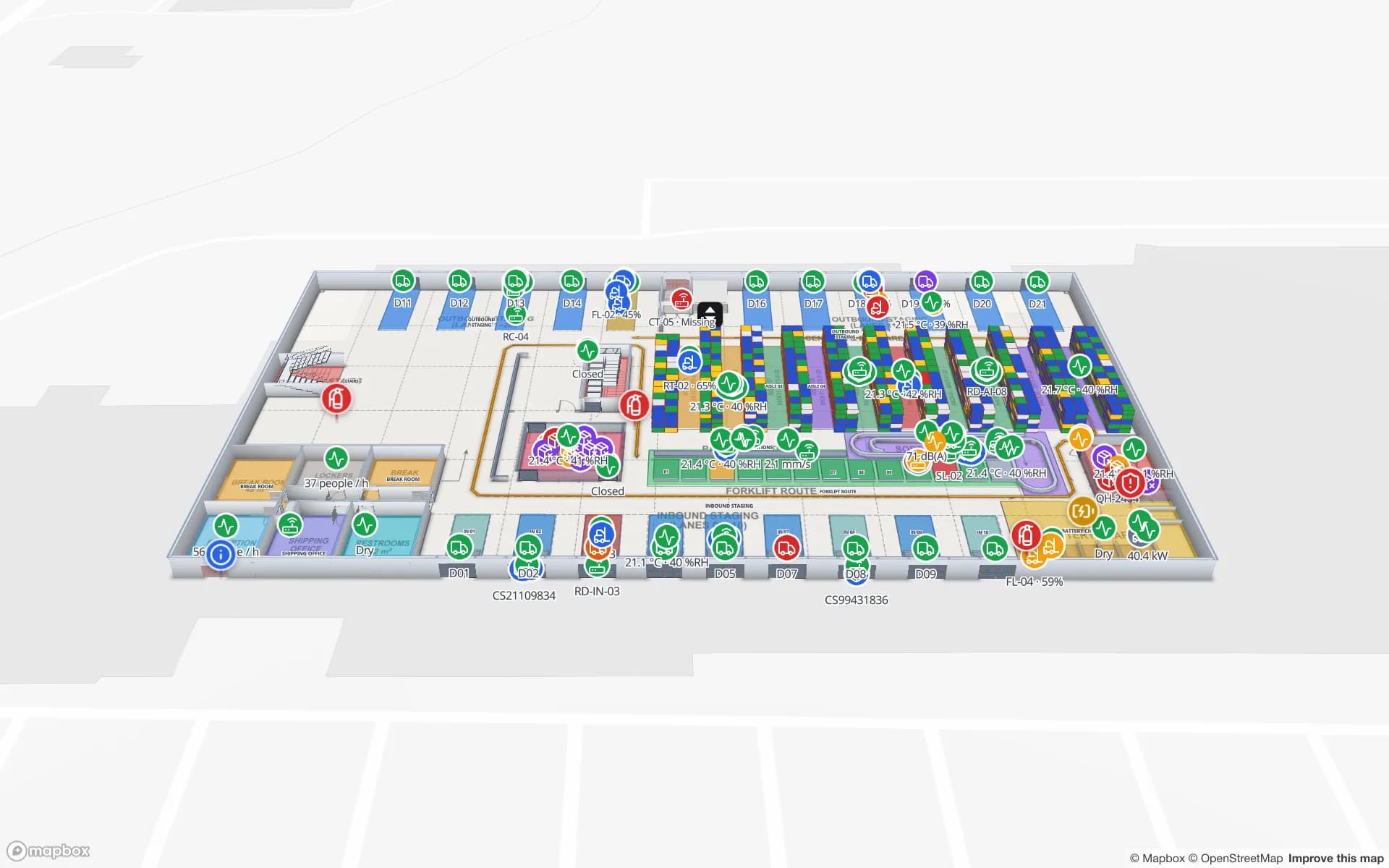
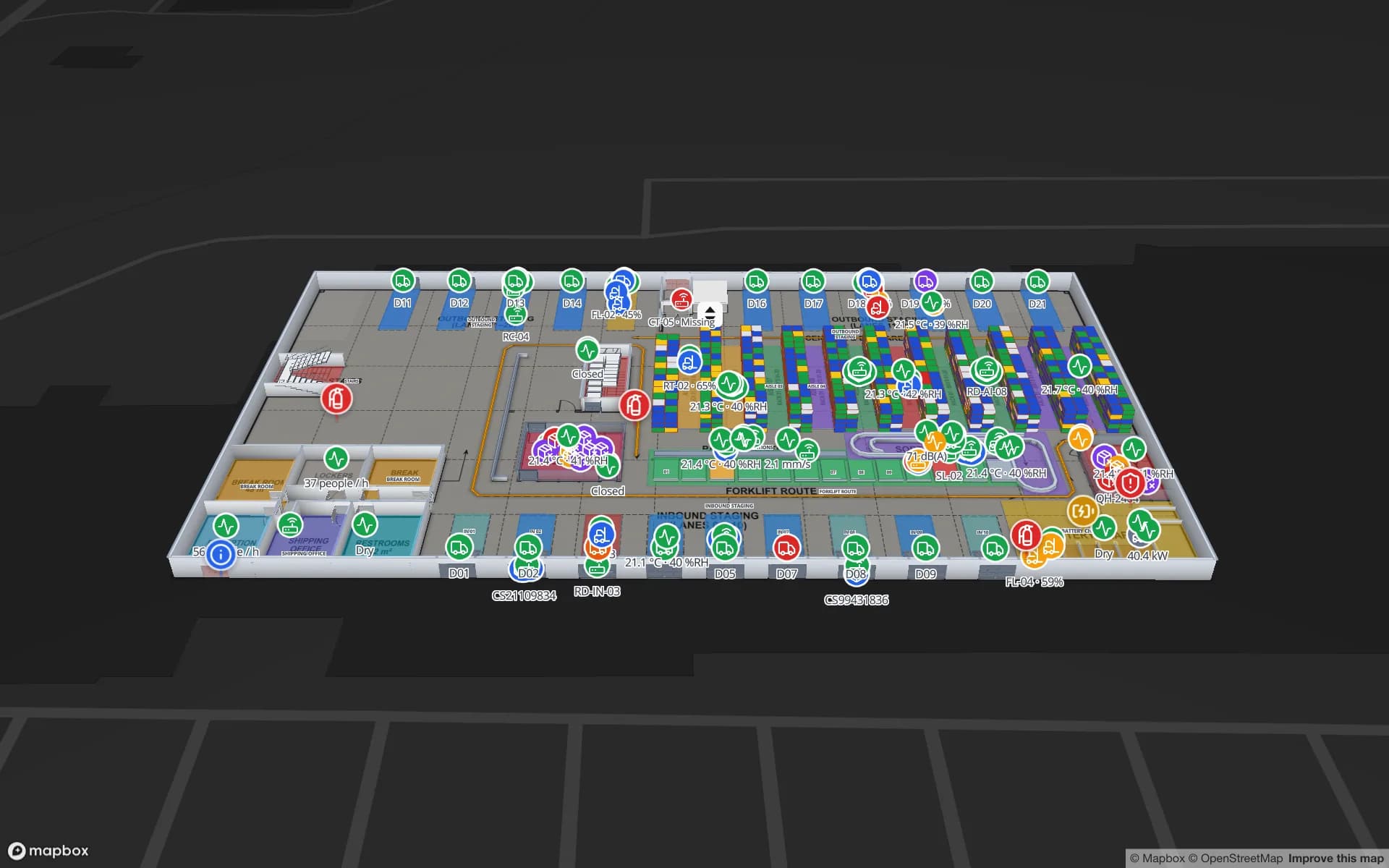
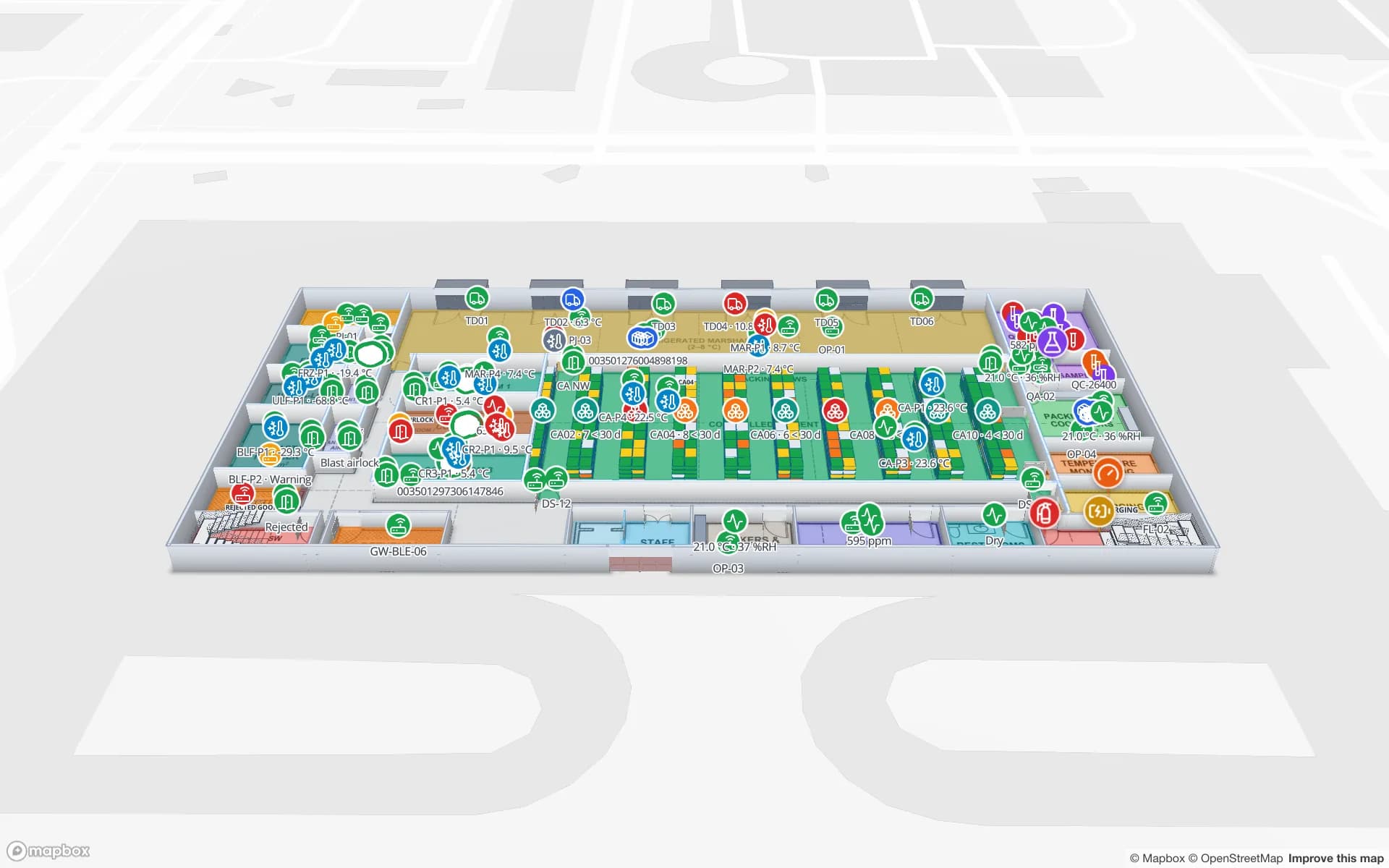
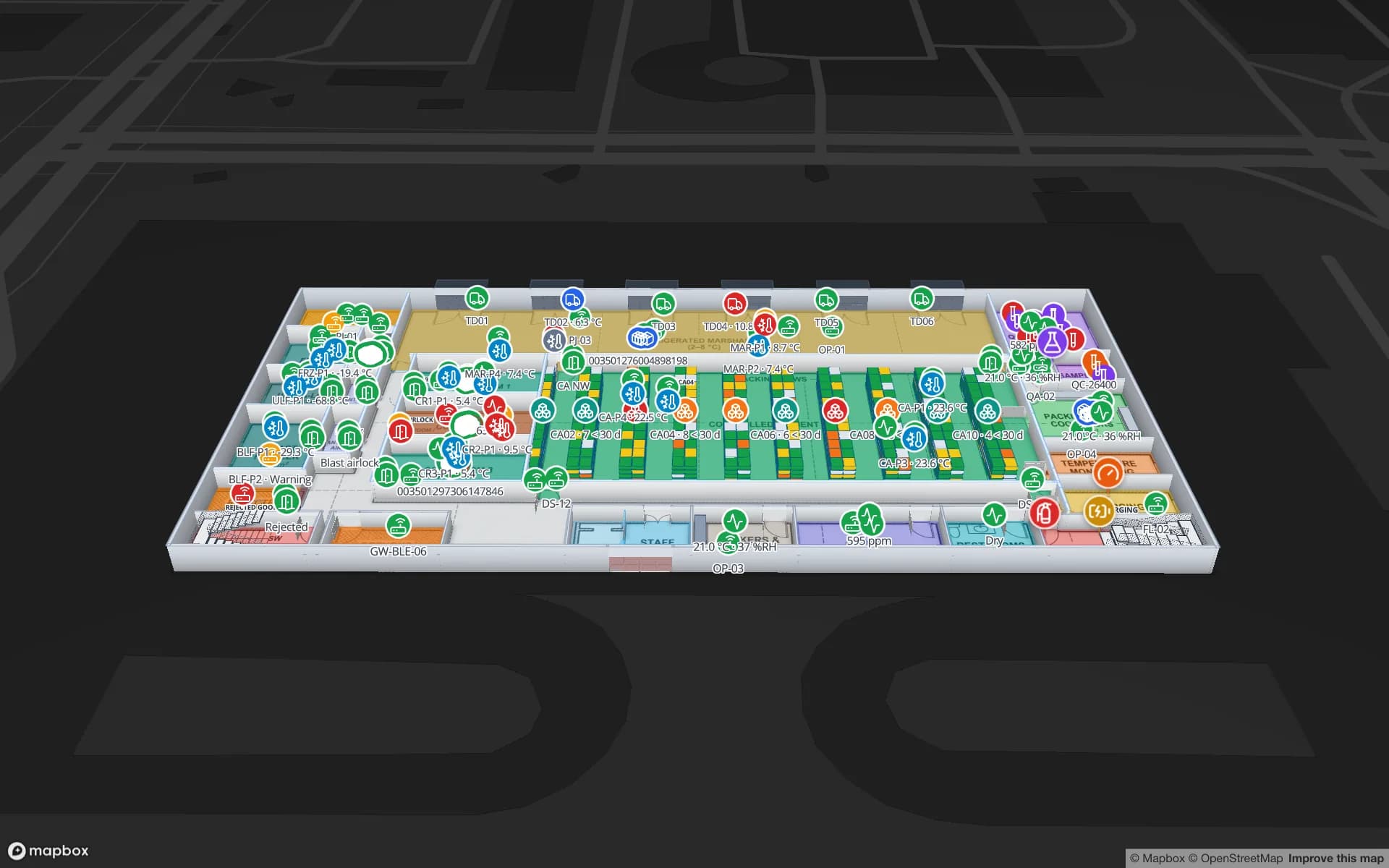
Polar Pharma — Cold Storage & QC Facility, a pharmaceutical cold store & qc lab demo, in the Spatial Map 3D viewer with live device markers
Polar Pharma — Cold Storage & QC Facility
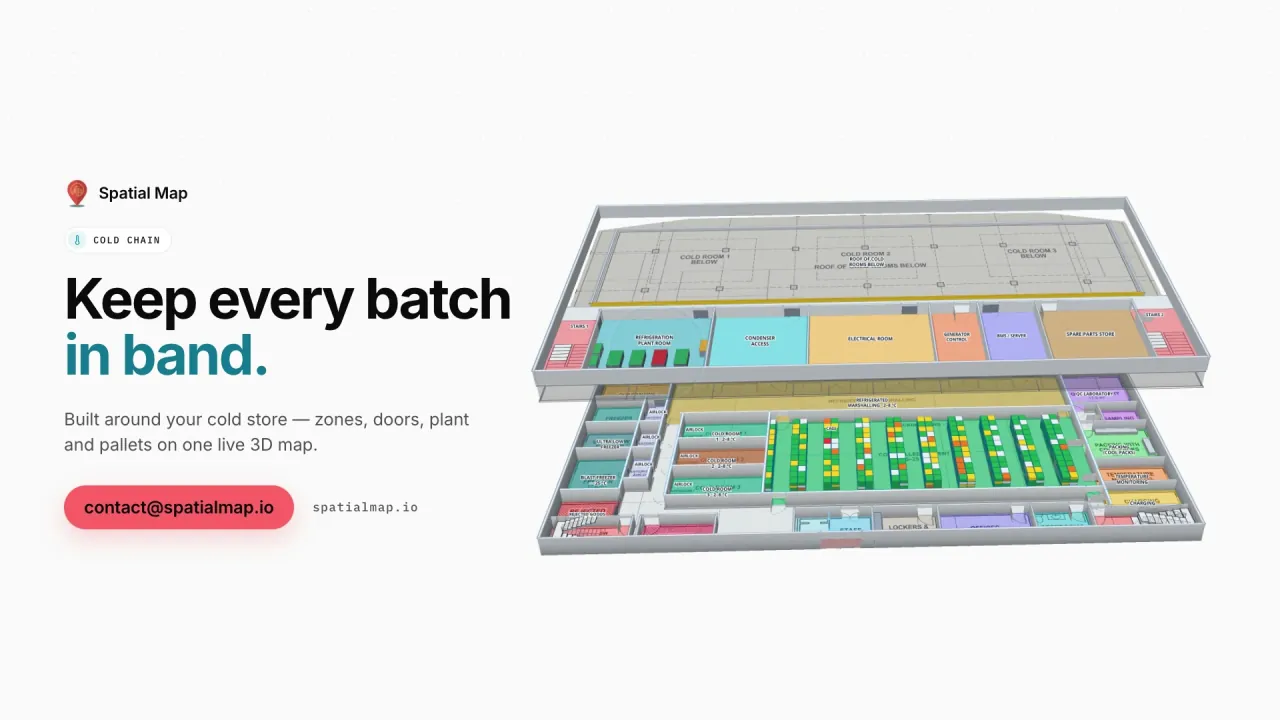
Polar Pharma, a demo cold store: temperature zones and probes, excursions, cold-room doors, reefer docks and quarantine, coloured by live readings.
Rack locations in the Polar Pharma cold-store demo
1,140
Floors in the Polar Pharma demo
2
How often alert rules are checked, with alerts shown in the app
15 s
Free trial, up to 5 facilities, no card
7 days

A port city that ships what spoils: seafood and spices

The Marine Products Export Development Authority (MPEDA), whose head office is in Kochi, named Visakhapatnam, JNPT and Kochi as the country’s top three ports for seafood cargo in its 2025–26 export figures, announced in Kochi on 1 June 2026. The Spices Board of India is also headquartered in the city, and the Cochin Special Economic Zone is at Kakkanad. The two trades that promote Kochi’s exports therefore have their headquarters in the same city as the cold stores that serve them.

Seafood is a cold-chain product from the moment it is landed: a processing hall, blast freezers, a cold store and a reefer truck are four places where a degree matters, and each has its own probe. Spices are different: they are shipped dry, and the risk is moisture. One map can hold both, with the cold rooms coloured by temperature and the dry stores coloured by humidity.


Vallarpadam and the last warm hour

The International Container Transshipment Terminal at Vallarpadam, inside Cochin Port, is described as India’s first international container transshipment terminal; a four-lane road and a rail link were built to serve it as part of more than Rs 2,000 crore of infrastructure. Reefer containers leave your cold store on a truck, enter the terminal, and are handled under the terminal’s own systems from that point.

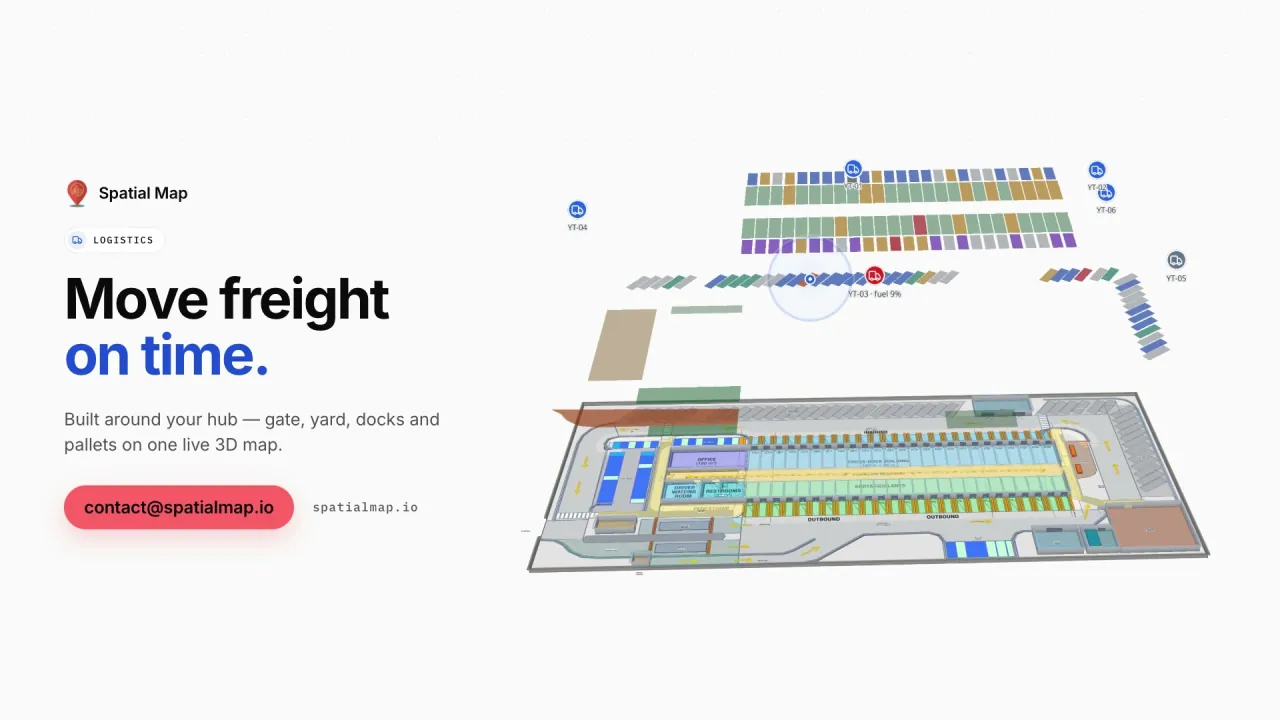
The part you control is the dock. Draw the reefer dock doors, add a door sensor to each, and the map shows which door is open, for how long, and what the cold room behind it read at the time. The Polar Pharma demo shows reefer docks, cold-room doors and probes on one plan; the Eastport demo shows the trailer side of the same loop. Spatial Map does not connect to the terminal, the port community or customs systems, and it stops at your gate.

Monsoon, humidity and the ambient store

The India Meteorological Department gives 1 June as the normal date of monsoon onset over Kerala, so a Kochi store spends a large share of the year in humid air. Humidity reaches spices, dried fish, packaging and cartons long before a freezer fails, and a single store-wide reading hides the damp corner by the door. Put humidity and temperature sensors in a grid and the map can draw them as a heatmap, one floor at a time; the post on warehouse temperature mapping shows how to place them.

Spatial Map shows the readings your sensors send and keeps their history, so a monthly review can replay a rainy week against the stock that was in the room. It makes no claim about food-safety, export-market or regulatory approvals; your quality system stays the record.

Silence is the signal you need most

A cold-room alarm that nobody hears, or a logger that has stopped without anyone noticing, is more dangerous than a high reading, because the screen looks calm. An alert rule of the kind “not updated for N minutes” on the probe table raises an in-app alert, with a severity and a message you write, when a probe goes quiet. A count rule raises one when fewer probes report than the room should have.

Alerts are shown in the app (the bell, a toast and the Alerts page) and are not sent by email, SMS or push, so decide who watches the screen and put the Show on map link in the message. The post on alert rules for warehouse sensors lists the rules teams set first.

Services for teams in Kochi

Kochi teams tend to follow three starting points:

Also served nearby

The same approach covers Kakkanad and the Cochin Special Economic Zone, Vallarpadam, Kalamassery and the wider Ernakulam area. Nothing needs to be installed at any of them: the map opens in a browser.

How Spatial Map does it

From one cold room to the whole dock

  1. 01

    Start with one cold store

    The room where a failure costs most, with its probes named the way your logger names them.

  2. 02

    Map rooms, doors and docks

    Upload the plan, photo or sketch, let AI Map draft the floor, then add cold rooms, reefer docks and door sensors.

  3. 03

    Connect probe readings

    Your logger software or gateway posts rows through the table write API, a polled REST endpoint or CSV and Excel uploads.

  4. 04

    Add limit and silence rules

    In-app alerts for a reading over your limit, a door open too long and a probe that stopped reporting.

What Kochi teams monitor

Seafood processing and cold stores

Freezer and cold-room probes coloured live, with an alert when one goes quiet.

Reefer docks and trailer turns

Dock doors, door sensors and dwell, with the room reading beside each door.

Spice and dry-goods stores

Humidity and temperature heatmaps by floor, with stock by bin on the same plan.

Chilled retail and supermarkets

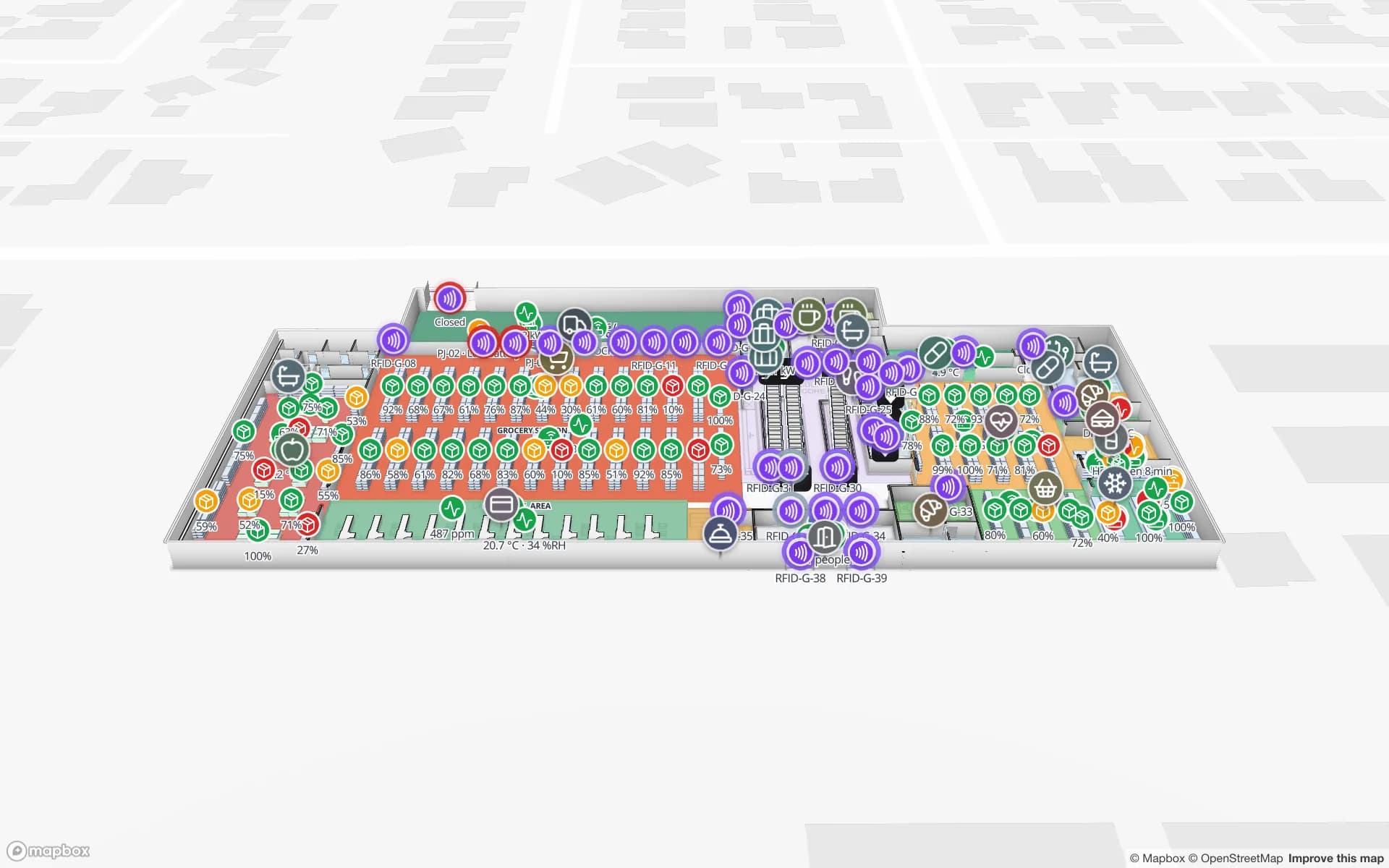
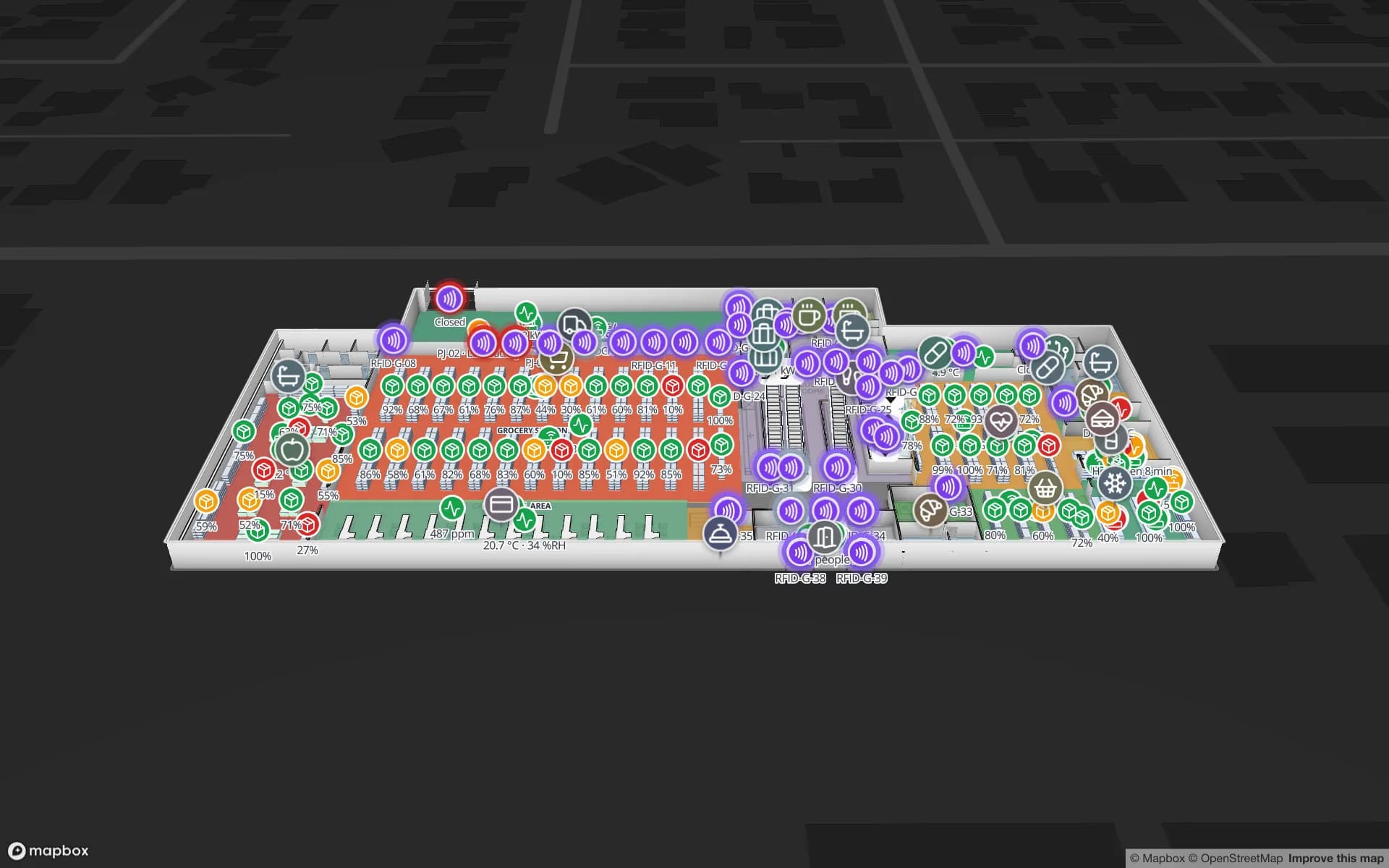
Fridge and freezer temperatures by floor, beside shelf stock.

See it on real demo facilities

Fictional names, real floor plans, live sensors, RFID, BLE tags and gateways — open any of them in the browser.

All 13 demo facilities

Cold chain monitoring in Kochi — questions we get

No. Your loggers and controllers measure and control; Spatial Map receives their readings and shows them on the plan, with history, reports and alert rules. It never switches equipment on or off.

It can help you keep and show records: readings are stored with history, and reports export to PDF, Excel, CSV and JSON. Spatial Map makes no compliance or approval claim of its own, and your quality system remains the record.

Spatial Map stops at your gate. Once a container is handled under the terminal’s own systems, its temperature records are theirs. On your side you can map the dock, the truck’s dwell and the cold room behind it.

Through the table write API (HTTPS, bearer API key, bulk upsert, 60 requests per minute per key), a REST endpoint that Spatial Map polls, or CSV and Excel uploads. A BlueIOT RTLS server has a built-in driver; other vendors connect through the same write API.

Not yet. It is in English, Arabic, Chinese, French, German and Spanish. Room names, probe codes and report titles can be typed in Malayalam or any other script and appear as written.

No. Spatial Map is sold online and our team works with customers in India remotely, by video call and through the contact form. There are no local resellers or partners.

In US dollars, the same worldwide: a 7-day free trial for up to 5 facilities with no card, then Pro at $60 a month or $600 a year for up to 4 facilities. Probes and gateways, if you ask us to source them, are quoted per project and are not part of the subscription.

Colour one Kochi cold room by its probes.

Start the free trial and open the Polar Pharma demo, or send us the plan of a cold store and a sample of probe readings through the contact form.