Lille · Delta 3 at Dourges, Lesquin airport, the Deûle ports

Warehouse tracking in Lille, across estates that share one road, rail and canal network

Spatial Map is browser-based software that shows stock, pallets and dock activity on a live 3D map of each warehouse. Warehouse tracking in Lille is rarely about one building: a logistics provider here may run a shed on the Dourges platform, an air-freight unit at Lesquin and a quay-side depot on the Deûle, each for several clients. Every building becomes its own facility in one workspace, with a French interface for the floor team and an English one for the group.

No credit card. Runs in the browser. Pro is $60/month for up to 4 facilities. Book a demo

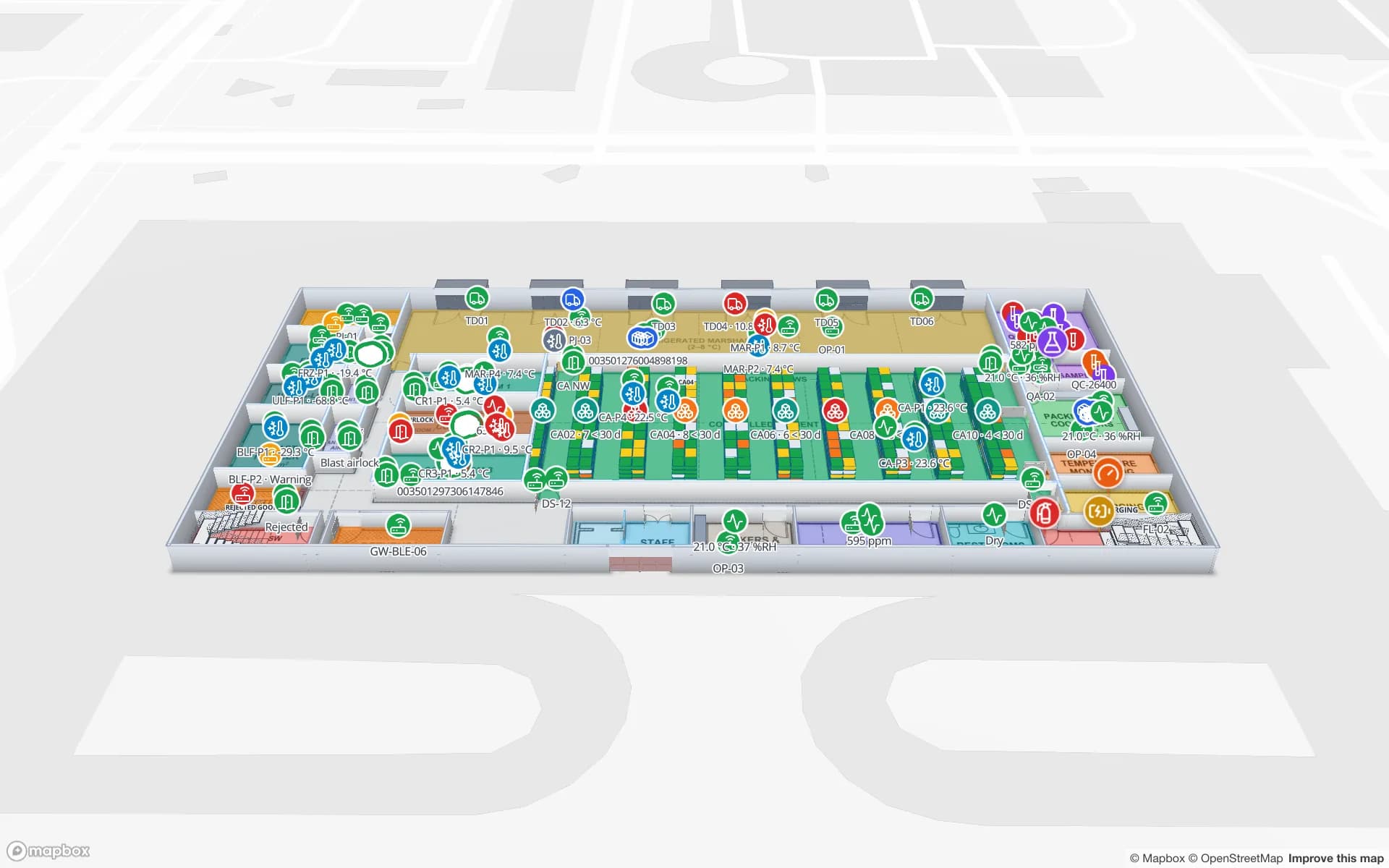
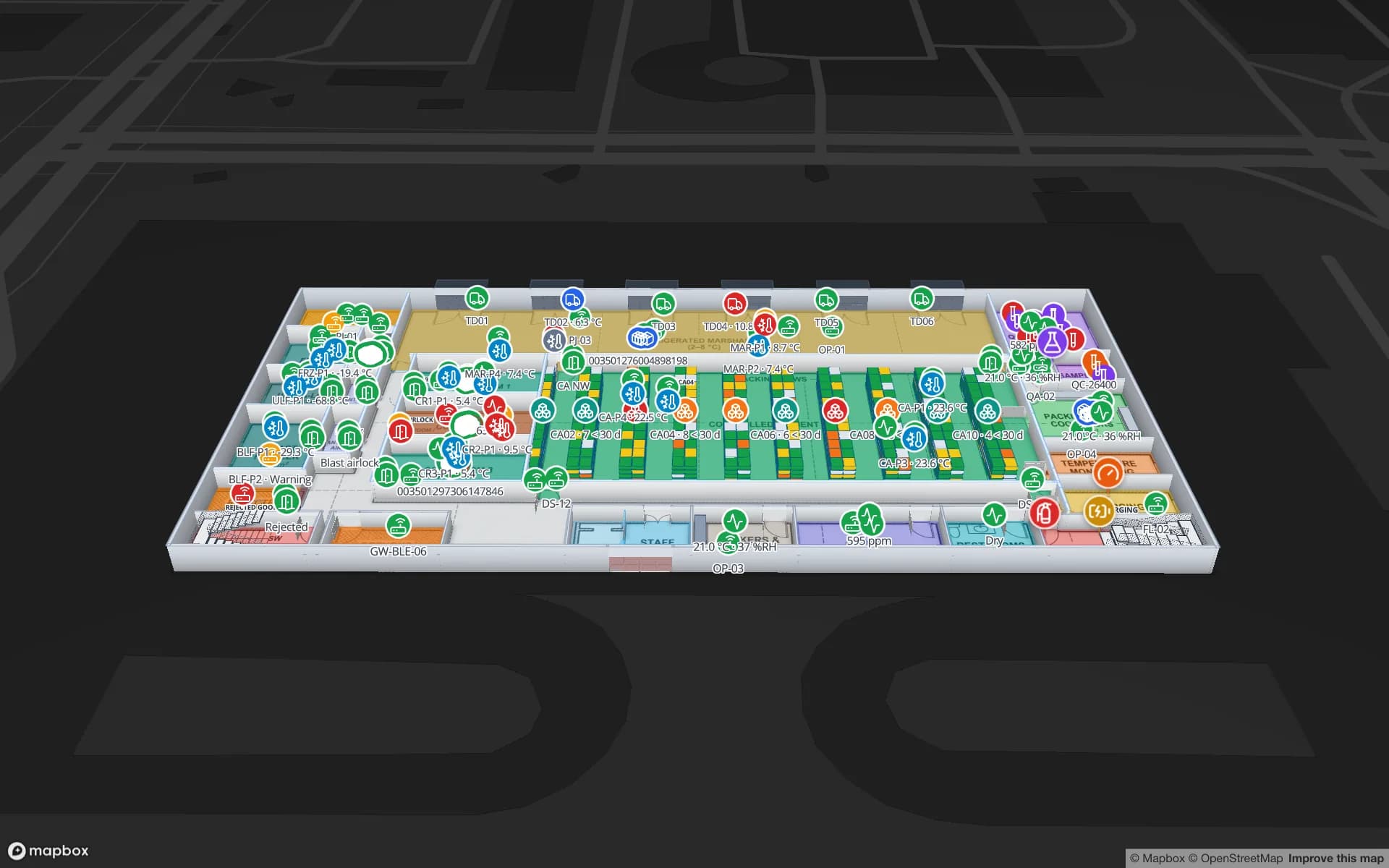
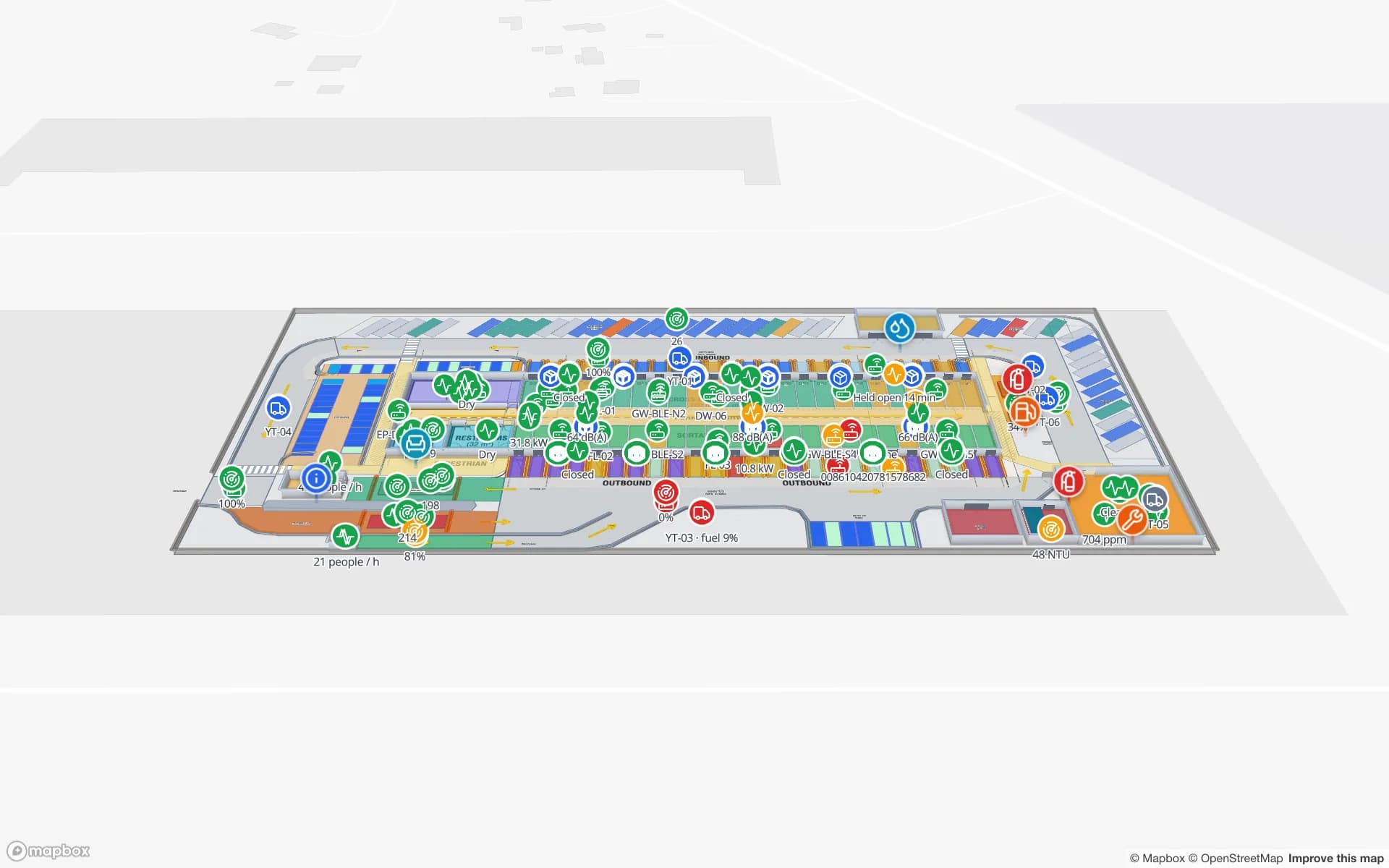
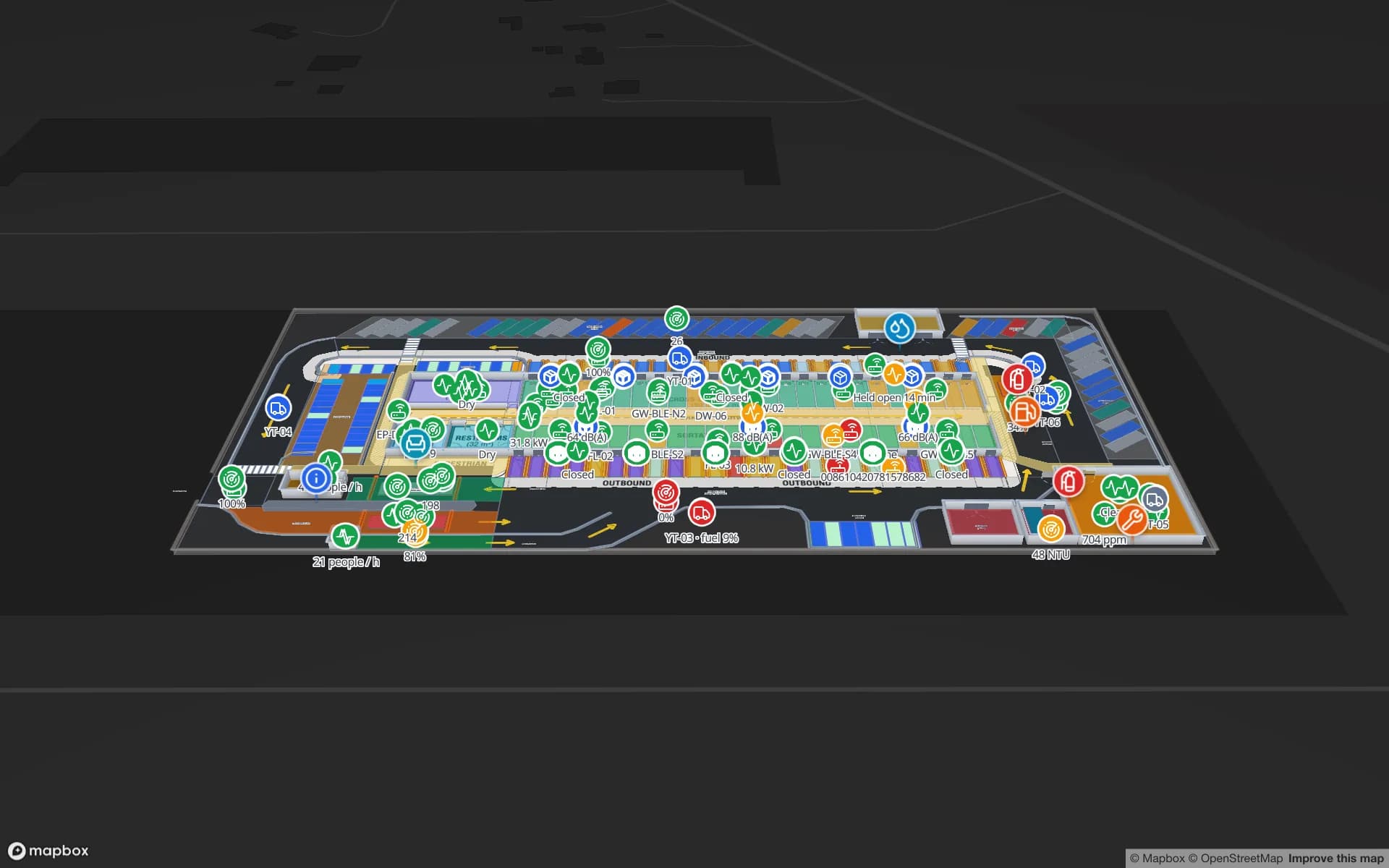
Eastport Cross-Dock Freight Hub, a cross-dock & trailer yard demo, in the Spatial Map 3D viewer with live device markers
Eastport Cross-Dock Freight Hub
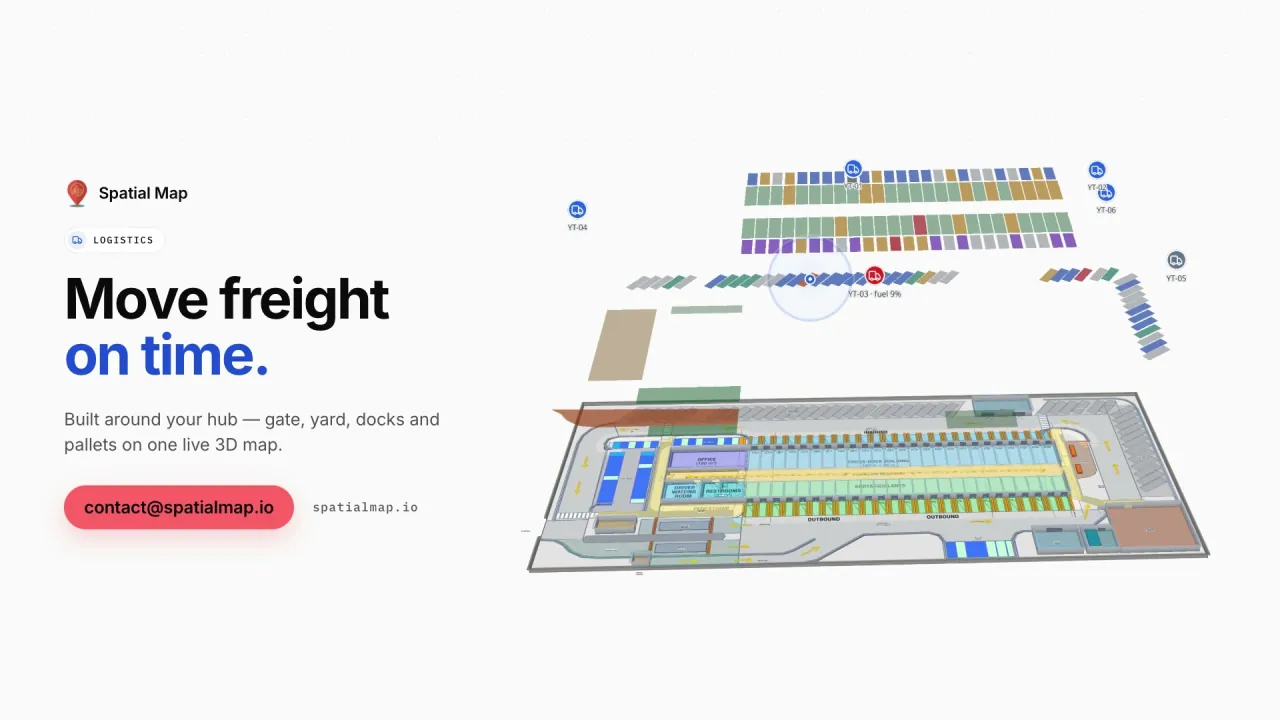
Eastport Cross-Dock, a demo freight hub: 50 dock doors, 44 yard slots and 1,180 RFID pallets, with the gate and weighbridge.
Dock doors in the Eastport cross-dock demo
50
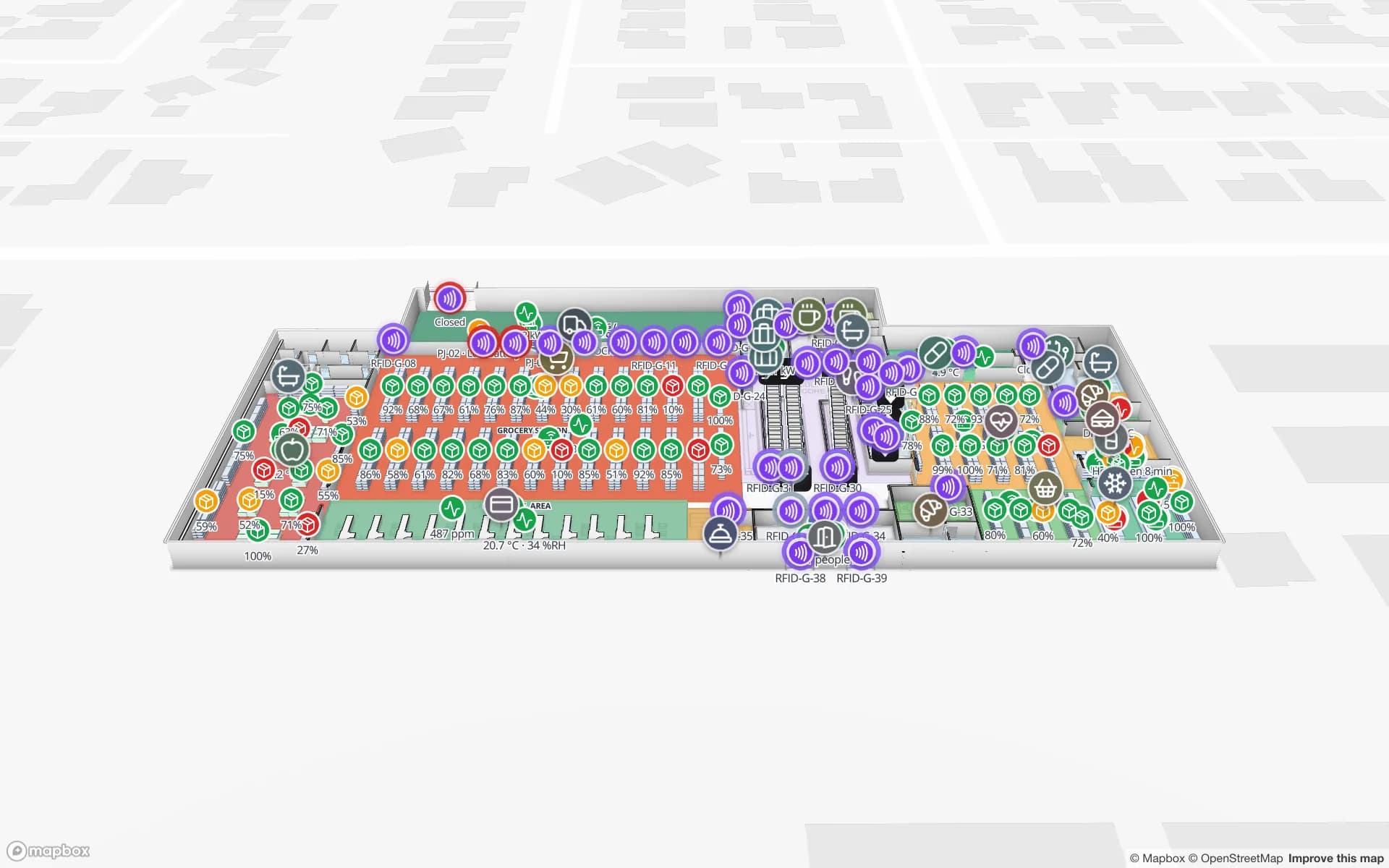
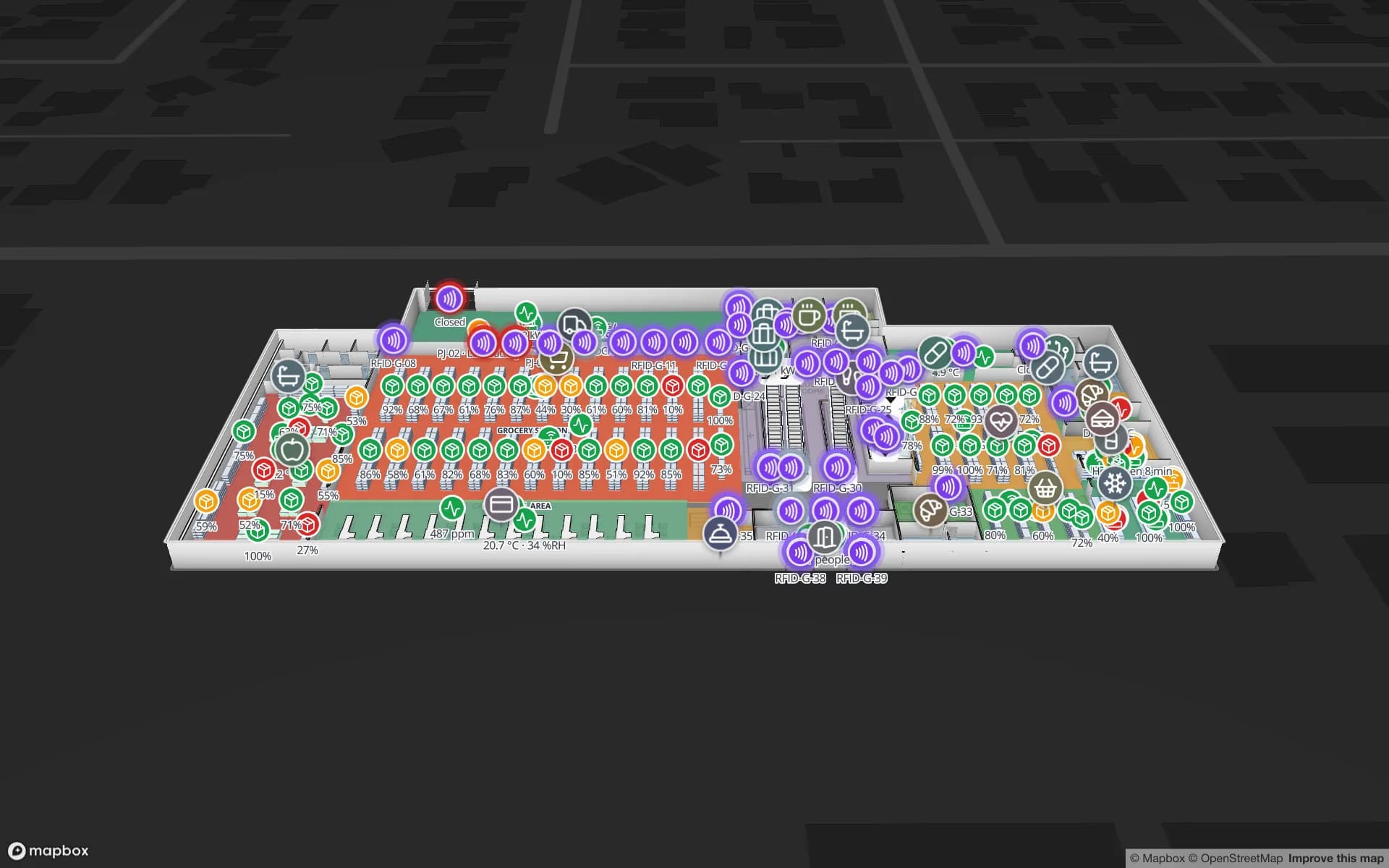
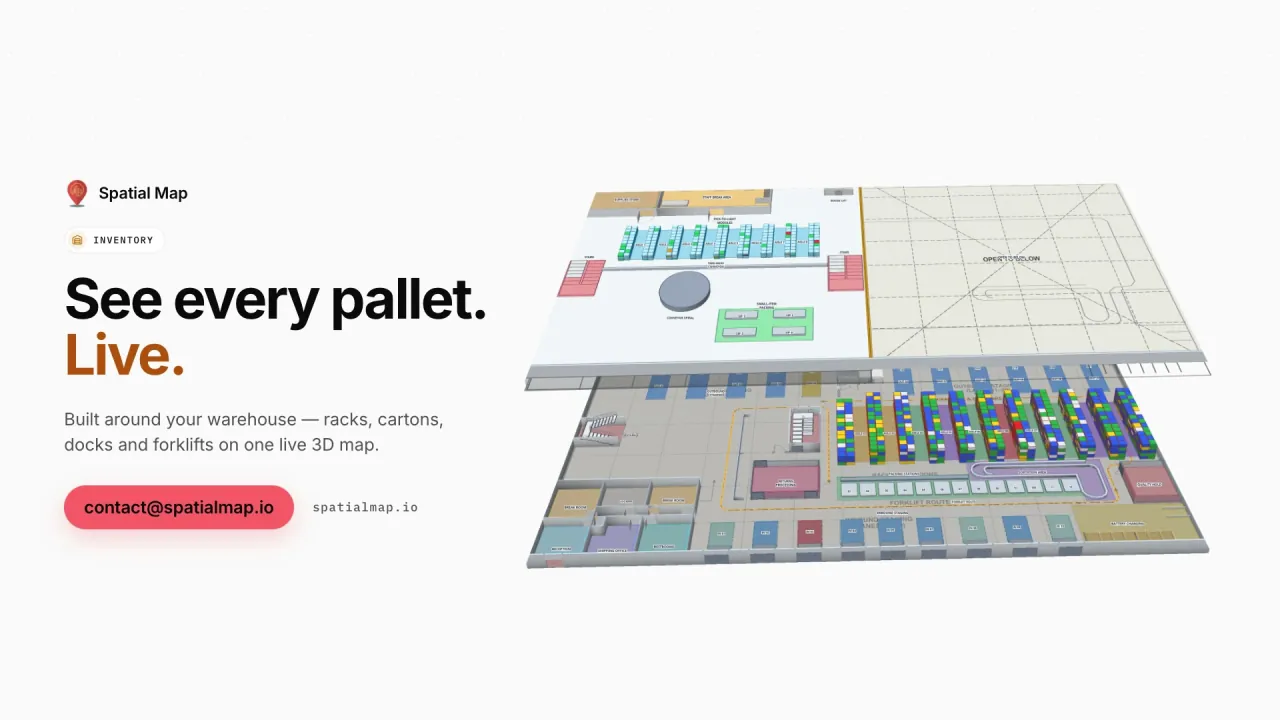
Rack locations in the Crestline fulfilment demo
2,204
How often alert rules are checked, with alerts shown in the app
15 s
Free trial, up to 5 facilities, no card
7 days

A crossroads that sells on delivery time

Lille Airport’s own freight page describes the site as “at the heart of the densest consumer area in Europe, with 150 million inhabitants”, within 24 or 48 hours of distribution across France, the Benelux countries and England, and at the centre of six large European cargo hubs: Paris, London, Brussels, Amsterdam, Frankfurt and Luxembourg. That is the operator’s marketing, not an independent measure, but it names the promise every warehouse around Lille makes: a delivery time.

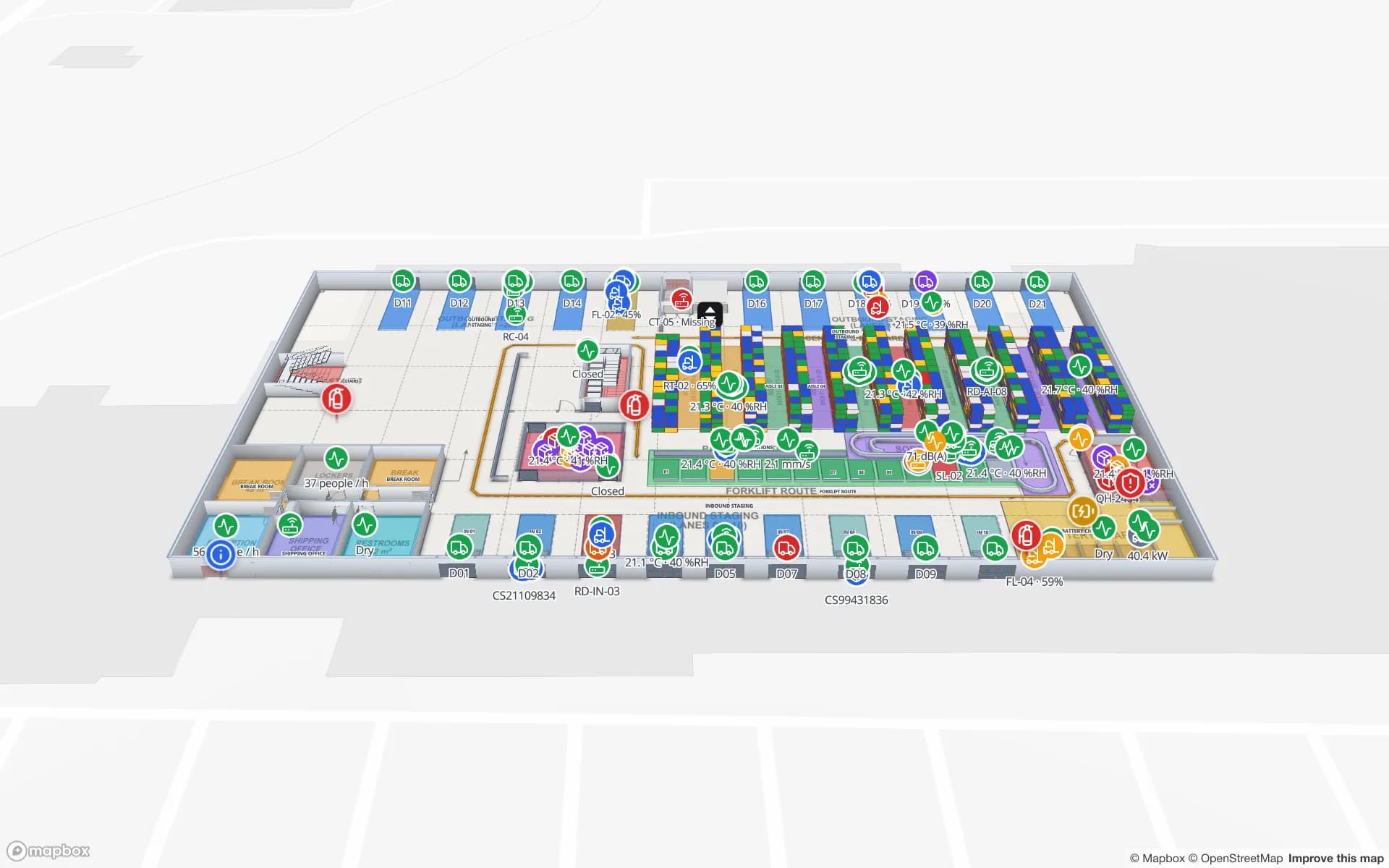
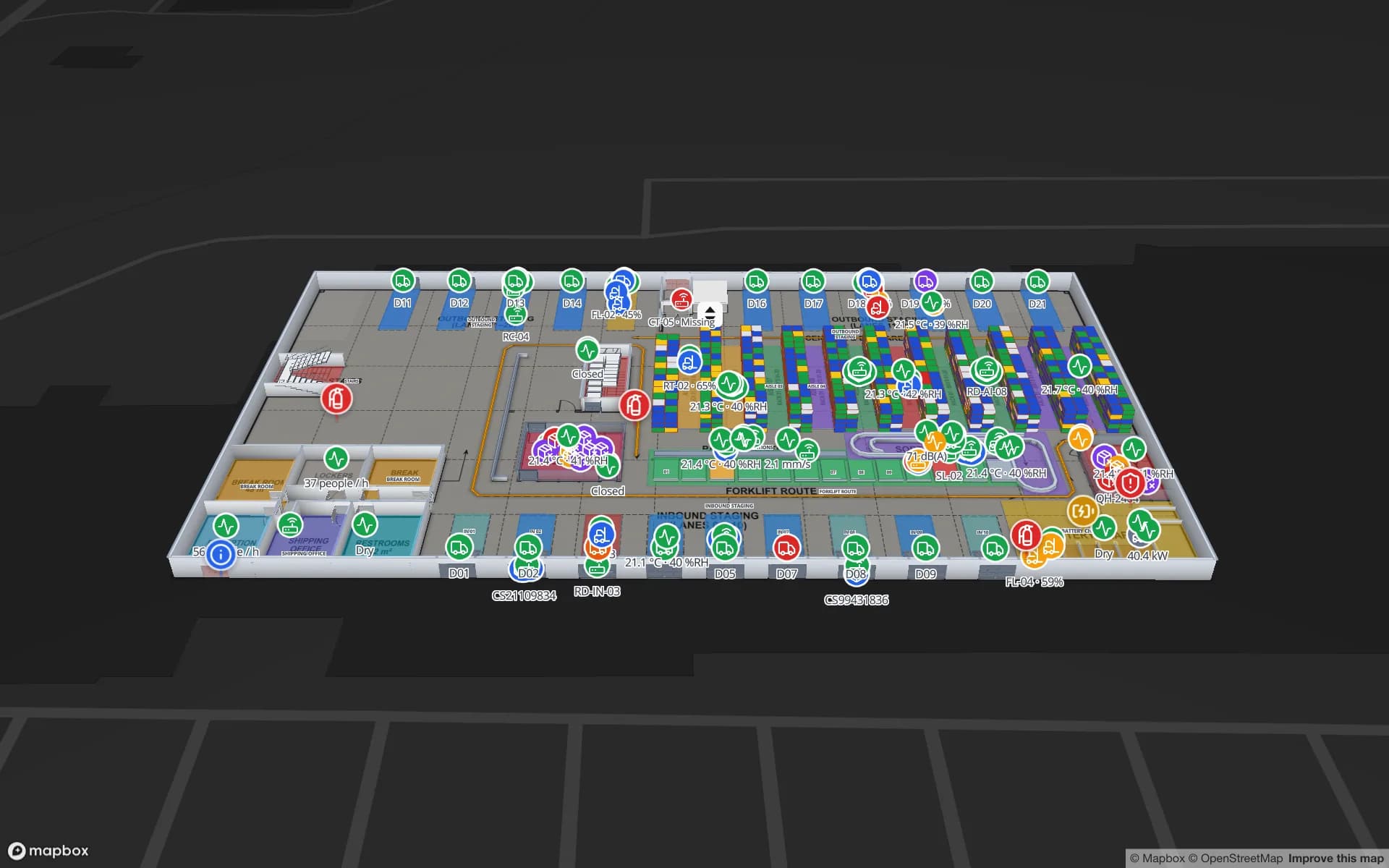
Inside the building, that promise turns into small questions asked all day. Which pallets are staged for tonight’s departure, which are still waiting for a missing carton, how long has an order been in the lane. Spatial Map draws the doors, lanes and racks of each site and colours them from the stock and scan data your WMS and RFID readers already produce, so the shift lead sees waiting time in place instead of reading it from a list.
Delta 3 at Dourges: road, rail and canal in one estate

The Delta 3 platform at Dourges, in the Pas-de-Calais, is described in public environmental opinions as tri-modal: road, rail and waterway. The 2010 opinion on its extension already speaks of a platform that had existed since 2003; the extension zone was declared of public utility in September 2010 and its development zone created by inter-prefectoral order in October 2013. A 2025 opinion describes the extension as about 105 hectares in four lots, with new warehouses still being added.

One of those buildings gives a good picture of the storage problem. The 2025 opinion describes a warehouse for small and large household appliances and electronic and IT devices, with a small quantity of aerosol-type products classed as dangerous. Mixed storage like that is a zoning job: high-value electronics in one aisle block, bulky appliances in another, dangerous goods in their own marked area. Draw each as an area, hang the stock table on it, and the map shows what is where. Your dangerous-goods procedures and permits remain the record; Spatial Map makes no compliance claim and shows only the data you send it.

The three modes also give each shed three kinds of door. Mark the rail-side doors, the truck doors and any canal-side quay as separate areas, post door events from your yard system or RFID portals, and the Eastport demo shows what the result looks like: 50 dock doors, 44 yard slots and 1,180 RFID pallets on one map.

Lesquin: air freight against a clock

Lille Airport operates around the clock. Its main east–west runway is 2,845 m long with ILS Cat III approach, the secondary one 1,600 m, and its freight page lists import and export handling, freight processing for mixed flights, order preparation, just-in-time consolidation and customs among the services around the airport. It sits near the Lesquin Regional Transport Centre, which the airport calls a major logistics centre in the region.

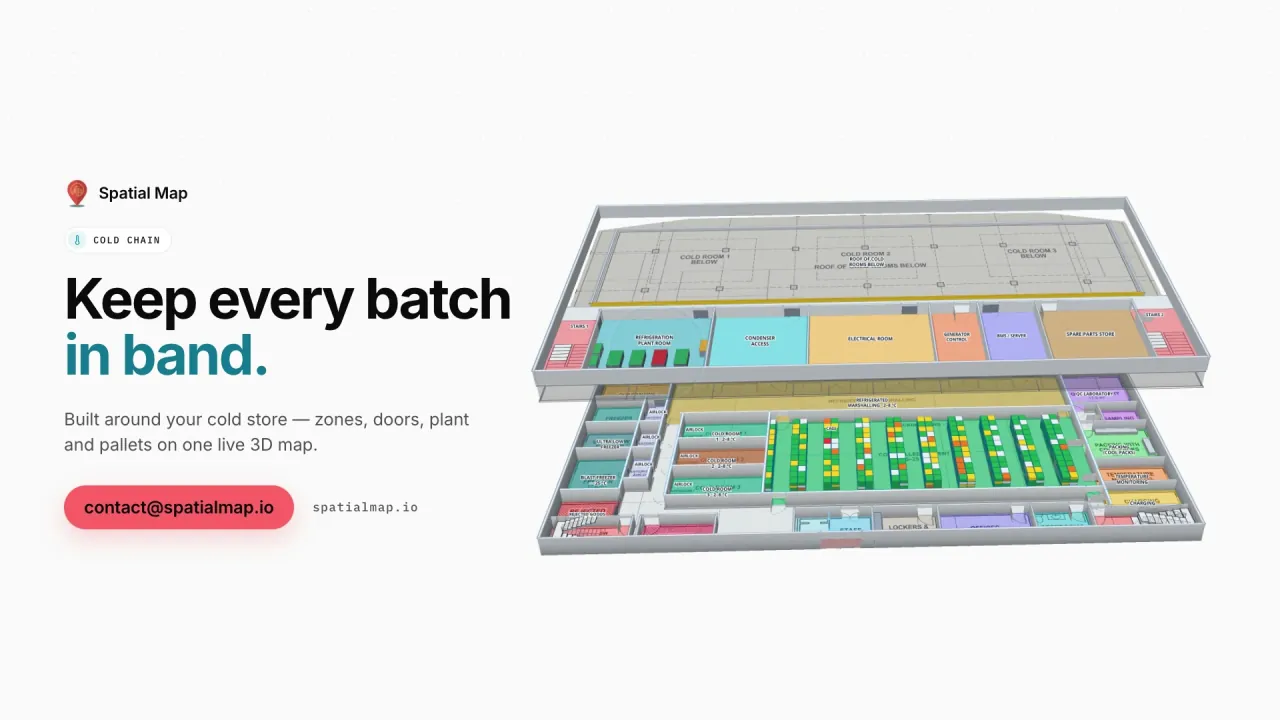
Air freight is the opposite of a slow shed: shipments are built up, held and loaded against a departure time. A build-up area, a cool room, a customs hold cage and a handful of dock doors fit on one floor plan, and a tagged cage or pallet read at each door shows where a consignment is. The Crestline demo shows the same pattern for order preparation, with 2,204 rack locations, staging lanes and packing. Spatial Map is not connected to airport, airline or customs systems; it shows what your own reads say.

The Deûle ports and the container yard

Ports de Lille works under a concession from Voies navigables de France and runs several river-port sites around the metropolis. A public environmental opinion of 2018 describes a project by Ports de Lille for a tri-modal container platform at the Port of Santes: 35,000 m² on an industrial brownfield along the Deûle, with 1,500 m of rail track for handling containers. The opinion is from 2018 and we have not checked what has been built since, so read it as an example of what the ports are planning, not a description of today’s site.

A container depot is a yard, not a building: boxes in lanes, a gate, a crane or reach-stacker, a rail spur. Spatial Map draws the yard slots and lanes, and a box number read at the gate (by OCR, a handheld or an RFID portal, whatever you use) places a container on the map. Read-only share links with an expiry date let a haulier or customer look at the yard on a phone without an account.

Several sites, several clients, one workspace

A logistics provider near Lille typically stores for more than one client in more than one building, and the clients want to see their own goods, not each other’s. Each site is a facility in the workspace; a client can be given a read-only link that opens only the floors and layers you choose, with an expiry date and a view cap; and the four built-in roles (Owner, Admin, Editor, Viewer), plus custom roles, decide who inside your team can change what.

Language is a practical point so close to the border. The app is available in French, English, German, Spanish, Arabic and Chinese, and each person picks their own. Dutch is not an interface language, so a Flemish client works in English or French, while rack codes, client names and report titles stay exactly as you write them. Reports export to PDF, Excel, CSV or JSON, and a public read-only report link can go to a customer who wants the weekly stock summary.

Services for teams in Lille

Where Lille teams usually start depends on what the building does:

  • Distribution and contract-logistics sheds start with inventory tracking at dock doors and rack level, because that is where a late or short load shows up first.
  • Air-freight and express units add RFID at the dock door, since a consignment is built up and loaded within hours.
  • Asset tracking follows for roll cages, pallet containers, forklifts and trailers that move between sites; RTLS and UWB matters only in large yards where vehicles and people must be located continuously.
  • If you have no readers or tags yet, our team can source devices on request, quoted per project, with warranty and device support from the manufacturer: see hardware and demo kits on request.
  • Where a connector or a handheld app is missing, our team builds custom software such as POS or booking systems and WMS integrations as client projects. The product runs as cloud or on-premises.

Also served nearby

The same page covers Lesquin and Seclin south of Lille, Villeneuve-d’Ascq and Roubaix–Tourcoing to the east, Lomme and Santes on the Deûle, Douai and Lens towards Dourges, and the Belgian side of the border at Mouscron and Tournai. Nothing needs to be installed at any of them: the map opens in a browser.

How Spatial Map does it

From one shed to a network of sites

  1. 01

    Start with the busiest building

    Upload its plan, photo or CAD file and draw doors, lanes and racks, or let AI Map draft them for a person to review.

  2. 02

    Connect stock and scans

    Your WMS and RFID middleware post rows through the table write API, or Spatial Map polls a REST endpoint; CSV and Excel uploads work for a first test.

  3. 03

    Add the other sites

    Each building is a facility; duplicate one as a starting point and keep clients’ goods in their own tables.

  4. 04

    Share per client

    Read-only links with an expiry date, a floor lock and a choice of layers, and in-app alerts for stock waiting too long in a lane.

What Lille teams track

Tri-modal distribution sheds

Rail-side, truck and quay doors as separate areas, with pallets staged for the right departure.

Order preparation and e-commerce stock

Rack locations coloured by stock status, with staging lanes in front of the docks.

Air-freight build-up and cool rooms

Tagged cages and pallets read at each door, and cool-room temperatures on the same plan.

Stores supplied from the region

Item-level RFID and shelf stock across floors, for retailers served from Lille sheds.

See it on real demo facilities

Fictional names, real floor plans, live sensors, RFID, BLE tags and gateways — open any of them in the browser.

All 13 demo facilities

Warehouse tracking in Lille — questions we get

Yes. Each building is its own facility, and a workspace holds as many as your plan allows: the 7-day trial covers up to 5 facilities and Pro up to 4, with larger estates quoted as custom services. Roles and share links work per facility.

Yes, in two ways. Keep each client’s stock in its own table, and send a read-only share link that opens only the floors and layers you choose, with an expiry date and a view cap. For a client who needs their own login, our team sets up a white-label client site as a project.

No. Spatial Map shows the data your own systems post through the write API, a polled REST endpoint or a CSV or Excel upload. It has no link to airport, airline, port or customs systems, and it does not write anything back to your WMS or ERP.

It can draw the zones and colour them from your stock table, so everyone sees where each class is stored. It does not manage dangerous-goods rules or permits and makes no compliance claim; your procedures remain the record.

French is available alongside English, German, Spanish, Arabic and Chinese, and each user picks their own language. Dutch is not an interface language; client names, rack codes and report titles can be in any language you type.

No. Spatial Map is sold online and our team works with customers in France remotely, by video call and through the contact form, in French or English. There are no local resellers or partners.

In US dollars, the same worldwide: a 7-day free trial for up to 5 facilities with no card, then Pro at $60 a month or $600 a year for up to 4 facilities. RFID hardware, if you ask us to source it, is quoted per project and is not part of the subscription.

Map one Lille shed before the next peak.

Start the free trial in French or English and open the Eastport demo, or send us the plan of a warehouse or air-freight unit and a sample of your stock or scan data through the contact form.