Latin America · Costa Rica

Indoor mapping & RFID tracking in Costa Rica

Spatial Map is browser-based software for indoor mapping & RFID tracking in Costa Rica: the plan of a plant, warehouse or cold room becomes a live 3D map, coloured by the data your MES, WMS, RFID readers and sensors already produce. Costa Rica’s manufacturing is concentrated in free-trade-zone plants, its freight leaves through a Caribbean terminal at Moín and a Pacific port at Caldera, and the capital sits between the two. The app has a Spanish interface, so a Costa Rican team can work in its own language.

No credit card. Runs in the browser. Pro is $60/month for up to 4 facilities. Book a demo

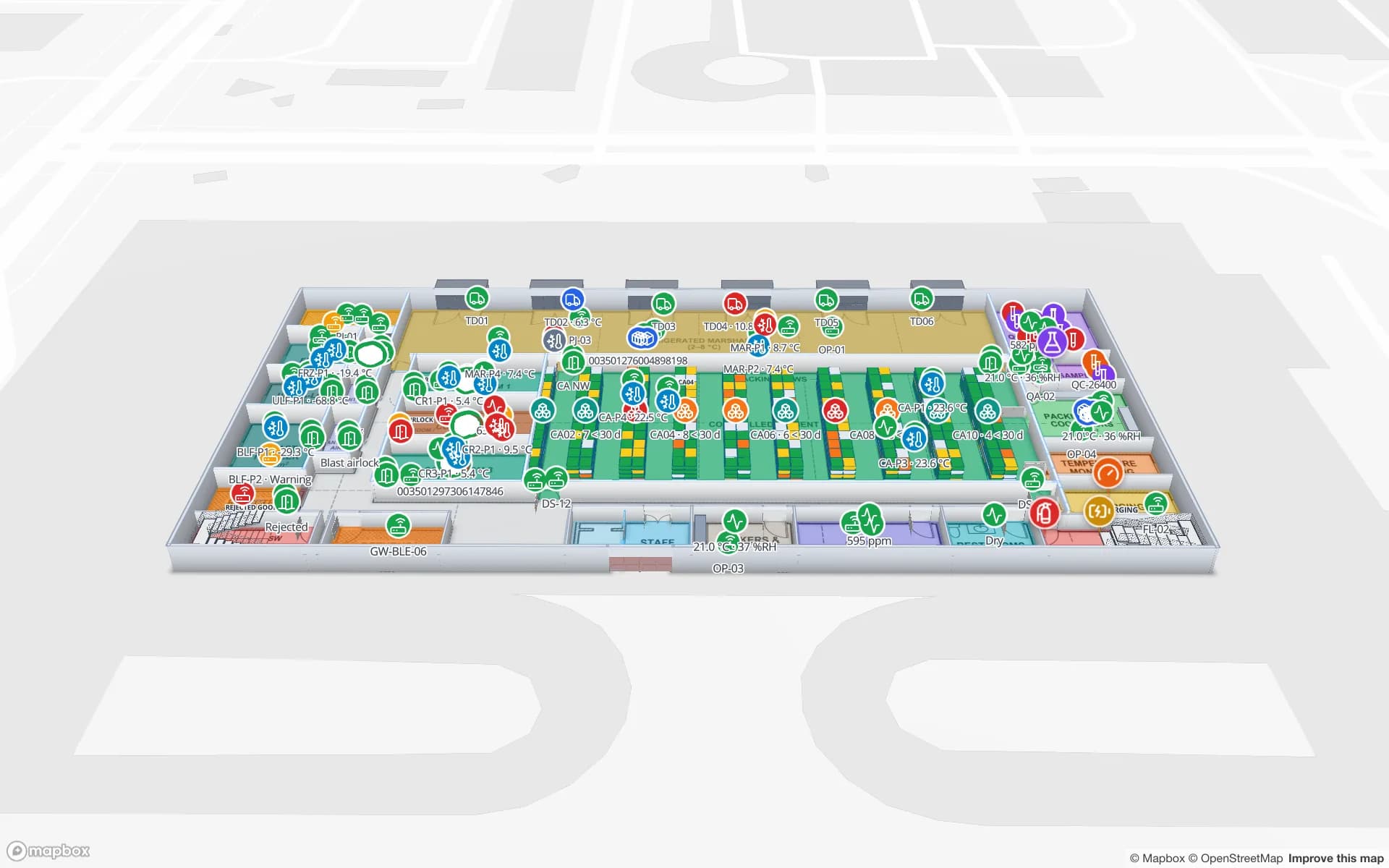
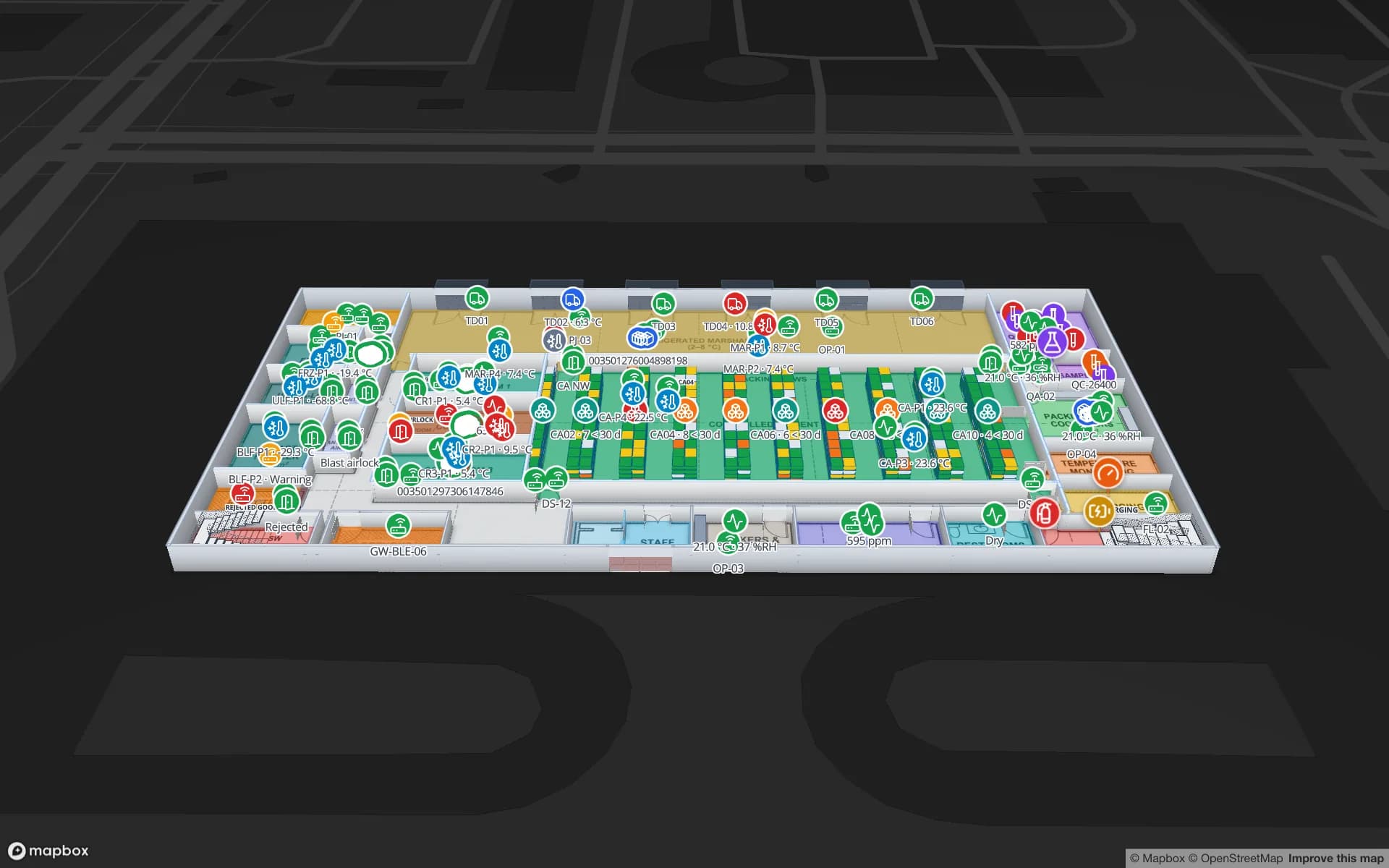
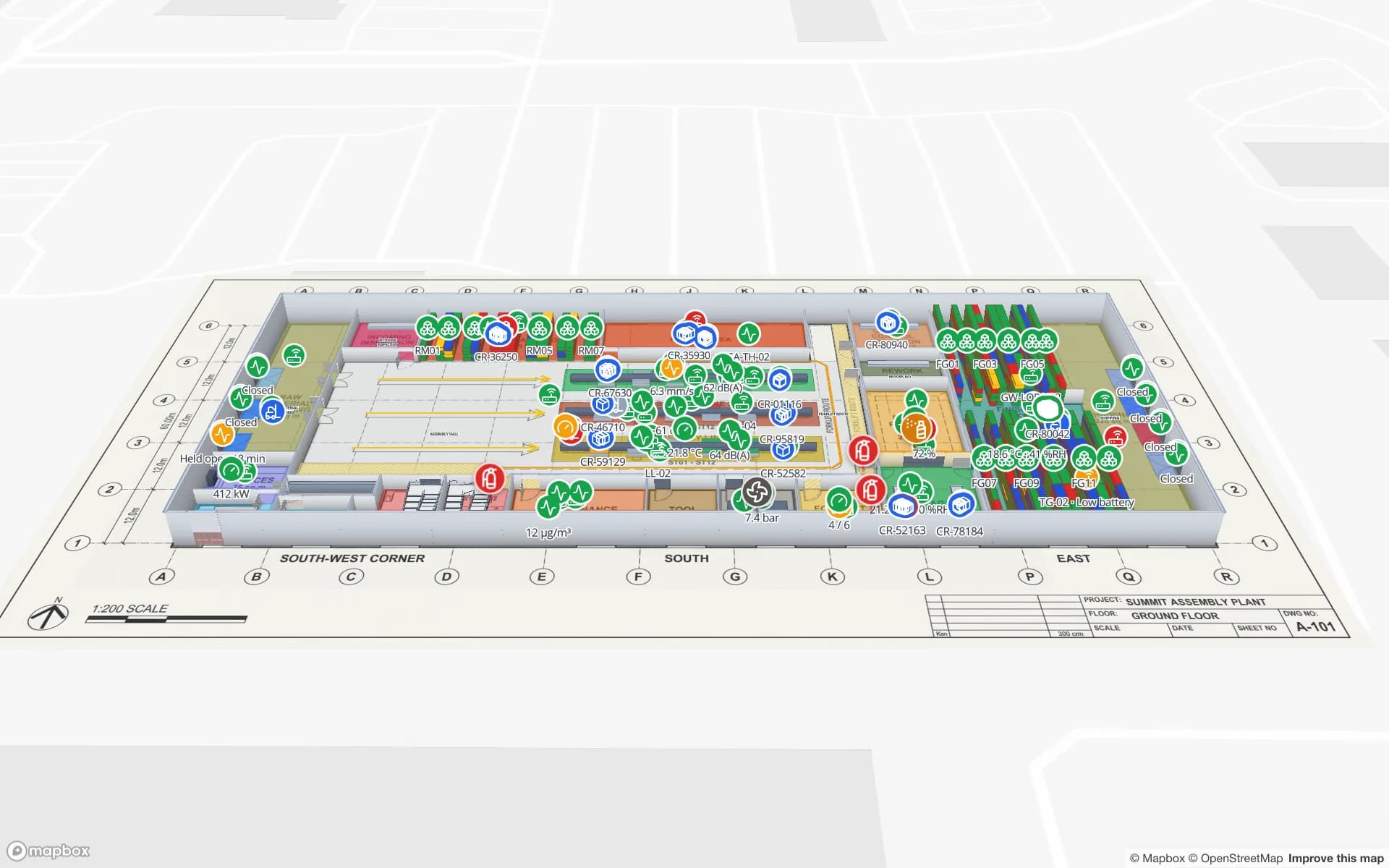
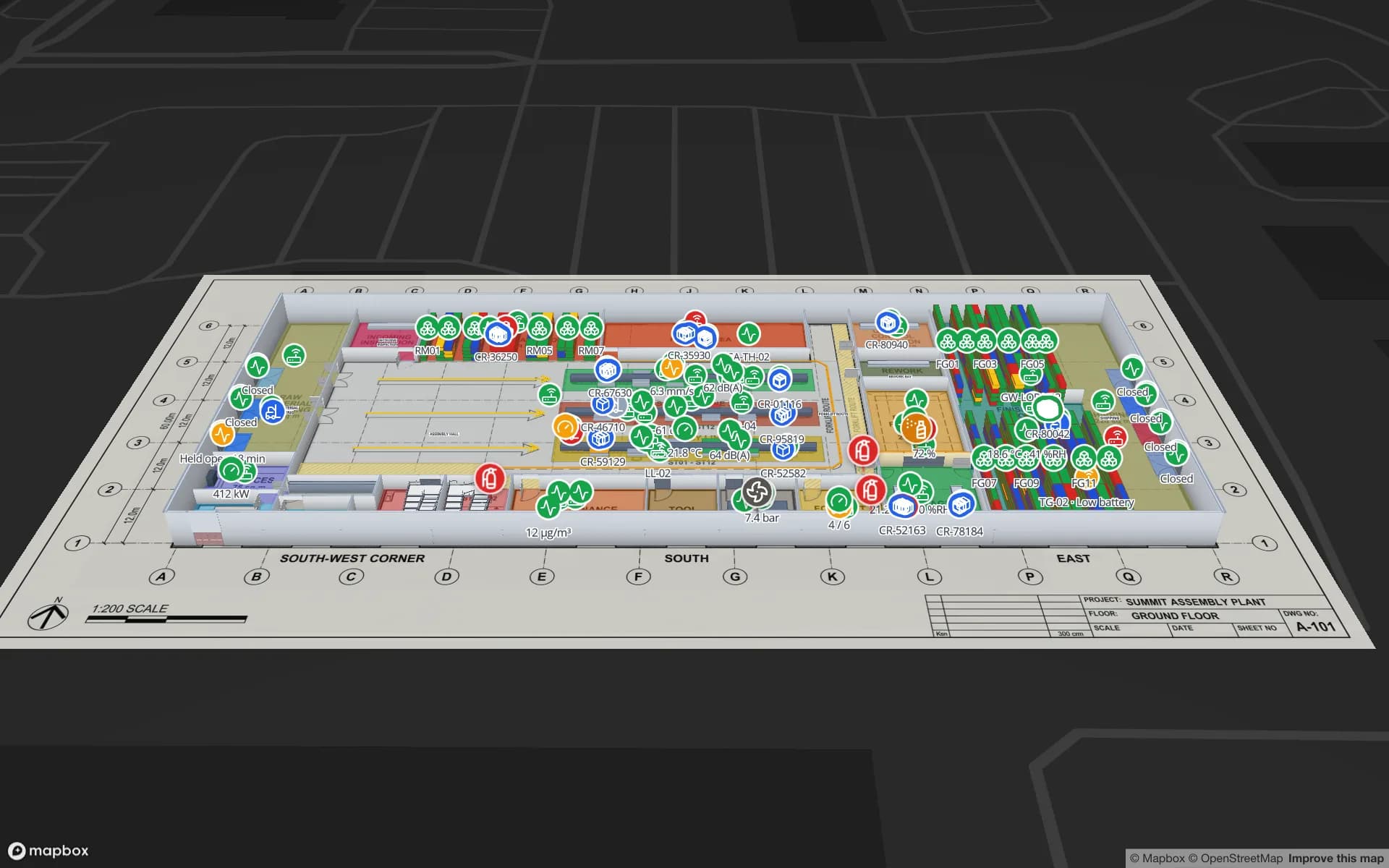
Summit Assembly Plant, a assembly plant demo, in the Spatial Map 3D viewer with live device markers
Summit Assembly Plant
Summit Assembly Plant, a demo plant: assembly lines and workstations, WIP carriers read by RFID between stations, and 867 rack locations for raw materials and finished goods.
Rack locations in the Summit assembly-plant demo
867
Spanish interface, one of six app languages
Español
How often alert rules are checked, with alerts shown in the app
15 s
Free trial, up to 5 facilities, no card
7 days

Free zones: where the exports are made

Law 7210 of 23 November 1990 created the free-zone regime as Costa Rica knows it today. The export-promotion agency PROCOMER administers it, reviews applications and supervises the companies that benefit. In a study reported in December 2025, PROCOMER found that 84 % of manufacturing exports came from free trade zones, mainly medical devices, needles and catheters, prosthetics and diagnostic equipment, and that 1,703 companies exported 3,368 different products in 2024.

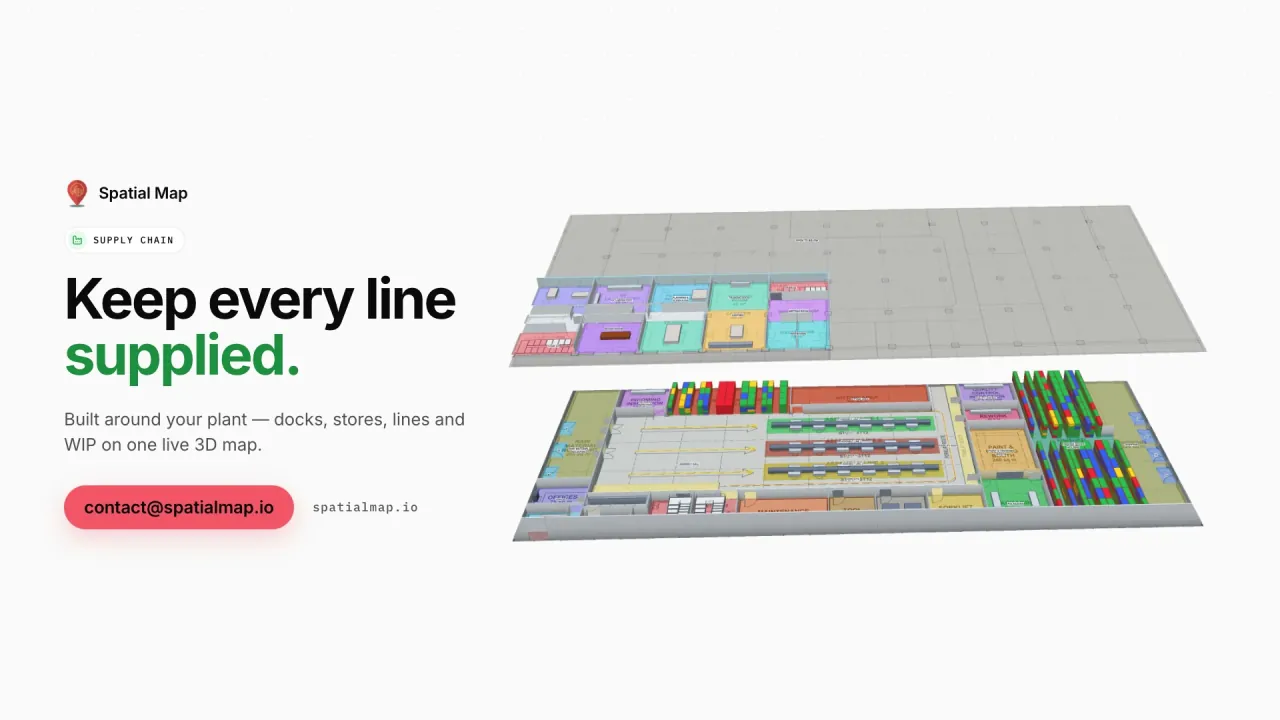
Medical devices have been the country’s number-one export since 2016, when they overtook bananas and tropical fruit; PROCOMER figures put them at US$1.68 billion in 2014 and US$5.87 billion in 2022. A plant that makes small, high-value, traceable parts has the same questions every day: which lot is on which line, which fixture is in which store, which carton is staged at which door. Spatial Map draws the plant as lines, stores and docks, colours each from your MES or ERP, and shows RFID reads where the last reader saw them, as in the Summit Assembly demo. Plants work to their own quality systems; Spatial Map makes no compliance claim and does not replace a batch record.
Two coasts and a capital in between

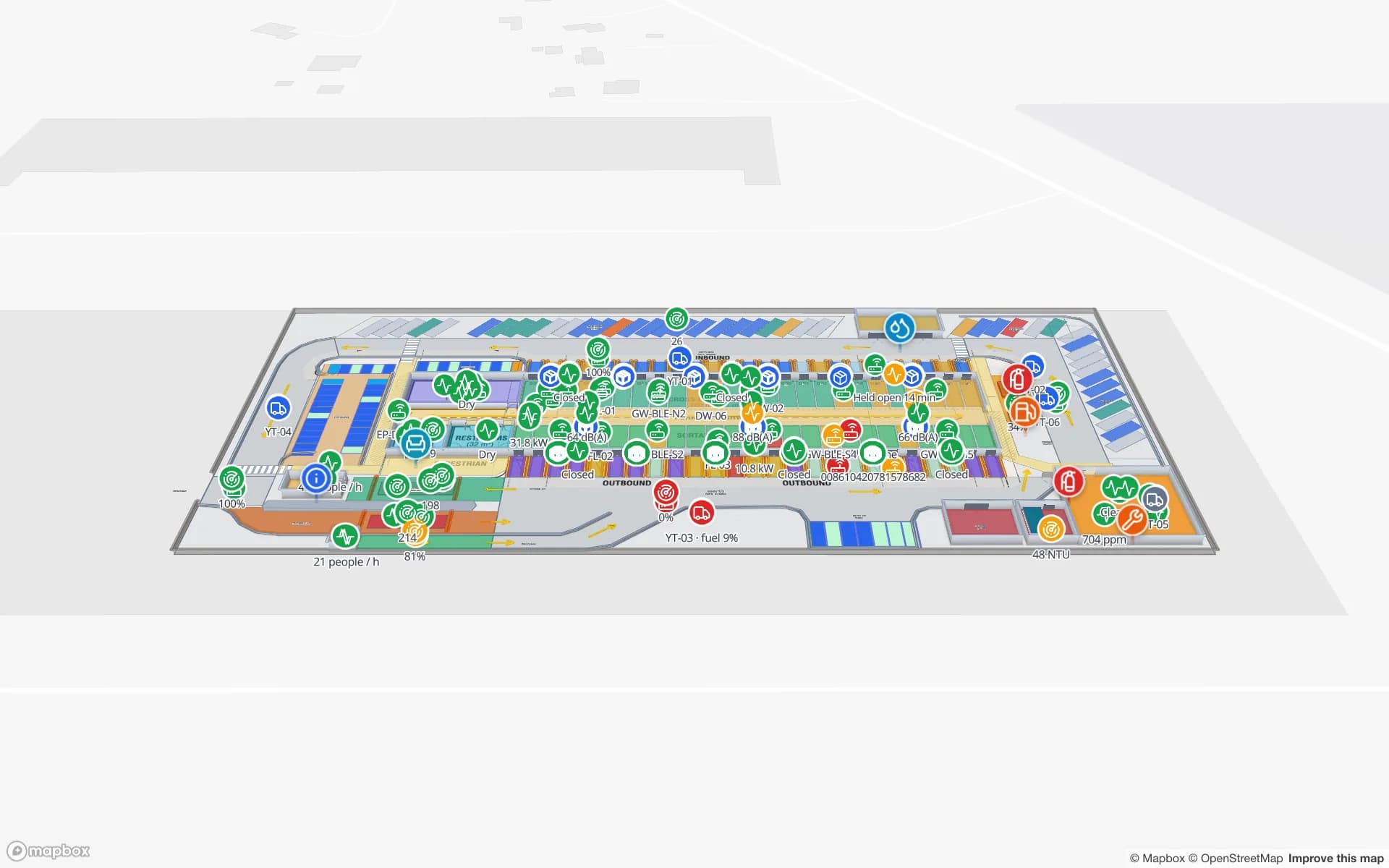
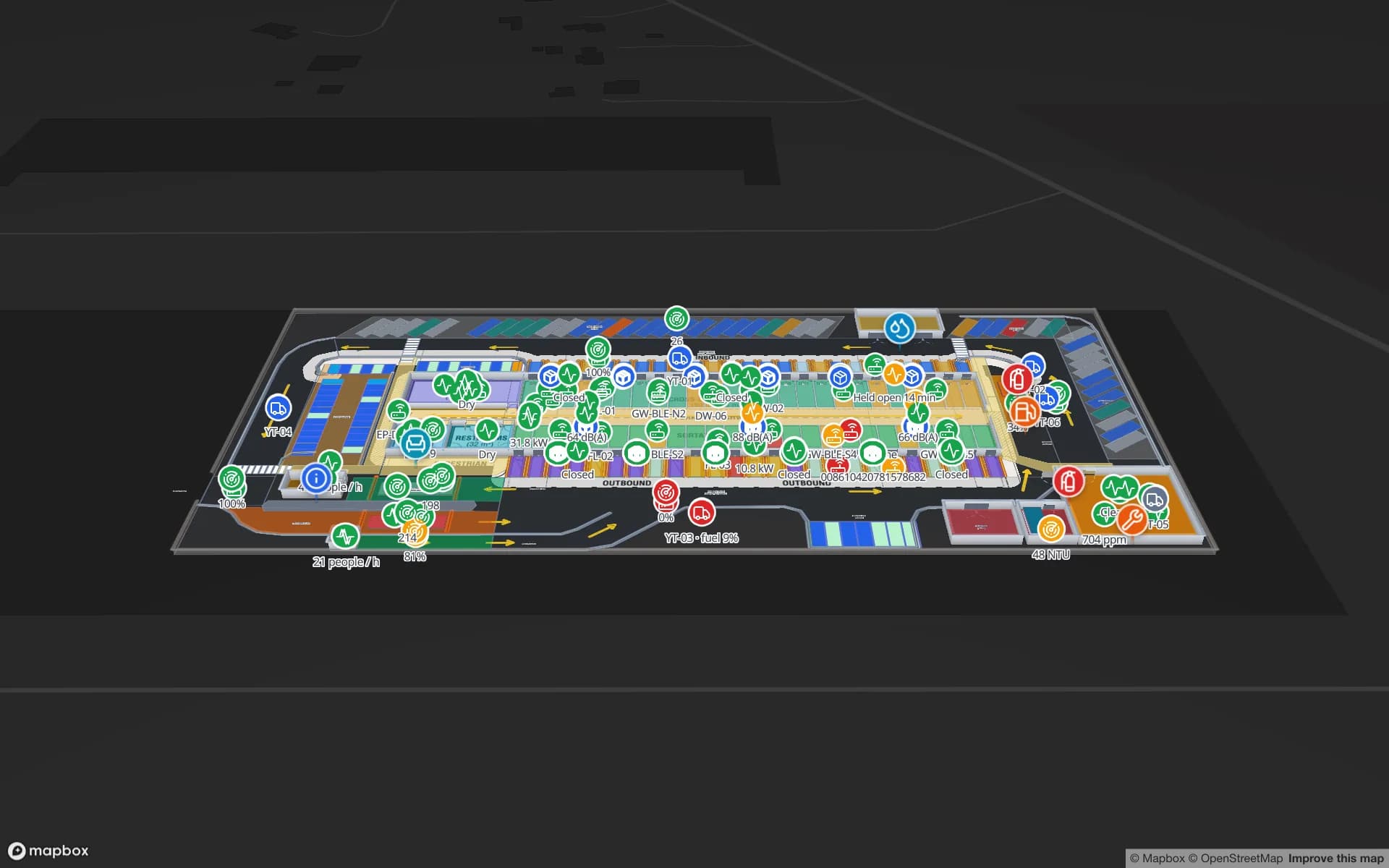
The Moín Container Terminal on the Caribbean coast reported 1.3 million containers handled in 2025, with more than 6 million tons exported, and runs 24 hours a day, every day of the year. On the Pacific side the port of Caldera lies 78 km from San José. Between them, freight moves by road: warehouses, depots and cross-docks sit at both ends and around the capital, each with its own trailers, dock doors and yard.

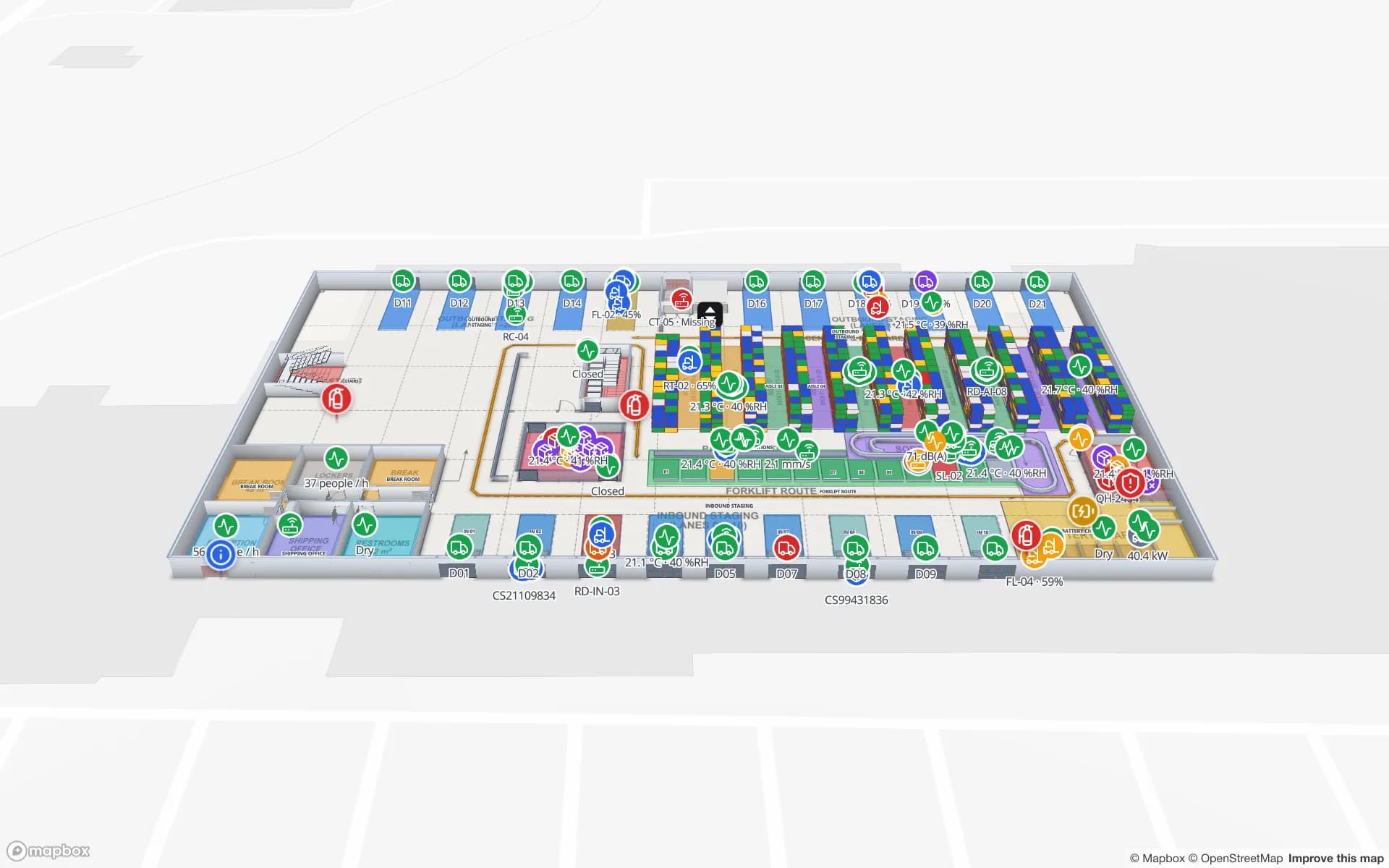
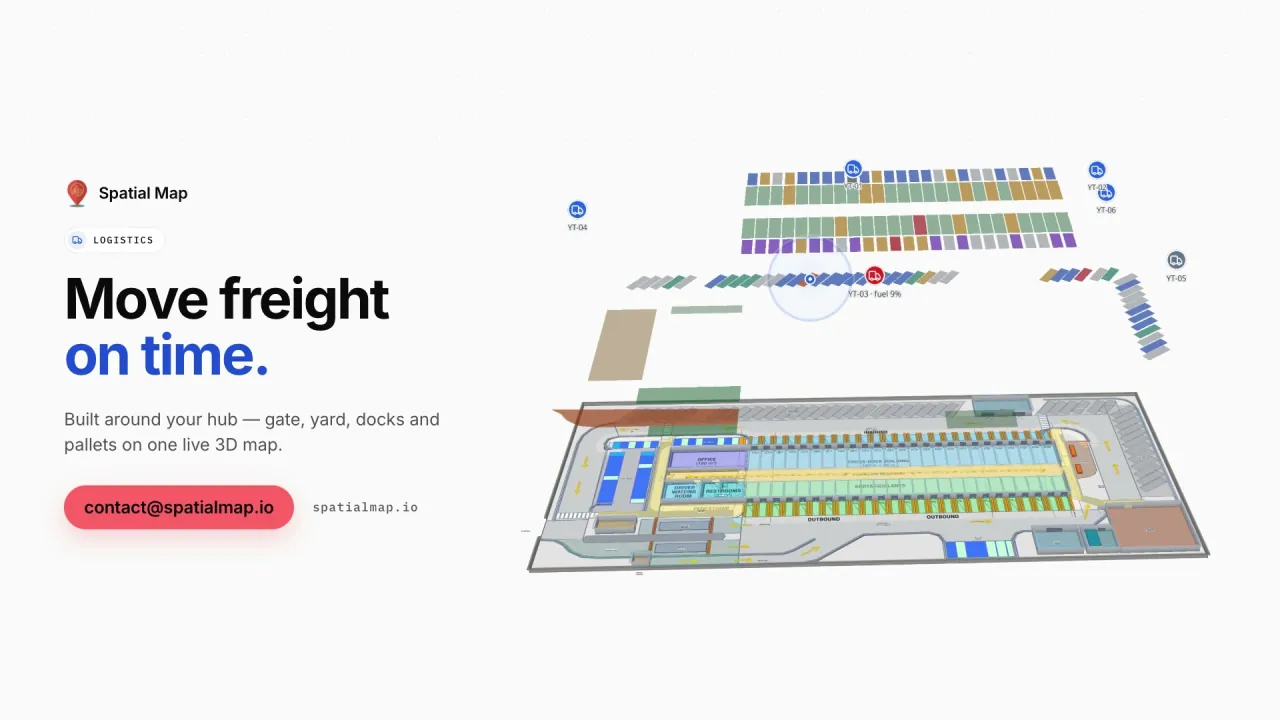
For those buildings the useful map is the dock: doors, yard slots, gate lanes and staging lanes, with RFID pallets showing where the last reader saw them, as in the Eastport Cross-Dock demo with 50 dock doors, 44 yard slots and 1,180 RFID pallets. Spatial Map has no link to port, customs or terminal systems; it shows what your own reads and records say is inside your building. The San José page goes into the road runs in detail.

Fresh exports and cold rooms

The Moín terminal’s own news archive includes a 2015 item on expanding its refrigerated export capacity, a reminder that part of what leaves Costa Rica leaves cooled. A packhouse or cold room is the first building in that chain, and the question is simple: is every room inside its range, and which pallets were in it when it was not?

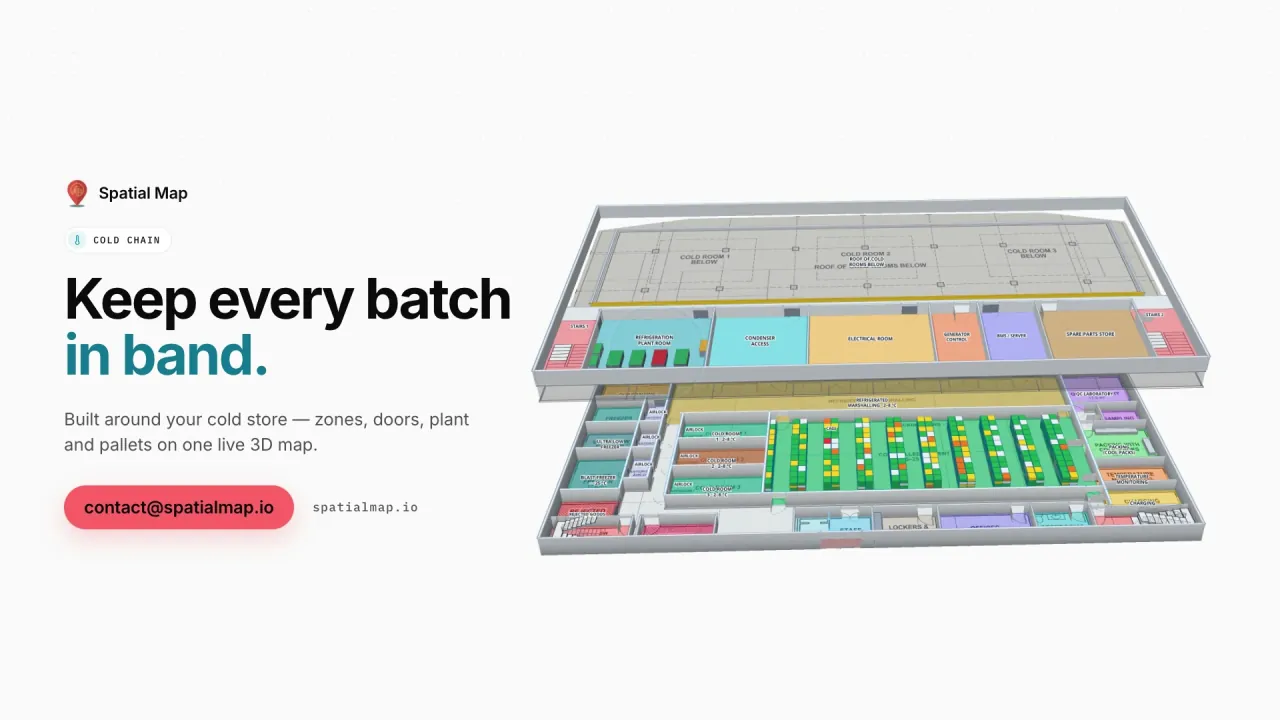
On a floor plan each cold room takes the colour of its latest probe reading, an alert rule such as “out of range for 10 minutes” appears in the app with Show on map, and the History player replays a night for a claim. The Polar Pharma demo shows the pattern in a cold store with 1,140 rack locations; the cold-chain solution explains it. Alerts are shown in the app only; there is no email or SMS.

Spanish, Law 8968 and working with us

The Spatial Map interface is available in Spanish, English, French, German, Arabic and Chinese, and each user picks their own. A Costa Rican team can run the app in Spanish; the services page in Spanish describes the mapping and integration work our team does for larger estates. Room names, rack codes and report titles are your own text and appear exactly as typed.

Where location data can be linked to a person, Law 8968 of 7 July 2011 on the protection of people in the processing of their personal data is the context, with the data-protection agency PRODHAB overseeing it. Your legal advisers decide what applies; tags on pallets, tools and stock do not identify anyone. A data processing agreement is available. Spatial Map is sold online at the same USD price everywhere, and our team works with customers remotely.

Services for teams in Costa Rica

Where Costa Rican teams usually start:

Also served

The same approach covers Alajuela, Heredia, Cartago, Liberia, Puntarenas, Limón and the free-zone parks around the Central Valley. None of them needs anything installed: the map opens in a browser.

How Spatial Map does it

From plan to live map

  1. 01

    Import the plan

    A PDF or a DWG from AutoCAD R2004–R2018 of the plant, warehouse or cold room, or a photographed plan, placed at scale.

  2. 02

    Draw the building

    Lines, stores, racks with their locations, dock doors and cold rooms; AI Map drafts them for a person to review.

  3. 03

    Connect the data

    Your MES, WMS, RFID middleware and sensor gateways post rows to a table, or Spatial Map polls a REST endpoint.

  4. 04

    Share and alert

    Read-only links for customers and group offices, and in-app alerts for the team.

What teams in Costa Rica map first

Free-zone plants

Lines, WIP carriers and component racks coloured from the MES.

Port-side warehouses and depots

Dock doors, yard slots and RFID pallets staged for the next truck.

Packhouses and cold rooms

Cold rooms by live temperature, with in-app alerts on excursions.

Distribution centres

Every rack location coloured from the WMS, with staging lanes at the docks.

See it on real demo facilities

Fictional names, real floor plans, live sensors, RFID, BLE tags and gateways — open any of them in the browser.

All 13 demo facilities

Questions from teams in Costa Rica

Yes. Spanish is one of six interface languages, with English, French, German, Arabic and Chinese, and each user picks their own. See the services page in Spanish for the project work our team does. Your own room names, rack codes and report titles can be written in any language.

No. It has no link to free-zone, customs or port systems. It shows what happens inside your own building, from your own MES, WMS, RFID reads and sensors, so those records stay in the systems that own them.

No. A map shows where lots, tools and instruments are and what your systems say about them; it makes no compliance claim and is not a quality record. Many plants use it beside the MES, to find things and to see status at a glance.

Fixed readers, portals or handhelds approved for use in Costa Rica; UHF settings differ between countries, so ask your supplier for the right model and region. Spatial Map has no reader drivers: your middleware posts reads to a table with the write API, or exposes a REST endpoint Spatial Map polls. Our team can source devices on request, quoted per project.

No. Spatial Map is sold online and our team works with customers in Costa Rica remotely, by video call and through the contact form. There are no local resellers or partners.

In US dollars, the same worldwide: a 7-day free trial for up to 5 facilities with no card, then Pro at $60 a month or $600 a year for up to 4 facilities. Larger estates are quoted as custom services. Hardware, if you ask us to source it, is quoted per project.

Map your first Costa Rican plant this week.

Start the free trial in Spanish or English, or send us the plan of a plant, port warehouse or cold room and a sample of your MES or sensor data through the contact form.