Latin America · Colombia

Indoor mapping & RFID tracking in Colombia

Spatial Map is browser-based software for indoor mapping & RFID tracking in Colombia: the plan of a warehouse, cold room, plant or store becomes a live 3D map, coloured by the data your WMS, RFID readers and sensors already produce. Colombia’s freight has a clear shape: flowers fly out of Bogotá, containers move through the Caribbean and Pacific ports, and a large network of free zones holds stock in between. The app has a Spanish interface, so a Colombian team can work in its own language.

No credit card. Runs in the browser. Pro is $60/month for up to 4 facilities. Book a demo

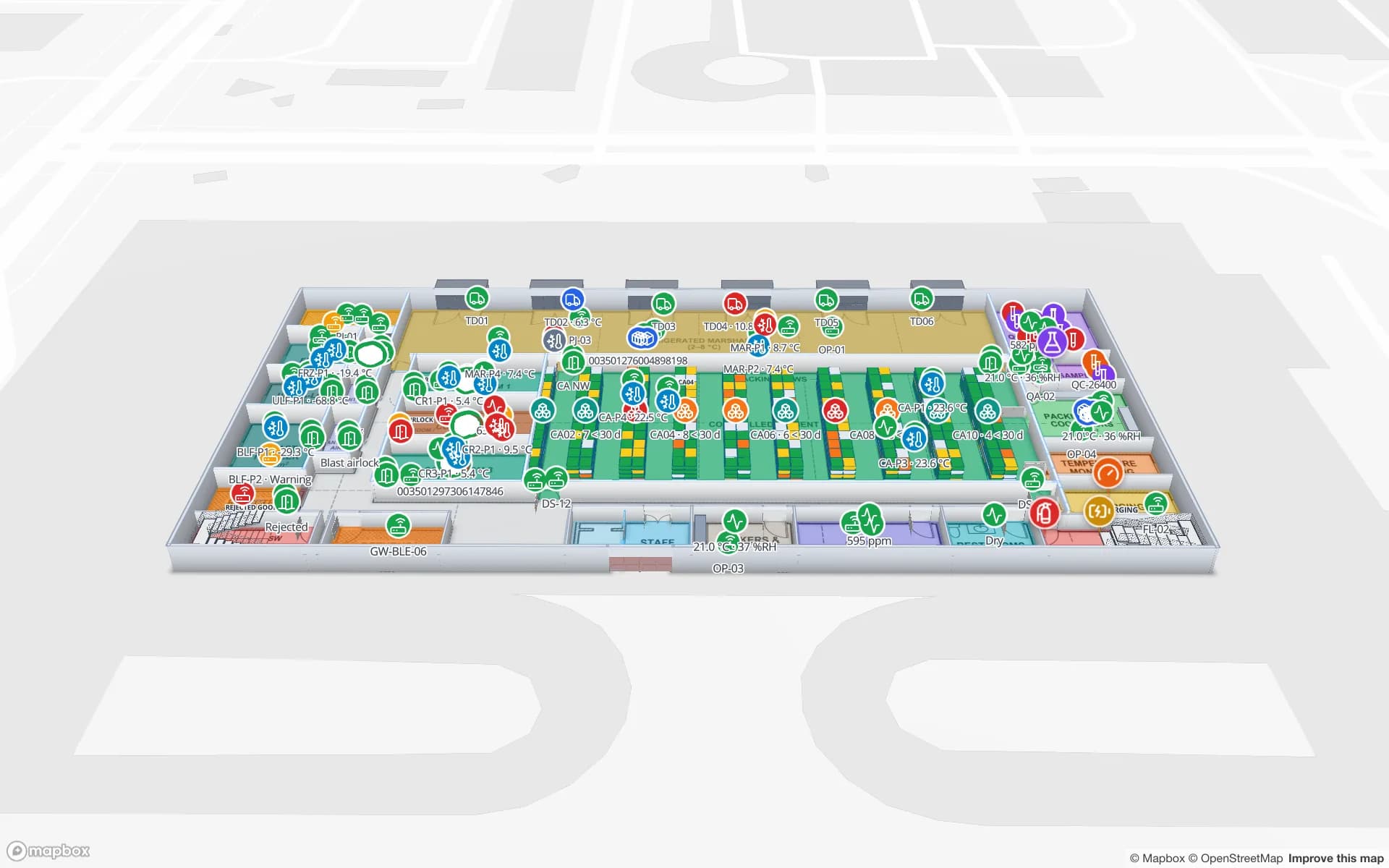
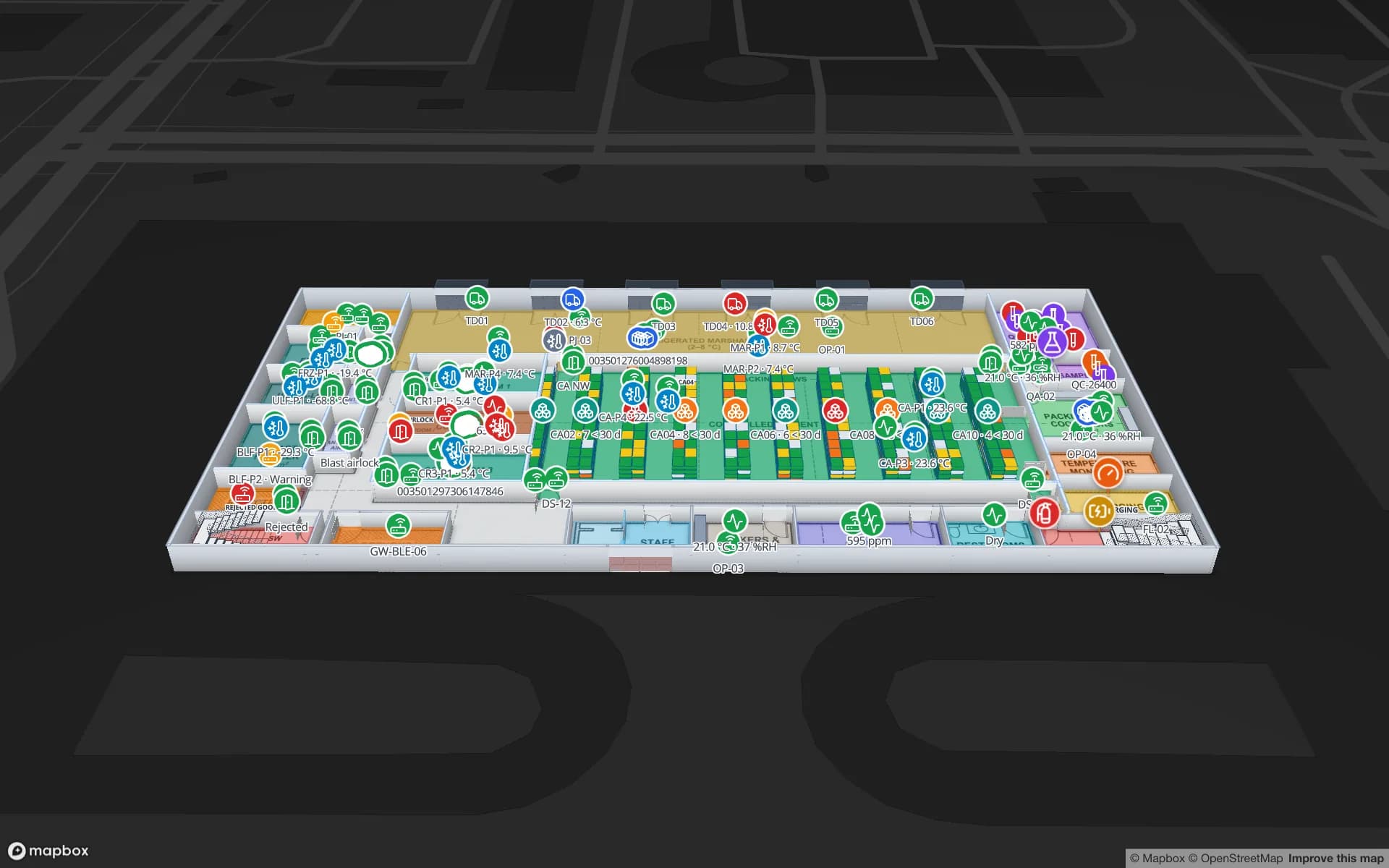
Polar Pharma — Cold Storage & QC Facility, a pharmaceutical cold store & qc lab demo, in the Spatial Map 3D viewer with live device markers
Polar Pharma — Cold Storage & QC Facility
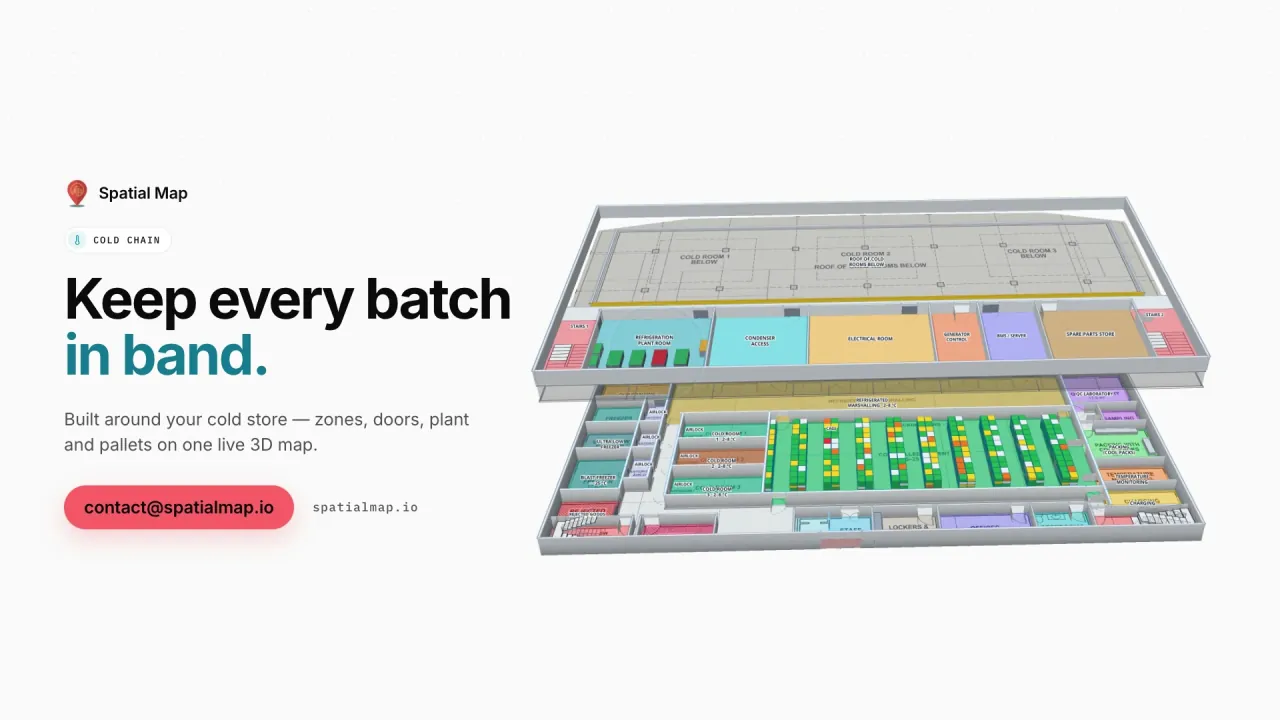
Polar Pharma, a demo cold store: temperature zones tinted from their probes, cold-room doors, reefer docks and 1,140 rack locations.
Rack locations in the Polar Pharma cold-store demo
1,140
Spanish interface, one of six app languages
Español
How often alert rules are checked, with alerts shown in the app
15 s
Free trial, up to 5 facilities, no card
7 days

Flowers: the sector that sets the freight calendar

Colombia is the world’s second-largest flower exporter after the Netherlands. The Ministry of Commerce, Industry and Tourism reported exports of US$2,439.5 million and more than 344,000 tonnes for 2025, with the United States taking 77 % and 94 % of the volume leaving by air, mostly through Bogotá’s El Dorado airport. The airport operator adds that Cundinamarca grows 71 % of Colombian flowers and Antioquia 27 %, and that Valentine’s Day and Mother’s Day together account for 30 % of flower exports.

For a grower or exporter the building is a packhouse and a cold room, and the task is the same every day: boxes arrive cooled, wait for their flight, and are staged by destination and cut-off. On a Spatial Map floor plan each cold room takes the colour of its latest sensor reading, boxes and pallets read at the doors show the room or bay that holds them, and an alert rule such as “out of range for 10 minutes” appears in the app with Show on map. The History player replays a night for a claim. The Polar Pharma demo shows the pattern in a pharmaceutical cold store; the cold-chain solution explains it. Spatial Map does not connect to airlines, airports or customs; it shows your own site.


Two coasts, and the road between them

Colombia ships through ports on both seas: Cartagena, Barranquilla and Santa Marta on the Caribbean, and Buenaventura on the Pacific. In Analdex’s port traffic report for January to June 2025, Cartagena handled 64.3 % of the country’s TEUs and Buenaventura 27.0 %. From both, containers go inland by road to Bogotá, Medellín and Cali, so freight stations, bonded warehouses and distribution centres sit at the port and again in the three big cities.

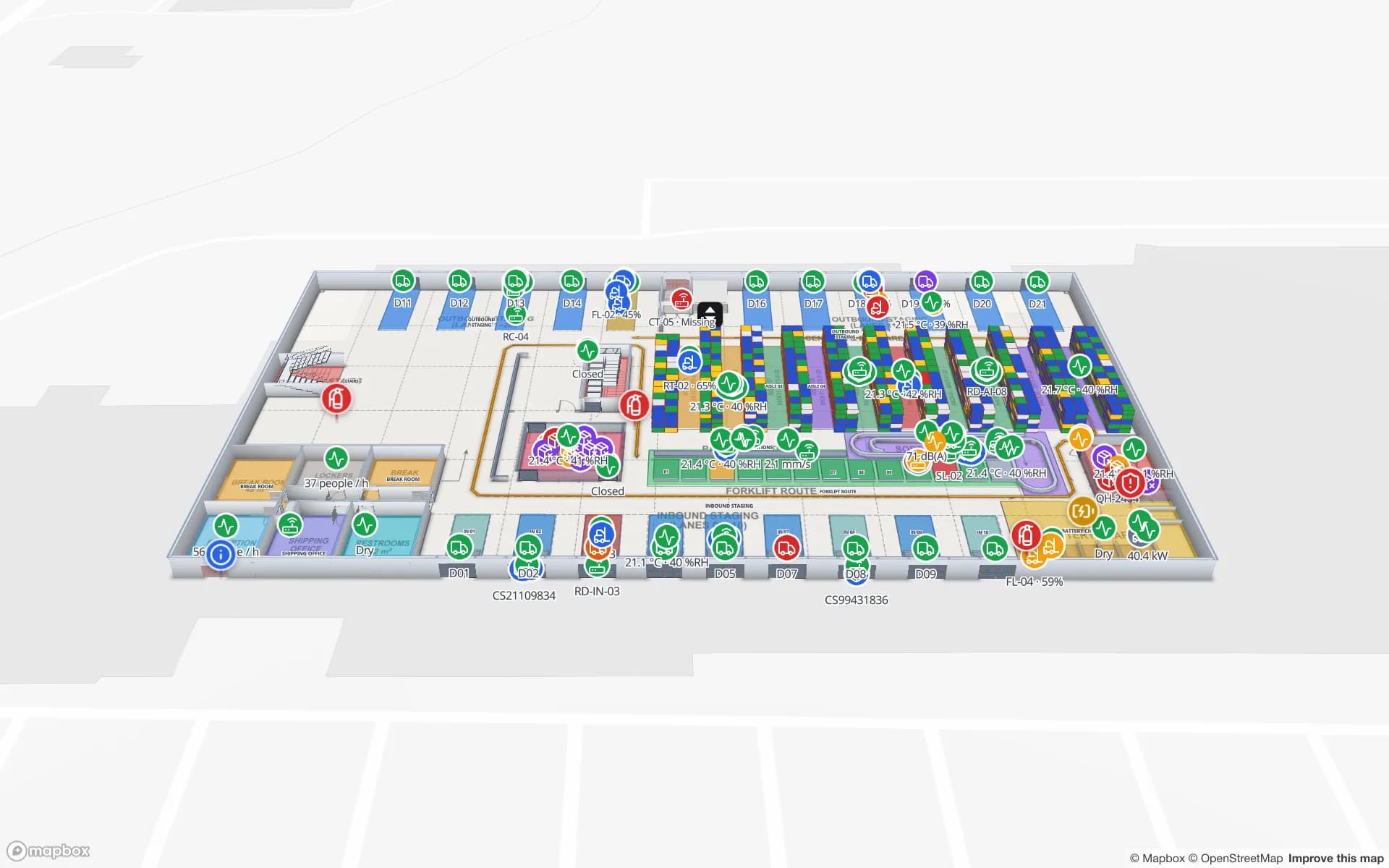
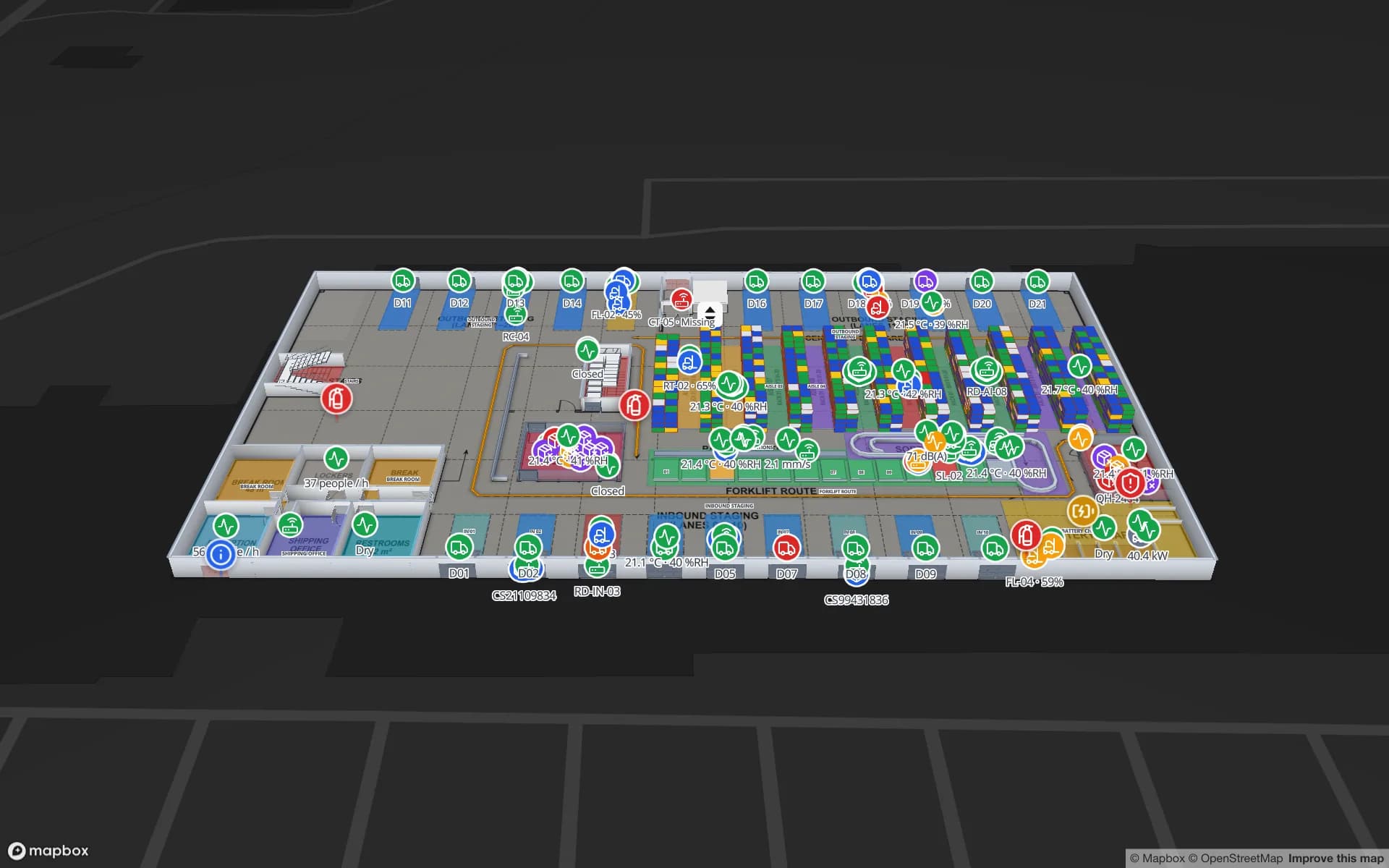
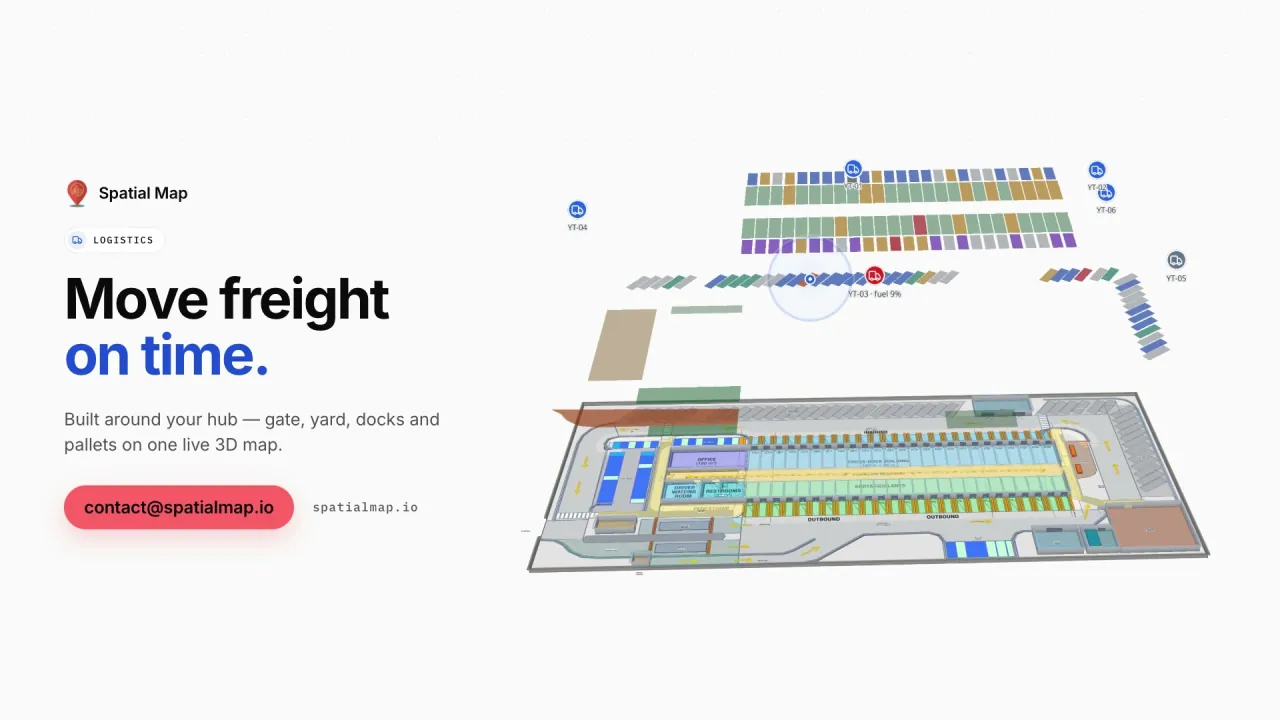
In each of those buildings the questions are the same: which container is at which dock door, which pallet is in which lane, which trailer is waiting in which yard slot. Spatial Map draws the doors, yard slots, gates and racks and colours them from your yard or WMS data, and RFID pallets show where the last reader saw them, as in the Eastport Cross-Dock demo with 50 dock doors, 44 yard slots and 1,180 RFID pallets. Port, customs and tax-authority records stay in their own systems.

Free zones: stock that belongs to several owners

In July 2026 the Ministry of Commerce reported 112 free zones declared and operating in Colombia, with investments above 57 billion pesos and more than 198,000 direct, indirect and linked jobs. A free-zone warehouse often holds goods for several owners under the same roof, each with its own lots and its own customer wanting to know where a consignment is.

Map the warehouse once, give each owner its stock as rows in a table, and use a read-only share link, with the layers you choose, an expiry date and a view cap, so an owner sees only their own bays without an account. The rules of the free-zone regime and your customs records stay in your own systems; Spatial Map makes no compliance claim. Bogotá has its own page, covering the zone in Fontibón.

Coffee, plants and the multi-floor store

The Colombian Coffee Growers Federation counts 560,000 coffee-growing families and reports exports of about 13.1 million 60 kg bags in 2025. Before a sack is exported it passes through a dry mill and an export warehouse, where the record that matters is the lot: which bags, in which bay, headed for which shipment. Pallets tagged with UHF RFID and read at the dock give that picture, and a table of lots from your own system colours the bays by status. Test tags on jute and plastic in your own bay before you buy in volume.

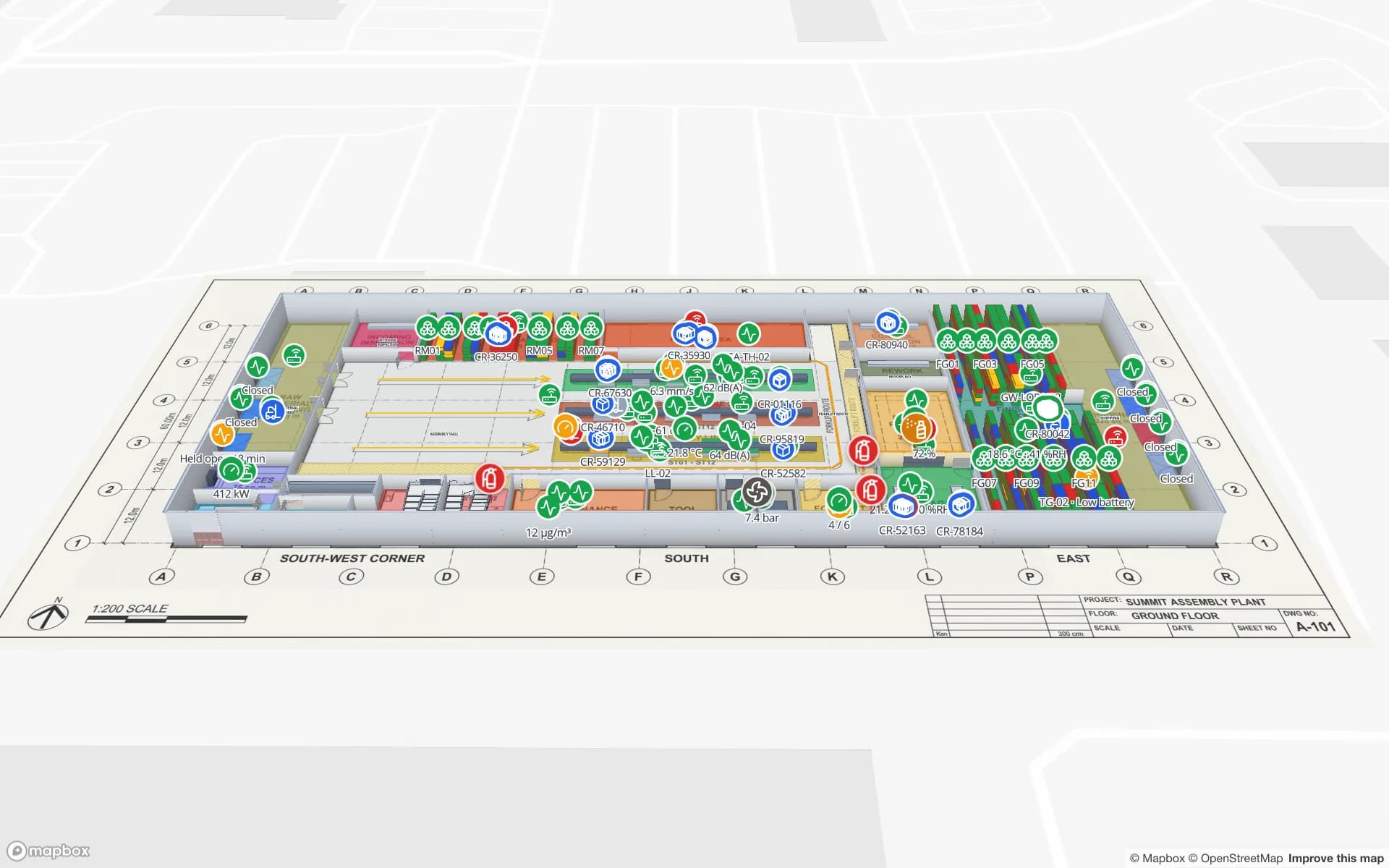
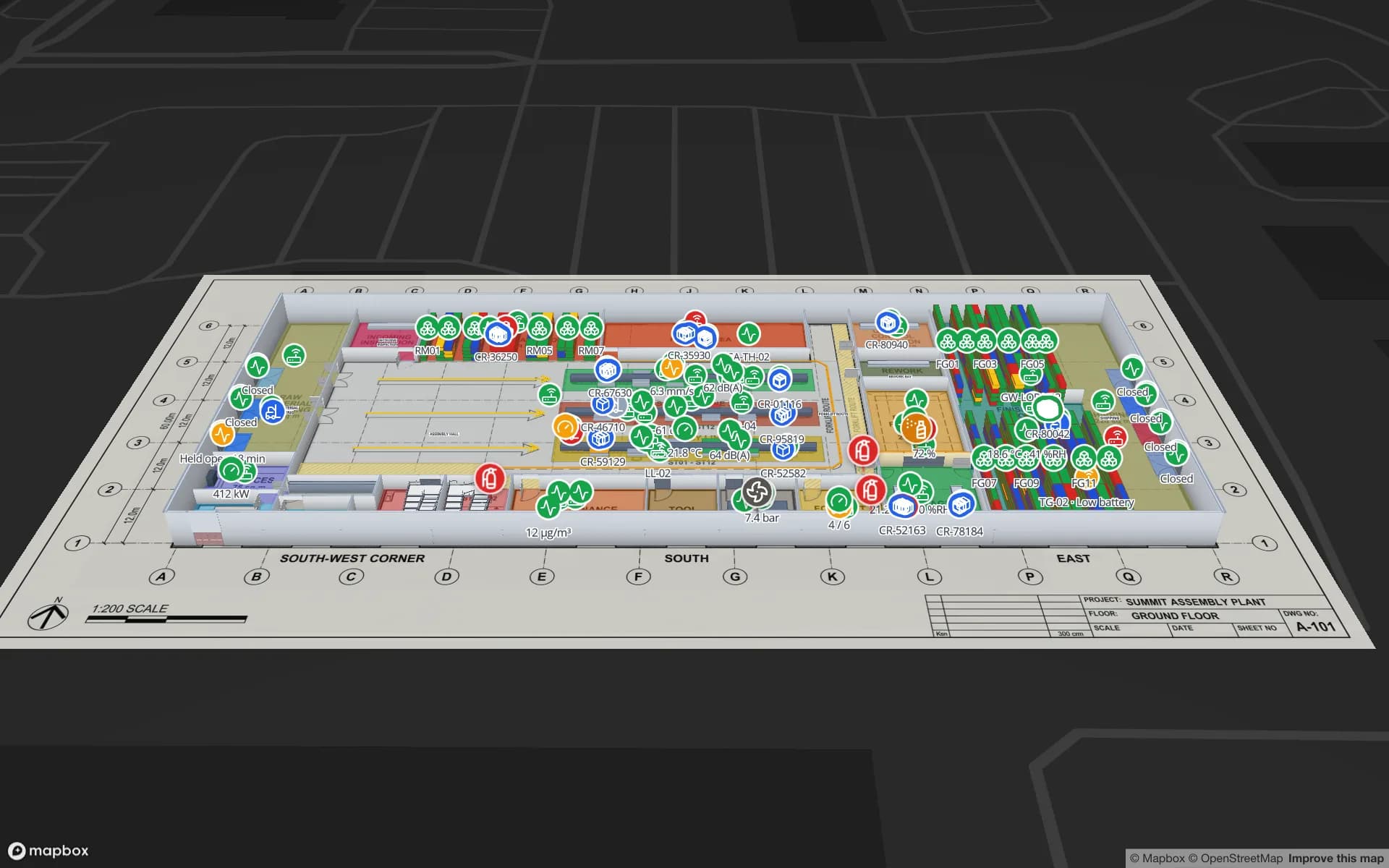
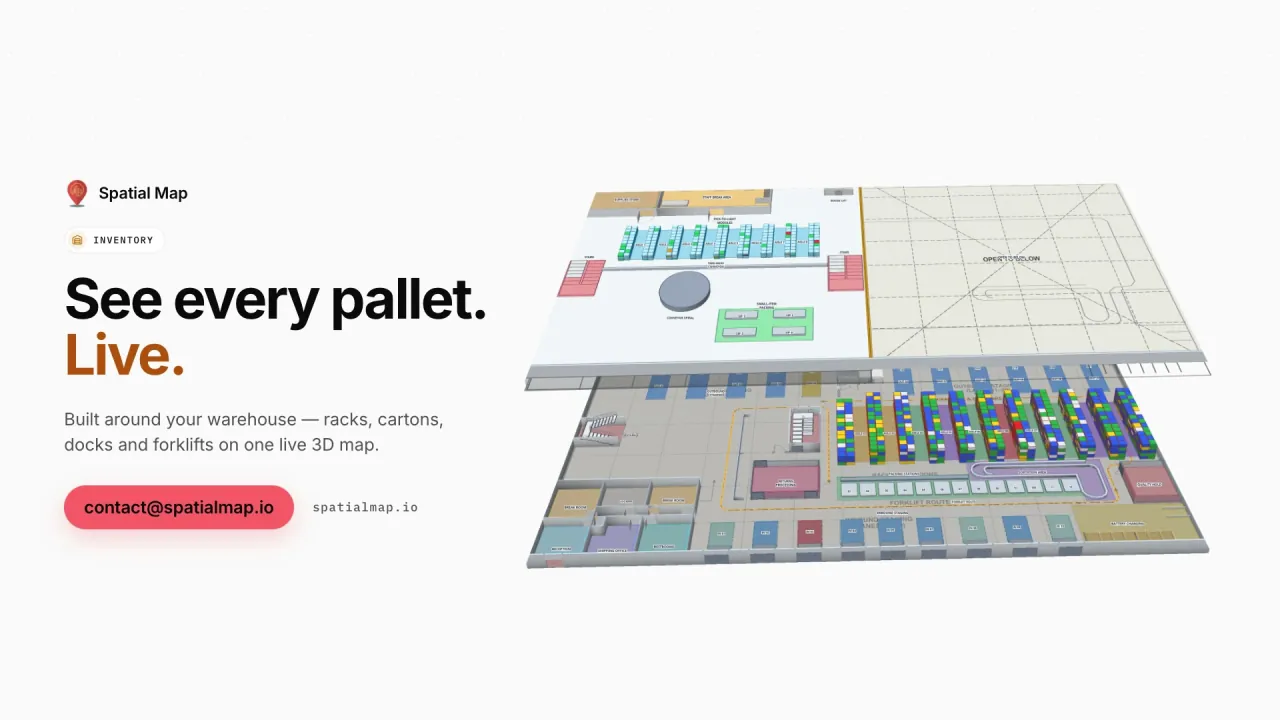
Colombia’s big cities also have factories, multi-level malls and fulfilment centres. Plants map lines and WIP racks as in the Summit Assembly demo; a mall or store shows RFID reads at the doors and footfall as a heatmap that stops at walls, as in the Retail Mart demo with 85 RFID readers on three floors.

Spanish, data protection and working with us

The Spatial Map interface is available in Spanish, English, French, German, Arabic and Chinese, and each user picks their own. Colombian teams can run the app in Spanish; the services page in Spanish describes the mapping and integration work our team does for larger estates. Room names, rack codes and report titles are your own text and appear exactly as typed.

Where location data can be linked to a person, Law 1581 of 2012 is the context: the Superintendency of Industry and Commerce is the data-protection authority and keeps the national database register. Your legal advisers decide what applies; tags on pallets, crates and stock do not identify anyone. A data processing agreement is available. Spatial Map is sold online at the same USD price everywhere, and our team works with customers remotely.

Services for teams in Colombia

Where Colombian teams usually start:

Also served

The same approach covers Medellín, Cali, Barranquilla, Cartagena, Bucaramanga and Pereira. None of them needs anything installed: the map opens in a browser.

How Spatial Map does it

From plan to live map

  1. 01

    Import the plan

    A PDF or a DWG from AutoCAD R2004–R2018 of the packhouse, warehouse or plant, or a photographed plan, placed at scale.

  2. 02

    Draw the building

    Racks with their locations, dock doors, cold rooms, stairs and lifts; AI Map drafts them for a person to review.

  3. 03

    Connect the data

    Your WMS, RFID middleware and sensor gateways post rows to a table, or Spatial Map polls a REST endpoint.

  4. 04

    Share and alert

    Read-only links for owners, customers and group offices, and in-app alerts for the team.

What teams in Colombia map first

Flower packhouses and cold rooms

Cold rooms by live temperature, boxes staged by flight, alerts on excursions.

Port-side warehouses and freight stations

Dock doors, yard slots and RFID pallets staged for the road haul inland.

Free-zone and distribution warehouses

Every rack location coloured from the WMS, with each owner’s bays on a share link.

Plants and multi-floor stores

Lines, WIP carriers and racks, or RFID reads and footfall by floor.

See it on real demo facilities

Fictional names, real floor plans, live sensors, RFID, BLE tags and gateways — open any of them in the browser.

All 13 demo facilities

Questions from teams in Colombia

Yes. Spanish is one of six interface languages, with English, French, German, Arabic and Chinese, and each user picks their own. Portuguese is not available. See the services page in Spanish for the project work our team does. Your own room names, rack codes and report titles can be written in any language.

No. It has no link to customs, port or airport cargo systems. It shows what happens inside your own building, from your own RFID reads, WMS or ERP and sensors, so it complements those systems rather than replacing them.

Fixed readers, portals or handhelds approved for use in Colombia; UHF settings differ between countries, so ask your supplier for the right model and region. Spatial Map has no reader drivers: your middleware posts reads to a table with the write API, or exposes a REST endpoint Spatial Map polls. Our team can source devices on request, quoted per project.

Yes. Keep one facility, store each owner’s stock as rows in a table, and give each owner a read-only share link with the layers you choose, an expiry date and a view cap. Four built-in roles and custom roles control who can edit.

No. Spatial Map is sold online and our team works with customers in Colombia remotely, by video call and through the contact form. There are no local resellers or partners.

In US dollars, the same worldwide: a 7-day free trial for up to 5 facilities with no card, then Pro at $60 a month or $600 a year for up to 4 facilities. Larger estates are quoted as custom services. Hardware, if you ask us to source it, is quoted per project.

Map your first Colombian site this week.

Start the free trial in Spanish or English, or send us the plan of a packhouse, port warehouse or free-zone bay and a sample of your WMS or sensor data through the contact form.